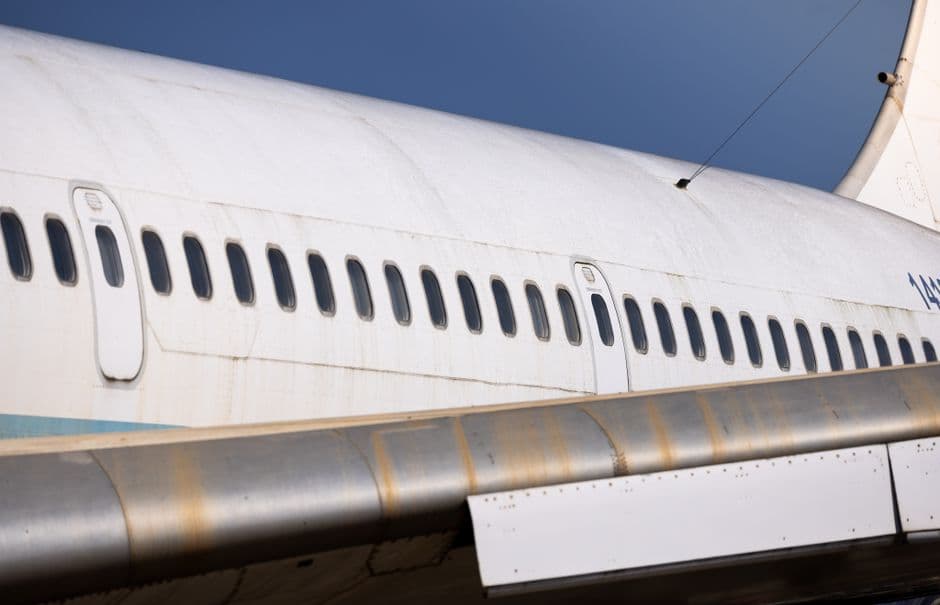
Every airliner flying today has a last flight waiting for it somewhere in the future. It might be twenty years away. It might be next spring. When that day comes, the jet takes off with a skeleton crew, no passengers, and often just enough fuel for a one-way trip to a dry patch of desert. Understanding what happens to retired airliners means following that final flight all the way to the ground and then watching what the industry does next.
The short answer is that almost nothing goes to waste. The longer answer involves cranes, torque wrenches, thick stacks of paperwork, and a global market that treats a worn-out jet less like trash and more like a very large parts bin. A retired airliner is worth real money, sometimes more in pieces than it ever was in one piece.
That math is the strange part. The plane stops being an airplane and starts being an inventory list.
Key Takeaways
When an airliner retires, it usually flies to a desert storage yard where crews decide its future. Some jets go back into service with a new airline. Some get rebuilt into cargo planes. Most are eventually taken apart, with engines, landing gear, and avionics pulled out and resold, and the leftover metal melted down and recycled. Very little of the aircraft ends up in a landfill.
| Stage | What Happens | Typical Outcome |
| Final revenue flight | Passengers offloaded, jet ferried to a storage site | Aircraft leaves the active fleet |
| Storage and preservation | Engines sealed, windows covered, fluids treated | Jet waits, sometimes for years |
| Market decision | Owner weighs resale against teardown | Return to service or part-out |
| Second operator | Cheaper carriers, charter, or cargo buyers | Aircraft flies again |
| Freighter conversion | Cabin stripped, cargo door installed | Jet becomes a freighter |
| Teardown | Engines, gear, and avionics removed and certified | Parts enter the used market |
| Recycling | Airframe cut apart, metals separated | Aluminum and alloys reused |
| Creative reuse | Trainers, museums, furniture, film sets | Airframe finds a new job |
Flying411 is an aviation marketplace where buyers and sellers connect over aircraft, engines, and certified parts, including the components that come out of these very teardowns.
Why Airlines Retire Airliners in the First Place
Planes do not wear out the way cars do. A well-maintained jet can keep flying for decades. What ends its career is usually money, not metal.
An airliner earns its keep by filling seats at a cost the airline can live with. Newer models burn less fuel, need fewer trips to the hangar, and carry more people per flight. Once an older jet costs more to run than it brings in, the spreadsheet makes the decision.
Age, Cycles, and Fatigue
Airframe life is measured in three ways, and all three matter:
- Flight hours track how long the jet has been in the air.
- Flight cycles count how many times it has taken off and landed, which stresses the structure through pressurization.
- Calendar years matter for corrosion, rubber, wiring, and sealant.
Short-haul jets rack up cycles fast because they fly many short legs each day. Long-haul jets build hours faster than cycles. A narrowbody and a widebody of the same age can be in totally different shape, which is one reason how long a Boeing 737 lasts is not a simple number.
Good to Know: Manufacturers publish a "design service goal" for each model, but it is a planning figure, not an expiration date. Aircraft can and do fly past it with extra inspections and structural work.
The Money Side of Retirement
Maintenance costs climb as an airframe ages. Heavy checks come around more often and take longer. Parts get harder to source. Meanwhile, the jet's book value keeps falling, which is a big part of why aircraft depreciate so fast in the first years and then flatten out.
Fuel prices swing the decision too. When fuel is expensive, thirsty older jets retire early. When fuel is cheap, those same jets get a stay of execution. Engine choice plays into it as well, since the efficiency gap between older and newer powerplants, like the difference between CFM56 and LEAP engines, shows up directly on the fuel bill.
Sometimes a whole model gets phased out at once. The four-engine giants are a good example, and the reasoning behind Boeing winding down the 747 had far more to do with efficiency than with worn-out airframes.
Where Retired Airliners Go: Inside the Aircraft Boneyard
The final flight usually ends at a large, remote airfield with miles of open pavement and hard-packed ground. These places are commonly called boneyards, graveyards, or storage yards. The industry term is a storage and disassembly facility, but nobody says that at the airport bar.
An aircraft boneyard is not a junkyard. It is a working business with hangars, tooling, certified technicians, and a parts warehouse attached.
Why the Desert
Most of the big American storage sites sit in the dry southwest, in states like Arizona, California, New Mexico, and Texas. There are similar facilities in Europe, Australia, and Asia. The reasons are practical:
- Dry air slows corrosion. Humidity is the enemy of parked aluminum and steel.
- Hard, alkaline ground supports heavy jets without acres of expensive paving.
- Land is cheap and space is plentiful. A widebody needs a lot of room.
- Clear weather means fewer delays for ferry flights and outdoor work.
Fun Fact: Aircraft parked long-term often have their engine inlets, exhausts, and windows sealed with bright white covers. The reflective wrapping keeps heat down and keeps birds, dust, and sun damage out.
Storage Is Not the Same as Scrapping
This is the part most people get wrong. A jet sitting in the desert is not automatically dead. There are three very different situations happening on the same ramp:
- Short-term parking. The aircraft is flyable and expected back. It gets regular maintenance, engine runs, and system checks.
- Long-term preservation. The jet is sealed up and waiting for a buyer or a market shift. It can be brought back with real work.
- End-of-service. The owner has decided the aircraft will not fly again. It is queued for teardown.
The line between the second and third category moves constantly. A downturn pushes jets into storage. A recovery pulls them back out. Airlines have gone back to the desert to reactivate parked aircraft more than once.
Why It Matters: The same airframe can be worth more parked one year and worth more parted out the next. Timing drives a huge share of the return an owner gets from an end-of-life aircraft.
What Happens to Retired Airliners After Their Final Flight
Here is the full path, stage by stage. Not every jet goes through every step, but this is the road map the industry follows.
1. The Ferry Flight and Arrival
The aircraft flies in empty, often with minimum crew and reduced fuel. Interiors may already be stripped of loose items. On arrival, the jet is towed to a parking spot, and the operator hands over records, keys, and logbooks.
Paperwork arrives with the plane. Those maintenance records are worth real money, which is why maintenance records affect resale value so heavily. A jet with clean, complete history sells better in every direction.
2. Preservation and Protection
If the aircraft will sit for a while, crews put it into a preservation program. Typical steps include:
- Draining or treating fuel, hydraulic fluid, and water systems
- Sealing engine inlets, exhausts, and probes
- Covering windows and cockpit glass
- Inhibiting the engines with preservation oil
- Chocking, grounding, and securing control surfaces
- Scheduled walk-arounds and periodic system checks
Desert storage done properly keeps a jet returnable. Storage done poorly turns a flyable airplane into scrap in a hurry.
Heads Up: Preservation is not free. Monthly storage and upkeep add up fast, which pressures owners to make a decision instead of letting an airframe sit indefinitely.
3. The Decision Point
Now the owner runs the numbers. On one side sits the market value of the whole aircraft. On the other sits the total value of its parts minus the cost of taking it apart.
Appraisers get involved here, and the process behind how commercial aircraft appraisals work is more detailed than most people expect. Age, cycles, engine time, maintenance status, model demand, and even the paint condition all factor in. The broader question of what determines a commercial aircraft's value applies just as much to a retired jet as to a new one.
4. A Second Life With Another Operator
Plenty of retired jets are far from finished. A plane that no longer fits a major carrier's fleet plan can be exactly right for someone else.
Common buyers include:
- Low-cost and regional carriers in growing markets
- Charter and ACMI operators who lease crews and aircraft
- Government, survey, and special-mission operators
- Cargo feeder airlines
- Flight test and research organizations
The aircraft gets a heavy check, a new interior, fresh paint, and a new registration. Then it goes right back to work. This is also why used narrowbodies hold value so well, and it explains a lot about why used Boeing 737s are so expensive compared to what buyers expect.
5. Passenger to Freighter Conversion
Cargo demand has given older airframes a whole second career. A passenger to freighter conversion turns a worn passenger cabin into a main-deck cargo hold.
The work is substantial. Shops remove seats, galleys, lavatories, and cabin windows, then cut a large cargo door into the fuselage, reinforce the floor, and install a cargo loading system and a rigid barrier behind the cockpit. The full picture of how freighter conversions are done covers months of hangar time and serious engineering approval.
Cost matters here. A detailed breakdown of P2F conversion costs shows why only certain models make sense. Some airframes are famous for it. The reasons the 767 makes such a strong freighter come down to door size, range, and pallet fit, and how much cargo a Boeing 767 can carry is a big part of the appeal. On the narrowbody side, the 757 keeps dominating express routes for similar reasons, which is part of the story behind what replaced the Boeing 757 in the passenger world.
Operators still weigh the tradeoffs of a converted freighter against a factory-built one, since new-build cargo jets come with advantages of their own.
Pro Tip: Freighter demand tends to favor airframes with big fuselage cross sections and proven engine support. If parts and engines are easy to source, conversion economics get much friendlier.
6. Engine Removal
For most retired jets, the engines are the crown jewels. A pair of modern turbofans with time remaining before overhaul can be worth more than the entire rest of the airplane.
Engines come off early in the process. From there they can be:
- Leased out as spares to operators flying the same type
- Sent through a shop visit, since engine overhauls can reset a lot of value
- Torn down themselves for high-value modules and life-limited parts
- Sold outright to a lessor or parts trader
Auxiliary power units, thrust reversers, and nacelles get pulled too. Landing gear follows close behind, since overhauled gear sets are always in demand.
7. Teardown and Parts Harvest
Now the aircraft teardown begins in earnest. Technicians work through the airframe methodically, removing components that carry value and can be returned to service.
Typical harvest includes:
| Component Group | Examples | Why It Sells |
| Powerplant | Engines, APU, thrust reversers | Highest dollar value on the aircraft |
| Landing gear | Struts, wheels, brakes, actuators | Expensive new, overhaul-friendly |
| Avionics | Radios, displays, flight computers | Fits many aircraft in the same family |
| Flight controls | Actuators, flap tracks, slats | Costly to manufacture new |
| Interior | Seats, galleys, lavatories, bins | Cheap refresh for other operators |
| Structure | Doors, panels, fairings | Hard-to-find repair items |
Everything removed gets tagged, inspected, and documented. That is how a part becomes used serviceable material, the industry's term for a component pulled from a retired aircraft and certified for reuse. The comparison between used serviceable and new OEM parts explains why airlines buy so much of it, especially when factory lead times stretch out.
Keep in Mind: A part is only valuable if its paperwork travels with it. Without documentation, even a perfect component is just an expensive paperweight.
8. Recycling the Airframe
Once the useful parts are gone, what remains is a stripped shell. That shell still has value as raw material.
Aircraft recycling follows a fairly consistent sequence:
- Remaining fluids and hazardous materials are removed and handled properly.
- Wiring and insulation are pulled out.
- Wings and tail are separated from the fuselage.
- The fuselage is cut into manageable sections.
- Aluminum, titanium, steel, and composites are sorted by type.
- Sorted metals go to smelters and re-enter the supply chain.
Industry figures commonly cited put the recoverable share of an airframe by weight somewhere in the range of 80 to 90 percent, and the number keeps improving as sorting technology gets better. The Aircraft Fleet Recycling Association publishes best-practice guidance and accredits facilities that follow it, which has helped standardize an industry that used to vary a lot from yard to yard.
9. What Is Left Over
Composites remain the hardest piece of the puzzle. Carbon fiber structures do not melt down the way aluminum does, and recycling routes for them are still maturing. Newer widebodies use far more composite material than older jets, so this is a growing area of research rather than a solved problem.
Cabin plastics, foams, and certain coatings also require careful handling. Responsible facilities document all of it.
Flying411's marketplace lists overhauled and serviceable engines alongside certified parts and avionics, making it a practical place to look when a teardown creates supply and an operator needs it.
What a Retired Airliner Is Worth
This is the question everyone asks, and the honest answer is that it depends on more variables than most assets on earth. Two identical-looking jets parked side by side can differ in value by a wide margin.
The Biggest Value Drivers
- Engine status. Time remaining before the next shop visit is the single largest swing factor.
- Life-limited parts. Components with mandatory retirement times carry hard limits, and how life-limited parts work directly shapes the value of a teardown.
- Maintenance position. A jet fresh out of a heavy check is worth more than one due for it, so maintenance check intervals matter to buyers.
- Fleet size in service. Parts for a popular type sell fast. Parts for a rare type sit.
- Records quality. Complete, traceable history lifts every number.
- Model demand. Cargo-friendly airframes hold value longer.
- Market timing. Parts shortages raise teardown returns.
The concept of residual value in aircraft is what lessors and owners plan around from the day a jet is delivered. Retirement is simply the moment that projection meets reality.
Quick Tip: If you own an aircraft and want a realistic sense of where it stands, a proper valuation is a better starting point than a listing price. Flying411 offers a way to value your aircraft before you make any decisions.
Whole Aircraft Versus Part-Out
The part-out value of a jet is the sum of its resalable components minus teardown labor, storage, transport, certification, and marketing costs. When that number beats the whole-aircraft market price, the teardown wins.
For very large aircraft, the calculation gets tougher. Big four-engine jets have fewer buyers, and the cost picture behind what a Boeing 747 costs shifts dramatically once the type leaves mainstream passenger service. Comparisons like the 747 against the 777 help explain why twin-engine widebodies aged into the used market more gracefully.
The Paperwork Behind Every Reused Part
A retired airliner is a source of thousands of components, but none of them can fly again without documentation proving what they are and where they came from.
Traceability Is Everything
Every serviceable part needs a paper trail back to an approved source. The rules around aircraft part traceability are strict for good reason. Buyers want to know the part's origin, its condition, its repair history, and its remaining life.
Release certificates do the heavy lifting here. The distinction between EASA Form 1 and FAA 8130-3 comes up constantly in cross-border sales, since a part accepted in one system may need extra steps in another.
Verifying What You Buy
Before a used part goes on an aircraft, someone has to confirm it belongs there. The practical steps for verifying that a part is airworthy include checking the certificate, the part number, the serial number, and the condition report against the aircraft's approved data.
Part numbering itself is a skill. Knowing how Boeing part numbers are structured saves a lot of guessing. It also helps to understand the difference between rotable and expendable components, since rotables are the ones that get overhauled and returned to service again and again.
Heads Up: The used parts market has a counterfeit problem at its edges. Learning how to spot counterfeit aircraft parts is a basic safety skill for anyone buying outside established channels.
Approved aftermarket components add another layer. Understanding what a PMA part is helps buyers compare options when an OEM component is backordered or priced out of reach.
Second Lives Beyond Aviation
Not every retired airliner ends as scrap. Some airframes find jobs that have nothing to do with flying.
- Emergency training rigs. Fire crews and cabin crew trainers use real fuselages for evacuation and firefighting practice.
- Museums and static displays. Historically significant airframes get preserved and restored.
- Film and television sets. Production companies use cabin sections for interior shots.
- Restaurants, hotels, and homes. A handful of converted airframes around the world serve as unusual buildings.
- Furniture and design pieces. Wing sections, cowlings, and window panels get upcycled into desks, tables, and art.
- Ground test articles. Engineers use retired structures for load testing and research.
Fun Fact: Aircraft skin panels and cabin trim have long been popular with designers because aviation-grade aluminum is light, strong, and holds a polish beautifully. A conference table made from a wing section is heavier on story than on materials cost.
These uses account for a small slice of retirements overall. Still, they are the ones people remember, and they keep a few famous airframes visible long after their flying days end.
How Modern Fleets Are Changing the Picture
Retirement patterns shift with the fleet. Narrowbodies now make up a much larger share of teardowns than they once did, simply because there are so many of them in service.
Model transitions matter too. The move from earlier generations to newer variants creates predictable waves of retirement, and the differences covered in the 737 NG versus MAX comparison show how quickly efficiency gains change fleet planning. Competitive pressure adds to it, which is why matchups like the 737 MAX against the A320neo influence how fast older jets leave the line.
Operating economics drive the timing. Airlines watch direct and indirect operating costs closely, and the way cost per available seat mile is calculated turns fleet age into a hard number on a quarterly report.
Ready to put a real number on an aircraft, engine, or parts inventory? Flying411 connects you with buyers, sellers, and certified aviation professionals in one place.
Conclusion
So what happens to retired airliners? They get parked, preserved, evaluated, and then sent down one of several roads. Some fly again under a new flag. Some haul freight for another twenty years. Most are eventually taken apart with care, their engines and components feeding the fleets still in the air, and their aluminum melted down and reborn as something else entirely.
It is one of the most efficient recycling stories in heavy industry, and it happens quietly in the desert while the rest of us are busy boarding the newer jets that replaced them. The airplane ends. The airplane's parts keep going.
Every retired jet is somebody's parts supply and somebody else's next aircraft. Start your search, or list what you have, at Flying411.
FAQs
How long does an airliner typically stay in service before retirement?
Most commercial jets serve somewhere in the range of two to three decades, though the exact figure varies widely by model, route type, and how the aircraft was maintained. Economics usually decide the retirement date well before the structure runs out of life.
Can a retired airliner ever return to passenger service?
Yes. Aircraft placed in preserved storage can be reactivated with inspections, maintenance, and system checks, and airlines have pulled parked jets back into service during demand recoveries. Once major components are removed for sale, though, returning to service becomes far less practical.
Are aircraft boneyards open to the public?
Most working storage and teardown facilities are private, secured sites and do not allow casual visitors. A few offer arranged tours or sit near museums with public access, so it is worth checking directly with the specific location.
Who owns a retired airliner after the airline is finished with it?
Ownership depends on how the aircraft was financed. Many jets are owned by leasing companies rather than the airline flying them, so the lessor decides what comes next, while owned aircraft are typically sold to a trader, teardown specialist, or another operator.
Do older aircraft parts get reused on brand new airplanes?
Generally no, since new production uses new components. Used serviceable parts are typically installed on aircraft of the same type and generation, where they are approved for that specific application.