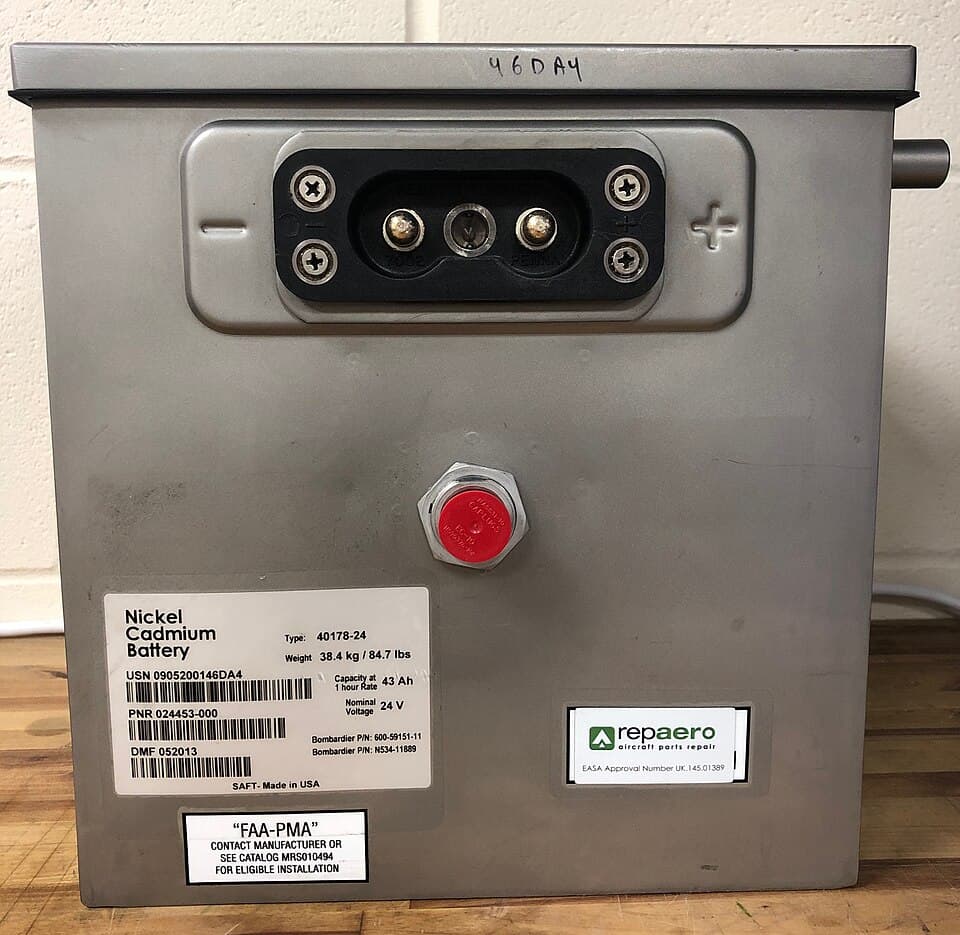
A shiny part in a sealed bag looks trustworthy. It has a barcode, a neat label, and a tag stapled to the outside. Everything about it says "ready to install." But a part is only as good as the paper trail behind it, and that paper trail is the whole ballgame. Knowing how to verify an aircraft part is airworthy is one of the few skills that protects your wallet, your certificate, and the people sitting behind you.
The tricky part is that bad parts rarely look bad. They look ordinary. They look boring. They look like every other box on the shelf, right up until an inspector asks a question nobody can answer.
Key Takeaways
To verify an aircraft part is airworthy, match the part to its paperwork and then match that paperwork to an approved source. That means checking the part number and serial number on the part itself, reading the release document that came with it, confirming the company that signed it holds a real certificate, checking the part is eligible for your specific aircraft, and making sure the condition, life limits, and shelf life all line up. If any one of those links breaks, the part cannot be installed until the gap is closed.
| Check | What You Are Looking For | Why It Matters |
| Part identification | Part number, serial number, and data plate match the paperwork | A mismatch means the documents belong to a different part |
| Release document | FAA Form 8130-3, EASA Form 1, or an approved equivalent | This is the formal statement that the part was approved or returned to service |
| Issuing authority | A valid repair station, production approval holder, or authorized signer | An unauthorized signature makes the tag meaningless |
| Traceability | An unbroken chain back to an approved source | Gaps in history are the most common reason parts get rejected |
| Eligibility | The part is approved for your exact model and configuration | Airworthy in general does not mean airworthy on your aircraft |
| Condition code | New, overhauled, repaired, inspected, or as removed | The code sets what work is still required before installation |
| Life limits and shelf life | Cycles, hours, and cure or expiration dates | Expired or timed-out parts cannot be installed, no matter how clean they look |
| Red flags | Altered documents, odd pricing, vague sources | Fraud in this industry hides inside normal-looking paperwork |
Flying411 keeps aircraft, engines, and certified parts listings in one place, along with the mechanics and shops who can verify them. It is a useful home base when you are trying to match a part to a seller you can stand behind.
What Airworthy Really Means for a Single Part
Most people think of airworthiness as something that belongs to a whole aircraft. It does. But it starts much smaller, at the level of a single bolt, bushing, or bearing.
For a part, airworthiness comes down to two ideas. First, the part must conform to its approved design. Second, the part must be in a condition that is safe for operation. Both have to be true at the same time.
A brand new part that was never approved for your aircraft fails the first test. A properly approved part that sat in a leaky shed for six years may fail the second. Neither one belongs on an aircraft.
Here is the part that surprises newcomers. Documentation does not make a part airworthy on its own. It records the judgment of someone who was authorized to make that call. The paperwork is evidence, not magic.
Good to Know: A release document tells you a part was approved or returned to service. It does not, by itself, approve installation on a particular aircraft. That decision belongs to the mechanic signing the maintenance record.
There is also a legal side worth understanding. The person who installs the part and signs the return to service carries real responsibility for the choice. "The seller said it was fine" has never been a strong defense.
The Documents That Prove a Part Is Approved
Aviation runs on a small family of airworthiness certification documents. Once you can recognize them on sight, verification gets much faster.
FAA Form 8130-3
This is the Authorized Release Certificate, often called the airworthiness approval tag. It is used two ways. A production approval holder can use it to show a new part conforms to approved design data. A repair station or other authorized organization can use it to show a part was returned to service after work.
Read a 8130-3 form from the middle out. Look at the description, part number, serial or batch number, and quantity. Then look at the status and work performed field, which tells you the condition. Then look at the release statement and the signature block with the certificate number of the signer.
If the description says one thing and the tag on the box says another, stop there.
EASA Form 1 and Other Equivalents
EASA Form 1 is the European counterpart and follows a very similar layout. Transport Canada, the UK CAA, and other authorities issue their own equivalents. Many tags carry a dual release, which means the part is released under two authorities at once.
Dual release matters when parts cross borders. A part released only under one authority may need extra steps before it can be used under another.
Certificate of Conformity
A Certificate of Conformity, or C of C, is a manufacturer statement that the item was built to the approved specification. You will see these often with standard hardware, raw material, and consumables where a full release tag is not the normal practice.
Serviceable Tags and Teardown Reports
A serviceable tag from a repair station shows the shop's own inspection result. A teardown report shows what was found and what was done during a shop visit. For engine and component work, that report is often the most useful document in the folder because it tells the story behind the numbers.
Trace Paperwork
Trace documents show where the part has been. These can include original purchase records, transfer records between distributors, a statement of the aircraft or engine the part came off, and a non-incident statement confirming the source aircraft was not involved in an accident or fire.
Pro Tip: Ask for the full document package before money changes hands, not after. Sellers who hesitate at that request are telling you something useful.
How to Verify an Aircraft Part Is Airworthy, Step by Step
Here is the practical sequence. Work it in order, because each step depends on the one before it. Skipping ahead is how good buyers end up with expensive paperweights.
1. Read the part itself before you read the paperwork.
Start with the hardware. Find the part number, the serial number, and any data plate or etching. Check that the markings are crisp and consistent. Look for signs that numbers were stamped over, ground down, or re-etched. Compare what is on the part to what is on the tag, character for character. Guidance on reading manufacturer part numbers can help when a number looks unfamiliar or carries an odd suffix.
2. Confirm the release document is complete and internally consistent.
Every field that should be filled in must be filled in. Look for correction fluid, mismatched fonts, crooked lines, misaligned boxes, and copies of copies. A tag that mixes production release language with maintenance release language is a problem, not a shortcut.
3. Verify the organization that signed it.
This is the step people skip most often. Take the certificate number from the signature block and confirm the organization is real, current, and rated for that kind of work. A repair station rated for wheels and brakes has no business releasing an avionics box. If the document is questionable, contact the named organization directly and ask them to confirm they issued it.
4. Trace the part back to an approved source.
Aircraft part traceability means being able to follow the part backward through every owner to a production approval holder, an approved repair source, or a documented aircraft removal. Each handoff should have a record. Gaps are common in the used market, and a gap is not automatically fraud, but it does need to be closed before the part can be used.
5. Check eligibility for your exact aircraft.
A part can be perfectly approved and still be wrong for you. Confirm eligibility using the illustrated parts catalog, the type certificate data sheet, the maintenance manual, or an applicable approval such as a supplemental type certificate. Effectivity often changes by serial number range, not just by model.
6. Match the condition code to what you need.
An "as removed" part is not ready to install. An overhauled part needs an overhaul record from a shop rated to do that work. Read the condition on the tag, then ask what work still has to happen before installation.
7. Check life limits, cycles, and shelf life.
For life-limited parts, you need back-to-birth records showing every hour and cycle since new. Missing history usually means the part must be scrapped, because there is no way to prove remaining life. For rubber goods, seals, tires, batteries, oxygen components, and chemicals, check cure dates and expiration dates.
8. Check for airworthiness directives and service bulletins.
A part can be approved and still be affected by a directive that requires inspection, modification, or replacement. Confirm the part's status against any applicable airworthiness directives and mandatory service bulletins before it goes on the aircraft.
Heads Up: A part that clears all eight checks still needs a proper receiving inspection at the shop. Verification and inspection are two different jobs, and both have to happen.
Part Condition Codes and What They Really Mean
Condition codes look like shorthand, and they are, but each one carries a different set of expectations. Here is a plain-language guide to the ones you will run into most.
| Code | Common Meaning | What It Usually Requires |
| NE / New | Never used, released by an approved production source | A conformity release such as an 8130-3 or C of C |
| NS / New Surplus | New but held in inventory, often for years | Trace to source plus a shelf life check |
| OH / Overhauled | Disassembled, inspected, repaired, and reassembled to approved standards | Overhaul release from a properly rated shop |
| RP / Repaired | Specific defects corrected, not a full overhaul | Repair release and clear scope of work |
| IN / Inspected or Tested | Checked and found serviceable, no significant work performed | Inspection release plus supporting trace |
| SV / Serviceable | Determined fit for use by an approved source | Release tag and removal history |
| AR / As Removed | Pulled from an aircraft with no shop evaluation | Full evaluation before any installation |
The gap between "serviceable" and "as removed" is where most buyer confusion lives. Serviceable means someone qualified made a call. As removed means nobody has.
Why It Matters: Buying an as removed part at a serviceable price is one of the fastest ways to lose money in aviation. The shop bill to make it usable can dwarf the savings.
PMA, OEM, and Used Serviceable Material
Not every approved part comes from the original manufacturer, and that is by design. There are three broad sources, and each one has a different verification rhythm.
- OEM parts come from the original equipment manufacturer or its production approval holders. The trace path is usually the cleanest.
- PMA parts are produced under a Parts Manufacturer Approval, which authorizes a company other than the type certificate holder to make a replacement part. A quick primer on what PMA approval covers is worth reading before your first purchase.
- Used serviceable material comes from teardowns and part-outs of retired aircraft and engines.
PMA parts are approved parts, full stop. The verification question is not "is PMA acceptable," it is "is this specific PMA part eligible for this specific aircraft," plus any operator or lessor rules that may restrict their use.
Used serviceable material is where documentation quality varies the most. The savings can be real, and so can the risk. The comparison between surplus and factory-new sourcing lays out the tradeoffs in more detail.
Flying411 lists overhauled and serviceable engines, certified parts, and avionics alongside the repair shops and A&P mechanics who can evaluate them, which makes it easier to line up a part and a second opinion at the same time.
Why Eligibility Changes From One Model to the Next
Two aircraft can look like siblings and still take different parts. Model families evolve through variants, engine changes, and design updates, and the parts lists follow.
The differences between the 737-800 and the 737 MAX are a good example, since a shared family name hides significant changes in engines and systems. Similar gaps exist between the 777 and the 787, where materials and systems architecture differ enough to change what interchanges and what does not.
The same holds true across manufacturers. Comparisons like the A350 against the 777 and the A380 next to the 747 show how design philosophy drives parts that are similar in function but completely different in specification. Even prototype programs make the point, since the X-32 and X-35 competitors solved the same mission with almost nothing in common.
The lesson is simple. Never rely on a part looking right. Rely on the effectivity data for your serial number.
Keep in Mind: Effectivity can change mid-production. A part that fits your neighbor's aircraft may not be approved for yours even though the model designation is identical.
Red Flags That Point to Suspected Unapproved Parts
The industry term for a questionable part is a suspected unapproved part. The FAA has published guidance on detecting and reporting suspected unapproved parts, and the warning signs are surprisingly consistent.
Watch for these:
- Prices well below the going market rate with no clear explanation
- Sellers who cannot or will not name the source of the part
- Documents with fuzzy logos, odd formatting, or fonts that shift mid-page
- Release tags issued by companies you cannot verify
- Part numbers or serial numbers that appear altered, missing, or freshly applied
- Packaging that does not match the supplier named on the paperwork
- Quantities that seem too large for a rare or hard-to-source item
- Delivery times that are impossibly fast for a part known to be on backorder
Fun fact: the aviation industry has long treated paperwork forgery as a bigger threat than counterfeit metal, because a convincing document can move a bad part through many hands before anyone looks closely at the hardware.
The AOG Technics case made that point in public. A UK-based parts supplier was found to have distributed engine components with falsified release certificates, and the fallout reached airlines across Europe and the United States. Regulators issued notifications, operators pulled records, and aircraft came out of service while inventories were checked. The company's director was later convicted and sentenced in connection with the scheme.
What makes the case instructive is how ordinary the fraud looked. The parts moved with documents that mimicked real forms from real organizations. The break came when someone questioned a certificate and contacted the named organization directly, which is exactly step three in the sequence above.
If you find a part you believe is unapproved, quarantine it. Do not return it to inventory, and do not send it back into the market without disposition. Then report it through the appropriate channel so the rest of the industry knows.
Buying From Distributors: Accreditation and Due Diligence
Most parts change hands through distributors, and the quality of a distributor's internal system tells you a lot about the parts they sell.
The FAA supports a voluntary accreditation program for civil aircraft parts distributors. Accredited distributors maintain quality systems that cover receiving inspection, traceability standards, quarantine procedures for suspect material, and training for staff on identifying counterfeit and unapproved parts. Using an accredited distributor does not remove your responsibility to verify, but it stacks the odds in your favor.
Practical habits that help:
- Put traceability requirements in writing on the purchase order.
- Ask for scans of all documents before shipment.
- Require the physical documents to travel with the part.
- Inspect on receipt, before the part enters your inventory system.
- Keep the records with the part for as long as you own it.
Quick Tip: Store your document scans by part serial number, not by invoice date. When someone asks about a part two years from now, serial number is the only search that works.
Special Cases That Deserve Extra Attention
Some categories carry higher risk or stricter rules. These are the ones worth slowing down for.
Life-limited rotating parts. Engine disks, shafts, and similar components require complete back-to-birth history. No history, no installation.
Rubber, seals, and hoses. These carry cure dates. A part with plenty of shelf life on paper can still be out of limits by the time it reaches you.
Batteries, oxygen components, and chemicals. Expiration dates and storage conditions both matter. Ask how the item was stored, not only when it was made.
Avionics and software-driven units. The hardware part number is only half the story. Software or firmware version can affect eligibility and function.
Structural and load-bearing parts. Corrosion, hidden damage, and repair history all come into play. Ask for the repair record, not only the release.
Standard hardware. Bolts, nuts, and fasteners are easy to overlook and easy to counterfeit. Buy them from sources you trust and keep the conformity paperwork.
Good to Know: Parts recovered from an aircraft involved in an accident, fire, or major incident are treated with extra caution. That is why a non-incident statement is a standard request in the used market.
Common Mistakes That Cost Real Money
Even careful buyers slip into a few familiar traps.
- Trusting the tag without checking the signer. A document is only as strong as the certificate behind it.
- Assuming a part number match equals eligibility. Effectivity ranges exist for a reason.
- Accepting scanned documents only. Originals or properly controlled copies should travel with the part.
- Ignoring shelf life on cheap items. An expired O-ring can ground an aircraft as fast as a bad pump.
- Filing paperwork separately from the part. Documents that get separated from hardware tend to stay separated.
- Letting urgency drive the decision. An aircraft on the ground creates pressure, and pressure is exactly what bad sellers count on.
Ready to source a part with confidence? Browse verified listings and connect with certified shops and mechanics on Flying411 before your next purchase.
Conclusion
Learning how to verify an aircraft part is airworthy comes down to patience and a repeatable habit. Read the part. Read the paperwork. Confirm the signer. Follow the trace. Check eligibility, condition, life limits, and directives. Every step is small, and together they close the door on the kind of problem that grounds aircraft and ends careers.
The good news is that this gets faster with practice. After a few dozen parts, you will spot a weak document package in seconds, and you will know which questions make a good seller nod and a bad seller change the subject.
Great parts deserve great homes, and great buyers deserve straight answers. Start your search on Flying411 and keep the paperwork as clean as the hardware.
FAQs
Can a mechanic install a part that has no 8130-3 tag?
In some cases yes, because an 8130-3 is not required for every part in every situation, and other acceptable documentation may exist. The installer still has to establish that the part conforms to approved design and is in a condition safe for operation.
What happens if I lose the paperwork for a part I already own?
Contact the original source or the repair station that released it and request a replacement copy or duplicate record. If the history cannot be reconstructed, the part generally cannot be used on a certificated aircraft.
Are homemade or owner-produced parts ever legal?
There are narrow provisions that allow an owner or operator to participate in producing a replacement part for their own aircraft, along with limited fabrication by maintenance personnel during a repair. Both paths have strict conditions and are worth reviewing with your mechanic before starting.
Does an overhauled part reset to zero time?
Not for life-limited components. An overhaul can restore condition and reset time since overhaul, but cycles and hours since new continue to count against the part's life limit.
How long should I keep records for a part after installation?
Keep them for as long as the part remains on the aircraft, and keep major repair, alteration, and life-limited part records permanently. Buyers will ask for that history the moment you decide to sell.