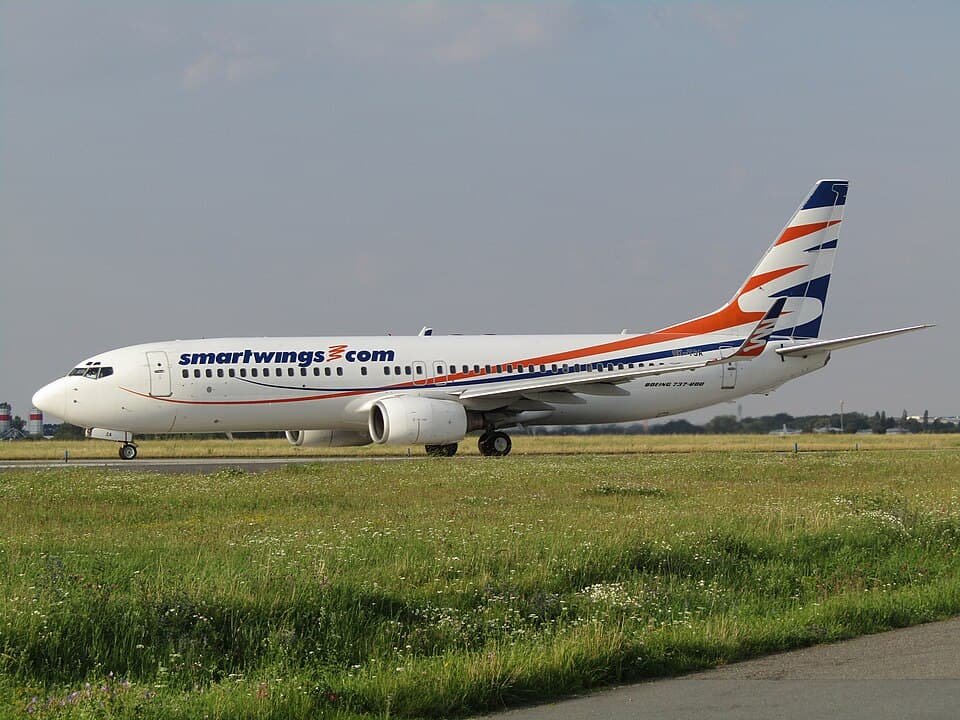
At first glance, a Boeing 737-800 and a 737 MAX look almost like twins. Same skinny tube. Same two engines slung under the wings. Same neat rows of little windows.
Most passengers walk down the jet bridge without a clue which one they are about to board. Yet the story behind the Boeing 737-800 vs 737 max matchup runs a lot deeper than the paint job, and a few of those differences ended up reshaping the whole aviation industry.
The two jets share a last name and a family tree. They were built in different eras, though, with different goals and very different engines.
One of them quietly helped Boeing rule the skies for two decades. The other nearly pulled the company down with it before clawing its way back into service.
Key Takeaways
The main difference between the 737-800 and the 737 MAX comes down to age and technology. The MAX is the newer jet with bigger, fuel-saving engines, redesigned winglets, and a longer range, while the 737-800 is the older workhorse that still fills fleets across the globe. The MAX also carries a heavier past, since it was grounded worldwide after two fatal crashes before it was allowed to fly again.
| Question | Short Answer |
| Which one is newer? | The 737 MAX (entered service in 2017) |
| Which is more fuel efficient? | The MAX, by a wide margin (widely reported at around 14 to 20 percent) |
| Which flies farther? | The MAX, at roughly 3,500 nautical miles vs about 2,900 for the -800 |
| Easiest way to tell them apart? | The MAX has serrated "chevron" engines and split-tip winglets |
| Was one of them grounded? | Yes, the MAX (2019 to 2020) |
| Which is more common today? | Both are everywhere, though the -800 still anchors many fleets |
At Flying411, we spend a lot of time around these narrow-body jets, keeping tabs on the aircraft, engines, and parts that keep them in the air.
Meet the Two 737s: A Quick Background
Before stacking them side by side, it helps to know where each jet came from. They belong to the same 737 line, but they represent two separate chapters in Boeing's long history with this aircraft.
The 737-800 and the Next Generation era
The 737-800 is part of what Boeing calls the 737 Next Generation family, often shortened to "NG." This generation arrived in the late 1990s and quickly became a favorite for airlines flying short and medium routes. The -800 in particular hit a sweet spot of size, range, and cost. It could carry a solid load of passengers, land at both big international hubs and smaller regional airports, and do it all day long without complaint.
Over the years, the 737-800 turned into one of the most widely flown narrow-body jets on the planet. Thousands were delivered before passenger production of the type wound down around 2020. Even now, you will spot the -800 at almost any busy airport, hauling travelers on everything from quick hops to longer cross-country runs.
Good to Know: The "NG" in Next Generation does not mean the aircraft is brand new today. It was Boeing's answer to a previous generation back in the 1990s. In aviation, yesterday's "next generation" is often today's dependable veteran.
The 737 MAX and what changed
The 737 MAX 8 is the fourth generation of the 737. Boeing designed it to answer a simple question from airlines: how do we burn less fuel without buying a totally new aircraft? Fuel is one of the biggest costs an airline faces, so even small savings add up fast across a large fleet.
The MAX 8 entered service in 2017 and slots into the middle of the MAX lineup in terms of length and seating. To pull off those fuel savings, Boeing bolted on much larger, more advanced engines and reworked several parts of the airframe. Those changes are the heart of the whole comparison, and they explain both the plane's strengths and the trouble it later ran into.
If you want to see how this jet stacks up against the rest of the lineup, our roundup of the strongest Boeing jets puts the 737 family in context alongside its bigger siblings.
Boeing 737-800 vs 737 MAX: The Core Differences That Matter
Here is where the two jets really split apart. On the ramp they look similar, but under the skin they were built with different technology. These are the differences that matter most, listed from the ones you can see to the ones you can only feel on an airline's balance sheet.
- Engines. This is the single biggest difference. The 737-800 uses two CFM56-7B engines, a proven design that powered the NG family for years. The MAX 8 uses the newer, larger CFM LEAP-1B engines. They have a bigger fan up front, a higher bypass ratio, and modern materials inside. Bigger engines are the reason so many other differences exist.
- Fuel efficiency. The whole point of the MAX was to sip less fuel, and it delivers. Reports commonly place the MAX 8's fuel efficiency at roughly 14 to 20 percent better than the older NG engines, depending on the route and how the numbers are measured. For an airline flying thousands of trips a year, that gap can mean serious money saved.
- Winglets. Look at the wingtips. The 737-800 wears blended winglets, and some carry a "split scimitar" version that looks a little like an add-on. The MAX uses sleeker split-tip winglets that point both up and down in one clean shape. They cut drag and are one of the easiest ways to spot a MAX from a distance.
- Range. The MAX flies farther. The 737-800 covers somewhere around 2,900 nautical miles in typical service, while the MAX 8 stretches to roughly 3,500 nautical miles based on published figures. That extra reach lets airlines open longer routes with the same size jet, including some flights that the -800 simply could not manage without stops.
- Seating capacity. The two are close in size, but the MAX 8 usually edges out the -800 on maximum seats. Depending on the cabin layout, the -800 tends to carry around 160 to 189 passengers, while the MAX 8 can be configured for a bit more. Airlines pick the layout that fits their routes and comfort goals.
- Cockpit and avionics. Step into the flight deck and the MAX feels more modern. It brings larger display screens and updated systems compared with the older -800 panel. Much of this thinking was borrowed from Boeing's 787 Dreamliner program. Curious how crews adapt to these jets? Our look at pilot training on Boeings breaks down what that process involves.
- Tail cone and nose gear. The MAX has a more pointed, streamlined tail cone, another idea carried over from the Dreamliner. It also sits with a taller nose landing gear. Boeing raised the nose to give those larger engines enough clearance off the ground, so a MAX looks like it is standing a touch taller up front.
- Cabin noise. The LEAP-1B engines are noticeably quieter than the older CFM56. On takeoff especially, the MAX produces a smoother, higher whirl instead of the deeper roar many travelers remember from the NG jets. Passengers near the wing often notice the difference.
- Price and operating cost. A newer MAX generally costs more up front than a used 737-800. Many airlines decide the fuel savings and longer range are worth the higher sticker price over the life of the aircraft. Others keep flying their -800s, which are already paid off and still reliable.
Why It Matters: Fuel is one of an airline's largest and most unpredictable costs. A jet that burns even 15 percent less fuel can change which routes make money and which do not. That single number is why the MAX exists at all.
Here is a quick side-by-side to keep the main points straight:
| Feature | Boeing 737-800 | Boeing 737 MAX 8 |
| Generation | Next Generation (NG) | MAX (fourth generation) |
| Entered service | Late 1990s | 2017 |
| Engines | CFM56-7B | CFM LEAP-1B |
| Winglets | Blended / split scimitar | Advanced Technology split-tip |
| Approx. range | About 2,900 nm | About 3,500 nm |
| Fuel burn | Baseline | Roughly 14 to 20 percent lower |
| Engine noise | Louder roar | Quieter, higher-pitched |
| Nose gear | Standard height | Taller for engine clearance |
How to Tell a 737 MAX from a 737-800
Want to impress your seatmate at the gate? Telling these two apart is easier than it sounds once you know where to look. You do not need to be a mechanic. You just need to check a few spots.
- The engines. This is the giveaway. The MAX has serrated, sawtooth edges on the back of the engine covers, called chevrons. The 737-800 usually has a smooth, straight rear edge with no teeth. Chevrons almost always mean MAX.
- The wingtips. The MAX wears those clean split-tip winglets that point up and down as one piece. The -800's winglets often look more like a separate blade bolted on.
- The tail cone. The MAX tapers into a sharper, more pointed tail. The -800's tail cone looks a little broader and flatter.
- The stance. A MAX sits slightly nose-high because of its taller front landing gear. Side by side with an -800, the difference in ground clearance can show.
- The sound. If you are near the runway, listen. The MAX's engines give off a quieter, higher whirl on takeoff, while the -800 produces a deeper roar.
Pro Tip: If you can only check one thing, check the back of the engines. Chevrons on the exhaust are the fastest, most reliable way to confirm you are looking at a MAX rather than an older 737.
The Safety Story: Grounding and Return
No honest comparison of these jets can skip the hardest part of the MAX's history. The MAX earned a reputation for efficiency, but it also went through one of the most serious crises in modern commercial aviation. Understanding it explains why the MAX faced so much scrutiny and why it changed after returning to the sky.
MCAS and the two crashes
To fit those larger engines on the wing, Boeing had to move and raise them, which changed how the aircraft handled in certain situations. To smooth this out, Boeing added a piece of software called MCAS, short for Maneuvering Characteristics Augmentation System. It could automatically push the nose down to help prevent a stall.
Two tragic crashes followed less than six months apart. Lion Air Flight JT610 went down in Indonesia in October 2018, and Ethiopian Airlines Flight ET302 crashed in March 2019. Together, the two accidents claimed 346 lives. Investigations pointed, in part, to the way this flight-control software operated and how pilots were informed about it.
Heads Up: MCAS is unique to the MAX generation. The 737-800 does not have it. That difference sits at the center of why the two jets, despite looking alike, have such different safety histories.
What changed after the grounding
After the second crash, the 737 MAX grounding spread around the world in March 2019. The entire MAX fleet was pulled from service for roughly 20 months, one of the longest groundings in the history of a major airliner. During that time, Boeing and regulators reworked the software, updated training, and reviewed the aircraft in depth.
The MAX returned to passenger service near the end of 2020. Since then, regulators have continued to track the fleet closely through updates and safety directives. You can see how that ongoing oversight works in our overview of the MAX airworthiness directives, which shows how issues get flagged and fixed over an aircraft's life. Boeing's wider fleet gets the same treatment, as seen in a recent Dreamliner transponder directive that affected the 787.
If you are shopping for a narrow-body airframe, overhauled engines, or certified parts, Flying411 lists new and used aircraft alongside serviceable engines and avionics in one convenient place.
Meet the MAX Family: MAX 7, 8, 9, and 10
The MAX 8 gets most of the attention, but it is only one of four MAX sizes. Think of them as the same basic jet stretched or shrunk to fit different missions. Here is how they line up from shortest to longest.
- MAX 7. The smallest of the group, built for thinner routes with fewer seats. It typically carries somewhere around 138 to 153 passengers and offers the longest range in the family.
- MAX 8. The middle child and the most common MAX flying today. It replaced the 737-800 on many core routes and balances size, range, and cost.
- MAX 9. A stretched version with a longer fuselage and more seats, aimed at higher-demand routes.
- MAX 10. The longest MAX of all, seating roughly 188 to 204 passengers in two classes. Boeing positions it against the popular Airbus A321neo.
As of 2026, the MAX 7 and MAX 10 were still working through certification. Regulators signaled that approval was expected during 2026, with first deliveries planned to follow, after delays tied to an engine anti-ice system redesign and updated cockpit alerting. The MAX 8 and MAX 9 have been carrying passengers for years.
Keep in Mind: When people say "the MAX," they usually mean the MAX 8, since it is by far the most common variant in service. The MAX 7 and MAX 10 sit at the small and large ends of the family and are the newest to arrive.
The 737 is only one slice of a huge aviation world, of course. Aircraft come in shapes and sizes built for wildly different jobs, from nimble small fighter planes and specialized firefighting aircraft to comfortable small luxury planes, workhorse light transport planes, and fun weekend sport aircraft. The narrow-body airliner is just the part of that world most of us meet at the gate.
Which One Is Better for Airlines and Passengers
So which jet wins? It depends on who is asking. Airlines and passengers care about different things, and the "better" plane changes based on the goal.
For airlines, the MAX usually makes more financial sense on paper. Lower fuel burn, longer range, and modern systems help the numbers over time. Many carriers are steadily replacing older -800s with MAX jets for exactly these reasons. That said, a paid-off 737-800 that still flies reliably can be very hard to beat on cost, since the airline already owns it.
For passengers, the experience is closer than you might expect. Cabins on both jets often look nearly identical, right down to the lighting and overhead bins. The MAX tends to run a little quieter, though seat comfort comes down to how each airline arranges its cabin rather than which jet it is. A tightly packed MAX can feel less roomy than a comfortable -800, and the other way around.
If you enjoy these kinds of matchups, aviation is full of them. The 777 and 787 compared covers Boeing's widebody twins, the A380 and 747 face-off pits two giants against each other, and for pure contrast, few things beat a tiny Cessna 172 next to a 747.
Fun Fact: Several of the MAX's smooth touches, including its pointed tail cone and parts of its cockpit thinking, are said to trace back to the 787 Dreamliner. Boeing borrowed lessons from its high-tech widebody and worked them into its best-selling narrow-body.
Cost and Ownership Considerations
Price is where the two jets diverge in a way buyers feel directly. A new MAX carries a higher purchase price than a used 737-800, and the gap can be significant. The trade-off is that the MAX aims to earn that money back through lower fuel bills and newer systems over years of service.
A few things shape the real cost of owning either jet:
- Purchase price. Used -800s are generally cheaper to buy than new MAX jets, which makes them attractive to budget-focused operators.
- Fuel costs. The MAX's efficiency advantage grows the more you fly it, so high-use routes favor the newer jet.
- Maintenance and parts. Both jets share a huge global support network, which keeps parts and service widely available for either one.
- Resale and demand. The 737-800 remains in strong demand on the used market, while MAX values track the newer, evolving fleet.
For anyone weighing these numbers seriously, having good listings and reliable support matters as much as the specs. That is true for a full airframe, a set of overhauled engines, or a stack of certified parts alike.
Ready to see what is available right now? Browse the latest aircraft, engine, and parts listings on Flying411 and start your search today.
Conclusion
The boeing 737-800 vs 737 max comparison really comes down to two jets built for the same job in two different decades. The 737-800 is the seasoned workhorse that helped define modern short-haul flying. The MAX is the newer, thriftier successor that offers better fuel efficiency and range, but it carries a harder history and closer scrutiny. Both will keep filling airport gates for years, and knowing how to tell them apart, and what sets them apart, makes you a sharper traveler and a smarter buyer.
Whichever side of this matchup you favor, Flying411 is where the buying, selling, and research all come together, so your next aircraft decision starts on solid ground.
FAQs
Is the 737 MAX safe to fly now?
The MAX returned to service after regulators required software changes, updated pilot training, and extensive review, and it has carried passengers worldwide since late 2020. Aviation authorities continue to monitor the fleet through ongoing safety directives.
Do pilots need a separate type rating for the 737 MAX?
Pilots already rated on the 737 generally complete differences training rather than a full new type rating, since the MAX shares the same 737 type certificate. This shared rating is one reason airlines find it easier to add the MAX to existing 737 fleets.
Can I tell which 737 I am booked on before I fly?
Yes, most booking tools and airline apps list the specific aircraft type for a flight, and codes often use an "M" to flag a MAX. Keep in mind that airlines sometimes swap aircraft, so the jet can change close to departure.
Which airlines operate the 737-800 and 737 MAX 8?
Both jets are flown by carriers all over the world, and many airlines operate the two side by side within the same fleet. It is common to fly an -800 one direction and a MAX 8 on the return without noticing much difference in the cabin.
How does the 737 MAX compare to the Airbus A320neo?
The 737 MAX and the Airbus A320neo family are direct rivals, both offering modern engines and strong fuel efficiency for short and medium routes. Airlines usually choose between them based on price, fleet history, and how each jet fits their specific network.