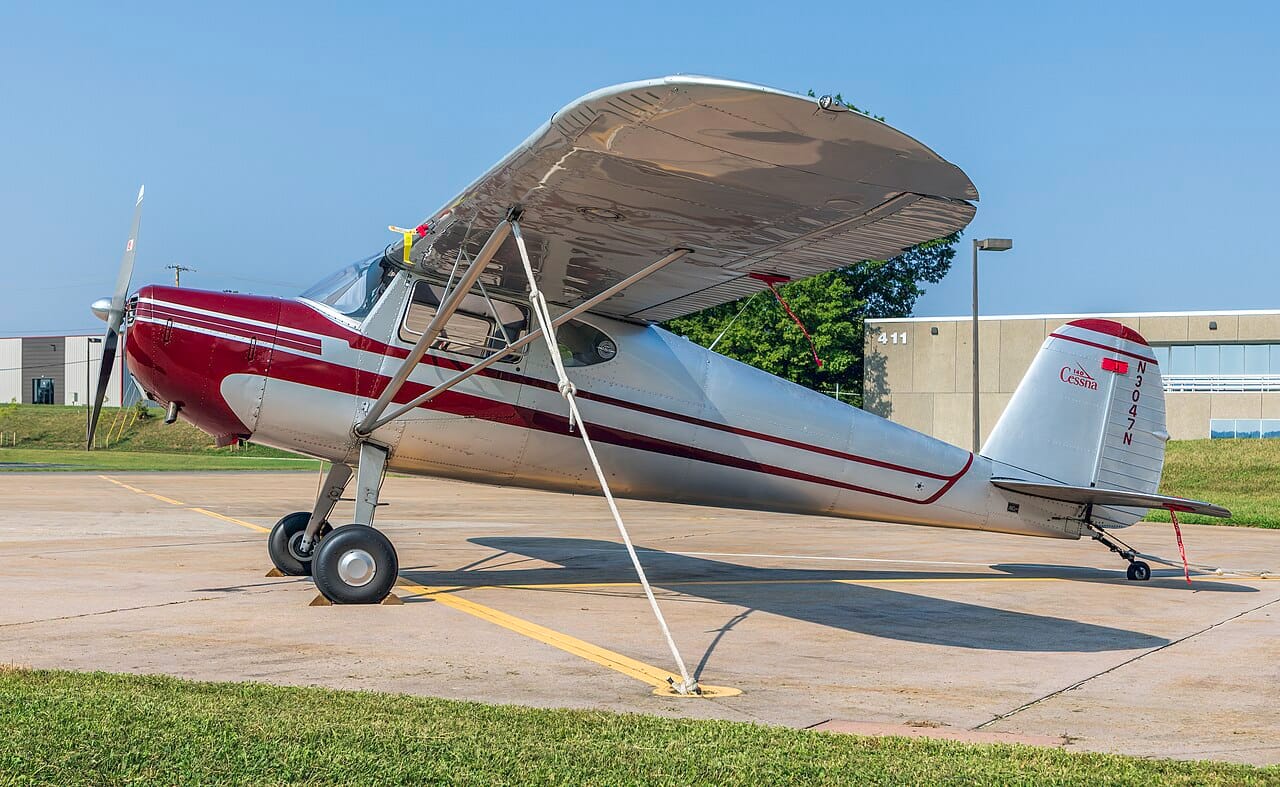
Cessna built 4,905 Model 140s and only 2,171 Model 120s between 1946 and 1949. The cheap, stripped-down version is the rare one today, and that single fact turns a lot of assumptions about Cessna 140 vs Cessna 120 shopping upside down. You are not choosing between a common airplane and a scarce one in the way the sticker price suggests — you are choosing between two trims of the same airframe, one of which simply stopped being built sooner.
The Cessna 120 and 140 share Type Certificate A-768 and much of the same basic airframe. The later 140A is a separate certificated model under Type Certificate 5A2, with an all-metal wing and other design changes. The differences come down to flaps, windows, a battery, and about a hundred pounds of useful load. Those differences matter more than they sound like they should, and they point in opposite directions depending on what you want the airplane to do.
The Short Answer
Buy the Cessna 140 if you want a complete airplane you can fly at night, into a strip with trees on the approach end, and keep at a field where a hand-prop is not socially acceptable — the flaps, the electrical system and the extra rear windows are worth the weight and the money for most owners. Buy the Cessna 120 if you fly day VFR from decent-length runways, you want the lightest, simplest, cheapest-to-own version of this airframe, and you value roughly 100 extra pounds of payload over the convenience items. Either way, the condition of the specific airplane — fabric, corrosion, logs and engine time — will swamp the model difference by a wide margin.
What Actually Separates a 120 From a 140
Cessna launched both models together in 1946. The 140 was the standard airplane and the 120 was the budget line, in the same way a pickup truck comes in a base trim and a deluxe trim off the same assembly line. The parts list tells the whole story.
The 140 came with wing flaps, an electrical system with starter and generator as standard equipment, rear side windows behind the doors, cabin trim, and a more finished interior. The 120 had no flaps, no rear quarter windows, a plain interior, and an electrical system only as an option — plenty of 120s left the factory with no battery and no starter at all.
Then there is the 140A, built from 1949 to 1951, with 525 produced. It added all-metal wings, a single lift strut per side instead of the earlier V-strut arrangement, and a 1,500-pound gross weight. Most were equipped with the 90-hp Continental C-90-12F, although some were built with 85-hp C-85 engines. If your real question is which of these airplanes you will spend the least on over ten years, the 140A deserves a look even though it is the hardest to find.
Good to Know: Over seventy-odd years, a great many 120s have had electrical systems added, and a fair number have had flaps installed from a 140. Likewise, some 140s have been lightened for racing or glider towing. Read the equipment list and the 337s before you decide what you are looking at.
Edge: Cessna 140 — more airplane for not much more money, and the 140A fixes the fabric wing entirely.
What They Cost to Buy and Own
Asking prices for both models move around enough that the only number worth trusting is the one in front of you on a current listing. What is stable is the shape of the market: a 120 generally trades at a discount to an equivalent-condition 140, the 140A usually brings the most of the three, and a metalized-wing airplane with a fresh engine and modern brakes commands far more than a tired original no matter which badge is on the tail.
The recurring costs are where buyers get surprised. Fabric wings are not forever. Think of them like a roof — you do not maintain your way out of a replacement, you budget for one. Depending on the covering system and how the airplane has been stored, a recover comes due somewhere in the fifteen-to-twenty-five-year range, and as of 2025 shops quote wing recovery work on a two-place Cessna in the five figures once stripping, inspection of the internal structure, covering, paint and rigging are counted. A metalizing STC is a one-time alternative that costs real money up front and then stops costing anything.
Engine reserve is the other big line. The Continental C-85, C-90 and O-200 all carry a 1,800-hour recommended TBO from the manufacturer, and as of 2025 a field overhaul on one of these small Continentals runs well into the twenties of thousands of dollars at most shops once accessories, baffles and hoses are included. On an airplane that may be worth less than three overhauls, engine time is not a detail — it is most of the deal.
Why It Matters: A 120 bought cheap with 1,600 hours on a C-85 and fifteen-year-old fabric is more expensive than a 140 bought dear with 300 hours since major and metal wings. The purchase price is the smallest number in the transaction.
Flying411 keeps classic Cessna listings in one place, so you can compare a fabric-wing 140 against a metalized 120 and a 140A side by side instead of hunting them down one at a time.
Edge: Cessna 120 on acquisition cost, draw on cost of ownership — the airframe is identical where it counts.
The Numbers, Side by Side
| Specification | Cessna 120 | Cessna 140 | Cessna 140A |
| Years built | 1946–1949 | 1946–1949 | 1949–1951 |
| Number built | 2,171 | 4,905 | 525 |
| Type certificate | A-768 | A-768 | 5A2 |
| Standard engine | Continental C-85-12F, 85 hp | Continental C-85-12F, 85 hp | Continental C-90-12F, 90 hp on most; some C-85-equipped aircraft |
| Recommended TBO | 1,800 hr | 1,800 hr | 1,800 hr |
| Wing covering | Fabric over metal structure | Fabric over metal structure | All metal, single lift strut |
| Flaps | None | Yes | Yes |
| Electrical system | Optional | Standard | Standard |
| Rear side windows | No | Yes | Yes |
| Gross weight | 1,450 lb | 1,450 lb | 1,500 lb |
| Typical empty weight | ~770–820 lb | ~860–920 lb | ~900–950 lb |
| Fuel capacity | 25 gal (two 12.5-gal wing tanks) | 25 gal (two 12.5-gal wing tanks) | 25 gal standard |
| Typical cruise | ~105 mph (91 kt) | ~105 mph (91 kt) | ~110 mph (95 kt) |
| Rate of climb, sea level | ~640 fpm | ~640 fpm | About 640 fpm, depending on engine and aircraft configuration |
| Service ceiling | ~15,500 ft | ~15,500 ft | ~15,500 ft |
| Seats | 2 | 2 | 2 |
Keep in Mind: Empty weights on seventy-year-old airplanes drift upward with every radio, every paint job and every interior. Weigh the airplane or at least read the most recent weight-and-balance sheet rather than trusting a book figure.
Flying Them: Payload, Flaps and Short Fields
In cruise you will not tell them apart. Both trundle along at about 105 mph on roughly five gallons an hour, which gives you about four hours of endurance and a practical range in the 400-mile neighborhood with reserves. That is a genuinely useful cross-country airplane for two people who pack light, and it costs less per hour in fuel than a lot of cars cost per hour in depreciation.
Payload is where the 120 earns its keep. Take a typical 140 at 900 pounds empty against a 1,450-pound gross: you have 550 pounds to work with, and full fuel eats 150 of it. That leaves roughly 400 pounds for two people and anything they bring. Two 185-pound adults use all of it and then some. A 120 at 800 pounds empty gives you about 500 pounds after full fuel — an extra bag and a lighter conscience. It is not a huge difference in absolute terms, but in a two-seater running near gross on every flight, a hundred pounds is the difference between "we can go" and "we can go if we fuel to the tabs."
The flaps swing it back the other way. The 140's flaps let you come down steeply and touch down slower, which matters on a 1,800-foot grass strip with a treeline. Without them, 120 pilots slip — which works fine and is a skill worth having, but it is less forgiving when you are new to the airplane and the approach is already busy. For getting into tight places, the 140 is the easier tool.
Pro Tip: Fly both before you commit, on the same day if you can. Ten minutes in the pattern with flaps and ten without will tell you more about which airplane suits your home field than any spec sheet.
Handling is identical and pleasant. The gear track is narrow by modern taildragger standards and the airplane will remind you to keep your feet alive after touchdown, but it is a mild-mannered machine compared with the bigger Cessna taildraggers. If your ambitions run toward gravel bars and oversized tires, read our comparison of the Cessna 180 and 185 instead — the 120/140 is a tailwheel airplane for grass strips and pancake breakfasts, not for heavy backcountry work.
Edge: Draw — the 120 carries more, the 140 lands shorter, and they cruise identically.
Maintenance and the Pre-Buy Items That Bite
The maintenance story is almost entirely shared, which is good news: whichever one you buy, the type club support is excellent and the airframe parts situation is better than for most 1940s designs. The International Cessna 120/140 Association is the first phone call to make before you write a deposit check, not after.
Four areas deserve a careful look on any 120, 140 or 140A:
The gear box and lower fuselage structure. The spring-steel gear legs attach to a structure in the belly that takes a beating from decades of three-point arrivals. Cracks and repairs here are common and not always well documented. Get a flashlight and a mirror in there.
Corrosion. These airplanes are all-metal fuselages built before anyone took corrosion proofing seriously. Check the belly, the area under the battery box if the airplane has one, the wing attach fittings, and the tailcone. A sixty-dollar borescope has saved buyers five-figure surprises.
Fabric and lift struts. On a fabric-wing airplane, a current punch test is non-negotiable. Strut-braced Cessna singles have been the subject of FAA airworthiness directive action on lift strut corrosion inspection, so confirm in the logs that the applicable inspections have been done or that sealed struts have been installed.
Engine parts supply. The C-85 is a good engine, but some C-85-specific parts are getting scarce. Many owners have gone to a C-90 or an O-200 under STC for better parts availability and a little more power. An airplane that already has that conversion signed off has solved a problem for you.
Heads Up: An airplane that has been sitting is the single most common trap in this market, because low total time reads like a selling point. It is not. A C-85 that flew 20 hours in the last decade may have rusted cam lobes and seized valve guides no matter what the tach says. Our guide on what to check when an airplane has sat for a year applies directly, and the fundamentals in our piece on maintaining vintage aircraft engines are worth reading before you shop.
Flying411 keeps vintage taildragger listings and the ownership guides that go with them in one place, so you can compare engine times, fabric age and avionics before you book a pre-buy flight.
Edge: Cessna 140A, narrowly — metal wings remove the single largest recurring airframe expense. Between a plain 120 and a plain 140, it is a draw.
Training, Insurance and the Sport Pilot Question
Neither of these is a first-hour airplane unless you are learning tailwheel from day one with an instructor who knows the type. Most insurers want to see tailwheel time before they will write a policy on a new owner — commonly in the range of 10 to 25 hours of tailwheel experience with some of it in make and model, though the exact requirement depends on your total time and the underwriter. Budget for a tailwheel endorsement and a few hours of dual in the airplane you buy, and tell your broker you plan to do it. Insurers reward that.
The bigger development is regulatory. Under the original light sport rules, the 120 and 140 were out of reach for sport pilots because the 1,450-pound gross weight blew past the 1,320-pound limit. The FAA's MOSAIC rule removed the old 1,320-pound sport-pilot aircraft weight limit and replaced it with performance-based criteria. The sport-pilot changes have been effective since October 22, 2025, and the Cessna 120 and 140 fall comfortably below the current 59-knot VS1 stall-speed limit. That means an otherwise qualified sport pilot may operate one, subject to the applicable sport-pilot privileges, endorsements, and medical or driver's-license requirements.
Why It Matters: If MOSAIC eligibility draws a wave of buyers toward simple two-place classics, the 120 and 140 are squarely in the path of it. That is a reason to be thorough on the pre-buy rather than a reason to rush.
There is one more training consideration. The 140 has an electrical system, a flap handle and more systems to manage — which makes it a slightly better platform for building real cross-country experience and for anyone who wants to add a radio stack and fly into towered fields. The 120 without an electrical system is a daylight, non-towered airplane unless you add a handheld and a portable transponder solution, and even then you are working around the gap rather than closing it.
Edge: Cessna 140 — the electrical system is what makes the airplane usable in the modern airspace system.
Which One Should You Buy?
The first-time owner who wants one airplane to do everything a two-seater can do. Buy the 140. The flaps, the lights, the starter and the rear windows are the difference between an airplane you fly on a Tuesday evening and an airplane you fly on Saturday mornings only. If you can find a 140A with metal wings and the 90-horse Continental, pay the premium — you are buying out of a recover bill. Buyers at this stage should also read our roundup of the best first planes to buy and our look at whether a Cessna 150 makes a good first plane, because the nosewheel alternative deserves an honest hearing.
The budget-minded pilot who already flies tailwheel. Buy the 120. You know how to slip, you fly from a non-towered grass field in daylight, and you want the lowest-cost route into Cessna ownership with the most payload. A good 120 with a solid engine and recent fabric is one of the better deals in classic aviation, and the simplicity is a feature — fewer systems, fewer squawks, fewer annual-inspection surprises.
The restorer. Either, but pick on condition and completeness of the logs, not on the model. A fabric-wing airplane with a known history and clean structure is a better project than a metal-wing airplane with missing logbooks and belly corrosion. If a restoration is what you are really after, our list of the best vintage aircraft to restore puts the 120/140 in context against the rest of the field, and the Cessna 195 buyer's guide shows what happens when you go one size up in the same era.
The pilot who needs four seats. Neither. Look at the 170, which is the same family grown up — our Cessna 170 vs 172 comparison covers the trade-offs between tailwheel and tricycle gear in a four-place airframe.
Flying411 keeps Cessna 120, 140 and 170 listings in one place, so you can compare what your money buys across the whole family before you settle on a model.
Buy the Logbooks, Not the Badge
The honest conclusion to the Cessna 140 vs Cessna 120 question is that the airplanes are 90 percent the same and the remaining 10 percent is a question about how you fly. Flaps and a battery for the pilot who wants capability; a lighter, simpler, cheaper airframe for the pilot who wants the purest version of a 1946 Cessna. Both will cruise at 105 mph on five gallons an hour for as long as you keep the fabric tight, the cam dry and the corrosion out of the belly.
What will actually determine whether you enjoy the next ten years is the pre-buy inspection, the engine's recent flight history and the completeness of the paperwork. Spend the money on a mechanic who knows the type, join the type club before you shop, and let the specific airplane — not the model number — make the decision for you.
When you are ready to compare listings, visitFlying411and see what is on the market today.