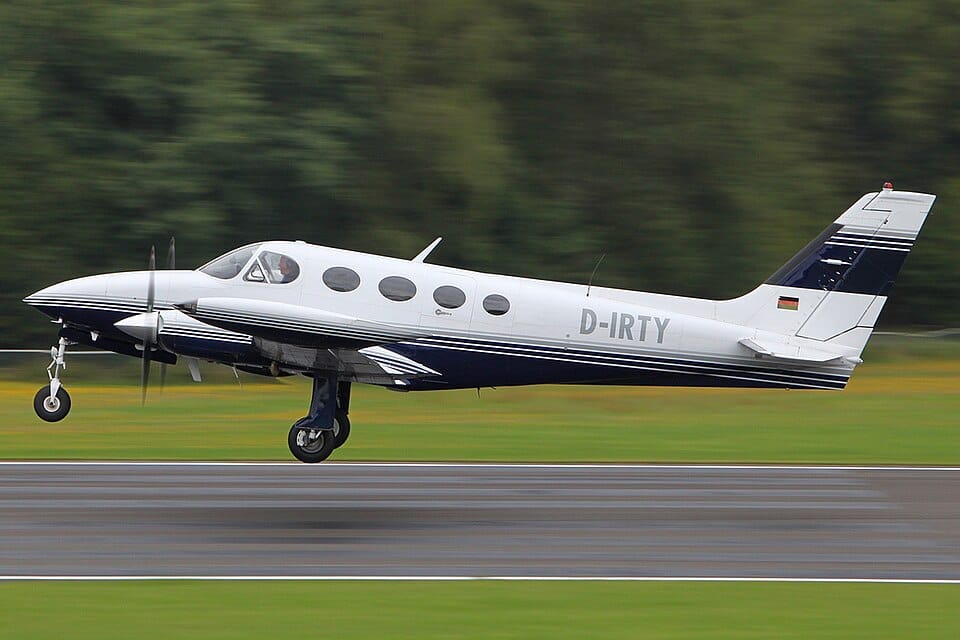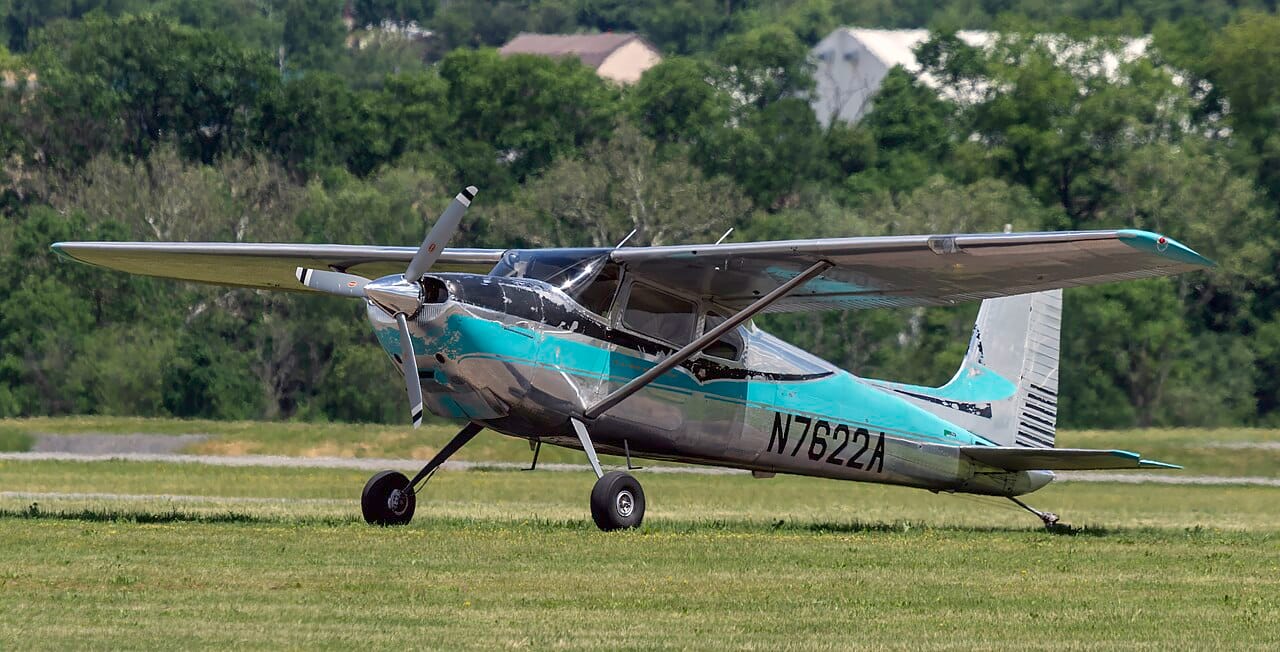
Walk any gravel strip in Alaska, northern Minnesota or the Idaho backcountry and you will eventually find two airplanes parked nose to tail that look almost like twins. Same high wing, same square tail, same spring-steel legs planted in the dirt. One has a slightly smaller tail and a two-blade prop turning in front of a carbureted six. The other sits a little taller, wears a belly pod, and has three blades and a fuel-injected 300-horse engine up front. From fifty feet away, most pilots cannot tell them apart.
They are the Cessna 180 and the Cessna 185 Skywagon, closely related airplanes that share much of the same basic design and mission. The 185 is the 180 with a bigger heart and a heavier frame. But the gap between them in purchase price, fuel burn, overhaul bill and insurance premium is wide enough that choosing wrong costs real money every year you own the airplane.
This guide answers the question a shopper actually types into a search box: in a Cessna 180 vs 185 decision, which one is the better backcountry buy for your mission? The honest answer depends less on which airplane is "better" and more on how much weight you plan to haul and how often you plan to put it on floats.
Key Takeaways
The Cessna 180 and 185 are closely related designs that share much of their basic structure, but they are certificated separately: the 180 under FAA TCDS 5A6 and the 185 under TCDS 3A24, but the 185 carries a heavier gross weight, a larger tail, a reinforced firewall and cabin structure, six seats and a factory belly cargo pod provision. The 180 runs a 230-horsepower Continental O-470 with a 1,500-hour recommended TBO; most 185s run the 300-horsepower fuel-injected IO-520-D at a 1,700-hour TBO, and the bigger engine burns roughly three more gallons an hour. If your loads are two people and camping gear on wheels, the 180 does the same job for meaningfully less money per hour and per year. If you fly four adults, haul freight, or operate on floats, the 185's extra 500-plus pounds of gross weight is not a luxury, it is the whole point. Expect 185s to command a clear price premium in the used market, and expect clean examples of both to sell fast.
| Quick Answer | Cessna 180 (180K) | Cessna 185 (A185F) |
| Engine | Continental O-470-U, 230 hp, carbureted | Continental IO-520-D, 300 hp, fuel injected |
| Recommended TBO | 2,200 hours (O-470-U) | 1,900 hours (IO-520-D) |
| Typical cruise fuel burn | About 12–13 gph | About 15–17 gph |
| Max gross weight (land) | 2,800 lb | 3,350 lb |
| Typical useful load | Roughly 1,050–1,200 lb | Roughly 1,500–1,650 lb |
| Seats | 4 standard (6-place option late models) | 6 |
| Cruise speed | About 140–145 kt | About 145–150 kt |
| Production years | 1953–1981 | 1961–1985 |
| Best for | Two adults, gear, short strips, lower cost | Heavy loads, floats, freight, family of four plus |
Where the Two Airplanes Actually Differ
Think of the 180 as a half-ton pickup and the 185 as the three-quarter-ton version of the same truck. Same cab, same doors, same view over the hood. The heavier truck has stiffer springs, a stouter frame and a bigger engine, and it costs more to feed whether or not there is anything in the bed.
What did Cessna change to build the 185?
The 185 was not a clean-sheet design. Cessna took the 180 airframe and reinforced it: a stronger firewall and forward fuselage to carry the bigger engine and the belly cargo pod loads, heavier landing gear, a taller vertical fin and larger rudder to handle the extra power and the yaw loads that come with floats, and structural provisions for a higher gross weight. Despite their close relationship, the two models are certificated separately: the 180 under FAA TCDS 5A6 and the 185 under TCDS 3A24
The first 185s in 1961 used the 260-horsepower Continental IO-470-F. From the A185E of the mid-1960s onward, Cessna fitted the IO-520-D at 300 horsepower, and that is the engine most buyers encounter today. Gross weight went from 3,200 lb on the early airplanes to 3,350 lb on the A185E and later models.
Good to Know: The "A" in A185F is not a different airplane. It reflects a Cessna designation change, not a major structural revision. An A185F and a 185F of similar year and equipment are close cousins, not different breeds.
How much more can the 185 actually carry?
This is the number that decides most purchases. A late 180K at 2,800 lb gross with a typical empty weight in the 1,650 to 1,750 lb range gives you somewhere around 1,050 to 1,200 pounds of useful load. Fill 65 gallons of usable fuel and you have burned about 390 pounds of that, leaving roughly 700 to 800 pounds for people and gear. That is two adults, full fuel, and a serious pile of camping equipment, or three adults and less fuel.
A 185 at 3,350 lb gross with an empty weight around 1,750 to 1,900 pounds gives you roughly 1,450 to 1,650 pounds of useful load. Same 65 gallons, and you still have well over 1,000 pounds left. That is four adults, bags, a cooler and a tent. It is also the difference between legally hauling a quartered animal out of a strip and leaving half of it behind.
Why It Matters: Backcountry flying punishes optimistic weight and balance math more than any other kind of general aviation. A short strip at 6,000 feet on a warm afternoon does not care what the book says at sea level. Buying the airplane that carries your real load with margin left over is cheaper than buying the light one and then paying for STOL modifications to make up the difference.
Performance Where It Counts
Which one gets off a short strip faster?
Here is the counterintuitive part. At their respective gross weights, the two airplanes post similar book takeoff numbers, because the 185's extra horsepower is offset by its extra weight. Published sea-level figures put the 180K ground roll around 625 feet with about 1,200 feet to clear 50 feet, and the A185F around 770 feet with roughly 1,350 feet over the obstacle. The 185 is the heavier performer on paper.
Load them the same, though, and the story flips completely. Put 700 pounds of people and gear in each airplane and the 185 is operating far below its limits with 300 horsepower pulling, while the 180 is near max gross with 230. At that point the 185 is dramatically the better short-field machine, and that is exactly how many owners use it.
Pro Tip: When you compare short-field numbers between any two airplanes, compare them at the same actual weight and the same density altitude, not at each one's book gross. Manufacturers publish what makes the airplane look good.
Do they cruise differently?
Not much. The 180 trues out around 140 to 145 knots at 75 percent power, and the 185 around 145 to 150 knots. You are paying three to four extra gallons an hour for maybe five knots. Nobody buys a Skywagon for speed; the wing struts and the big tires see to that. You buy it for the ability to land somewhere a Skyhawk should not.
Fuel capacity varies substantially by model year and configuration. A late 180K carries 88 gallons total and 84 usable, while 185-series capacity varies with year and tank installation. Earlier 185s were offered with standard and long-range systems, so range comparisons should always use the specific airplane's POH and installed tanks.
Flying411 keeps Cessna 180 and 185 listings in one place, so you can compare useful load, tank capacity and engine time side by side instead of hunting through five tabs.
The Money: Purchase, Fuel, Overhaul and Insurance
What do they cost to buy?
Both models have appreciated sharply over the last decade, in part because Cessna stopped building them and nothing has fully replaced them. Broadly, clean 180s on wheels tend to trade in the mid-to-high six figures below a comparable 185, with well-equipped 185s, especially those on amphibious floats with fresh engines and modern panels, reaching well into the upper end of the piston single market. Float-equipped and Alaska-based airplanes carry a premium because the demand is there.
Condition drives price far more than model year. A 1957 180 with a corrosion-free airframe, fresh engine, clean logs and no damage history will out-sell a 1978 185 with a mid-time engine, a sketchy repair in the tailcone and gaps in the records. For a framework on how condition and documentation move value, our guide on what a pre-buy inspection should uncover applies almost directly to these airframes.
Which is cheaper to operate per hour?
The 180. It is not close. The carbureted O-470 burns roughly three gallons per hour less in cruise and reaches overhaul less expensively than the IO-520. Recommended TBO varies by engine model and configuration; current Continental guidance lists the late 180K's O-470-U at 2,200 hours and the A185F's IO-520-D at 1,900 hours. The overhaul invoice on a 300-horsepower fuel-injected six is still the bigger one when it lands.
| Cost Factor | Cessna 180 | Cessna 185 |
| Fuel at 100LL, per hour | Lower, roughly 12–13 gph | Higher, roughly 15–17 gph |
| Overhaul reserve per hour | Lower, smaller engine | Higher, IO-520 overhaul costs more |
| Insurance hull value | Lower hull, lower premium | Higher hull, higher premium |
| Annual inspection | Similar, simple airframe | Similar, slightly more systems |
| Resale demand | Strong | Very strong, especially on floats |
Heads Up: The IO-520-D has a long service history of crankcase cracking on older case designs, and it rewards careful cylinder cooling and disciplined power management. Ask specifically what case is installed, when it was last overhauled, and by whom. A cheap field overhaul on a 300-horse Continental is not a bargain.
Is insurance different between them?
Yes, in two ways. The hull value is higher on most 185s, which raises the premium directly. And underwriters look hard at tailwheel time on both airplanes. If you are stepping up from a nosewheel trainer, expect a dual requirement measured in real hours, often ten to twenty-five in type, plus a tailwheel endorsement under 14 CFR 61.31(i) before you fly solo. Low-time pilots frequently find the 180 easier to insure simply because it is a smaller risk in dollar terms. Our overview of what drives aircraft insurance costs covers how underwriters build those quotes.
Floats, Skis and the Alaska Question
Can a 180 go on floats?
It can, and thousands have, usually on straight floats in the Edo 2870 class. But the 180 on floats is a two-people-and-light-gear airplane. The float installation eats a large chunk of useful load before you put a single duffel aboard, and you are asking 230 horsepower to break water on a hot, calm day at a high-elevation lake.
The 185 is the airplane that made floatplane work practical for a generation of operators. With 300 horsepower and a gross weight of 3,350 pounds, it gets on the step and off the water with load aboard, and the larger tail gives the directional authority floats demand. If floats are anywhere in your five-year plan, buy the 185. Converting a 180 later is the expensive way to arrive at the same place.
Keep in Mind: Amphibious floats cost more than straight floats to buy and maintain, add more weight, and bring retractable gear into an airplane that did not have it. They also let you go home to a paved runway. Decide which problem you are solving before you shop.
If you are still mapping the wider field of backcountry airplanes before narrowing to these two, our roundup of the best bush planes for remote flying puts the Skywagons in context against the Super Cub, Maule and Husky crowd.
Inspection Priorities Specific to These Airframes
What should a pre-buy focus on?
These are old airplanes that have spent their lives doing hard work off unimproved surfaces. That shapes the inspection list.
Start with the firewall and forward fuselage. Repeated hard landings and gravel operations show up as wrinkles, cracked firewall stiffeners, and elongated engine mount holes. Then the landing gear box and gear-leg attach structure, where the spring steel legs transmit every arrival into the fuselage. Look for cracks, prior repairs and bushing wear.
Check the tailcone and rear bulkhead for damage from tail strikes and from ground loops. Ground loops are the taildragger's signature accident, and the repair history often hides in a logbook entry two lines long. Pull the seats and inspect the seat rails and locking pins; the FAA has addressed seat track wear on Cessna singles through airworthiness directive action for decades, including AD 87-20-03 and its successors, and worn rails remain a real finding.
Look closely at the wing lift struts and their attach fittings for corrosion, cracks, dents and evidence of previous repairs, and verify that all model- and serial-number-specific AD requirements are current in the logbooks.
Quick Tip: Bring a borescope and a flashlight to the float fittings and the belly if the airplane has ever operated on water or near salt. Corrosion in a Skywagon belly is the single most expensive surprise in this market.
Flying411 keeps maintenance-history questions and listing data together, so you can shortlist airframes with documented logs before you spend money on a trip to see one.
Which modifications add real value?
Both models have deep aftermarket support. Vortex generator kits improve slow-speed handling and, on some installations, support gross weight increases. STOL leading-edge cuffs, extended baggage kits, heavy-duty gear legs, larger tires and 180-degree flap-and-aileron packages are all common. Engine upgrade STCs exist that take a 180 to 300 horsepower or a 185 to an IO-550, which closes the performance gap between them at the cost of higher fuel burn and a new overhaul reserve.
Fun Fact: Cessna built roughly 6,200 model 180s between 1953 and 1981 and about 4,400 Skywagon 185s between 1961 and 1985. Nearly seventy years after the first 180 rolled out, a large share of both fleets is still flying, which says more about the design than any brochure ever could.
So Which One Should You Buy?
Buy the 180 if...
Your usual load is one or two people plus gear. You fly off wheels and expect to keep it that way. You are cost-sensitive on fuel and overhaul reserve, or you are a lower-time tailwheel pilot who wants an easier insurance conversation. You want the lightest airplane that will still haul a moose camp's worth of equipment in two trips instead of one.
Buy the 185 if...
You need to move four adults and their bags, or freight, or you plan to operate on floats or skis with load aboard. You fly from high-elevation strips in summer heat where horsepower is not optional. You want a belly pod. You want the machine that has the widest margin when the strip is short, the air is thin and the airplane is full.
What about buying the cheaper airplane and upgrading later?
It rarely pencils out. A 300-horsepower conversion on a 180 gets you 185 power, but not 185 gross weight or 185 structure, and the money spent seldom returns fully at resale. If the mission needs a 185, the cleanest path is to buy a 185, even if it means waiting a season for the right one or adjusting how you finance it. Our comparison of leasing versus buying an aircraft walks through how ownership structure changes what you can afford up front.
Good to Know: If you are coming from a Skyhawk and want to understand how much airplane a Skywagon really is, our Cessna 185 vs 172 comparison lays out the step up in weight, power and pilot workload.
Flying411 keeps Skywagon listings, float-equipped airframes and wheel-gear examples in one place, so you can compare what the market is actually asking before you commit to a model.
Conclusion
The Cessna 180 vs 185 question comes down to one honest number: what do you need to lift, and how often? The 180 is the lighter, thriftier, slightly simpler airplane that does ninety percent of backcountry flying beautifully and costs less every hour it runs. The 185 is the one you buy when that last ten percent, the heavy load, the float operation, the high strip on a hot day, is the whole reason you are buying an airplane at all.
Whichever you choose, condition beats model. A well-documented, corrosion-free airframe with a known engine and honest logs is worth more than a nominally better model with a thin history. Get a type-experienced inspector, get the seat rails and lift strut AD compliance confirmed, and budget for the overhaul reserve from day one. Then go find a gravel bar.
When you are ready to compare listings, visitFlying411and see what is on the market today.
Frequently Asked Questions
Is the Cessna 185 just a Cessna 180 with a bigger engine?
No. The 185 has a reinforced firewall and forward fuselage, heavier landing gear, a larger vertical fin and rudder, provisions for a belly cargo pod, six seats and a higher certificated gross weight. The engine is the most visible change, but the structure underneath it changed too. They are certificated separately, with the Cessna 180 under FAA TCDS 5A6 and the Cessna 185 under TCDS 3A24.
Which is easier to land for a new tailwheel pilot?
Most pilots find the 180 slightly more forgiving simply because it is lighter and has less power and torque to manage on takeoff. Both airplanes demand active feet and both will ground loop if you stop flying them after touchdown. Plan on meaningful dual instruction in type regardless of which one you buy.
What is the TBO on the engines?
Continental publishes a recommended time between overhaul of 1,500 hours for the O-470 series used in the 180 and 1,700 hours for the IO-520 series used in most 185s. TBO is a manufacturer recommendation, not a legal limit for Part 91 operators, but it is what insurers, buyers and lenders anchor to.
Can either airplane carry six people?
The 185 is certificated for six. The 180 is a four-place airplane, though late models offered a six-place seating option. In practice, filling six seats in either one with full fuel is not realistic; weight and balance, not seat count, is the limit.
Do these airplanes still hold their value?
Yes. Both have appreciated significantly because production ended decades ago and demand from backcountry and floatplane operators has not. Clean, damage-free, well-documented examples sell quickly, and the 185 generally commands the higher price, especially with floats and a fresh engine.
Should I get a pre-buy inspection even on a well-known airplane?
Always, and from a shop that knows Skywagons specifically rather than the seller's usual mechanic. Look hard at the firewall, gear box, tailcone, seat rails, lift struts and belly corrosion. On a working backcountry airplane, the inspection fee is small next to what it can find.