Buying your first airplane is one of the biggest decisions a pilot will ever make. It sits right up there with choosing a flight school or picking your first cross-country route. The stakes feel high, the options feel overwhelming, and the price tags can make your coffee go cold real fast.
Here is the truth: there is no single perfect first plane for everyone. The best first plane to buy for you depends on your budget, your flying goals, and how many seats you actually need. But there are a handful of aircraft that have earned a strong reputation as beginner-friendly, budget-smart, and joy-to-fly machines.
The nine planes in this list cover a wide range, from vintage classics to modern composite designs, and from bare-bones budgets to mid-range investments. By the end, you will know exactly what to look for and which aircraft might be the right fit for your hangar.
Key Takeaways
The best first planes to buy are the ones that balance affordability, ease of handling, and low operating costs. For most new pilot-owners in the US, aircraft like the Cessna 172 Skyhawk, Piper Cherokee, and Cessna 150/152 top the list due to their forgiving flight characteristics, widely available parts, and strong resale value.
| Aircraft | Approx. Price Range | Best For |
| Cessna 172 Skyhawk | $25,000 – $100,000+ | All-around first ownership |
| Cessna 150/152 | $15,000 – $35,000 | Budget-conscious solo flyers |
| Piper Cherokee | $20,000 – $60,000 | Stable, family-friendly flying |
| Piper Warrior (PA-28-161) | $30,000 – $75,000 | Versatile four-seater |
| Diamond DA40 | $100,000 – $200,000+ | Modern, fuel-efficient design |
| Cirrus SR20 | $95,000 – $250,000+ | Safety-first tech-forward flyers |
| Beechcraft Bonanza (older) | $60,000 – $150,000 | Step-up performance |
| Ercoupe | $15,000 – $30,000 | Easiest-to-fly vintage option |
| Aeronca Champ | $15,000 – $40,000 | Classic stick-and-rudder fun |
Fun Fact: The Cessna 172 holds a world endurance record of 64 days aloft, set near Las Vegas in 1958. A truck drove beneath the plane to refuel it mid-flight.
Flying411 is a trusted resource for pilots navigating aircraft ownership, from first-time buyers to seasoned aviators. Whether you are comparing models or sorting out financing, Flying411 has the information you need in one place.
What to Think About Before Buying Your First Plane
Before jumping straight into aircraft models, it helps to ask yourself a few honest questions.
How many hours do you have? Most aviation insurance companies require a minimum number of logged hours before they will cover a new owner-pilot. Fewer hours usually means higher premiums and more restrictions on the aircraft you can insure.
What will you actually use it for? A plane you plan to use for $100 hamburger runs on weekends looks very different from one you plan to use for cross-country business trips with two passengers.
Here are the main factors to weigh:
- Budget. This includes the purchase price plus fuel, insurance, annual inspections, hangar or tie-down fees, and maintenance reserves.
- Seats needed. Flying solo? A two-seater works great. Flying with a family? A four-seater is likely the minimum.
- Range and speed. Are you staying within 100 miles of home, or do you want to cover larger distances comfortably?
- Pilot certificate type. A Private Pilot License (PPL) opens the door to most light general aviation aircraft.
- Maintenance access. Some planes have more mechanics familiar with them, more parts available, and larger owner communities. That matters a lot when something breaks.
Taking the time to answer these honestly will narrow your list fast.
Why Used Aircraft Make Sense for First-Time Buyers
The used aircraft market offers real value for first-time buyers. New production general aviation aircraft can cost several hundred thousand dollars. A well-maintained used airplane can cost a fraction of that while still being safe, fun, and capable.
Buying used also means you avoid the steep depreciation hit that new aircraft owners take in the first few years. A well-kept 1975 Cessna 172, for example, is still flying strong decades later. It has a proven track record, a massive parts supply, and an enormous owner community.
That said, used does not mean skip the inspection. Always budget for a pre-purchase inspection performed by an independent mechanic before handing over money. This one step can save you thousands in surprise repairs.
The 9 Best First Planes to Buy for New Pilot-Owners
Now that you know what to look for, here are nine aircraft that consistently rise to the top when new pilots start shopping. Each one brings something different to the table, so read through them all before making up your mind.
1. Cessna 172 Skyhawk
The Cessna 172 Skyhawk is the most produced general aviation aircraft in history, and for good reason. It has been a staple of flight training since 1956 and remains the gold standard for first-time buyers.
Its high-wing design gives pilots excellent ground visibility during takeoff and landing. The controls are predictable, the stall behavior is forgiving, and the four-seat cabin gives you room to bring passengers along.
Key highlights:
- Approx. price: $25,000 to $100,000+ depending on year and avionics
- Burns around 8–9 gallons per hour
- Cruise speed of roughly 120 knots
- Massive parts and mechanic availability
- Strong resale value
If you want one plane that does everything well for a first owner, the 172 is hard to beat. It is the closest thing aviation has to a Swiss Army knife.
The Cessna 172 is also one of the most commonly used aircraft at flight schools, which makes transitioning from training to ownership nearly seamless.
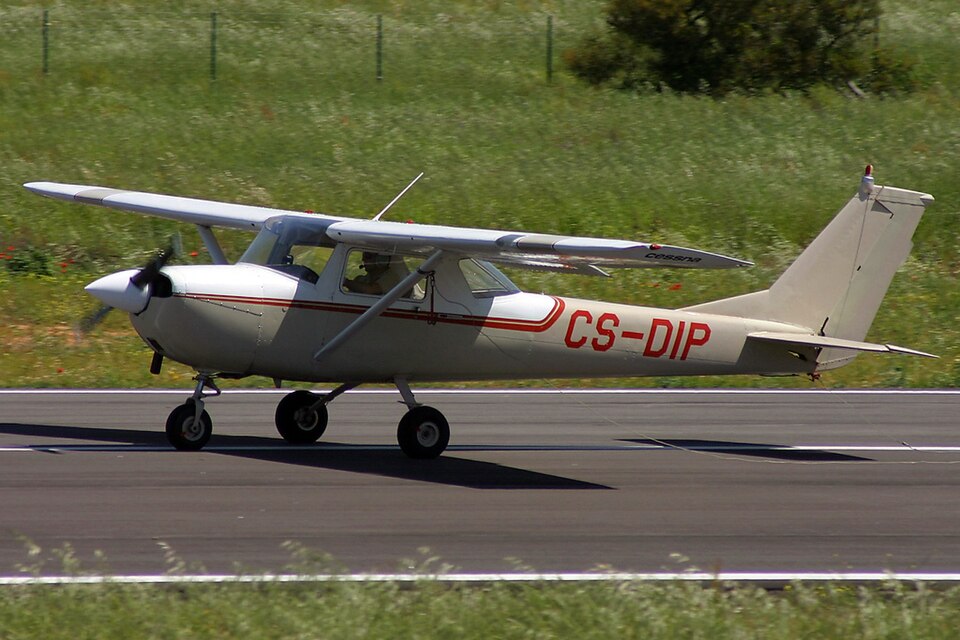
2. Cessna 150 / Cessna 152
The Cessna 150 and 152 are the two-seat siblings of the 172. They cost less to buy, less to operate, and less to insure. For pilots who mostly fly solo or with one passenger, these aircraft make a compelling case.
The 150 was produced from 1958 to 1977, while the 152 ran from 1977 to 1985. Both share the same reliable, easy-to-fly DNA. These planes are commonly recommended for pilots who are still building hours and want to keep costs manageable.
Key highlights:
- Approx. price: $15,000 to $35,000
- Burns only 5–6 gallons per hour (very economical)
- Easy to fly with excellent stall warning
- Widely available and well understood by most mechanics
- Cabin is small, but fine for one or two people
If your priority is keeping operating costs low while you build experience, the Cessna 150 or 152 is one of the smartest choices on this list.
3. Piper Cherokee (PA-28)
The Piper Cherokee is the Cessna 172's main rival, and the debate between Cherokee fans and Cessna fans has been going on for decades. Both are excellent. The Cherokee's low-wing design feels different from the high-wing Cessna, offering a sportier look and slightly different handling characteristics.
The Cherokee series includes several variants, all sharing a similar airframe. The PA-28-140, 160, and 180 are all popular used-plane picks. For those looking at single-engine planes ideal for family travel, the Cherokee is a frequent recommendation.
Key highlights:
- Approx. price: $20,000 to $60,000
- Stable, forgiving low-wing handling
- Four seats with decent useful load
- Good parts availability through a large owner community
- Straightforward systems make it easy to maintain
The Cherokee is a great pick if you want a reliable four-seater with a community of owners who love to share advice and resources.
4. Piper Warrior (PA-28-161)
The Piper Warrior is essentially a longer-wing version of the Cherokee, and that extra wingspan pays off in improved climb performance and lower stall speed. It is one of the most widely used training aircraft in the US, which means parts are easy to find and instructors know it well.
The Warrior sits in a sweet spot: it is docile enough for new pilots but capable enough for real cross-country flying. It also has a good useful load and comfortable four-seat cabin.
Key highlights:
- Approx. price: $30,000 to $75,000
- Cruise speed around 110 knots
- Excellent stability for instrument training later on
- Comfortable cabin with good headroom
- Widely used in flight schools nationwide
If you trained in a Warrior and want to buy what you already know, this is an obvious and sensible choice.
5. Diamond DA40
The Diamond DA40 represents a step into the modern era of general aviation. Built from composite materials, it is lightweight, aerodynamically efficient, and equipped with a modern glass cockpit in most configurations. It looks sharp, and it flies even better than it looks.
The DA40 burns less fuel than many comparable aircraft and offers a visibility-forward canopy design that pilots love. It is more expensive than a used Cessna or Piper, but it comes with the feel of a modern aircraft and strong safety credentials.
Key highlights:
- Approx. price: $100,000 to $200,000+ for used models
- Burns roughly 8–9 gallons per hour despite its performance
- Modern avionics standard on most models
- Composite construction is durable and corrosion-resistant
- Excellent visibility through the large canopy
For pilots who want a modern, efficient four-seater and are willing to spend more upfront, the DA40 delivers real value.
6. Cirrus SR20
The Cirrus SR20 is famous for one thing above almost everything else: the Cirrus Airframe Parachute System (CAPS). This whole-aircraft parachute gives the SR20 a safety advantage that no other plane on this list can match. In an emergency, the pilot pulls a handle and a parachute deploys to lower the entire aircraft to the ground.
For first-time owners who prioritize safety, this feature alone makes the SR20 worth serious consideration. Add in modern avionics, a comfortable four-seat cabin, and solid cruise performance, and you have a very capable first aircraft.
Key highlights:
- Approx. price: $95,000 to $250,000+ depending on year
- Cruise speed around 155 knots
- CAPS parachute system adds an unmatched safety layer
- Glass cockpit avionics standard on most models
- Active owner community and good resale value
The SR20 costs more than most options on this list, but its safety record and modern features justify the investment for many buyers.
7. Beechcraft Bonanza (Older Models)
The Beechcraft Bonanza is one of aviation's legends. The V-tail design of earlier models is instantly recognizable, and even the later straight-tail models carry a reputation for quality and performance. The Bonanza has been in continuous production since 1947, making it one of the longest-produced aircraft in history.
Older Bonanzas, particularly the A36 or V35 models from the 1970s and early 1980s, can be found at prices that put them within reach for buyers with a moderate budget. They fly faster than most trainers, carry more useful load, and feel genuinely comfortable on longer trips.
Among the many private planes worth owning, the Bonanza consistently appears near the top of experienced buyers' wish lists.
Key highlights:
- Approx. price: $60,000 to $150,000 for older models
- Cruise speed of 150–165 knots
- Six seats on some models
- Higher operating costs than smaller singles
- Best suited for pilots ready to handle a step-up aircraft
The Bonanza is more airplane than a true beginner needs, but for a pilot with 200+ hours looking to step up, it is worth every penny.
8. Ercoupe
The Ercoupe is one of the most unique and beginner-friendly aircraft ever built. It was the first general aviation plane certified as non-stallable and non-spinnable, and it features a linked aileron-rudder system that removes the need for separate rudder pedals on many models.
If that sounds unusual, it is, but in a good way. The Ercoupe is genuinely one of the easiest aircraft to fly, which is why it has attracted generations of new pilots and weekend flyers. Its operating costs are low, with a fuel burn of around 6 gallons per hour.
Key highlights:
- Approx. price: $15,000 to $30,000
- Spin-resistant design adds a real safety margin for new pilots
- Simple systems make it easy to maintain
- Two-seat tandem cockpit
- Limited range and speed compared to newer designs
For pilots on a tight budget who want an approachable, quirky, and genuinely fun aircraft, the Ercoupe earns a spot on this list.
Flying411 can help you compare aircraft across categories, understand ownership costs, and find listings that match your budget and flying goals. Visit Flying411 to start your search today.
9. Aeronca Champ (7AC)
The Aeronca Champ is a classic taildragger from the 1940s that still has a devoted following. Taildraggers require more skill to taxi and land than tricycle-gear aircraft, but many pilots swear that learning to fly a taildragger makes you a more precise and aware aviator overall.
The Champ's fuel burn of just 4–5 gallons per hour is hard to beat. It is slow, simple, and pure. Flying a Champ feels like stepping back to aviation's golden age, and the low operating costs make it one of the most affordable aircraft to own over time.
Key highlights:
- Approx. price: $15,000 to $40,000
- Burns only 4–5 gallons per hour
- Taildragger design builds fundamental stick-and-rudder skills
- Simple systems with low maintenance costs
- Open-air flying feel with side-by-side seating on some variants
If you want character, simplicity, and low costs, the Aeronca Champ delivers all three. Just plan to put some extra hours into your tailwheel endorsement first.
How First-Time Buyers Should Think About Aircraft Costs
The purchase price is just the beginning. New aircraft owners are sometimes surprised by the ongoing costs that come with ownership. Here is a realistic breakdown of what to budget for:
| Cost Category | Typical Annual Range |
| Hangar or tie-down | $1,200 – $6,000+ |
| Annual inspection | $800 – $2,500+ |
| Insurance | $1,000 – $4,000+ |
| Fuel | Varies by hours flown |
| Maintenance reserve | $1,000 – $3,000+ |
| Engine reserve (overhaul) | $50 – $150 per hour flown |
The rule of thumb many veteran owners use: budget roughly as much per year in operating costs as you paid for the airplane.
Understanding this upfront helps you pick a plane that fits your life rather than one that stretches your finances thin every month.
Should You Buy New or Used?
For most first-time buyers, used is the smarter financial move. New general aviation aircraft from manufacturers like Cessna or Piper can cost well above $300,000 for a basic model. A used Cessna 172 from the 1970s or 1980s can be found for a fraction of that price and, with proper maintenance, will fly just as reliably.
The used market also offers more variety. You can find aircraft with upgraded avionics, freshly overhauled engines, or recent interior refurbishment, often at prices that still make financial sense.
That said, some pilots prefer newer used aircraft for the peace of mind that comes with fewer unknowns. A used Cirrus SR20 from 2010, for example, gives you modern safety features at a significantly lower price than a brand-new model.
Fun Fact: The Piper Cherokee has been used to train more private pilots in the United States than almost any other aircraft design, second only to Cessna's training fleet.
When you are ready to take that step from renter to owner, you will also want to read up on the range of aircraft types suited for private ownership to see how different configurations compare side by side.
What Makes a Plane "Beginner-Friendly"
Not every aircraft is equally forgiving of the mistakes that new pilots naturally make. Here are the traits that define a truly beginner-friendly airplane:
- Stable flight characteristics. The plane should resist unusual attitudes and return to level flight without excessive pilot input.
- Forgiving stall behavior. Good stall warning and a gentle, predictable break make stall recovery easier to learn and practice.
- Excellent visibility. High-wing aircraft like the Cessna 172 offer great ground visibility during landing approaches.
- Simple systems. Fewer complex systems means fewer things to manage and fewer things to go wrong.
- Widely available support. A large mechanic network and parts supply makes maintenance easier and less expensive.
- Docile handling at low speeds. Slower approach and stall speeds give new pilots more time to react during the most demanding phases of flight.
- Strong safety record. A history of safe operation in the hands of student pilots is meaningful data.
Every aircraft on this list scores well in most of these categories, which is why they appear here.
Tips for Finding the Right First Airplane
Finding the plane is the fun part. Buying it wisely is the important part.
- Get your license first. Owning an airplane before you can legally fly it solo creates more stress than joy.
- Rent before you buy. If a flight school or club has the model you are considering, rent it for a few hours before committing.
- Join an owner community. Type clubs for Cessnas, Pipers, and Cirruses are full of knowledge you cannot find anywhere else.
- Hire an independent mechanic for a pre-buy inspection. Never skip this step. Never.
- Talk to your insurance broker early. Insurance costs vary significantly based on your hours, the aircraft type, and your certificate level.
- Consider a partnership. Flying with a co-owner cuts costs dramatically and works well when both owners have compatible flying schedules.
Aviation has a community culture unlike almost any other hobby. Take advantage of it. Other pilots who have been through this process are usually happy to share what they learned.
For pilots also curious about the bigger picture of what is flying in the skies today, it is worth browsing overviews of popular commercial aircraft designs to see how the general aviation world compares to the larger aviation ecosystem.
If you are ready to take the next step toward aircraft ownership, Flying411 is a great place to start comparing options, reading owner reviews, and connecting with the information you need to buy with confidence.
General Aviation Is Growing
The general aviation community in the United States is seeing renewed interest from a new generation of pilots. Single-engine aircraft sales remain strong, and manufacturers are investing in new safety technology, improved avionics, and more fuel-efficient designs.
For anyone who has dreamed of owning a plane, the timing has never been better in terms of available resources, owner communities, and the range of aircraft options at every price point.
Some pilots also get into aviation because they fall in love with the design side. There is a reason people gravitate toward aircraft with iconic looks when browsing the market. Aesthetics matter, even if performance and cost should always come first.
The key is doing the homework, building the right experience base, and buying something that matches your realistic mission rather than your wildest dream.
Conclusion
Choosing the best first plane to buy is part research, part gut check, and part honest conversation with yourself about what you actually need versus what you think you want. The nine aircraft on this list represent some of the best options available across a wide range of budgets and use cases, from the affordable and forgiving Cessna 150 to the safety-tech-forward Cirrus SR20.
Start with your budget, think about your flying mission, and take your time. The right airplane is out there waiting for you.
Ready to find it? Flying411 is where smart pilots go to get the information that actually helps them buy right the first time.
Frequently Asked Questions
How much does it cost to own a small plane for the first time?
Total first-year costs for a small single-engine aircraft typically run between $10,000 and $20,000 on top of the purchase price, including insurance, annual inspection, hangar fees, and fuel. Costs vary widely based on the aircraft type and how often you fly.
Do I need a pilot's license before buying an airplane?
You do not legally need a license to purchase an aircraft, but you must hold at least a student pilot certificate to fly solo, and you will need to be fully licensed to carry passengers. Most buyers complete their training before purchasing.
What is the cheapest single-engine plane a first-timer can buy?
The Ercoupe and Cessna 150 are among the most affordable certified single-engine options, with flyable examples sometimes found under $20,000. The Aeronca Champ is similarly priced in the used market.
How many hours should I have before buying my first plane?
Most aviation insurance underwriters prefer new owner-pilots to have between 100 and 300 hours of total flight time before insuring them in their own aircraft. More hours typically mean lower premiums and fewer restrictions.
Is it better to buy a plane alone or in a partnership?
A partnership can cut ownership costs by 50% or more if you find a compatible co-owner. It works best when both pilots have different scheduling patterns so the plane stays active without conflicts over access.