Flying with your family is one of the most rewarding things a pilot can do. Skipping the long security lines, choosing your own schedule, and landing closer to your destination — it is hard to beat that kind of freedom. But finding the right airplane for the job takes some thought.
The best single engine planes for family travel need to do a lot of things well at the same time. They need enough seats for everyone, good luggage capacity, smooth handling, modern safety features, and ideally, reasonable operating costs. That is a tall order for any single aircraft to fill.
The good news is that several planes on the market today hit almost every mark on that list. Whether you are shopping new or used, looking for a budget-friendly workhorse or a premium family hauler, there is something on this list for you. Let’s find out what makes a plane a great family flyer, then break down the top seven picks worth your serious attention.
Key Takeaways
The best single engine planes for family flying combine roomy cabins, strong useful loads, modern avionics, and proven safety records. Models like the Cessna 182 Skylane, Cirrus SR22, Piper Cherokee Six, Beechcraft Bonanza A36, Piper Saratoga, Cessna 206 Stationair, and Piper M350 consistently top the list for family missions. The right choice depends on your family size, typical trip length, home airport runway length, and total budget for purchase and ongoing ownership.
| Aircraft | Seats | Cruise Speed | Best For |
| Cessna 182 Skylane | 4 | ~140 knots | Smaller families, versatility |
| Cirrus SR22 | 4-5 | ~180 knots | Speed, safety tech, modern avionics |
| Piper Cherokee Six | 6 | ~130 knots | Large families, maximum cabin space |
| Beechcraft Bonanza A36 | 6 | ~165 knots | Speed plus six seats |
| Piper Saratoga | 6 | ~145 knots | Practical six-seat cruiser |
| Cessna 206 Stationair | 6 | ~140 knots | Utility, rugged use, cargo |
| Piper M350 | 6 | ~213 knots | Premium performance, pressurized cabin |
Pro Tip: Always factor in useful load, not just seat count. A six-seat plane loaded with passengers and bags can quickly exceed its weight limit — so always run the numbers before you book the trip.
Flying411 is a trusted resource for pilots and aircraft buyers across the United States. Whether you are browsing your first family plane or upgrading to something bigger, Flying411 has the listings and expert guidance to help you find the right fit.
What Makes a Plane a Good Family Aircraft
Not every single engine plane is cut out for family duty. A two-seat trainer might be fun for solo flying, but it will not get the whole crew to the lake house for the weekend. Here are the key things to look for when shopping with your family in mind.
Cabin Space and Seating
The most obvious factor is how many people the plane can actually carry comfortably. Many four-seat aircraft can technically hold four adults, but legroom and headroom in the back can be tight. If you have teenagers, tall family members, or a mix of kids and adults, look for planes with genuine rear-cabin space.
Six-seat singles are the gold standard for family flying. They give you room for the whole crew plus luggage without feeling cramped. Even if you do not always fill every seat, the extra space makes longer flights far more enjoyable.
Useful Load
This is where many buyers get surprised. Useful load is the total weight a plane can carry in fuel, passengers, and baggage combined. A plane that seats six may only have a useful load that realistically allows four adults and light bags once fuel is topped off.
Always calculate your real-world payload. Add up your typical passenger weights, luggage, and the fuel you need for the trip. Then compare that number to the aircraft's published useful load.
Good to Know: Many popular six-seat singles have useful loads ranging from roughly 1,200 to 1,600 pounds depending on the specific model and equipment installed. Running your weight and balance before every flight is not optional — it is the law and, more importantly, it is essential for safety.
Range and Speed
A family plane needs to cover real distance without constant fuel stops. Fuel stops add time, cost, and wear on young passengers' patience. Look for planes with a practical range of at least 600 to 800 nautical miles with reserves. That covers a solid cross-country trip without rushing.
Speed matters too. The faster the plane, the sooner you arrive. Even a 20-knot difference in cruise speed adds up to significant time savings on a 600-mile trip.
Safety Features
Modern safety technology has come a long way in general aviation. Autopilot systems, traffic awareness displays, terrain alerts, and emergency parachute systems are all features that raise the safety ceiling for family flying.
For used aircraft, look for planes with updated avionics and a strong maintenance history. A well-maintained 20-year-old plane with modern glass panel avionics can be just as capable as a newer aircraft in many situations.
Operating Costs
Owning a family plane involves more than the purchase price. Budget for:
- Fuel (typically 10 to 18 gallons per hour depending on the aircraft)
- Annual inspections
- Hangar or tie-down fees
- Insurance
- Engine reserve (saving toward the eventual overhaul)
- Unexpected maintenance
The total cost of ownership varies widely by aircraft type. Simpler planes with fixed landing gear and non-turbocharged engines tend to cost less to maintain than complex, high-performance aircraft.
How Single Engine Planes Compare to Twins for Family Flying
Many pilots wonder whether a single engine or twin engine plane is the better choice for family travel. There are real tradeoffs on both sides.
Single engine planes are generally less expensive to buy, cheaper to insure, and simpler to maintain. For most family missions, a reliable single engine aircraft with a strong safety record is more than adequate. Fuel burn is lower, and operating costs stay more manageable.
Twin engine aircraft offer redundancy if one engine fails, which is a legitimate safety argument — though managing an engine failure in a twin requires solid pilot proficiency. If you are curious about how twins stack up, the performance and passenger capacity differences between single and twin engine aircraft are worth exploring before you make a final decision.
For most families flying typical general aviation missions, a well-chosen single engine plane delivers excellent safety, comfort, and value.
Why It Matters: General aviation safety has improved considerably over the past few decades, with modern avionics, better weather tools, and improved pilot training all contributing to a safer flying environment for families.
7 Best Single Engine Planes for Family Flying
Here is a closer look at seven aircraft that consistently earn top marks for family missions. Each one has real strengths, and each involves some tradeoff — because in aviation, there is no such thing as the perfect plane for everyone.
1. Cessna 182 Skylane
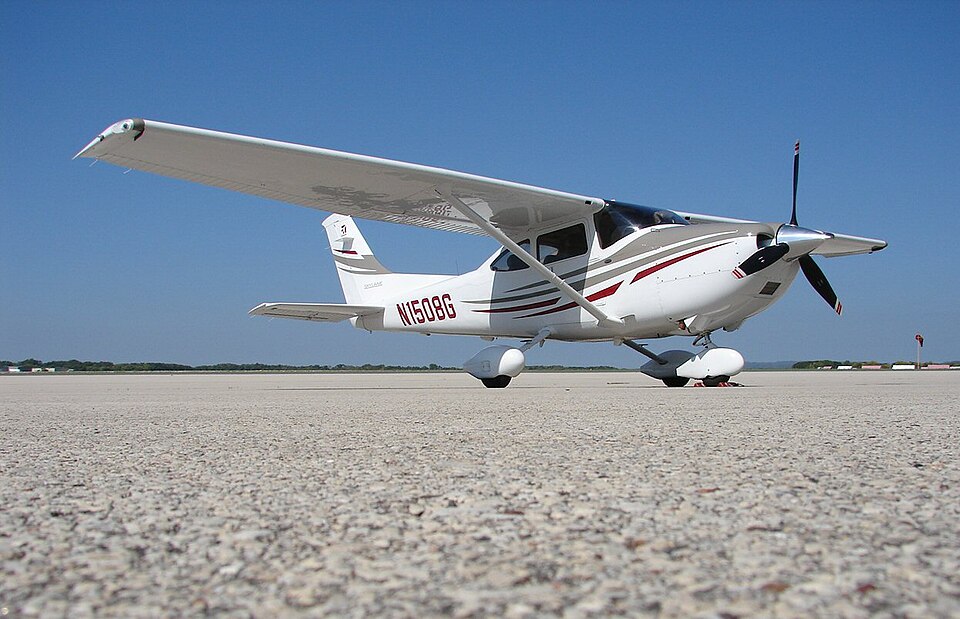
The Cessna 182 Skylane is one of the most trusted and popular family aircraft in general aviation history. It has been in production for decades, with a pause and a very successful return to manufacturing in the late 1990s. Its long track record means there is a huge fleet of used aircraft available at a wide range of prices.
The 182 seats four passengers comfortably and handles like a dream. Its high-wing design gives excellent visibility, a stable ride, and makes loading and unloading easier compared to low-wing alternatives. The rugged fixed landing gear keeps maintenance simple and costs down.
Key specs (varies by year and model):
- Seats: 4
- Cruise speed: approximately 140 knots
- Range: approximately 800 to 900 nautical miles with standard fuel
- Engine: typically a Lycoming O-540 producing around 230 horsepower
The 182 is not the fastest or the most spacious family hauler on this list. But for a family of three or four, it checks nearly every box — dependability, ease of flight, strong parts availability, and wide useful load for its size.
Fun Fact: The Cessna 182 is said to be one of the most frequently flown general aviation aircraft in the United States, with a fleet stretching back to the late 1950s. Finding parts, mechanics familiar with the airframe, and training resources is rarely a challenge.
If your missions include shorter grass strips, backcountry approaches, or trips to smaller rural airports, the 182 handles those situations better than most of the other planes on this list. Its fixed gear, high-wing design, and solid power-to-weight ratio make it a true workhorse for families who like to get off the beaten path.
2. Cirrus SR22
The Cirrus SR22 is the modern benchmark for high-performance four-seat single engine travel. Since its introduction in the early 2000s, the SR22 has become one of the best-selling general aviation aircraft in the world — and for good reason.
Speed, comfort, and advanced safety technology come together in a package that has genuinely changed what pilots expect from a personal aircraft. The SR22 cruises at around 180 knots, which puts it well ahead of the Cessna 182 in terms of speed.
Key specs (varies by year and model):
- Seats: 4 to 5
- Cruise speed: approximately 180 knots
- Range: approximately 1,000 nautical miles
- Engine: Continental IO-550 producing around 310 horsepower
The SR22's most famous feature is its Cirrus Airframe Parachute System (CAPS). This whole-aircraft parachute can be deployed in an emergency to bring the entire plane safely to the ground. For families, that extra layer of protection provides genuine peace of mind.
The cockpit features Garmin's Perspective avionics suite in newer models, including a large primary flight display, moving map, traffic awareness, terrain alerts, and weather overlays. Flying cross-country with the family becomes noticeably less stressful with tools like that at your fingertips.
The SR22 is also available in a turbocharged variant, the SR22T, which delivers even higher cruise speeds and altitude capability. Used SR22 aircraft are widely available, and newer models continue to set the standard for what a family touring aircraft can be.
Pro Tip: If you are shopping for a used SR22, pay close attention to the avionics generation. Earlier models with older Avidyne or first-generation Garmin panels are still capable aircraft, but upgrading avionics later can be expensive. Factor in the avionics generation when comparing prices.
3. Piper Cherokee Six (PA-32)
If your family is larger, or if you just value maximum interior space above all else, the Piper Cherokee Six deserves serious consideration. Often compared to a Chevy Suburban with wings, the PA-32 is built around a wide, comfortable cabin that can genuinely seat six adults with real elbow room.
The Cherokee Six entered production in the 1960s and remained popular through numerous variants including the Lance and Saratoga. Its large side doors and club-style rear seating make boarding easy, and the cabin feel is noticeably more spacious than most competing aircraft.
Key specs (varies by year and model):
- Seats: 6
- Cruise speed: approximately 130 to 145 knots depending on variant
- Range: approximately 700 to 900 nautical miles
- Engine: Lycoming IO-540, typically 260 to 300 horsepower depending on model
The Cherokee Six is not the fastest plane on this list. It trades speed for volume, and for families who prioritize comfort over cruise speed, that is a perfectly reasonable trade. The cabin is wide and the rear seats have genuine legroom — a meaningful difference on a two-hour flight.
Used PA-32 aircraft are available at a range of price points. Older fixed-gear models offer good value, while Lance and Saratoga variants with retractable gear are a step up in cost and complexity.
For families who want to understand how payload capacity works in real-world flying, reviewing aircraft with strong useful load performance for single engine planes can help set realistic expectations before you buy.
Good to Know: The Piper PA-32 family has spawned several variants over the years. The original Cherokee Six uses fixed landing gear. The Lance added retractable gear. The Saratoga used a semi-tapered wing and came in both fixed and retractable versions. Each variant has its fans, and all share the same basic wide-body cabin.
4. Beechcraft Bonanza A36
The Beechcraft Bonanza has long been considered one of the finest touring aircraft in general aviation. The A36 variant takes the Bonanza formula and stretches the cabin to add a third row of seats, making it one of the most elegant six-seat singles ever built.
The Bonanza A36 has a reputation for speed, smoothness, and build quality that few aircraft can match. It cruises comfortably at around 165 knots and handles cross-country trips with real authority.
Key specs (varies by year and model):
- Seats: 6
- Cruise speed: approximately 163 to 168 knots
- Range: approximately 800 to 1,000 nautical miles
- Engine: Continental IO-550, around 300 horsepower
The A36 does have some tradeoffs. Cargo space is more limited than the Cherokee Six, and the rear seats are better suited for smaller passengers on longer trips. But the overall quality of construction, the smoothness of the ride, and the aircraft's reputation for reliability make it a perennial favorite for families who prioritize performance.
Fun Fact: The Beechcraft Bonanza is said to have one of the longest continuous production runs of any aircraft in aviation history, with roots going back to the late 1940s. Its longevity is a testament to a genuinely sound design.
The G36 Bonanza is the modern production version, featuring Garmin G1000 NXi avionics and a refined cabin. It sits at a higher price point but delivers a turnkey, thoroughly modern flying experience. For families who want to avoid older avionics or aging airframes, a newer G36 is a compelling option.
Flying411 connects buyers with quality aircraft listings across the country, including Bonanza models at a range of price points. Explore the Flying411 marketplace to find your family's next airplane.
5. Piper Saratoga
The Piper Saratoga sits in a sweet spot for family flying. It shares the wide cabin of the PA-32 family while offering a more refined aerodynamic profile than the original Cherokee Six. The semi-tapered wing improves climb and cruise performance compared to earlier PA-32 variants.
Saratoga models are available in both fixed-gear and retractable-gear configurations. The retractable version adds some cruise speed at the cost of additional maintenance complexity and higher insurance rates for lower-time pilots.
Key specs (varies by year and model):
- Seats: 6
- Cruise speed: approximately 145 to 162 knots depending on variant
- Range: approximately 750 to 900 nautical miles
- Engine: Lycoming IO-540 or TIO-540, typically 300 horsepower
The Saratoga is a practical, family-oriented aircraft that does not ask pilots to sacrifice too much in any single category. It is not as fast as a Bonanza or as spacious-feeling as a Stationair, but it blends speed, comfort, and payload in a package that works extremely well for typical family missions.
Used Saratogas are available across a broad price range, with older fixed-gear models offering exceptional value for pilots who want six seats without a large initial outlay.
Keep in Mind: The Saratoga II HP and Saratoga II TC are later production models with updated interiors and avionics. They command higher prices on the used market but deliver a noticeably more modern cabin and cockpit experience than earlier variants.
6. Cessna 206 Stationair
The Cessna 206 Stationair is the utility vehicle of single engine family aircraft. It is not the fastest plane on this list, and it is not the most aerodynamically elegant, but it carries more payload and offers more raw interior volume than almost anything in its category.
The Stationair has earned a devoted following among families who fly to remote destinations — think Alaska bush strips, mountain airstrips, or island runways. Its rugged construction, wide double doors, and ability to accept floats or tundra tires make it uniquely versatile.
Key specs (varies by year and model):
- Seats: 6
- Cruise speed: approximately 135 to 145 knots
- Range: approximately 700 to 800 nautical miles
- Engine: Continental IO-550, around 300 horsepower
The 206 is also popular for its freight-carrying ability. The cargo door makes loading large or awkward items straightforward — helpful for families who travel with sports gear, camping equipment, or other bulky luggage.
Modern Cessna 206 aircraft come with Garmin G1000 NXi avionics as standard equipment, making new 206s among the best-equipped utility aircraft in general aviation. Families looking at remote or adventurous flying will find the 206 hard to beat.
For pilots drawn to backcountry and off-airport flying, understanding the capabilities of purpose-built bush planes helps put the Stationair's utility mission in perspective.
Heads Up: The Cessna 206 typically burns a bit more fuel per hour than some competing six-seat singles due to its heavier airframe and larger engine. Factor in slightly higher fuel costs when comparing overall operating expenses.
7. Piper M350
The Piper M350 is the premium option on this list — and it delivers a premium experience to match its price. It is the only pressurized single engine piston aircraft in current production, which sets it apart from every other airplane here.
Pressurization means the cabin altitude stays comfortable even at higher flight altitudes. That translates to smoother rides above weather, less turbulence for passengers, and reduced fatigue on longer trips. For a family that flies frequently and prioritizes comfort at altitude, the M350 is in a class of its own among piston singles.
Key specs (varies by year and model):
- Seats: 6
- Cruise speed: approximately 213 knots
- Range: approximately 1,500 nautical miles
- Engine: Lycoming TIO-540-AE2A, 350 horsepower turbocharged and intercooled
The M350 is fast, smooth, and thoroughly modern. It features the Garmin G1000 NXi avionics suite and a cabin that competes with light jets in terms of overall finish and passenger comfort. Some aviation observers compare it favorably to turboprop performance at a piston price point.
The tradeoff is cost. The M350 carries a purchase price that is significantly higher than most other aircraft on this list. Operating costs are also higher given its turbocharged engine and pressurization system maintenance requirements.
For families who frequently fly long cross-country trips and want the comfort and speed that approach turboprop territory, the M350 makes a compelling case. Exploring the best private planes to own can help put the M350's value proposition in context alongside other premium options.
Why It Matters: Pressurization is not just a comfort feature. Flying higher means flying above most weather and turbulence. For families with young children or passengers who are prone to motion sickness, the ability to ride smoothly at altitude can make a genuine difference in the quality of every trip.
Comparing the 7 Best Family Single Engine Planes
Here is a side-by-side look at all seven aircraft to help you compare them at a glance.
| Aircraft | Seats | Approx. Cruise Speed | Pressurized | Gear Type | Best Fit |
| Cessna 182 Skylane | 4 | ~140 kts | No | Fixed | Small families, versatility |
| Cirrus SR22 | 4-5 | ~180 kts | No | Fixed | Speed + safety tech |
| Piper Cherokee Six | 6 | ~130-145 kts | No | Fixed or Retractable | Maximum cabin space |
| Beechcraft Bonanza A36 | 6 | ~165 kts | No | Retractable | Speed with six seats |
| Piper Saratoga | 6 | ~145-162 kts | No | Fixed or Retractable | Balanced six-seat cruiser |
| Cessna 206 Stationair | 6 | ~140 kts | No | Fixed | Utility, backcountry |
| Piper M350 | 6 | ~213 kts | Yes | Retractable | Premium speed + comfort |
How to Choose the Right Family Plane for Your Needs
With seven solid options on the table, how do you narrow it down? These questions will help focus your search.
How Many People Are You Flying Regularly?
If your typical mission involves two adults and one or two children, a Cessna 182 or Cirrus SR22 may be all you need. If you regularly fly with five or six passengers, a six-seat single is the practical choice from day one.
What Are Your Typical Trip Distances?
Short regional hops under 300 miles open up more options because range is less critical. For regular 600-plus mile trips, you want a plane with good cruise speed and enough fuel capacity to minimize stops. The M350, Cirrus SR22, and Bonanza A36 stand out at longer ranges.
What Is Your Home Airport Like?
Shorter runways, unpaved surfaces, or high-elevation airports all affect which aircraft perform best. The Cessna 182 and 206 shine on shorter or rougher fields. The M350 and retractable-gear variants prefer longer paved runways for best performance.
What Is Your Total Budget?
Factor in the purchase price and the full cost of ownership. A less expensive used aircraft with higher annual maintenance costs may cost more over five years than a slightly pricier airplane with a better maintenance record and lower typical ownership expenses.
Quick Tip: Budget at least 15 to 20 percent of the aircraft purchase price per year for ongoing ownership costs — fuel, insurance, hangar, maintenance, and reserves. This is a rough guide, but it helps set realistic expectations before you buy.
For families considering whether a six-passenger aircraft is the right size for their mission, reviewing what separates the best 6 passenger planes in terms of comfort and capability can help sharpen your thinking.
What New Pilots Should Know Before Buying a Family Plane
Buying your first family plane is exciting, but it pays to go in with clear expectations.
- Get a pre-purchase inspection. Always have a qualified aviation mechanic (ideally one unfamiliar with the seller) inspect any used aircraft before you buy. This step can save you from costly surprises.
- Talk to your insurance broker early. Insurance costs vary significantly based on pilot experience, total flight hours, and aircraft type. Get a quote before you fall in love with a specific plane.
- Think in ownership windows. Your first family plane may not be your last. Many pilots upgrade within three to five years as their experience and mission needs evolve. Choose a plane that fits your needs now, knowing you will likely move up later.
- Plan for recurring costs. Annual inspections, avionics database updates, oil changes, and engine reserve contributions all add up. Build these into your monthly ownership budget.
- Train in the specific aircraft you buy. Every plane has its own handling quirks and limitations. Investing in transition training from a qualified instructor in your specific model pays dividends in safety and confidence.
If you are ready to take the next step toward family aircraft ownership, Flying411 offers expert resources and a wide selection of aircraft listings to help you find your ideal match.
Single Engine vs. Turboprop: When to Consider Stepping Up
The seven planes on this list are all piston-powered single engine aircraft. For many families, they represent the ideal balance of cost and capability. But some families eventually find themselves looking beyond piston singles.
Turboprop aircraft offer significantly higher cruise speeds, greater range, pressurization, and the ability to operate in more demanding conditions. Models like those in the TBM series or the Pilatus PC-12 are known for delivering an experience closer to a light jet than a traditional piston plane. The tradeoffs are substantially higher purchase prices and operating costs.
For most families flying typical missions in the continental United States, a well-chosen piston single delivers tremendous value. As missions grow more demanding — longer distances, more frequent travel, or more passengers — turboprop territory begins to make more sense.
Conclusion
Finding the best single engine planes for family flying comes down to matching the right aircraft to your specific needs. The Cessna 182 Skylane is a dependable, versatile choice for smaller families and shorter trips. The Cirrus SR22 delivers modern safety technology and impressive speed. The Piper Cherokee Six, Beechcraft Bonanza A36, and Piper Saratoga each offer six-seat cabins with their own balance of speed, space, and cost. The Cessna 206 Stationair is the go-anywhere utility hauler for adventurous families. And the Piper M350 sits at the top of the piston single world with pressurized comfort and near-turboprop performance.
There is a family plane on this list for almost every budget and mission. The key is knowing what your family actually needs before you start shopping — and making sure the aircraft you choose can realistically carry your full crew, luggage, and fuel for the trips you actually plan to fly.
Ready to find your family's perfect aircraft? Flying411 makes it easy to browse listings, compare options, and connect with the information you need to buy with confidence.
FAQs
What is the safest single engine plane for families?
The Cirrus SR22 is widely regarded as one of the safest single engine planes for families, largely because of its Cirrus Airframe Parachute System. That said, any well-maintained aircraft from a reputable manufacturer with modern avionics and a thorough pre-purchase inspection can be a safe family flyer.
How much does it cost to own a family single engine plane per year?
Annual ownership costs vary widely by aircraft type, age, and location. A rough estimate for a used single engine family plane covers fuel, insurance, hangar or tie-down, annual inspection, and maintenance reserves. Many owners find that ongoing costs each year can approach or exceed a meaningful portion of the original purchase price, so budget planning before buying is essential.
Can a four-seat plane work for a family of five?
Some four-seat aircraft, including certain Cirrus SR22 configurations, can technically carry five occupants in a fifth belted seating position. However, useful load becomes a serious limiting factor with five adults on board. Running the numbers carefully for weight and balance on every flight is critical.
Is a used family plane a good investment?
Aircraft generally depreciate over time, though certain well-maintained, popular models hold their value better than others. Most families view a plane as a lifestyle investment rather than a financial one. The value comes from the time saved, the flexibility gained, and the experiences shared — not from the aircraft's resale value years later.
What pilot certificate do I need to fly a family single engine plane?
A Private Pilot Certificate with a single engine land rating is the minimum required to fly the aircraft on this list. Some higher-performance aircraft, particularly retractable-gear or high-performance singles, may require additional endorsements. The Piper M350 may also require pilots to hold a complex and high-performance aircraft endorsement.
How do I know if an airport near my family's destination can handle a single engine plane?
Most general aviation airports can accommodate single engine piston aircraft. You can check runway length, surface type, and available services on the FAA's Airport/Facility Directory or through aviation apps like ForeFlight or Garmin Pilot before planning any trip.
Do single engine planes have enough range for family road trips replaced by air travel?
Many of the planes on this list have practical ranges of 700 to over 1,000 nautical miles with appropriate reserves. That covers most regional and cross-country family trips comfortably. For very long routes, a fuel stop may be needed, but even that is typically faster and simpler than driving or dealing with commercial airline schedules.