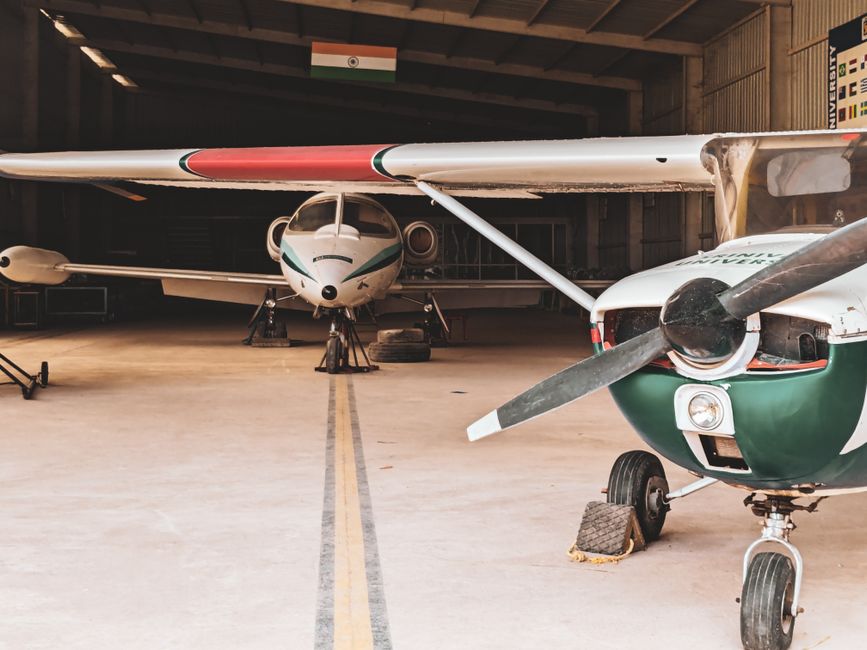
An airplane that has sat for a year is not airworthy just because it looks fine. Tires hold air, paint still shines, and the logbooks say the last annual went smoothly — none of that tells you what happened inside the cylinders, the fuel tanks, or the tailcone while nobody was watching. Airplanes do not rest. They corrode, they dry out, and they collect tenants.
This guide walks you through the return-to-service inspection in the order a careful owner actually does it, from paperwork to the first flight back. Plan on two to four weeks of calendar time and the cost of an annual inspection plus a contingency fund, because the squawk list from a stored airplane is almost always longer than the one from a flown airplane.
Step 1: Do the paperwork before you touch the airplane
Start at the desk. It costs nothing and it tells you how deep the hole is.
Check five dates. The annual inspection under 14 CFR 91.409 is good for 12 calendar months, so if the airplane sat a year it is due or about to be. The transponder check under 91.413 and, for IFR, the pitot-static and altimeter check under 91.411 each run 24 calendar months. The ELT needs an inspection every 12 calendar months under 91.207, and its battery must be replaced after one cumulative hour of use or when half its useful life has passed. Finally, check your FAA registration — the FAA now issues registration certificates valid for seven years rather than three, but an expired certificate grounds the airplane no matter how good the engine is.
Then pull the AD list. Airworthiness Directives kept being issued while your airplane slept, and some are calendar-based. Your mechanic will run this anyway, but knowing in advance whether a big one landed on your model changes the budget conversation.
Heads Up: Call your insurer before the first flight, not after. Policies that were reduced to "ground and hull not in motion" coverage during storage do not automatically snap back, and many underwriters want to know the airplane has had a return-to-service inspection before they restore full coverage.
Do not forget yourself. A flight review is required within the preceding 24 calendar months under 61.56, passenger currency generally requires three takeoffs and landings within the preceding 90 days under 61.57, and instrument pilots must meet the instrument-experience requirements of 61.57 within the preceding six calendar months before acting as PIC under IFR or in weather below VFR minimums.
Flying411 keeps registration status, annual dates and comparable asking prices in one place, so you can compare what your airframe is worth against examples that never stopped flying.
Step 2: Open every access panel and look for animals and water
Before any mechanical inspection, do the nest hunt. A year is plenty of time for mud daubers, mice and birds to move in, and rodent urine is corrosive enough to eat wiring insulation and control cable strands.
Look in the engine cowling and around the cylinder baffles, inside the air filter box, up the exhaust stacks, in the tailcone, in wheel wells, behind wing inspection panels, and under the instrument panel. Check the pitot tube, the static ports, the fuel tank vents and the stall warning vane opening. A mud dauber nest in a pitot tube is small, cheap to remove, and has killed people who found it on takeoff roll instead of on the ramp.
Water is the other tenant. Look for staining and pooling in the belly, at the bottom of the fuselage where drain grommets can clog, and around window seals. If the airplane sat outside uncovered, expect the interior to smell like a basement — and treat that smell as a corrosion warning, not a cleaning problem.
Step 3: Treat the engine as guilty until proven innocent
This is the expensive part, and it deserves the most attention. Lycoming Service Letter L180B covers preservation of active and stored engines and recommends its preservation procedure when an aircraft is expected to remain inactive for 30 days or more, especially in humid or saltwater environments. An engine properly preserved with corrosion-preventive oil, sealed openings and desiccant has a much better chance of surviving a year of storage without internal corrosion. Continental gives similar guidance in its standard practice maintenance manual. An engine pickled properly — preservative oil, dehydrator plugs, sealed openings, desiccant — has a real chance of coming through a year clean.
- Drain the oil and cut the filter. Open the filter element and inspect the pleats for ferrous particles. Send an oil sample for analysis. Iron and chrome spikes point at cam, lifters and cylinder walls.
- Borescope every cylinder. You are looking for rust streaking on the barrel walls, pitted valve faces and stuck rings. A modern articulating borescope also lets a good shop see some of the lifter faces on many engines.
- Run a differential compression check — but read it alongside the borescope, not instead of it. Compression numbers on a stored engine can look fine while the cam is being eaten.
- Inspect the exhaust and intake for internal corrosion and for anything a rodent left behind.
- Check calendar time. Lycoming's current Service Instruction 1009BF, issued in July 2026, retains a recommended 12-year calendar overhaul interval regardless of accumulated hours. Continental also publishes calendar-based overhaul guidance for its engines. A year of sitting on top of an already old engine changes the maintenance and valuation picture.
Why It Matters: Flat-tappet camshafts and lifters live at the top of the engine, where oil drains away first and moist air lingers. They are also the one part you cannot inspect without splitting the case on most engines. That is why owners who find metal in the filter after long storage often end up facing a teardown rather than a top overhaul. If the numbers push you that direction, our guide on whether to replace or overhaul an aircraft engine lays out the tradeoffs.
Step 4: Drain the fuel system and inspect the tanks
Sealed 100LL in a full tank is fairly stable over a year. The trouble is everything around it. Partly empty tanks breathe warm humid air in and condense water out, night after night, for 365 nights.
Sump every drain repeatedly until you get clean, blue, water-free fuel, then sump again after the airplane has been moved. Have your mechanic check the gascolator screen, the fuel strainer and the selector valve for sediment and gum. If the airplane has rubber fuel bladders, they should have been stored full — dry bladders stiffen, crack and wrinkle, and a wrinkled bladder traps water where the sump drain cannot reach it.
If the airplane ran on autogas or the fuel is of unknown age, the cheapest answer is usually to drain the tanks completely and refill with fresh fuel. Fuel is cheap next to an engine.
| Step | What you need | How long it usually takes |
| 1. Paperwork and currency check | Logbooks, registration, AD search, insurance agent, your own logbook | 2–3 hours, plus days waiting on the insurer |
| 2. Animal and water sweep | Screwdrivers, flashlight, mirror, shop vacuum | Half a day |
| 3. Engine corrosion assessment | A&P, borescope, oil filter cutter, oil analysis lab | 1 day of work, 1–2 weeks for lab results |
| 4. Fuel system drain and inspection | Sump cup, fresh fuel, access to a defueling service | Half a day to a full day |
| 5. Battery, tires, brakes and rubber | New battery (likely), tire gauge, jack, brake linings | 1 day, longer if parts are backordered |
| 6. Pitot-static, avionics and instruments | Avionics shop, database subscriptions, 91.411/91.413 certification | 1–3 days at the shop |
| 7. Return-to-service annual | IA, hangar space, parts budget | 1–3 weeks depending on squawks |
| 8. Ground runs and first flight | Clear day, empty seats, an airport you know | Half a day |
Step 5: Battery, tires, brakes and everything rubber
A lead-acid aircraft battery left uncharged for a year is usually scrap. Sulfation is permanent, and a battery that accepts a charge on the bench may still fail to turn a cold engine or hold up a dark-and-quiet electrical emergency. Budget for a new one and be pleasantly surprised if you do not need it.
Tires flat-spot and crack. Check pressures, look for ozone cracking in the sidewalls, and expect brake discs to have surface rust that will clean up — or pitting that will not. Rotate the wheels and feel for dragging brakes and dry bearings.
Then look at the rubber and the flexible hoses. Fuel and oil hoses harden and check with age whether the airplane flies or not, and many manufacturers recommend replacing flexible hoses on condition or at engine overhaul. Door seals, window seals, induction tubes and engine mount rubber all take a year of sitting badly. So does a dry vacuum pump: if the airplane still has one, plan for it to be a limited-life item that has just spent a year absorbing moisture.
Pro Tip: Have someone move the flight controls through the full range, stop to stop, while another person watches the cables, pulleys and bellcranks with a flashlight. Corroded cable strands show as rust-colored dust at the pulley grooves, and that is a finding you want on the ground.
Step 6: Avionics, instruments and databases
Power the panel up on a ground power unit, not the freshly charged battery, and let it sit. Displays that have been cold for a year sometimes come up with backlight or fan problems. Gyro instruments that have not spun in a year can be noisy or slow to erect; listen to them.
Check that your navigation databases, charts and any subscription services are current, and confirm the 24-month transponder and pitot-static checks. If the airplane will fly IFR, do these before you need them, not on the morning of a trip.
Flying411 keeps avionics fit, engine time and equipment lists for comparable aircraft in one place, so you can compare what an upgrade is actually worth before you spend on a panel.
Step 7: Let an IA sign the return-to-service annual
Even if the annual technically has a month left, do it now and tell the inspector the airplane sat for a year. That single sentence changes how the inspection is performed: more panels off, more attention to corrosion in the wing spar carry-through, seat rails, control surface hinges and the belly, and a harder look at anything rubber.
Give the shop room to find things. The most common mistake owners make here is scheduling the annual against a trip they have already booked. The second most common is authorizing the minimum and deferring the rest, which turns a stored airplane into a deferred-maintenance airplane. And if parts come from anywhere other than a known distributor, be careful — counterfeit and unapproved parts tend to surface when people are hunting for a bargain on an unexpected repair.
Good to Know: If you are buying an airplane that has been sitting, everything above becomes the pre-buy, not the post-purchase surprise. Our aircraft purchase checklist covers the rest of the transaction, and the seller's asking price should reflect an engine of unknown internal condition.
Step 8: Ground runs, then a careful first flight
Resist the urge to start it early. A five-minute ground run is worse than no run at all — it puts combustion moisture into a cold engine and then shuts it down before the oil is hot enough to drive that moisture off. When you do run it, run it long enough to reach full oil temperature, and watch for leaks, fuel stains, oil weeps and odd noises while it is hot.
Make the first flight a boring one. Day VFR, light fuel, no passengers, at an airport you know well, with a pattern or two before you go anywhere. Stay within gliding distance of the runway for the first circuit. Land, shut down, open the cowling and look again — a hot engine after flight shows leaks that a cold one hides.
Then fly it. The single best thing you can do for an airplane that has been sitting is to stop letting it sit. Engines are like a bicycle chain left in the rain: motion and fresh oil keep them alive, and stillness is what kills them. Aim to fly at least once every two weeks, to full operating temperature, and the corrosion clock slows way down. Older airframes tolerate age fine when they are used — our piece on aircraft age and safety gets into why use matters more than the number on the data plate.
Key Takeaways
A year of storage does not hurt an airplane evenly — it hurts the engine first, the battery and rubber next, and the paperwork quietly in the background. Start with the desk work so you know which inspections and directives came due, then attack the engine with an oil filter cut, an oil analysis and a borescope before you spend money anywhere else, because a corroded camshaft can change the whole economic picture. Budget for a full annual with an IA who knows the history, expect a new battery and probably tires, and assume something rubber needs replacing. Plan two to four weeks and a contingency fund rather than a weekend. And once it is flying again, the cheapest maintenance program available is simply flying it regularly enough that it never has to be woken up like this a second time.
Getting Back in the Air
Bringing back an airplane that has sat for a year is mostly a discipline problem, not a technical one. The findings are predictable; the trap is skipping the unglamorous steps because the airplane looks ready. Do the paperwork, cut the filter, borescope the jugs, drain the fuel, and let the mechanic finish before you plan a trip. If the engine comes back with metal and you are weighing what to do next, it is worth reading up on whether to overhaul before selling instead of sinking the money into an airframe you may not keep.
Flying411 keeps listings, specifications and ownership guidance in one place, so you can compare the real cost of reviving your airplane against the cost of a different one.
When you are ready to compare listings, visitFlying411and see what is on the market today.
Frequently Asked Questions
Is it legal to fly an airplane that has been sitting for a year?
Legality depends on inspections and airworthiness, not on how long it sat. If the annual, ELT inspection, and any applicable transponder and pitot-static checks are current, there is no rule that grounds a stored airplane. That said, the pilot in command is responsible under 91.7 for determining the aircraft is in condition for safe flight, and a year of storage is exactly the situation where that responsibility has teeth.
How much does a return-to-service inspection cost?
Think of it as an annual inspection plus squawks. The inspection labor on a light single is typically similar to a normal annual, but the parts list is longer: battery, tires, hoses, filters and seals are common. If the engine shows corrosion, costs jump into overhaul territory, which is why the oil analysis and borescope come early.
Can the engine really be ruined by one year of sitting?
It can be seriously damaged, yes. Lycoming and Continental both publish preservation guidance precisely because internal corrosion begins quickly in an unpreserved engine, and camshaft and lifter pitting is the usual result. A properly pickled engine stored in a dry hangar often comes through fine. An unpreserved engine that sat outside in a humid climate frequently does not.
What if the airplane was flown occasionally during the year?
That helps, but only if the flights were long enough to bring the oil to full operating temperature. Short hops and brief ground runs add moisture without removing it and can be worse than leaving the engine alone. Look at the tach and Hobbs entries: a handful of one-hour flights spread through the year is a much better sign than a dozen fifteen-minute ones.