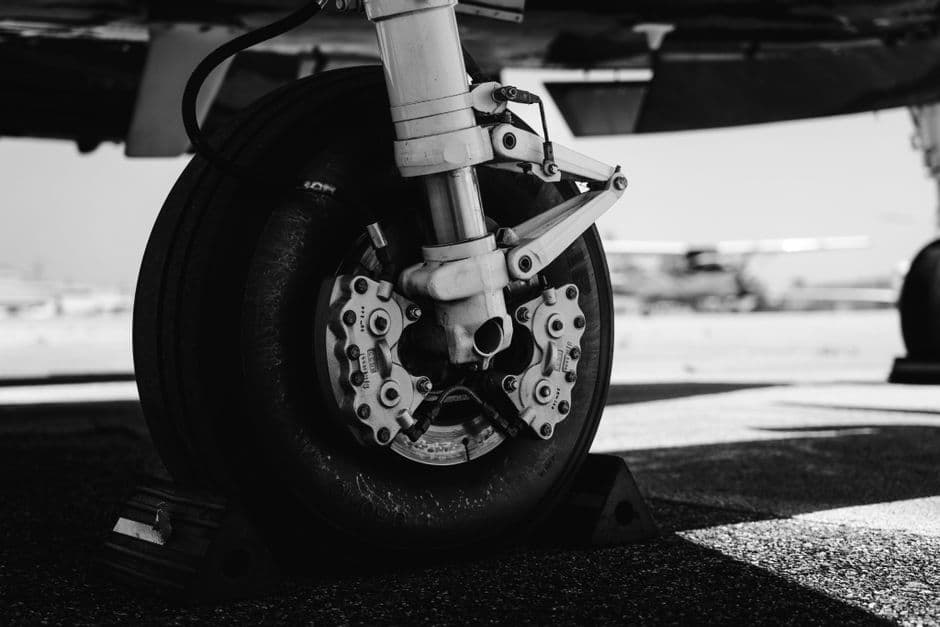
A strut that will not hold its extension is a discrepancy, not a cosmetic blemish. When your mechanic rolls the airplane into the hangar for its annual and finds a flat or leaking oleo strut, you are looking at a written squawk, and under 14 CFR 43.11 the inspector has to either correct it or hand you a signed list of it before anyone signs the aircraft back as airworthy.
The good news is that most strut problems are small and cheap. A strut is an air spring stacked on top of an oil damper, a lot like the shock on a mountain bike: compressed gas on top holds the airplane up, hydraulic fluid underneath squeezes through an orifice to soak up the landing. When the seal at the bottom of the gas chamber gets tired, gas escapes past it, oil weeps out behind it, and the strut sags.
The bad news is that the same symptom can also mean a scored, pitted chrome piston, and that is the version that costs real money. This guide separates the two, explains exactly what a certificated pilot may legally do without calling a mechanic, and gives honest 2025–2026 price ranges for a reseal.
Is a Flat or Leaking Strut an Airworthiness Problem?
Under 14 CFR Section 91.7, an aircraft may not be operated unless it is airworthy, and Section 91.403 places primary responsibility for maintaining that condition on the owner or operator. Airworthiness requires conformity with the approved type design and a condition for safe operation. A collapsed or leaking shock strut may make the aircraft unairworthy, particularly if it cannot maintain the manufacturer's required extension or provide adequate shock absorption. However, acceptable extension and servicing conditions vary by aircraft model, loading, and temperature. A mechanic should evaluate the strut against the applicable maintenance instructions before determining whether it requires repair or servicing.
Does a little oil on the chrome ground the airplane?
Usually not. Most airframe maintenance manuals describe a thin film of hydraulic fluid on the exposed piston as normal and even desirable — that film is what lubricates the seal on every compression stroke. The line between normal and unairworthy is behavior, not appearance. Ask three questions:
- Does the strut hold the manual's specified extension after sitting overnight?
- Is there a visible drip, a run down the strut, or oil pooling on the gear fairing and tire?
- Does the strut bottom out and clunk on a normal landing instead of absorbing it?
A damp film with correct extension is a watch item. A strut you have to air up weekly is a leak. A strut that is flat is a grounding squawk.
Why It Matters: A flat strut puts landing loads straight into the structure it was designed to protect. On a nosewheel airplane, a collapsed nose strut transmits shock into the firewall and engine mount, and it reduces propeller ground clearance exactly when you least want it reduced. This is one of the few maintenance items where deferring it can turn a $700 bill into a $7,000 one.
What does the IA do with it at annual?
If the shop corrects it, the work is recorded as a repair and the annual is signed off normally. If you decline the repair or the parts are backordered, the inspector signs the aircraft as not airworthy and gives you a written list of discrepancies under 43.11. That is not a punishment — it is the normal paperwork path, and it is covered in more depth in our guide to what happens when an IA won't sign your annual. To move the airplane to a shop in that condition, you apply for a special flight permit under 14 CFR 21.197.
What Actually Fails Inside the Strut
There are only a handful of failure modes, and telling them apart before you authorize work is the difference between a modest bill and an open-ended one.
Worn seals
The common one. The O-ring, backup rings and scraper ring at the gland nut harden with age and heat. Gas escapes first, so the symptom order is almost always: strut gets low, you add air, it goes low again faster, then oil appears. Seal kits for a light single are inexpensive. Many type clubs point out that seals are effectively a time-limited item on airplanes that sit outside, so a reseal every ten to fifteen years is unremarkable.
Pitted or scored chrome
The expensive one. The polished chrome piston is what the seal rides on. If the airplane has lived outdoors, moisture and road grit cut the chrome, and corrosion pits form under the plating. A pitted piston will shred a brand-new seal within a few landings. Your mechanic can only tell once the strut is apart, which is why reseal quotes are usually given as "plus parts if the chrome is bad." If you are already chasing corrosion found elsewhere at annual, assume the struts are in the same condition as everything else.
Wrong fluid or wrong gas level
A strut with sufficient gas pressure but too little hydraulic fluid may appear properly extended on the ramp while providing inadequate damping during landing. Adding gas alone cannot correct a low fluid level. Many general aviation aircraft use MIL-PRF-5606 hydraulic fluid, while other designs specify MIL-PRF-83282 or MIL-PRF-87257. These fluids have different properties, although certain specifications recognize compatibility between them. Compatibility does not automatically authorize substitution, so use only the fluid specified or approved for the particular aircraft and strut. Incorrect servicing can affect damping, sealing, and component reliability.
Heads Up: Never service a strut with oxygen. Hydraulic fluid plus pure oxygen under pressure is a genuine explosion hazard. Dry nitrogen is preferred everywhere and required by some manuals; clean, dry compressed air is accepted by many light-aircraft manuals, but shop air carries moisture that feeds the corrosion that ruins the chrome.
Not every airplane even has one
Know what you own before you start shopping for a reseal. The Cessna 150, 172 and 182 use spring-steel main gear legs with an air/oil nose strut only — there is one strut to service, not three. Piper's PA-28 family and most Beech singles and twins use oleos at all three corners. Mooney uses rubber shock discs that compress with age instead of struts, so a "low" Mooney is a biscuit replacement job, not a reseal.
Flying411 keeps light-single and light-twin listings in one place, so you can compare how different gear designs — spring steel, oleo, shock disc — line up against the maintenance budget you actually have.
What an Owner Can Legally Do
This is the part worth memorizing, because it is unusually clear in the regulations. Part 43, Appendix A, paragraph (c) lists preventive maintenance, and item (c)(3) reads: "Servicing landing gear shock struts by adding oil, air, or both." Item (c)(4) covers cleaning and greasing wheel bearings, and (c)(1) covers tires.
Under 14 CFR Section 43.3(g), a pilot holding an appropriate certificate under Part 61 may perform authorized preventive maintenance on an aircraft they own or operate, provided it is not used under Parts 121, 129, or 135. However, sport pilots have more limited privileges, generally involving aircraft issued special airworthiness certificates in the light-sport category. Under Section 43.7, a pilot holding at least a private pilot certificate may approve the aircraft for return to service after personally performing authorized preventive maintenance. Therefore, eligible owners can service their landing gear shock struts without an A&P, provided they follow the applicable maintenance instructions and make the required records.
What you may not do
Taking the strut apart is where the line sits. Removing the gland nut, extracting the piston, replacing the seals and reassembling is a repair, not preventive maintenance. That requires an A&P, or you working under the direct supervision of an A&P who inspects the job and makes the entry. Same for replacing the piston, rechroming, or anything involving removing the gear leg from the airframe. Owners of experimental amateur-built aircraft work under their operating limitations instead and have far more latitude.
The logbook entry is not optional
14 CFR 43.9 requires a record entry for preventive maintenance: a description of the work, the date, and your signature, certificate number and kind of certificate. "Serviced nose strut with MIL-PRF-5606 and nitrogen to 3.25 in. extension per [manual reference]" is enough. Skipping it is a paperwork violation and it also hides a leak trend from the next person who looks, which hurts you at resale. Our piece on proving an aircraft is airworthy covers why a clean, continuous record is worth money.
Pro Tip: Write the strut extension measurement in your own notebook every time you service it, with the date and outside temperature. Three dated entries turn "I think it leaks" into a rate of leak, and a rate of leak tells your mechanic whether to order a seal kit or a piston.
Doing It Safely
Servicing a strut is simple and occasionally dangerous. The gas charge is holding the weight of the airplane, and the fitting you unscrew is not always the one you think.
The air valve on most light struts is a Schrader-type core inside a larger swivel nut or valve housing. Loosen the core to release pressure. Loosening the housing while the strut is still charged can launch it. FAA Advisory Circular 43.13-1B's landing gear guidance and every airframe maintenance manual say the same thing: fully deflate before any component is loosened.
The correct servicing sequence depends on the aircraft and strut design. Some procedures require jacking the airplane, completely releasing the gas charge, cycling the strut to remove trapped air, and replenishing hydraulic fluid before recharging it with the approved gas. However, valve arrangements, fluid-level measurements, filling procedures, and servicing pressures vary between manufacturers. Always follow the aircraft's current maintenance manual, use approved jacking points and equipment, and verify that pressure has been safely released before removing any pressurized component. Final servicing may require checking strut extension, pressure, or both under specified loading conditions.
Keep in Mind: Struts read low on cold mornings. Gas contracts, and a strut that measured correctly at 80°F can look an inch short at 20°F. Before you chase a leak in January, check it again in a warm hangar. Also check tire pressure first — a soft tire makes a healthy strut look short.
What a Reseal Costs
Shop labor at general aviation maintenance facilities ran roughly $95 to $175 per hour through 2025, with coastal metro shops at the top of that band. A nose strut reseal on a fixed-gear single is typically a three to five hour job including jacking, cleaning and servicing. Retractable gear multiplies the labor because the leg often has to come off, and a gear swing and rigging check follow.
Parts are the swing factor. Seal kits for common light singles generally run from under a hundred dollars to a few hundred. A replacement or rechromed piston is the step change — budget four figures. On cabin twins and turboprops, many shops quote an exchange strut assembly rather than a field reseal.
Good to Know: If one strut is leaking on an airplane with three oleos of the same age, ask what the other two cost while the airplane is already on jacks. Doing all three at once usually saves a meaningful chunk of labor, and it is the same logic that makes the first annual after a purchase cost more than the ones that follow.
Flying411 keeps maintenance-driven ownership costs and live listings in one place, so you can compare what an airplane is asking against what its deferred items are likely to cost.
| Item | Typical range (US, 2025–2026) | Notes |
| Owner strut service (air/oil top-up) | $0–$60 | Preventive maintenance under Part 43 App. A (c)(3); logbook entry required |
| Shop strut service, no disassembly | $100–$300 | 0.5–1.5 hours labor plus fluid and nitrogen |
| Seal kit, light single strut | $60–$300 | O-ring, backup and scraper rings |
| Nose strut reseal, fixed-gear single | $450–$1,200 | Assumes chrome is serviceable |
| Main strut reseal, each, fixed gear | $500–$1,500 | PA-28, Beech singles and similar |
| Retractable gear strut reseal, each | $1,500–$3,500 | Includes removal, rigging and gear swing |
| Rechromed or new piston | $900–$3,000+ | The cost driver when corrosion is found |
| Exchange strut assembly, twin/turbine | $3,000–$10,000+ | Often faster than a field reseal |
| Shop labor rate, GA maintenance | $95–$175/hour | Varies sharply by region |
| Special flight permit (21.197) | $0 via FSDO; DAR fees vary | To ferry an unairworthy aircraft to a shop |
Buying, Selling and Flying It Afterward
On a pre-buy, a sagging strut is worth more as information than as a dollar figure. It tells you the airplane probably sat outside, which points you toward the gear bays, the belly and the control cables. Our comparison of what a pre-buy covers versus an annual is the place to start if you are shopping. An airplane that has been idle deserves the fuller treatment in our guide to inspecting a plane that sat for a year.
As a seller, fix it. A reseal is one of the cheapest items on the squawk list and one of the most visible. Buyers who see oil running down a chrome piston on the first walkaround discount the whole airplane, not just the strut.
Quick Tip: After a reseal, make the first few landings on a long, smooth runway and check extension and for leaks right after shutdown. A new seal that is going to fail usually does it in the first handful of cycles. The same discipline applies to the whole airplane on the first flight after an annual.
Flying411 keeps airframe, engine and inspection history alongside the listing, so you can compare two airplanes on condition rather than on photographs.
Conclusion
A flat or leaking oleo strut at annual is a legitimate airworthiness discrepancy, but it is also one of the most manageable items on a light aircraft. You may legally add air and fluid yourself under Part 43, Appendix A (c)(3), as long as you log it per 43.9. You may not open the strut — that belongs to an A&P. Expect roughly $450 to $1,200 for a nose strut reseal on a fixed-gear single if the chrome is good, and plan for four figures more if it is not. Get a dated extension record going now, because that record is what keeps a $200 seal kit from becoming a $3,000 piston.
When you are ready to compare listings, visitFlying411 and see what is on the market today.