
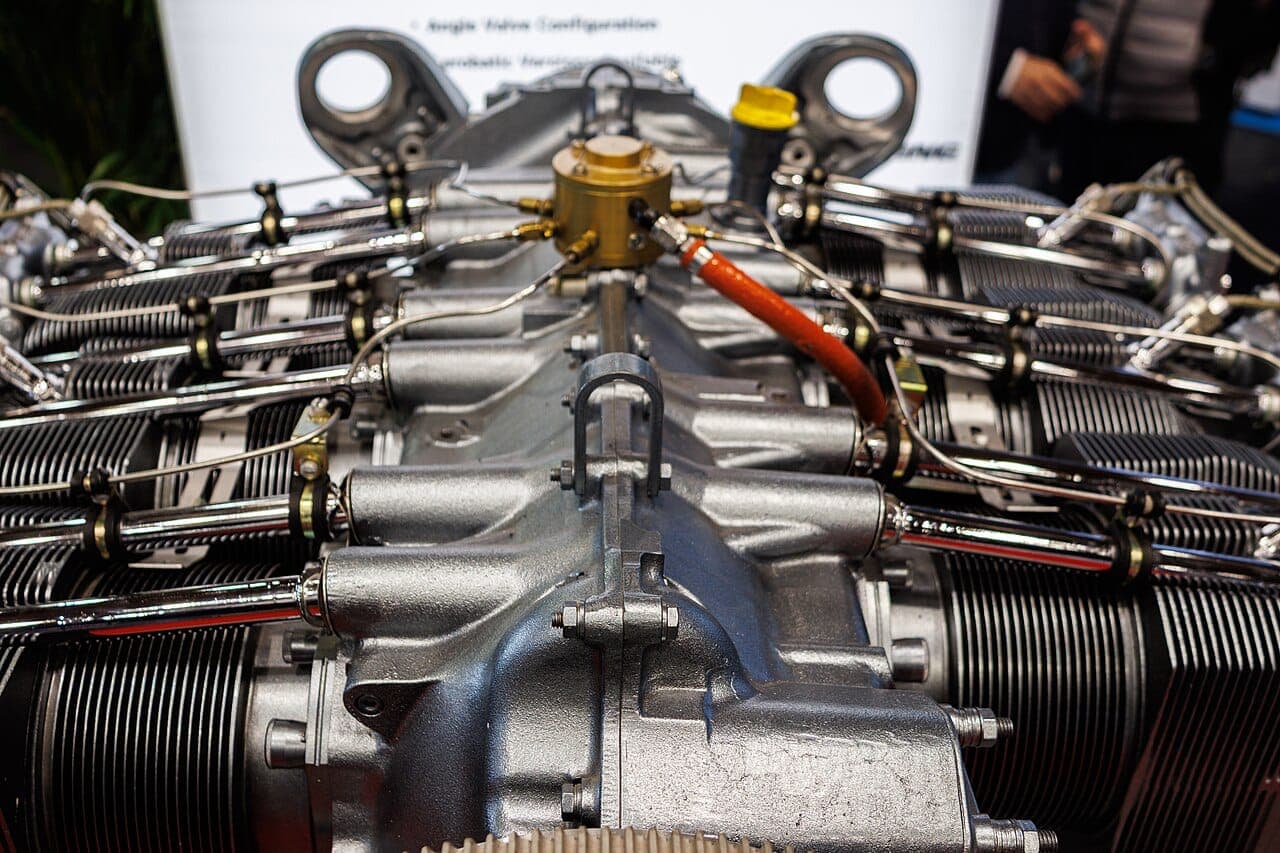
A low number on a differential compression test is not, by itself, a reason to pull a cylinder. It is a measurement of how fast air leaks out of one cylinder, and both Lycoming and Continental now say that number has to be read alongside a master orifice reading and a borescope look before anyone touches a wrench. That difference matters because a cylinder change runs into four figures per hole, and plenty of cylinders have come off airplanes that did not need it.
This article explains what each number on the gauge means, what the codes and documents your mechanic quotes actually say, where the leak is coming from based on what you hear, and the short list of findings that genuinely require removal.
Key Takeaways
A differential compression reading like 58/80 means the tester supplies air at 80 psi while the cylinder-side gauge stabilizes at 58 psi. The 22 psi difference indicates pressure loss across the tester's calibrated restriction as air escapes through the cylinder, but it does not directly measure how much air is leaking. The old 60/80 rule is not a universal rejection limit. Continental's Standard Practice Maintenance Manual M-0 uses a calibrated master orifice to help determine acceptable cylinder leakage, while Lycoming's Service Instruction 1191A recommends further investigation when readings fall significantly or drop below 60/80. Technique ruins more compression tests than worn engines do, with a cold engine and a poorly positioned propeller being the usual culprits. A borescope decides the case: burned or eroded valve faces, cracks between the valve seats or at the spark plug boss, and scored barrels are cylinder-off findings, while ring leakage with clean oil consumption and a clean borescope is usually something to fly and retest. Expect roughly $2,000 to $3,500 per cylinder installed as of 2025, which is exactly why the diagnosis deserves more than one gauge reading.
What the Numbers and Terms Actually Mean
A differential compression tester is two pressure gauges with a small restricting orifice between them. Shop air is regulated to 80 psi on the upstream gauge and fed into a cylinder whose piston is sitting at top dead center on the compression stroke, with both valves closed. Whatever pressure the downstream gauge holds is the second number. Think of it like filling a bucket with a hose while the bucket has a hole in the bottom: the water level settles where the inflow matches the leak. A tighter cylinder holds a higher number.
The vocabulary around this test gets used loosely at the shop counter, so here is what each term means in plain language.
| Term or code | What it means |
| Differential compression test | Regulated air is pushed into a closed cylinder and the pressure it holds is compared to the pressure going in. Also called a leak-down test. |
| "58/80" | 80 psi applied, 58 psi retained. Not a percentage and not a power rating, just a leak measurement at one moment. |
| Master orifice | A calibrated leak of known size. Continental's SB03-3 specifies 0.040-inch diameter for cylinder bores under 5.00 inches and 0.060-inch for bores of 5.00 inches and larger, both 0.250 inches long with a 60-degree approach angle. |
| Continental SB03-3 | Continental's service bulletin covering differential pressure testing and borescope inspection. A cylinder reading below the master orifice value is the rejection point, not a fixed number. |
| Lycoming SI 1191A | Lycoming's Service Instruction on cylinder compression. Calls for testing a warm engine and treats a reading under 60/80 as cause for further investigation. |
| Lycoming SB 388C | The exhaust valve and guide "wobble test," a separate check of valve stem movement in the guide that catches sticking valves a compression test can miss. |
| 14 CFR Part 43, Appendix D | The regulation that makes compression part of an annual or 100-hour inspection. It requires checking cylinder compression and, if compression is weak, investigating internal condition. |
| Staking or lapping a valve | Seating a valve back into its seat, either by running the engine hard or by hand-lapping with the cylinder in place or removed. |
| Blow-by | Combustion gas leaking past the piston rings into the crankcase. Heard at the oil filler or breather tube during the test. |
| Top overhaul | Replacing or reconditioning cylinders, pistons and valves without splitting the crankcase. |
Why It Matters: Part 43 Appendix D requires the compression check at every annual, but it sets no pass number. The threshold comes from the engine manufacturer, which is why a Continental cylinder and a Lycoming cylinder with the same reading can get two different answers from two correct mechanics.
Why 60/80 No Longer Ends the Argument
The 60/80 figure is old shorthand that outlived its precision. Continental moved away from a fixed number years ago because gauge calibration, shop air supply, cylinder bore size and even field elevation shift the reading. Under SB03-3, the mechanic first measures the tester against the master orifice that day, then compares each cylinder to that measured value. A cylinder reading above the orifice value passes. One reading below it gets a borescope and further work, even if the raw number happens to be above 60.
Lycoming's Service Instruction 1191A recommends testing a warm engine and evaluating both the readings and their differences between cylinders. Readings below 65/80 indicate wear and call for closer monitoring, while readings below 60/80 or a rapidly increasing leakage rate mean cylinder removal and overhaul should be considered. This does not mean every cylinder below 60/80 must immediately come off, but the result needs proper investigation. Compression history, leakage location and other inspection findings all matter.
Good to Know: The air supply matters more than most owners realize. A small compressor that cannot keep up with a leaking cylinder will show a falsely low number simply because it cannot hold 80 psi upstream. If your shop's regulator gauge sags during the test, the reading is not valid.
Flying411 keeps maintenance explainers and aircraft listings in one place, so you can compare what a pre-purchase squawk really costs before you make an offer.
Where the Air Is Going
The number tells you how much leaks. Listening tells you where, and that is the part that decides the repair. With the air on and the propeller held at top dead center, a mechanic checks three places.
Hissing at the exhaust pipe
Air escaping out the tailpipe means the exhaust valve is not sealing. This is the most common cause of a low reading and the most serious one, because a leaking exhaust valve runs hot and can burn through. Sometimes the valve is only carboned up or sitting slightly off its seat. Running the engine at high power for 30 to 45 minutes and retesting often restores the reading as the valve reseats. If the borescope shows an even, symmetrical heat pattern on the valve face, that is a valve doing its job. An asymmetric or shadowed pattern is the warning sign.
Hissing at the induction or air filter
An intake valve leak is less common and less urgent thermally, but it still means a seat or valve face problem that will not fix itself with a flight.
Bubbling or rushing at the oil filler or breather
That is ring leakage. On an engine that has sat, on a fresh cylinder still breaking in, or on an engine tested cold, ring leakage is often temporary. Rings that have not seated or that have corrosion-roughened barrels behind them read low until they run. If oil consumption is normal and the borescope shows good crosshatch with no scoring, ring blow-by alone rarely justifies removal. Our guide to Lycoming cylinder corrosion covers what rust in the barrel actually does to these readings.
Heads Up: Air coming out around the cylinder-to-head joint, or a reading that collapses to near zero with no obvious escape path, points to a cracked head. That cylinder comes off, no debate.
When a Cylinder Actually Has to Come Off
Removal is justified by what the borescope and the physical evidence show, not by the gauge alone. The findings that end the discussion are these: a burned, eroded or cupped exhaust valve face; cracks in the head between the valve seats, around the spark plug boss, or at the barrel-to-head joint; deep scoring, spalling or pitting in the barrel; broken ring lands or a damaged piston crown; a valve guide so worn that it fails the SB 388C wobble check; and metal in the oil filter traceable to that cylinder.
The findings that usually do not require removal, at least not yet, are a single low reading on a cold engine, ring leakage with clean oil consumption and a clean borescope, a reading that recovers after a hard run and retest, and a cylinder that is low but still above the master orifice value with no visible damage.
If your mechanic wants to remove a cylinder on a number alone, ask three questions: what did the master orifice read today, where was the air escaping, and what did the borescope show. A good shop answers all three without hesitation. If the inspector refuses to sign the annual over a disputed finding, our explainer on FAR 43.11 and what an IA can and cannot require covers your options.
Pro Tip: Ask for the borescope images. Nearly every shop uses a camera scope that saves photos to a phone or tablet. Those images belong in your file and are worth real money at resale, because the next buyer's mechanic can see the valve faces from two years ago.
What It Costs and What It Does to Resale
As of 2025, a new factory cylinder assembly for a four-cylinder Lycoming typically runs roughly $1,400 to $2,000, with big-bore Continental cylinders higher. Add four to eight hours of labor per cylinder, plus gaskets, hardware and a leak check, and most shops land in the $2,000 to $3,500 range per cylinder installed. A repaired or overhauled cylinder can come in lower, often $700 to $1,200 for the cylinder itself, though availability moves around.
At resale, the logbook story matters as much as the number. One replaced cylinder with a clear entry explaining a burned exhaust valve reads as honest maintenance. Four replaced cylinders at 600 hours since major overhaul reads as a troubled engine and will be priced that way, much as corrosion found at an annual follows an airframe through every future sale.
Flying411 keeps engine and airframe details on every listing in one place, so you can compare time since overhaul and cylinder history across similar aircraft.
The Mistakes That Cost Owners Money
Most bad readings are bad tests. Testing a cold engine shrinks clearances the wrong way and almost guarantees low numbers, which is why both manufacturers want the engine run first. Letting the propeller move off top dead center opens a valve mid-test. Failing to rock the prop into the stop before reading lets the piston ride down the bore. Skipping the master orifice check means comparing your cylinder to a number nobody verified. And testing an engine that has been sitting for months, before flying it, confuses storage rust with wear. An airplane that has been parked deserves a different approach entirely, as covered in our piece on what to inspect after a year of sitting.
Keep in Mind: A compression test measures sealing, not power. Engines have made full rated power with readings in the low 50s, and engines have made 75/80 on all four while a cam lobe quietly disappeared. Use oil analysis, filter inspection and the borescope together.
Before You Authorize the Work
Treat a differential compression test result as one part of the diagnosis, not an automatic verdict. Ask your mechanic for the applicable compression limits, the location of the leak and the borescope findings. If no unsafe condition is found, the manufacturer's procedures may allow an additional engine run or flight followed by a warm compression test before deciding whether cylinder removal is necessary. Never fly with a suspected burned valve, cracked cylinder or other unresolved airworthiness problem. If a cylinder does come off, plan the return to service carefully, because a fresh cylinder changes how the engine behaves on the first flight after an annual
Flying411 keeps listings, logbook summaries and ownership guides in one place, so you can compare aircraft on maintenance history rather than hours alone.
When you are ready to compare listings, visitFlying411and see what is on the market today.
Frequently Asked Questions
Is 60/80 still a legal minimum?
No. 14 CFR Part 43, Appendix D requires a compression check at every annual and 100-hour inspection but sets no number. The limits come from the engine manufacturer, through Continental's SB03-3 master orifice method or Lycoming's SI 1191A, and those are what your mechanic should be citing.
Can a low cylinder come back up on its own?
Sometimes. Carbon deposits or temporary ring-sealing problems can produce low readings that improve after engine operation. Continental's procedures allow a flight of at least 45 minutes followed by a hot retest in certain circumstances, but only after inspection supports continued safe operation. A burned valve, cracked cylinder or other confirmed damage requires corrective action rather than another flight.
Does a low compression reading mean I lose power?
Not necessarily. The test measures how well a static cylinder seals at 80 psi, not how it performs under combustion pressure at 2,400 rpm. Engines routinely make rated power with readings well below 60/80. A dropping reading matters as a trend and as a warning, not as a direct power loss.
Should a borescope inspection be done every annual?
It should. Continental requires borescope inspection alongside the pressure test in SB03-3, and the camera catches burning valves, barrel scoring and ring problems that the gauge misses entirely. If your shop does not borescope as a matter of course, ask for it and expect a modest added charge.
How many low cylinders before I consider a top overhaul?
There is no fixed count, but when two or more cylinders fail the master orifice comparison with confirmed valve or barrel damage on an engine well past mid-time, pricing a top overhaul alongside individual repairs usually makes sense. Doing them one at a time over three years can cost more in labor than doing them together.
Does a buyer's mechanic weigh compression heavily in a pre-purchase?
Yes, but mostly as a starting point. Experienced buyers' mechanics compare the current readings to the last several annuals in the logbooks, borescope every cylinder, cut the oil filter and check the records for prior cylinder changes. A single low hole with a clean history rarely kills a deal; a pattern of replaced cylinders does.