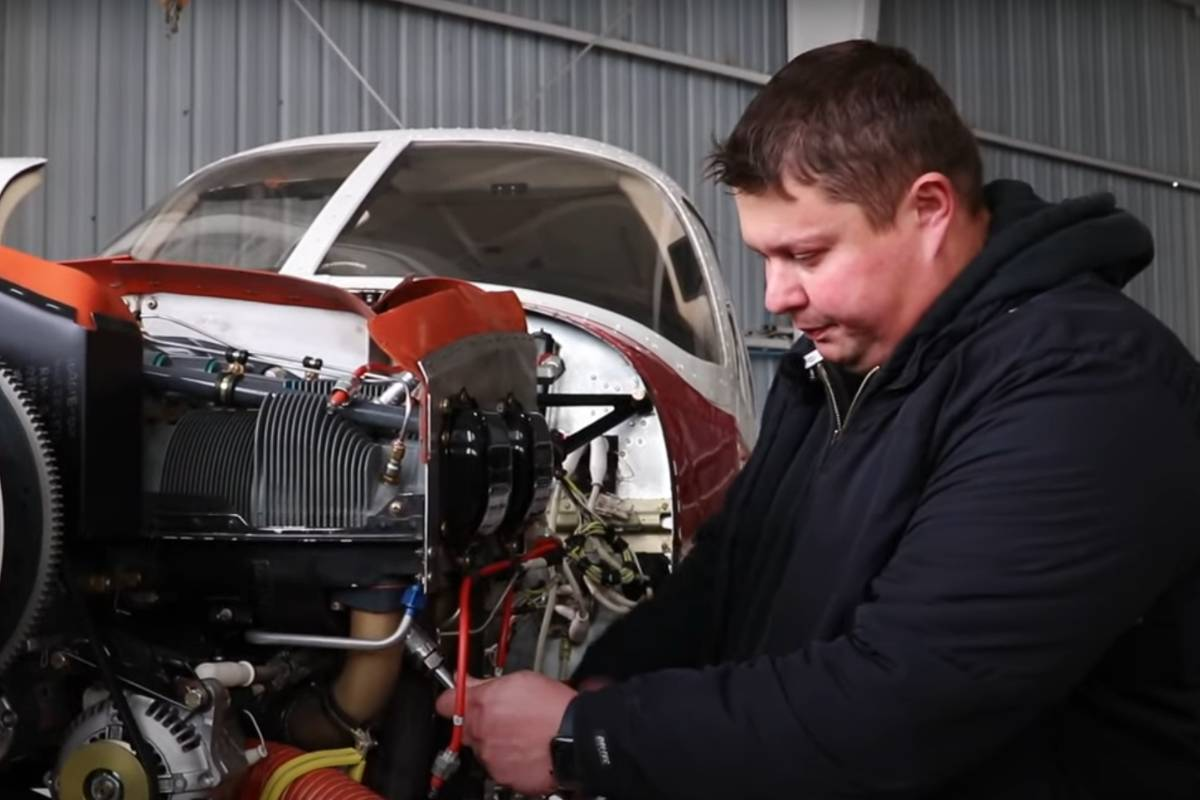
It is the last week of the month and your airplane is sitting on jacks with three inspection panels off, the cowling on a rolling cart, and the spinner in a cardboard box. You walk into the hangar expecting a bill and a signature. Instead the inspection authorization (IA) hands you two typed pages and says, "I can't sign this off."
That moment feels like the end of the world, and it is usually not. When your mechanic won't sign off the annual, the regulations already anticipate it. There is a specific logbook entry for a failed inspection, a specific document the shop owes you, and a specific path back to airworthy. Most of the panic owners feel comes from not knowing that the annual can be completed and failed at the same time — those are not opposites.
Think of it the way you think of a state vehicle inspection. The shop does not refuse to acknowledge that it looked at your car. It stamps the paperwork, marks it failed, and hands you a list of what has to be repaired before the sticker goes on. Aviation works the same way, except the paperwork is 14 CFR 43.11 and the stakes are measured in AMUs instead of dollars.
This article walks through exactly what the rule requires, how to tell a genuine unairworthy item from a mechanic's preference, what your realistic options are, and how to get the airplane home or back in the air without creating a bigger problem in the records.
Key Takeaways
Under 14 CFR 43.11, the person who performs an annual inspection must make a maintenance record entry whether they approve the aircraft for return to service or not — there is no legal option to inspect your airplane and write nothing. If the aircraft is found unairworthy, 43.11(b) requires the inspector to give you a signed and dated list of discrepancies, and that list is yours to keep and to take elsewhere. The annual inspection itself has been performed at that point; the aircraft simply is not airworthy yet. In many cases, an appropriately rated A&P mechanic can correct the discrepancies identified during a completed annual inspection and make the required maintenance entries returning the aircraft to service; the mechanic must be authorized for the work performed, and any repair or alteration requiring additional approval must be handled accordingly.
Pasted markdown
| Situation | What the record says | What you can do next |
| Annual complete, aircraft airworthy | 43.11(a)(4) statement: inspected and "determined to be in airworthy condition" | Fly. Next annual due end of the 12th calendar month |
| Annual complete, aircraft unairworthy | 43.11(a)(5) statement: inspected, and a dated list of discrepancies "has been provided" | Correct the listed items; an A&P can then approve return to service |
| Shop stopped mid-inspection | No annual entry; only 43.9 entries for maintenance actually done | Get the airplane reassembled or moved; the annual still has to be performed |
| Aircraft unairworthy and must be moved | Discrepancy list plus a special flight permit under 21.197 | One-time ferry flight to a shop of your choosing |
What FAR 43.11 Actually Requires
The entry your mechanic owes you
Section 43.11 is titled "Content, form, and disposition of records for inspections conducted under parts 91 and 125..." and it applies to the person approving or disapproving for return to service. That phrase does a lot of work. The rule requires an entry containing the type of inspection and a brief description of its extent, the date of the inspection and the aircraft total time in service, and the signature, certificate number and kind of certificate held by the person doing it.
Then it splits. If the aircraft passes, the entry uses the language in 43.11(a)(4): "I certify that this aircraft has been inspected in accordance with (insert type) inspection and was determined to be in airworthy condition." If it does not pass, 43.11(a)(5) gives the other wording: "I certify that this aircraft has been inspected in accordance with (insert type of inspection) and a list of discrepancies and unairworthy items dated (date) has been provided for the aircraft owner or operator."
That second statement is the one owners rarely see and almost never expect. It is not a black mark or an enforcement action. It is the normal, correct output of an annual that found problems.
Why It Matters: Once that 43.11(a)(5) entry is made, the annual inspection has been performed. You do not have to pay for a second full inspection after the repairs are done, because the inspection is not the thing that is missing — the airworthy determination is.
The discrepancy list is a regulatory requirement, not a courtesy
Paragraph (b) of the rule is the part to memorize. If the person performing an inspection required by part 91 finds that the aircraft is unairworthy or does not meet the applicable type certificate data, airworthiness directives, or other approved data on which its airworthiness depends, that person must give the owner or lessee a signed and dated list of those discrepancies. The same paragraph covers items you are allowed to leave inoperative under 91.213(d)(2): those get an "INOPERATIVE" placard on the instrument panel and still go on the list.
So "I'm not signing anything" is not a lawful outcome of a completed inspection. Ask for the list in writing, signed and dated. Politely, once, in those words. Most shops produce it immediately because it is their normal paperwork.
Pro Tip: Ask the shop to reference each item to its source — an AD number, a line from Part 43 Appendix D, a limit in the type certificate data sheet, or 43.13 for general condition. A referenced list is worth far more to the next mechanic than "brakes worn, exhaust suspect."
What an annual inspection legally covers
The scope is not the IA's personal opinion. Part 43 Appendix D, "Scope and detail of items to be included in annual and 100-hour inspections," sets the checklist floor, and 43.15(c) requires the inspector to actually use a checklist and, on piston airplanes, to run the engine and check performance before approving return to service. Section 65.95 is what lets a mechanic holding an inspection authorization perform the annual at all, and 91.409(a) is the rule that says you need one every 12 calendar months.
Flying411 keeps maintenance explainers, ownership cost guides and live aircraft listings in one place, so you can compare what an airplane costs to keep before you compare what it costs to buy.
"Won't Sign" Means Three Different Things
Which one are you actually dealing with?
Before you get angry, figure out which conversation you are in. They have very different answers.
One: a legitimate disapproval. The IA found an AD that was never complied with, a spar corrosion area, a cracked cylinder head, control cable wear beyond limits. The airplane is genuinely not airworthy and no amount of discussion changes that. You need the list and a repair plan.
Two: a scope disagreement. The shop wants to replace a serviceable-but-tired part, comply with a non-mandatory service bulletin, or overhaul something that is within limits. Nothing on that list makes the aircraft unairworthy, but the shop has bundled recommendations and requirements into one invoice.
Three: a shop that has stopped working. The airplane is partly disassembled, the inspection was never finished, and communication has broken down. This is a business dispute wearing a maintenance costume, and it is the hardest of the three.
Heads Up: An IA cannot be forced to sign an approval for return to service. The FAA will not order a mechanic to certify something they do not believe is airworthy, and you should not want a signature obtained under pressure sitting in your logbook.
Sorting Real Unairworthy Items From Preferences
Is it an airworthiness directive?
Start here, because ADs are not negotiable. Part 39 makes it plain: no person may operate a product to which an AD applies except in accordance with that AD. If the list includes an uncomplied AD, a recurring inspection that has run past its interval, or a terminating action that was never done, that item stays on the list until it is done. Our guide to tracking AD compliance in your records covers how to verify each one rather than taking a summary sheet's word for it.
Is it a service bulletin?
For a normal part 91 owner, manufacturer service bulletins, service letters and service instructions are recommendations unless an AD adopts them or your operating rule requires them. That is a real distinction, and it is where a lot of annual disputes live. It is also worth saying that some of those bulletins exist because airplanes broke, so "not mandatory" is not the same as "not important." Ask what the failure mode is, then decide with your wallet and your risk tolerance, not out of reflex.
Is it a condition call under 43.13?
Plenty of items are genuine judgment: tire cord showing, a tired hose, a seat rail with elongated holes, play in a rod end. Section 43.13 requires work to be done using methods and practices acceptable to the Administrator, and maintenance manuals supply the actual limits. Ask for the number. "The service manual allows 0.015 inch and we measured 0.040" ends an argument. "It looks tired" starts one.
Good to Know: If you own a common trainer or cruiser, your type club has seen every version of this fight. Type club technical volunteers can often tell you in one phone call whether an item is a known airworthiness issue or a shop habit. For a baseline on typical scope and pricing, see our walkthrough of the Cessna 172 annual inspection.
Your Options, In The Order Most Owners Should Try Them
1. Get the list, pay the inspection bill, slow down
Pay for the inspection labor you agreed to. That single act changes the tone of everything that follows, and it protects you if a lien dispute develops later. Then take the list home and read it cold, away from the hangar. Group items into three buckets: must do, should do, and no.
2. Negotiate the scope with the same shop
Most annual blowups are really estimate blowups. Ask for a line-by-line quote and tell the shop which items you are authorizing now. A shop that inspected your airplane well is worth keeping, even if you decline half its recommendations this year.
3. Have the discrepancies corrected — by anyone qualified
This is the option owners most often miss. The annual inspection requires an IA. Correcting the items on the discrepancy list is ordinary maintenance. Under 43.7, an appropriately rated mechanic may approve maintenance they are authorized to perform for return to service. FAA guidance specifically recognizes that, after an annual inspection has been completed and the aircraft disapproved with a discrepancy list, authorized mechanics may correct those discrepancies and make the appropriate maintenance entries returning the aircraft to service. The A&P is certifying the repairs, not re-certifying the inspection.
Get that agreement in writing before work starts, and make sure the repairing mechanic has the signed and dated list — their 43.9 entries should reference it item by item.
Keep in Mind: You can also do some of the work yourself. Part 43 Appendix A(c) lists the preventive maintenance a certificated pilot who owns or operates the aircraft may perform on an aircraft not used under parts 121, 129 or 135 — things like servicing wheel bearings, replacing safety wire, changing hose connections and replacing defective wiring in landing light circuits. Log it properly under 43.9.
4. Take the airplane to a different shop
You are allowed to shop for a second opinion. You are not allowed to shop until someone ignores a real defect, and a new IA who sees the prior 43.11(a)(5) entry will ask what happened to that list. That is exactly how the system is supposed to work.
The practical problem is moving an aircraft that is out of annual or known unairworthy. That is what a special flight permit under 14 CFR 21.197 is for — including, specifically, flying the aircraft to a base where repairs or maintenance are to be performed. Our step-by-step on the ferry permit for an out-of-annual aircraft covers the application, the mechanic statement, and the operating limitations the FSDO will attach. Trucking the airframe is the other answer, and for a badly disassembled airplane it is sometimes the cheaper one.
5. Call the FSDO — carefully
Your local Flight Standards District Office can tell you whether a specific item is an airworthiness matter. Aviation safety inspectors field these calls regularly and many are genuinely helpful. Understand the trade: you are inviting the FAA to look at a situation that includes your records and your compliance, not only the shop's judgment. Use it when you have a clean file and a real regulatory question, not as a threat.
Flying411 keeps aircraft listings, maintenance guidance and ownership cost research in one place, so you can compare a $12,000 annual against the price of a better-maintained airframe before you write the check.
Getting The Airplane Back: Records, Liens And Leverage
Who owns the logbooks?
Section 91.417 makes the owner or operator responsible for maintaining the required aircraft records for the specified retention periods. That does not by itself settle who may physically possess the logbooks during a billing or lien dispute, which can depend on state law and the circumstances.
Quick Tip: Scan every page of your logbooks and your AD compliance file before you drop the airplane off, every year. Owners who do this almost never end up in a records fight. Owners who do not sometimes lose decades of history when a shop closes. Our guide to keeping maintenance records and logbooks clean goes through what to capture.
What if the inspection was never finished?
If the shop walked away at item twenty of Appendix D, there is no annual to record and no 43.11(a)(5) entry. What you are owed is a 43.9 record of the maintenance actually performed, a clear account of what is disassembled and where the parts are, and an itemized bill. Get the airplane buttoned up enough to move safely and take it somewhere else to have the annual performed from the start. Yes, you will pay twice for the same inspection labor. That is the cost of the wrong shop, and it is usually less than a lawsuit.
Fun Fact: There is no such thing as a partial annual in the regulations. An annual is either performed in accordance with the scope of Appendix D or it is not performed. "Ninety percent done" is a business status, not a regulatory one.
The 12-Month Clock And What It Costs You
Does the annual restart when the repairs are finished?
Section 91.409(a) requires an annual inspection within the preceding 12 calendar months. The inspection date in that 43.11 entry is the date the inspection was performed — not the date the last discrepancy was cleared. The common reading among IAs and FAA inspectors is that your next annual is due at the end of the twelfth calendar month after the inspection, so four months of arguing over a cylinder eats four months of the airplane's year. If the delay stretches long enough that the IA wants to re-inspect items before anyone signs a return to service, that is a reasonable position, and it is worth asking about up front.
Why It Matters: Time is the expensive part of a disapproved annual. Hangar rent, insurance and loan payments all keep running while the airplane sits. Deciding fast, even if the decision is "I'll do the three required items now and the rest next year," is usually worth more than winning the argument.
If You Are A Buyer, This Changes How You Shop
A fresh annual is not a guarantee
Sellers advertise "fresh annual" because it sells airplanes. Read the actual entry. If it uses the 43.11(a)(5) wording, the airplane was inspected and failed, and somebody still owes a corrected-and-returned-to-service entry. If it uses the (a)(4) wording, ask who signed it and what the discrepancy history looked like in the two prior years. A pre-purchase inspection by a shop that has no relationship to the seller is the only reliable version of this information — our pre-purchase inspection checklist lays out what to demand.
Also check the paper behind the parts. If a major component was replaced to clear a discrepancy, the tags matter — see our explainer on what 8130-3 tags and trace records actually prove. And if you are on the other side of the deal, a disapproved annual sitting unresolved will show up in every buyer's inspection; our guide to the best places to sell an airplane explains why clearing it first usually nets more than disclosing it later.
Conclusion
When your mechanic won't sign off the annual, the regulation is not your enemy — it is the map. FAR 43.11 gives the inspector two possible entries, requires a signed and dated discrepancy list when the aircraft is unairworthy, and leaves you free to have those discrepancies corrected by whoever you choose to hire. Sort the list into ADs, manual limits and opinions. Pay for the inspection. Authorize what has to be done. Use a special flight permit if the airplane needs to move. And write down what happened, because the next IA to open those books will want the story.
Handled calmly, a disapproved annual is a bad month and a repair bill. Handled badly, it becomes a year of hangar rent and a records gap that costs you real money at resale.
When you are ready to compare listings, visitFlying411and see what is on the market today.
Frequently Asked Questions
Can an A&P without an inspection authorization fix the items and return my airplane to service?
Generally yes. The annual inspection itself must be performed by a mechanic holding an inspection authorization under 65.95, but correcting the discrepancies is ordinary maintenance. Section 43.7 allows an appropriately rated mechanic to approve an aircraft for return to service after performing or supervising that maintenance, and FAA legal interpretations have supported that approach once the annual has been performed and the discrepancy list issued. Confirm the plan with the mechanic who will sign, and keep the original signed list with the work order.
Does my next annual come due 12 months from the inspection or from the repairs?
From the inspection. The date recorded in the 43.11 entry is the inspection date, and 91.409(a) counts 12 calendar months from there. A long repair delay does not buy you extra time, which is a strong argument for resolving a disapproved annual quickly.
Can the shop refuse to give me the discrepancy list or my logbooks?
Section 43.11(b) requires the person performing the inspection to give the owner or lessee a signed and dated list of the discrepancies, and 91.417 makes you responsible for keeping the records, so withholding them is not a defensible position. Possession of the aircraft itself is a state lien law question, so if money is in dispute, get local legal advice rather than guessing.
Do I have to comply with a service bulletin the shop says is required?
For part 91 operations, manufacturer service bulletins and service letters are recommendations unless an airworthiness directive makes them mandatory or your operating rules require them. Ask the shop to point to the AD or the manual limit. If neither exists, it is your call — but ask what happens when the part fails before you decline.
Can I fly the airplane to a shop I trust instead?
Not on a lapsed annual or with known unairworthy items, unless you hold a special flight permit issued under 14 CFR 21.197. The permit is designed for exactly this — moving an aircraft to a base where maintenance will be performed — and typically requires a mechanic's statement that the aircraft is safe for the intended flight, plus operating limitations such as day VFR and no passengers.
Will a failed annual show up when I sell the airplane?
Yes. The 43.11(a)(5) entry becomes part of the aircraft's maintenance history, and a careful buyer's mechanic will look for the follow-up entries showing how the discrepancies were corrected. Although owners commonly retain annual entries indefinitely, the FAA's minimum retention rules do not require that particular annual-inspection entry to be kept permanently.