If you fly regularly, keeping your engine healthy is one of the most important things you can do. Lycoming engines power a huge number of small planes across the United States — and their well-earned reputation for reliability doesn’t happen by accident. It comes from consistent, scheduled care.
Did you know that many engine problems caught during routine checkups could have led to serious in-flight failures if left undetected? That’s a powerful reason to take the 50 hour inspection for Lycoming engines seriously. Let’s walk through exactly what this inspection involves, who does it, and why skipping it could cost you a lot more than just time.
Key Takeaways
The 50 hour inspection for Lycoming engines is a routine maintenance check done every 50 flight hours. It typically includes an oil change, spark plug inspection, and a visual review of key engine parts. It is not required by the FAA for all aircraft, but Lycoming strongly recommends it — and skipping it can lead to bigger, costlier problems down the road.
| Key Takeaway | Detail |
|---|---|
| What it is | A routine engine checkup every 50 flight hours |
| Who does it | A licensed A&P mechanic |
| Is it required? | Recommended by Lycoming; may be required by your POH or operator |
| Main tasks | Oil change, spark plug check, filter inspection, visual checks |
| Average cost | $150–$450+ depending on location and findings |
| What happens if skipped | Increased risk of engine damage, failed 100-hour or annual inspection |
Why Your Airplane Engine Needs Regular Checkups
Think of your airplane engine the way you think about a car engine — except the stakes are much higher. When a car breaks down, you pull over. When an aircraft engine has a problem at 5,000 feet, your options get limited fast. That’s why aviation takes maintenance seriously.
Every engine goes through wear and tear during normal operation. Heat, pressure, friction, and vibration all work against your engine’s components over time. Small issues — a loose fitting, a bit of corrosion, a worn spark plug — can turn into bigger problems if they go unnoticed. Regular inspections exist to catch those small issues before they become serious ones.
The FAA sets certain minimums for aircraft maintenance, but manufacturers like Lycoming go further with their own recommendations. Following them keeps your engine running the way it was designed to.
Here’s why regular engine checkups matter:
- Safety first. Problems found on the ground stay on the ground.
- Cost savings. Small repairs are almost always cheaper than big ones.
- Resale value. A well-documented maintenance history makes your plane more attractive to buyers.
- Insurance and liability. Staying current on maintenance protects you legally and financially.
Pilots at a flight school are especially familiar with this cycle — training aircraft often rack up hours quickly, making consistent inspections even more critical.
What Makes Lycoming Engines Different
Lycoming engines have been around since the 1920s, and today they power a massive portion of the general aviation fleet. From the simple O-235 to more complex fuel-injected models, these engines are known for being tough, proven, and relatively straightforward to maintain.
One thing that sets Lycoming apart is how detailed their maintenance documentation is. Their service instruction documents, manual resources, and illustrated parts catalogs give mechanics and owners clear guidance on what to check and when.
Here are a few things that make Lycoming engines stand out:
- Wide fleet presence. Lycoming engines are used in Cessnas, Pipers, Beechcraft, and dozens of other popular aircraft.
- Strong parts availability. Because so many planes use these engines, parts are widely stocked.
- Clear maintenance intervals. Lycoming specifies inspection intervals in plain terms — every 50 hours, every 100 hours, and at annual milestones.
- Known quirks. Like any engine, Lycoming has known issues — including sticking valves — that mechanics watch for during routine checks.
Want to compare Lycoming to other powerplants? Read our guide: Lycoming Engine Maintenance
The 50-Hour Rule: A Quick Safety Check
Here’s the simple version: Lycoming recommends that owners inspect their engines every 50 hours of flight time. This is what people call the 50-hour check or 50 hr inspection. It’s shorter and less involved than the 100-hour inspection, but it’s still important.
The 100 hr and annual inspection are more comprehensive and cover the entire aircraft. The 50-hour check focuses mainly on the engine and related systems. Think of it as a mid-cycle health check between the bigger inspections.
50-Hour vs. 100-Hour vs. Annual Inspection
| Inspection Type | Interval | Scope | Required? |
|---|---|---|---|
| 50-Hour Check | Every 50 hrs | Engine-focused | Recommended |
| 100-Hour Inspection | Every 100 hrs | Full aircraft | Required for hire |
| Annual Inspection | Every 12 months | Full aircraft | FAA required |
The 50-hour interval isn’t mandatory for all private owners, but it is written into many Pilot’s Operating Handbooks (POH) and is considered best practice. If your plane is used for commercial operations or a flight school, the FAA’s 100-hour rules become required.
A good mechanic will also use the 50-hour visit to note any squawk items — small issues worth watching — and flag anything that might need attention before your next maintenance cycle.
For a broader look at what goes into engine inspections: Lycoming Engine Problems and Troubleshooting
How Mechanics Check Your Lycoming Engine Every 50 Hours
What Parts Get Checked Most Carefully
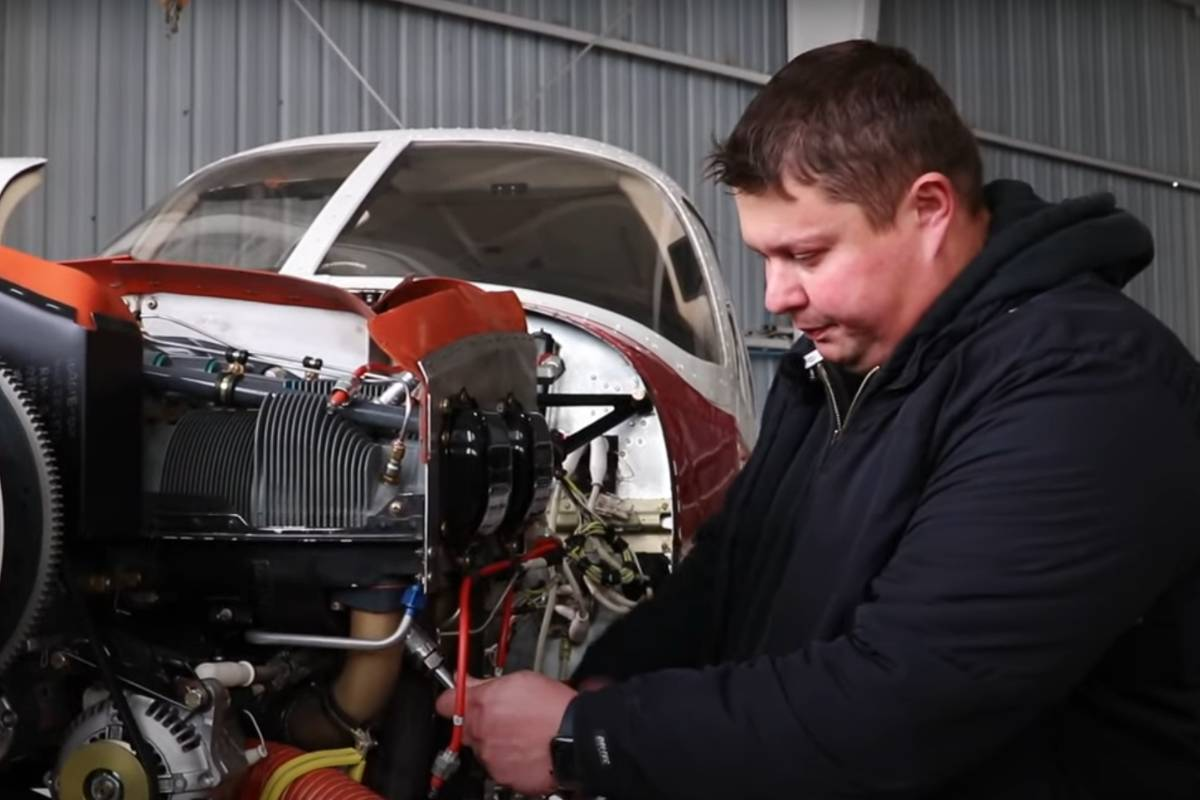
When a licensed A&P mechanic performs a 50-hour inspection on a Lycoming engine, they’re working through a specific process guided by the maintenance manual and Lycoming’s published service instructions. This isn’t a quick glance — it’s a structured walkthrough of the engine and its connected systems.
The mechanic will visually inspect the outside of the engine first, looking for oil streaks, fluid leak points, cracked hoses, loose fittings, and anything out of place. Key areas they examine include:
- Cylinder walls and heads — looking for cracks, heat discoloration, or damage
- Exhaust system connections — checking for corrosion, cracks, or loose clamps
- Valve covers — inspecting for oil leaks and checking proper torque
- Breather tube — making sure it’s clear and not clogged or kinked
- Turbo system (if equipped) — checking for oil leaks, heat damage, and secure connections
- Wiring and ignition leads — looking for chafing, corrosion, or loose connections
- Propeller — checking for nicks, cracks, and security at the flange
The goal is to detect small problems before they become airworthiness concerns. Many issues, when caught early, require simple corrective action — tightening a fitting, replacing a gasket, cleaning a component.
Curious about which parts wear out most? See: Lycoming Engine Parts Often Replaced
Oil Changes and Filter Inspections
One of the most important parts of the 50 hr check is the oil service. Oil changes every 50 hours — or at least every four months — are a core part of keeping a Lycoming engine healthy. Old oil can’t protect your engine as well as fresh oil.
Here’s what the oil service process looks like:
- Drain the old oil — while it’s warm so it carries contaminants out completely
- Remove and inspect the oil filter — cutting it open to check for metallic particles or debris
- Check for solids — Lycoming’s solids identification process helps mechanics spot abnormal wear patterns
- Install a new filter — using the correct part number from the maintenance manual
- Refill with the correct oil — following the spec listed in the POH and maintenance documentation
Finding metallic debris in the filter is a significant finding. Fine, powdery material might be normal wear. Chunks or flakes could indicate a more serious internal problem. The fuel strainer is also checked during this service — a clogged strainer can cause fuel flow issues that affect engine performance and safety.
Spark Plugs and Ignition System Checks
Spark plug condition tells a mechanic a lot about what’s happening inside your engine. The color, deposits, and physical condition of each plug give insight into combustion temperatures, oil consumption, and mixture settings.
During the 50-hour visit, the mechanic will:
- Remove each spark plug carefully to avoid thread damage
- Visually inspect each plug for fouling, erosion, or cracks
- Gap-check the plugs against the spec in the maintenance manual
- Clean and re-gap plugs that are still serviceable, or replace those that aren’t
- Rotate plugs from top to bottom positions to ensure even wear (a common Lycoming practice)
- Inspect ignition leads and check for chafing or cracking in the insulation
The ignition system also gets attention. Wiring connections are checked for security and corrosion. The magneto timing may be verified if there’s any indication it’s drifted. A properly functioning ignition system is essential for reliable engine starts and smooth operation.
Need help diagnosing engine issues? Read: Lycoming Engine Troubleshooting
How Much Does a 50-Hour Inspection Cost?
The cost of a 50-hour inspection varies depending on where you are, who does the work, and what the mechanic finds. Here’s what most aircraft owners can expect:
| Item | Typical Cost Range |
|---|---|
| Labor (1–2 hours) | $80–$200 |
| Oil and filter | $40–$80 |
| Spark plug service | $30–$80 |
| Miscellaneous parts | $20–$100+ |
| Total | $150–$450+ |
If the engine inspection turns up additional issues — a leaking breather, worn ignition lead, or cracked exhaust fitting — those repairs will add to the bill. That said, catching problems at the 50-hour mark almost always costs less than catching them at overhaul time.
Planning ahead for long-term engine costs? Read: Should I Overhaul or Replace My Lycoming Engine?
Can You Skip or Delay This Inspection?
This is a common question — and the answer depends on your situation, but in most cases, skipping is a bad idea.
For private owners flying for personal use, the 50-hour inspection is technically recommended, not legally mandatory under FAA rules. However, your POH or logbook requirements may include it. For commercial operations and flight schools, the FAA requires 100-hour inspections every 100 hours of operation.
Here’s why skipping is risky even when it’s not required:
- Small developing issues grow into bigger ones fast when inspections are skipped
- Your IA will notice gaps in your logbook during the annual inspection
- Pre-buy evaluations will flag missing service records immediately
- Hours since last service is one of the first things any buyer or ferry pilot will ask about
Staying on schedule protects your engine, your passengers, and your investment.
How to Keep Track of Your Engine Hours
Tracking flight hours doesn’t have to be complicated. Most aircraft have a Hobbs meter or tachometer that logs engine time. Here are some simple ways to stay on top of your 50-hour and 100-hour service schedule:
- Log every flight in your aircraft logbook — even short ones
- Set a reminder in your phone or calendar when you’re within 5 hours of the next 50-hour or 100-hour threshold
- Talk to your mechanic after each inspection — they can note the next due time directly in the maintenance records
- Use an app — several aviation apps let you track engine hours and upcoming inspections
- Keep your logbooks current — gaps in records are a red flag for buyers and IA inspectors alike
Staying organized costs nothing and saves you from scrambling to remember when things are due. It also gives you confidence that your aircraft is always ready to fly safely.
Learn more about what planes use Lycoming engines: What Planes Use Lycoming Engines?
Conclusion
The 50 hour inspection for Lycoming engines is one of the simplest, most cost-effective things you can do to protect your aircraft and everyone who flies in it. It’s not a big, complicated event — it’s a focused, routine check that keeps small problems from becoming expensive ones. Staying current on your inspections means more confidence in the air, fewer surprises at annual time, and a better-maintained aircraft overall.
If you want to keep learning about engine care, inspection requirements, and smart ownership tips, Flying411 has a growing library of articles written with real pilots and owners in mind.
Frequently Asked Questions
Can a private pilot perform the 50-hour inspection themselves?
No — a private pilot certificate alone does not authorize you to perform engine maintenance. The 50-hour inspection must be completed by a licensed A&P mechanic. However, pilots can perform certain preventive maintenance items listed in FAR Part 43, such as checking tire pressure or adding oil. Engine inspections fall outside that scope.
Does the 50-hour inspection reset the clock on the 100-hour inspection?
No, the two run on separate tracks. The 50-hour inspection is a mid-cycle engine check, while the 100-hour inspection is a separate, more comprehensive requirement for commercial operations. Completing a 50-hour service does not extend or replace the 100-hour interval — both are tracked independently based on flight hours.
What happens if my engine reaches 100 hours without a 50-hour inspection?
For private owners not flying for hire, skipping the 50-hour check won’t trigger an FAA violation on its own. However, if your maintenance manual or POH requires it, you may have a compliance issue. Your A&P or IA will likely note the gap during your next annual inspection, and it could affect your engine’s warranty coverage if still under one.
Are there differences in the 50-hour inspection for turbocharged Lycoming engines?
Yes. The turbo system itself — including oil supply and return lines, heat shields, and the turbocharger housing — gets inspected for leaks, cracks, and wear. Turbo engines also tend to run hotter, which means exhaust and cylinder components need closer attention during each 50-hour visit.
How does the 50-hour inspection relate to the engine’s TBO?
The 50-hour inspection is part of the routine maintenance that helps your engine reach its full TBO — typically 1,200 to 2,000 hours depending on the model. Skipping regular service intervals can accelerate wear and lead to early overhaul. Keeping up with 50-hour checks is one of the best ways to protect your engine’s long-term health and reach TBO on schedule.