Your aircraft's engine is its heart. Take care of it well, and it will take care of you up in the sky. Ignore it, and you could find yourself grounded at the worst possible time — or worse, dealing with a failure in flight. Lycoming engine maintenance is not just about following a checklist. It is about building habits that keep your engine healthy for every single hour it runs.
Lycoming engines are known for being tough and reliable. They power thousands of general aviation aircraft, from Cessnas to Pipers to experimental builds. But even the toughest engine needs consistent attention. Whether you are a new aircraft owner or a seasoned pilot with hundreds of hours in your logbook, this guide gives you 13 practical tips to stretch your engine's life — and get you to TBO and beyond.
Key Takeaways
Proper Lycoming engine maintenance comes down to consistency. Change your oil every 50 hours or 4 months, fly regularly to prevent corrosion, lean the mixture correctly, and monitor cylinder health through compression tests and oil analysis. Following manufacturer guidelines, staying current on Airworthiness Directives, and working with a trusted A&P mechanic are the three pillars that keep your engine airworthy and your flights safe.
| Key Topic | Quick Summary |
| Oil change interval | Every 50 hours or 4 months (25 hours with pressure screen only) |
| Flying frequency | At least once a week to prevent cylinder corrosion |
| CHT limit | Keep cylinder head temps under 400°F |
| TBO reference | ~2,000 hours for most Lycoming models (Part 91 operators may fly "on condition") |
| Oil analysis | Run at every oil change to catch wear trends early |
| Shock cooling | Reduce power gradually — no more than 1" manifold pressure per minute |
| ADs | Mandatory — check FAA's DRS for your specific serial number |
| Service Bulletins | Not mandatory for Part 91, but highly recommended |
| Warm-up | Let oil temp reach the green arc before applying high power |
| Break-in period | Critical for new or freshly overhauled engines — see break-in guidance |
Why Proactive Lycoming Engine Maintenance Is Non-Negotiable
Ignoring small engine issues is a fast track to grounded flights and a drained bank account. A minor oil leak today could be a cracked cylinder tomorrow. That small problem that "feels fine" can turn into a catastrophic failure — and those do not wait for convenient moments.
Beyond safety, good maintenance habits protect your investment. An engine with a complete, documented service history commands a higher resale price and gives buyers confidence. It shows the aircraft has been cared for, not just flown.
Airworthiness also is not optional. Federal Aviation Regulations (FAR) Part 43 and Part 91 place the responsibility squarely on the owner and operator to keep the aircraft in an airworthy condition. Staying ahead of maintenance means staying legal, staying safe, and staying in the air.
13 Essential Tips for Extending Your Lycoming Engine's Life
1. Master the Preflight and Post-Flight Inspection
Many pilots treat the preflight as a quick glance. It should be a forensic investigation. You are the first line of defense against engine failure, and your eyes are your most powerful tool.
When you check the oil, do not just confirm the level. Look at the color. Is it unusually dark for the hours flown? Is there a milky residue on the dipstick? That milkiness can mean moisture has gotten into the crankcase — and moisture means corrosion.
Check the cowling and the ground under the engine. Fresh oil drips, blue fuel stains, or soot around the exhaust stacks all tell a story. Drain the fuel sumps thoroughly and keep draining until no contaminants appear.
After the flight, take another look. Heat can expand cracks and loosen fittings that were tight when cold. A post-flight inspection often catches leaks that only show up under pressure.
2. Follow a Consistent Oil Change Schedule
Oil is the lifeblood of your Lycoming. It cools, cleans, and lubricates parts moving at high speeds under extreme heat. Over time, oil breaks down, loses viscosity, and turns acidic — and acidic oil eats engine internals.
Lycoming's recommendation: Change the oil every 50 hours or 4 months, whichever comes first. If your engine only has a pressure screen (no full-flow filter), drop that interval to 25 hours.
Do not ignore the calendar limit. Even if you have only flown 10 hours in four months, old oil sitting in a crankcase accumulates moisture and combustion byproducts. This causes internal corrosion — the silent killer of aircraft engines. An oil change costs you a couple of hours and a small amount of money. An early overhaul costs tens of thousands.
Pro Tip: Always change the oil after an engine has been sitting for several months, even if the hour count looks fine. Time matters as much as flight hours.
3. Use Oil Analysis to Spot Trouble Early
Think of oil analysis as a blood test for your engine. You send a small sample of used oil to a lab at every oil change, and the lab reports back on microscopic wear metals that you cannot see with the naked eye.
The lab measures:
- Aluminum — from pistons
- Iron — from cylinders and crankshaft
- Copper — from bearings
- Silicon — from dirt or gasket material
One elevated reading might not be cause for alarm. But a trend line showing a rapid spike in iron over several samples could mean a cam lobe is wearing down — something you would never catch until it failed.
Collect the sample midstream while the oil is hot. This keeps contaminants suspended in the fluid rather than settled at the bottom. Consistent sampling gives you a baseline so you can spot deviations early — before they become expensive emergencies.
4. Lean Aggressively and Correctly
Improper leaning is one of the most common causes of cylinder head problems and spark plug fouling. Many pilots are afraid to lean, fearing they will "fry" a cylinder. But running too rich is just as damaging — it builds carbon deposits on valves and spark plugs, which can cause stuck valves and rough running.
Follow your Pilot's Operating Handbook (POH) for specific leaning procedures. For most Lycoming engines, lean the mixture at any altitude when cruising at 75% power or less.
Use your Exhaust Gas Temperature (EGT) gauge as your guide. Lean until the engine runs rough, then enrich slightly until it smooths out. Whether you fly rich-of-peak or lean-of-peak depends on your engine's setup and your mechanic's advice. The goal is stable internal temperatures and clean combustion.
| EGT Strategy | Best For | Key Consideration |
| Rich of Peak (ROP) | High-power operations | Cooler CHTs, higher fuel burn |
| Lean of Peak (LOP) | Cruise efficiency | Lower CHTs, requires proper setup |
| Peak EGT | Short-term reference point | Not a cruise setting |
5. Let Your Engine Warm Up and Cool Down Properly
Metal expands when heated and contracts when cooled. Your engine is made of different metals — aluminum cylinder heads and steel barrels — that expand and contract at different rates. "Shock cooling" happens when the engine cools too rapidly. The heads contract faster than the barrels, which can crack the head.
At startup, let the engine idle until the oil temperature reaches the green arc. Do not apply high power for takeoff with cold oil. Cold oil is thick, does not circulate well, and can blow out seals.
On descent, avoid chopping the power from cruise to idle. Plan your arrival so you reduce power gradually — ideally by no more than one inch of manifold pressure per minute. This gives the engine time to stabilize thermally and prevents stress fractures over time.
Cold weather note: Starting a Lycoming in cold conditions requires special care. Review the Lycoming cold weather starting guide before flying in freezing temperatures.
6. Fly Your Aircraft Regularly
Aircraft engines hate inactivity. When a plane sits for weeks, the oil film drains off the cylinder walls and exposes bare steel to air. Moisture reacts with that steel, causing rust. This pitting corrosion destroys the cylinder walls and wrecks the piston rings' sealing performance.
The target: Fly at least once a week for at least one hour. This gets the oil hot enough — around 180°F or higher — to boil off moisture that has accumulated in the crankcase.
Ground running is not a substitute. It rarely gets the oil hot enough, and it can actually cause uneven heating that does more harm than good.
If you know the aircraft will sit for more than 30 days, consult Lycoming Service Letter L180B on engine preservation. This covers using preservative oil and installing desiccant plugs to protect internal surfaces during storage.
7. Keep Your Cylinders Healthy
Cylinders take more abuse than any other part of your engine. They contain the controlled explosions that make your aircraft fly. Monitoring their health is critical.
Watch your Cylinder Head Temperatures (CHT) during climb and cruise. Keep them well below the redline — ideally under 400°F. Sustained high CHTs accelerate metal fatigue and can crack cylinder heads.
Run regular compression tests. A differential compression test (typically done during annual or 100-hour inspections) measures how well the rings and valves are sealing.
| Compression Reading | What It Means |
| 76/80 or higher | Excellent condition |
| 70–75/80 | Acceptable, monitor closely |
| 60–69/80 | Wear present, investigate |
| Below 60/80 | Immediate attention needed |
Listen during the test. Air escaping from the exhaust indicates a leaking exhaust valve. Air coming from the breather line indicates worn rings. Catching a low-compression cylinder early often allows a top overhaul — fixing just the cylinder — rather than waiting until the problem reaches the entire engine.
8. Pay Attention to Baffles and Seals
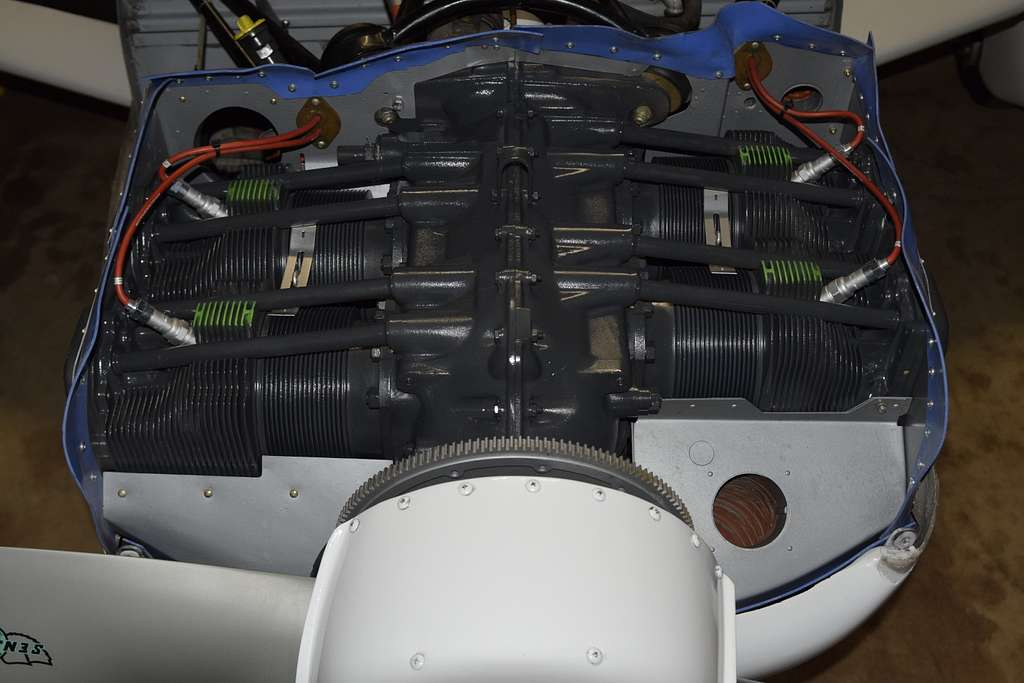
Your Lycoming is an air-cooled engine. It depends on a system of aluminum baffles and rubber seals to force high-pressure air down through the cylinder fins. If those baffles are cracked or bent, or the rubber seals are folded backward, air takes the path of least resistance and bypasses the cylinders entirely.
The result? Hot spots — especially on the rear cylinders, which naturally run hotter than the front ones.
During your preflight (look through the cowl inlets) and during oil changes (with the cowl off), inspect the baffling closely. The rubber seals should be flexible and pointed upward and forward into the airflow, creating a tight seal against the cowling.
Replacing worn baffle seals is a low-cost fix. Neglecting them can lead to cylinder damage that costs thousands to repair.
9. Understand and Comply With Airworthiness Directives (ADs)
Airworthiness Directives are not suggestions. They are mandatory FAA regulations issued to correct unsafe conditions. Ignoring an AD makes your aircraft unairworthy and illegal to fly — period.
ADs for Lycoming engines have addressed issues including oil pump gears, crankshaft replacements, and fuel injector lines. You need to know which ADs apply to your specific engine serial number.
- One-time ADs: Required fix, then done
- Recurring ADs: Required inspection every 50 or 100 hours
Check the FAA's Dynamic Regulatory System (DRS) website or work with your mechanic to review your AD compliance record. Your annual inspection should include an AD compliance check, but as the owner, you are ultimately responsible.
10. Don't Ignore Manufacturer's Service Bulletins (SBs)
Lycoming issues Service Bulletins to inform owners about product improvements and recommended inspections. For Part 91 non-commercial operators, SBs are technically not mandatory — but ignoring them is unwise.
Many SBs become Airworthiness Directives when the underlying problem turns out to be serious enough. By proactively complying with SBs, you are following the manufacturer's best thinking about how to keep your engine healthy.
Often, an SB introduces a more durable part or a better inspection method. Think of them as Lycoming saying, "We learned something new — here is how to do it better." Treat recommended SBs as strong guidance, not optional reading.
11. Choose the Right Fuel and Check for Contamination
Lycoming engines are designed to run on specific grades of aviation fuel — typically 100LL (low lead). Using a lower-grade fuel can cause detonation: an uncontrolled explosion inside the cylinder that can destroy an engine in seconds. That is not a slow failure. It is catastrophic.
Always verify the fuel grade before fueling. Never use automotive gasoline (Mogas) unless you have a specific Supplemental Type Certificate (STC) that covers your airframe and engine combination.
Fuel contamination is a serious risk. Water condenses in fuel tanks, especially when they are left partially full overnight as temperatures drop. Rust or dirt can clog fuel injectors. Sumping before every flight is the only way to be sure your fuel is clean.
What to look for in 100LL: It should be blue. Colorless fuel, or fuel with visible sediment, means you stop and investigate before that engine starts.
12. Trust Your Ears: Listen for Unusual Noises
You know your engine better than anyone else. You know how it sounds at idle, during run-up, and at cruise power. When that sound changes, pay attention.
- A new ticking noise could be an exhaust leak
- A stumble during mag checks could be a fouled spark plug
- A vibration that was not there yesterday could be a propeller imbalance or an internal engine issue
Do not normalize these changes. If something sounds or feels off, do not fly. Document the symptoms specifically. "It feels rough" tells your mechanic almost nothing. "It vibrates noticeably at 2,300 RPM but smooths out at 2,500 RPM" gives them a real clue to chase down.
Your senses are diagnostic tools. Use them.
13. Build a Relationship with a Trusted A&P Mechanic
You cannot do all of this alone — nor should you. While FAR Part 43, Appendix A allows aircraft owners with at least a private pilot certificate to perform certain preventive maintenance tasks (oil changes, spark plug cleaning, battery replacement), heavy maintenance requires a certified Airframe and Powerplant (A&P) mechanic.
A great A&P is not just a service provider. They are a partner. They will explain what they are fixing and why. They will help you plan for upcoming maintenance costs and help you read oil analysis trends. They will notice things you miss.
Finding the right mechanic matters. The Flying411 Aviation Business Directory is a great resource for locating certified service centers and A&P mechanics in your area who specialize in Lycoming engines.
Beyond the Basics: Advanced Engine Health Monitoring
Technology has given general aviation pilots tools that were once only available to commercial operators. Modern Engine Monitoring Systems (EMS) have changed how we care for piston engines.
Old analog gauges are often slow and imprecise. A digital engine monitor gives you real-time data on CHT and EGT for every cylinder — with alarms that trigger the moment a parameter goes out of range. You can also track fuel flow, oil pressure, and even signs of carburetor icing.
Data logging takes it further. Download your flight data after the flight and review trends over time. A cylinder that consistently runs 20°F hotter than the others is telling you something, even if it has not caused a problem yet.
For pilots interested in upgrading their panel, understanding your monitoring options is worth the research time.
New Engine? Break-In Matters More Than You Think
If you have recently installed a new or freshly overhauled engine, the break-in period is one of the most important phases in the engine's entire life. How you treat those first 50 hours sets the tone for everything that follows.
The goal during break-in is to seat the piston rings against the cylinder walls properly. This requires flying at higher power settings (65–75%) and avoiding prolonged ground running. Many owners are too gentle with a new engine — but that caution can actually prevent the rings from seating correctly, leading to higher oil consumption for the life of the engine.
Read the complete guide to breaking in a new Lycoming engine before logging those first crucial hours.
Rebuilt vs. Overhauled: Know the Difference Before You Spend
When your engine reaches the end of its service life, you will face a major decision. Should you get a factory overhaul, a factory rebuilt engine, or a field overhaul? These are not the same thing, and the difference can significantly affect your costs, your warranties, and the engine's expected lifespan.
A factory rebuilt engine is built to new limits by the manufacturer at their facility. A factory overhauled engine is returned to serviceable limits. A field overhaul is performed by an independent shop — quality varies widely.
For a deep dive on this decision, the Lycoming rebuilt vs. overhaul comparison lays out the tradeoffs clearly. And if you are weighing a factory new engine against a factory rebuilt option, the Lycoming factory new vs. factory rebuilt guide is required reading before you write that check.
When Is It Time for an Overhaul?
Despite your best maintenance efforts, every engine eventually reaches the end of its service life. TBO — Time Between Overhaul — is the manufacturer's recommended interval. For many Lycoming models, that is around 2,000 hours.
However, for Part 91 (non-commercial) operators, TBO is not a mandatory expiration date. If your engine has good compression, clean oil analysis results, and low oil consumption, you may be able to fly past TBO "on condition" with proper documentation and your mechanic's sign-off.
Conversely, an engine that has sat inactive for years may need an overhaul at 500 hours due to corrosion damage. Hours alone do not tell the whole story.
Signs that an overhaul is coming:
- Sudden increase in oil consumption
- Metal particles in the oil filter
- Consistently low cylinder compression readings
- A prop strike (even a minor one — always have the engine inspected after any prop strike)
When the time comes, work with a certified Lycoming overhaul specialist. Find qualified shops and mechanics through the Flying411 directory.
Conclusion
Lycoming engine maintenance is not complicated — but it does require consistency. The 13 tips in this guide give you a clear roadmap: stay on top of oil changes, fly regularly, lean correctly, watch your cylinder health, and keep your paperwork current. Add a trusted A&P mechanic to your team, invest in an engine monitor, and treat manufacturer guidance as the valuable resource it is.
An engine that is cared for properly will reward you with reliable performance, lower long-term costs, and the confidence that comes from knowing your powerplant is in good shape.
Whether you are researching your first aircraft purchase, planning an overhaul, or just looking to be a more informed owner, Flying411 has the resources to help. Browse the Flying411 directory to find certified Lycoming mechanics and overhaul shops in your area, and explore the blog for practical guides on every stage of aircraft ownership.
Frequently Asked Questions
How often should I change the oil in my Lycoming engine?
Lycoming recommends changing the oil every 50 hours or 4 months, whichever comes first. If your engine only has a pressure screen instead of a full-flow filter, drop that interval to 25 hours or 4 months.
What is the difference between an annual inspection and a 100-hour inspection?
An annual inspection is required for all aircraft every 12 calendar months. A 100-hour inspection is only required for aircraft carrying passengers for hire or used for flight training. The scope of both inspections is identical, but an annual must be signed off by a mechanic with Inspection Authorization (IA). A standard A&P can sign off a 100-hour.
Can I perform my own preventive maintenance on my Lycoming engine?
Yes — if you own the aircraft and hold at least a private pilot certificate, FAR Part 43, Appendix A allows you to perform specific tasks yourself. These include oil changes, spark plug cleaning, and battery replacement. Anything beyond that list requires a certified A&P mechanic.
What are the most common signs of a failing Lycoming engine?
Watch for high oil consumption, metal flakes in the oil filter, low cylinder compression readings, new oil leaks, and unusual vibrations or noises during operation. Any combination of these warrants a conversation with your A&P before the next flight.
Is it safe to fly past my Lycoming engine's TBO?
It can be safe if the engine is maintained "on condition." This means regular oil analysis, compression checks, and borescope inspections must confirm the engine remains airworthy despite high hours. It requires diligence, documentation, and a mechanic who understands what to look for.
How can I prevent engine corrosion during long periods of inactivity?
The best prevention is flying regularly — at least once every one to two weeks. If the aircraft must sit for more than 30 days, follow Lycoming's preservation guidelines in Service Letter L180B. This typically involves using preservative oil and installing desiccant plugs in the cylinders to absorb moisture.
What is "shock cooling" and how do I avoid it?
Shock cooling happens when an engine cools too rapidly — for example, when a pilot chops the throttle to idle from cruise power. The aluminum cylinder heads contract faster than the steel barrels, which can crack the head over time. Avoid it by reducing power gradually during descent, ideally by no more than one inch of manifold pressure per minute.
Where can I find Airworthiness Directives (ADs) for my Lycoming engine?
ADs are published by the FAA on their Dynamic Regulatory System (DRS) website at rgl.faa.gov. Search by engine model and serial number. Your mechanic should also run an AD compliance review during your annual inspection.
Are Lycoming Service Bulletins (SBs) mandatory?
For Part 91 non-commercial operators, SBs are generally not mandatory unless they are accompanied by an AD. That said, complying with SBs is strongly recommended — they represent the manufacturer's best guidance on keeping your engine safe and healthy.
What is the best way to find a reliable A&P mechanic for my Lycoming engine?
Look for mechanics with specific Lycoming experience and familiarity with your aircraft model. The Flying411 Aviation Business Directory is a practical resource for finding rated repair stations and certified mechanics in your area.
Does oil analysis really matter if my engine sounds fine?
Yes — it matters a great deal. Many engine failures develop slowly and silently. Oil analysis catches metal contamination trends weeks or months before they become audible or visible. Think of it as early warning radar for your engine.
What happens if I use the wrong fuel in my Lycoming?
Using a fuel grade lower than specified can cause detonation — an uncontrolled explosion inside the cylinder. Detonation can destroy an engine rapidly, sometimes in a single flight. Always verify the fuel grade before fueling, and never use automotive gasoline without a proper STC on file.