If you own or fly a piston-powered airplane, you already know the engine is everything. It's the one part of the aircraft that demands the most attention — and the most money when something needs to be done. So when the time comes for major engine work, every Lycoming owner faces the same big question: should you go with a Lycoming rebuilt vs overhaul engine?
It's a question that sounds straightforward, but the differences between these two paths go deeper than most people realize. We're talking about real gaps in cost, legal status, warranty coverage, resale value, and how the FAA views your engine going forward. According to aviation safety data, engine-related mechanical issues remain one of the top causes of incidents in general aviation — so getting this decision right matters for your safety, your wallet, and your peace of mind.
Whether you're comparing a new vs overhauled vs rebuilt aircraft engine for the first time or you've been through the process before, this guide will walk you through every detail you need to make a smart, confident choice.
Key Takeaways
A Lycoming rebuilt engine comes directly from the Lycoming factory. It gets completely disassembled and reassembled to factory-new tolerances, receives a brand-new data plate, and earns the FAA status of "zero time since new" — just like a brand-new engine. An overhauled engine, on the other hand, is rebuilt by an FAA-certified shop (or the factory) using a mix of new and serviceable used parts. It keeps its original serial number and carries the status of "zero time since major overhaul." The rebuilt path costs more upfront but delivers stronger resale value and a factory warranty. The overhaul path costs less and is a solid choice for owners who plan to keep flying the aircraft long-term. Neither option is wrong — it depends on your budget, your goals, and how long you plan to own the airplane.
| Feature | Lycoming Factory Rebuilt | Overhauled Engine |
| Performed by | Lycoming factory only | FAA-certified shop or factory |
| New data plate | Yes | No |
| Serial number | New (original replaced) | Original retained |
| Parts standard | New or factory-new tolerances | Mix of new and serviceable used |
| FAA logbook status | Zero time since new | Zero time since major overhaul |
| Typical cost | $20,000–$40,000+ | $10,000–$25,000+ |
| TBO (Time Between Overhaul) | Full factory TBO | Same TBO as original |
| Warranty | Factory warranty (typically 1 year) | Shop warranty (varies by facility) |
| Best for | Long-term value, resale, factory confidence | Budget-conscious owners, long-term keepers |
Why Your Lycoming Engine Matters More Than You Think
Your engine is the heart of your aircraft. Nothing else matters if it isn't running right. Lycoming is one of the most trusted names in general aviation, and for good reason — their engines power thousands of airplanes across the fleet, from basic Cessna and Piper trainers to more complex aircraft like Mooneys and Bonanzas.
Every piston engine has a TBO, or Time Between Overhaul. This is the manufacturer's recommended limit for how many hours an engine should run before it needs major work. Lycoming sets these limits based on extensive testing and real-world engineering data. For Part 91 (non-commercial) operators, flying past TBO isn't technically illegal — but it carries real risk and can affect your insurance coverage and resale value.
Here's why Lycoming engines remain the standard in general aviation:
- They power a massive portion of single-engine and light twin aircraft in the United States and worldwide.
- Parts availability is excellent, which keeps long-term maintenance costs more manageable than many other brands.
- They carry a long track record of reliable performance when maintained according to Lycoming's service bulletins and recommendations.
- FAA-approved overhaul and rebuild standards are clearly established, giving owners and shops a solid framework to follow.
When your engine runs well, your flights are safer, your fuel burn stays efficient, and your aircraft holds its value. Neglecting engine health is one of the most expensive mistakes an aircraft owner can make — and by the time problems show up in flight, the repair bill is almost always bigger than it would have been with proactive maintenance.
Signs Your Lycoming Engine May Need Major Work
Not sure if your engine is due for serious attention? There are some clear warning signs that experienced owners and mechanics watch for. A good A&P mechanic will catch most of these during annual inspections, but knowing what to look for yourself keeps you informed and ahead of potential problems.
Common warning signs include:
- High oil consumption — If you're burning through oil faster than normal (for most Lycoming engines, more than one quart every 4–6 hours is a concern), internal wear may be the cause.
- Metal particles in the oil filter — This is a major red flag. Metal shavings or flakes in the filter screen mean something inside the engine is wearing down and shedding material.
- Low compression readings — Each cylinder should hold pressure within Lycoming's published limits during a differential compression test. Readings below 60/80 (or a significant drop from previous checks) point to worn rings, valve issues, or damaged cylinder walls.
- Rough running or excessive vibration — This could indicate problems with magnetos, fuel delivery, worn engine mounts, or internal component imbalance.
- Visible oil leaks — Small seeps at gasket surfaces are common on older engines. But significant leaks from case halves, pushrod tubes, or accessory housings need immediate attention.
- Approaching or past TBO — Even without obvious symptoms, total time and calendar age both matter. Corrosion can develop in engines that sit, even with low total hours.
Tip: If you're seeing more than one of these signs at the same time, it's time to have a serious conversation with your mechanic. Catching problems early almost always costs less than waiting until something fails in flight.
For a deeper look at timing and decision factors, check out this guide on when to overhaul an aircraft engine.
Two Main Paths: Rebuilt or Overhauled?
Once you've decided major engine work is needed, you have two primary paths forward: a factory rebuild from Lycoming or an engine overhaul from an FAA-certified shop. Both can return your engine to airworthy condition, but they are not the same process — and the differences affect everything from your logbook to your wallet.
Here's the simplest way to think about it:
A factory rebuild means the engine goes back to the Lycoming factory in Williamsport, Pennsylvania. It gets completely disassembled down to the last bolt. Every part is inspected and either replaced with new components or brought back to factory-new tolerances. The engine receives a brand-new data plate and a new serial number. In the eyes of the FAA, it's treated as zero time since new — the same status as an engine that just rolled off the assembly line.
An overhaul means the engine is sent to an FAA-certified repair station (or, in some cases, the Lycoming factory itself for a factory overhaul). The engine is disassembled, inspected, and reassembled using a combination of new parts and serviceable used parts. The engine keeps its original serial number, and the logbook entry shows "zero time since major overhaul" — not zero time since new. The engine's full history stays attached.
Key legal distinction: A rebuilt engine is the only engine type that is legally allowed to drop its prior history under FAA regulations. An overhauled engine retains its entire history. This distinction matters significantly for resale, insurance, and how future buyers evaluate your aircraft.
Lycoming Rebuilt vs Overhauled Engines: A Look Into the Differences
This is where most aircraft owners need to slow down and really examine the details. The choice between a rebuilt engine and a Lycoming overhaul isn't just about the sticker price. It touches on FAA legal status, parts standards, resale impact, warranty protection, and long-term cost of ownership. Let's go through each area carefully.
What "Zero Time" Really Means
The term "zero time engine" gets used a lot in aviation, and it causes real confusion. Let's clear it up.
A factory-rebuilt engine from Lycoming starts its life completely over. It receives a new data plate with no reference to previous hours, cycles, or history. Under 14 CFR §91.421, only the original equipment manufacturer (OEM) — in this case, Lycoming — is authorized to issue "rebuilt" status. The engine must be built to new manufacturing limits, not just serviceable limits. The result is an engine that legally carries the status of zero time since new (TTSN).
An overhauled engine carries the status of zero time since major overhaul (SMOH). It keeps its original serial number and logbooks. The engine's complete history — every annual inspection, every oil change, every prior repair — stays part of the record. That's not inherently bad, but it does mean a knowledgeable buyer can see everything.
| Status | What It Means | Who Can Assign It |
| Zero time since new (TTSN) | Factory rebuilt — full fresh start, new data plate | Lycoming factory only |
| Zero time since major overhaul (SMOH) | Overhauled — history retained, original serial number | Any FAA-certified repair station |
| Total time since new | Total accumulated hours on original engine build | N/A — running total in logbook |
How Each Engine Type Is Built
Understanding the actual assembly process helps explain why the price gap exists between these two options.
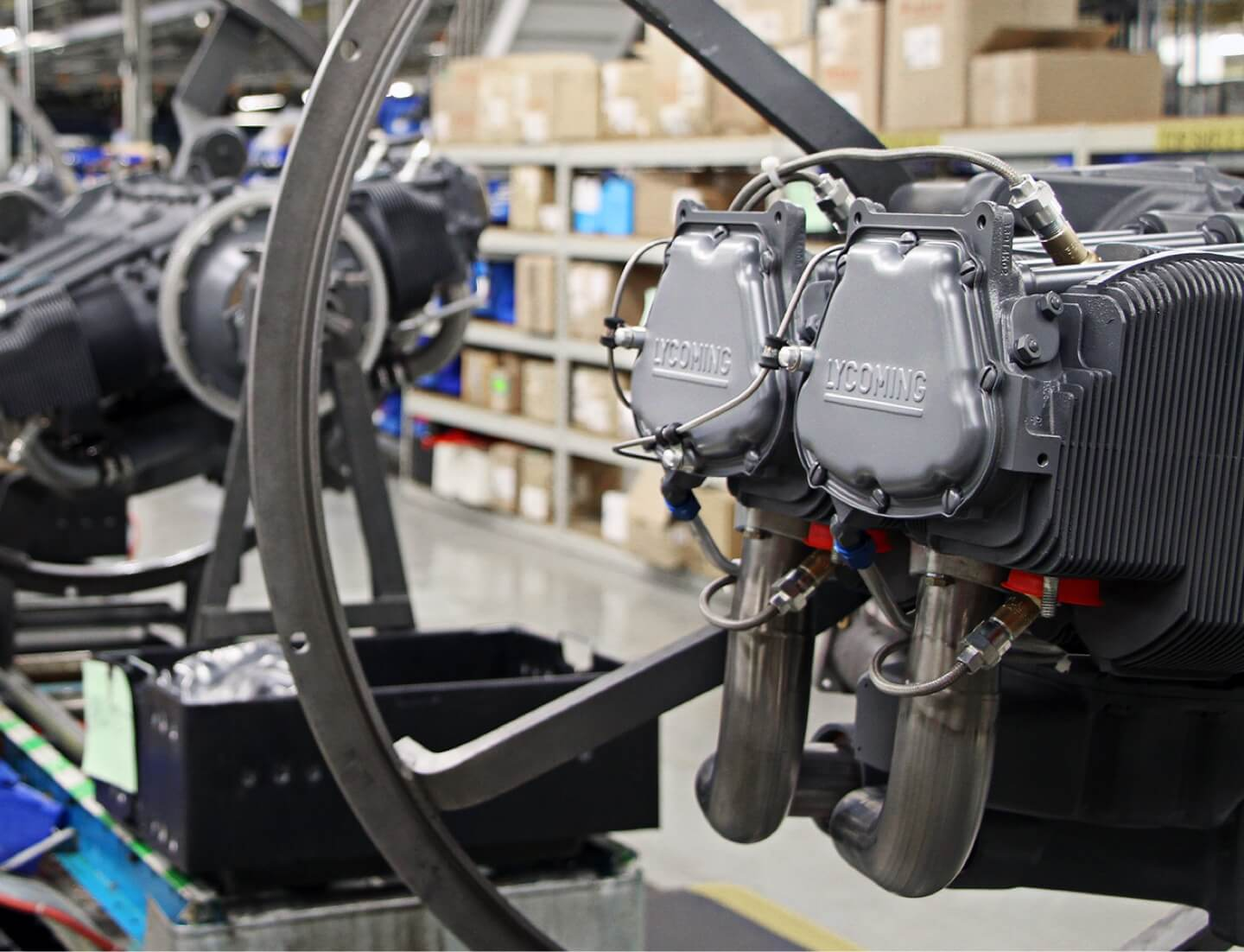
Lycoming factory rebuilt engines go through the company's own controlled process. Every component is inspected against factory-new specifications — not just "serviceable" specs. Crankshafts are checked to new dimensional tolerances. Connecting rods, camshafts, gears, and case halves all must meet the same standards as parts going into a brand-new engine. If a part doesn't measure up, it gets replaced with a new OEM component. The result is an engine that, at least on paper, is indistinguishable from a new engine.
Overhauled engines follow a different standard. An FAA-certified overhaul shop disassembles the engine, inspects each part, and determines whether it meets "serviceable limits" — the minimum dimensions and conditions that make a part safe to continue using. Parts that are still serviceable get cleaned, treated, and reinstalled. Parts that are beyond serviceable limits get replaced — often with new OEM parts, but sometimes with PMA (Parts Manufacturer Approval) parts from third-party manufacturers.
Example: Consider a crankshaft. In a factory rebuild, the crankshaft must measure within the same tolerances as a brand-new crankshaft coming off the manufacturing line. In an overhaul, the crankshaft must measure within the broader "serviceable limits" published in Lycoming's overhaul manual. Both are legal and safe — but the factory rebuild crankshaft starts at a tighter spec.
Here's a breakdown of how key components are handled:
| Component | Factory Rebuild Standard | Overhaul Standard |
| Crankshaft | New manufacturing tolerances | Serviceable limits |
| Camshaft | New or meets new specs | Serviceable or replaced |
| Case halves | New tolerances; replaced if needed | Serviceable limits; repaired if possible |
| Cylinders | New or rebuilt to new limits | Serviceable, rehoned, or replaced |
| Pistons & rings | New | New (typically always replaced) |
| Bearings | New | New (typically always replaced) |
| Gears & accessory drives | New tolerances | Serviceable limits |
| Magnetos | New or factory-rebuilt | Overhauled or replaced |
Understanding PMA Parts vs OEM Parts in Overhauls
One factor that affects both cost and perception is the type of replacement parts used during an overhaul. There are two main categories:
OEM parts are manufactured by Lycoming (or their approved suppliers) and carry Lycoming part numbers. These are the same parts used in new engines and factory rebuilds.
PMA parts are produced by FAA-approved third-party manufacturers. They've been tested and certified by the FAA as meeting the same performance and safety standards as the OEM originals. PMA parts are legal, airworthy, and widely used — but they can be a sticking point with some buyers who prefer "all Lycoming" engines.
Some overhaul shops give you the choice. A shop that uses 100% OEM parts will charge more, but the engine may carry stronger appeal at resale time. A shop that uses quality PMA parts can save you real money without sacrificing safety. It's worth asking your shop exactly which parts they plan to use before committing.
Cost Comparison: What You'll Actually Pay
Let's talk numbers. Engine work is one of the biggest expenses in aircraft ownership, so understanding the real cost range matters.
Factory Rebuilt (Lycoming) Costs
- Typical range: $20,000 to $40,000+, depending on engine model and accessories included
- What's included: Factory warranty (typically 1 year or a set number of hours), new data plate, zero time since new status, all parts meeting new manufacturing tolerances
- Pricing factors: Six-cylinder engines (O-540, IO-540) cost more than four-cylinder models (O-235, O-320). Fuel-injected (IO-series) engines cost more than carbureted (O-series) models. Turbo-normalized or turbocharged engines add significant cost.
Shop Overhaul Costs
- Typical range: $10,000 to $25,000+, depending on engine condition, model, and parts choices
- What's included: Shop warranty (varies — could be 1 year, 500 hours, or something different), zero time since major overhaul status, mix of new and serviceable parts
- Pricing factors: The condition of your "core" engine heavily affects the final price. If your cylinders, crankshaft, and case halves are in good shape, the overhaul is cheaper. If major components need replacement, costs climb fast.
For detailed cost breakdowns by specific engine model, these guides are very helpful:
- Lycoming engine overhaul cost — general overview across models
- Lycoming O-series overhaul cost — carbureted four- and six-cylinder engines
- Lycoming IO-series overhaul cost — fuel-injected models
Cost Per Flight Hour: A Different Way to Compare
Raw purchase price doesn't tell the whole story. Smart owners think about cost per hour — what the engine actually costs you for each hour you fly.
Here's a simple example using a Lycoming O-360 with a 2,000-hour TBO:
| Factory Rebuilt | Shop Overhaul | |
| Estimated cost | $30,000 | $18,000 |
| Expected TBO | 2,000 hours | 2,000 hours |
| Cost per flight hour | $15.00/hr | $9.00/hr |
| Resale value boost | ~$5,000–$8,000 higher | Baseline |
| Adjusted cost per hour | ~$11.00–$12.50/hr | $9.00/hr |
When you factor in the higher resale value a factory rebuild provides, the effective cost per hour gap narrows quite a bit. For an owner who flies 100–150 hours per year and plans to sell the aircraft within 5–7 years, the factory rebuild often makes stronger financial sense than it first appears.
Tip: Always ask for an itemized estimate before committing to any engine work. A good shop will break down parts, labor, and accessory costs so you know exactly where your money is going.
What Is a "Core Charge" and How Does It Work?
A core charge is a deposit you pay when exchanging your old engine for a rebuilt or overhauled unit. Your existing engine — the "core" — is the foundation that the shop or factory uses for the work.
Here's how it typically works:
- You send your engine (the core) to the shop or factory.
- They assess its condition — are the case halves, crankshaft, and other major components reusable?
- If your core is in good condition, the core charge is refunded or significantly reduced.
- If your core has cracked case halves, a damaged crankshaft, or other non-repairable issues, the core charge stays higher because the shop needs to source replacement components.
Core charges can range from $2,000 to $10,000+ depending on the engine model and the condition of your core. Getting a pre-assessment from your shop before sending the engine can help you avoid surprises.
Lifespan and TBO: How Long Will Each Engine Last?
Both rebuilt and overhauled engines are designed to reach their published TBO. For most Lycoming four-cylinder engines, that's 2,000 hours. For some six-cylinder models, it can be 1,800 or 2,000 hours. But real-world results depend on several factors beyond the engine work itself.
Factory Rebuilt Engine Lifespan
A factory-rebuilt engine carries Lycoming's full confidence. Every part meets factory-new specifications, so the engine is expected to reach its full TBO under normal operating conditions. Lycoming backs this up with a factory warranty — typically covering defects in materials and workmanship for 1 year or a set number of flight hours (whichever comes first).
Shop Overhaul Engine Lifespan
A well-done shop overhaul should also reach TBO — and many do. But results can vary more widely depending on the quality of the shop, the parts used, and how closely the work follows Lycoming's overhaul manual.
Some owners report shop-overhauled engines needing cylinder work (top overhaul) within the first 200–500 hours. Others sail past TBO without any issues. The variable is quality control at the shop level.
What Affects Engine Longevity After Major Work?
Regardless of whether you choose rebuilt or overhauled, these factors play a huge role in how long your engine actually lasts:
- Oil changes — Lycoming recommends oil changes every 50 hours or 4 months (whichever comes first). Following this schedule is one of the single best things you can do for engine life.
- Oil analysis — Sending oil samples to a lab (like Blackstone Laboratories) at every oil change lets you spot wear trends early, before they become expensive problems.
- Proper break-in — New and freshly overhauled engines need proper break-in procedures. For Lycoming engines, this typically means running the engine hard (high power settings) during the first 25–50 hours to seat the piston rings properly. Babying a new engine can actually cause problems.
- Avoiding prolonged inactivity — Engines that sit for weeks or months without running are prone to internal corrosion, which can drastically shorten engine life. If you fly less than 40–50 hours per year, corrosion is a real concern.
- Operating temperatures — Consistently running the engine too hot (high CHT or EGT readings) accelerates wear. Good engine monitoring equipment pays for itself.
Real-world example: An owner flying a Lycoming O-360 with a quality shop overhaul, who flies 100 hours per year, changes oil every 50 hours with filter-cut inspections, and runs an oil analysis program, has an excellent chance of reaching or exceeding the 2,000-hour TBO. The same engine, flown only 20 hours per year and stored in a humid hangar, may develop corrosion issues well before TBO — regardless of whether it was rebuilt or overhauled.
Resale Value and Insurance: How Your Engine Choice Affects the Bottom Line
This is an area that a lot of aircraft owners overlook when making the rebuilt vs overhaul decision — and it can have a significant financial impact.
Impact on Resale Value
When it comes time to sell your airplane, the engine is usually the single biggest factor in the price a buyer is willing to pay. Here's how each option stacks up:
- Factory rebuilt (zero time since new): This adds measurable value to any listing. Buyers know a factory-rebuilt Lycoming means every part meets new tolerances, backed by the factory's reputation. For popular aircraft like a Cessna 172, Piper Cherokee, or Mooney M20, a factory-rebuilt engine can justify a price premium of $5,000 to $10,000 or more over an equivalent aircraft with a shop overhaul at similar hours.
- Shop overhaul (zero time since major overhaul): The engine retains its original serial number and complete logbook history. A knowledgeable buyer will review every entry — looking at the shop's reputation, parts used, any ADs (Airworthiness Directives) complied with, and total time on the airframe. A quality shop overhaul from a well-known facility still carries good value, but it won't command the same premium as a factory rebuild.
Impact on Insurance
Insurance underwriters do pay attention to engine status. A factory-rebuilt engine with zero time since new can sometimes result in more favorable premium rates or easier underwriting approval. This is especially true for higher-value aircraft or when insuring hull values above certain thresholds.
An engine with high time since overhaul (say, 1,500+ hours of a 2,000-hour TBO) may trigger higher premiums or additional scrutiny from underwriters. Always disclose your engine's exact status to your insurer — surprises at claim time can be very costly.
For a thorough look at the tradeoffs, advantages and disadvantages of engine overhaul covers both sides of this decision in detail.
Factory Overhaul vs Shop Overhaul: Is There a Middle Ground?
Here's something worth knowing: Lycoming also offers a factory overhaul program, which is different from a factory rebuild. This is a middle-ground option that confuses a lot of people, so let's clarify.
| Option | Done By | Parts Standard | Data Plate | FAA Status |
| Factory rebuild | Lycoming factory | New manufacturing tolerances | New | Zero time since new |
| Factory overhaul | Lycoming factory | Serviceable limits (same as shop overhaul) | Original retained | Zero time since major overhaul |
| Shop overhaul | FAA-certified repair station | Serviceable limits | Original retained | Zero time since major overhaul |
A factory overhaul is performed by Lycoming at their factory, but it follows the overhaul standard — serviceable limits, not new limits. You get the benefit of Lycoming's own technicians and quality control, but the engine keeps its original serial number and history. Pricing typically falls between a shop overhaul and a full factory rebuild.
This option appeals to owners who want Lycoming's quality assurance without paying for a full rebuild and new data plate. If Lycoming offers a factory overhaul for your specific engine model, it's worth getting a quote alongside your other options.
If you're weighing the broader question of should you replace or overhaul your aircraft engine, that guide walks through the full decision process step by step.
Decision Framework: Which Option Is Right for You?
Choosing between rebuilt and overhauled isn't one-size-fits-all. The right answer depends on your specific situation. Here's a simple framework to help you decide:
A factory rebuild probably makes sense if:
- You plan to sell the aircraft within the next 5–10 years and want maximum resale value
- You want the cleanest possible logbook with zero history attached to the engine
- Factory warranty and manufacturer backing are important to you
- Your budget allows for the higher upfront cost
- You want the tightest possible tolerances for maximum longevity
A shop overhaul probably makes sense if:
- You plan to keep and fly the aircraft long-term without selling
- Budget is a primary concern and you want to minimize upfront cost
- You have a reputable, well-reviewed FAA-certified overhaul shop you trust
- The engine's history is clean and won't scare off a future buyer if plans change
- You're comfortable with the shop's warranty terms
Consider the factory overhaul middle ground if:
- You want Lycoming's own workmanship but don't need the new data plate
- Pricing falls in a comfortable range between full rebuild and shop overhaul
- You value factory quality control but plan to keep the aircraft long-term
Choosing a Reputable Overhaul Shop
If you go the overhaul route, picking the right shop is arguably the most important decision you'll make. A great shop can produce work that rivals factory quality. A mediocre one can leave you with cylinder problems, oil leaks, and unexpected costs within the first few hundred hours.
Here's what to look for:
- FAA certification — The shop must hold an FAA Repair Station Certificate (14 CFR Part 145) with the appropriate ratings for your engine type. This is non-negotiable.
- Lycoming-specific experience — A shop that specializes in Lycoming engines will know the platform's quirks, common failure points, and best practices far better than a generalist shop.
- Reputation and reviews — Ask other owners on forums, at your local airport, and through type clubs (Cessna Pilots Association, Piper Owner Society, etc.). Word of mouth is the most reliable indicator.
- Warranty terms — Get the warranty in writing before committing. Know exactly what's covered, for how long, and what voids it.
- Parts transparency — A good shop will tell you upfront whether they're using OEM or PMA parts, and will let you specify a preference.
- Turnaround time — Shop overhaul timelines vary widely, from 4–6 weeks for a well-stocked shop to 3–4 months or more if parts are backordered. Factor in downtime when planning.
Engine Comparisons: Knowing Your Platform
If you're flying a specific aircraft type and considering your options, it helps to understand how your Lycoming engine compares to alternatives on the market. For example, understanding the differences between platforms like the Continental O-200 vs Lycoming O-235 can inform not just your overhaul decision but your long-term ownership planning as well.
Different engines have different TBOs, different parts costs, and different reputations in the used aircraft market. Knowing where your engine stands in the broader landscape gives you better leverage when negotiating overhaul pricing or evaluating aircraft purchases.
The AOPA and Industry Perspectives
The Aircraft Owners and Pilots Association (AOPA) has published helpful resources on engine overhaul options and maintenance planning. Their overview of aircraft maintenance and engine overhaul choices is worth bookmarking as a reference.
For a more in-depth technical perspective from the pilot community, this Flyer magazine feature on engine overhaul considerations covers the topic from a practical, experience-driven angle.
Conclusion
The Lycoming rebuilt vs overhaul decision comes down to your priorities — budget, resale value, factory peace of mind, or a blend of all three. A factory rebuild gives you a true fresh start with zero time since new status, a new data plate, and Lycoming's full backing. A shop overhaul puts you back in the air at a lower cost with the engine's history intact. Neither choice is wrong, and both can deliver safe, reliable performance for thousands of hours when the work is done right and the engine is maintained properly.
The most important thing is making an informed decision with solid information and realistic expectations. For more guidance, resources, listings, and tools to help you navigate aircraft ownership decisions, visit Flying411 — your go-to resource for general aviation.
Frequently Asked Questions
Can a shop-overhauled Lycoming engine reach its full TBO?
Yes, absolutely. A shop overhaul performed by a reputable, FAA-certified facility using quality OEM parts can reach the engine's published TBO — and many do. The key factors are the shop's workmanship, the quality of parts used, and how well the owner maintains the engine afterward. Regular oil changes every 50 hours, consistent oil analysis, and proper operating habits all play a big role in reaching TBO.
Does a Lycoming factory rebuild erase the engine's maintenance history?
Yes. When Lycoming performs a factory rebuild, the engine receives a new data plate and a new serial number. The original logbooks and maintenance history are no longer attached to the rebuilt engine. In FAA terms, it's treated as a brand-new engine with zero time since new. This clean-slate status is one of the biggest reasons factory rebuilds appeal to owners focused on resale value.
What is a "core charge" and how does it affect my total cost?
A core charge is a deposit you pay when your old engine is sent to a shop or factory for overhaul or rebuild work. Your existing engine — the "core" — serves as the foundation for the work. If the major components (case halves, crankshaft, etc.) are in good condition, the core charge is typically refunded or reduced. If major parts are damaged beyond repair, the core charge stays higher because replacements must be sourced. Core charges typically range from $2,000 to $10,000+ depending on the engine model.
How long does a Lycoming engine overhaul or rebuild take?
Turnaround times vary. A shop overhaul typically takes 4–8 weeks, depending on parts availability and the shop's backlog. A factory rebuild from Lycoming can take 6–12 weeks or longer, depending on demand. It's smart to plan ahead — if your engine is approaching TBO, start getting quotes and scheduling 6+ months in advance to minimize downtime.
Are there financing options for Lycoming engine work?
Yes. Several aviation-specific lenders and specialty finance companies offer loans for engine overhauls and rebuilds. Some overhaul shops also work with financing partners directly. Engine work financing can make the higher cost of a factory rebuild more manageable by spreading payments over time. Terms, rates, and eligibility vary by lender, so comparing a few options before committing is a smart move.
How does my engine choice affect aircraft insurance premiums?
Insurance underwriters do consider engine status. A factory-rebuilt engine with zero time since new status can sometimes lead to more favorable premium rates or smoother coverage approval. An engine with high hours since overhaul may face higher premiums or additional underwriting scrutiny. Always disclose your engine's exact status to your insurer and ask specifically how it affects your premium — the impact can vary by aircraft type and insured value.
What's the difference between "top overhaul" and "major overhaul"?
A top overhaul addresses only the cylinders — removing them, inspecting, reconditioning or replacing them, and reinstalling. It doesn't touch the crankcase, crankshaft, camshaft, or bottom-end components. A major overhaul is a complete teardown of the entire engine, including all internal components. Top overhauls are less expensive and less invasive, and they don't reset the engine's time since major overhaul. They're often done mid-TBO when one or more cylinders develop problems.
Can I upgrade my engine during an overhaul or rebuild?
In some cases, yes. Certain Supplemental Type Certificates (STCs) allow modifications during overhaul — such as switching from a carbureted to a fuel-injected configuration, or installing improved cylinder designs. Your overhaul shop or Lycoming can advise you on what modifications are available and approved for your specific engine model. Keep in mind that modifications can affect the engine's TBO, type certificate, and insurance coverage.