Your engine can sound perfectly fine on the outside while something serious is developing inside — and the camshaft is one of the most overlooked places problems quietly start. Camshaft damage is one of the leading causes of premature engine failure in general aviation piston engines, often linked to poor oil management and inactivity.
Understanding what a Lycoming camshaft inspection involves — and when it's needed — can save you from a very expensive surprise down the road. Let's walk through exactly what to look for, when to look, and what to do about it.
Key Takeaways
A Lycoming camshaft inspection involves checking the cam lobes and lifters for wear, pitting, spalling, and corrosion. It may be done visually during overhaul, with a borescope, or through oil analysis. Inspections are required at TBO, after periods of inactivity, and any time you find metal in the oil filter. Catching problems early can prevent full engine disassembly or costly replacement.
| Topic | Key Point |
| What it does | Controls valve timing and engine performance |
| Common warning signs | Rough running, metal in filter, valve train noise |
| Inspection methods | Visual, borescope, magnetic particle inspection |
| When required | At TBO, after long storage, when making metal |
| Replacement decision | Based on lobe measurements, lifter wear, and cost |
What Does a Lycoming Camshaft Actually Do?
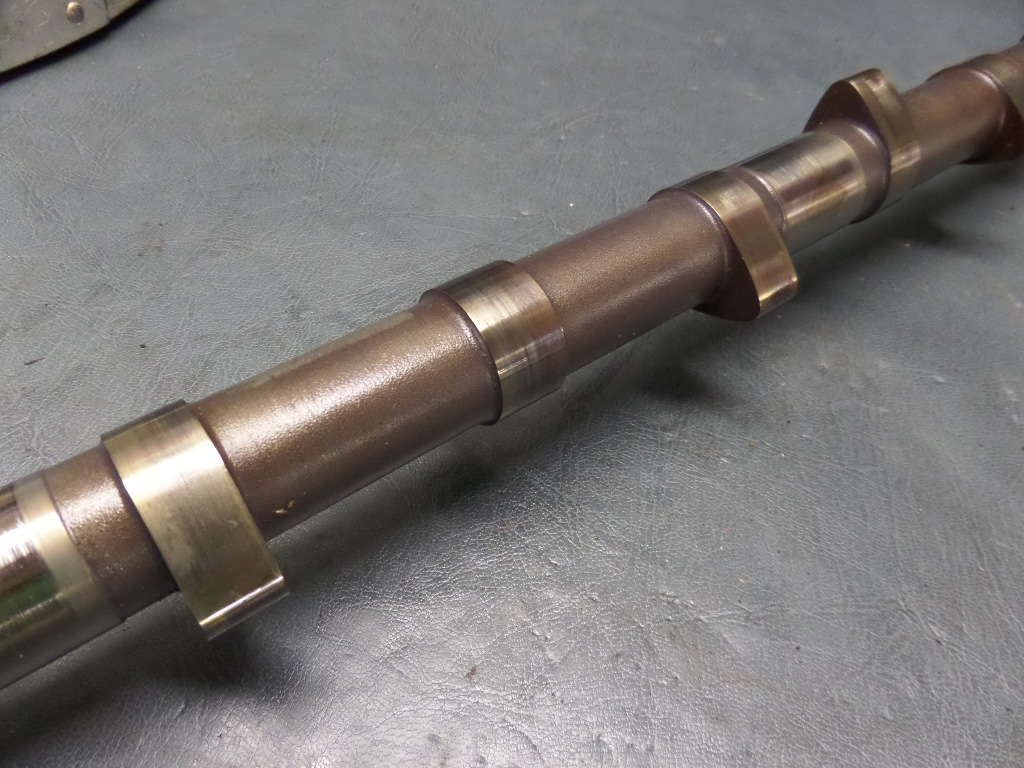
The camshaft is one of the most important moving parts inside a piston aircraft engine. It sits in the crankcase, parallel to the crankshaft, and its job is to open and close the intake and exhaust valves at exactly the right time. It does this through a series of egg-shaped bumps called cam lobes. As the camshaft rotates, each lobe pushes a lifter upward, which transfers motion through pushrods to the rocker arms, and finally opens the valves.
This timing has to be precise. Even slight wear on a cam lobe can change when a valve opens or how far it opens, which directly affects engine power and efficiency. If a lobe is worn down, the valve may not open fully. If it's damaged, the motion becomes inconsistent. Either way, the engine doesn't run as it should.
Here's why this matters so much:
- Engine timing depends on it — the camshaft is driven directly off the crankshaft, so everything must stay in sync.
- Combustion efficiency is tied to valve operation. If the intake valve doesn't open correctly, the fuel-air mixture suffers. If the exhaust valve doesn't close fully, you lose compression.
- One bad lobe affects one cylinder — and sometimes more. A single worn cam lobe can cause rough running that looks like a magneto problem or a bad spark plug.
A single cylinder running poorly can throw off the balance of the entire engine. Mechanics often chase ignition or fuel system issues before they find a damaged lobe — and by then, metal debris may already be circulating through the oil system.
The good news? A proper inspection can catch these problems early, often before they cause serious damage. Tools like borescope cameras and regular oil analysis give mechanics a look inside without a full crankcase teardown. Learning to recognize the early signs is the first step.
Signs Your Camshaft May Need Attention
Most pilots don't think about the cam until something goes obviously wrong. But the engine usually tries to tell you something is off well before it becomes a crisis. Knowing what to look for — and taking it seriously — can make a big difference.
Common warning signs include:
- Metal in the oil filter. This is one of the clearest red flags. During an oil change or inspection, a mechanic should always inspect the filter for metallic particles. Fine gray metallic debris, especially ferrous (iron) particles, can point directly to camshaft or lifter wear.
- Rough or uneven engine operation. A cylinder that's not performing can cause vibration or slight power loss. This is easy to blame on plugs or mags, but cam lobe wear should be on the list.
- Unusual valve train noise. A ticking or clacking sound from the top of the engine — especially if it's new or changed — can indicate lifter problems related to cam wear.
- Low compression on a cylinder. If a valve isn't seating or opening properly due to cam damage, compression will drop.
Why Are These Signs Often Missed?
Cam-related symptoms overlap with many other engine issues. A rough-running engine points to spark plugs, fuel injectors, magnetos, or cylinders before the cam gets a second thought. Metal in the filter gets dismissed as 'normal wear' without a closer look at particle size and type. Valve train noise can also be mistaken for normal engine sounds, especially in older aircraft.
A few habits that help:
- Cut open your oil filter at every oil change and look at what's inside.
- Track oil analysis results over time — trends matter more than single readings.
- Pay attention to any new or changing engine sounds during run-up.
- Log engine behavior consistently so subtle changes don't go unnoticed.
Proper care of your Lycoming camshaft starts with staying aware of these early signals. The earlier you catch a problem, the more options you have — and usually, the lower the cost.
How Camshaft Inspections Are Performed
Understanding how a camshaft inspection actually works helps you have a much better conversation with your mechanic and make smarter decisions about your engine. There's no single method that fits every situation. The right approach depends on the reason for the inspection, how much access you have, and what you find along the way.
Visual Inspection During Overhaul
The most thorough way to inspect a camshaft is during a full engine overhaul, when the engine is completely torn apart. This gives the mechanic direct access to every internal engine component.
During disassembly, the mechanic can:
- Remove the camshaft from the crankcase entirely.
- Physically examine each cam lobe for pitting, scoring, or flat spots.
- Check the lifter bodies and tappet body surfaces for wear patterns.
- Use a dial indicator to measure lobe lift and compare it against Lycoming's published limits.
- Inspect the camshaft journals for signs of corrosion or scoring.
This level of detail is only possible when the engine is fully apart. It's also the point where mechanics can check lobes and lifters together, since the condition of one directly affects the other. A worn cam lobe will accelerate wear on the lifter face, and vice versa.
Borescope Inspection
A borescope — sometimes called a flexible scope — is a camera on a long flexible cable that allows a mechanic to see inside the engine without complete engine disassembly. It's one of the most practical tools for checking cam condition between overhauls.
Here's how borescope access to the cam typically works:
- The mechanic removes a rocker cover or uses an existing access point.
- The scope is threaded through the cylinder area or an oil passage to get a view of the camshaft.
- With the engine rotated by hand, different sections of the cam surface become visible.
- The mechanic looks for corrosion pits, surface irregularities, or unusual wear on each lobe.
This method has limits. You can see surface condition, but you can't always measure precisely, and some areas of the cam may not be fully visible without splitting the crankcase. That said, a skilled technician with a good scope can often spot developing problems before they become critical.
Borescope and Cylinder Pulls
Sometimes a mechanic will recommend pulling a cylinder to get better access to a specific area of the camshaft. This is less invasive than a full teardown but gives a much better view than a borescope alone. It also allows the mechanic to inspect the piston, rings, cylinder wall, and valve condition at the same time.
Pulling a cylinder is common when:
- Oil analysis shows elevated iron levels suggesting cam or lifter wear.
- A specific cylinder has low compression.
- Metal has been found in the oil filter and the source needs to be identified.
Magnetic Particle Inspection (MPI) and Non-Destructive Testing
At overhaul, many shops perform magnetic particle inspection (MPI) on the camshaft. This involves magnetizing the part and applying iron particles that cluster around any surface or near-surface cracks. It's a non-destructive way to find defects that aren't visible to the naked eye.
MPI is especially useful for catching:
- Fatigue cracks in the cam lobes.
- Sub-surface defects that could lead to sudden spalling.
- Hidden damage from previous overheating or impact.
Other non-destructive testing methods used on engine components include dye penetrant testing and fluorescent inspection. Together, these help mechanics make confident decisions about whether a cam is safe to reuse.
What Mechanics Look For
No matter the method, mechanics are examining the same key indicators:
- Pitting: Small, crater-like depressions on the cam lobe surface. Often caused by corrosion from moisture during inactivity. Even minor pitting can grow quickly once oil circulation disturbs the surface.
- Spalling: Flaking or chunking of material from the cam surface. Spalling is a more advanced form of surface damage and often means the camshaft needs to be replaced.
- Wear patterns: Abnormal contact patterns between the cam and cam followers (tappets) indicate misalignment or inadequate lubrication.
- Lobe dimensions: Using precision tools including a dial indicator, mechanics measure actual valve lift against Lycoming's published specifications. Any lobe that falls outside limits must be replaced.
- Corrosion on journals: The camshaft journals ride in the crankcase bores. Corrosion here can damage the case itself, making repairs much more expensive.
Lycoming Service Instructions and Bulletins
Textron Lycoming publishes detailed service information governing camshaft inspection and replacement criteria. Key documents include:
- Lycoming Service Instruction 1427: Covers camshaft inspection criteria, acceptable wear limits, and procedures for various engine models.
- Service Bulletin 388: Addresses cam and tappet replacement, including guidance on when both parts must be replaced together.
- Mandatory Service Bulletin 475 and related ADs: Cover certain engine families known to have higher cam wear rates.
Always check the current version of these documents. Requirements and recommendations are updated over time, and your mechanic should be working from the most current service information available.
When Is a Camshaft Inspection Required?
Knowing when an inspection is required is just as important as knowing how to do it. For Lycoming engines, there are several triggering events.
TBO (Time Between Overhaul)
TBO is the manufacturer's recommended interval at which the engine should be overhauled. For most Lycoming engines, TBO ranges from 1,200 to 2,400 hours depending on the model. At TBO, a full inspection of the camshaft and all engine components is standard.
Your hours since overhaul are tracked in your engine logbook. As you approach TBO, more frequent filter inspections and oil analysis are recommended to catch any cam issues before full teardown. If you're weighing what comes next, the guide on whether to overhaul or replace your Lycoming engine walks through both paths in detail.
AD Compliance
Airworthiness Directives (ADs) are mandatory. Some ADs require camshaft inspection at specific intervals or after certain events — like an engine that has experienced a prop strike or sudden stoppage. Always verify AD compliance with your mechanic before assuming your engine is up to date. Failure to comply is not just a safety risk — it affects airworthiness certification.
Inactivity and Corrosion
This is one of the most important — and most underappreciated — triggers for early inspection. An aircraft that sits for months without flying is actually at higher risk for camshaft problems than one flown regularly. Here's why:
- Oil drains off the cam surface when the engine sits.
- Moisture condenses inside the crankcase.
- Corrosion forms on the bare metal cam lobes.
- When the engine starts again, those corroded spots can flake and cause rapid wear.
An engine that has been inactive for 30 days or more should get extra attention. At minimum, run oil analysis and inspect the oil filter after the first few flights. If you see elevated iron particles or visible debris in the sump, stop flying and have the cam checked.
Making Metal / Filter Findings
Any time you find metal in the filter — especially after cutting open the filter element — that's a stop-and-investigate moment. Even small amounts of ferrous metal warrant a closer look. Your mechanic may recommend a borescope inspection, oil analysis, or pulling a cylinder to determine the source.
"Making metal" is a term used among aviation mechanics to describe an engine that is shedding metallic particles into the oil. It's not normal, and it's not something to fly through.
Camshaft Replacement vs. Reuse: Making the Right Call
Once the inspection is done, the mechanic has to decide: can the camshaft go back in, or does it need to come out for good? This decision has real cost and safety implications.
Criteria for Reuse
A camshaft may be reusable if:
- All cam lobes measure within Lycoming's published wear limits.
- No pitting or spalling is present on any lobe surface.
- Journals show no scoring or corrosion damage.
- The overall surface condition is consistent with normal use.
- MPI or other non-destructive testing shows no cracks.
If even one lobe is out of tolerance, the entire camshaft should be replaced. You can't selectively repair individual lobes — the shaft is replaced as a unit.
The Role of the Lifters (Tappets)
Here's an important rule: cam and lifter wear are paired. When a camshaft is replaced, the tappets (also called cam followers or lifter bodies) should almost always be replaced at the same time. Here's why:
- The cam lobe and lifter face develop a matched wear pattern over time.
- Installing a new cam against old tappets creates a mismatched contact surface.
- This mismatch accelerates wear on the new cam almost immediately.
- The same is true in reverse — new tappets on an old, worn cam.
Lycoming engines use specific hydraulic tappets that must meet Lycoming's dimensional specs. Always replace lobes and lifters together unless a thorough inspection confirms the old tappets are within limits and have clean, undamaged faces.
Cost Considerations
A new camshaft for a Lycoming engine typically runs several hundred to over a thousand dollars for the part alone, depending on the engine model. Add tappets, labor, and any related parts (pushrods, covers, gaskets), and the total can be significant — but it's still far less than dealing with cam failure mid-flight or a complete engine teardown caused by debris.
If your aircraft engine is already at or near TBO, it may make more sense to go ahead with a full overhaul rather than replace only the cam. Talk to your mechanic and review your engine's specific overhaul requirements before deciding. A planned replacement now is almost always cheaper than an unplanned teardown later.
Long-Term Reliability and Cam Care Habits
Replacing a marginal cam now is almost always the right call for long-term reliability. A cam that's at the edge of limits today will be out of limits sooner than you think — especially if the engine sits for any extended period.
A few small habits add up to a much healthier engine over time:
- Fly regularly. Frequent flights keep oil circulating over the cam lobes, preventing the moisture buildup and surface corrosion that happen during long periods of inactivity. Most mechanics recommend flying at least once every one to two weeks.
- Stay on top of oil changes and use the correct oil for your engine and operating conditions. Straight-weight mineral oil or approved ashless dispersant (AD) oil are the most commonly recommended options for Lycoming engines, especially during break-in periods.
- Cut open your oil filter at every change and check it carefully for metallic debris.
- Use oil analysis consistently and watch for trends in iron levels over time.
- Keep up with Lycoming service bulletins and ADs — these are updated regularly and sometimes change inspection intervals.
For a deeper dive into general Lycoming care, the Lycoming engine maintenance guide covers best practices across the full engine. And if you've been troubleshooting engine issues that led you here, the Lycoming engine troubleshooting guide is a good companion read. For a broader look at what commonly wears out in these engines, check out the guide on Lycoming engine parts often replaced.
Conclusion
A Lycoming camshaft inspection is not just a checkbox on a maintenance form. It's one of the most important things you can do to keep your engine running reliably and safely for years to come. Catching wear early, staying current on service bulletins, replacing parts correctly, and flying the aircraft regularly — these habits protect your engine far better than reactive repairs ever will.
For more in-depth guides, engine comparisons, and practical tips for aircraft owners, visit Flying411 and explore everything they have for the general aviation community.
Frequently Asked Questions
Can I inspect my Lycoming camshaft without removing the engine from the aircraft?
Yes, in many cases a preliminary inspection can be done with the engine installed. A borescope can be threaded through cylinder access points or rocker cover openings to view portions of the camshaft. Oil analysis and oil filter inspection can also be performed without engine removal. However, a full inspection for precise measurements requires engine disassembly at a shop.
How does flying frequency affect camshaft condition?
Flying regularly is actually one of the best things you can do for cam health. Frequent flights keep oil circulating over the cam lobes, preventing the moisture buildup and surface corrosion that happen during long periods of inactivity. Mechanics generally recommend flying at least once every one to two weeks to maintain proper lubrication on camshaft surfaces.
What type of oil is best for protecting a Lycoming camshaft?
Straight-weight mineral oil or approved ashless dispersant (AD) oil are the most commonly recommended options for Lycoming engines, especially during break-in periods. Some owners use oils with anti-wear additives approved for aircraft use. Always follow Lycoming's current oil recommendations for your specific engine model and operating conditions to ensure proper cam protection.
Is camshaft damage covered under engine warranties or overhaul shop guarantees?
This depends on the warranty terms offered by the overhaul facility or engine manufacturer. Many factory remanufactured or zero-time engines come with limited warranties that cover defects including premature cam wear under normal operating conditions. Field overhauls may or may not include similar coverage. Review the warranty documentation carefully and ask specifically about cam and tappet coverage before committing to a shop.
Can a camshaft inspection reveal problems with other engine components?
Absolutely. The camshaft works closely with the lifters, pushrods, rocker arms, and valve train as a system. When a mechanic finds cam damage, it often points to related wear in the tappets, pushrod tubes, or oil delivery passages. Debris from a failing cam can also travel through the oil system and affect the oil pump, oil passages, and even main bearings. A thorough inspection rarely stops at the cam alone.