Your IA calls halfway through the annual and says there is corrosion in the wing, or under the battery box, or along the belly, and now you want to know two things: what will it cost to fix, and what will it do to what the airplane is worth. Here is the honest answer. Corrosion found at your annual usually costs somewhere between a few hundred dollars and a few thousand, because most of what mechanics find is light surface corrosion that gets cleaned, treated and primed. The bills that hurt are the structural ones — spars, spar carry-throughs, steel tube fuselages, wing strut forks — and those can run past the value of an older training airplane.
The resale side is less about the corrosion and more about the paperwork. A properly cleaned and documented light corrosion repair barely moves an appraisal. A vague logbook entry that says "treated corrosion" with no detail, or a structural repair with a thin Form 337, is what makes the next buyer's pre-buy mechanic nervous and knocks thousands off the price.
Find Out Which Kind of Corrosion You Actually Have
Before you talk money, get the severity and the location nailed down. The FAA's corrosion control advisory circular, AC 43-4B, sorts corrosion into light, moderate and severe, and Chapter 6 of AC 43.13-1B covers inspection and protection. Those categories matter because they drive the repair method: light corrosion is cleaned and re-protected, moderate may need blending out and a thickness check, and severe means metal has to be removed or replaced. Think of it like rust on a car's rocker panel — the bubbled paint is the symptom, and the cost lives in whatever is under it.
- Ask for the severity term your mechanic is using. Good answer: "light surface corrosion on the inboard belly skins, no pitting, cleaned and re-primed." Bad answer: "there's some corrosion back there" with no depth, no extent and no photos.
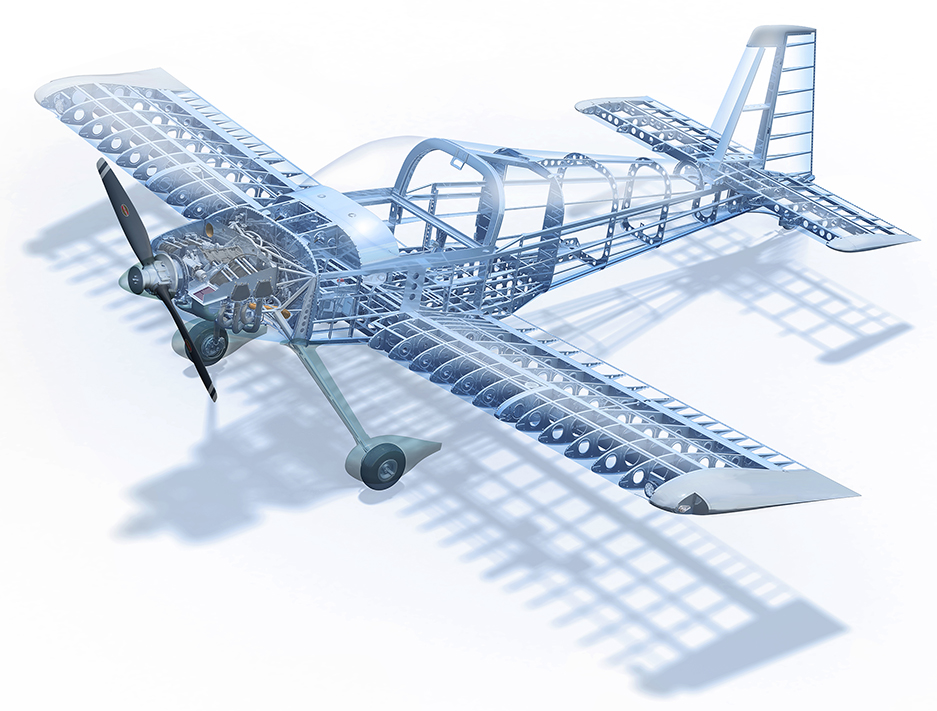
- Ask whether it is on a primary structure or a secondary part. Good: inspection plates, fairings, battery box, seat rails, non-structural skins. Bad: main spar cap, spar carry-through, wing attach fittings, landing gear box structure, steel tube fuselage cluster welds.
- Ask for photos with something in the frame for scale. A ruler or a wrench beats a description. If a shop will not photograph it, you have no way to compare a second opinion later.
- Ask whether material thickness was measured. Good: the mechanic blended the pit out and checked remaining thickness against the structural repair manual limits. Bad: "we sanded it until it looked clean."
- Ask whether it is filiform, intergranular or exfoliation. Filiform corrosion under paint is mostly cosmetic. Exfoliation — metal that looks like flaky pastry layers — means the part is usually scrap.
Why It Matters: Location changes the price by an order of magnitude more than severity does. Moderate corrosion on a belly skin is a skin. The same corrosion two feet inboard on a spar cap is a wing.
Read the Discrepancy List Before You Approve a Dollar
Under 14 CFR 43.11, if the inspector does not approve the aircraft for return to service, the owner must receive a signed and dated list of discrepancies and unairworthy items. Treat that regulatory list separately from additional maintenance recommendations or cosmetic work the shop may suggest while the airplane is open.
- Get the list in writing, signed. Good: an itemized sheet, each item with a reference to the maintenance manual, AD, or service document behind it. Bad: a verbal list and a verbal estimate.
- Separate the Section 43.11 discrepancies from any recommended or cosmetic work the shop has listed separately.
- Check whether any item is tied to a mandatory inspection you already owed. Corrosion is often discovered during a required inspection rather than being the finding itself — the Piper wing spar inspection required by AD 2020-26-16 on many PA-28 and PA-32 models, the Cessna 210 wing carry-thru spar inspection the FAA mandated in 2020, or the corrosion items in Cessna's Supplemental Inspection Documents for the 100 and 200 series. If you owed the inspection anyway, that labor is not a corrosion cost.
- Ask what happens if you defer. Good: the shop explains which items can wait to the next annual and why. Bad: everything is urgent, no explanation.
If the conversation breaks down and your IA will not sign the airplane off, our explainer on what FAR 43.11 requires and what your options are walks through the process, including your right to take the discrepancy list to another shop.
Get the Repair Scoped in Writing, Not in Hours
Corrosion work is labor, and labor on corrosion is unpredictable because nobody knows how far it goes until the paint is off and the panels are open. That is exactly why open-ended time-and-materials billing hurts owners. You want the scope broken into a look-see phase and a repair phase, with a decision point in between.
- Ask for a two-stage quote. Good: "eight hours to open access panels, strip and evaluate, then we re-quote." Bad: "probably twenty to sixty hours, we'll see."
- Confirm the shop rate and who does the work. As of 2025, general aviation shop labor commonly runs roughly $100 to $175 an hour, with metro and turbine shops higher. An A&P and an apprentice at different rates is normal; being billed IA time for panel removal is not.
- Ask what access work is included. Interior out, tanks drained, seats and carpet out, fairings off — all of that is billable time that has nothing to do with the corrosion itself and can be half the invoice on a belly job.
- Ask which primer and corrosion inhibiting compound will be used. Good: an epoxy or chromate primer per the structural repair manual, plus a CIC like ACF-50 or Corrosion X applied to enclosed areas. Bad: rattle-can primer and no inhibitor.
- Ask whether parts are available. Good: skins and struts in stock from the OEM or a PMA supplier. Bad: a back-ordered spar part with no delivery date, which turns a four-week annual into a five-month hangar rental.
Pro Tip: Ask for the removed parts, or at least photographs of them before disposal. A corroded strut fork in a box is proof the repair was real, and that proof is worth money to the next buyer.
Flying411 keeps aircraft listings, specs and ownership guides in one place, so you can compare what comparable airframes are actually asking before you spend on a repair.
What the Common Repairs Actually Cost
These are ranges owners and shops commonly report for piston singles and light twins as of 2025. Your quote will land inside or outside them depending on region, parts availability and how much of the airplane has to come apart first. Treat them as a sanity check on an estimate, not a price list.
Light and moderate work
- Clean, treat and prime light surface corrosion in an accessible area: a few hundred dollars to about $1,500, mostly labor.
- Battery box and firewall area corrosion: roughly $1,000 to $5,000 depending on whether the box, tray and firewall skin need replacement.
- Corroded control cables and pulleys: cables themselves are usually a few hundred dollars each; the cost is routing labor, often $1,500 to $5,000 for a set in a 172-class airframe.
- Seat rail replacement: commonly $1,500 to $4,000 for a pair, and worth checking against AD 87-20-03 on the Cessna 100 and 200 series, which addresses rail wear rather than corrosion but gets looked at in the same breath.
- Belly skin replacement, one or two panels: roughly $2,000 to $7,000, higher if the panel is a doubler or crosses a stringer.
- Wing strut or strut fork replacement on a strut-braced Cessna: parts plus labor commonly $3,000 to $8,000 per side.
The expensive end
- Cylinder corrosion from sitting: a top overhaul on a four-cylinder Lycoming or Continental commonly runs $8,000 to $18,000. If cam and lifters are pitted, you are into a full overhaul, which owners report in the $30,000 to $50,000-plus range for a four-cylinder as of 2025. Our deep dive on Lycoming cylinder corrosion causes and prevention covers how it starts.
- Spar or spar carry-through repair: if a repair is even approved, budget five figures. Replacing a wing on an older single is commonly $25,000 to $60,000 with a serviceable used wing, more with new parts, and often exceeds the airplane's value.
- Steel tube fuselage corrosion on a fabric airplane (Citabria, Champ, Cub, Maule): tube replacement plus recover and paint frequently lands between $20,000 and $50,000, because you cannot get to the tubes without taking the fabric off.
- Full strip and repaint after extensive skin work: commonly $15,000 to $30,000 for a single-engine piston as of 2025, and stripping is the part where more corrosion gets discovered.
Heads Up: Chemical stripping finds corrosion that a visual inspection misses. Plenty of owners have gone in for a $18,000 paint job and come out with a $35,000 invoice. If your airplane is due for paint and it has spent its life near salt water, budget a contingency of 25 to 40 percent.
How Corrosion Repairs Hit Resale Value
Appraisers do not price corrosion. They price the record of it. A treated, documented, closed-out finding is a maintained airplane. An undocumented or unresolved one is an unknown, and buyers price unknowns at worst case.
- Light corrosion, cleaned and logged: essentially no measurable value effect. Some appraisers treat it as a positive because it shows the airframe is actually being inspected.
- Replaced skins, struts or brackets under a standard logbook entry: small effect, typically low single-digit percentages, and often none if the parts are new and the entry is specific.
- A major repair documented on FAA Form 337 — such as qualifying spar work or structural skin repairs listed as major under Part 43 Appendix A — becomes part of the aircraft's FAA record when the required copy is filed.
- Corrosion disclosed but not repaired: the biggest hit of all. A buyer deducts the worst quote they can imagine, then deducts again for risk. Many simply walk.
- Geography follows the airplane. An airframe with a coastal history gets a harder pre-buy no matter what the logs say. That is not unfair, it is just how pattern recognition works.
This is the same dynamic covered in our piece on how maintenance records affect resale value, and it lines up with what appraisers weigh generally — see the nine factors appraisers actually look for. Corrosion sits in the same bucket as damage history: the deduction is driven by documentation quality, not just by the event.
Flying411 keeps model guides, valuation explainers and live listings in one place, so you can compare how corrosion-prone airframes are priced against clean ones.
Paperwork That Protects What You Just Spent
You are going to spend real money. Spend another thirty minutes making sure the record of that money reads well to a stranger in six years. This is the cheapest value-protection available to an owner.
- Insist the logbook entry names the location, extent, method and materials. Good: "Removed left inboard belly skin, P/N xxxx. Light to moderate corrosion, blended within SRM limits, thickness verified. Alodine applied, two coats epoxy primer per SRM, ACF-50 applied to interior structure. New skin installed per SRM Chapter 51." Bad: "Treated corrosion LH belly. OK for return to service."
- Get a complete Form 337 if the repair is major. Good: the 337 references the specific approved data — SRM page, AC 43.13-1B paragraph, or an existing STC. Bad: "repair per standard practices" with no citation.
- Keep the photos, invoices and parts tags in the aircraft file. A folder of before-and-after photos with the invoice does more at a pre-buy than any amount of reassurance.
- Write down the ongoing plan. Good: an annual CIC application logged each year, drain holes verified clear, a note on where to re-inspect. Bad: nothing, so the next mechanic has no idea whether the area has been watched.
- Review your hull value after a major repair. The amount spent on structural work does not automatically add dollar-for-dollar to the airplane's market value, but a major change in condition, equipment or replacement cost is a good reason to confirm that the insured value still reflects the aircraft's defensible market value.
Good to Know: Form 337s submitted to the FAA become part of the aircraft's FAA record and can be reviewed by future buyers. Treat a structural repair as part of the airplane's documented history, and make sure the form clearly identifies the repair and the approved data used.
When the Repair Costs More Than the Airplane
Sometimes the right answer is to stop. An honest total-loss decision made early is cheaper than a partial repair that strands you with a disassembled airplane in a rented hangar.
- Compare the repair quote to the airplane's market value, not to what you paid. If a wing replacement is 60 percent of value, the math rarely works unless the airframe is otherwise exceptional.
- Check what remains after the repair. Good: fresh engine, current avionics, clean paint, so the repaired airframe still sells. Bad: run-out engine, 1970s panel, and now a structural 337 as well. Three problems do not average out, they compound.
- Ask your insurer before you commit. Corrosion is normally excluded as wear and tear, so it will not be covered, but if corrosion was found while repairing a covered event, the conversation is worth having.
- Price the parts-out option. An airframe with a good engine, prop and panel can be worth more in pieces than as a project. It is a grim calculation, but it is a real number.
- Consider a serviceable used component instead of new. A dry-climate donor wing or strut with clean logs is often half the cost of new parts and just as airworthy once inspected.
The Checklist at a Glance
| What to check | What good looks like | Red flag |
|---|---|---|
| Severity classification | Light, moderate or severe per AC 43-4B, with photos and measured thickness | "Some corrosion" with no depth, extent or documentation |
| Location | Skins, fairings, battery box, non-structural brackets | Spar caps, carry-through, wing attach fittings, steel tube clusters |
| Discrepancy list | Signed, itemized, each item tied to a manual, AD or SID reference | Verbal list, everything called urgent, no references |
| Estimate structure | Two-stage: evaluate, then re-quote with a firm scope | Open-ended time and materials with a wide guess |
| Access labor | Broken out separately from the corrosion work itself | Buried in a single lump-sum line |
| Materials used | Primer per the SRM plus a corrosion inhibiting compound in enclosed areas | Sanded and rattle-can primed, no inhibitor |
| Logbook entry | Location, extent, method, part numbers, approved data cited | "Treated corrosion, returned to service" |
| Form 337 | Complete, references specific approved data for the major repair | Missing, or "per standard practices" with no citation |
| Repair vs value | Repair well under half the airframe's market value | Structural quote approaching or exceeding what the plane is worth |
| Follow-up plan | Annual CIC application and a named re-inspection area, logged | No recurring plan, drain holes never verified |
Before You Sign
Walk away from a repair quote when the shop cannot tell you what approved data they are working from, when the estimate has no ceiling and no decision point, or when a structural number crosses about half the airplane's market value and the rest of the airframe is tired. Walk away from a purchase when the seller has corrosion on the discrepancy list and wants you to "just deal with it after closing." You will be dealing with it alone, at your price, on your schedule.
Get a second professional opinion any time the words spar, carry-through, wing attach or fuselage tube come up, and get it from a shop that specializes in your type — a type club can usually name two or three. A $600 second look has saved plenty of owners a $30,000 mistake in both directions: some found the first quote was alarmist, and some found it was optimistic. If you are trying to understand how the repair will price against the rest of the airplane, read our breakdowns of how airframe hours affect value and how engine time affects resale price alongside it. For type-specific hot spots, our guide to where corrosion shows up in Cessna 172s is the place to start.
Handled well, corrosion found at your annual is a maintenance event with a paper trail, not a value event. Handled badly — deferred, half-treated, or logged in six vague words — it becomes the reason a buyer walks three years from now. Fix it once, write it down properly, and keep the photos. After the work is done, plan the return-to-service flight deliberately; our notes on the first flight after an annual cover that.
Flying411 keeps ownership cost guides, valuation explainers and current listings in one place, so you can compare what a repaired airframe and a clean one are really worth.
When you are ready to compare listings, visitFlying411and see what is on the market today.