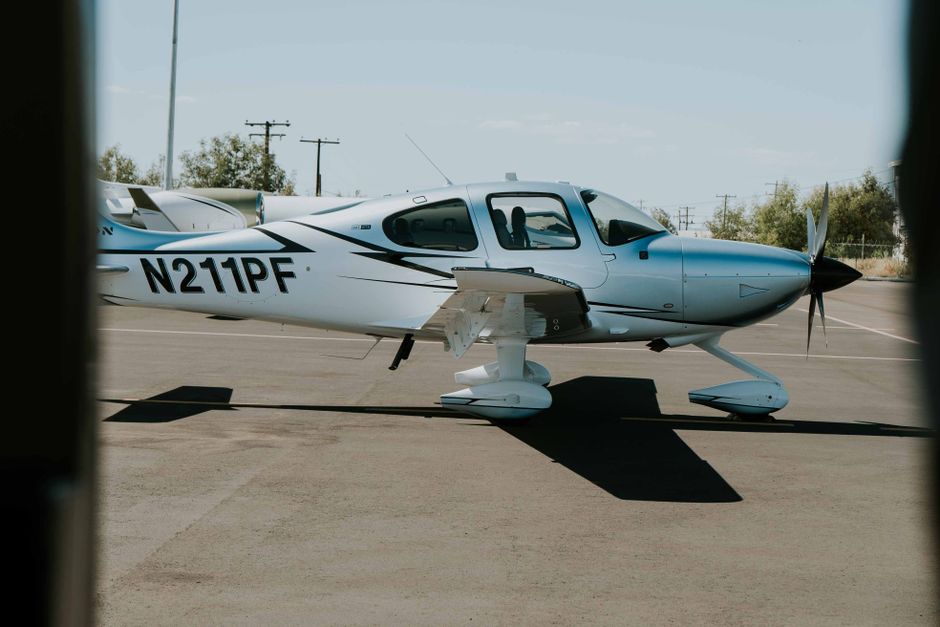
Picture two Cirrus SR22s parked nose to nose on the same ramp. Same model year, same engine time, both with a G1000 panel and both painted in that familiar white-and-silver scheme. One is listed for $389,000. The other is listed for $362,000, and the seller sounds a little impatient on the phone. The difference is not paint, not avionics, and not damage history. It is a date stamped on a rocket motor buried behind the baggage compartment bulkhead.
That date is the heart of the Cirrus CAPS parachute repack cost question, and it is one of the few maintenance items in light aviation that runs entirely on the calendar. It does not care how many hours you fly. It does not care whether the airplane sat in a heated hangar or on a windy tiedown in Amarillo. When the clock runs out, the airplane needs a five-figure service event, and every informed buyer in the market knows it.
If you are shopping for a Cirrus, or you already own one and the ten-year mark is creeping up, this is the number you need to have straight before you sign anything. Below is what the repack actually includes, what owners and service centers report paying, whether an expired parachute makes the airplane unairworthy, and how brokers and appraisers treat a chute that is due, nearly due, or already past due.
Key Takeaways
A full CAPS service event replaces the solid-propellant rocket motor, replaces or repacks the parachute canopy and harness, and replaces the pyrotechnic line cutters. Owners and Cirrus Authorized Service Centers commonly report all-in costs in the mid-teens to low twenties of thousands of dollars for an SR20 or SR22, with roughly two to four weeks of downtime depending on scheduling and shipping. Because Cirrus publishes the parachute and rocket service life as a limitation in the FAA-approved Airplane Flight Manual, flying past it is not a judgment call — it is an airworthiness problem. In the resale market, a chute due inside the next year is usually deducted close to dollar-for-dollar, and one already expired often costs the seller more than the repack itself, because the buyer is also absorbing downtime and risk. A fresh repack, by contrast, is one of the cleanest selling points a Cirrus can carry.
| Question | Short answer |
| What does a full CAPS repack cost? | Roughly $18,000–$25,000 on many later aircraft; some Gen 1 airplanes can approach $30,000 or more |
| How often is it required? | Every 10 years on most installations; 11 years for certain approved CAPS component part numbers |
| Is it hours-based? | No — calendar only |
| Can you fly with an expired CAPS? | No. It is an AFM limitation; a ferry permit is the usual workaround |
| Typical downtime | About 2–3 days for many G2-and-later aircraft; around two weeks for some Gen 1 work, plus advance parts lead time |
| Resale hit if overdue | Full repack cost, frequently plus a downtime penalty |
| Resale gain if fresh | Real but rarely the full cost — think most of it in a strong market |
What a CAPS Repack Actually Involves
The Cirrus Airframe Parachute System is not a skydiving rig that someone shakes out and folds up on a long table. It is a rocket-deployed recovery system, and the rocket is the part that drives the calendar. A solid propellant grain and its igniter age whether or not they are used, so Cirrus assigns them a hard service life the same way a fire extinguisher gets a hydrostatic test date or a car's airbag inflator has a shelf life. Hours flown are irrelevant.
What gets replaced?
At a full service event, a Cirrus Authorized Service Center opens the CAPS compartment behind the aft cabin, disconnects the harness attachments, and removes the packed canopy and the rocket. The rocket motor is replaced outright with a new unit. The parachute canopy, risers and harness are inspected and repacked — or replaced if they do not pass inspection. The pyrotechnic line cutters, which sever the reefing line so the canopy can open fully after the initial slowed deployment, are replaced with fresh units. Everything is reinstalled, the activation handle and cable are checked, and the work is logged against the applicable Cirrus service documents and the maintenance manual's CAPS chapter.
Good to Know: The line cutters have historically carried a shorter life than the parachute itself — around six years on many SR-series airframes — which means some owners face a smaller mid-cycle service before the big one. Check the specific interval for your serial number rather than assuming.
Is it ten years or twelve?
The normal CAPS replacement interval is ten years, but certain approved rocket motor and parachute part numbers have an 11-year replacement interval under Cirrus's Airworthiness Limitations. The applicable interval depends on the CAPS components actually installed, so confirm the part numbers and expiration dates in the aircraft records during a prebuy.
Heads Up: Do not assume the longer interval from the airplane's model year alone. Verify the installed CAPS component part numbers and their documented expiration dates.
What the Repack Really Costs
There is no single published retail price that applies to every airplane, because the total depends on the generation of the airframe, which components need replacement versus repack, the shop's labor rate, and how the rocket gets shipped. What follows is the shape of the bill, using the ranges owners and service centers commonly report. Treat it as a planning framework, then get a written quote.
| Line item | Typical range | Notes |
| Parachute canopy repack or replacement | $6,000–$11,000 | Replacement costs more than a passing repack |
| Rocket motor | $5,000–$9,000 | Replaced, not overhauled |
| Line cutters | $1,000–$3,000 | Sometimes done separately mid-cycle |
| Removal and reinstallation labor | $2,000–$4,500 | Shop rate and generation dependent |
| Hazmat shipping and handling | $500–$1,500 | The rocket is a regulated explosive |
| All-in total | $18,000–$30,000+ | Later generations are generally cheaper; Gen 1 work can cost more |
Two costs never show up on the invoice and catch first-time Cirrus owners off guard. The first is downtime. Actual shop downtime may be only a few days on later-generation aircraft, while Gen 1 airplanes can require roughly two weeks because of composite and paint work. Parts and scheduling should be arranged months ahead, since component lead times can be much longer than the installation itself.. If you fly the airplane for business or you are renting it back to a flight school, that is real money. The second is positioning. Not every maintenance shop can do this work. You need a Cirrus Authorized Service Center, and depending on where you are based, that can mean a two-hour ferry each way plus a rental car.
Pro Tip: Schedule the CAPS service to overlap with your annual inspection. Much of the aft interior is already coming out for the annual, and you only lose the airplane once instead of twice. Owners who do this routinely report saving both labor hours and a full week of calendar time.
Flying411 keeps Cirrus SR20 and SR22 listings, specs and ownership guides in one place, so you can compare asking prices against the maintenance events each airplane is actually carrying.
Does an Expired CAPS Ground the Airplane?
This is where owners get into trouble, usually because someone at the airport told them the parachute is "just a safety option" and the airplane flies fine without it. That is wrong in a way that can cost you an insurance claim.
Why it is an airworthiness item, not a preference
Cirrus publishes the CAPS component replacement limits in the FAA-approved Airworthiness Limitations section of the aircraft maintenance manual. Under 14 CFR 91.403(c), an aircraft may not be operated unless the mandatory replacement times and related procedures in that section have been complied with. An expired CAPS component therefore makes the airplane unairworthy until the required maintenance is completed or the FAA authorizes a special flight permit.
If a chute goes out of life while the airplane is away from a service center, the normal path is a special flight permit — a ferry permit — issued under 14 CFR 21.197 by your local FAA Flight Standards office or an authorized DAR, allowing a one-time flight to the facility where the work will be performed. That is routine paperwork, but it takes time and it is one more thing a buyer would rather not inherit.
Why It Matters: Insurance follows airworthiness. If you bend the airplane while operating outside AFM limitations, expect your carrier to take a very close look at whether coverage applies. It is worth reading up on how policy structure works — our guide to agreed value versus stated value aircraft insurance explains what actually gets paid out when a claim goes sideways.
What underwriters ask about
Cirrus insurance underwriting has always leaned on CAPS as a risk mitigator, and the type's accident record with successful parachute deployments is a large part of why premiums settled where they did. Some carriers ask directly about CAPS currency at renewal. An expired system is not the kind of detail you want discovered after the fact.
How an Overdue Repack Moves the Price
Here is the part buyers and sellers argue about. The honest answer is that the market prices CAPS status the way it prices engine time: as a known, dated, quantifiable future expense, applied against the asking price with very little sentiment attached.
| CAPS status at time of sale | How the market typically treats it |
| Freshly done, 0–2 years ago | Genuine premium; sellers recover most, not all, of the cost |
| Mid-life, 3–7 years remaining | Neutral — priced as normal |
| Due in 12–24 months | Partial deduction, often half the repack cost |
| Due within 12 months | Near-full deduction; buyers often ask for an escrow holdback |
| Already expired | Full cost deducted, plus a penalty for downtime and ferry hassle |
Notice the asymmetry. A fresh repack rarely returns one hundred cents on the dollar, but an expired one frequently costs more than one hundred cents. That is not unfair — it is how every dated maintenance item behaves in every aircraft market. The buyer of an expired-CAPS airplane is taking on a scheduling problem, a ferry permit, a few weeks without an airplane, and the risk that the canopy fails inspection and has to be replaced rather than repacked. They price that risk in.
Keep in Mind: An airplane with an expired chute also shrinks its own buyer pool. Financed buyers and first-time owners often walk rather than deal with a grounded airplane on day one. Fewer bidders means a softer price, independent of the repack math.
This behaves much like other paper-driven value factors. A tidy, complete set of logs supports price the same way a current chute does — see how aircraft maintenance records affect resale value and price — and airframe time works on a similar sliding scale, covered in how airframe hours affect aircraft value.
Escrow holdbacks: the usual compromise
When a chute is due within a year, the cleanest deal structure is a holdback. Both parties agree on a figure — say the written quote from a Cirrus service center — and that amount stays in escrow until the work is done, or it simply comes off the purchase price at closing. Sellers prefer the price reduction because it ends their involvement. Buyers prefer the escrow because it guarantees the money is there. Either works. What does not work is a handshake promise to "sort it out later."
Quick Tip: Get the quote before you negotiate, not after. A written number from an authorized service center ends the argument in about ninety seconds. A guess from the internet starts a new one.
Checking CAPS Status During a Prebuy
If you are buying, this is a ten-minute verification that protects five figures. Do not skip it, and do not accept a verbal answer.
What to look for
Ask the prebuy shop to confirm four things in writing. First, the rocket motor date and part number, read off the component itself where accessible or from the last install logbook entry. Second, the parachute pack date and next due date. Third, the line cutter installation dates, since those may come due on their own schedule. Fourth, whether the airframe qualifies for the twelve-year interval or is still on ten. Then cross-check all of that against the placard in the cabin and the entries in the airframe logbook.
While the shop has the logs open, it is worth having them flag the other big calendar and hours items so you can build a five-year cost picture rather than reacting to one expense at a time. A Cirrus with a fresh chute but a run-out engine is not a bargain.
Fun Fact: CAPS has been credited with saving well over two hundred lives since the first successful deployment in 2002, which is why Cirrus owners treat the repack less like a tax and more like renewing a life insurance policy that happens to be bolted to the airframe. The concept has spread upward too — we look at where else it shows up in safest private jets with parachutes.
Flying411 keeps Cirrus model guides, price research and prebuy checklists in one place, so you can walk into a showing already knowing which questions cost money if you forget to ask them.
Selling: Should You Repack Before You List?
If the chute is expired or due within six months, yes — do the work, then list. You will not fully recover the cost, but you will recover most of it, and more importantly you will keep the airplane in front of every buyer instead of only the ones comfortable with a grounded purchase. A listing that says "CAPS just completed, next due 2037" answers a question before it gets asked, and that shortens time on market.
If the chute has three or more years left, leave it alone. Spending $20,000 to buy back a $6,000 perception is bad math. Price the airplane honestly, disclose the due date in the listing, and let the buyer do their own arithmetic.
The gray zone is twelve to twenty-four months out. Here, the right answer usually depends on how hot the market is. When inventory is tight and financing is cheap, buyers are less fussy about a chute due next year. When rates are high and airplanes are sitting, every future expense gets scrutinized — a dynamic we cover in how interest rates affect aircraft prices.
Good to Know: The value logic here is the same one that governs panel upgrades — some money comes back, some does not, and timing matters more than the invoice. The pattern is laid out plainly in our piece on which avionics upgrades actually increase price.
Budgeting for CAPS as an Owner
The smartest Cirrus owners treat the repack the way airlines treat a heavy check: they fund it monthly rather than absorbing it in one hit. If you set aside roughly $150 to $200 a month from the day you buy, a ten- or twelve-year cycle funds itself. That is less than most owners spend on hangar rent, and it converts a scary five-figure surprise into a line item.
Fold it into your full cost-of-ownership picture alongside the engine reserve, the annual, insurance and fuel. If you are still deciding whether the numbers work at all, our rundown of the pros and cons of owning an airplane is a good reality check, and buyers weighing an SR20 against an SR22 will find the operating-cost comparison in Cirrus SR20 vs SR22 useful, since the CAPS bill lands on both.
Pro Tip: Book the service slot six to nine months ahead. Cirrus service centers cluster their CAPS work, and the G3 and G5 fleets are now hitting their second cycles in volume. The owner who calls three weeks before expiration is the owner who ends up filing for a ferry permit.
Flying411 keeps ownership cost guides, valuation explainers and live aircraft listings in one place, so you can see how a due-soon maintenance item shows up in real asking prices rather than in theory.
Conclusion
The Cirrus CAPS parachute repack cost is not a mystery and it is not negotiable — it is a dated, five-figure, calendar-driven event that every SR20 and SR22 will meet, usually at year ten or twelve depending on the airframe. Budget $15,000 to $25,000, plan for two to four weeks without the airplane, and confirm the interval against your own serial number rather than what someone told you on the ramp.
On the resale side, the rule is simple. A current chute is invisible, which is exactly what you want. A chute due next year is a discount. An expired chute is a discount plus a hassle premium plus a smaller pool of buyers willing to deal with it. If you are buying, verify the dates in writing during the prebuy and negotiate with a real quote in hand. If you are selling with an expired system, do the work first — the market will pay you back most of it and reward you with a faster sale. For a broader look at where these airplanes sit on price, see our Cirrus SR22 price guide.
When you are ready to compare listings, visitFlying411 and see what is on the market today.
Frequently Asked Questions
How much does a Cirrus CAPS repack cost?
Owners and Cirrus Authorized Service Centers commonly report all-in figures between roughly $15,000 and $25,000 for an SR20 or SR22, with many landing in the high teens. The total covers a new rocket motor, the parachute repack or replacement, new line cutters, removal and reinstallation labor, and hazmat shipping. Get a written quote for your serial number, since costs vary by generation and shop rate.
Is the CAPS repack every 10 years or 12 years?
Originally ten. Cirrus later published documentation extending the interval to twelve years for airframes meeting specific configuration requirements, so both numbers are in circulation. The applicable interval depends on your serial number and the components actually installed, and it should be confirmed by a Cirrus service center rather than assumed from the model year.
Can I legally fly a Cirrus with an expired parachute?
No. Cirrus lists the CAPS component service life in the Limitations section of the FAA-approved Airplane Flight Manual, and 14 CFR 91.9 requires you to operate within those limitations. An expired system makes the airplane unairworthy. To move it to a service center, you would apply for a special flight permit under 14 CFR 21.197.
Does hours flown affect when the repack is due?
No. Cirrus lists the CAPS component replacement limits in the FAA-approved Airworthiness Limitations section of the maintenance manual, and 14 CFR 91.403(c) requires compliance with those mandatory replacement times.
How much will an overdue CAPS knock off the asking price?
Expect at least the full cost of the repack to come off, and often more once the buyer prices in several weeks of downtime, the ferry permit, and the risk that the canopy needs replacement rather than repack. A chute due within the next twelve months typically draws a near-full deduction or an escrow holdback; one due in two years is often split roughly in half.
Do I get my money back if I repack before selling?
Usually most of it, not all of it. The bigger benefit is market access — a current airplane appeals to every buyer, including financed and first-time owners who will not touch a grounded aircraft. If the chute has three or more years left, leave it and disclose the due date instead.