What is the Lycoming valve wobble test, and what happens if a cylinder fails it? It is a measurement of exhaust valve stem movement used to detect excessive guide wear or restricted clearance caused by deposits. A failed test requires corrective maintenance before further flight, ranging from cleaning the valve guide with the cylinder installed to removing the cylinder for valve and guide replacement.
This one matters in dollars and in safety. A worn or gummed-up exhaust valve guide is how a Lycoming ends up with a stuck valve, a bent pushrod, and on a bad day a valve head that breaks off and destroys a cylinder in flight. Catching it costs an hour of shop labor per cylinder. Missing it can cost you a cylinder, a prop strike inspection, or worse.
| Term | What it means in plain English |
| Valve wobble test | Lifting the exhaust valve off its seat and rocking it sideways while a dial indicator measures how far it moves. Too much movement means a worn guide. |
| Valve guide | A bronze or steel sleeve pressed into the cylinder head that the valve stem slides through, like the sleeve a drawer runner rides in. |
| Service Bulletin 388C | Lycoming's published procedure, titled "Procedure to Determine Exhaust Valve and Guide Condition." This is the wobble test document. |
| Service Instruction 1425A | Lycoming's companion paper, "Suggested Maintenance Procedures to Reduce the Possibility of Valve Sticking." Covers reaming and cleaning. |
| Morning sickness | Shop slang for a Lycoming that runs rough on the first start of the day, then smooths out as the engine warms and a sticky valve frees up. |
| Stuck valve | The valve stem seizes in the guide and stops closing or opening properly. Usually bends the pushrod. |
| TIR | Total indicator reading. The full sweep a dial indicator needle travels — the number the wobble test produces. |
| Reaming | Running a precision cutter through the guide to clean out carbon and restore the correct inside diameter. |
| Necked stem | A valve stem worn thin near the head, shaped a little like an hourglass. A valve in that condition gets replaced, not reused. |
| TIS | Time in service. The hours the engine has run, which is what the inspection interval is counted against. |
What the Test Actually Measures
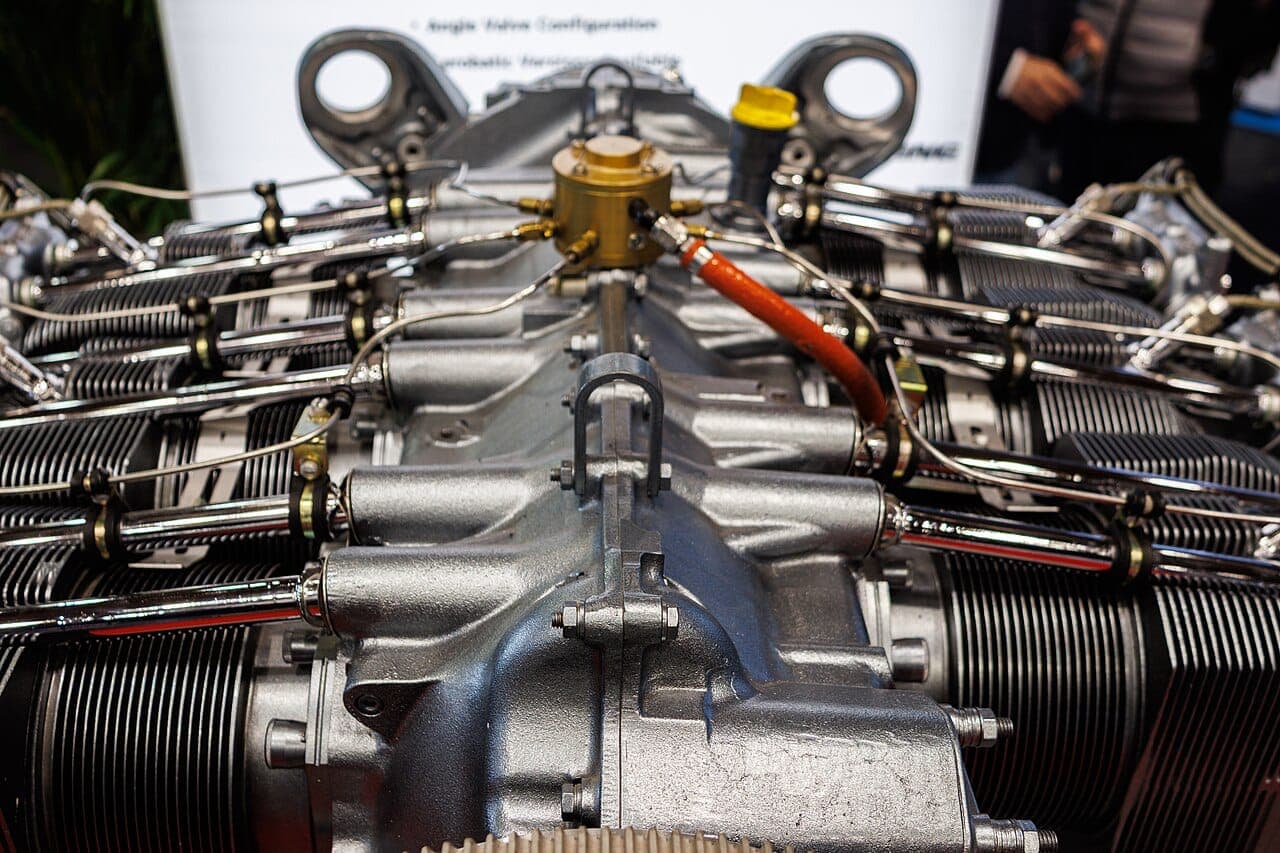
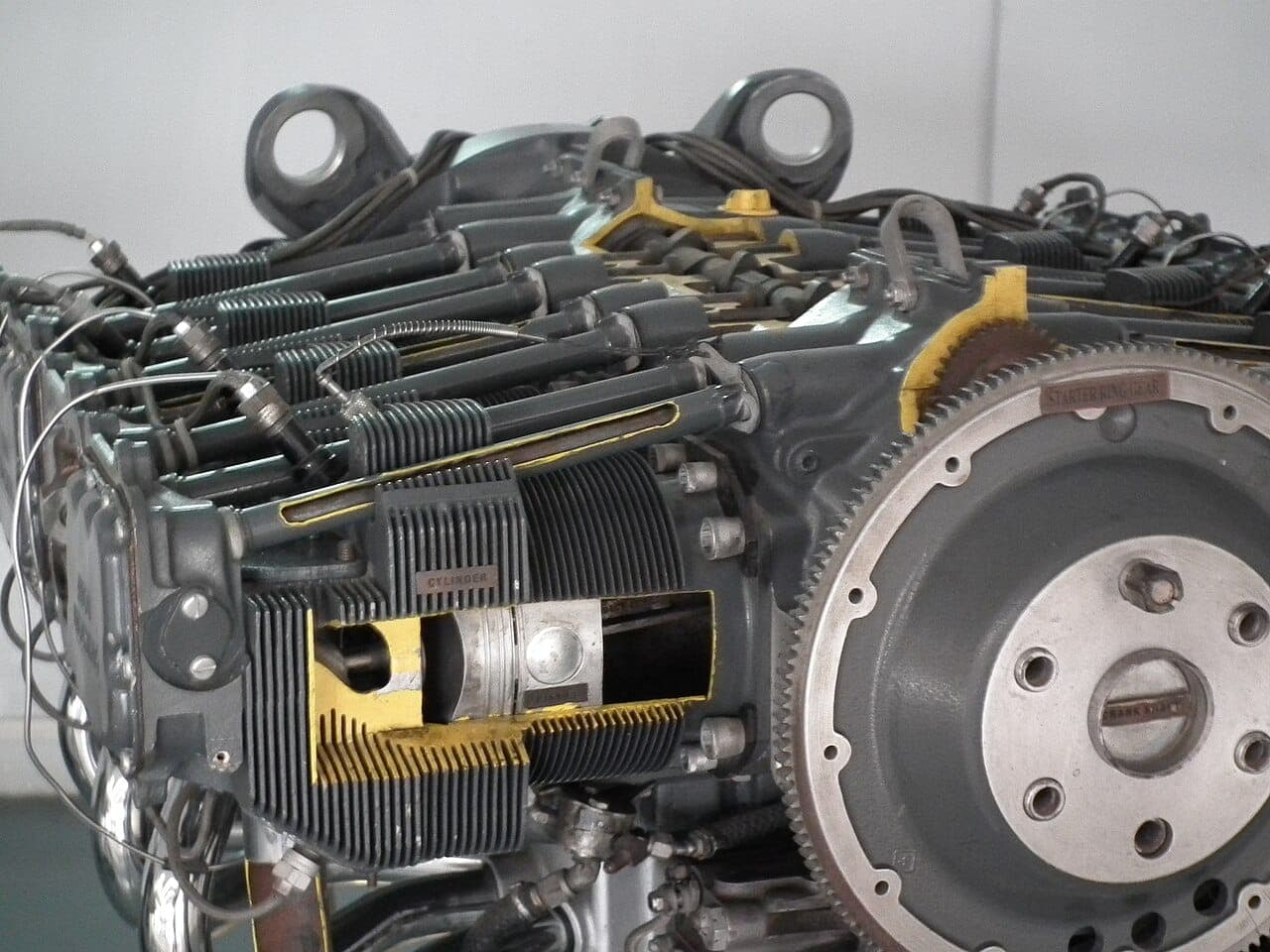
An exhaust valve stem lives in a guide with a few thousandths of an inch of clearance — enough to slide, not enough to flop. Combustion byproducts, lead from 100LL, and cooked oil build up as hard carbon inside that guide. At the same time the guide itself wears, because the valve is sliding in it thousands of times a minute at temperatures that would glow in the dark.
The two problems produce opposite results during a wobble test. Carbon buildup restricts valve movement, while excessive guide wear allows too much movement. Lycoming's inspection measures lateral movement of the exhaust valve stem using a specified fixture and measuring tool. Service Bulletin 388C lists minimum allowable movement of 0.010 or 0.015 inch and maximum movement of 0.030 or 0.035 inch, depending on the valve guide's internal diameter. The mechanic compares the reading against both limits to determine whether the guide needs cleaning or replacement.
Good to Know: A compression check will not find this. A valve guide can be worn well past limits while the cylinder still blows 76/80, because the valve is still sealing when it is closed and hot. Compression and wobble answer two different questions. Our explainer on low compression at annual covers the other half of that picture.
The Two Documents Behind It
Lycoming's Service Bulletin No. 388C is the wobble test itself. It gives the procedure, the tooling, and the limits for judging exhaust valve and guide condition. Lycoming calls for the check beginning at the engine's first 1,000 hours of operation and then at roughly 400-hour intervals after that, and also any time you see symptoms — rough running on a cold start, an intermittently cold cylinder, or a bent pushrod.
Service Instruction No. 1425A is the preventive side. It covers reaming guides to clean out carbon and the operating habits that keep deposits from forming in the first place. Think of 388C as the measurement and 1425A as the housekeeping.
Is it mandatory?
Under Part 91, a manufacturer's service bulletin is not legally binding on its own. It becomes mandatory when an Airworthiness Directive references it, or when you operate under Part 135 or a Part 91 inspection program that requires compliance with the manufacturer's published maintenance recommendations. Plenty of Part 91 owners skip it. Plenty of those owners later buy a cylinder. Our rundown of common Lycoming ADs is a separate matter — ADs you must comply with; 388C you should want to.
Heads Up: Service bulletins get revised. The letter suffix matters. If your mechanic is working from a photocopy of 388B that has been in the toolbox since the 1990s, the limits and the tooling callouts may not match what Lycoming publishes today.
How the Inspection Is Done
The good news for owners is that the cylinder stays on the engine. A mechanic following Lycoming Service Bulletin 388C will generally:
- Gain access to the exhaust valve train and remove the necessary components.
- Install the appropriate valve guide inspection fixture and measuring equipment.
- Measure lateral movement at the valve stem adapter in the direction specified by Lycoming.
- Compare the recorded movement against both minimum and maximum allowable limits.
- Examine the valve and related components for applicable signs of damage or abnormal wear.
- Reassemble the valve train, perform the required clearance checks, and record the inspection results and any corrective maintenance in the engine logbook.
The exact procedure varies with cylinder design and exhaust valve configuration, so the mechanic must follow the applicable instructions in SB 388C and the engine maintenance documentation.
Figure on an hour or so per cylinder in labor, plus rocker box gaskets. On a four-cylinder O-320 or O-360 it is a half day's work folded into an annual. On a six-cylinder angle-valve engine it takes longer, partly because of the baffling and partly because angle-valve heads are simply more work to get into — a difference we dig into in parallel valve vs angle valve engines.
Flying411 keeps Lycoming-powered singles and twins in one place, so you can compare engine times, cylinder history and recent inspection entries side by side before you pay for a pre-buy.
What Happens When a Cylinder Fails
Carbon, not wear
If the guide measures out of limits but the inside diameter is being choked by deposits rather than worn oversize, the usual fix follows SI 1425A: ream the guide in place with the correct reamer, clean everything, reinstall, and re-measure. The cylinder stays on the airplane and the bill stays modest. This is the outcome you hope for, and it is common on engines that sit between flights.
A genuinely worn guide
If the measured valve stem movement exceeds the maximum allowable limit, Lycoming SB 388C calls for replacement of both the exhaust valve and valve guide. That normally requires removing the cylinder and sending it to a qualified cylinder shop. The replacement guide, valve and valve seat must be fitted and inspected according to the applicable Lycoming overhaul procedures. Owners should compare the complete repair estimate, including removal, installation and replacement parts, against the cost of a replacement cylinder assembly.
A bad valve
Valve stem erosion, scoring, abnormal heat damage or a burned valve face may indicate additional problems beyond guide clearance. The mechanic must evaluate these findings against the applicable Lycoming inspection and repair limits. Some valve seating problems can be corrected without cylinder removal, while severe damage may require cylinder repair or replacement. At that point, many owners compare the repair quote against a new or overhauled cylinder assembly, including installation labor.
Why It Matters: The failure mode you are buying insurance against is a valve that seizes in its guide while the engine is running. The pushrod bends, the cylinder stops producing power, and metal starts going somewhere. In the ugliest version the valve head fatigues and separates, and the piston hammers it into the head. Our guide to metal in your oil filter describes what that looks like after the fact.
What the Test Means When You Are Buying or Selling
For a buyer, documented compliance with SB 388C is a quality signal that costs nothing to look for. Open the engine logbook and check for inspections at the intervals applicable to its exhaust valve guide configuration — generally 400 hours for older-style guides or 1,000 hours for improved guides under SI 1485B.A good entry names the bulletin and revision and records the actual readings per cylinder, not just "complied with." Recorded numbers let you watch a trend — a guide creeping from 0.012 to 0.021 over two inspections is telling you something a checkbox never will.
A mid-time Lycoming with 1,400 hours and no wobble test in the records is not automatically a bad engine, but it is an open question, and open questions belong in your pre-buy scope and in your offer. Asking the seller's shop to run 388C on all cylinders during the pre-buy is cheap relative to what it can reveal. If you are working out what an airplane should cost with that uncertainty attached, our piece on telling whether a used aircraft is priced right walks through the arithmetic.
For a seller, the reverse is true. A clean set of wobble readings in the logbook answers the exact question a sharp buyer's mechanic is going to ask, and it supports the price you are asking for a high-time engine.
Flying411 keeps listing details and seller-supplied maintenance summaries in one place, so you can compare how well two similar airframes have actually been looked after rather than guessing from the photos.
Common Mistakes Owners Make
Treating a smooth-running engine as proof. Morning sickness is a late symptom. Guides go out of limits quietly and long before the engine tells you.
Doing one cylinder and calling it done. Guide wear is not uniform. The hottest cylinder on a poorly baffled installation will be the one that fails first, and that is rarely the one your mechanic opens first.
Flying too little. Infrequent flying is a double hit here — short, cool flights leave combustion deposits and moisture behind, and the same habit drives the corrosion problems covered in our article on Lycoming cylinder corrosion.
Skipping oil discipline. Running the wrong oil, or stretching change intervals on an engine that flies 50 hours a year, builds the varnish that glues valves into guides. Our explainer on mineral versus ashless dispersant oil covers why the additive package matters.
Pro Tip: Schedule the wobble test with your annual and ask that the readings be written into the logbook cylinder by cylinder, in thousandths. It costs your mechanic two extra minutes and it adds real resale value. And when the work is done, treat the first flight afterward like a test flight — our notes on the first flight after an annual apply exactly.
Keep in Mind: Valve guide cleaning or valve lapping alone does not normally require a cylinder break-in period. If the repair also involves cylinder honing, replacement piston rings or installation of a new or overhauled cylinder assembly, follow the applicable manufacturer's break-in instructions. Our guide to the Lycoming break-in procedure explains that process.
Flying411 keeps engine specifications, model histories and current listings in one place, so you can compare what a Lycoming-powered airplane really costs to keep flying before you commit.
The Short Version Worth Remembering
The Lycoming valve wobble test is a relatively inexpensive, cylinder-on inspection of exhaust valve guide condition published in Service Bulletin 388C. Fixed-wing inspection intervals are generally 400 hours for older-style guides or 1,000 hours for improved guides under Service Instruction 1485B, with earlier checks whenever valve sticking is suspected. Pass it and you have a logbook entry that reassures the next buyer. Fail it and the repair may range from in-place guide cleaning to cylinder removal for valve and guide replacement.
When you are ready to compare listings, visitFlying411and see what is on the market today.
Frequently Asked Questions
Does the cylinder have to come off for the wobble test?
No. The test is done with the cylinder installed. Your mechanic removes the rocker box cover, rocker arm and pushrod, installs the fixture and takes the reading. The cylinder only comes off if the guide is worn beyond limits and needs replacing.
Is Service Bulletin 388C legally required?
Not for most Part 91 owners. Manufacturer service bulletins become mandatory when an Airworthiness Directive incorporates them, or when you operate under rules such as Part 135 that require compliance with the manufacturer's maintenance program. Many owners and insurers treat 388C as best practice anyway.
My engine runs rough for the first minute on a cold morning. Is that the guides?
It is one of the classic signs, often called morning sickness: a valve sticking slightly in a carboned guide until heat expands everything into place. It is worth a wobble test and a borescope on all cylinders before you chase ignition or fuel problems.
How often should I have it done if I fly only 50 hours a year?
Hours are the published yardstick, with 400-hour or 1,000-hour intervals generally applicable to fixed-wing engines depending on their exhaust valve guides. Low-use engines may benefit from earlier inspections, particularly when valve sticking is suspected. Ask your mechanic whether including the check in your annual inspection makes sense for your engine's condition and operating history.