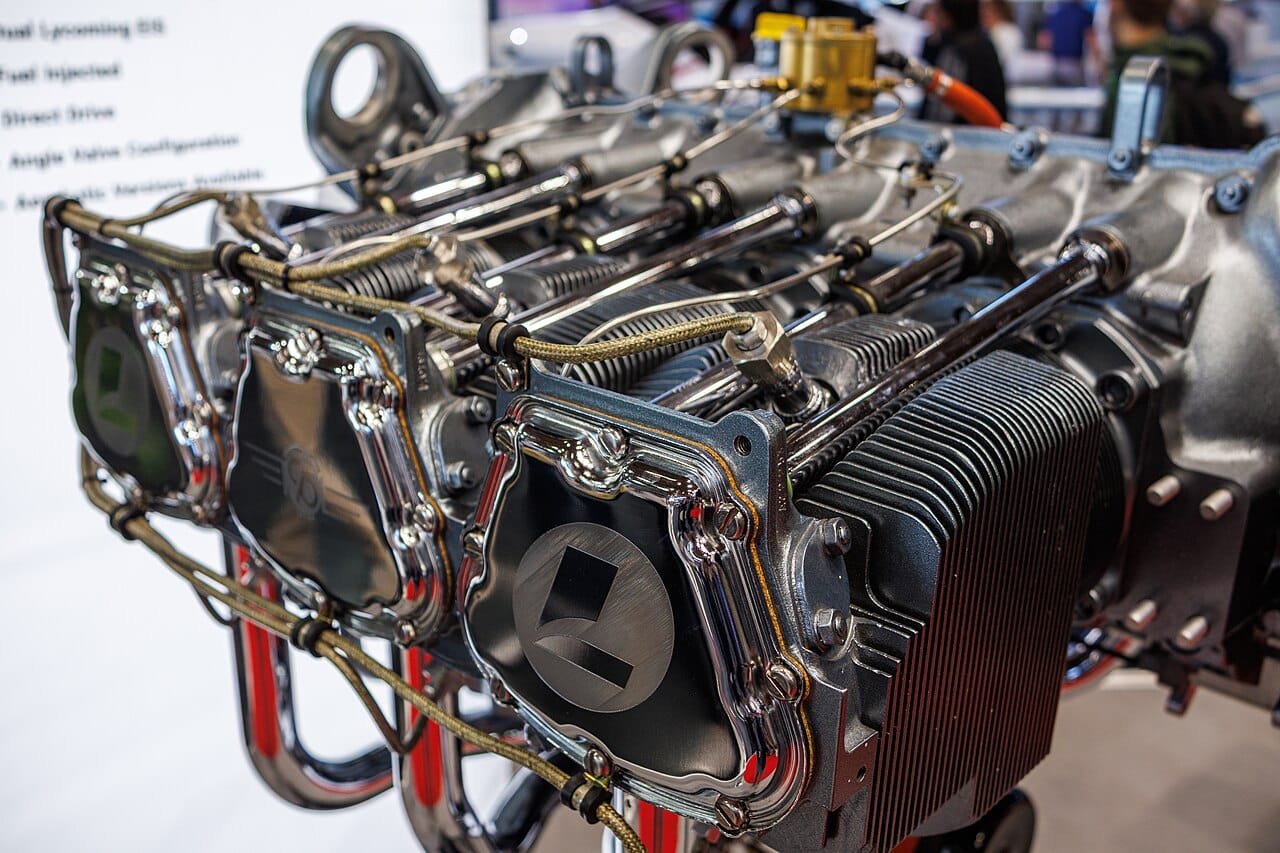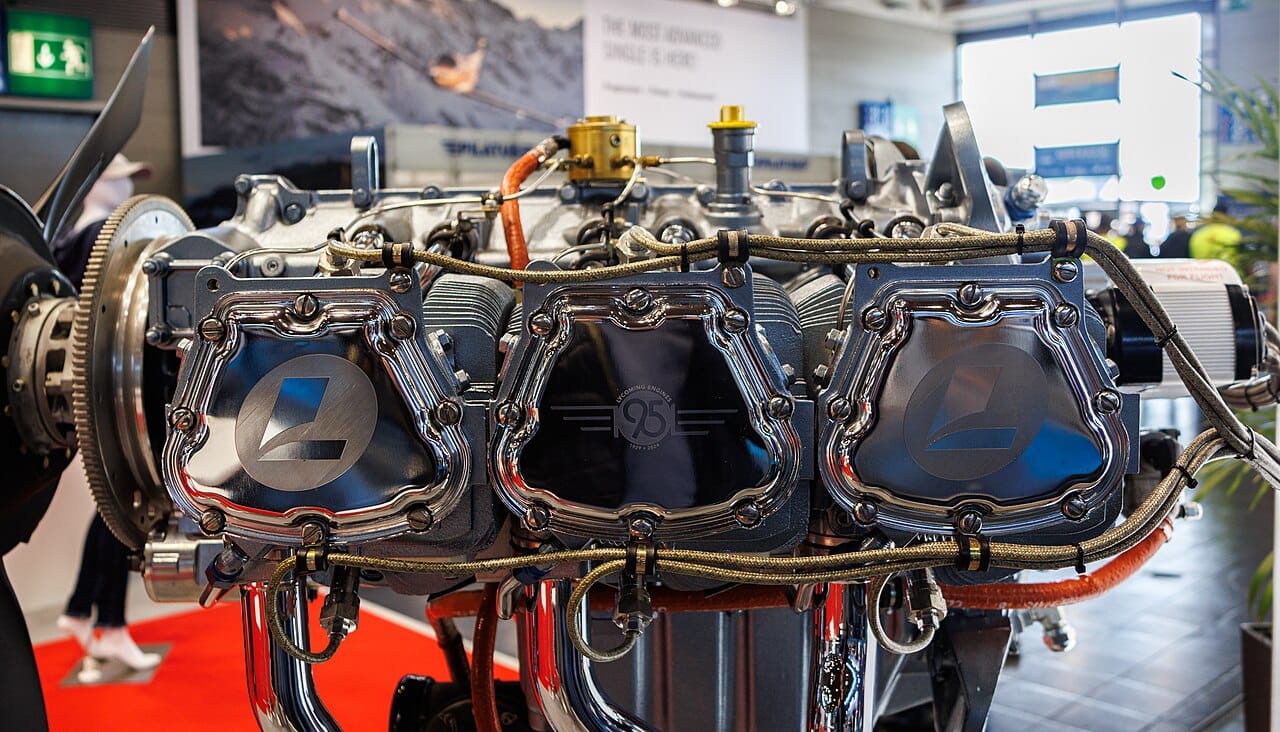
For most naturally aspirated Lycomings, Except for the engine families specifically treated differently in SI 1014P, a new, rebuilt or overhauled engine — and an engine following replacement of one or more cylinders — is operated on non-dispersant mineral oil during break-in until oil consumption stabilizes, with Lycoming using the first 50 hours as the normal break-in period. Important exceptions apply: Lycoming requires turbocharged engines to be broken in and operated on ashless dispersant oil, while the O-320-H and O/LO-360-E series have their own lubrication requirements. That single sentence covers 90 percent of the Lycoming oil question, but it leaves out the parts that actually cost people money: which viscosity for your climate, whether your oil already carries Lycoming's anti-wear additive, and how often Lycoming recommends changing the oil when the airplane sits more than it flies.
Oil is the cheapest maintenance decision you will ever make and one of the most expensive to get wrong. A camshaft that spalls because the oil sat in a damp hangar for eight months is a $30,000 lesson. Eight quarts and a filter is about $130. This article walks through the two oil families, what Lycoming's own service documents say, and how to set a change interval you can actually live with.
Mineral vs Ashless Dispersant: What the Difference Actually Is
Both oils start from the same refined petroleum base stock. What separates them is the additive package.
Straight mineral oil meets the MIL-L-6082 specification (now carried commercially as SAE J1966). It is essentially plain oil with a corrosion inhibitor and not much else. It lubricates, it carries heat away, and when combustion by-products get past the rings, it lets them settle out as sludge and varnish inside the engine.
Ashless dispersant oil — AD oil for short — meets MIL-L-22851, commercially SAE J1899. "Dispersant" means it holds carbon, lead salts and other combustion junk in suspension as tiny particles instead of letting them drop out onto the cam lobes and gallery walls. Think of it as the difference between rinsing a greasy pan in plain water and rinsing it with a squirt of dish soap. The soapy water carries the grease away; the plain water lets it settle back down. In an engine, "away" means the full-flow oil filter, which is exactly where you want the debris to end up.
"Ashless" is the other half of the name and it matters just as much. Automotive oils use metallic detergents — zinc, calcium, magnesium compounds — that leave behind a hard ash when they burn. In a low-compression, air-cooled engine drinking 100LL, that ash bakes onto spark plugs, valve stems and piston crowns. Aviation AD oils use additives that burn clean. That is the main reason car oil does not belong in a certified Lycoming, no matter what the viscosity number on the bottle says.
Why It Matters: Ninety-nine percent of the time your airplane should be running AD oil. The mineral-versus-AD debate is really a debate about one narrow window — the break-in period — plus a handful of preservation cases. Everything else is settled.
Break-In: Mineral Oil, and for How Long
Lycoming's guidance here lives in two documents worth naming: Service Instruction No. 1014, which lists approved lubricating oils and viscosities, and Service Instruction No. 1427, which covers engine break-in and oil consumption. Between them, the rule is straightforward. A new, rebuilt or overhauled engine, or an engine with new or freshly overhauled cylinders, runs on straight mineral oil for the first 50 hours of operation or until oil consumption stabilizes, whichever comes later.
The reason is friction, and it is slightly counterintuitive. You want some controlled wear during break-in. The piston rings have to scrub the crosshatch honing pattern in the cylinder walls down to a matched, sealing finish, and that only happens under real cylinder pressure with an oil that is not doing everything in its power to keep metal from touching metal. AD oil's additive package is good enough at its job that rings can glaze over instead of seating — and a glazed cylinder means high oil consumption for the rest of the engine's life, fixable only by pulling the jug and re-honing it.
Chrome-plated cylinder barrels are the classic exception to the 50-hour figure. Chrome is harder and slower to seat, and Lycoming's instruction allows for mineral oil well past 50 hours until consumption settles. Turbocharged and turbonormalized installations have their own notes in SI 1014, because oil coking in a hot turbo bearing is a different problem from ring seating — read the instruction and your engine operator's manual rather than assuming the four-cylinder normally aspirated answer applies.
How You Know Break-In Is Done
"Until consumption stabilizes" sounds vague, but in practice it is obvious. You log the hours between adding a quart. When that number stops climbing and holds steady over two or three tanks of oil — say the engine settles at a quart every eight hours and stays there — the rings have seated. Cylinder head temperatures dropping and then holding at a normal cruise value is the other tell.
For the actual operating technique during those first hours — power settings, climbs, avoiding long descents at idle — see our separate walkthrough of the Lycoming break-in procedure. Oil choice is only half the job; the other half is flying the airplane hard enough to make the rings seat.
Keep in Mind: Lycoming publishes a maximum allowable oil consumption formula, not a target: 0.006 × rated horsepower × 4 ÷ 7.4 equals quarts per hour. On a 180-hp O-360 that works out to roughly 0.58 quarts an hour, which is a legally airworthy engine and a badly tired one. Healthy four-cylinder Lycomings typically use a quart every 6 to 12 hours.
Head-to-Head: The Three Oils You Will Actually Choose Between
Most owners are picking among three things on the shelf: a straight mineral break-in oil, a single-grade AD oil, and a multigrade semi-synthetic AD oil. Prices below are typical US retail per quart as of 2025, buying by the case.
| Straight Mineral | Single-Grade AD | Multigrade AD (semi-synthetic) | |
|---|---|---|---|
| Specification | MIL-L-6082 / SAE J1966 | MIL-L-22851 / SAE J1899 | MIL-L-22851 / SAE J1899 |
| Common products | Aeroshell 80, 100, 120; Phillips 66 aviation oil (mineral grades) | Aeroshell W80, W100, W100 Plus, W120 | Aeroshell W 15W-50; Phillips 66 X/C 20W-50; Exxon Elite 20W-50 |
| Dispersant additives | None | Yes | Yes |
| Anti-wear additive (LW-16702) included | No | W100 Plus yes; plain W80/W100/W120 no | Aeroshell 15W-50 yes; others vary — check the data sheet |
| Approved for break-in | Required for most normally aspirated Lycomings; see SI 1014P for exceptions | Required for turbocharged Lycomings and permitted/required in certain other models | Depends on exact approved oil and engine requirements |
| Ambient range per SI 1014 | SAE 30 below 70°F, SAE 40 for 30–90°F, SAE 50 above 60°F, SAE 60 above 80°F | Same grade-by-temperature bands as mineral | Single product covers roughly 0°F through 90°F and above |
| Cold starts below 20°F | Poor unless you drop to SAE 30 and preheat | Poor in SAE 50/60; acceptable in W80 | Best of the three — flows at low temperature without a grade change |
| Seasonal grade changes needed | Yes, in most climates | Yes, in most climates | No |
| Oil change interval | 50 hrs with filter / 25 hrs with screen | 50 hrs with filter / 25 hrs with screen | 50 hrs with filter / 25 hrs with screen |
| Calendar limit | 4 months | 4 months | 4 months |
| Typical price per quart (2025) | $7–$10 | $8–$11 | $9–$13 |
| Cost of an 8-qt change plus filter | $95–$125 | $105–$130 | $115–$150 |
Notice what the table does not show: a difference in change interval. Paying more for semi-synthetic multigrade does not buy you extra hours between changes in a piston aircraft engine. It buys you easier cold starts and one product year-round.
Flying411 keeps aircraft listings, engine data and ownership guides in one place, so you can compare what a 2,000-hour Lycoming really costs to run before you sign anything.
Picking a Viscosity: Single-Grade or Multigrade
Service Instruction 1014 lays out approved grades against average ambient air temperature. The simplified version most owners use:
- Consistently hot climate (average above 80°F): SAE 60, or a 20W-50 multigrade.
- Warm season, 60°F to 90°F: SAE 50 — this is the classic Aeroshell W100 summer fill.
- Shoulder seasons, roughly 30°F to 90°F: SAE 40.
- Cold, below about 30°F: SAE 30, or a 15W-50 / 20W-50 multigrade.
Aviation grade numbers confuse newcomers because the can may say 80, 100 or 120 rather than SAE 40, 50 or 60. They are the same thing: commercial aviation grade 65 is SAE 30, 80 is SAE 40, 100 is SAE 50, and 120 is SAE 60. The "W" in W100 does not mean winter — it means the oil contains the ashless dispersant additive package.
The honest case for multigrade is winter. A 15W-50 behaves like a thin oil at start-up and a thick one at operating temperature, which means oil reaches the cam and the valve train faster on a cold morning. Most cylinder and cam wear happens in the first thirty seconds after start, when the oil film has drained off overnight and the pump has not caught up yet. If your airplane lives outdoors north of the Mason-Dixon line, multigrade earns its extra two or three dollars a quart every single start. Pair it with a proper preheat — our guide to Lycoming cold weather starting covers how cold is too cold to turn the key.
The case for single-grade is simpler: it is cheaper, it is what generations of these engines have run on, and in a hangared airplane in Arizona or Florida there is nothing a multigrade will do for you that W100 will not.
Fun Fact: Fully synthetic aviation piston oil has been tried and abandoned. Mobil launched AV 1, a full synthetic, in the late 1980s and withdrew it in the mid-1990s after engines accumulated sludge — the synthetic base stock did not handle the lead by-products of 100LL. Every "synthetic" aviation piston oil sold today is a semi-synthetic blend for exactly that reason.
Additives: What Lycoming Requires and What It Does Not
The one additive Lycoming actually specifies is its own LW-16702 anti-scuff compound, covered by Service Instruction No. 1409. It is a friction modifier aimed squarely at cam and tappet wear, which is the single most common reason a Lycoming comes apart before TBO.
Plain Aeroshell W100 and several other single-grade AD oils are not. Read the product data sheet for the exact oil you are buying and check the requirements for your engine model before adding anything separately. Some engines specifically require LW-16702 or an approved equivalent, while on many other Lycomings its use is approved rather than mandatory.
Here is the part owners get wrong: several oils already contain it. Aeroshell W 15W-50 and Aeroshell W100 Plus are blended with LW-16702, so you do not add it again. Plain Aeroshell W100 and several other single-grade AD oils are not. Read the product data sheet for the exact oil you are buying rather than assuming, and if the additive is not in there, dose it at each oil change per SI 1409.
Aftermarket Additives
Corrosion-prevention additives such as ASL CamGuard are popular with owners who fly infrequently, and the logic behind them — leaving a protective film on steel parts between flights — is sound. But they are not on Lycoming's approved list in SI 1014, and Lycoming's position is that unapproved additives are used at the owner's risk. During a factory warranty period that distinction has teeth. Outside of warranty, it is your call and plenty of careful owners make it; just do not confuse a popular product with a manufacturer-approved one.
Heads Up: Do not mix oil families to save a trip to the FBO. Pouring a quart of straight mineral oil into a sump full of AD oil dilutes the dispersant package for no benefit. Topping off with a different brand of the same AD grade is fine and done all the time.
Flying411 keeps maintenance explainers and model-by-model ownership costs in one place, so you can compare the real annual burden of two airplanes instead of guessing.
Oil Change Intervals: Hours, Calendar, and Which One Bites First
Lycoming Service Bulletin No. 480F is the document to quote here. It sets three numbers:
- 50 hours between oil and filter changes on engines fitted with a full-flow spin-on oil filter.
- 25 hours between changes on engines with only a pressure screen — no filter.
- 4 months maximum regardless of hours flown.
That calendar limit is the one that catches most private owners. Fly 100 hours a year and you will hit 50 hours about every six months, so the four-month clock, not the hour meter, is what drives your schedule. Used oil turns acidic as it absorbs combustion by-products and moisture; those acids sit on bearing surfaces and cam lobes doing quiet damage while the airplane does nothing at all. Fresh oil in a rarely-flown engine is cheap insurance against the corrosion that kills camshafts.
The 25-versus-50-hour split is worth understanding if you are shopping for an older airframe. A screen catches particles down to roughly the size of a grain of sand; a full-flow filter catches far finer debris and holds it. If a candidate airplane still has the screen-only setup, budget for twice as many oil changes, or price the STC'd filter conversion adapter into your first-year costs. Over 100 hours a year, that is four changes instead of two.
Cut the Filter Every Time
An oil change with no inspection is a waste of the best diagnostic opportunity you get. Cut the filter open, wash the pleats, and look at what came out. Lycoming publishes limits for how much metal is acceptable and what kinds are not — our piece on metal in your oil filter and Lycoming's limits covers the thresholds and what each material points to. Pull a sample for spectrographic oil analysis at the same time, around $30 a shot. One report tells you very little. Six reports on the same engine tell you when iron or chrome starts trending up, which is months of warning before anything shows up on a compression check.
Pro Tip: Drain the oil hot, right after a flight, and let it drip for a full twenty minutes. Hot oil carries suspended contaminants out with it; cold oil leaves them behind on the sump floor. That is dispersant oil doing exactly what you paid for.
If the Airplane Sits
Oil grade barely matters compared with how often the engine runs. Lycoming's preservation guidance is built around flying at least every 30 days, long enough to boil the water out of the oil. Short ground runs are worse than nothing — they put moisture into the crankcase without ever getting the oil hot enough to drive it off. If your airplane is going to sit for months, do it properly: our guides to Lycoming engine preservation and full engine pickling cover preservative oil, dehydrator plugs and the paperwork.
This is also where TBO gets misunderstood. A calendar-limited, badly stored engine can be scrap at 900 hours while a well-flown one sails past published TBO — and for Part 91 operators, that published number is a recommendation, not a legal wall. We unpack that in is Lycoming TBO a legal limit for Part 91.
Doing It Yourself
The FAA lists lubrication that does not require disassembly among the preventive maintenance items in 14 CFR Part 43, Appendix A, paragraph (c), and owner-pilots routinely change their own oil and filter under that provision, making their own logbook entry. Doing it yourself takes about an hour and cuts a $130 shop bill down to the cost of the oil and filter. It also means you are the one looking at the filter media, which is the real benefit.
One note for anyone moving between engine families: none of this transfers to a Rotax. The 912 wants a motorcycle-type oil, needs its oil tank burped before you can read the dipstick, and follows a completely different oil change procedure. Do not carry Lycoming habits across.
Cost Over a Year, and Where the Money Really Goes
Fly 100 hours a year behind a filter-equipped four-cylinder Lycoming and you will do two or three oil changes. At 8 quarts plus a filter, that is roughly $230 to $450 a year in materials if you do the work yourself, and $500 to $800 if a shop does it. Add $60 to $90 for two or three oil analyses. Call it under a thousand dollars a year, all in.
Set that against a field overhaul on a four-cylinder Lycoming, which has been running in the $35,000 to $50,000 range through 2025 depending on model, accessories and how many cylinders need replacing. The oil program is roughly two percent of the overhaul it is meant to postpone. Choosing the $8 oil over the $12 oil saves you about $100 a year and is nowhere near the most important decision in this article — that would be the four-month calendar interval and flying the airplane regularly.
If your engine is already near the end and you are weighing what to do next, the economics shift entirely: see should I overhaul or replace my Lycoming engine, and if you are selling, should you overhaul before selling your plane.
Flying411 keeps listings, engine times and maintenance guidance in one place, so you can compare a mid-time Lycoming against a freshly overhauled one with the running costs of both in front of you.
Key Takeaways
For most naturally aspirated Lycomings, straight mineral oil is primarily a break-in oil used until oil consumption stabilizes. Turbocharged engines and certain other Lycoming models follow different lubrication requirements, so check the current SI 1014P for the exact engine — seating rings in a new, rebuilt or re-cylindered engine for the first 50 hours or until oil consumption steadies, per Lycoming's Service Instruction 1427, with chrome barrels often taking longer. After that, ashless dispersant oil meeting MIL-L-22851 is the answer for the rest of the engine's life, and the choice between a single grade like W100 and a multigrade like 15W-50 comes down to climate and how much you value easy cold starts. Check whether your oil already carries Lycoming's LW-16702 anti-wear additive before adding it, and know that it is mandatory in the O-320-H and O/LO-360-E series under Service Bulletin 471. Change the oil and filter every 50 hours with a full-flow filter, every 25 with a screen only, and never let it go past four months no matter how little you fly. Cut the filter every time and start an oil analysis history — those two habits will tell you more about your engine's health than any oil brand on the shelf.
Conclusion
The Lycoming oil decision is less of a decision than most owners expect. Mineral oil for break-in, ashless dispersant forever after, viscosity to match your climate, and an interval driven by the four-month calendar as much as the tach. The variables that actually move the needle on whether your engine reaches TBO are how often you fly it, how well it is stored between flights, and whether anyone is looking inside the filter. Oil brand loyalty is a hangar argument; regular flying and a disciplined change schedule are the thing that keeps a camshaft alive.
If you are shopping rather than maintaining, ask for the oil analysis history and the last ten oil change entries before you ask about paint. An engine with a documented 50-hour habit and clean filters is worth real money more than one with a low hour reading and three years of gaps in the logs.
When you are ready to compare listings, visitFlying411and see what is on the market today.
Frequently Asked Questions
Can I use automotive oil in a Lycoming?
No. Automotive oils use metallic detergent additives that leave ash deposits on plugs, valves and piston crowns, and they are not formulated for the lead by-products of 100LL or for an air-cooled engine's operating temperatures. Lycoming's approved oils are listed in Service Instruction 1014, and none of them come from an auto parts store.
How long do I run mineral oil after installing new cylinders?
Treat new or overhauled cylinders like a new engine: straight mineral oil until oil consumption stabilizes, generally around 50 hours with steel barrels and often longer with chrome. Change the oil and cut the filter at about 25 hours during that period rather than waiting the full 50 — break-in produces more metal than normal running, and you want to see it leave the engine.
Is 15W-50 fine in summer heat?
Yes. The approved multigrades cover the full ambient range in Service Instruction 1014, including hot weather, which is why many owners run one product year-round. In a consistently very hot climate some owners still prefer a straight SAE 60 or 20W-50, but 15W-50 is approved and widely used in summer.
Do I really have to change oil every four months if I only fly 20 hours a year?
Lycoming recommends that you do. Service Bulletin 480F calls for a maximum of four months between oil changes regardless of hours, and a low-utilization engine is exactly where moisture and combustion by-products make that calendar guidance valuable. For an ordinary Part 91 aircraft, however, the service bulletin is not automatically a federal requirement unless it is made binding through an applicable AD, approved maintenance program or other regulatory basis.
Does switching oil brands hurt anything?
Not if you stay within the same specification. Moving from one MIL-L-22851 ashless dispersant oil to another is routine and needs no flush. What you should avoid is mixing mineral and AD oil in the same sump, and you should re-check whether the new product contains LW-16702, because that varies by brand and grade.
Should I add CamGuard or a similar corrosion additive?
It is a judgment call. Aftermarket corrosion-prevention additives are not on Lycoming's approved list in Service Instruction 1014, so using one is at your own risk and can complicate a factory warranty claim. Owners of rarely-flown airplanes often use them anyway; owners of a new factory engine under warranty generally should not.