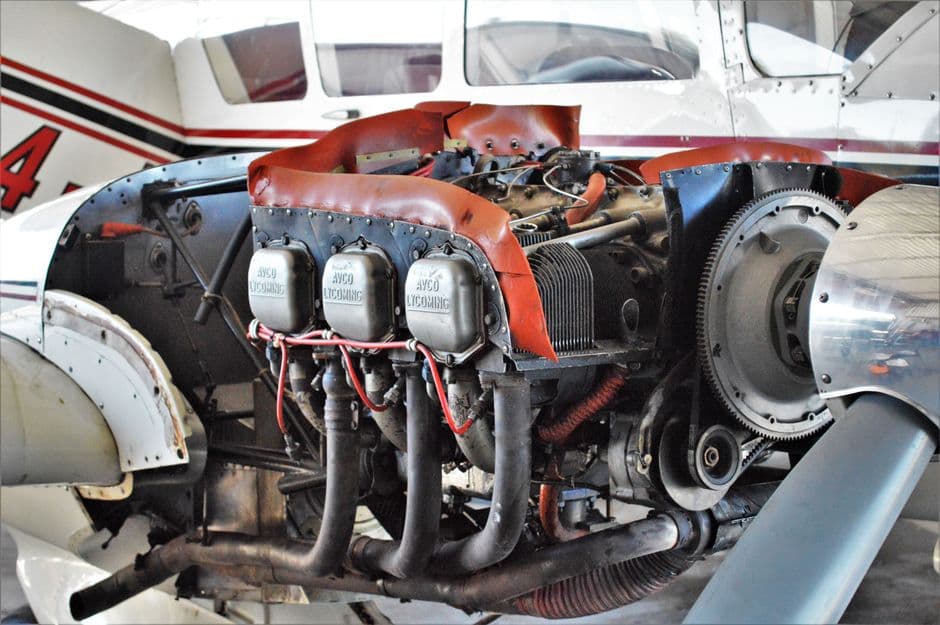
An airworthiness directive on your engine is a legal order to fix something, and in nearly every case the person who pays is whoever owns the airplane on the day the work is done. Not the manufacturer, not your insurer, not the previous owner. An AD works like a car recall with one important difference: the carmaker is not picking up the tab.
By the end of this you will know how to confirm the AD actually applies to your serial number, how to price it before the shop does, who you can realistically ask for money, and what an open or recurring AD does to your asking price. The paperwork side takes an afternoon. The shop side takes anywhere from an hour of inspection to a full engine removal, and that spread is exactly why you want to work through it in order.
The Job at a Glance
| Step | What you need | How long it usually takes |
| 1. Confirm it applies | Engine and airframe logs, data plate info, the AD text | 1 to 2 hours |
| 2. Price it | AD "Costs of Compliance" section, a shop quote | 2 to 5 days to get real numbers |
| 3. Choose a compliance path | Service bulletin references, parts availability | A day; weeks to months if you request an AMOC |
| 4. Time it around the annual | Compliance deadline in hours or calendar time | Varies; plan 1 to 3 extra shop days |
| 5. Get the paperwork right | A&P or IA signature, AD status list | Same visit |
| 6. Work out who pays | Warranty records, purchase agreement, co-ownership docs | 1 to 3 weeks of phone calls |
| 7. Re-price the airplane | Compliance records, recent comparable listings | An hour, once the work is signed off |
Step 1: Confirm the AD Actually Applies to Your Engine
Half the panic over a new AD comes from owners who read the headline and not the applicability paragraph. Every AD under 14 CFR Part 39 names exactly what it covers: engine models, and very often a specific range of part numbers or serial numbers for the component involved. A crankshaft AD might cover only crankshafts forged in a certain period. A cylinder AD might cover only assemblies from one supplier.
What to do: pull the engine logbook and the last 8130-3 or yellow tags for any replaced parts. Match part numbers and serial numbers against the applicability section line by line. Then find two dates in the AD text — the effective date and the compliance time. Compliance time is usually written in hours of time in service, calendar months, or "at the next inspection," and those are very different deadlines for a 40-hour-a-year flyer versus a flight school.
What goes wrong: owners assume an overhaul erased the AD. It sometimes does and sometimes does not. If your shop installed a new-production cylinder or a redesigned part that the AD names as terminating action, you are done. If the overhauler reinstalled the original part, the AD still follows that part. The logbook has to show which.
Good to Know: An AD applies to the aircraft, engine, propeller or appliance identified in its applicability section. Some ADs follow specific components and serial numbers, while others apply to an entire aircraft or engine model regardless of individual component history. Buy a used cylinder, a used prop, or a used mag from a salvage yard and you inherit whatever AD history came with it — including recurring inspections that restart on your dime.
Step 2: Price It Before the Shop Does
Every AD the FAA issues includes a "Costs of Compliance" section with an estimate in work-hours and parts dollars. The FAA has used a figure of about $85 per work-hour in recent rulemaking, which is useful as a floor and nothing more. Owners report general aviation shop rates roughly in the $100 to $175 per hour range as of 2025, with specialty engine shops and turbine facilities higher. Take the FAA's work-hour estimate, multiply by your shop's real rate, and add parts at current catalog prices.
| Type of engine AD | Typical shop work | Realistic owner cost (piston single, 2025) |
| Visual or records check | Cowling off, look, log it | $100 to $400 |
| Recurring component inspection (magneto, oil hose, fuel pump) | Remove, inspect, reinstall at set intervals | $250 to $900 each time it comes due |
| Parts replacement, accessible | Hoses, gaskets, pump, impulse coupling | $500 to $3,000 |
| Cylinder inspection or replacement | Pull and replace affected jugs | Owners report roughly $1,500 to $3,000 per cylinder installed |
| Internal inspection requiring teardown | Engine removal, split case, reassemble, test run | $8,000 and up; often pushes owners into a full overhaul |
The bottom row is the one that hurts. Once an AD requires splitting the case, the marginal cost of simply overhauling the engine while it is apart is often small compared to doing the AD alone and putting a mid-time engine back together. A factory overhauled or rebuilt four-cylinder Lycoming runs well north of $30,000 as of 2025, so this is a real fork in the road, not a formality. Our guide on how engine time affects aircraft value is worth reading before you decide, because a fresh overhaul changes your resale math in a way a completed AD does not.
Flying411 keeps engine times, overhaul status and asking prices for comparable airplanes in one place, so you can compare what a mid-time engine and a zero-time engine are actually fetching before you authorize a teardown.
Step 3: Choose Your Compliance Path
Some engine ADs provide multiple compliance options, while others mandate a specific inspection, replacement or modification. Where the AD allows it, owners may choose between recurring inspections and a terminating action. An alternative method of compliance requires FAA approval before it can be used.
- Repetitive inspection. Cheapest today, most expensive over ten years. You pay again every 50, 100 or 500 hours, forever.
- Terminating action. Replace the part with a redesigned one and the AD goes away for good. Costs more up front and is almost always the better buy if you plan to keep the airplane.
- Alternative method of compliance (AMOC). Under 14 CFR 39.19 you can ask the FAA office that issued the AD to approve a different way of meeting the safety intent. Realistic for fleets and unusual installations, rarely worth the wait for one privately owned piston single.
What goes wrong: owners pick the repetitive inspection because the first bill is smaller, then sell the airplane three years later and discover the buyer discounts them for the open obligation anyway. Run the arithmetic. A $600 recurring inspection every 100 hours on an airplane flying 120 hours a year is about $720 a year in added operating cost, or $7 per flight hour you can never get back. If terminating action costs $4,000, it pays for itself in six years and shows up as a clean line in the logbook when you sell.
Pro Tip: Ask your shop whether the terminating part is backordered before you commit. Parts shortages on AD-driven components are common in the first year after issuance, and an airplane grounded waiting for a casting is still costing you hangar rent and insurance.
Step 4: Time It Around the Annual
Doing AD work during the annual inspection saves you money for one simple reason: the cowling, baffles and accessories are already off. You are not paying twice for access labor. If the compliance deadline lands near your inspection month, talk to your IA about pulling it forward into the annual.
What you cannot do is let the deadline pass. Under 14 CFR 91.403(a) the owner or operator is primarily responsible for keeping the aircraft airworthy, including compliance with Part 39. An overdue AD makes the aircraft unairworthy, full stop, and no amount of good intention covers it. If an aircraft must be flown to a repair facility with an overdue AD, the owner or operator generally needs a special flight permit under 14 CFR Section 21.197, unless the operator already has specific authority to make that flight. Under 14 CFR Section 39.23, the FAA may issue a permit if the AD does not prohibit the flight and the aircraft can be operated safely.
What goes wrong: the AD surfaces mid-annual, the parts are three weeks out, and the owner expects the IA to sign off anyway. That is not a negotiation. If you are heading into that conversation, read what FAR 43.11 actually requires of your IA first so you understand what they can and cannot do. A few ADs do allow a certificated pilot who owns or operates the aircraft to perform the check and make the entry, but the AD has to say so explicitly — do not assume it.
Heads Up: A new AD can be issued the week after your annual is signed. Nothing about a fresh annual grants immunity. Sign up for the FAA's AD email notifications for your make and model so the news reaches you before your mechanic does.
Step 5: Get the Paperwork Right the First Time
The compliance record is worth real money later, so treat it as part of the job rather than an afterthought. 14 CFR 91.417(a)(2)(v) requires the maintenance records to show the current status of applicable airworthiness directives — the AD number, the revision date, the method of compliance, and for a recurring AD, the time and date when the next action is due.
A proper entry looks like this: AD number and revision, the paragraph complied with, the method used (which usually means naming the service bulletin or service instruction the AD references), aircraft and engine time in service, date, and the next due point if it recurs. Vague entries like "complied with engine AD" are worthless to the next buyer's mechanic, who will assume the worst and re-do the inspection.
Keep a standalone AD compliance list for the engine and airframe, updated at every annual. Buyers and appraisers ask for it first. Our article on how maintenance records affect resale value gets into what a well-kept set of books is worth, and the short version is thousands, not hundreds. If you want the distinction between one-time and recurring obligations laid out properly, see our explainer on one-time versus recurring AD compliance.
Step 6: Work Out Who Actually Pays
Here is the honest answer in plain order of likelihood.
You do. The FAA issues safety orders. It does not assign the bill, and it has no authority to make a manufacturer reimburse you. For an out-of-warranty engine in a privately owned airplane, the owner pays, and that is the end of the analysis roughly nine times out of ten.
Sometimes the manufacturer helps. Engine makers occasionally offer free or discounted parts, labor allowances, or credit toward an overhaul when an AD stems from a manufacturing defect they own. Lycoming and Continental have both run support programs of this kind in past campaigns. These are business decisions, announced through service bulletins and dealer channels, and they usually come with deadlines and a requirement that the work be done by an authorized facility. Ask your shop to check before they start cutting safety wire. Nobody at the factory will call you.
Warranty, if you are inside it. A factory new, rebuilt or overhauled engine carries a warranty period, and AD work on a covered defect may fall inside it. Pull your warranty registration before you assume otherwise.
Not your insurer. Hull insurance covers sudden accidental damage, not maintenance and not regulatory compliance. An AD bill is not a claim, no matter how much it looks like one on your bank statement. If you are unclear where your policy's line sits, our piece on agreed value versus stated value coverage explains what a hull policy actually pays for.
In a sale, whoever the contract says. This is the one place the answer is genuinely negotiable. Most purchase agreements require the seller to deliver the aircraft airworthy with all ADs complied with as of closing. If a new AD is issued between signing and closing, or if the pre-buy turns up an overdue one, the usual outcomes are a price reduction, an escrow holdback, or the seller completing the work before delivery. Brokers commonly hold back 100 to 150 percent of the quoted cost, because AD work has a habit of finding more work. If you are buying, make a written AD search part of the pre-buy scope and get it in the contract.
In a partnership or leaseback, whoever the agreement says. Most co-ownership documents treat AD compliance as a shared capital expense split by ownership share, not an hourly operating cost. If yours is silent on it, fix that this month rather than during the argument.
Flying411 keeps listings, specs and seller details in one place, so you can see how sellers of your make and model are presenting their AD and inspection status before you write your own description.
Step 7: Re-Price the Airplane
AD history moves value in a predictable way, and the pattern is less about the AD itself than about whether the obligation is finished.
| Status at time of sale | Effect on value |
| One-time AD, complied with, clean entry | Neutral. Slightly positive against a competing airplane with sloppy records. |
| Terminating action installed | Mildly positive. Buyers pay for certainty and so do their mechanics. |
| Recurring inspection, current | Small discount. Buyers capitalize the ongoing cost over the hours they plan to fly. |
| Recurring inspection, due soon | Discount of roughly the full cost of the next compliance. |
| AD open or overdue | Discount well beyond the quoted cost. The airplane is unairworthy, so the buyer prices in risk, delay and a possible teardown. |
| Compliance undocumented | Worst case. The buyer's mechanic assumes it was never done and quotes doing it again. |
The pattern that catches sellers off guard is the last one. An AD you genuinely complied with in 2019 but logged as a one-line scribble is, to a careful buyer, the same as an AD you never did. Appraisers treat records as evidence, not as testimony, which is why our list of what appraisers look for in an aircraft puts logbook completeness near the top.
The other thing worth knowing: a widely publicized AD on a popular engine rarely dents the value of the model as a whole, because every airplane in the fleet carries the same obligation. What it dents is the value of the specific airplanes that have not dealt with it. If you own one of the compliant ones, say so in the listing, in the first three lines, with the AD number. That costs nothing and separates you from the airplane two hangars over.
Why It Matters: Buyers are not pricing the repair. They are pricing uncertainty. A $2,000 AD that is clearly documented costs you nothing at sale; the same $2,000 AD left vague can cost you $6,000 in negotiation because the buyer has no idea how deep the hole goes.
If the AD in question affects a Lycoming, our roundup of the most common Lycoming airworthiness directives is a useful cross-check against your own engine logs. And if your annual turned up more than one problem at once, the same cost-and-resale logic applies to corrosion found at the annual.
Flying411 keeps aircraft listings, maintenance context and ownership guides in one place, so you can compare what comparable airplanes are asking before you decide whether to fix, fly or sell.
Key Takeaways
An engine AD is a legally enforceable requirement under 14 CFR Part 39, and 14 CFR Section 91.403 makes the owner or operator primarily responsible for maintaining compliance. The owner typically bears the expense, although warranty coverage, manufacturer assistance, insurance terms or contractual agreements may affect who ultimately pays. Start by confirming the AD applies to your specific part and serial numbers, then price it from the FAA's work-hour estimate multiplied by your shop's real rate rather than waiting for the invoice to surprise you. Where the AD offers both a repeating inspection and a terminating action, do the arithmetic over the years you plan to keep the airplane, because the cheap option today is usually the expensive one by year six. Manufacturer support programs and warranty coverage exist but have to be asked for, and insurance never covers compliance work. At resale, a completed, well-documented AD is close to value-neutral, a recurring one costs you roughly the next compliance, and an open or undocumented one costs you far more than the repair itself.
Conclusion
The owners who get hurt by ADs are rarely the ones with the expensive engines. They are the ones who waited, guessed at applicability, let the compliance entry go in vague, or found out about an overdue directive from a buyer's mechanic instead of their own. Handle an airworthiness directive on your engine like a scheduled maintenance event with a legal deadline attached: confirm, price, choose the path that ends the obligation if you can afford it, document it properly, and put the AD number in your listing when the day comes to sell. Done that way, it is a line item. Ignored, it is a negotiation you lose.
When you are ready to compare listings, visitFlying411and see what is on the market today.