There is something deeply satisfying about bringing an old airplane back to life. The smell of fresh dope on fabric, the sight of polished aluminum catching the sun, the sound of a vintage engine turning over for the first time in years — these are moments that restoration enthusiasts never forget. Whether you are a seasoned A&P mechanic or a curious pilot with a hangar and a dream, choosing the right project makes all the difference.
The market for vintage aircraft restoration in the United States is active and passionate. From fly-ins at Oshkosh to quiet country airstrips, restored classics draw crowds and command serious admiration. But not every old airplane makes for a practical project. Parts availability, structural complexity, community support, and long-term value all play a role in choosing wisely.
This guide covers the 11 best vintage aircraft to restore, ranked with first-timers and seasoned enthusiasts in mind. Each entry covers what makes the aircraft special, how difficult the restoration tends to be, and what to watch out for before you write that first check.
Key Takeaways
The best vintage aircraft to restore are generally those with strong parts availability, active type clubs, and proven airframes. The Piper J-3 Cub, Boeing Stearman, Cessna 140, and Aeronca Champ are among the most beginner-friendly options thanks to their simple construction and large support networks. Warbirds like the North American T-6 Texan and the P-51 Mustang offer historic prestige but require considerably more resources. Whatever you choose, a solid logbook, a good pre-purchase inspection, and a realistic budget are your three best tools.
| Aircraft | Difficulty Level | Parts Availability | Restoration Cost Range (Approx.) |
| Piper J-3 Cub | Beginner | Excellent | Low to Moderate |
| Aeronca 7AC Champ | Beginner | Excellent | Low to Moderate |
| Cessna 120/140 | Beginner-Intermediate | Excellent | Moderate |
| Boeing Stearman | Intermediate | Good | Moderate to High |
| Taylorcraft BC-12D | Beginner | Good | Low to Moderate |
| Luscombe 8 Series | Beginner-Intermediate | Good | Moderate |
| Cessna 170 | Intermediate | Good | Moderate |
| Beechcraft Staggerwing | Advanced | Fair | High |
| WACO Biplane | Advanced | Fair-Good | High |
| North American T-6 Texan | Advanced | Good | High |
| North American P-51 Mustang | Expert | Fair | Very High |
If you are exploring the world of vintage aviation and want guidance on finding the right aircraft, Flying411 is a trusted resource that connects buyers and enthusiasts with the knowledge they need to make smart aviation decisions.
Why Restoring a Vintage Aircraft Is Worth the Effort
Restoring a vintage airplane is not like restoring a classic car. The stakes are higher, the regulations are stricter, and the skills required are more specialized. But the rewards match the challenge.
Restored antique aircraft tend to appreciate in value over time, especially when the work is documented carefully and done to a high standard. Beyond money, there is the irreplaceable satisfaction of preserving a piece of aviation history and being able to fly it.
According to the Experimental Aircraft Association (EAA) Vintage Aircraft Association, restoration of antique and classic aircraft represents a significant portion of sport aviation in the United States. Thousands of volunteers and professionals invest their time every year to keep historic airplanes flying.
Why It Matters: A well-restored vintage aircraft does more than win trophies at fly-ins. It keeps a piece of American aviation history alive and airworthy for the next generation to see and experience.
What Makes a Good Restoration Candidate
Not every old airplane sitting in a barn is a worthwhile project. Before committing to a restoration, consider these key factors:
- Airworthiness certificate and registration paperwork should be intact or recoverable
- Logbooks should be present and complete, or at least partially traceable
- Structural integrity of the airframe, especially tubes, spars, and attach points
- Parts availability for the specific model and series
- Active type club or community that can offer technical support
- Engine condition and overhaul status, since engines can be one of the largest costs
Pro Tip: Always budget at least 25 percent more than your initial restoration estimate. Engine decisions, custom part fabrication, and unexpected corrosion are common cost drivers that can expand a budget quickly.
A flying airplane or one that can be ferried is almost always a better starting point than a basket-case project. The more assembled the aircraft, the clearer the picture of what you are dealing with.
Understanding FAA Requirements for Restoration
The Federal Aviation Administration (FAA) has specific rules that govern restoration work on certificated aircraft. Under Federal Aviation Regulation (FAR) Part 43, most maintenance and restoration work must be performed or supervised by a licensed Airframe and Powerplant (A&P) mechanic. Returning the aircraft to service requires sign-off by an A&P mechanic who holds an Inspection Authorization (IA).
Good to Know: You can legally perform much of the hands-on work yourself as the owner, but an IA must inspect and approve the work before the aircraft flies again. Finding an IA who is willing to work alongside owner-restorers is a key first step.
This is why joining a type club early matters so much. Clubs often have lists of trusted mechanics who understand specific models and are experienced in working with enthusiast-restorers.
The 11 Best Vintage Aircraft to Restore
Each aircraft on this list was chosen for a reason. Some are ideal for first-time restorers. Others are better suited for experienced hands with deeper pockets. What they all share is a combination of historic character, an active ownership community, and a genuine reward at the end of the work. Here is a closer look at each one.
1. Piper J-3 Cub
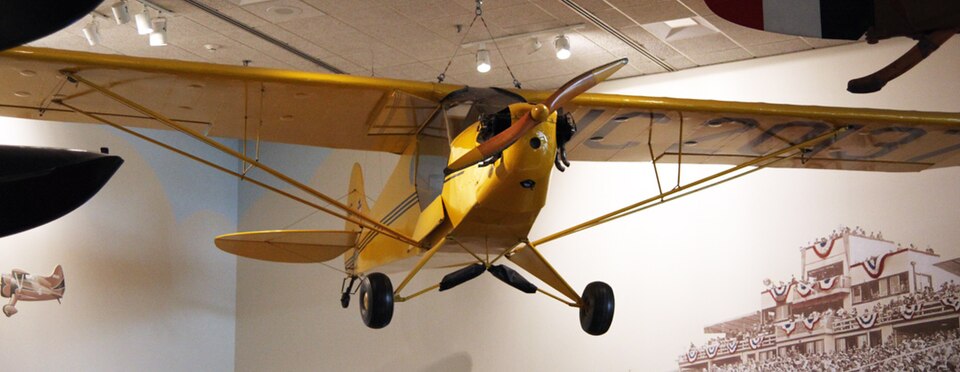
The Piper J-3 Cub is probably the most beloved vintage aircraft in American aviation history. Produced from the late 1930s through the mid-1940s, the J-3 taught a generation of pilots to fly, including many who went on to serve in World War II. Today, it remains one of the most popular restoration choices in the country.
The J-3 is a fabric-covered, tube-and-steel-frame aircraft with a simple, forgiving design. Parts are widely available from suppliers like Dakota Cub Aircraft, and the active community of Cub enthusiasts means technical help is never far away. The Continental A-65 engine that powers most J-3s is well understood and relatively affordable to overhaul.
Fun Fact: The Piper J-3 Cub is said to have trained more pilots than any other aircraft in American history, with production figures in the tens of thousands during its peak years.
What to watch: Fabric condition is the first thing to check. Corrosion in the steel tube fuselage is another common concern, especially in aircraft that spent time in humid climates. Always inspect the spars carefully before committing to a project.
Difficulty: Beginner-friendly Community support: Excellent
2. Aeronca 7AC Champ
The Aeronca 7AC Champion, known simply as the Champ, is often mentioned in the same breath as the Piper Cub. Like the Cub, it is a two-seat, fabric-covered trainer with a simple structure and a loyal following. Introduced just after World War II, the Champ was designed as an affordable civilian trainer and has been earning fans ever since.
Restoration parts are widely available, and the Aeronca Aviators Club provides excellent support for owners. The Continental A-65 engine is common on early Champs, while later versions used the Champion 7EC engine lineup. Either way, engine parts and knowledge are readily accessible.
Keep in Mind: The Champ and the Cub look similar from a distance, but they fly differently. The Champ has side-by-side seating in some variants and tandem in others. Always verify the specific sub-model before purchasing, as parts and configurations vary.
What to watch: Spar condition is critical. Like all fabric aircraft, the underlying wood structure needs careful inspection, especially if the airplane sat outside for extended periods.
Difficulty: Beginner-friendly Community support: Excellent
3. Cessna 120 and 140
The Cessna 120 and 140 are all-metal tailwheel aircraft produced in the late 1940s. The all-metal construction makes them somewhat easier to assess structurally than fabric-covered aircraft, and corrosion, while possible, is more visible and straightforward to address. The Continental C-85 engine powering most examples is well-supported with a solid parts network.
Univair Aircraft Corporation is a major supplier of certified replacement parts for the Cessna 120/140, making sourcing components considerably easier than for rarer types. The Cessna 120/140 Association is another tremendous resource, with technical manuals, type-specific knowledge, and a network of experienced owners.
Pro Tip: The Cessna 140 featured flaps and a slightly more refined interior than the 120. Both are excellent restoration candidates, but verify the specific variant before purchasing, as there are meaningful differences between early and late production aircraft.
The Cessna 140 also appears on lists of small aircraft worth owning for pilots who want capable, economical flying after their restoration is complete.
What to watch: Inspect the fabric wing covering on early models carefully. Later 140s had all-metal wings, which are generally more durable. Check for corrosion around the fuel tank area and in the wing root.
Difficulty: Beginner to Intermediate Community support: Excellent
4. Boeing Stearman (Model 75)
The Boeing Stearman is the quintessential American biplane. Built in large numbers as a military primary trainer during World War II, thousands of Stearmans survived the war and entered civilian life as crop dusters, aerobatic performers, and airshow icons. Today, the Stearman is one of the most recognizable vintage aircraft on the airshow circuit.
Restoration of a Stearman is more involved than a Cub or Champ, largely because of its biplane structure, wood wing components, and radial engine. The Lycoming R-680 and Continental W-670 engines that power most Stearmans are robust but require specialized knowledge for overhaul. Specialists like Big Sky Stearman in Oregon have decades of experience working on these aircraft and can provide both parts and expertise.
Fun Fact: The Stearman is sometimes called the "Yellow Peril" by veterans of World War II pilot training programs, a nickname that referred to its distinctive yellow paint scheme and its reputation for demanding precise flying technique.
What to watch: The wood in the wings deteriorates over time, especially in humid or coastal environments. A full inspection of the wing spars and ribs is essential. Ground loops are a known hazard with the Stearman's narrow-track landing gear, so check the fuselage and landing gear attachment points carefully.
Difficulty: Intermediate Community support: Good
5. Taylorcraft BC-12D
The Taylorcraft BC-12D is a charming side-by-side two-seater from the 1940s that does not always get the same attention as the Cub or Champ. That is actually part of its appeal. Projects can be found at lower prices, and the Continental A-65 engine is the same unit found in the Cub, making engine support and parts easy to access.
The Taylorcraft Owners Club provides excellent support, including a technical library and a network of experienced mechanics. The fabric-and-tube construction is familiar to anyone who has worked on Piper Cubs, so skills transfer well between the types.
Good to Know: The side-by-side seating of the Taylorcraft makes it popular with couples and flying partners who want to enjoy the flight together rather than staring at the back of someone's head.
What to watch: Pay close attention to the wing attachment fittings and the condition of the fabric. Some Taylorcraft aircraft have had alterations over the decades that may affect their airworthiness certificates, so verify the paperwork carefully.
Difficulty: Beginner-friendly Community support: Good
6. Luscombe 8 Series
The Luscombe 8 is an all-metal aircraft from the 1940s with a sleek, modern look for its era. Donald Luscombe designed it to be more advanced than the fabric-covered trainers of the time, and the all-metal construction has held up remarkably well in many surviving examples. The Luscombe 8A through 8F series covers a range of engine options and refinements.
The Luscombe Association is an active organization that supports owners and restorers with technical guidance and a registry of surviving aircraft. Parts are available, though some specialized items require fabrication or sourcing from salvage.
Heads Up: Luscombe aircraft are known for being a bit tricky to land compared to other tailwheel aircraft of the same era. The narrow landing gear and light weight make crosswind landings demanding. This does not affect the restoration process, but it is worth knowing before you commit to flying the finished product.
What to watch: Inspect the riveted aluminum skin carefully for corrosion, especially around the wing roots and lower fuselage. The fuel tanks in early models are known problem areas and may need replacement or careful inspection.
Difficulty: Beginner to Intermediate Community support: Good
Flying411 can help you navigate the process of finding, evaluating, and acquiring a vintage aircraft that fits your restoration goals and budget. Reach out to the team at Flying411 for guidance tailored to your specific situation.
7. Cessna 170
The Cessna 170 is a four-seat tailwheel aircraft from the late 1940s and early 1950s that sits in an interesting position in the vintage market. It offers more utility than a two-seat trainer, with room for a family or a passenger, and it is all-metal, which simplifies structural assessment. The Continental C-145 engine is well-supported, and parts availability is generally strong.
The Cessna 170 Association is a well-organized club with conventions, a newsletter, and a library of technical resources. The 170 is also a gateway into understanding how the legendary Cessna 172 developed, since Cessna essentially converted the 170 design to tricycle gear to create the 172.
Why It Matters: Restored Cessna 170s are popular among pilots who want vintage aesthetics combined with a practical four-seat airplane they can actually use. A well-done restoration often commands strong resale value in the vintage aircraft market.
The Cessna 170 shares design DNA with a broader category of regional-use general aviation aircraft that have served American pilots for generations.
What to watch: Early 170s had fabric-covered wings. Later models used all-metal wings, which are generally preferred. Inspect the lower skin panels of the fuselage for corrosion and pay close attention to the tailwheel assembly.
Difficulty: Intermediate Community support: Good
8. Beechcraft Staggerwing
The Beechcraft Model 17 Staggerwing is one of the most visually stunning aircraft ever built. Its distinctive negative stagger wing arrangement, retractable landing gear, and powerful radial engine make it a showpiece at any fly-in. The Staggerwing was produced from the 1930s through the end of World War II and was considered a luxury aircraft in its time.
Restoration of a Staggerwing is a serious undertaking. The complex fabric-covered wooden structure, the retractable gear system, and the powerful Pratt and Whitney or Wright radial engines all require specialized knowledge and significant resources. The Staggerwing Museum Foundation in Tullahoma, Tennessee is the primary center of expertise for this aircraft.
Fun Fact: The Beechcraft Staggerwing was said to be faster than many military fighters of its era when it first appeared in the 1930s, a claim that made it a remarkable symbol of American manufacturing and engineering at the time.
What to watch: The wood structure of the Staggerwing requires very careful inspection, as rot and moisture damage can hide in places that are difficult to access. The retractable landing gear system is mechanically complex and must be thoroughly checked. This is not a beginner's project.
Difficulty: Advanced Community support: Fair, but focused through the Staggerwing Museum Foundation
9. WACO Biplane (Various Models)
The WACO Aircraft Company produced a wide range of biplanes from the 1920s through the early 1940s, and restored examples are among the most prized aircraft at fly-ins across the country. WACO biplanes vary considerably in their design and configuration, so it is important to understand which specific model you are considering before diving in.
Common WACO restoration subjects include the UPF-7, the YMF-5, and various OX-5-powered biplanes from the 1920s. Each has its own parts situation and restoration challenges. RARE Aircraft and other specialists have extensive experience with WACO restorations and can provide guidance on specific models.
Some of the most adventurous vintage aircraft operators fly WACO biplanes for tours and experiences. The type also turns up in discussions of unique VTOL and short-field capable aircraft given its remarkably slow stall speeds and short-field capability.
Keep in Mind: WACO biplanes cover a huge range of complexity. An early OX-5-powered model from the 1920s is a very different project from a 1940s UPF-7. Do your research on the specific model before purchasing, and connect with experienced restorers early in the process.
What to watch: Fabric condition, wood structure, and the engine are the three biggest variables. OX-5 engines are increasingly rare and challenging to source parts for. Continental or Jacobs radial engines on later models are more supportable.
Difficulty: Advanced Community support: Fair to Good, depending on model
10. North American T-6 Texan
The North American T-6 Texan is the gold standard of warbird trainers. Used by the United States Army Air Forces and the navies and air forces of many Allied nations during World War II, the T-6 taught thousands of military pilots the fundamentals of high-performance flight. Today it remains one of the most popular warbird restoration projects, with a strong parts market and a devoted community.
The T-6 is powered by the Pratt and Whitney R-1340 Wasp radial engine, a robust and well-documented powerplant with solid parts support. The all-metal construction holds up well, and airframes in reasonable condition can still be found, though prices have risen as demand has grown.
Pro Tip: The T-6 Texan is known for its demanding ground handling. The powerful torque of the R-1340 engine and the narrow landing gear made it an effective tool for training military pilots to handle more demanding aircraft. Budget for additional tailwheel training if you plan to fly your restoration yourself.
The T-6 shares a lineage and design philosophy with aircraft discussed in histories of long-range maritime patrol missions that evolved from wartime designs like the Texan platform.
What to watch: Corrosion in the wing spars and lower fuselage is a common concern, especially in aircraft that operated in coastal environments. Inspect the firewall and engine mount carefully. An engine overhaul on the R-1340 is a significant expense and should be factored into any budget.
Difficulty: Advanced Community support: Good
11. North American P-51 Mustang
The North American P-51 Mustang is perhaps the most iconic American fighter aircraft of World War II. Its combination of long range, high speed, and exceptional handling made it the preferred escort fighter for strategic bombing missions over Europe. Today, a restored and airworthy Mustang represents the pinnacle of warbird collecting.
Restoring a P-51 is an expert-level undertaking that requires significant resources, specialized skills, and patience. The Rolls-Royce Merlin or Packard-built V-1650 engine is expensive to overhaul, and authentic period-correct components can be extremely difficult to source. Many restorations involve the use of reproduction parts, which must be properly documented for FAA certification.
Heads Up: P-51 Mustangs are among the most valuable vintage aircraft on the market. A fully restored airworthy example can command prices that few private buyers can manage without serious financial planning. Even a project aircraft in poor condition can carry a surprisingly high asking price due to its historic significance.
The P-51 Mustang represents the high end of a spectrum that also includes large, technically complex aircraft like the massive passenger planes of the postwar era, which share some of the same engineering challenges in their own preservation efforts.
What to watch: Airframe history is critical. Crash-damaged and rebuilt aircraft carry additional documentation requirements. The fuel system, landing gear, and control surfaces all require careful inspection. Budget generously, and plan for the restoration to take several years.
Difficulty: Expert Community support: Fair, through warbird organizations and specialized shops
How to Choose the Right Vintage Aircraft for Your Restoration
Choosing the right restoration project is as much about knowing yourself as it is about knowing airplanes. Here is a straightforward way to think through the decision:
Match the aircraft to your skill level. A first-time restorer who takes on a Beechcraft Staggerwing is setting themselves up for a difficult experience. Starting with a Piper Cub or Aeronca Champ builds skills and confidence that pay off on future projects.
Think about the long game. Restoration projects routinely take longer than expected. Choose an aircraft type you genuinely love, because you will be living with it for years.
Assess the parts situation honestly. An aircraft with excellent parts availability from suppliers like Univair or Dakota Cub is far less stressful than one where every bracket requires custom fabrication. Check parts availability before you commit.
Join the type club before you buy. Type clubs often have listings of aircraft for sale, and experienced members can help you evaluate a specific airplane before you commit. This is one of the most valuable steps you can take.
Quick Tip: Search Barnstormers.com and Trade-A-Plane for your target aircraft type and spend time studying what is available, what projects look like, and what prices are being asked. This market research will give you a realistic baseline before you start seriously shopping.
Restoration Tips From the Aviation Community
The collective wisdom of the vintage aviation community boils down to a few consistent themes that show up again and again:
- Photograph everything before disassembly. You will thank yourself later when trying to remember how a bracket was oriented or where a wire ran.
- Take the restoration all the way down to the frame on a full restoration. Hidden damage in tubing and structural members only becomes visible on complete disassembly.
- Find your IA mechanic before you start. Building a relationship with a licensed Inspector Authorization mechanic early keeps the project on a legal and safe track.
- Accept that the budget will grow. Add a contingency to every estimate and treat it as a planning tool, not a ceiling.
- Get connected to the EAA and the Vintage Aircraft Association. These organizations offer educational resources, fly-in events, and a community of people who want to help.
Fun Fact: The EAA's AirVenture fly-in at Oshkosh, Wisconsin is said to be one of the largest aviation events in the world, drawing hundreds of thousands of visitors and participants each year to see vintage aircraft, experimental builds, and warbirds on display.
Restoration work done under the guidance of an experienced mentor is almost always faster, cheaper, and less stressful than going it alone. The vintage aviation community is generally welcoming to newcomers who show genuine interest and respect for the craft.
Conclusion
The world of vintage aircraft restoration rewards patience, preparation, and passion in equal measure. Whether you choose a friendly Piper J-3 Cub for your first project or set your sights on a P-51 Mustang after years of building experience, the best vintage aircraft to restore is ultimately the one that fits your skills, your budget, and your sense of adventure.
Do your research, join a type club, find a trusted IA mechanic, and budget conservatively. The airplane you bring back to life will pay you back in experiences and memories that no modern aircraft can quite replicate.
When you are ready to take the next step, Flying411 is here to help you navigate the vintage aircraft market with confidence and find the project that is right for you.
Frequently Asked Questions
What is the easiest vintage aircraft to restore for a beginner?
The Piper J-3 Cub and the Aeronca 7AC Champ are widely considered the most beginner-friendly vintage aircraft to restore. Both have simple fabric-and-tube construction, excellent parts availability, and large communities of experienced owners who are willing to offer guidance.
How long does it typically take to restore a vintage aircraft?
Restoration timelines vary widely depending on the condition of the aircraft, the complexity of the design, and the amount of time you can dedicate to the project. A straightforward Piper Cub in reasonable condition might take one to three years, while a complex warbird could take a decade or more.
Do I need an A&P license to restore a vintage aircraft myself?
You do not need an Airframe and Powerplant (A&P) license to perform restoration work on your own aircraft. However, all work must be inspected and signed off by a licensed A&P mechanic holding an Inspection Authorization (IA) before the aircraft can legally fly. Many restorers perform the hands-on work themselves under IA supervision.
Where can I find vintage aircraft restoration projects for sale?
Barnstormers.com and Trade-A-Plane are two of the most active marketplaces for vintage aircraft projects in the United States. Type club newsletters and websites are also excellent sources, as are EAA chapter networks and fly-in classified sections.
Are restored vintage aircraft good investments?
Restored vintage aircraft can appreciate in value over time, particularly when the restoration is well-documented, period-correct, and of high quality. However, restoration costs often exceed what the market will pay for the finished aircraft, so financial return should not be the primary motivation. The joy of the project and the experience of flying a historic airplane are typically the real rewards.
How much does it cost to restore a vintage aircraft?
Costs vary enormously by aircraft type, condition, and the extent of the work required. A simple fabric-covered trainer like a Piper Cub might be restored for a range from tens of thousands to over a hundred thousand dollars depending on condition and choices made. Warbirds and complex types can easily run into several hundred thousand dollars or more for a complete restoration. Always add a contingency of at least 25 percent to any initial budget estimate.
What is the difference between an antique, classic, and vintage aircraft?
The EAA Vintage Aircraft Association generally considers aircraft manufactured in 1945 or earlier to be antique aircraft, while classic aircraft are those manufactured between 1946 and 1955. The term vintage is used more broadly to refer to older aircraft in general, often including anything with a historic or nostalgic character regardless of exact age.