From the moment the Wright Brothers lifted off at Kitty Hawk, humans have been pushing aviation further, faster, and bigger. Today, the biggest passenger planes in the world are nothing short of jaw-dropping. These machines stretch longer than football fields, weigh hundreds of thousands of pounds, and carry hundreds of travelers across oceans in a single flight.
Whether you are a first-time flyer or a seasoned aviation enthusiast, there is something deeply awe-inspiring about the sheer scale of modern commercial aircraft. They represent the peak of engineering, logistics, and human ambition all rolled into one airframe.
This guide ranks the 15 largest passenger planes ever built or currently flying, looking at size, passenger capacity, range, and what makes each one a true giant of the skies.
Key Takeaways
The biggest passenger planes in the world include both legendary classics and cutting-edge newcomers. The Airbus A380 holds the title as the largest passenger airliner ever built, capable of seating up to around 853 passengers in a full-economy layout. Other giants like the Boeing 747-8, Boeing 777-300ER, Airbus A340-600, and the upcoming Boeing 777-9 round out the top tier of massive commercial aircraft. These planes are defined by their long range, high passenger capacity, and wide-body designs built for the world's busiest routes.
| Aircraft | Typical Seating (3-class) | Max Capacity | Notable Feature |
| Airbus A380-800 | ~525 | ~853 | Only full double-deck airliner |
| Boeing 747-8I | ~467 | ~605 | Longest Boeing passenger jet |
| Boeing 777-300ER | ~396 | ~550 | Most popular large twin-engine jet |
| Boeing 777-9 | ~426 | ~426 | Largest twin-engine jet in development |
| Airbus A340-600 | ~370 | ~475 | Once the world's longest commercial aircraft |
| Airbus A350-1000 | ~369 | ~480 | Most fuel-efficient widebody today |
| Boeing 787-10 Dreamliner | ~330 | ~440 | Advanced cabin humidity for comfort |
| Boeing 747-400 | ~416 | ~524 | The original jumbo jet workhorse |
| Airbus A330-900neo | ~310 | ~460 | Next-gen A330 with improved range |
| Boeing 767-400ER | ~245 | ~375 | Long-serving mid-size widebody |
| Airbus A340-500 | ~270 | ~375 | Ultra-long-range quad-jet |
| Boeing 777-200 | ~305 | ~440 | First of the famous triple-seven family |
| Airbus A330-300 | ~295 | ~440 | Popular long-haul workhorse |
| Boeing 747-400ER | ~416 | ~524 | Extended-range jumbo jet variant |
| McDonnell Douglas MD-11 | ~293 | ~410 | Iconic tri-engine widebody |
Flying411 is your go-to resource for everything aviation. Whether you are curious about aircraft types or looking to buy or sell a plane, Flying411 connects you with the knowledge and listings you need.
Why Size Matters in Commercial Aviation
Bigger is not always better in aviation, but on certain routes, it absolutely is. The world's busiest air corridors, think Dubai to London or Sydney to Los Angeles, demand aircraft that can carry hundreds of passengers in a single trip. That is where the giants come in.
Large commercial aircraft allow airlines to move more passengers per flight, which reduces the cost-per-seat. That savings gets passed to travelers (or kept as airline profit). Bigger planes also mean fewer flights needed on congested routes, which eases the burden on busy airports.
Why It Matters: At airports like London Heathrow, gate slots are so limited that airlines need the largest possible planes to move enough passengers. Without big jets like the A380 or 777-300ER, these hubs would be gridlocked.
But there is a tradeoff. Massive aircraft are expensive to operate. They burn more fuel, require special infrastructure, and need a certain number of passengers on every flight to be profitable. That is why the era of the "superjumbo" has been slowly winding down, replaced by smaller, more efficient twin-engine jets.
Still, these giants remain some of the most fascinating machines ever built. Here is a closer look at the 15 biggest passenger planes in the world.
The 15 Biggest Passenger Planes in the World
Not all big planes are big in the same way. Some stretch longer than a city block. Others pack in more passengers than a small stadium section. The 15 aircraft below cover both extremes, ranked by a combination of passenger capacity, physical dimensions, and their overall significance in commercial aviation history.
Each one earns its place on this list for a different reason, and together they tell the full story of what it means to build a truly massive passenger jet.
1. Airbus A380-800
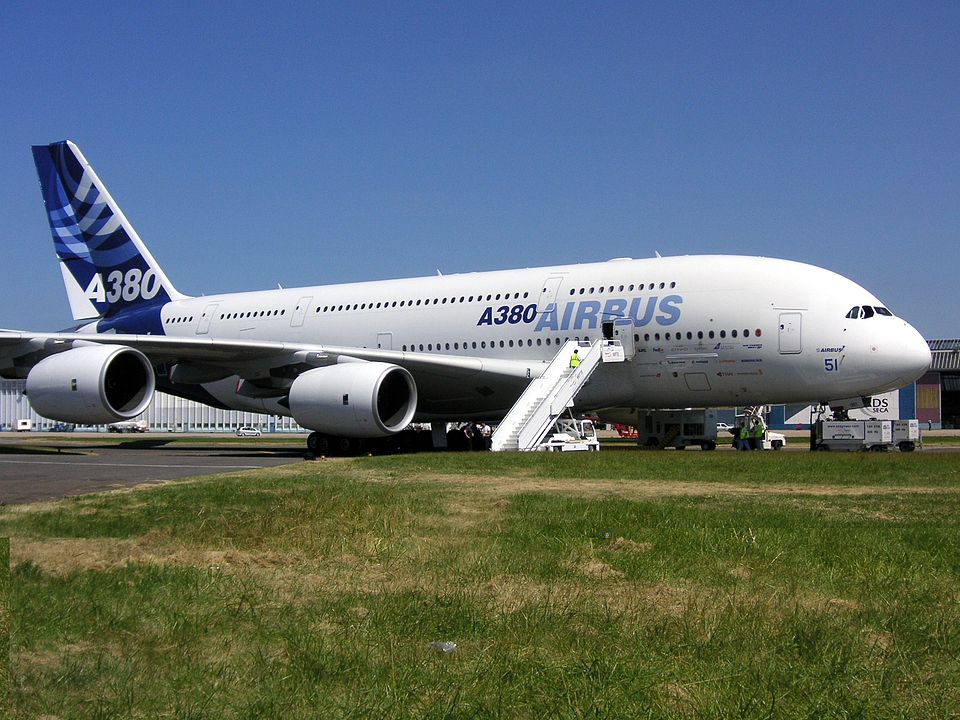
The Airbus A380 is the undisputed champion of passenger aircraft size. This double-deck, four-engine giant can carry around 525 passengers in a typical three-class setup, and up to approximately 853 passengers in an all-economy configuration. No other passenger airliner comes close.
The A380 first flew in April 2005 and entered commercial service with Singapore Airlines in October 2007. It measures roughly 239 feet (72.7 meters) long with a wingspan of about 261 feet (79.8 meters). Standing about 79 feet tall, it is nearly as high as an eight-story building.
Airbus ended A380 production in 2021 after building around 254 airframes. Despite the production halt, Emirates continues to operate the largest A380 fleet in the world, with well over 100 aircraft in service. Singapore Airlines, Qantas, and Korean Air also keep fleets of these iconic planes flying.
Fun Fact: The A380 is the only commercial airliner ever built with two full-length passenger decks running the entire length of the fuselage. Some airlines have installed bars, showers, and private suites onboard.
Key Specs:
- Length: ~239 ft (72.7 m)
- Wingspan: ~261 ft (79.8 m)
- Typical seating: ~525 (three-class)
- Max capacity: ~853
- Range: ~8,000 nautical miles
- Engines: 4 (Engine Alliance GP7200 or Rolls-Royce Trent 900)
2. Boeing 747-8 Intercontinental
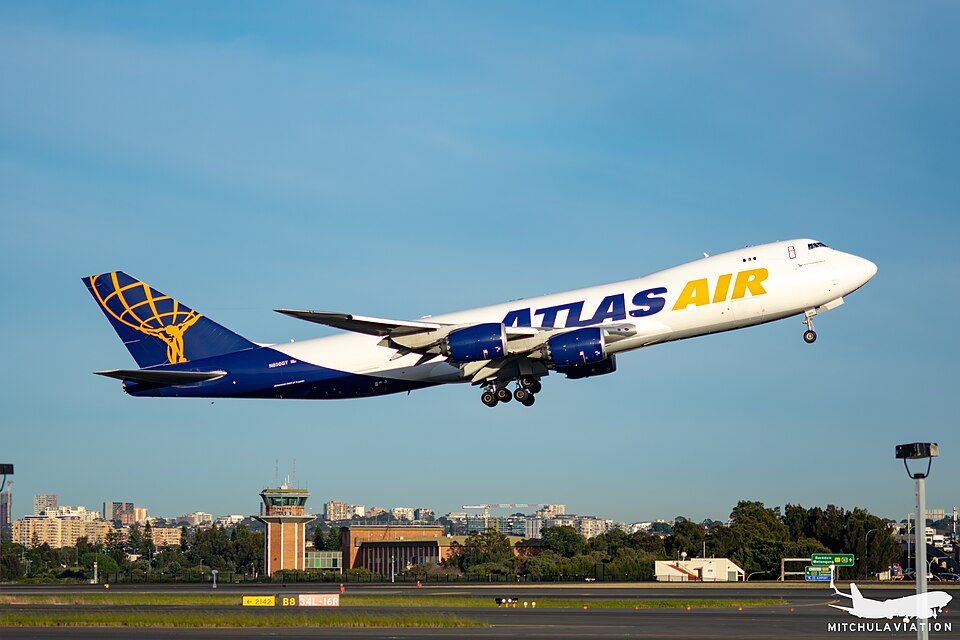
The Boeing 747-8I is the latest and largest variant of the iconic 747 "Queen of the Skies." It entered commercial service in 2012 and remains the longest passenger aircraft Boeing has ever produced, stretching about 250 feet (76.3 meters) from nose to tail.
While slightly longer than the A380, the 747-8I carries fewer passengers in typical configurations, seating around 467 in three classes. Its distinctive upper hump, a design feature since the original 747 in the 1970s, creates extra cabin space for premium seating or first-class suites on the upper deck.
Boeing ended 747-8 production in 2023. Lufthansa was the primary operator of the passenger variant, though it has been retiring its fleet. The 747-8 also lives on in cargo form, with several major freight carriers still operating it.
Good to Know: The 747's hump shape was originally designed to allow cargo to be loaded through the nose of the jet, with the cockpit moved upstairs to make room. Passenger airlines later filled that upper deck with premium cabins.
Key Specs:
- Length: ~250 ft (76.3 m)
- Wingspan: ~224 ft (68.4 m)
- Typical seating: ~467 (three-class)
- Max capacity: ~605
- Range: ~8,000 nautical miles
- Engines: 4 (GEnx-2B67)
3. Boeing 777-300ER
The Boeing 777-300ER is arguably the most commercially successful large passenger aircraft ever built. The "ER" stands for Extended Range, and this jet has become the backbone of long-haul fleets for carriers like Emirates, Cathay Pacific, Turkish Airlines, and Air France.
It can seat around 396 passengers in a typical three-class layout, with a maximum capacity of roughly 550 in a single-class arrangement. At about 242 feet (73.9 meters) long, it is almost as long as the A380 but carries fewer passengers because of its single-deck design.
What makes the 777-300ER so popular is its combination of high capacity, long range (about 7,370 nautical miles), and relatively efficient twin-engine operation. It replaced many aging 747s on dense international routes and is considered one of the most reliable widebodies ever produced.
Pro Tip: If you want a smooth, spacious long-haul experience, flying on a 777-300ER is hard to beat. Emirates' configuration on this jet often includes a generous business class flat-bed and a comfortable economy cabin.
Key Specs:
- Length: ~242 ft (73.9 m)
- Wingspan: ~212 ft (64.8 m)
- Typical seating: ~396 (three-class)
- Max capacity: ~550
- Range: ~7,370 nautical miles
- Engines: 2 (GE90-115B)
The 777-300ER is one of the best examples of how twin-engine jets overtook four-engine planes as the preferred choice for long-haul travel.
4. Boeing 777-9
The Boeing 777-9 is the newest and largest member of the 777 family, and once certified, it will be the biggest twin-engine passenger jet ever to enter commercial service. Boeing has faced repeated delays in the 777-9's certification program, with structural issues discovered during testing requiring redesigns, but deliveries are now expected in the 2025 to 2026 timeframe.
The 777-9 can seat around 426 passengers in a standard two-class layout and stretches about 252 feet (76.7 meters) in length. One of its most clever features is a pair of folding wingtips. The wingspan extends to about 235 feet in the air but folds down to fit within standard airport gate dimensions on the ground.
Emirates has the largest order for the 777-9, with well over 100 aircraft on order. Qatar Airways and Singapore Airlines are also major customers.
Keep in Mind: The 777-9 uses GE9X engines, which have been recognized as among the world's most powerful commercial turbofan engines. These engines are key to the jet's fuel efficiency and long-range performance.
Key Specs:
- Length: ~252 ft (76.7 m)
- Wingspan: ~235 ft (folded: ~213 ft)
- Typical seating: ~426 (two-class)
- Range: ~7,285 nautical miles
- Engines: 2 (GE9X-105B1A)
5. Airbus A340-600
The Airbus A340-600 was once the longest commercial aircraft in the world, a record it held until the Boeing 747-8 claimed the title. Stretching about 247 feet (75.4 meters), the A340-600 was designed to carry roughly 370 passengers in a three-class layout, with a maximum single-class capacity of around 475.
Powered by four Rolls-Royce Trent 556 engines, the A340-600 was built for ultra-long-haul routes and entered commercial service in 2002. Airlines like Lufthansa, Virgin Atlantic, and Iberia operated the type on some of their most demanding international routes.
The A340-600 has largely been retired across most fleets due to its high fuel burn compared to modern twin-engine jets. However, some carriers, including Mahan Air in Iran, still keep examples in service.
Fun Fact: The A340-600 was so long that a special tow tug had to be designed just to handle its extended fuselage on airport taxiways. Its nose-to-tail length made standard ground handling equipment unusable.
Key Specs:
- Length: ~247 ft (75.4 m)
- Wingspan: ~208 ft (63.5 m)
- Typical seating: ~370 (three-class)
- Max capacity: ~475
- Range: ~7,800 nautical miles
- Engines: 4 (Rolls-Royce Trent 556)
6. Airbus A350-1000
The Airbus A350-1000 is the largest variant of Airbus's modern A350 family and represents the future of high-capacity long-haul flight. It seats around 369 passengers in a typical three-class configuration, with a maximum capacity of up to 480.
Built with an advanced carbon-fiber composite structure, the A350-1000 is about 242 feet (73.8 meters) long and offers superior fuel efficiency compared to older widebodies like the 777-300ER. It has a range of approximately 8,700 nautical miles, making it one of the longest-range large passenger jets available today.
Qatar Airways, British Airways, and Cathay Pacific are among the leading operators of the A350-1000. The aircraft is generally considered the direct competitor to the Boeing 777-300ER and will eventually replace it on many routes.
Good to Know: The A350's fuselage is made of more than 50% composite materials by weight, which makes it significantly lighter than aircraft built primarily from aluminum. This lighter structure contributes directly to better fuel efficiency.
Key Specs:
- Length: ~242 ft (73.8 m)
- Wingspan: ~212 ft (64.75 m)
- Typical seating: ~369 (three-class)
- Max capacity: ~480
- Range: ~8,700 nautical miles
- Engines: 2 (Rolls-Royce Trent XWB-97)
Flying411 covers a wide range of aircraft, from wide-body jets to smaller private planes. If you are exploring the world of general aviation, check out some of the best general aviation aircraft available today.
7. Boeing 787-10 Dreamliner
The Boeing 787-10 is the longest and largest variant of Boeing's next-generation Dreamliner family. It can seat around 330 passengers in a standard two-class layout and stretches about 224 feet (68.3 meters) in length.
What makes the 787-10 stand out is not just its size, but its commitment to passenger comfort and efficiency. The aircraft uses composite materials extensively to reduce weight, and its cabin is pressurized to a lower altitude than most jets, which helps reduce passenger fatigue on long flights. The cabin also maintains higher humidity levels, which combats the dry air that makes long-haul travel exhausting.
Singapore Airlines, United Airlines, and All Nippon Airways are among the major operators of the 787-10. The aircraft is particularly popular on medium-to-long-haul routes where efficiency matters as much as capacity.
Pro Tip: Passengers often report feeling less fatigued after long flights on the 787 Dreamliner compared to older-generation widebodies. The improved cabin environment makes a noticeable difference on routes of ten hours or more.
Key Specs:
- Length: ~224 ft (68.3 m)
- Wingspan: ~197 ft (60.1 m)
- Typical seating: ~330 (two-class)
- Max capacity: ~440
- Range: ~6,430 nautical miles
- Engines: 2 (GEnx-1B or Rolls-Royce Trent 1000)
8. Boeing 747-400
Before the 747-8 arrived, the Boeing 747-400 was the definitive jumbo jet. Entering service in 1989, the 747-400 became the workhorse of international aviation for two decades. It can carry around 416 passengers in a three-class setup and up to roughly 524 in a single-class layout.
The 747-400 set the standard for what a long-haul widebody could accomplish. Airlines around the world used it on their most prestigious routes, and it defined air travel for an entire generation of passengers. Many carriers have now retired their 747-400 fleets, with British Airways completing its retirement in 2024 and others following suit.
Fun Fact: The Boeing 747 contains an estimated six million individual parts, making it one of the most mechanically complex objects ever assembled by human hands.
Key Specs:
- Length: ~231 ft (70.6 m)
- Wingspan: ~211 ft (64.4 m)
- Typical seating: ~416 (three-class)
- Max capacity: ~524
- Range: ~7,260 nautical miles
- Engines: 4 (various, including GE CF6, P&W PW4000, RR RB211)
If you are curious about how aviation has evolved from these massive jets down to smaller private platforms, the best business aircraft available today offer a fascinating contrast in scale and purpose.
9. Airbus A330-900neo
The Airbus A330-900neo is the latest generation of the long-running A330 family, combining the proven A330 airframe with new Rolls-Royce Trent 7000 engines and winglet technology. It can seat around 310 passengers in a typical three-class configuration and up to 460 in a high-density layout.
At about 222 feet (67.9 meters) long, the A330-900neo is a mid-size giant. It offers airlines a more fuel-efficient alternative to older A330 models, with improvements in fuel burn of around 25% compared to earlier A330 variants. Air Mauritius, Lufthansa, and Turkish Airlines are among its operators.
Good to Know: The "neo" in A330neo stands for New Engine Option. While the airframe itself is a refined version of a decades-old design, the new engines and aerodynamic improvements make a significant difference in operating costs.
Key Specs:
- Length: ~222 ft (67.9 m)
- Wingspan: ~197 ft (60.1 m)
- Typical seating: ~310 (three-class)
- Max capacity: ~460
- Range: ~7,200 nautical miles
- Engines: 2 (Rolls-Royce Trent 7000)
10. Airbus A340-500
The Airbus A340-500 was designed for one specific mission: flying farther than almost any other commercial aircraft. At the time of its introduction, it was the longest-range airliner in the world. Singapore Airlines famously operated the A340-500 on ultra-long nonstop routes, including a service from Singapore to Newark that was, for a time, the world's longest commercial flight.
It can seat around 270 passengers in a three-class layout and stretches about 223 feet (67.9 meters) in length. Like its sibling the A340-600, it is powered by four Rolls-Royce Trent 500 engines, which made it less competitive as more efficient twin-engine jets emerged.
Fun Fact: The A340-500's nonstop Singapore to Newark route covered roughly 9,500 nautical miles and took over 18 hours. It was eventually discontinued because the aircraft's fuel burn made it too expensive to operate profitably.
Key Specs:
- Length: ~223 ft (67.9 m)
- Wingspan: ~208 ft (63.5 m)
- Typical seating: ~270 (three-class)
- Max capacity: ~375
- Range: ~8,650 nautical miles
- Engines: 4 (Rolls-Royce Trent 553)
11. Boeing 777-200
The original Boeing 777-200 was the jet that launched one of aviation's most successful widebody families. Entering service in May 1995, it can seat around 305 passengers in a typical three-class setup and up to about 440 in a single-class configuration.
At roughly 209 feet (63.7 meters) long, the 777-200 is the shortest member of the 777 family. It laid the groundwork for all the stretched and extended-range variants that followed, including the 777-300ER and the upcoming 777-9. British Airways, United Airlines, and All Nippon Airways still operate the 777-200 on various routes.
Keep in Mind: The 777-200 was the first commercial aircraft to be entirely designed using three-dimensional computer modeling. This approach, then cutting-edge, allowed Boeing to virtually assemble the plane before a single physical part was built, reducing errors and rework significantly.
Key Specs:
- Length: ~209 ft (63.7 m)
- Wingspan: ~200 ft (60.9 m)
- Typical seating: ~305 (three-class)
- Max capacity: ~440
- Range: ~5,240 nautical miles
- Engines: 2 (GE90, P&W 4090, or RR Trent 877)
12. Airbus A330-300
The Airbus A330-300 has been one of the most widely used long-haul widebodies in aviation history. With seating for around 295 passengers in a standard three-class setup and up to 440 in high-density configurations, the A330-300 has served airlines on routes spanning every continent.
It is about 209 feet (63.6 meters) long with a wingspan of about 197 feet (60.3 meters). Powered by two large turbofan engines from General Electric, Pratt and Whitney, or Rolls-Royce, the A330-300 offers solid range at around 6,350 nautical miles.
Cathay Pacific, Air France, and Singapore Airlines have been major A330-300 operators. While newer jets are gradually replacing it, the A330-300 remains a dependable workhorse on medium and long-haul routes worldwide.
Heads Up: If you are booking a long-haul flight and your plane is listed as an A330, do not be surprised to find a well-worn but comfortable widebody experience. The A330 family entered service in the early 1990s and, while older, is still widely regarded as a reliable and passenger-friendly aircraft.
Key Specs:
- Length: ~209 ft (63.6 m)
- Wingspan: ~197 ft (60.3 m)
- Typical seating: ~295 (three-class)
- Max capacity: ~440
- Range: ~6,350 nautical miles
- Engines: 2 (CF6-80E1, PW4168, or Trent 700)
For aviation enthusiasts looking at the other end of the size spectrum, exploring best small aircraft reveals how dramatically aircraft design differs across categories.
13. Boeing 747-400ER
The Boeing 747-400ER is an extended-range variant of the already capable 747-400. Developed specifically for Qantas, it added additional fuel capacity to allow nonstop flying on ultra-long routes, including the famous Sydney to Dallas and Sydney to Los Angeles services.
In terms of passenger capacity and physical dimensions, the 747-400ER mirrors the standard 747-400, seating around 416 passengers in three classes and up to roughly 524 in high-density layouts. The key difference lies in its extra fuel tanks and increased maximum takeoff weight, which gave it the legs to fly routes other 747-400s could not.
Fun Fact: Qantas used the 747-400ER on some of the longest passenger routes in the world during the 2000s, including nonstop flights from Australia to North America that covered more than 7,000 nautical miles.
Key Specs:
- Length: ~231 ft (70.6 m)
- Wingspan: ~211 ft (64.4 m)
- Typical seating: ~416 (three-class)
- Max capacity: ~524
- Range: ~7,670 nautical miles
- Engines: 4 (GE CF6 or Rolls-Royce RB211)
14. McDonnell Douglas MD-11
The McDonnell Douglas MD-11 is a three-engine widebody that entered commercial service in 1990 as a stretched successor to the iconic DC-10. It can seat around 293 passengers in a typical three-class layout and up to about 410 in a high-density configuration.
The MD-11 stretches about 202 feet (61.6 meters) in length and is instantly recognizable by its third engine mounted at the base of the tail fin. While most passenger variants have now been retired or converted to freighters, the MD-11 played an important role in long-haul aviation throughout the 1990s.
Today, the MD-11 lives on almost exclusively as a cargo aircraft. FedEx operates a large fleet of MD-11 freighters, making it a familiar sight at major cargo hubs around the world.
Fun Fact: The MD-11 was one of the last commercial aircraft produced by McDonnell Douglas before the company merged with Boeing in 1997. It marked the end of an era for a manufacturer with a storied history in commercial and military aviation.
Key Specs:
- Length: ~202 ft (61.6 m)
- Wingspan: ~169 ft (51.7 m)
- Typical seating: ~293 (three-class)
- Max capacity: ~410
- Range: ~7,240 nautical miles
- Engines: 3 (GE CF6-80C2 or P&W PW4460)
If you are fascinated by the variety of aircraft designs out there, from three-engine jets to twin-engine piston planes, Flying411 has resources on everything including the best twin-engine piston aircraft for pilots looking to step up their flying.
15. Boeing 767-400ER
Rounding out the list is the Boeing 767-400ER, the largest variant of the long-serving 767 family. While it is the smallest aircraft on this list by capacity, seating around 245 passengers in a typical two-class setup and up to about 375 in a dense configuration, it earns its place through its important role in long-haul aviation.
The 767-400ER stretches about 201 feet (61.4 meters) and was designed primarily for Delta Air Lines and Continental Airlines (now United Airlines). With a range of roughly 5,625 nautical miles, it is well-suited to transatlantic routes and other extended-range missions.
The 767 family as a whole has been one of Boeing's most enduring designs, and the -400ER represents the peak of that lineage. It features an extended fuselage and new winglets not found on earlier 767 models.
Quick Tip: The 767-400ER is narrower than the massive planes higher on this list, with a fuselage width of about 16 feet compared to the A380's nearly 24 feet. But for mid-capacity transatlantic routes, its two-aisle cabin still offers a comfortable widebody experience.
Key Specs:
- Length: ~201 ft (61.4 m)
- Wingspan: ~170 ft (51.9 m)
- Typical seating: ~245 (two-class)
- Max capacity: ~375
- Range: ~5,625 nautical miles
- Engines: 2 (GE CF6-80C2 or P&W PW4062)
How These Giants Compare: A Quick Reference
| Aircraft | Length | Max Seating | Range (nm) | Engines |
| Airbus A380-800 | 239 ft | ~853 | ~8,000 | 4 |
| Boeing 747-8I | 250 ft | ~605 | ~8,000 | 4 |
| Boeing 777-9 | 252 ft | ~426 | ~7,285 | 2 |
| Airbus A340-600 | 247 ft | ~475 | ~7,800 | 4 |
| Boeing 777-300ER | 242 ft | ~550 | ~7,370 | 2 |
| Airbus A350-1000 | 242 ft | ~480 | ~8,700 | 2 |
| Boeing 747-400/ER | 231 ft | ~524 | ~7,260 | 4 |
| Boeing 787-10 | 224 ft | ~440 | ~6,430 | 2 |
| Airbus A340-500 | 223 ft | ~375 | ~8,650 | 4 |
| Airbus A330-900neo | 222 ft | ~460 | ~7,200 | 2 |
| Boeing 777-200 | 209 ft | ~440 | ~5,240 | 2 |
| Airbus A330-300 | 209 ft | ~440 | ~6,350 | 2 |
| McDonnell Douglas MD-11 | 202 ft | ~410 | ~7,240 | 3 |
| Boeing 767-400ER | 201 ft | ~375 | ~5,625 | 2 |
The Shift From Four Engines to Two
One of the most striking trends in the story of large passenger aircraft is the move away from four-engine planes toward twin-engine jets. For much of aviation history, four engines were considered necessary for long overwater flights. Regulators required aircraft to always be within a certain range of an airport in case of engine failure.
That changed as engines became dramatically more reliable. The rules around Extended-range Twin-engine Operational Performance Standards (ETOPS) were gradually relaxed, allowing twin-engine jets to fly transoceanic routes. Today, a Boeing 787 or Airbus A350 can fly routes that once required four-engine planes.
The result is telling. The A380 and 747-8, both quad-engine jets, have ended production. The four-engine A340 family is largely retired. Meanwhile, the twin-engine 777-300ER and A350-1000 dominate the large widebody market.
Why It Matters: Twin-engine jets cost significantly less to operate than quad-engine planes. With two fewer engines to maintain and fuel, airlines save substantial amounts per flight. Over a fleet of hundreds of aircraft, those savings compound into billions of dollars annually.
The aviation landscape is also seeing innovation beyond traditional widebodies. Aircraft like the best VTOL aircraft represent a completely different approach to flight, showing how aviation technology continues to branch in multiple directions simultaneously.
What Makes a Passenger Plane "Big"?
It depends on what you are measuring. There are several ways to define size in commercial aviation:
- Passenger capacity: The A380 wins on this front, seating far more passengers than any other commercial airliner.
- Length: The Boeing 777-9 and 747-8 are among the longest commercial jets ever built.
- Wingspan: The A380's massive 261-foot wingspan is among the widest for any passenger aircraft.
- Maximum Takeoff Weight (MTOW): This is the heaviest weight at which an aircraft is certified to take off. The A380's MTOW of around 560,000 kilograms reflects its enormous size and fuel load.
Each measurement tells a slightly different story. The A380 may not be the longest aircraft, but it carries the most passengers. The 777-9 is longer but fewer seats.
Keep in Mind: When airlines advertise seat counts, the numbers vary depending on how the cabin is configured. A plane advertised as carrying 400 passengers in a three-class setup might hold 550 in an all-economy layout. Always check the specific airline's configuration when booking.
The Future of Large Passenger Aircraft
The age of the true superjumbo may be drawing to a close, but large passenger jets are not going anywhere. They are simply evolving.
The Boeing 777-9, still awaiting certification, will become the largest twin-engine passenger jet in service once it enters commercial operation. The Airbus A350-1000 continues to gain orders as airlines replace older widebodies. And the A380, despite no longer being in production, will continue flying for leading carriers like Emirates well into the 2030s.
Fuel efficiency and sustainability are now driving aircraft design. Future large jets will rely on even more composite materials, more efficient engines, and eventually, potentially sustainable aviation fuels. The goal is to carry just as many people even farther, while burning less fuel and producing fewer emissions.
The aviation sector is also seeing exciting development in specialized aircraft. From massive passenger jets to innovative platforms like firefighting aircraft, aviation continues to push into new frontiers of capability and design.
Conclusion
The biggest passenger planes in the world are more than just large machines. They are symbols of what engineering and ambition can achieve. From the iconic double-deck grandeur of the Airbus A380 to the cutting-edge twin-engine efficiency of the Boeing 777-9, each aircraft on this list represents a different chapter in the ongoing story of commercial aviation.
Whether you are flying in one, spotting them at the airport, or dreaming of your own aviation journey, these giants of the sky never fail to impress. The scale, the engineering, and the sheer human effort behind each aircraft is something worth marveling at.
For anyone looking to take the next step in their own aviation story, from exploring aircraft listings to getting expert buying guidance, Flying411 is here to help you navigate the skies with confidence.
Frequently Asked Questions
What is the biggest passenger plane in the world right now?
The Airbus A380-800 is the largest passenger airliner ever built. It can seat up to approximately 853 passengers in an all-economy configuration and remains in active service with carriers like Emirates, Singapore Airlines, and Qantas.
Is the Airbus A380 still being produced?
No. Airbus ended A380 production in 2021 after delivering around 254 aircraft. The program was commercially challenging, and Airbus determined the market for ultra-large four-engine jets was too limited to continue. However, existing A380s are expected to fly for decades to come.
How is the Boeing 777-9 different from the 777-300ER?
The Boeing 777-9 is a next-generation development of the 777 family. It is longer, uses more efficient GE9X engines, features folding wingtips for airport compatibility, and offers improved fuel economy. It is expected to carry around 426 passengers in a typical two-class configuration, compared to about 396 on the 777-300ER.
Why are four-engine passenger jets being phased out?
Modern jet engines have become so reliable that aviation regulators allow twin-engine jets to fly long overwater routes that once required four engines. Twin-engine jets cost significantly less to operate and maintain, making them more financially attractive for airlines on most routes.
Which airline operates the most large passenger aircraft?
Emirates is widely considered the airline with the most large widebody aircraft in its fleet, operating the largest fleets of both the Airbus A380 and Boeing 777-300ER in the world. Its network, centered at Dubai International Airport, depends heavily on high-capacity jets to move passengers between global hubs.