Flying commercial has its place. But if you run a business, time is your most valuable resource — and every wasted hour in a terminal or on a connecting flight is money left on the table. That is exactly why the market for the best business aircraft has grown so consistently over the decades.
Today, you can choose from sleek light jets for short hops, powerful turboprops that land on dirt strips, and ultra-long-range jets that fly you from New York to Tokyo without a fuel stop.
But with so many aircraft types, manufacturers, and models to compare, where do you start? This guide breaks down 11 of the top options available right now — covering performance, cabin comfort, range, and who each one is best for.
Key Takeaways
The best business aircraft depend entirely on your mission, your passenger count, and your budget. For short regional trips, a turboprop like the Pilatus PC-12 NGX or the Beechcraft King Air 350i delivers excellent value and access to smaller airports. For transcontinental or international travel, mid-size jets like the Cessna Citation Latitude and large-cabin aircraft like the Bombardier Global 7500 or Gulfstream G700 set the gold standard. In short, there is no single best option — only the right aircraft for the right mission.
| Aircraft | Category | Approx. Range | Best For |
| Gulfstream G700 | Ultra-Long-Range Jet | ~7,750 nm | Global executives |
| Bombardier Global 7500 | Ultra-Long-Range Jet | ~7,700 nm | Intercontinental travel |
| Dassault Falcon 8X | Large-Cabin Jet | ~6,450 nm | Europe/Asia routes |
| Bombardier Challenger 3500 | Super-Midsize Jet | ~3,400 nm | Transcontinental US |
| Cessna Citation Latitude | Mid-Size Jet | ~2,700 nm | Domestic business travel |
| Embraer Phenom 300E | Light Jet | ~2,010 nm | Regional business travel |
| Pilatus PC-24 | Light Jet / Turboprop Hybrid | ~2,000 nm | Remote/short-runway access |
| Beechcraft King Air 350i | Twin Turboprop | ~1,800 nm | Regional multi-stop routes |
| Pilatus PC-12 NGX | Single-Engine Turboprop | ~1,800 nm | Budget-conscious operators |
| Daher TBM 960 | Single-Engine Turboprop | ~1,730 nm | Owner-pilots and fast trips |
| Piaggio Avanti EVO | Twin Turboprop | ~1,800 nm | Speed-focused turboprop buyers |
If you are researching aircraft for purchase or just starting to explore your options, Flying411 is a great resource for up-to-date listings, market insights, and expert guidance to help you find the right fit.
Why Choosing the Right Business Aircraft Matters
Picking a business aircraft is not like buying a company car. The decision touches on your mission profile, your team's needs, your maintenance budget, and how often you plan to fly internationally versus regionally.
A plane that is perfect for one company could be completely wrong for another. A real estate firm with clients across a three-state region has very different needs from a global investment firm sending executives to Singapore and Frankfurt every month.
Before looking at any specific aircraft, it helps to know what the key variables are. Here is a quick breakdown:
- Range: How far you need to fly without stopping
- Cabin size: How many passengers you carry and how much working space you need
- Airport access: Whether you fly into large international airports or smaller regional strips
- Operating costs: Fuel burn, maintenance, crew requirements, and hangar fees
- Speed: How quickly you need to arrive at your destination
Once you understand your own mission, the rest of the comparison becomes a lot easier.
Good to Know: Business aircraft are generally grouped into categories — light jets, midsize jets, super-midsize jets, large-cabin jets, ultra-long-range jets, and turboprops. Each tier up adds range, cabin space, and cost.
Turboprops vs. Jets: Which Is Right for You?
Before diving into the aircraft list, it is worth understanding the fundamental split between turboprops and jets. Both types are common in business aviation, but they serve different missions well.
Turboprop aircraft are powered by a turbine engine that spins a propeller. They are generally more fuel-efficient than jets, especially on shorter routes. They also excel at landing on shorter or unpaved runways, which opens up far more airports. The tradeoff is that they typically cruise at lower altitudes and slower speeds than jets.
Business jets use jet engines that push air backward to generate thrust. They cruise faster, fly higher (above most weather), and offer larger, pressurized cabins. The cost of ownership is higher, but so is the productivity and comfort for long trips.
If you regularly fly routes under 500 miles to a mix of large airports and small regional strips, a turboprop is hard to beat. For anything longer or more international, a jet starts to make more sense.
Pro Tip: Some operators run both. A turboprop handles regional hops during the week, while a midsize jet covers the longer trips. This "fleet mix" approach is increasingly common among growing companies.
For those specifically exploring twin-engine options for long-distance missions, the range and reliability advantages of twin-engine aircraft are worth examining closely before making a decision.
The 11 Best Business Aircraft Available Today
Here is a look at 11 of the standout options across every major category, along with what makes each one worth considering.
1. Gulfstream G700
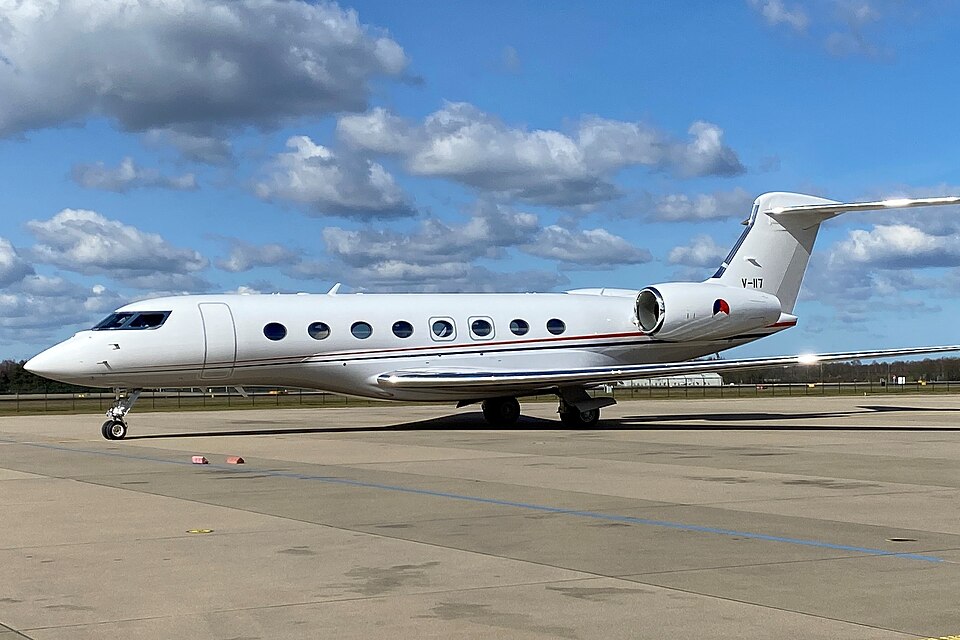
The Gulfstream G700 is about as close to a flying penthouse as aviation gets. Certified by the FAA in early 2024, it quickly became one of the most talked-about ultra-long-range jets in the world.
Range: Approximately 7,750 nautical miles at Mach 0.85 Max speed: Mach 0.935 Cabin: Up to five distinct living zones, seating 13 to 19 passengers Price: Approximately $79 million new
The G700's cabin is the widest in its class, measuring about 8.2 feet across and just over 57 feet long. It features 20 of Gulfstream's signature oval windows on each side, allowing exceptional natural light. The cabin altitude at 41,000 feet is around 2,900 feet, which is considerably lower than most jets and helps passengers feel far less fatigued on long flights.
One standout feature is the optional shower suite. Very few business jets offer a full shower at altitude, and it has become a signature amenity of the G700. Configured right, the aircraft can fly non-stop from New York to Hong Kong with passengers arriving rested and ready.
Fun Fact: The G700 is powered by a pair of Rolls-Royce Pearl 700 engines — the same engine family that powers some of the most advanced jets in the world today.
2. Bombardier Global 7500
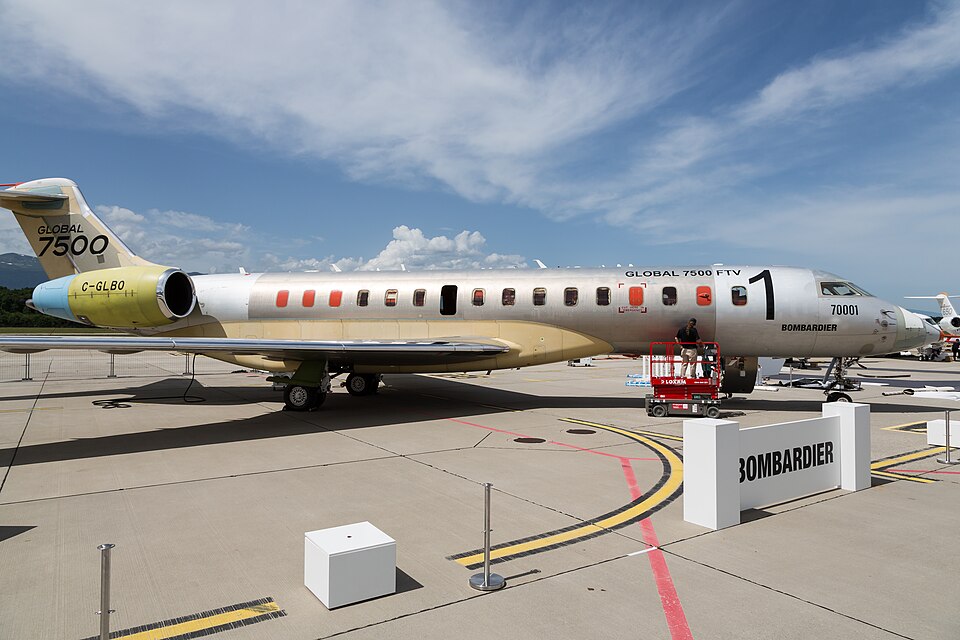
The Bombardier Global 7500 is the G700's closest rival and has been in service since 2018. It set records early on for the longest non-stop flight by a purpose-built business jet.
Range: Approximately 7,700 nautical miles Max speed: Mach 0.925 Cabin: Four dedicated zones, seating up to 19 Price: In the range of $75 million new
What sets the Global 7500 apart is Bombardier's design philosophy around livability. The cabin is organized into four distinct zones, including a full private suite with a dedicated bed, a crew rest area, a main lounge, and a forward conference area. The iconic Nuage seat has won multiple design awards and is widely considered one of the most comfortable aircraft seats ever built.
The Global 7500 uses GE Passport engines, which provide consistent performance across a wide range of conditions and altitudes. For operators flying diverse global routes — from tropical destinations to cold-weather northern airports — the aircraft handles it all with impressive reliability.
Why It Matters: The slight range advantage of the Global 7500 over the G700 (roughly 200 nm more) rarely changes routing decisions in practice. The real competition between these two aircraft comes down to cabin preference and brand loyalty.
3. Dassault Falcon 8X
The Dassault Falcon 8X occupies a fascinating space in business aviation. It has a distinctive three-engine configuration — two engines on the rear fuselage and one at the base of the tail — which gives it better climb performance and one-engine-out safety margins compared to twin-engine designs.
Range: Approximately 6,450 nautical miles Max speed: Mach 0.90 Cabin: Up to 14 passengers Price: In the range of $58 to $60 million new
The Falcon 8X is a favorite on transatlantic routes, particularly for operators flying between the US East Coast and Europe or the Middle East. Its tri-engine design also allows it to operate on certain routes that require three-engine aircraft (ETOPS rules vary by situation). The cabin is known for being exceptionally quiet, and Dassault offers extensive customization options.
French engineering heritage runs deep in the Falcon line, with a focus on aerodynamic efficiency and pilot-friendly handling. The aircraft regularly earns praise from both flight crews and passengers.
Good to Know: Dassault Aviation has been building business jets since the 1960s. The Falcon brand has a long reputation for reliability and resale value in the used aircraft market.
4. Bombardier Challenger 3500
The Bombardier Challenger 3500 is one of the most popular super-midsize jets in North America. It hits a sweet spot for companies that need transcontinental range without the cost of an ultra-long-range jet.
Range: Approximately 3,400 nautical miles Max speed: Mach 0.88 Cabin: Up to 10 passengers Price: Approximately $26 to $28 million new
The Challenger 3500 features a flat-floor cabin that is among the largest in its class, with a stand-up height that makes it feel much more spacious than comparable aircraft. Bombardier redesigned the interior significantly with improved lighting, new seat designs, and an updated cockpit featuring large touchscreen displays.
For US-based operators, this aircraft can fly coast-to-coast non-stop with a comfortable passenger load. For companies traveling between major business hubs like New York, Chicago, Houston, and Los Angeles, the Challenger 3500 covers virtually every domestic route without a fuel stop.
Pro Tip: The Challenger 3500 replaced the Challenger 350, which itself was one of the best-selling super-midsize jets of its era. Pre-owned Challenger 350s are widely available and worth considering for budget-conscious buyers.
5. Cessna Citation Latitude
The Cessna Citation Latitude is consistently one of the best-selling midsize jets in the world. It is built by Textron Aviation and has been a market leader in its category for years.
Range: Approximately 2,700 nautical miles Max speed: Around Mach 0.80 Cabin: Up to 9 passengers with a flat floor Price: Approximately $17 to $18 million new
The Citation Latitude stands out for its flat-floor cabin in the midsize category, which was unusual when it launched and remains a major comfort advantage. Passengers can move around easily, and the stand-up headroom is a genuine benefit on longer trips. The aircraft is also known for being pilot-friendly, with excellent handling and a reliable avionics suite.
Operating costs are reasonable for the category, and the aircraft's proven reliability has made it a popular choice for both fractional ownership programs and corporate flight departments. Maintenance support from Textron Aviation's extensive network is widely available across the US.
If you are interested in aircraft that work well for larger family or team travel, take a look at options reviewed for family groups of six or more — several business jets in the midsize category serve dual duty beautifully.
Keep in Mind: The Citation Latitude is a workhorse, not a flashy jet. If maximum comfort and cabin space are your top priority, you may want to look at the Citation Longitude (a longer-range stablemate) or a Challenger 3500 instead.
6. Embraer Phenom 300E
The Embraer Phenom 300E is the most popular light jet in the world by deliveries for multiple years running. It has held that title consistently, which speaks volumes about how well it fits the needs of a huge range of operators.
Range: Approximately 2,010 nautical miles Max speed: Around Mach 0.80 Cabin: Up to 8 passengers Price: Approximately $10 to $11 million new
The Phenom 300E is built around the same platform as the original Phenom 300 but with significant upgrades including a new interior, better lighting, improved avionics, and a redesigned galley. The cabin is genuinely comfortable for a light jet, with large windows and impressive baggage storage.
Fractional ownership providers like NetJets and Flexjet have made the Phenom 300E a cornerstone of their fleets — a strong signal of how cost-effective and reliable the aircraft is in high-utilization environments.
Fun Fact: The Phenom 300E can connect New York to Miami, Los Angeles to Denver, or Chicago to Dallas non-stop — covering a large portion of common US business travel routes within its light jet operating costs.
7. Pilatus PC-24
The Pilatus PC-24 is sometimes called the "Super Versatile Jet," and that nickname is well earned. It is one of the few jets in the world that can operate from unpaved or grass runways, which dramatically expands where you can fly.
Range: Approximately 2,000 nautical miles Max speed: Around Mach 0.82 Cabin: Up to 10 passengers Price: Approximately $11 to $12 million new
The PC-24 was designed by Pilatus to bridge the gap between their hugely popular PC-12 turboprop and full business jets. It offers jet speed and altitude performance while retaining the short-field and soft-surface landing capability that has made Pilatus aircraft so trusted around the world.
For companies that need to access remote mine sites, island airstrips, or ranches with grass runways — while also flying executives in comfort to major city airports — the PC-24 is genuinely unique. Almost no other jet offers this combination.
Why It Matters: The PC-24's ability to land on unpaved runways is not just a nice-to-have. For some industries — energy, agriculture, humanitarian operations — it is the only jet that can do the job.
8. Beechcraft King Air 350i
The Beechcraft King Air 350i is one of the most successful business aircraft ever made. The King Air family has been in continuous production for decades, which is a testament to how well the design has aged and how well Textron Aviation has kept it updated.
Range: Approximately 1,800 nautical miles Max cruise speed: Approximately 359 mph Cabin: Up to 11 passengers (8 typical in executive config) Price: Approximately $7.5 to $8 million new
The King Air 350i features a spacious twin-engine turboprop cabin with modern noise-reduction technology, executive work tables that fold away when not needed, electrical outlets at every seat, and LED lighting throughout. The avionics suite is fully current, and the aircraft handles well in a wide range of weather conditions.
For companies flying between secondary cities and regional hubs, the King Air 350i is often the ideal tool. It can use shorter runways than most jets, carries a meaningful load of passengers and baggage, and costs significantly less to operate than a comparable jet.
For operators interested in aircraft that can serve both business and cargo needs, it is worth understanding the broader landscape of cargo-capable aircraft — because the King Air platform has served both missions effectively throughout its history.
Pro Tip: The King Air brand has one of the largest parts and maintenance networks of any business aircraft in existence. If you fly to remote areas where maintenance support matters, this is a real operational advantage.
9. Pilatus PC-12 NGX
The Pilatus PC-12 NGX is the updated version of what many pilots and operators consider the gold standard of single-engine turboprops. It has been called the "Swiss Army knife of the sky" by more than one aviation publication, and the nickname fits.
Range: Approximately 1,800 nautical miles Max cruise speed: Approximately 322 mph Cabin: Up to 9 passengers (or mixed passenger/cargo) Price: Approximately $5 to $6 million new
The PC-12 NGX features a single Pratt & Whitney Canada PT6 engine — one of the most reliable turbine engines ever built. The aircraft's large cargo door makes it equally capable as a passenger plane or a utility hauler. The cabin can be reconfigured in many ways depending on the mission.
What truly sets the PC-12 NGX apart is its ability to land on short, unpaved, or even rough runways. Gravel strips, grass fields, and remote bush airports are no problem. This opens up destinations that would be impossible for almost any jet. At the same time, it is fully pressurized and equipped with modern avionics that make it as capable as larger aircraft in controlled airspace.
For those just getting into aviation ownership and building experience with more capable aircraft, it is helpful to review what experts look for in beginner-friendly aircraft — because the transition from simpler planes to something like the PC-12 requires solid foundational knowledge.
Fun Fact: According to industry surveys, the Pilatus PC-12 has consistently been among the best-selling turboprops in the world year after year. In 2025, Pilatus reportedly delivered over 80 new PC-12s globally.
10. Daher TBM 960
The Daher TBM 960 is the fastest single-engine turboprop available today. If speed is your priority but you want turboprop economics, this is the aircraft to look at.
Range: Approximately 1,730 nautical miles Max cruise speed: Over 330 knots (approximately 380 mph) Cabin: Up to 5 passengers Price: Approximately $4.5 to $5 million new
The TBM 960 features a Pratt & Whitney Canada PT6E engine with a dual-channel FADEC (Full Authority Digital Engine Control), which automates a lot of the engine management that pilots previously handled manually. The cockpit is dominated by a Garmin G3000 avionics suite, and the aircraft comes standard with the HomeSafe emergency auto-landing system — which can land the plane automatically if the pilot becomes incapacitated.
The TBM 960 burns roughly 50 gallons of fuel per hour at cruise, making it very economical compared to jets with similar cruise speeds. For owner-pilots or small executive teams that want fast travel without a full flight department, the TBM 960 is a compelling option.
Keep in Mind: The TBM 960 is a five-seat aircraft. If your typical mission involves more than four passengers plus a pilot, you will need to look at a larger platform like the King Air 350i or a light jet.
11. Piaggio Avanti EVO
The Piaggio Avanti EVO is unlike any other aircraft on this list. Its distinctive pusher-propeller design, forward canard wings, and sleek Italian styling make it instantly recognizable. It is also one of the fastest turboprops in the world.
Range: Approximately 1,800 nautical miles Max cruise speed: Up to 402 knots (approximately 460 mph) Cabin: Up to 9 passengers Price: In the range of $8 to $9 million new
The Avanti EVO generates far less noise than a conventional turboprop because the propellers push from behind rather than pull from the front. Inside the cabin, this means a noticeably quieter and more refined environment. The fuselage is wide for a turboprop — almost jet-like in its proportions — and the stand-up headroom is impressive.
For operators who want turboprop economics combined with near-jet speed and a distinctive look, the Piaggio Avanti EVO stands alone. The aircraft is particularly popular in Europe and has a dedicated following among operators who value its combination of efficiency and performance.
Airbus has also produced some remarkable commercial aviation platforms worth knowing about — reviewing the best Airbus aircraft puts the Piaggio's European engineering heritage in interesting context.
Fun Fact: The Piaggio Avanti EVO's pusher-propeller configuration is not just about aesthetics. It produces significantly lower cabin noise than conventional turboprops, which is one of the main reasons operators choose it for passenger comfort.
At Flying411, you will find a wealth of resources for aircraft buyers at every stage of the research process — from first-time buyers learning the basics to experienced operators looking to upgrade their fleet.
How to Compare Business Aircraft: A Simple Framework
With so many options, it helps to have a structured way to think through the decision. Here are the key questions to ask before settling on any specific aircraft.
What is your typical mission?
Think about your most common flights. Are they short regional hops under 500 miles? Transcontinental runs across the US? International routes to Europe or Asia? The answer narrows your aircraft category significantly.
How many passengers do you typically carry?
Most business trips involve just a few people. But if you regularly fly a full team, you need a larger cabin. Aircraft like the Challenger 3500 or the Gulfstream G700 can carry larger groups in genuine comfort.
What airports do you use?
This matters more than most buyers initially realize. If your destination airports have short runways or limited infrastructure, your aircraft options narrow. Turboprops like the PC-12 and the King Air 350i give you far more flexibility here than most jets.
What is your total cost of ownership budget?
Purchase price is just one piece. Annual costs including fuel, maintenance, crew, insurance, and hangar fees can add up to millions of dollars per year for larger aircraft. Be realistic about the full financial picture.
Do you want to owner-fly or hire crew?
Some aircraft, particularly turboprops like the TBM 960, are popular with owner-pilots. Most jets require at least one or two professional pilots. This affects your operating model significantly.
Heads Up: Many first-time aircraft buyers underestimate operating costs. A good rule of thumb is to budget roughly 1% to 1.5% of the aircraft's purchase price per month for ongoing operating costs — though actual figures vary considerably by aircraft type and utilization level.
A Look at Business Aircraft Categories
Understanding the category landscape helps you quickly identify which aircraft belong in your comparison.
| Category | Typical Range | Typical Passengers | Price Range (New) |
| Single-Engine Turboprop | 1,400 to 1,800 nm | 4 to 6 | $4M to $6M |
| Twin-Engine Turboprop | 1,600 to 2,000 nm | 6 to 11 | $6M to $10M |
| Light Jet | 1,200 to 2,200 nm | 5 to 8 | $5M to $12M |
| Mid-Size Jet | 2,000 to 3,000 nm | 7 to 9 | $14M to $20M |
| Super-Midsize Jet | 3,000 to 4,000 nm | 8 to 10 | $22M to $32M |
| Large-Cabin Jet | 4,000 to 6,500 nm | 10 to 14 | $40M to $65M |
| Ultra-Long-Range Jet | 6,000 to 8,000+ nm | 13 to 19 | $65M to $85M+ |
These figures are approximate. Actual prices and performance vary significantly by configuration, model year, and market conditions.
For aviation enthusiasts curious about where business aircraft sit relative to the largest planes ever built, it is worth exploring the world's biggest aircraft to get a sense of the full scale of what modern aviation can achieve.
Quick Tip: The used aircraft market is well worth exploring. A pre-owned aircraft that is three to five years old can offer substantial savings compared to a new one, often with the same avionics and interior quality.
What to Look for During a Pre-Purchase Evaluation
Once you have identified a specific aircraft model, a thorough pre-purchase inspection is essential. Here is what the process typically involves.
Maintenance records review — Every aircraft should have a complete, unbroken maintenance history. Gaps in records are a serious red flag.
Airframe and engine hours — Total time on the airframe and engines affects value and upcoming maintenance costs significantly.
Avionics audit — Check that all required navigation and communication equipment is current and properly certified.
Physical inspection — A qualified maintenance facility should inspect the aircraft structure, control surfaces, landing gear, and all systems.
Test flight — Always fly the aircraft before purchase to evaluate systems performance and pilot feel.
Title search — Confirm the aircraft is free of liens, encumbrances, or ownership disputes through the FAA registry.
Getting an independent pre-purchase inspection from an experienced aviation maintenance organization is money very well spent. A thorough inspection typically costs a few thousand dollars and can save you from a purchase that turns into an expensive maintenance headache.
Conclusion
The business aircraft market has never offered more variety or more capability than it does right now. From the nimble and economical Daher TBM 960 that an owner-pilot can fly solo to the cabin-in-the-sky opulence of the Gulfstream G700 crossing the Pacific, the best business aircraft for your needs is out there. The key is matching the airplane to your mission — not the other way around.
Think carefully about your routes, your passenger count, your budget, and how you plan to operate. Once those parameters are clear, the list of viable candidates becomes much shorter and the right choice becomes obvious.
Ready to start exploring? Flying411 is built for exactly this kind of research — whether you are narrowing down a shortlist, comparing pre-owned options, or simply learning what questions to ask. Start your search there and you will be ahead of most buyers from day one.
FAQs
What is the most popular business aircraft in the US?
The Cessna Citation Latitude and the Embraer Phenom 300E are consistently among the most popular business jets in the United States. The Pilatus PC-12 holds a similar position in the turboprop category. Popularity is driven by a combination of performance, reliability, and reasonable operating costs.
How much does it cost to own and operate a business jet?
Total annual operating costs vary widely depending on aircraft size and utilization. A light jet might cost somewhere in the range of $500,000 to $1 million per year to operate, while a large-cabin ultra-long-range jet can cost several million dollars annually when you factor in fuel, crew, maintenance, insurance, and hangar fees.
Can a turboprop really compete with a jet for business travel?
For many missions, yes. Turboprops like the King Air 350i and the Pilatus PC-12 NGX offer speed, comfort, and range that are genuinely competitive with light jets — often at significantly lower operating costs. The key advantages of jets come into play on longer routes, at higher altitudes, and when cabin size and speed are top priorities.
What is the difference between a super-midsize jet and a large-cabin jet?
Super-midsize jets like the Bombardier Challenger 3500 offer transcontinental range with a stand-up cabin, typically seating eight to ten passengers. Large-cabin jets take the cabin size and range further, with more zones, higher passenger counts, and the ability to fly intercontinental routes. The price difference is substantial, often doubling or more between categories.
Is it better to buy or charter a business aircraft?
The answer depends on how many hours per year you fly. Most aviation consultants suggest that buyers who fly 200 to 400 hours per year or more often benefit financially from ownership compared to chartering. Below that threshold, fractional ownership or charter programs are typically more cost-effective. Tax considerations also play a significant role in the analysis.