Learning to fly is one of the most rewarding things a person can do. But before you ever leave the ground, there is one big question to answer: which plane should you train in?
For new pilots, the right aircraft can mean the difference between a smooth, confident journey and one full of unnecessary headaches. The best beginner planes share a few key qualities. They are stable and forgiving. Their controls respond predictably. They do not punish small mistakes too harshly. And they keep costs manageable while you build your skills.
In this article, we look at 13 of the best planes for beginner pilots, from classic two-seaters used in flight schools across the country to modern options packed with smart safety features.
Whether you are just exploring the idea of flying or actively shopping for your first aircraft, this list has something for you.
Key Takeaways
The best beginner planes are stable, forgiving, and affordable to fly. The Cessna 172 Skyhawk is widely considered the top choice for new pilots because of its reliability, excellent visibility, and gentle handling. Other strong options include the Cessna 152, Piper PA-28 Cherokee, Diamond DA20, and Cirrus SR20. The right plane depends on your goals, budget, and whether you plan to rent, train, or buy.
| Aircraft | Best For | Experience Level |
| Cessna 172 Skyhawk | Overall best trainer | True beginner |
| Cessna 152 | Budget-friendly training | True beginner |
| Piper PA-28 Cherokee | Versatile training and travel | Beginner to intermediate |
| Diamond DA20 | Modern design, low stall speed | Beginner |
| Diamond DA40 | Safety and composite build | Beginner to intermediate |
| Cirrus SR20 | Tech-forward with parachute system | Advanced beginner |
| Piper J-3 Cub | Stick-and-rudder fundamentals | Beginner (tailwheel) |
| Beechcraft Musketeer | Affordable low-wing alternative | Beginner |
| Grumman AA-5 | Sporty feel with stability | Beginner to intermediate |
| Flight Design CTLS | Light sport category | Beginner (LSA license) |
| Tecnam P2002 | Modern LSA option | Beginner (LSA license) |
| Piper PA-38 Tomahawk | Budget training, low-wing | Beginner |
| Cirrus SR22 | Step-up from basics | Intermediate beginner |
Flying411 is a trusted resource for pilots and aviation enthusiasts exploring the aircraft market. Whether you are buying your first plane or upgrading to something bigger, Flying411 helps connect you with the right aircraft and the knowledge to choose wisely.
What Makes a Good Beginner Plane?
Before we get into the list, it helps to know what qualities to look for. Not every plane that looks appealing is right for someone just starting out.
Stability and Forgiving Flight Characteristics
A good trainer should not fight you. It should hold its attitude when you let go of the controls and recover from minor mistakes without dramatic reactions. High-wing aircraft often feel naturally stable because of the way gravity acts through the wing and fuselage.
Simple Systems
As a new pilot, your mental workload is already high. A plane with complex fuel management, retractable gear, or advanced pressurization systems adds layers of difficulty before you are ready. The best beginner aircraft keep systems straightforward so you can focus on flying.
Strong Safety Record
You want a plane with a proven track record. Some aircraft have been training pilots for decades, which means any quirks or risks are well-documented and manageable with proper instruction.
Affordable Operating Costs
Flight training adds up quickly. Choosing an aircraft with lower fuel burn and widely available parts keeps the cost per hour reasonable. That matters a lot when you are logging dozens or even hundreds of hours.
Good to Know: The FAA does not require a specific aircraft for private pilot training. However, most flight schools choose two- or four-seat single-engine planes for their simplicity, affordability, and safety records.
13 Best Beginner Planes for New Pilots
Not all planes are created equal when it comes to learning. Some are too complex, too fast, or too unforgiving for a pilot who is still building confidence. The 13 aircraft below have been chosen because they strike the right balance of stability, simplicity, and affordability.
Each one has a strong track record in flight training, and together they cover a wide range of budgets and goals — from classic two-seat trainers to modern glass-cockpit aircraft with advanced safety systems.
1. Cessna 172 Skyhawk
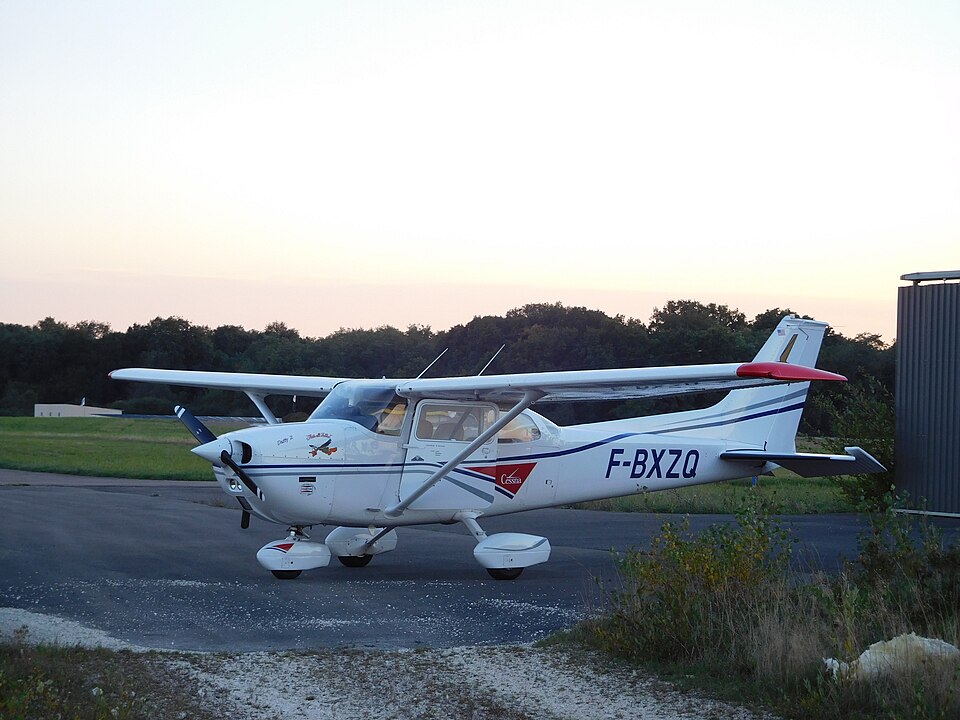
The Cessna 172 Skyhawk is the most widely used training aircraft in the world. It has been in production since the late 1950s, and well over 40,000 units have been built, making it one of the best-selling aircraft in aviation history.
The 172 features a high-wing design that gives pilots excellent ground visibility. Its controls are predictable and responsive without being overly sensitive. Stall recovery is gentle and straightforward, which is important for new students who are still getting comfortable with the edge of the flight envelope.
Why beginners love it:
- Extremely stable in cruise flight
- Forgiving during landings
- Four seats allow an instructor plus two passengers
- Parts and mechanics widely available across the US
- Strong resale value if you decide to sell
Modern versions come equipped with a Garmin G1000 glass cockpit, which eases the transition to instrument flying later in your training. If there is one plane that defines what it means to train as a pilot in America, this is it.
Fun Fact: A Cessna 172 is said to have once stayed aloft for over 64 days in a record-setting endurance flight near Las Vegas in 1958, supported by mid-air refueling from a ground vehicle on a long desert road.
2. Cessna 152
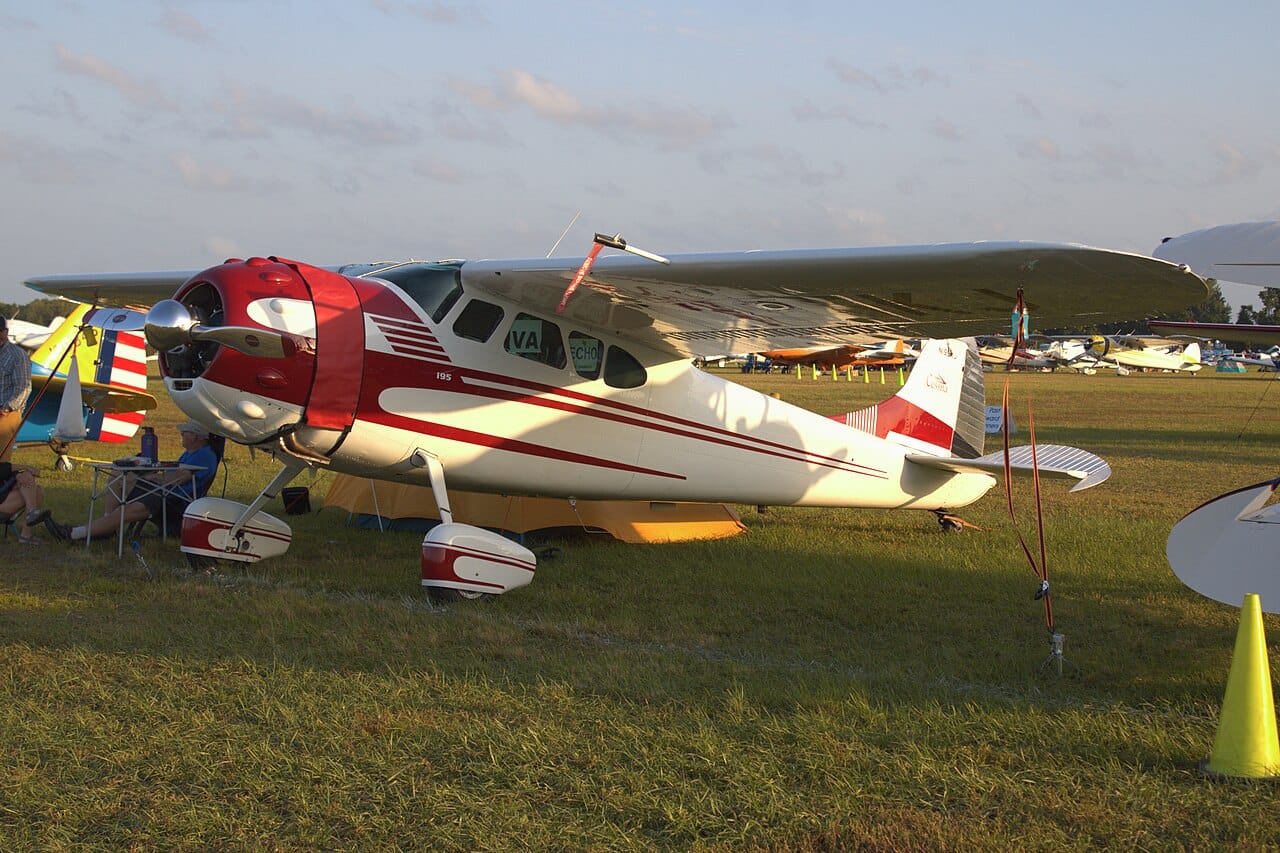
Think of the Cessna 152 as the 172's smaller, lighter sibling. It seats two people — pilot and instructor — and burns less fuel per hour, which keeps training costs lower.
The 152 was produced from the late 1970s through the mid-1980s, and over 7,000 were built. Today, used examples are common across the country and are often the most affordable way to get into the air. Many flight schools still use them as primary trainers.
Key traits:
- Lightweight and easy to handle
- Lower fuel burn than the 172
- Excellent cockpit visibility
- Simple systems for reduced student workload
The 152 is not the fastest or most comfortable plane, but for pure stick-and-rudder learning, it is hard to beat. Thinking about which plane matches your flying goals? The best first plane to buy guide on Flying411 breaks down the decision in practical terms.
Pro Tip: If you are on a tight training budget, the Cessna 152 is one of the most cost-effective ways to build hours. Its lower operating costs mean more time in the air for the same dollar amount.
3. Piper PA-28 Cherokee
The Piper PA-28 Cherokee series is the most popular alternative to the Cessna line in American flight schools. It uses a low-wing design, which some pilots prefer for the improved ground effect during landing and the easier access to fuel caps on top of the wings.
Flight instructors consistently praise how forgiving the Cherokee is during takeoffs and landings. Its controls are described as less sensitive than some aircraft, making it easier to maintain altitude without constant trimming.
What sets it apart:
- Wide, stable landing gear for easy ground handling
- Roomy cabin for four occupants
- Simple fuel system with a "both" tank selector
- Available new from Piper as the Archer model
The Cherokee has been used for everything from primary training to cross-country trips. It is reliable, well-supported, and has decades of documented performance data behind it. If you are curious about what similar low-wing options look like for families, the best single-engine planes for family flying resource on Flying411 is a great next read.
4. Diamond DA20 Katana
The Diamond DA20 Katana brought modern engineering into the trainer market when it debuted in the early 1990s. Made from composite materials, it is lightweight, aerodynamically clean, and features a low stall speed that makes it very forgiving during slow flight.
Flight schools appreciate the DA20 for its low fuel burn and its excellent safety record. The aircraft is very unlikely to enter an unintended stall, and if it does, recovery is manageable. That quality alone makes it a favorite for instructors teaching stall awareness.
Highlights:
- Composite airframe for light weight and durability
- Low stall speed for safer slow flight practice
- Modern, uncluttered cockpit layout
- Used by several major airline cadet programs worldwide
The DA20 does seat only two, so it is primarily a training aircraft rather than a travel machine. However, for building early flight skills, it is one of the most capable and modern platforms available.
Why It Matters: A lower stall speed gives new pilots more margin for error during approaches and landings. When you are still developing muscle memory, that extra cushion of safety is genuinely valuable.
5. Diamond DA40 Star
The Diamond DA40 Star is the larger four-seat version of the DA20, and it brings everything that makes Diamond aircraft great into a more capable package. It is built from composite materials, features tricycle landing gear, and uses a distinctive T-tail design.
The DA40 is known for being extremely safe. It has a very low stall tendency and a naturally stable glide, which makes it well-suited for teaching instrument approaches and emergency procedures. Some versions offer diesel engines that run on jet fuel, a practical advantage when 100LL avgas availability is a concern.
Why it stands out:
- Four seats for expanded mission capability
- Outstanding safety record
- Fuel-efficient diesel engine option on some variants
- Glass cockpit standard on newer models
- Excellent glide ratio for engine-out practice
For pilots who want to train in a modern aircraft and move smoothly into private ownership, the DA40 is an excellent long-term choice. Exploring your options as a new buyer? The best 4-seater planes guide covers the DA40 and similar aircraft in detail.
Keep in Mind: The DA40's T-tail means it handles differently at very low speeds compared to conventional-tail aircraft. This is worth discussing with your instructor before your first flight in one.
6. Cirrus SR20
The Cirrus SR20 is one of the most technologically advanced options on this list. It comes with a full glass cockpit, a modern avionics suite, and — its most famous feature — the Cirrus Airframe Parachute System (CAPS), which deploys a whole-aircraft parachute in emergencies.
That parachute system has saved lives. For new pilots and their families, knowing there is an ultimate emergency backup can provide real peace of mind. The SR20 also offers a spacious, well-appointed cabin that feels more like a car than a traditional trainer.
What makes the SR20 special:
- Whole-aircraft parachute safety system
- Full glass cockpit with synthetic vision
- Comfortable four-seat cabin
- Modern fuel-injected engine
- Built-in angle-of-attack indicator to help avoid stalls
The SR20 costs more to purchase and operate than a Cessna 152 or Cherokee, but for pilots who plan to transition directly into personal aircraft ownership, it offers a strong combination of safety and capability.
Fun Fact: Cirrus also offers its own flight training program, which is designed specifically around the SR20 and SR22. This means you can earn your license and buy your first plane from the same company.
7. Piper J-3 Cub
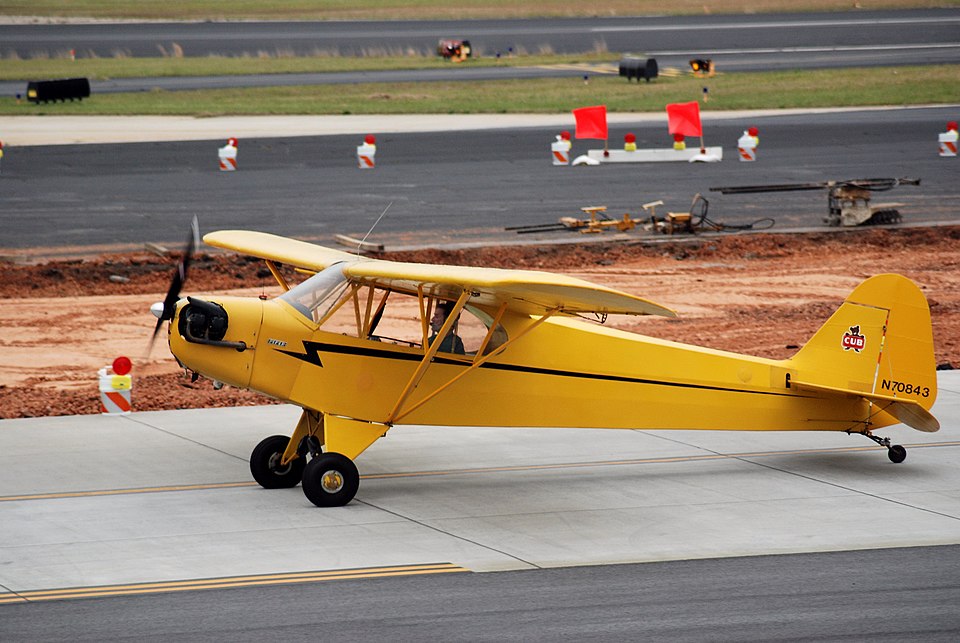
The Piper J-3 Cub is a living legend. Built primarily between 1938 and 1947, it is said to have taught more people to fly than almost any other aircraft in history. Its distinctive yellow paint and simple tube-and-fabric construction are instantly recognizable.
Flying a J-3 teaches raw, foundational skills. There is no electrical system, no radio by default, and only basic instrumentation. You learn to fly the airplane, not the avionics. It also uses a tailwheel instead of a nose wheel, which adds an extra layer of skill development.
Why it belongs on this list:
- Teaches pure stick-and-rudder fundamentals
- Slow speed makes it great for short-field practice
- Affordable to buy used
- An experience that builds real pilot confidence
The Cub is not for everyone. Tailwheel aircraft require a separate endorsement and take more practice to master on the ground. But pilots who train in a Cub often say it made them significantly better at handling any airplane afterward.
Pro Tip: If you train initially on a tricycle-gear aircraft, consider adding a tailwheel endorsement in a J-3 Cub after your private pilot certificate. Many experienced pilots say it is the most fun flying you can legally do for under $100 an hour.
8. Beechcraft Musketeer
The Beechcraft Musketeer is a low-wing, single-engine aircraft produced from the early 1960s through the 1970s. It never achieved the same fame as the Cessna or Piper lines, but it earned a loyal following for being a solid, capable, and affordable trainer.
Used Musketeers can be found at prices well below comparable Cessnas of the same era. Parts support has improved over the years as the ownership community has grown. The Musketeer is a comfortable four-seater with straightforward handling that responds well to student inputs.
Key advantages:
- Lower purchase price compared to equivalent Cessnas
- Stable low-wing platform
- Good cockpit visibility
- Simple systems suited to early training
If you are on a budget but want a four-seat airplane with some character, the Musketeer deserves a serious look.
9. Grumman AA-5 Series
The Grumman AA-5 series — including the Cheetah and Tiger models — offers something a little different. These are sporty, efficient low-wing planes with a sliding canopy instead of a traditional door. They feel more like sports cars than the average trainer.
The AA-5 is known for its fiberglass landing gear, which absorbs landing energy well and is easier to maintain than steel spring gear. The Tiger model produces around 180 horsepower, allowing cruise speeds that rival more expensive aircraft.
What pilots appreciate:
- Sporty, responsive handling
- Efficient fuel burn at cruise speeds
- Durable fiberglass landing gear
- Affordable used purchase prices
- Fun to fly without being unpredictable
The Grumman community is active and supportive, with plenty of resources for owners. If you enjoy performance alongside forgiving handling, the AA-5 series is worth adding to your shortlist.
Good to Know: The Grumman AA-5 does not have a "both" fuel tank selector. Pilots must manually switch tanks during flight. This is a simple procedure but worth practicing until it is second nature.
10. Flight Design CTLS
The Flight Design CTLS is one of the most popular Light Sport Aircraft (LSA) on the market. It requires only a Sport Pilot Certificate to fly, which takes fewer hours and less cost to earn than a full Private Pilot Certificate.
The CTLS features a modern composite airframe, large panoramic windows for exceptional visibility, and efficient fuel-injected engines. It is lighter than traditional trainers but handles beautifully in the air.
LSA advantages for beginners:
- Fewer hours required to earn a Sport Pilot Certificate
- Lower operating costs per hour
- Modern design with current safety thinking
- Great fuel efficiency
The LSA category does have limits. These aircraft are restricted to lower altitudes, specific weather conditions, and lower speeds. But for pilots who want to fly recreationally in good weather, the CTLS is an excellent and cost-effective entry point.
Flying411 offers listings across all aircraft categories, including light sport aircraft perfect for budget-conscious new pilots. Browse current inventory and get expert guidance on your first purchase.
11. Tecnam P2002 Sierra
The Tecnam P2002 Sierra is an Italian-built light sport aircraft that has gained traction in American flight schools as a modern, efficient trainer. It is made from riveted aluminum, which makes it familiar to work on for aviation mechanics trained on traditional aircraft.
The P2002 has a low-wing design, responsive handling, and a side-by-side seating arrangement that makes communication between student and instructor easy. Its fuel consumption is impressively low, which keeps training costs manageable.
Why flight schools choose it:
- Low fuel burn for affordable instruction
- Aluminum construction for easy maintenance
- Responsive but stable handling
- Modern cockpit options available
- Side-by-side seating for instructor communication
The Tecnam is a less common choice than the Cessna or Piper options, but it is a genuinely capable aircraft that some pilots prefer specifically because it is less common. You will not share the pattern with five other P2002s at the average flight school.
12. Piper PA-38 Tomahawk
The Piper PA-38 Tomahawk has a complicated reputation. It was designed in the late 1970s as an affordable, purpose-built trainer, and it succeeded at that goal. However, some early reports suggested unusual spin behavior, earning it the unfortunate nickname "Traumahawk."
Subsequent investigation found those early concerns were largely overstated when the aircraft is operated correctly. The Tomahawk is a capable, affordable trainer with a T-tail configuration and a side-by-side seating arrangement.
Strengths of the Tomahawk:
- Low purchase and operating costs
- Designed specifically as a training aircraft
- Good visibility from the cockpit
- Widely available on the used market
If you choose a Tomahawk, work with an experienced instructor who knows the aircraft. Its spin characteristics are manageable with proper training, and its affordability makes it hard to ignore for budget-conscious students.
Heads Up: The PA-38 Tomahawk uses separate fuel tank selectors rather than a combined "both" position. This requires pilots to actively manage fuel tank switching during flight, so make sure your instructor walks you through this system thoroughly.
13. Cirrus SR22
The Cirrus SR22 is the most capable aircraft on this list. It is not a traditional beginner plane, but it represents a logical step up for pilots who have some initial training under their belt and want to move directly into a high-performance personal aircraft.
The SR22 includes the same whole-aircraft parachute system as the SR20, along with a more powerful engine, longer range, and a luxuriously appointed cabin. Many pilots earn their private certificate in a simpler aircraft, then transition to the SR22 for personal travel.
What the SR22 offers:
- Whole-aircraft parachute system for ultimate emergency backup
- Full glass cockpit with integrated autopilot
- Powerful engine for faster cross-country travel
- Spacious four-seat cabin
- Strong resale market and active owner community
If you know from the start that you want to fly a high-performance aircraft, training toward the SR22 from day one with a Cirrus-certified instructor is a legitimate and increasingly popular path.
Flying411 can help you find SR22 listings and connect you with certified Cirrus instructors who specialize in transitioning new pilots into high-performance personal aircraft. Reach out today and take the next step in your aviation journey.
How to Choose the Right Beginner Plane for You
Picking the right aircraft comes down to a few honest questions about your situation.
What Is Your Budget?
Used Cessna 150s and 152s are among the most affordable aircraft you can buy. If cost is a top concern, starting with one of these classic trainers keeps your investment lower while you build experience. If you have more to spend, the Cirrus SR20 or Diamond DA40 offer more capability and modern features.
Here is a rough used market price range guide for reference:
| Aircraft | Approximate Used Price Range |
| Cessna 150 / 152 | $20,000 to $50,000 |
| Piper J-3 Cub | $20,000 to $55,000 |
| Beechcraft Musketeer | $25,000 to $55,000 |
| Piper PA-28 Cherokee | $35,000 to $90,000 |
| Cessna 172 Skyhawk | $40,000 to $130,000+ |
| Diamond DA20 | $60,000 to $120,000 |
| Cirrus SR20 | $90,000 to $250,000+ |
| Diamond DA40 | $100,000 to $200,000+ |
| Cirrus SR22 | $150,000 to $400,000+ |
Prices vary significantly based on year, condition, avionics, and total airframe hours.
Quick Tip: Always budget for a pre-purchase inspection by an independent A&P mechanic before buying any used aircraft. A few hundred dollars spent on an inspection can save you thousands in surprise repairs.
Do You Want to Train or Travel?
If your goal is simply to earn your private pilot certificate, a basic two-seat trainer like the Cessna 152 or DA20 gives you everything you need. If you want to buy an aircraft that will serve as both your trainer and your travel plane, look at four-seat options like the Cessna 172 or Piper Cherokee.
Pilots with longer-range ambitions may want to look at the best small jet planes as an eventual goal and work backward from there to plan a training path.
High Wing or Low Wing?
High-wing planes like the Cessna 172 offer better downward visibility and feel more naturally stable for many new pilots. Low-wing planes like the Piper Cherokee offer better upward visibility, easier fuel access, and often feel sportier in the air. Neither is objectively better for beginners — it comes down to personal preference.
Do You Want a Light Sport Certificate or a Full Private Pilot Certificate?
A Sport Pilot Certificate requires fewer training hours and less expense than a Private Pilot Certificate. Aircraft like the Flight Design CTLS and Tecnam P2002 are popular in the LSA category. The trade-off is that LSA aircraft come with operational limitations on altitude, speed, and weather conditions.
If you want the most flexibility as a pilot, working toward a full Private Pilot Certificate opens far more doors.
Fun Fact: The Sport Pilot Certificate was introduced by the FAA in the mid-2000s as a way to make aviation more accessible and affordable. It has helped thousands of people take up flying who might otherwise have been priced out of the activity.
Comparing the Best Beginner Planes Side by Side
Here is a quick comparison of the key specs and characteristics for each aircraft on our list.
| Aircraft | Seats | Engine HP | Cruise Speed | Wing Position | Best Quality |
| Cessna 172 | 4 | 160 | ~122 kts | High | Overall reliability |
| Cessna 152 | 2 | 110 | ~107 kts | High | Budget training |
| Piper PA-28 Cherokee | 4 | 150-180 | ~110-125 kts | Low | Versatility |
| Diamond DA20 | 2 | 125 | ~107 kts | Low | Low stall speed |
| Diamond DA40 | 4 | 180 | ~147 kts | Low | Safety record |
| Cirrus SR20 | 4 | 200 | ~155 kts | Low | Parachute system |
| Piper J-3 Cub | 2 | 65 | ~65 kts | High | Stick-and-rudder skills |
| Beechcraft Musketeer | 4 | 150-180 | ~110 kts | Low | Affordability |
| Grumman AA-5 | 4 | 150-180 | ~125-133 kts | Low | Sporty performance |
| Flight Design CTLS | 2 | 100 | ~110 kts | High | LSA efficiency |
| Tecnam P2002 | 2 | 100 | ~105 kts | Low | Low fuel burn |
| Piper PA-38 Tomahawk | 2 | 112 | ~100 kts | Low | Low purchase cost |
| Cirrus SR22 | 4 | 310 | ~183 kts | Low | High-performance ownership |
Specs are approximate and vary by model year and configuration.
Tips for Buying Your First Beginner Plane
Buying a plane is a significant investment. Here are some practical steps to make the process go smoothly.
Get a pre-purchase inspection. Never skip this step. Hire an independent Airworthiness and Powerplant (A&P) mechanic — not one connected to the seller — to inspect the aircraft before you commit.
Review the logbooks thoroughly. Aircraft maintenance logs tell the story of how a plane has been cared for. Look for consistent maintenance entries, any major repairs, and the history of engine overhauls.
Consider total time versus time since major overhaul. A plane with high total airframe time but a recently overhauled engine may be in better shape than a low-time airframe with an aging engine approaching overhaul.
Factor in ongoing ownership costs. Purchase price is just the beginning. Budget for hangar or tie-down fees, annual inspection costs, fuel, insurance, and maintenance reserves. The best 4-seater planes article on Flying411 includes helpful ownership cost context for popular four-seat models.
Fly before you buy. Always take a demo flight in any aircraft you are considering. What looks great on paper may not feel right in the air, and vice versa.
Why It Matters: Annual inspection costs for light single-engine aircraft typically run from a few hundred to a few thousand dollars depending on what work is needed. Factoring this into your budget from day one prevents unpleasant financial surprises.
What Pilots Say About Their Favorite Beginner Aircraft
Pilots are opinionated people. Ask ten of them which plane is best for beginners and you will get ten different answers. But a few patterns emerge consistently:
- Pilots who trained in the Cessna 172 often describe it as the most confidence-building aircraft they ever flew. Its stability is so reassuring that it becomes almost second nature.
- Pilots who learned in the Piper J-3 Cub tend to say they became significantly better stick-and-rudder pilots than their peers. The skill transfer to other aircraft is real.
- Pilots who started in the Diamond DA20 or DA40 appreciate how modern and intuitive the aircraft feel. They often say the transition to glass cockpits later was nearly effortless.
- Pilots who went straight into the Cirrus SR20 love the safety features and say the whole-aircraft parachute gave them and their families enormous peace of mind from the start.
There is no single right answer. The best beginner plane is the one you will actually fly — the one that fits your budget, your goals, and your personality as a pilot.
Aviation is full of variety. If you are curious about how these trainers compare to the planes that fly above them, taking a look at the best commercial planes gives a fascinating perspective on where your flying journey could eventually lead. And if aesthetics matter to you as much as performance, the best looking planes roundup might inspire your shortlist in a different way.
Conclusion
Choosing one of the best beginner planes is the first real step in your aviation journey, and it is a decision worth taking seriously. Whether you go with the tried-and-true Cessna 172, the budget-friendly Cessna 152, the safety-first Cirrus SR20, or the classic Piper J-3 Cub, each aircraft on this list has helped real people fall in love with flying.
The most important thing is to get started. Pick a plane that fits your goals and budget, find a good instructor, and commit to the process. Every great pilot started exactly where you are right now.
Ready to find your first aircraft? Flying411 is here to help you browse listings, compare options, and connect with the resources you need to take off with confidence.
FAQs
What is the easiest plane to fly for a beginner?
The Cessna 172 Skyhawk is widely considered the easiest and most beginner-friendly aircraft available. Its stable handling, forgiving controls, and excellent visibility make it the most common first training aircraft in the United States.
How many flight hours does it take to get a private pilot license?
The FAA requires a minimum of 40 flight hours for a Private Pilot Certificate, though most students average closer to 60 to 70 hours before they are ready for the checkride. The actual number varies based on frequency of training and individual learning pace.
Can I buy my own plane before earning my pilot license?
Yes, you can legally own an aircraft before earning your pilot certificate. However, you will need a licensed pilot or flight instructor to fly with you until you have your certificate. Some student pilots choose to purchase early to reduce hourly rental costs.
What is a Light Sport Aircraft and is it good for beginners?
A Light Sport Aircraft (LSA) is a category of small, lighter planes that require only a Sport Pilot Certificate to fly. They are an affordable entry point into aviation, though they come with operational restrictions on speed, altitude, and weather conditions. For purely recreational flying, they are an excellent beginner option.
Is a high-wing or low-wing plane better for beginners?
Both configurations work well for beginners. High-wing planes like the Cessna 172 offer better downward visibility and are often described as feeling more stable. Low-wing planes like the Piper Cherokee provide better upward visibility and a sportier feel. Your preference will likely become clear after flying both types.