Small jets have changed the game for private aviation. They are faster than turboprops, more affordable than large cabin jets, and nimble enough to land at airports that bigger planes can't touch. Whether you are a business owner looking to cut travel time or a pilot ready to step into jet ownership, small jets offer a compelling mix of speed, comfort, and flexibility.
The market has grown a lot in recent years. More manufacturers are entering the space, more used options are available, and prices have become more competitive than ever. That means more choices for buyers, but also more to sort through.
This guide makes that job easier. Below, you will find the 13 best small jet planes available today, covering everything from very light jets to capable light jets, with honest notes on performance, cost, and who each plane is best suited for.
Key Takeaways
The best small jet plane for you depends on your budget, how far you typically fly, and whether you want to pilot it yourself. Very light jets like the Cirrus Vision Jet start around $3 million new and are great for solo pilots flying regional routes. Light jets like the Embraer Phenom 300E and Cessna Citation CJ4 Gen2 offer more cabin space and range for small groups and business travel.
| Jet | Category | Approx. Starting Price | Range | Passengers |
| Cirrus Vision Jet G2+ | VLJ | ~$3.3M | ~1,200 nm | Up to 5 |
| HondaJet Elite II | VLJ | ~$6.9M | ~1,547 nm | Up to 5 |
| Embraer Phenom 100EV | VLJ | ~$4.5M | ~1,250 nm | Up to 4 |
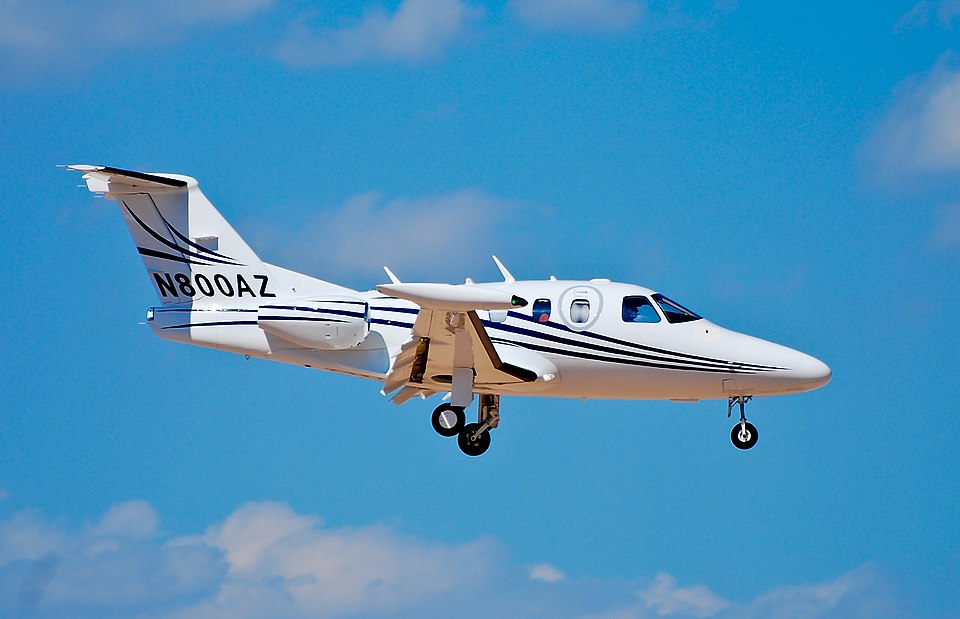
| Eclipse 550 | VLJ | ~$3M (used) | ~1,125 nm | Up to 4 |
| Cessna Citation Mustang | VLJ | ~$3M (used) | ~1,150 nm | Up to 4 |
| Embraer Phenom 300E | Light Jet | ~$11M | ~2,010 nm | Up to 8 |
| Cessna Citation CJ4 Gen2 | Light Jet | ~$9.5M | ~2,165 nm | Up to 10 |
| Cessna Citation CJ3+ | Light Jet | ~$7M | ~2,040 nm | Up to 9 |
| Pilatus PC-24 | Light Jet | ~$13M | ~2,000 nm | Up to 10 |
| Hawker 400XP | Light Jet | ~$2.5M (used) | ~2,490 mi | Up to 9 |
| Learjet 70 | Light Jet | ~$11M | ~2,000 nm | Up to 8 |
| Cessna Citation XLS+ | Mid-Light Jet | ~$9M (used) | ~2,100 nm | Up to 9 |
| Flaris LAR 01 | VLJ | ~$2M | ~700 nm | Up to 4 |
If you are researching small jets and want expert guidance on listings, pricing, and the buying process, Flying411 is a great place to start. Their team understands the private aviation market inside and out.
What Makes a Jet "Small"?
Before diving into the list, it helps to understand the categories. Not every small jet is the same. The industry generally breaks them into two groups.
Very Light Jets (VLJs)
Very light jets are the entry point into jet ownership. They typically weigh 10,000 pounds or less at max takeoff, carry four to six passengers, and have a range of roughly 1,000 to 1,500 nautical miles. They are usually single-pilot certified, meaning you can fly one without a co-pilot if you hold the right rating.
VLJs are best for:
- Owner-pilots who fly themselves
- Regional trips under 1,500 miles
- Buyers stepping up from a high-performance piston aircraft
- Budget-conscious entry into jet ownership
Light Jets
Light jets are a step up. They generally seat six to ten passengers, have ranges stretching past 2,000 nautical miles, and offer more cabin room. Many still qualify for single-pilot operation, though some require two pilots.
Light jets are best for:
- Small business teams
- Groups of up to ten passengers
- Longer cross-country routes
- Buyers who want more comfort and amenities
Fun Fact: Very light jets were once considered too small to be practical, but today they account for a significant share of new private jet deliveries in the United States each year.
Why Small Jets Are Worth a Closer Look
There is a common misconception that you need a large cabin jet to get real value from private aviation. That is simply not true.
Small jets punch well above their weight class. Here is why they deserve serious consideration.
Access to more airports. Small jets can use shorter runways that larger aircraft cannot. This means you can often land closer to your actual destination, saving time on both ends of the trip.
Lower operating costs. A very light jet can cost significantly less per hour to operate than a midsize or large cabin aircraft. Fuel burn, maintenance, and crew costs all drop as the aircraft gets smaller.
Single-pilot certified. Many small jets are approved for single-pilot operation. If you hold a type rating, you can fly yourself. That eliminates the cost of a full-time crew.
Faster than turboprops. Small jets cruise in the 400 to 480 mph range, noticeably faster than most turboprops. That time savings adds up on a busy travel schedule.
Ideal range for most US trips. The majority of business travel in the United States covers distances under 1,500 miles. Small jets cover that range comfortably.
Good to Know: The used small jet market has grown significantly. Average asking prices for pre-owned business jets dropped noticeably, making now a favorable time to shop for a second-hand aircraft.
For buyers interested in comparing across categories, a look at some of the best private planes to own can help set a useful baseline before narrowing your search.
The 13 Best Small Jet Planes Ranked
Here is a detailed breakdown of each aircraft, starting with very light jets and moving into light jets.
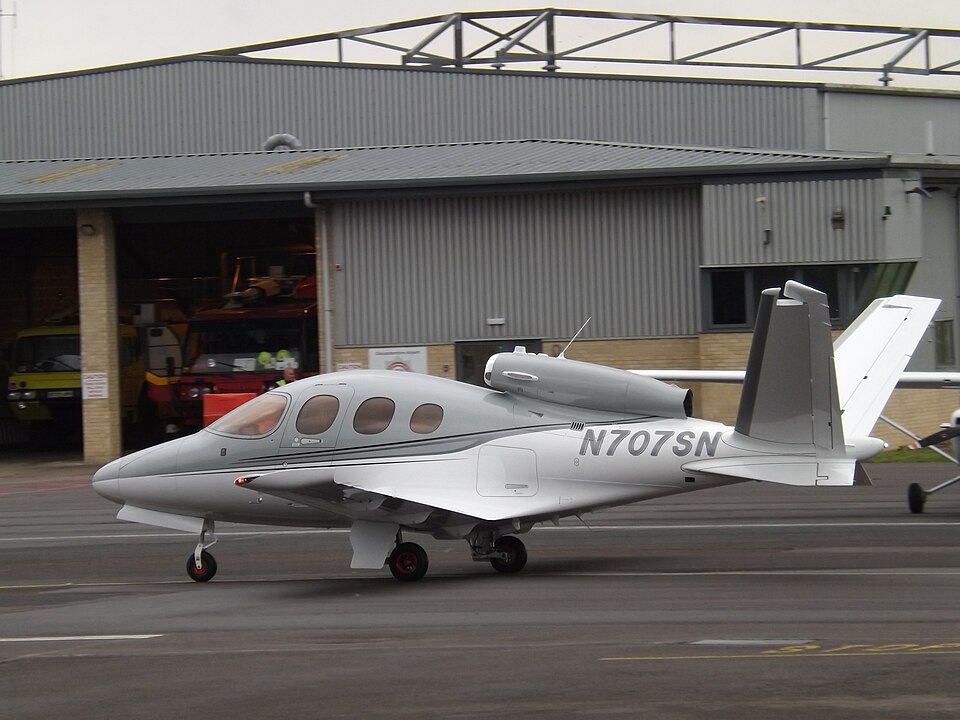
1. Cirrus Vision Jet G2+
The Cirrus Vision Jet is the only FAA-certified single-engine personal jet on the market. It is a groundbreaking aircraft that opened jet ownership to a whole new class of buyers. The G2+ version, updated in recent years, adds improved avionics, better range, and a higher cruise altitude than earlier models.
Standout features:
- Cirrus Airframe Parachute System (CAPS): deploys a whole-aircraft parachute in an emergency
- Garmin Autoland: autonomously lands the plane if the pilot is incapacitated
- Pressurized cabin with large panoramic windows
- Single-pilot certified with a relatively straightforward type rating
The Vision Jet seats up to five adults including the pilot. Its range of around 1,200 nautical miles makes it well-suited for hops between major US metros. It is widely considered the most accessible entry into true jet ownership.
Best for: Owner-pilots stepping up from a piston aircraft who want a personal jet for regional travel.
Pro Tip: The Cirrus Vision Jet's CAPS parachute system has a real-world track record. It has been deployed successfully multiple times, making it one of the safest aircraft in its class for single-pilot operation.
2. HondaJet Elite II
When Honda decided to build a jet, aviation watchers were skeptical. That skepticism did not last long. The HondaJet Elite II is widely regarded as one of the finest very light jets ever produced. Its over-the-wing engine mount is not just a design statement. It frees up cabin space and reduces interior noise at the same time.
Standout features:
- Over-the-wing engine design for a quieter, roomier cabin
- Range of up to 1,547 nautical miles, best in the VLJ class
- Fully enclosed lavatory, rare at this size
- Garmin Autoland emergency system standard
The Elite II seats up to five passengers. Its cabin is praised for feeling larger than the aircraft's exterior dimensions suggest. New pricing runs in the neighborhood of $6.9 million, which makes it one of the pricier VLJs, but the performance and refinement justify the cost.
Best for: Non-pilot executives using crewed charter, or owner-pilots who want top-tier VLJ range and comfort.
3. Embraer Phenom 100EV
Embraer's entry-level jet punches well above its size. The Phenom 100EV is technically a very light jet, but it feels more like a light jet inside. The cabin layout, fit, and finish all reflect Embraer's long experience building larger commercial aircraft.
Standout features:
- Speeds up to around 470 mph, among the fastest in the VLJ category
- Sophisticated flight control systems and modern avionics suite
- Up to four passengers in a well-appointed cabin
- Strong manufacturer support network across the US
The Phenom 100EV has a range of around 1,250 nautical miles. It does not have a lavatory in standard configuration, which is worth noting for longer trips. Used examples are widely available and offer strong value.
Best for: Small businesses and owner-operators who want Embraer's build quality at a VLJ price point.
If you are also exploring multi-engine options for small family or business travel, the best 6-passenger planes offer a useful side-by-side view of what is available in that size range.
4. Eclipse 550
The Eclipse 550 is a high-tech twin-engine very light jet that has developed a devoted following among owner-pilots. It is compact, fast, and one of the most affordable ways to own a twin-engine jet. Eclipse Aerospace resumed deliveries after a production hiatus, and the aircraft features updated avionics and improved systems over the original Eclipse 500.
Standout features:
- Twin Pratt & Whitney Canada turbofan engines
- Certified for flight up to 41,000 feet
- Advanced avionics package including synthetic vision
- Approved for flight in known icing conditions
The Eclipse 550 seats up to four passengers and has a range of around 1,125 nautical miles. It lacks an onboard lavatory, which limits comfort on longer legs. That said, for the price and the twin-engine safety margin, it is hard to beat.
Best for: Pilot-owners who want a twin-engine jet at a budget-conscious price.
Why It Matters: Flying a twin-engine jet provides an extra layer of safety on over-water or mountainous terrain routes. The Eclipse 550's twin configuration is a meaningful differentiator in the VLJ category.
5. Cessna Citation Mustang
The Citation Mustang was Cessna's answer to the very light jet movement of the 2000s. It is no longer in production, but hundreds of examples remain in service across the US. The Mustang is known for its reliability, strong parts support, and relatively low operating costs.
Standout features:
- Twin Pratt & Whitney Canada turbofan engines
- Garmin G1000 avionics (updated in many pre-owned examples)
- Pressurized and comfortable for four passengers
- Wide dealer and MRO network across the country
Used Mustangs can be found for around $1.5 million to $3 million depending on age and condition, making them one of the most accessible jet ownership options in the market. Range runs to around 1,150 nautical miles.
Best for: First-time jet buyers looking for a proven, cost-effective twin-engine VLJ.
6. Embraer Phenom 300E
The Phenom 300E is the most popular light jet in its class by deliveries. That is not a coincidence. Embraer took everything that worked in the Phenom 100 and scaled it up into a proper light jet with meaningful cabin space, coast-to-coast range, and a level of comfort that rivals some midsize jets.
Standout features:
- Range of around 2,010 nautical miles, enough for many US coast-to-coast routes
- Up to eight passengers in a well-configured cabin
- Enclosed lavatory with privacy partition
- Single-pilot certified with an approachable type rating
The Phenom 300E cruises at around 453 knots and has become the go-to choice for corporate flight departments that need a capable light jet. New pricing is around $11 million. Used examples hold their value well.
Best for: Corporate flight departments and serious owner-operators who need coast-to-coast range in a light jet.
Flying411 lists pre-owned Phenom 300E aircraft with verified specs and maintenance histories, making it easier to compare options without starting from scratch.
7. Cessna Citation CJ4 Gen2
The Citation CJ4 Gen2 is the largest aircraft in the Citation CJ family and one of the most capable single-pilot certified light jets in the world. The Gen2 update added improved ambient lighting, updated interior options, and additional customization choices while keeping the proven CJ4 airframe and systems.
Standout features:
- Seats up to 10 passengers in various configurations
- Maximum range of around 2,165 nautical miles
- Single-pilot certified despite its size
- Enclosed lavatory standard
The CJ4 Gen2 is well-regarded for its climb performance and high cruise altitude, both of which help it avoid weather and fly efficiently. New pricing runs around $9.5 million.
Best for: Owner-pilots who want maximum passenger capacity and range without requiring two pilots.
Keep in Mind: While the CJ4 Gen2 is single-pilot certified, many operators choose to fly with two pilots for increased safety margin, especially on longer or more complex trips.
8. Cessna Citation CJ3+
The CJ3+ slots in just below the CJ4 in the Citation family. It seats up to nine passengers, has a range of around 2,040 nautical miles, and is also single-pilot certified. It costs less than the CJ4 while offering most of the same operational advantages.
Standout features:
- Williams FJ44-3A engines known for fuel efficiency and reliability
- Single-pilot certified
- Garmin G3000 touch flight deck
- Widely supported across the US service network
The CJ3+ is a popular choice for fractional ownership programs and individual buyers alike. Used pricing starts around $5 million for well-maintained examples, making it a compelling mid-market option.
Best for: Buyers who want Citation reliability and range at a step below CJ4 pricing.
9. Pilatus PC-24
The PC-24 is in a category of its own. It is a light jet with the rough-field capability of a turboprop, able to operate from unpaved and short runways that would stop most jets cold. Pilatus calls it a "super versatile jet," and that label fits.
Standout features:
- Short-field capability, including unpaved runway operations
- Up to 10 passengers in a flexible cabin layout with a large rear cargo door
- Range of around 2,000 nautical miles
- Rolls-Royce PW617F engines
New PC-24s run around $13 million. That is on the higher end for a light jet, but the versatility justifies the cost for operators who need to reach remote destinations. The PC-24 can access destinations that no other jet its size can reach.
Best for: Operators who need light jet speed combined with turboprop-level airport access.
Among aircraft with this kind of operational reach, the PC-24 stands alongside some of the best single-engine planes for family use in terms of versatility, though it is a very different type of aircraft.
10. Hawker 400XP
The Hawker 400XP has a long lineage. It started as a Mitsubishi design, was picked up by Beechcraft, and eventually landed under Textron Aviation. It has also been used by the US Air Force for advanced pilot training, which says something about its capabilities.
Standout features:
- Up to nine passengers with a private lavatory
- Range of up to around 2,490 miles
- Swept-wing design that contributes to efficient cruise performance
- Robust construction and well-understood maintenance profile
Used Hawker 400XPs are available in the $1.5 million to $3.5 million range depending on condition and avionics fit, making them a cost-effective entry into a capable light jet platform.
Best for: Buyers who want a proven, affordable light jet with nine-passenger capacity and cross-country range.
Heads Up: The Hawker 400XP is no longer in production, so buyers should carefully review maintenance logs and confirm parts availability before purchase. A pre-purchase inspection is strongly recommended.
11. Learjet 70
The Learjet name carries weight in aviation. The Learjet 70 is the modern evolution of a line that has been synonymous with private jet travel for decades. It combines a high-altitude cruise capability with a comfortable cabin and enough range for serious business travel.
Standout features:
- Cruise altitude up to 51,000 feet, above most weather
- Range of around 2,000 nautical miles
- Up to eight passengers
- Honeywell Primus Elite avionics suite
Learjets have historically appealed to buyers who want speed and altitude performance. The 70 series carries on that tradition with modern avionics and updated systems. New pricing runs around $11 million.
Best for: Speed-focused operators who want a recognizable brand and high-altitude performance in a light jet.
When evaluating jets at this performance level, it is worth comparing them alongside the best commercial planes to understand how private light jets compare to commercial regional aircraft in terms of performance and range.
12. Cessna Citation XLS+
The Citation XLS+ sits at the boundary between light and midsize jets. It is sometimes classified as a mid-light jet because of its cabin size and range. It can seat up to nine passengers and has a range of around 2,100 nautical miles, enough for most US city pairs.
Standout features:
- Flat-floor cabin with stand-up headroom in some sections
- Up to nine passengers with full amenities including a lavatory
- Pratt & Whitney Canada PW545C engines
- Strong used market with many well-maintained examples
The XLS+ is a favorite for charter fleets because of its passenger comfort and operational flexibility. Used examples are widely available, with pricing starting around $7 million to $9 million for quality examples.
Best for: Buyers who want near-midsize comfort at a light jet price point.
Fun Fact: The Citation XLS+ is said to be one of the most chartered light jets in the United States, largely because of its cabin comfort and range versatility.
13. Flaris LAR 01
The Flaris LAR 01 is the newcomer on this list and the most unconventional. Built in Poland, this single-engine very light jet weighs in at under 2,000 pounds empty and is only about 27 feet long, roughly the length of two cars parked end to end.
Standout features:
- One of the lightest certified jets in the world
- Expected pricing around $2 million, making it the most affordable new jet option
- Simple systems designed for easy maintenance
- Single-pilot operation
The LAR 01 seats up to four passengers and has a range of around 700 nautical miles. It is not a cross-country workhorse, but for short regional hops, it may become one of the most cost-effective jet options available. Deliveries have been limited so far, with broader production expected as the program matures.
Best for: Budget-conscious buyers looking for the lowest cost of entry into jet ownership, especially for short-range regional travel.
How to Compare Small Jets the Right Way
Shopping for a small jet involves more than comparing speed and range. Here is a practical framework for narrowing down your options.
Step 1: Define Your Typical Mission
Most aircraft end up flying the same handful of routes repeatedly. Identify your most common routes before anything else. If most of your trips are under 1,000 nautical miles, a VLJ is probably all you need. If you regularly fly coast-to-coast, a light jet with 2,000-plus nautical miles of range makes more sense.
Step 2: Decide on Pilot or Crewed Operation
Will you fly the plane yourself, or will you hire a pilot? If you plan to fly yourself, focus on aircraft with single-pilot type ratings that are known for pilot-friendly systems. If you plan to hire a crew, you have more flexibility in aircraft choice.
Step 3: Set a Realistic Total Cost Budget
Purchase price is only part of the equation. Plan for annual costs that include:
- Fuel
- Maintenance and inspections
- Hangar or tie-down fees
- Insurance
- Crew costs (if applicable)
- Engine reserve funds
A ballpark rule for light jets is that annual operating costs often run between $300,000 and $600,000 depending on how many hours you fly.
Step 4: Consider Used vs. New
New jets come with warranties and the latest avionics, but they cost significantly more. Used jets can offer outstanding value, especially in today's market where pre-owned inventory has grown and prices have softened. The key with used aircraft is a thorough pre-purchase inspection and a close review of maintenance records.
Quick Tip: Always hire an independent aviation consultant or broker to review any used aircraft before purchase. Their fee is minimal compared to the cost of missing a hidden issue.
Step 5: Think About Resale Value
Some models hold their value better than others. Aircraft with strong manufacturer support, a large fleet in service, and proven reliability tend to depreciate more slowly. The Phenom 300E and Citation CJ series are generally regarded as solid performers on resale.
Small Jets vs. Turboprops: Which Is Right for You?
Some buyers are deciding between a small jet and a turboprop. Both have real merits. Here is a quick comparison.
| Factor | Small Jet | Turboprop |
| Speed | 400-480 mph typical | 300-360 mph typical |
| Range | 1,000-2,500 nm | 800-2,000 nm |
| Fuel Efficiency | Lower per hour | Higher per hour |
| Airport Access | Good (paved runways) | Excellent (short/unpaved) |
| Cabin Comfort | Generally better pressurization | Comfortable but lower altitude |
| Purchase Price | Higher | Lower |
| Maintenance Cost | Moderate to high | Lower on average |
If speed is your priority and you mostly fly between paved airports, a small jet wins. If you need to reach remote destinations with unpaved strips, or if fuel costs are a major concern, a turboprop may serve you better.
When you are ready to explore your options in more depth, Flying411 can connect you with aircraft listings and knowledgeable advisors who specialize in the private aviation market.
A Note on Safety Features in Modern Small Jets
Safety technology in small jets has advanced dramatically in recent years. Several features are now available even in entry-level VLJs that would have been unimaginable a decade ago.
Autoland systems. Aircraft like the HondaJet Elite II and Cirrus Vision Jet include emergency autoland technology. If a pilot becomes incapacitated, a passenger can press a button and the aircraft will fly itself to the nearest suitable airport, communicate with air traffic control, and land autonomously.
Whole-aircraft parachutes. The Cirrus Vision Jet's CAPS system deploys a ballistic parachute that lowers the entire aircraft safely to the ground in a catastrophic emergency. This system has been used successfully in real-world situations.
Synthetic vision. Most modern small jets include synthetic vision displays that show terrain, obstacles, and traffic in a graphical format even in zero-visibility conditions.
Icing protection. Many small jets are certified for known icing conditions, which expands the range of weather they can safely operate in.
Why It Matters: Safety technology in small jets has closed a significant gap with larger aircraft. Modern VLJs and light jets are equipped with systems that were once reserved for airliners.
Small Jets and the Used Market
The used private jet market has been favorable for buyers. Pre-owned inventory has grown, and average asking prices for used business jets dropped noticeably compared to the peak years following the pandemic. Older models are seeing further price corrections, while newer and well-equipped examples still hold strong values.
This creates opportunity for smart buyers. A three-to-five-year-old VLJ or light jet can offer nearly all the capability of a new aircraft at a meaningful discount. The key is doing the homework upfront.
What to check on a used small jet:
- Total airframe time: Hours on the airframe since new
- Engine time since overhaul: Engines are expensive; know where each one sits in its life cycle
- Avionics status: Are the navigation databases current? Have mandated upgrades been completed?
- Damage history: Any previous accidents or hard landings
- Maintenance records: Are all logbooks complete and accounted for?
For context on how the small jet market fits into the broader world of private aviation, exploring the landscape of the best Boeing planes and best-looking planes can give useful perspective on how design and engineering standards vary across the industry.
Conclusion
The world of small jet planes has never been more accessible or more impressive. From the revolutionary Cirrus Vision Jet to the versatile Pilatus PC-24 and the proven Embraer Phenom 300E, there is a best small jet plane for almost every mission, budget, and flying style. The key is matching the aircraft to your actual needs rather than buying more airplane than you need, or settling for less than your missions require.
The used market is active, new options are appearing, and financing options have expanded. There has never been a better time to explore jet ownership or charter.
When you are ready to take the next step, Flying411 is here to help you navigate listings, compare aircraft, and make a confident, informed decision.
Frequently Asked Questions
What is the cheapest small jet you can buy?
Used options like the Cessna Citation Mustang and Hawker 400XP can be found for around $1.5 million to $3 million depending on age and condition. The Flaris LAR 01 is expected to be one of the most affordable new very light jets at around $2 million when broader production begins.
Can one pilot fly a small private jet?
Yes, many small jets are certified for single-pilot operation. Aircraft like the Cirrus Vision Jet, HondaJet Elite II, Embraer Phenom 100EV, and several Citation CJ models can be legally and safely flown by a single qualified pilot who holds the appropriate type rating.
How far can a small private jet fly on one tank of fuel?
Very light jets typically cover around 1,000 to 1,500 nautical miles on a full tank. Light jets extend that to around 1,800 to 2,500 nautical miles. Factors like payload, altitude, and weather conditions affect actual range in real-world operations.
How much does it cost to operate a small jet per year?
Annual operating costs for a very light jet typically run from around $200,000 to $400,000 per year for a typical owner flying 150 to 200 hours annually. Light jets cost more, often in the $350,000 to $600,000 range depending on utilization. These figures include fuel, maintenance, hangar, insurance, and reserves.
Is it better to buy or charter a small jet?
If you fly more than roughly 200 hours per year, ownership often becomes cost-competitive with charter. Below that threshold, chartering or joining a jet card program usually offers better value. Fractional ownership is another middle-ground option for buyers who want access without full ownership costs.