Boeing has been shaping the skies for well over a century. From its earliest biplanes to its modern wide-body jets, the company has produced aircraft that changed how the world travels.
Some of its planes became so beloved that travelers would actually choose flights based on the aircraft type alone. That says a lot.
Whether you are a casual flyer, an aviation enthusiast, or someone who works in the industry, the best Boeing planes represent some of the most impressive engineering in history.
Each model on this list earned its spot through performance, innovation, or sheer cultural impact. Let's look at what makes these aircraft stand out from everything else in the sky.
Key Takeaways
The best Boeing planes include a range of iconic commercial jets and wide-body airliners that shaped modern aviation. The Boeing 747 is widely considered one of the most iconic aircraft ever built, while models like the 737 and 787 Dreamliner continue to dominate commercial routes around the world. Boeing's legacy spans decades and includes planes built for long-haul travel, regional routes, and everything in between.
| Boeing Model | Nickname | Key Strength |
| Boeing 747 | Queen of the Skies | Iconic size, long range |
| Boeing 737 | Workhorse | Most widely flown jet |
| Boeing 787 Dreamliner | Dreamliner | Fuel efficiency, passenger comfort |
| Boeing 767 | Long Ranger | Versatile wide-body |
| Boeing 777 | Triple Seven | Ultra-long range |
| Boeing 757 | Narrow-body King | Powerful climb, mid-range |
| Boeing 727 | Classic Trijet | Historic significance |
At Flying411, we love everything aviation, from commercial giants to personal aircraft. If you are exploring the world of planes, you are in the right place.
A Brief History of Boeing
Boeing was founded in 1916 in Seattle, Washington. What started as a small lumber company turned aviation venture grew into one of the largest aerospace manufacturers in the world. For much of the 20th century, Boeing and Douglas Aircraft dominated commercial aviation. Boeing pulled ahead when it introduced the 707, a jet that made transatlantic air travel practical for everyday passengers.
The company went on to revolutionize aviation multiple times. The 747 created the wide-body era. The 757 and 767 defined medium and long-haul travel in the 1980s. The 777 raised the bar for twin-engine long-haul performance. And the 787 Dreamliner brought composite materials and fuel savings into the modern age.
Fun Fact: Boeing's first aircraft, the B&W seaplane, made its maiden flight in 1916 over Lake Union in Seattle. The company has come a long way since then.
Each generation of Boeing jets has pushed boundaries. Understanding that history makes appreciating these planes even more rewarding.
What Makes a Boeing Plane "the Best"?
Before diving into the list, it helps to understand the criteria. "Best" can mean different things depending on who you ask.
Here are the factors that shaped this list:
- Historical impact: Did the plane change aviation in a meaningful way?
- Performance: How well does it handle range, speed, and efficiency?
- Passenger experience: Is it comfortable, quiet, and well-designed?
- Longevity: Has it proven itself over decades of service?
- Innovation: Did it introduce new technology or design ideas?
No single plane scores perfectly in every category. But each plane on this list excels in at least a few of them, and that is what puts them here.
Good to Know: Boeing produces aircraft for commercial airlines, cargo operators, and military customers. This list focuses on commercial passenger aircraft, which is where Boeing's legacy shines brightest.
The 7 Best Boeing Planes of All Time
These seven aircraft represent the best of what Boeing has produced across more than five decades of commercial aviation. Some changed the industry overnight. Others quietly became the workhorses that keep the global air travel system running. Each one earned its place on this list for a reason.
1. Boeing 747: The Queen of the Skies
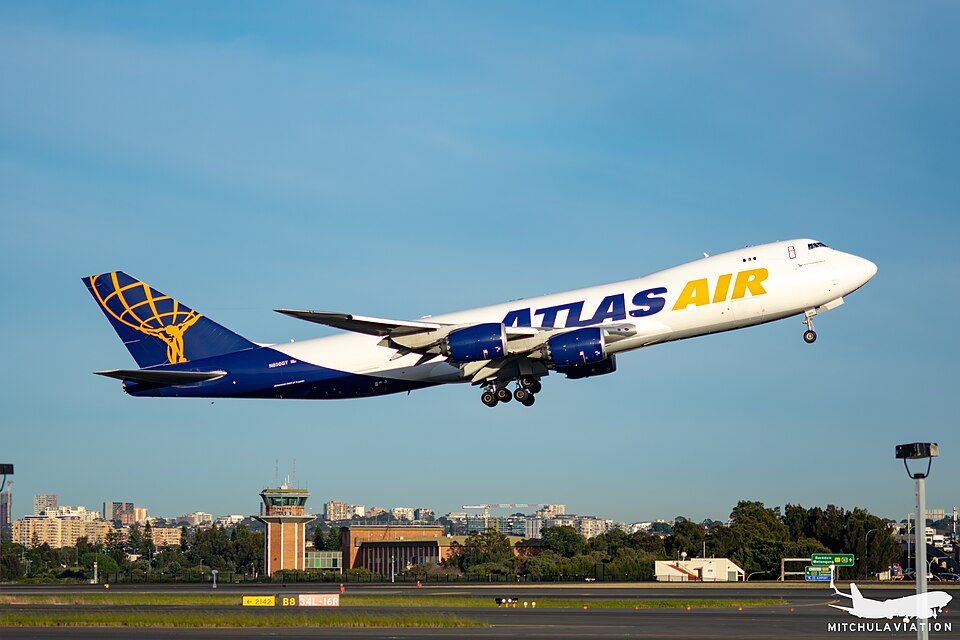
If any plane deserves the title of most iconic, it is the Boeing 747. Introduced in the late 1960s, the 747 was the first wide-body commercial jet ever built. Its double-deck nose and distinctive hump made it instantly recognizable to anyone who saw it.
The 747 made international travel more accessible by dramatically increasing passenger capacity. Airlines could carry far more people on a single flight, which helped lower ticket prices over time. That was a big deal.
At its peak, the 747 could carry well over 400 passengers in a typical configuration, and some high-density layouts pushed that number even higher. Its range allowed it to fly nonstop between continents with ease, making it the backbone of transatlantic and transpacific routes for decades.
The 747 also served as the basis for Air Force One, the official aircraft of the President of the United States. That alone cements its place in history.
Why It Matters: The 747 democratized long-haul travel. Before it, international flights were expensive and often limited to wealthier passengers. The 747 helped make flying accessible to millions of people.
For passengers who enjoy smoother rides at altitude, exploring planes best suited for turbulence offers a helpful comparison to understand how the 747 stacks up against other designs.
2. Boeing 737: The World's Most Popular Jet
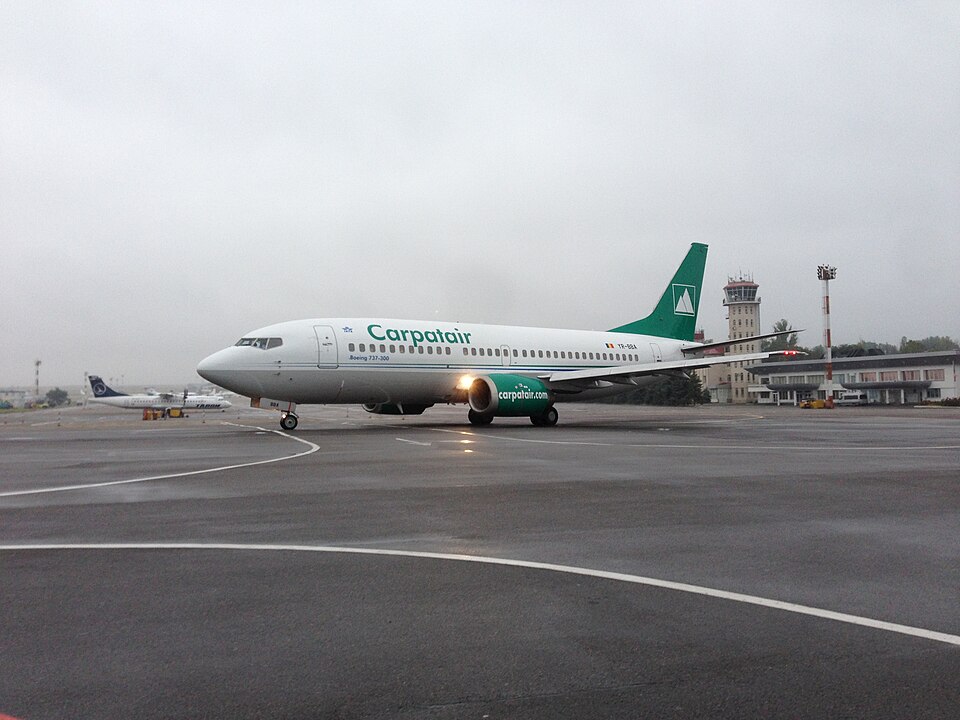
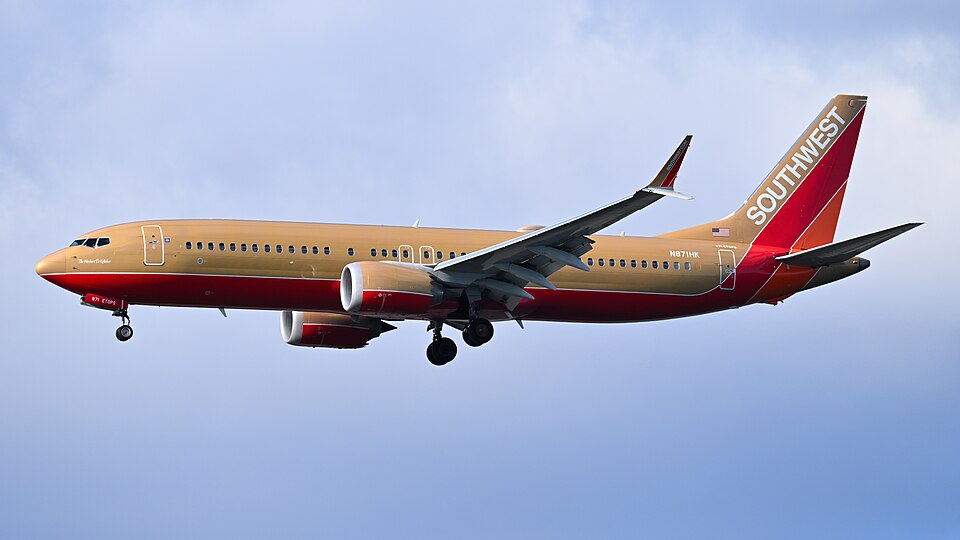
The Boeing 737 is, by most measures, the most commercially successful jetliner ever built. First introduced in the late 1960s, the 737 has gone through multiple generations of updates and remains in production today. Airlines around the world rely on it daily.
The 737 was designed as a short to medium-range aircraft, making it ideal for domestic and regional routes. Its relatively small size and operating costs made it affordable for airlines to run multiple flights per day on the same plane.
Over the decades, Boeing released several updated variants:
- 737 Classic (100/200/300/400/500 series): The original and early updated versions
- 737 Next Generation (600/700/800/900): A major redesign with better range and efficiency
- 737 MAX: The latest generation with updated engines and aerodynamics
The 737 is not glamorous. It does not have the size of the 747 or the luxury feel of the Dreamliner. But it works. It works every single day, on thousands of flights, for hundreds of airlines. That reliability is its superpower.
Pro Tip: If you fly domestically in the United States, there is a strong chance you have flown on a 737 without even knowing it. Many airlines operate them on their busiest routes.
3. Boeing 787 Dreamliner: A Passenger's Best Friend
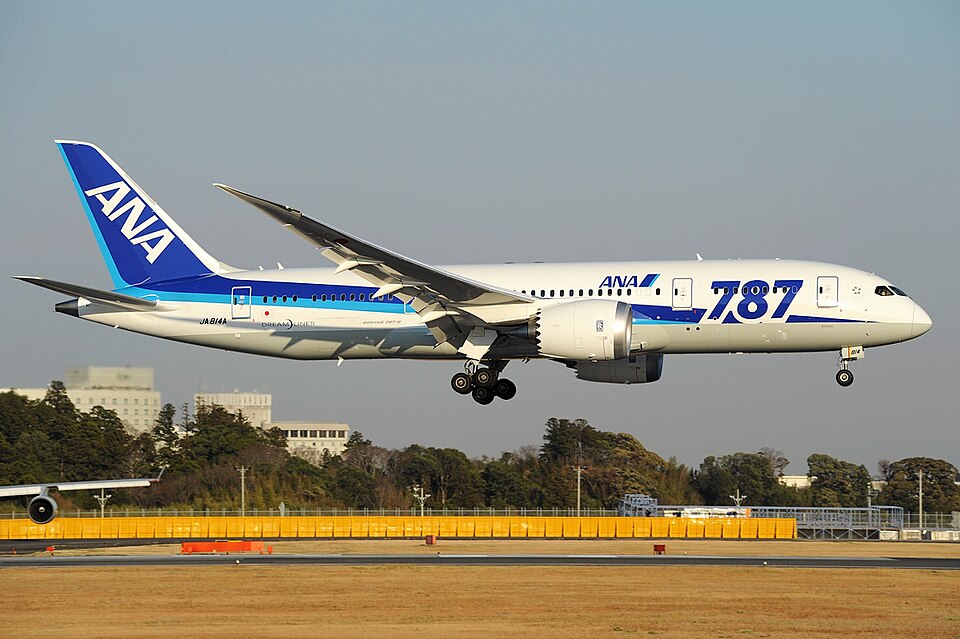
The Boeing 787 Dreamliner represents a generational leap in aircraft design. Introduced in the early 2010s, it was the first commercial airliner to use composite materials for the majority of its airframe. That made it lighter, stronger, and more fuel efficient than earlier jets.
The Dreamliner's passenger experience improvements were just as notable as its engineering. Boeing raised the cabin humidity level, which helps reduce fatigue and dryness on long flights. It also added larger windows with electrochromic dimming, meaning passengers can adjust the tint without a physical shade. The cabin pressure was also set at a lower effective altitude, which many travelers say makes them feel less jet-lagged after long flights.
For airlines, the 787 opened up new routes that were not previously practical. Because it is so fuel efficient, carriers could now fly point-to-point long-haul routes without the need to stop and refuel at a hub. That gave passengers more direct routing options.
Fun Fact: The 787's composite materials are said to be up to several times stronger than steel by weight. The use of composites in commercial aviation at this scale was largely pioneered by the Dreamliner program.
If you are planning a transatlantic trip and want to know which aircraft handle those routes best, a closer look at aircraft suited for transatlantic flights gives helpful context on how the 787 compares to other options.
4. Boeing 777: The Triple Seven
The Boeing 777 is one of the longest-range commercial jets ever produced. It is a twin-engine wide-body aircraft, meaning it has two engines rather than four. When it was introduced in the mid-1990s, that was a bold choice for a plane designed to fly routes that long.
The 777 proved the skeptics wrong. It went on to become one of the most trusted aircraft in commercial aviation. Airlines used it to replace older four-engine jets, getting the same or better range with half the engines and significantly lower fuel costs.
The 777 comes in several variants, including shorter-range versions and ultra-long-range models. The 777X, a next-generation variant with folding wingtips and new engines, is in development and represents the next chapter in the Triple Seven's story.
Capacity and range are two of the 777's biggest strengths. Depending on configuration, it can carry well over 300 passengers across distances that exceed 8,000 nautical miles in some variants. That is enough to fly from the U.S. East Coast to Southeast Asia without stopping.
Keep in Mind: The 777 holds several aviation records for twin-engine long-haul performance. It is the aircraft airlines most often choose when they want to open ultra-long-haul routes between two cities.
5. Boeing 767: The Reliable Long Ranger
The Boeing 767 does not always get the headlines that the 747 or the Dreamliner do. But it has quietly served airlines for decades as a dependable, versatile wide-body jet. First entering service in the early 1980s, the 767 was one of the first airliners designed with a two-pilot cockpit using advanced avionics, eliminating the need for a flight engineer.
The 767 found a sweet spot between the large 747 and the smaller narrowbody jets. It was wide enough to carry two aisles of passengers but not so large that airlines needed to fill hundreds of seats to make a flight profitable.
Airlines in the United States have used the 767 extensively on transatlantic routes, particularly between smaller cities and European hubs. It has also become a go-to platform for cargo conversion, with many retired passenger 767s living a second life as freighters.
Good to Know: The Boeing 767 is still used today by several major U.S. airlines on transatlantic routes. It may not be new, but it still gets the job done with solid fuel efficiency and a comfortable cabin.
6. Boeing 757: The Narrow-Body King
The Boeing 757 occupies a unique place in aviation history. It is a narrowbody aircraft, meaning it has a single aisle running down the cabin. But do not let that fool you. The 757 was built with one of the most powerful thrust-to-weight ratios of any commercial jet at the time.
Airlines loved the 757 for high-altitude airports and hot weather destinations, where thinner air makes it harder for aircraft to generate lift. The 757's powerful engines gave it a meaningful advantage in those conditions.
The 757 also became the aircraft of choice for many transatlantic charter operators. Even though it is a narrowbody, its range is impressive enough for shorter transatlantic crossings. Routes from the U.S. East Coast to Iceland or the UK were well within its reach.
Boeing stopped producing the 757 in the early 2000s, but the aircraft remains in service with many airlines. Its combination of power, range, and narrow-body economics kept it popular long after newer jets arrived.
Pro Tip: If you ever fly on a 757 and happen to be seated toward the front, you may notice just how steep the climb feels after takeoff. That is the power-to-weight ratio at work.
7. Boeing 727: A Classic Trijet
The Boeing 727 earns its spot on this list for historical significance more than anything else. Introduced in the early 1960s, it became one of the most popular commercial jets of its era and remained in widespread service for decades.
The 727 was a trijet, meaning it had three engines. Two were mounted on the sides of the rear fuselage, and one sat inside the tail. This arrangement kept the wings clean and allowed the 727 to use powerful high-lift devices that made it capable of operating from shorter runways than many of its competitors.
That short-field capability made the 727 attractive to airlines flying into smaller airports. Cities that could not accommodate the 707 or later widebody jets could still receive service from a 727.
The 727 was eventually retired from most commercial passenger service as fuel prices rose and more efficient aircraft became available. But it left a major mark on aviation. It helped establish jet travel as the norm for domestic U.S. routes and set the stage for everything that followed.
Fun Fact: The Boeing 727 is said to be the aircraft that popularized the airstair, a set of stairs built into the rear of the plane that fold down from the fuselage. This allowed the aircraft to board and deplane passengers without needing a jet bridge.
Private pilots and aviation students often look at the history of iconic jets as a way to understand how commercial aviation evolved. If you are new to flying and want to start with something more your size, reading about the best aircraft for learning to fly is a great first step.
How Boeing's Best Compare Side by Side
Here is a quick look at how these seven planes compare on some key specs. Note that figures vary by variant and configuration, so treat these as general reference ranges.
| Model | Engines | Approximate Range | Cabin Type | Era |
| 747 | 4 | 8,000+ nm | Wide-body | 1970s-present |
| 737 | 2 | 3,000-3,800 nm | Narrow-body | 1968-present |
| 787 | 2 | 7,000-8,000+ nm | Wide-body | 2011-present |
| 777 | 2 | 8,000-9,000+ nm | Wide-body | 1995-present |
| 767 | 2 | 5,000-7,000 nm | Wide-body | 1982-present |
| 757 | 2 | 3,900-4,500 nm | Narrow-body | 1983-2004 |
| 727 | 3 | ~2,700 nm | Narrow-body | 1964-1984 |
Boeing vs. Airbus: A Friendly Rivalry
No conversation about the best Boeing planes is complete without mentioning Airbus. The European manufacturer has been Boeing's main rival since the 1970s. Today, the two companies dominate commercial aviation, splitting the market between them.
Boeing tends to be favored for its long-haul twin-engine jets and its legacy of wide-body innovation. Airbus is often praised for its fly-by-wire technology and its A320 family, which competes directly with the 737.
The rivalry has pushed both manufacturers to innovate faster than either would have on their own. Passengers have benefited from that competition in the form of quieter cabins, better fuel efficiency, and more direct routes.
Why It Matters: The Boeing-Airbus rivalry is one of the most consequential in industrial history. It has shaped global aviation infrastructure, airline economics, and the passenger experience for hundreds of millions of travelers every year.
What About Boeing for Private Pilots?
Most of the planes on this list are commercial airliners. They are not the kind of aircraft a private pilot would fly on a weekend. But Boeing's influence on aviation extends beyond the airlines. The company's innovations in aerodynamics, materials, and avionics have trickled down into general aviation in meaningful ways.
Private pilots who want to understand aircraft performance can learn a lot by studying how Boeing approaches efficiency, range, and safety. The principles are not that different. Lift, drag, thrust, and weight matter whether you are flying a 747 or a small single-engine plane.
For pilots looking at personal aircraft options that are known for outstanding performance, exploring planes popular among private pilots is a useful way to see how general aviation stacks up against its commercial cousins.
Quick Tip: Understanding how commercial jets are designed can make you a more informed general aviation pilot. Many of the efficiency principles Boeing uses in its jets apply directly to smaller aircraft as well.
General aviation enthusiasts often want to know how aircraft handle across different mission profiles. Whether you are thinking about a twin-engine plane for more capability, a rugged bush plane for backcountry adventures, or want to maximize your useful load in a single-engine aircraft, the right aircraft depends on what you need it to do.
Ready to explore what the aviation world has to offer? Flying411 is your go-to resource for aircraft guides, comparisons, and everything that makes flying so fascinating.
Conclusion
The best Boeing planes have done more than carry passengers from one city to another. They have shaped how the world moves, connected continents, lowered the cost of travel, and pushed the limits of what engineers thought was possible. From the iconic Queen of the Skies to the fuel-efficient Dreamliner, each aircraft on this list represents a milestone in aviation history.
Whether you are drawn to the 747 for its sheer presence or to the 787 for its passenger-friendly innovations, there is something to appreciate in every plane on this list. Boeing has had its share of challenges over the years, but its legacy of designing transformative aircraft remains intact.
Aviation is one of the most fascinating fields in the world, and understanding the planes that shaped it makes every flight a little more meaningful.
For more aircraft guides, comparisons, and aviation insights, visit Flying411 and dive into everything the world of flying has to offer.
Frequently Asked Questions
What is the most iconic Boeing plane ever made?
The Boeing 747 is widely considered the most iconic aircraft Boeing has ever produced. Its distinctive hump and double-deck nose made it instantly recognizable and it helped transform long-haul international travel for generations of passengers.
Is the Boeing 737 still being manufactured?
Yes, the Boeing 737 MAX is the current production version of the 737 family and is actively being manufactured and delivered to airlines around the world. It is one of the best-selling commercial aircraft in history.
How is the Boeing 787 Dreamliner different from older Boeing jets?
The 787 Dreamliner was the first commercial airliner to use composite materials for most of its airframe, making it lighter and more fuel efficient. It also features a more comfortable cabin with higher humidity, larger windows, and lower effective cabin altitude compared to older jets.
Why did Boeing stop making the 757?
Boeing discontinued the 757 in the early 2000s primarily due to declining demand from airlines at the time. However, the aircraft has remained popular in service and there has been ongoing discussion in the industry about the market gap the 757 left behind.
Which Boeing plane has the longest range?
The Boeing 777X and some variants of the 777-200LR are among the longest-range commercial jets Boeing has built, with some configurations capable of flying distances well over 8,000 nautical miles nonstop. The 787 Dreamliner also competes at the upper end of long-range performance for twin-engine commercial aircraft.