If you have ever stood on a flight line and looked out at row after row of small aircraft, you already know the feeling. There are so many options. Single-engine planes. Twins. High wings. Low wings. Glass cockpits. Steam gauges. Each one built for a different kind of pilot, a different kind of mission, and a different kind of budget. So how do you know which one is right for you?
General aviation covers a broad range of flying that sits outside of commercial airline service and military operations. It includes everything from weekend recreational flights to serious cross-country travel, flight training, cargo runs, and even bush flying. The best general aviation aircraft for you depends on your goals, your experience level, and the type of flying you actually plan to do.
This article walks through 13 of the most respected and widely flown general aviation aircraft available today. Each one has earned its spot for a reason, and by the end, you will have a clearer picture of which direction makes the most sense for you.
Key Takeaways
The best general aviation aircraft depend entirely on what you need from a plane. The Cessna 172 Skyhawk remains the most produced and widely flown trainer in history, while the Cirrus SR22T has held the top spot in new piston aircraft sales for many consecutive years. For budget-conscious buyers, the Piper PA-28 Cherokee and Cessna 182 Skylane offer excellent value and versatility. Pilots looking for speed can turn to the Mooney M20 or Beechcraft Bonanza, while those who want modern safety features often gravitate toward the Diamond DA40 or Cirrus SR20.
| Aircraft | Best For | Approx. Used Price Range |
| Cessna 172 Skyhawk | Training, first ownership | $50,000 – $380,000+ |
| Piper PA-28 Cherokee | Budget buyers, trainers | $30,000 – $80,000 |
| Cessna 182 Skylane | Family travel, utility | $60,000 – $250,000+ |
| Beechcraft Bonanza A36 | Cross-country, performance | $100,000 – $350,000+ |
| Cirrus SR22 | Modern tech, safety-minded | $200,000 – $600,000+ |
| Cirrus SR22T | High-performance touring | $300,000 – $900,000+ |
| Mooney M20 | Speed, efficiency | $80,000 – $300,000+ |
| Diamond DA40 | Fuel efficiency, training | $100,000 – $350,000+ |
| Piper PA-32 Cherokee Six | Large families, utility | $60,000 – $150,000+ |
| Cessna 210 Centurion | High performance, payload | $80,000 – $250,000+ |
| Piper Seneca | Twin-engine touring | $80,000 – $250,000+ |
| Beechcraft Baron | Twin-engine performance | $150,000 – $400,000+ |
| Piper J-3 Cub | Fun flying, stick-and-rudder skills | $20,000 – $60,000+ |
Note: Prices are approximate ranges based on market data and vary widely by year, condition, avionics, and total time. Always work with a qualified aviation professional before purchasing.
Looking for expert guidance before you buy? Flying411 is a trusted resource for pilots exploring the general aviation market, with in-depth reviews and buying resources to help you make a confident decision.
What Is General Aviation and Who Flies These Aircraft?
General aviation, often called GA, refers to all civil aviation activity that falls outside of scheduled commercial airline service. It is a remarkably broad category. It includes private pilots flying for fun, student pilots working toward their certificates, business travelers hopping between regional airports, aerial photographers, agricultural operators, and search-and-rescue crews.
In the United States, the FAA estimates that general aviation aircraft vastly outnumber commercial airliners. The GA fleet is the backbone of American aviation. It keeps rural communities connected, powers flight training pipelines, and gives everyday people access to the sky without needing to buy a ticket.
Good to Know: The vast majority of pilots in the world first learn their skills in a general aviation aircraft. The GA fleet has produced virtually every airline captain, military aviator, and cargo pilot flying today.
General aviation aircraft typically seat anywhere from one to ten people and are powered by piston engines, turboprops, or small jet engines. For the purposes of this article, the focus is on piston-powered and light aircraft — the heart of the GA market in the United States.
How to Choose the Right General Aviation Aircraft
Before diving into the list, it helps to think through a few key questions. The right aircraft for one pilot may be a poor fit for another. Consider the following factors:
- Mission profile: Are you flying locally for fun, building hours, traveling cross-country, or hauling cargo?
- Passenger capacity: Will you usually fly solo, or do you need seats for family or passengers?
- Budget: This includes both the purchase price and ongoing costs like fuel, maintenance, hangar fees, and insurance.
- Experience level: Some aircraft are forgiving and easy to learn; others demand more skill and currency.
- Range and speed: Do you need to cover long distances quickly, or are shorter hops typical?
Pro Tip: Never buy an aircraft based on the purchase price alone. The ongoing cost of ownership, including annual inspections, engine reserves, avionics updates, and hangar fees, can significantly exceed the initial investment over time.
Understanding Cost of Ownership
Aircraft ownership involves both fixed and variable costs. Fixed costs include insurance, hangar or tie-down fees, and annual inspection costs. Variable costs include fuel, oil, and routine maintenance. Together, these can add up to a significant annual figure. Buyers should budget carefully and speak with a certified aviation financial advisor before committing to a purchase.
The 13 Best General Aviation Aircraft
Each aircraft on this list has earned its place through a combination of reliability, real-world usefulness, and a proven track record with pilots across the country. They span a wide range of budgets, skill levels, and mission types, so look for the ones that match how you actually plan to fly.
1. Cessna 172 Skyhawk
The Cessna 172 Skyhawk is, by nearly every measure, the most successful general aviation aircraft ever built. With well over 44,000 units produced since its introduction in the mid-1950s, no other aircraft type comes close to its production numbers. It is the standard against which all other training aircraft are measured.
The 172 features a high-wing design that gives pilots excellent ground visibility during preflight, a forgiving flight envelope that builds confidence in new students, and a parts supply chain so deep and widespread that mechanics across the country can work on it without hesitation. Newer variants like the 172S Skyhawk SP are available with Garmin G1000 glass cockpit avionics as standard equipment.
Used prices vary considerably by model year and equipment. Older 172s can sometimes be found at relatively accessible price points, while newer glass-panel examples command a significant premium.
Best for: Student pilots, first-time buyers, flight training, local recreational flying
Fun Fact: The Cessna 172 is widely considered the most produced aircraft in aviation history. Its longevity and unmatched production run have made it a true icon of general aviation.
Key specs (172S):
- Seats: 4
- Cruise speed: Approximately 122 knots
- Range: Approximately 640 nautical miles
- Engine: Lycoming IO-360 (180 HP)
If you are just starting out and looking for your first aircraft, exploring options for beginner pilots can help you understand how the 172 stacks up against other entry-level choices.
2. Piper PA-28 Cherokee
The Piper PA-28 Cherokee is the Cessna 172's closest rival, and it has held that position for decades. Where the 172 chose a high-wing design, the Cherokee went low. This gives pilots a different kind of ground visibility and, according to many owners, a more stable feel in turbulence due to the lower center of gravity.
The Cherokee family spans multiple variants, including the Cherokee 140, Warrior, Archer, and the more powerful Cherokee 180. The basic airframe is regarded as one of the simplest and most reliable in the GA fleet. Mechanics often note that it is straightforward to maintain, and parts are widely available.
From a cost standpoint, older Cherokees are frequently available at prices that undercut comparable Cessna 172s. This makes the Cherokee an attractive option for budget-conscious buyers who still want a capable, four-seat trainer with a long service history.
Best for: Budget-conscious buyers, training, recreational flying, first ownership
Good to Know: The Piper PA-28 Cherokee and Cessna 172 together have trained more pilots than virtually any other aircraft types in history. Both remain excellent choices, and the choice between them often comes down to personal preference.
Key specs (PA-28-181 Archer III):
- Seats: 4
- Cruise speed: Approximately 125 knots
- Range: Approximately 520 nautical miles
- Engine: Lycoming O-360 (180 HP)
3. Cessna 182 Skylane
The Cessna 182 Skylane is what many pilots call the natural upgrade from the 172. It carries more, goes farther, and climbs faster, all while retaining the forgiving, stable flight characteristics that made the 172 so popular. It has earned a reputation as one of the best utility aircraft in the single-engine piston world.
The 182 features a larger cabin, a more powerful engine, and a significantly higher useful load compared to the 172. This makes it a popular choice for families who want to travel together, for pilots who need to carry more equipment, or for anyone planning longer cross-country flights. The high-wing design, shared with the 172, keeps ground visibility excellent.
Range on the 182 can exceed 900 nautical miles in favorable conditions, making it a practical option for serious cross-country missions. The short-field performance is also notably good for its class.
Best for: Families, cross-country travel, utility missions, step-up from the 172
Pro Tip: The Cessna 182 is often considered a sweet spot in the used aircraft market. It offers significantly more capability than a 172 while remaining affordable and widely supported.
Key specs (182T Skylane):
- Seats: 4
- Cruise speed: Approximately 145 knots
- Range: Approximately 915 nautical miles
- Engine: Lycoming IO-540 (230 HP)
For pilots looking to carry a larger group, planes built for families of six offer a broader look at high-capacity options beyond the 182.
4. Beechcraft Bonanza A36
The Beechcraft Bonanza is one of the most storied names in general aviation. It has been in continuous production longer than nearly any other aircraft type in history, and pilots who fly one tend to be fiercely loyal. The A36 variant is the six-seat version, powered by a Continental IO-550 engine that delivers strong performance at cruise altitudes.
The Bonanza's cabin is noticeably wider and more comfortable than many of its competitors. The retractable landing gear reduces drag and contributes to cruise speeds that routinely exceed 170 knots in favorable conditions. The aircraft handles beautifully and rewards pilots who stay current and sharp.
Ownership costs for the Bonanza are higher than for the Cessna 172 or Cherokee, but pilots who choose it often cite the combination of speed, comfort, and capability as justification. A well-maintained Bonanza holds its value well in the used aircraft market.
Best for: Cross-country travel, experienced pilots, pilot-owner operators who want performance
Why It Matters: The Beechcraft Bonanza has long been associated with capable, serious cross-country flying. Its long production history means parts and expertise are well-established across the country.
Key specs (A36):
- Seats: 4 to 6
- Cruise speed: Approximately 174 knots
- Range: Approximately 800 nautical miles
- Engine: Continental IO-550 (300 HP)
5. Cirrus SR20
The Cirrus SR20 introduced the aviation world to the Cirrus Airframe Parachute System, known as CAPS. This whole-aircraft parachute can deploy in an emergency to lower the entire plane safely to the ground. It was a groundbreaking safety feature that changed how many pilots and families thought about GA flying.
The SR20 is the smaller sibling to the SR22, powered by a Continental IO-360 engine. It is a high-performance composite aircraft with a side-stick control, a modern glass cockpit, and a sleek low-wing design. The cabin is comfortable and well-appointed, giving it more of a modern feel than older GA aircraft.
For pilots stepping into the Cirrus family for the first time, the SR20 offers a manageable entry point. The avionics systems are sophisticated, so some transition training is strongly recommended.
Best for: Safety-conscious buyers, modern avionics enthusiasts, comfortable cross-country flying
Key specs (SR20):
- Seats: 4
- Cruise speed: Approximately 155 knots
- Range: Approximately 700 nautical miles
- Engine: Continental IO-360 (200 HP)
6. Cirrus SR22
The Cirrus SR22 has been the top-selling new piston aircraft in the United States for well over two decades. That kind of sustained market dominance does not happen by accident. The SR22 builds on the SR20's foundation with a larger engine, higher cruise speeds, greater range, and a useful load that makes four-place cross-country travel genuinely practical.
The SR22 comes equipped with the Garmin Perspective avionics suite in later models, giving pilots a connected, modern cockpit experience. The CAPS parachute system carries over from the SR20, and Cirrus has invested heavily in pilot training programs to support owners in learning the aircraft properly.
Used SR22s are available across a wide price range depending on model year and equipment. Earlier models can be found at significantly lower prices than newer examples, though buyers should factor in avionics updates and maintenance history carefully.
Best for: Serious cross-country pilots, owner-operators, tech-forward buyers
Fun Fact: The Cirrus SR22 has held the top spot in new piston aircraft deliveries for more than 20 consecutive years, according to GAMA annual reports. It consistently outsells its closest competitors.
Key specs (SR22):
- Seats: 4
- Cruise speed: Approximately 183 knots
- Range: Approximately 1,000 nautical miles
- Engine: Continental IO-550 (310 HP)
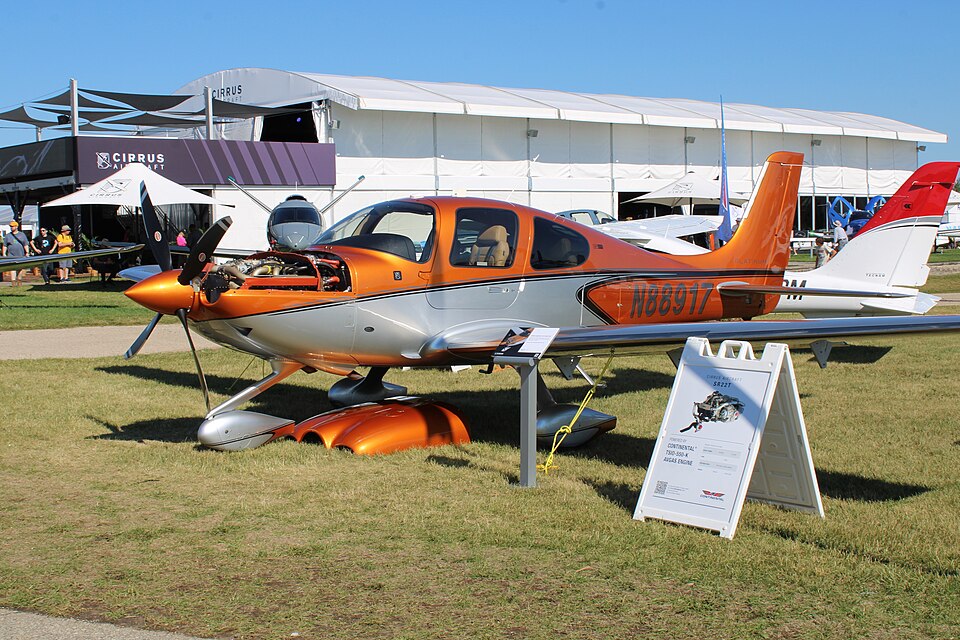
7. Cirrus SR22T
The Cirrus SR22T takes everything that makes the SR22 compelling and adds a turbocharger. This allows the aircraft to maintain its rated power output at higher altitudes, where it can cruise above much of the weather and turbulence that affects lower-flying aircraft. The result is a fast, capable touring machine that feels more like a light jet than a traditional piston plane inside.
The SR22T is frequently cited in discussions of the best high-performance single-engine piston aircraft. The combination of the CAPS safety system, the glass cockpit, the pressurized turbocharger, and the smooth cabin makes it a compelling choice for pilots who fly frequently and cover serious distances.
It is not an inexpensive aircraft to own or operate, but for pilots who log significant hours per year, the capability can justify the investment.
Best for: High-altitude flying, frequent long-distance travel, experienced owner-operators
Key specs (SR22T):
- Seats: 4 to 5
- Cruise speed: Approximately 213 knots
- Range: Approximately 1,000 nautical miles
- Engine: Continental TSIO-550 (315 HP, turbocharged)
If you frequently need to cover long distances efficiently, a look at the best twin-engine planes for long-distance travel can help you compare the SR22T to twin-engine alternatives.
8. Mooney M20
The Mooney M20 series is the aircraft of choice for pilots who want to go fast without spending as much on fuel or purchase price as a Cirrus. The Mooney is famous for its aerodynamically efficient airframe, its distinctive forward-swept tail, and its retractable landing gear — all of which contribute to cruise speeds that are impressive for the engine power used.
Pilots who fly Mooneys often talk about the aircraft's responsiveness and the sense that it rewards precise inputs. The cabin is narrow compared to a Bonanza or a Cirrus, which some pilots find tight, but most accept this trade-off for the speed and efficiency gains.
The Mooney M20 comes in many variants, from earlier models that are more budget-friendly to later Acclaim and Ovation models that push well past 200 knots at cruise. Used prices span a wide range across the family.
Best for: Speed-focused pilots, cross-country efficiency, pilots who value aerodynamic performance
Keep in Mind: The Mooney M20 has a narrower cabin than many of its competitors. Taller pilots or those flying with larger passengers may find it uncomfortable on longer flights.
Key specs (M20V Acclaim Ultra):
- Seats: 4
- Cruise speed: Approximately 242 knots (in later Acclaim variant)
- Range: Approximately 1,300 nautical miles
- Engine: Continental TSIO-550 (280 HP, turbocharged)
9. Diamond DA40
The Diamond DA40 Diamond Star is a modern composite aircraft that stands apart from the crowd with its elegant design, fuel-efficient engine options, and exceptional cockpit visibility thanks to its bubble canopy. Diamond Aircraft has built a reputation for thoughtful engineering and excellent build quality.
Later DA40 NG variants are equipped with a diesel engine that runs on Jet-A fuel, which is typically available at a wider range of airports than 100LL avgas. This can simplify fuel planning and reduce per-hour operating costs for pilots who fly frequently.
The DA40 is a popular choice at flight schools that want to offer students a modern training experience, and it translates well into personal ownership for pilots who want a capable, efficient cross-country machine.
Best for: Fuel-conscious pilots, modern composite enthusiasts, training and cross-country flying
Fun Fact: Diamond Aircraft was among the first manufacturers to offer a diesel-powered piston aircraft with a glass cockpit as standard equipment, making the DA40 NG a genuinely forward-looking design.
Key specs (DA40 NG):
- Seats: 4
- Cruise speed: Approximately 150 knots
- Range: Approximately 900 nautical miles
- Engine: Continental CD-155 diesel (155 HP)
10. Piper PA-32 Cherokee Six
When a family or operator needs more seats, the Piper PA-32 Cherokee Six has long been one of the go-to solutions in general aviation. This six-seat, single-engine aircraft offers a spacious cabin, impressive useful load, and a reliable powerplant in a relatively accessible price range for used examples.
The Cherokee Six has been used for everything from family travel to cargo operations to air taxi service. It is popular in island and coastal markets where carrying multiple passengers or significant cargo over shorter routes is a regular mission. The aircraft is straightforward to maintain and has a deep parts supply.
One consideration for buyers is that the Cherokee Six requires a more capable pilot than a 172 or standard Cherokee, given its weight and performance envelope. Transition training is highly recommended.
Best for: Large families, utility missions, pilots who need six seats on a piston budget
Key specs (PA-32-300):
- Seats: 6
- Cruise speed: Approximately 142 knots
- Range: Approximately 700 nautical miles
- Engine: Lycoming IO-540 (300 HP)
11. Cessna 210 Centurion
The Cessna 210 Centurion is a high-performance, retractable-gear single that occupies a class of its own. It offers one of the largest cabin volumes and payload capacities available in a single-engine piston aircraft, with a pressurized variant that allows flight at higher altitudes with increased comfort.
The 210 has a loyal following among pilots who need to carry four to six people along with meaningful luggage over real distances. The pressurized P210 variant allows flight well above typical piston altitudes, which expands its operational capability in challenging weather regions.
Maintenance complexity is higher than for simpler fixed-gear aircraft, and the retractable gear system requires careful attention. Buyers should budget accordingly and ensure a thorough pre-purchase inspection.
Best for: High-payload missions, serious cross-country travel, pilots seeking pressurized single-engine capability
Heads Up: The Cessna 210's complex systems and higher operating costs make it better suited to experienced pilots who fly regularly. It is not typically recommended as a first aircraft.
Key specs (210N):
- Seats: 4 to 6
- Cruise speed: Approximately 170 knots
- Range: Approximately 900 nautical miles
- Engine: Continental IO-520 (300 HP)
12. Piper PA-34 Seneca
The Piper PA-34 Seneca is one of the most popular light twin-engine aircraft in general aviation, and for good reason. Twin-engine aircraft offer an important redundancy that single-engine planes cannot: if one engine fails, the other can still get you to an airport. This makes the Seneca a popular choice for instrument-rated pilots flying in challenging weather conditions or over terrain where an engine failure would be serious.
The Seneca is also widely used for multi-engine training, which means mechanics and instructors who know the type well are found across the country. It carries up to six occupants in a comfortable cabin and offers a range that works well for regional travel.
Used Senecas span a wide price range depending on year, engine time, and avionics. Buyers should pay close attention to the engine condition on any twin, as overhaul costs apply to two engines rather than one.
Best for: Multi-engine training, IFR flying, pilots who want engine redundancy
Pro Tip: When shopping for a twin-engine aircraft, always factor in the cost of two engine overhauls rather than one. This significantly changes the long-term ownership cost calculation.
Key specs (PA-34-220T Seneca V):
- Seats: 5 to 6
- Cruise speed: Approximately 196 knots
- Range: Approximately 800 nautical miles
- Engines: Continental TSIO-360 (220 HP each, turbocharged)
13. Piper J-3 Cub
No list of the best general aviation aircraft would be complete without the Piper J-3 Cub. This simple, two-seat, fabric-covered taildragger is one of the most beloved training aircraft in aviation history. It has taught basic stick-and-rudder flying to generations of pilots, and flying one today still feels connected, alive, and purely joyful.
The J-3 Cub has no electrical system in its most basic form, no radio, and no complexity at all. It is powered by a modest Continental or Lycoming engine and typically cruises slowly enough that you can see everything below in remarkable detail. Flying a Cub is often described as the purest form of light aviation.
For pilots who want to sharpen their fundamental flying skills, build tailwheel experience, or simply have fun in the air without worrying about avionics, the J-3 Cub is hard to beat. Used examples are available at some of the most accessible price points in the GA market.
Best for: Stick-and-rudder skill building, tailwheel training, recreational flying, budget-conscious pilots
Fun Fact: The Piper J-3 Cub is said to have trained more military pilots during World War II than any other single aircraft type, having been used extensively in the Civilian Pilot Training Program.
Key specs (J-3 Cub):
- Seats: 2 (tandem)
- Cruise speed: Approximately 65 knots
- Range: Approximately 190 nautical miles
- Engine: Continental A-65 (65 HP)
How These Aircraft Compare: A Quick Reference
| Aircraft | Seats | Approx. Cruise Speed | Engine Type | Complexity Level |
| Cessna 172 | 4 | 122 kts | Piston single, fixed gear | Low |
| Piper PA-28 Cherokee | 4 | 125 kts | Piston single, fixed gear | Low |
| Cessna 182 Skylane | 4 | 145 kts | Piston single, fixed gear | Low-Medium |
| Beechcraft Bonanza A36 | 4-6 | 174 kts | Piston single, retractable | Medium |
| Cirrus SR20 | 4 | 155 kts | Piston single, fixed gear | Medium |
| Cirrus SR22 | 4 | 183 kts | Piston single, fixed gear | Medium |
| Cirrus SR22T | 4-5 | 213 kts | Piston single, turbocharged | Medium-High |
| Mooney M20 | 4 | 170-242 kts | Piston single, retractable | Medium |
| Diamond DA40 | 4 | 150 kts | Diesel/piston single | Low-Medium |
| Piper PA-32 | 6 | 142 kts | Piston single, fixed gear | Medium |
| Cessna 210 Centurion | 4-6 | 170 kts | Piston single, retractable | Medium-High |
| Piper PA-34 Seneca | 5-6 | 196 kts | Twin piston, retractable | High |
| Piper J-3 Cub | 2 | 65 kts | Piston single, fixed gear | Very Low |
All figures are approximate and may vary by variant, altitude, and operating conditions.
Matching Aircraft to Mission Profiles
Choosing a plane is easier when you start with a honest look at how you actually plan to fly.
The Weekend Flyer
If you fly mostly on weekends for fun, short hops, and the occasional $100 hamburger run, a Cessna 172 or a Piper Cherokee is almost certainly enough airplane. These aircraft are forgiving, inexpensive to operate relative to larger models, and available at a wide range of used price points. The Cherokee often comes in at a lower price for comparable capability.
The Cross-Country Traveler
For pilots who want to cover real distances efficiently, the options open up quickly. The Cessna 182 Skylane handles the mission well and offers a better payload than a 172. Step up further and the Beechcraft Bonanza or Cirrus SR22 delivers cruise speeds and range that make long trips genuinely productive.
The Family Flyer
Pilots flying regularly with family should think carefully about useful load, not just seat count. Four seats mean nothing if the aircraft cannot legally carry four people with fuel. The Cessna 182, Bonanza A36, and Cherokee Six are all worth studying carefully for real-world family missions.
For an in-depth look at aircraft designed to carry larger groups, high-capacity aircraft for larger families breaks down the best options across several categories.
Quick Tip: Always calculate the actual useful load before purchasing any aircraft. Subtract empty weight from maximum gross weight, then subtract the weight of full fuel. What is left is the real-world payload available for people and baggage.
The Serious IFR Pilot
Pilots who fly frequently in instrument conditions should look at aircraft with capable avionics suites, good climb performance, and ideally some form of redundancy. The Cirrus SR22 and SR22T, the Mooney M20, and the Piper Seneca all earn high marks in this category.
Whether you are buying your first plane or your fifth, Flying411 offers detailed guides and aircraft comparisons to help you navigate the GA market with confidence.
What About Cargo and Specialized Operations?
Some pilots fly for purposes beyond personal travel. Aerial operators, charter services, and specialty missions have specific requirements that standard touring aircraft may not meet. Aircraft designed for higher payloads, larger cabin volumes, or specific configurations become relevant in these cases. If that sounds like your situation, exploring aircraft built for cargo and utility operations can expand your perspective on what is available beyond traditional GA categories.
Tips for Buying a General Aviation Aircraft
Whether you are buying your first plane or adding to your fleet, a few practical principles will serve you well:
- Get a pre-purchase inspection. Hire an independent FAA-certificated Airframe and Powerplant mechanic (A&P/IA) to perform a thorough inspection before signing anything.
- Review the logbooks carefully. Engine time, prop time, and a complete maintenance history tell a detailed story about how an aircraft was cared for.
- Fly the aircraft first. A demo flight or arrangement with the seller to fly the aircraft before purchase helps you understand if the type fits your skills and comfort level.
- Research the owner community. Most popular GA types have active owner groups and type clubs that publish maintenance tips, known issues, and service difficulty reports.
- Factor in avionics. Older aircraft may need avionics upgrades for ADS-B compliance and practical IFR use. This can significantly affect total acquisition cost.
Keep in Mind: ADS-B Out compliance is now required in most controlled airspace in the United States. Any aircraft you are seriously considering should already have an FAA-compliant ADS-B Out installation, or the cost of installation should be factored into your offer.
Working with Aviation Finance
Aircraft financing differs from car or home loans. Specialized aviation lenders understand the unique nature of aircraft assets. Loan terms, interest rates, and down payment requirements vary by lender and aircraft age. Consulting with an aviation finance specialist early in the process can help you understand what is realistic within your budget.
Conclusion
The world of general aviation is full of exceptional aircraft, and the 13 planes covered here represent some of the best choices across a wide range of missions, budgets, and experience levels. From the legendary Cessna 172 Skyhawk to the high-performance Cirrus SR22T and the pure joy of a Piper J-3 Cub, the best general aviation aircraft for you is the one that fits how you actually fly.
No matter where you are in your aviation journey, taking the time to match aircraft capabilities to your real-world mission will pay off for years to come. Think about where you fly, who you fly with, how often you go, and what you need when you get there. Then find the aircraft that checks those boxes.
For more expert guidance, trusted aircraft reviews, and resources built specifically for general aviation pilots and buyers, visit Flying411 and start your search with confidence.
Frequently Asked Questions
What is the best general aviation aircraft for a beginner pilot?
The Cessna 172 Skyhawk is widely recommended for beginner pilots due to its forgiving handling, excellent visibility, and massive support network. The Piper PA-28 Cherokee is another strong option, often available at a lower purchase price for similar capability.
How much does it cost to own a small general aviation aircraft per year?
Annual ownership costs vary significantly depending on the aircraft type, how often you fly, where you hangar the plane, and local maintenance rates. A simple piston single such as a Cessna 172 may cost anywhere from roughly $10,000 to $20,000 or more per year for moderate use, including insurance, hangar, fuel, and maintenance. More complex aircraft naturally cost more.
What is the safest single-engine general aviation aircraft?
The Cirrus SR22 and SR20 are frequently cited for their active safety systems, particularly the Cirrus Airframe Parachute System (CAPS). The whole-aircraft parachute has saved many lives in emergency situations. However, overall safety in GA depends heavily on pilot training, currency, and decision-making, not just the aircraft itself.
Is it better to buy a new or used general aviation aircraft?
Both options have advantages. New aircraft come with warranties, modern avionics, and no unknown maintenance history. Used aircraft offer significantly lower purchase prices, and the best-used models hold their value well. Many buyers find exceptional value in well-maintained used aircraft with good logbooks and recent upgrades.
Do I need a special license to fly a general aviation aircraft?
The FAA requires at least a Sport Pilot Certificate to fly light sport aircraft and a Private Pilot Certificate (PPL) to fly most general aviation aircraft as pilot-in-command. Certain high-performance aircraft may require additional endorsements. Instrument flying requires an Instrument Rating beyond the PPL.
What is the best general aviation aircraft for long-distance travel?
High-performance singles like the Cirrus SR22T and Mooney M20 Acclaim are strong choices for cross-country efficiency and range. Twin-engine options like the Piper PA-34 Seneca add redundancy that many IFR pilots prefer for extended travel. The right choice depends on budget, required speed, and how often weather will be a factor.
How does general aviation differ from commercial aviation?
Commercial aviation refers to scheduled airline service carrying paying passengers under Part 121 regulations. General aviation covers all other civil aviation activity, including private flying, flight training, charter, cargo operations, and recreational flying, regulated primarily under FAA Parts 61, 91, and 135.