Every aircraft on the planet is a collection of parts that eventually wear out. Bearings wear down. Seals dry up. Brackets crack. Filters clog. When the time comes to replace something, a mechanic has to answer one simple question before touching a wrench: is this part legal to install? That question is exactly why a PMA part in aviation exists, and why the three letters stamped on a small metal tag can matter as much as the part itself.
Most aircraft owners hear the term for the first time when a shop hands them a quote with two prices for the same component. One is high. One is lower. Both are perfectly legal. The difference between those two numbers is a story about paperwork, engineering, and a federal approval process that almost nobody outside a hangar ever sees.
A part that costs half as much and still meets the same safety standard sounds too good to be true, so it is worth knowing exactly how the FAA makes that possible.
Key Takeaways
A PMA part is a replacement or modification part built by a company other than the original manufacturer, approved by the FAA to be installed on certified aircraft. PMA stands for Parts Manufacturer Approval. The FAA reviews both the design of the part and the factory that builds it. Once both pass, the part is legal to install, and it must be marked with "FAA-PMA" so anyone can identify it later. PMA parts are commonly used by airlines, repair shops, and private owners because they are usually easier to source and often cost less than the original version.
| Question | Short Answer |
| What does PMA stand for? | Parts Manufacturer Approval |
| Who issues it? | The Federal Aviation Administration (FAA) |
| What rule covers it? | 14 CFR Part 21, Subpart K (sections 21.301 through 21.320) |
| What does it approve? | Both the part's design and the manufacturer's production system |
| Who makes PMA parts? | Companies other than the original aircraft or engine maker |
| Is it legal to install? | Yes, on the specific aircraft models listed as eligible |
| How do you spot one? | Look for "FAA-PMA" marked on the part, tag, or container |
| Why do people use them? | Availability, shorter lead times, and usually lower cost |
| Are they less safe? | No. They must meet the same airworthiness standards |
Flying411 is an online aviation marketplace where owners, mechanics, and shoppers can browse aircraft, engines, and parts in one place. It also connects people with certified aviation professionals when a question needs a real expert.
PMA Explained in Plain Language
Think about your car for a second. When a brake pad wears out, you can buy the pad from the dealership or you can buy one from a different company that makes pads for that exact model. Both fit. Both stop the car. One usually costs less.
Aviation works in a similar way, with one enormous difference: a government agency has to approve the alternative part first. There is no casual aftermarket in aviation. Nothing gets bolted onto a certified aircraft on good faith.
Parts Manufacturer Approval is the FAA's answer to that problem. It is a single approval that covers two separate things at once:
- The design. The company has to prove the part meets the airworthiness rules that apply to the aircraft, engine, or propeller it goes on.
- The production. The company has to prove its factory can build that part correctly, over and over, without drifting away from the approved design.
Both halves have to pass. A brilliant design built in a sloppy shop does not earn a PMA. Neither does a spotless factory building a part nobody has substantiated.
The rules live in Title 14 of the Code of Federal Regulations, Part 21, Subpart K. In practice, an FAA engineering office signs off on the design side, and a manufacturing inspection office signs off on the production side. Only when both are satisfied does the approval get issued.
Good to Know: A PMA is tied to the company that earned it. It is not transferable like a title or a deed. A company can sell its design data to someone else, but the buyer still has to go through the approval process to hold a PMA of its own.
What Counts as a "Part" Here
The FAA uses the word "article" in its rules, and it covers more ground than most people expect. An article can be a material, a part, a component, a process, or an appliance. So a PMA might cover something as small as a rubber seal or as involved as a hydraulic pump assembly.
That range is part of why PMA parts show up in so many corners of aviation without most passengers ever knowing.
How the FAA Approves a PMA Part
The approval process is slow and document heavy by design. A manufacturer does not simply mail in a sample and wait for a stamp.
The Design Side
The applicant has to show the FAA that the part meets the airworthiness requirements that apply to the product it will be installed on. Depending on the approach, that can mean drawings, materials specifications, tolerances, special processes, test plans, test results, and analysis showing the part behaves the way it needs to.
The applicant also has to identify installation eligibility. In plain terms, that means listing exactly which aircraft, engine, or propeller models the part is approved for. A PMA is never a blanket "fits anything" approval. It is specific.
The Production Side
Having a good design on paper is only half the job. The manufacturer must run an approved quality system so every part that leaves the building matches the approved design. The FAA holds PMA producers to production requirements comparable to those placed on companies that build complete engines and aircraft.
Oversight is scaled to the part. A simple bracket and a rotating engine component do not get the same level of scrutiny, and that is intentional.
The Four Common Paths to Approval
There is more than one way to earn a PMA. The path a company takes depends on what data it has and how it obtained it.
| Approval Path | What It Means | Typical Situation |
| Identicality with a licensing agreement | The original design holder licenses its data to the manufacturer | A supplier or partner producing under an agreement |
| Identicality without a licensing agreement | The applicant shows its design is the same as the certified design | Only very minor cosmetic differences are allowed |
| Test reports and computations | The applicant substantiates the design through testing and analysis | Often a reverse engineered part with supporting data |
| Based on a Supplemental Type Certificate | Parts produced for an approved modification | Installation eligibility follows the STC |
The test and computation route is the one most people picture when they hear "aftermarket." The manufacturer studies the original part, works out what it has to do, designs its own version, then proves through testing and calculation that the result meets the standard. Minor design changes are possible on this path when they are properly substantiated, which is one reason some PMA parts end up addressing a known weak point in an older design.
Why It Matters: The approval covers the part and the process. That combination is what separates a legitimate PMA part from an unapproved part with a convincing box. The oversight is the product.
PMA vs OEM Parts: What Actually Changes
OEM stands for Original Equipment Manufacturer. That is the company that built the aircraft or engine, or a supplier working under that company's approval.
Here is the honest comparison, without the marketing from either side.
What stays the same:
- Both must meet the applicable airworthiness standards.
- Both are legal to install when the paperwork is correct.
- Both are subject to FAA oversight of design and production.
- Both can be tracked, tagged, and traced.
What can differ:
- Price. PMA parts are frequently offered at a lower price than the original version, though savings vary a great deal by part and by supplier.
- Lead time. When an original part is backordered, a PMA alternative sometimes ships sooner.
- Design details. On the test and computation path, a manufacturer may make small, substantiated improvements.
- Part number. PMA parts usually carry their own number, or the original number with a prefix or suffix added.
- Documentation trail. Some operators, lessors, and buyers track PMA content separately in their records.
The PMA vs OEM debate has been running in hangars for decades, and it rarely gets settled by argument. It gets settled by the specific part, the specific aircraft, and the specific operator's policy.
Heads Up: Some aircraft lease agreements, maintenance programs, and warranty terms include language about which parts may be installed. If your aircraft is leased, financed, or enrolled in a program, read those terms before approving a parts substitution. The part can be perfectly legal and still create a contract headache.
Large fleet operators feel this most. An airline weighing the operating economics of two similar widebodies, the kind of analysis behind any comparison of the 777 and 787, is looking at parts and maintenance costs across thousands of flight hours, not just fuel burn on a spec sheet.
PMA vs TSO vs STC vs Owner-Produced Parts
PMA is one of several ways a part becomes legal for installation. Mixing these up is one of the most common sources of confusion in aviation parts certification.
| Approval Type | What It Is | Key Point |
| PMA | Design and production approval for replacement or modification parts | Tied to specific eligible models |
| TSO | Technical Standard Order authorization for articles meeting a published standard | Approves the article against a standard, not installation on a given aircraft |
| STC | Supplemental Type Certificate for a modification to a certified product | Approves a design change; parts for it may be produced under PMA |
| Owner or operator produced | Parts made by the owner or operator for their own aircraft | Cannot be sold to others for installation on someone else's aircraft |
| Standard parts | Items built to accepted government or industry specifications | Common hardware like certain fasteners |
A few clarifications worth locking in:
- A TSO article meets a published performance standard. Holding a TSO does not by itself mean the article is approved for installation on your particular aircraft.
- An STC approves a change to a type-certificated product. Parts needed for that change are often produced under a PMA connected to the STC.
- Owner produced parts are a real and narrow allowance. An owner or operator can produce a part for their own product without a PMA, and the installation still has to comply with the maintenance rules. The moment those parts are produced for sale to someone else, a PMA is required.
- A certificated repair station may fabricate a part for a product it currently has in-house for repair. Those parts may not be offered for sale as separate items.
That last group of exceptions exists to keep normal maintenance workable. It is not a loophole for building a parts business.
What a PMA Part in Aviation Means in Real-World Maintenance: 9 Things to Know
Rules are one thing. What actually happens in a hangar is another. Here are the nine points that matter most when a PMA part shows up on your invoice.
1. It is a legal, approved part, full stop. An FAA-PMA part that is correctly marked, correctly documented, and listed as eligible for your model is an approved part. It is not a gray-market item, and it is not a compromise your mechanic is sneaking past you.
2. Eligibility is specific, not general. The approval names the products the part may be installed on. A PMA bracket approved for one engine model is not automatically approved for a different one, even if it physically fits. Physical fit is never the test. Eligibility is.
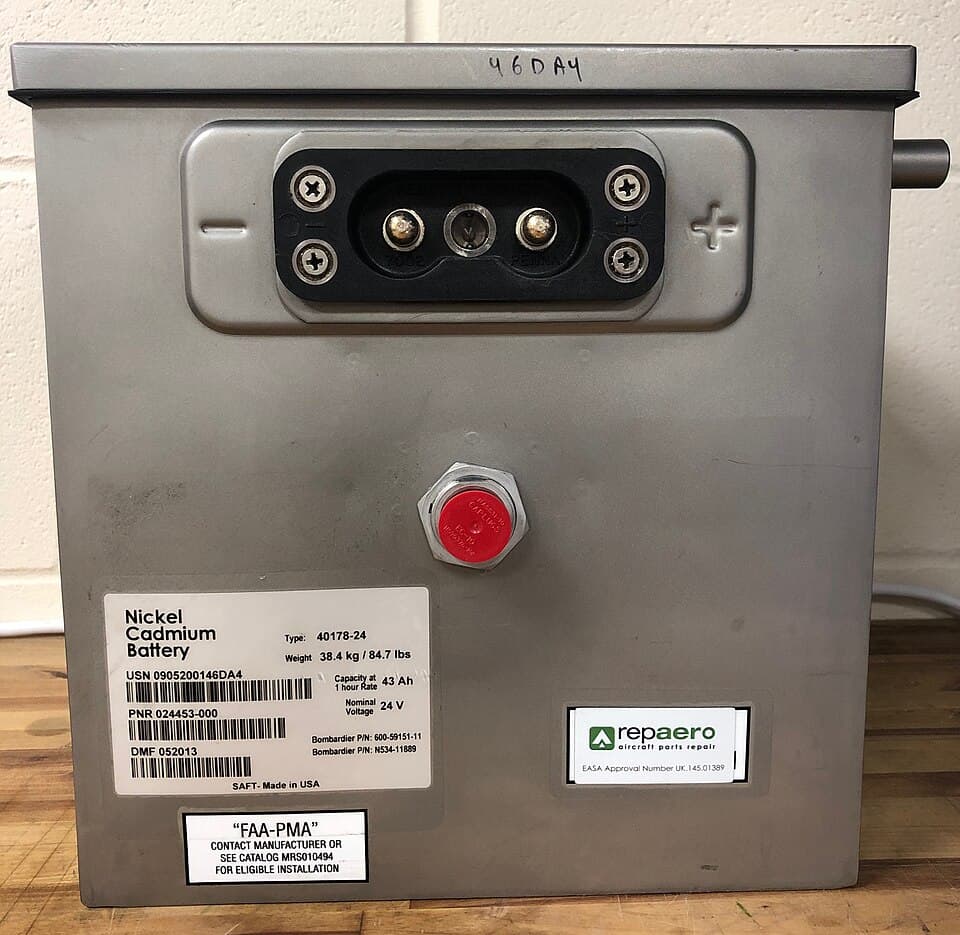
3. Marking is required and it is your best clue. Under the marking rules, PMA parts carry permanent, legible identification including the letters "FAA-PMA" along with the holder's name, trademark, or symbol, and the part number. If a part is too small or impractical to mark, the information goes on an attached tag or the container.
4. Critical parts get extra identification. Parts with a replacement time, inspection interval, or related procedure called out in the airworthiness limitations must be marked with a unique serial number or equivalent. That traceability is what makes life-limited tracking possible years down the road.
5. The paperwork travels with the part. Approved parts generally arrive with documentation. An FAA Form 8130-3 Authorized Release Certificate is a common companion document. Keep it. Your logbooks, your next annual, and your eventual buyer will all care about it.
6. Savings are real but not uniform. PMA alternatives are often priced below the original version, and for high-consumption items that adds up quickly across a fleet. On other parts the gap is modest. Anyone promising a fixed percentage across the board is guessing.
7. Availability can be the bigger win. When an original part is on a long backorder, a grounded aircraft costs money every single day it sits. A PMA alternative that ships this week can be worth more than the price difference ever was.
8. Not every shop or program accepts them. Some maintenance programs, some lessors, and some individual operators restrict PMA use by policy. That is a business decision, not a safety ruling, but it is binding on you if you signed it.
9. Resale conversation is worth having early. Buyers ask questions during pre-purchase inspections. Complete, organized records that clearly show what was installed and why will answer those questions faster than a shrug. Documentation protects value.
Pro Tip: Before you approve any parts quote, ask your shop for the part number, the PMA holder's name, and confirmation that your exact make and model appears on the eligibility list. Three questions, two minutes, and no surprises at the next inspection.
When you are sourcing certified parts, avionics, or an overhauled engine, the listings on Flying411 let you compare options from sellers across the country. You can line up condition, documentation, and price before you commit to anything.
How to Tell If a Part Is PMA Approved
This is the practical skill, and it is not complicated.
Start with the part itself. Look for the "FAA-PMA" marking. It should be permanent and legible, placed where normal service will not wear it away. Alongside it you should find the manufacturer's identification and the part number.
Check the tag and the box. Small parts move their information to an attached tag or container label. A part that is genuinely too small to mark is normal. A tagless part with no traceable paperwork is not.
Read the release document. The 8130-3 or equivalent release paperwork should match the part in your hand. Part number, quantity, and status should all line up.
Verify eligibility. The FAA maintains searchable PMA records, and the agency's Dynamic Regulatory System is the usual starting point for looking up part numbers and holders. Suppliers can also provide eligibility documentation on request.
Trust the chain. Buy from sellers who can tell you where a part came from. A clean paper trail is worth more than a low price on aircraft replacement parts that nobody can vouch for.
Quick Tip: Photograph the part markings and the 8130-3 together before installation. It takes ten seconds and it has saved more than a few owners a frustrating afternoon of digging through folders years later.
Where PMA Parts Show Up
PMA coverage is broader than most people assume. Common categories include:
- Engine components. Seals, gaskets, bearings, bushings, and various accessory items.
- Airframe hardware. Brackets, panels, fasteners, and structural details.
- Interior items. Seat components, trim, and cabin hardware.
- Brakes and landing gear parts. A long-standing and active category.
- Filters and consumables. Items replaced on a regular schedule.
- Electrical and avionics components. Certain assemblies and replacement pieces.
- Hard-to-find legacy parts. Items for older aircraft where original support has thinned out.
That last category deserves attention. Older aircraft are where PMA often shines brightest. When a type has been out of production for decades, original support can slow to a trickle. A PMA manufacturer willing to produce a small run keeps those aircraft flying.
The same logic applies at the top of the market. Very large aircraft that are no longer rolling off the line, the kind of jets that come up in any four-engine versus four-engine matchup, rely heavily on a healthy secondary parts ecosystem as their fleets age.
Narrowbody operators live in a different world entirely, where high fleet counts and shared components change the math. Anyone tracking differences across the 737 family knows that parts commonality across a fleet is one of the quiet drivers of an airline's maintenance budget.
Keep in Mind: A PMA stays valid until it is surrendered, withdrawn, or terminated. It does not expire on a schedule the way a medical certificate does. What can change is the eligibility list, which grows as the holder adds approved applications.
The Cost Question, Answered Honestly
People want a number. There is not a single honest one to give, because the range is enormous.
What can be said with confidence:
- PMA alternatives are frequently priced below the original version of the same part.
- The savings tend to be largest on frequently replaced items where volume multiplies the difference.
- On some specialized parts, the price gap is small or nonexistent.
- The total cost picture includes downtime, shipping, and administrative time, not only the sticker price.
That last point gets underrated. A cheaper part that arrives three weeks late on a grounded aircraft is not cheaper. A slightly more expensive part in stock today might be the better financial decision by a wide margin.
Airlines run this calculation constantly. When carriers weigh two similar twin-aisle aircraft against each other, the sort of analysis behind an A350 and 777 breakdown, maintenance cost per flight hour sits right next to fuel burn in the spreadsheet. Parts strategy is a real lever there.
Private owners face a smaller version of the same problem, and the emotional weight is arguably higher. A single component on a piston twin can represent a meaningful chunk of the year's maintenance budget.
Who Uses PMA Parts
The short answer is: almost everyone, at some point.
- Commercial airlines use them to control maintenance costs and protect against supply disruptions.
- MRO providers stock them to keep turnaround times short.
- Corporate flight departments use them where the operating policy allows.
- Flight schools rely on them because training fleets consume parts at a steady clip.
- Private owners use them, often without realizing it, when a shop sources a replacement.
- Restoration shops depend on them to keep older airframes airworthy.
One important limit: PMA is a civil aviation approval process. It applies to type-certificated civil products. Military programs run on an entirely different acquisition and approval system, which is why a defense competition like the one behind the X-32 and X-35 fly-off has nothing to do with Part 21 Subpart K.
Fun Fact: The concept behind today's PMA system is widely said to trace back to the mid-1950s, when regulators first allowed companies other than the original certificate holder to produce replacement parts for sale on civil aircraft. The framework has been revised many times since, but the core idea has held up for generations.
Common Misconceptions Worth Clearing Up
"PMA means copied." Some PMA parts are approved on the basis of identicality. Many others are substantiated through independent testing and analysis. The approval is about meeting the standard, not about how closely the part resembles something else.
"PMA parts are unapproved parts." These are opposite categories. Unapproved parts have no legitimate approval basis at all. A PMA part carries an FAA design and production approval. Confusing the two does real damage to a perfectly legitimate segment of the industry.
"A cheaper part must be a lesser part." Price reflects business model, tooling, volume, and overhead. A company producing a single high-demand component can operate very differently from one supporting an entire aircraft program.
"If it fits, it is legal." This is the most dangerous one on the list. Fit proves nothing. Eligibility and documentation are what make an installation legal.
"My mechanic decides and I do not need to know." Your mechanic makes the technical call, and you should trust that judgment. You still sign for the work and own the records. Understanding what went into your aircraft is part of ownership.
Ready to find the part your aircraft actually needs? Browse the parts and engine listings on Flying411 and connect with sellers and certified professionals directly.
PMA Parts Outside the United States
A PMA is an FAA approval, so the natural question is what happens when the aircraft is registered somewhere else.
Under bilateral arrangements between the United States and other authorities, FAA-PMA articles can be accepted abroad, though the conditions vary. European rules, for example, apply additional requirements when the part is classified as a critical component, sometimes requiring a validated certificate or an equivalent approval on the European side.
The takeaway for operators is straightforward. If your aircraft is on a non-US registry, confirm the acceptance path before you buy. The part may be perfectly approved in one jurisdiction and require extra steps in another.
Pros, Cons, and Honest Limitations
Advantages:
- Broader sourcing options for approved aircraft parts
- Often shorter lead times when original stock is thin
- Competitive pricing pressure across the parts market
- Continued support for older and out-of-production aircraft
- Occasional design improvements addressing known service issues
Limitations:
- Eligibility is model specific and must be verified every time
- Some contracts, programs, and lessors restrict use
- Not every part has a PMA alternative available
- Extra documentation discipline is needed for clean records
- International acceptance can involve additional conditions
Neither list wins outright. The right answer depends on your aircraft, your mission, your contracts, and your records.
Conclusion
A PMA part in aviation is not a shortcut and not a gamble. It is a part that went through an FAA process covering both its design and the factory that builds it, then earned permission to be installed on a specific list of aircraft. The marking on the part, the paperwork in the box, and the eligibility list are the three things that turn a piece of metal into an approved component.
Once you understand that, the two-price quote from your shop stops being confusing. It becomes a decision you can actually make, with real information behind it. Ask about eligibility. Keep your documents. Read your program terms. Then buy the part that keeps your aircraft flying safely and sensibly.
Aircraft do not fly on good intentions, they fly on approved parts and honest paperwork. Start your search at Flying411 and find the part, the engine, or the professional your aircraft needs next.
FAQs
Can a mechanic install a PMA part without the owner's approval?
Your mechanic makes the airworthiness determination, but most shops confirm parts selection with the owner before ordering, especially on larger items. If you have a preference or a contractual restriction, tell your shop in writing before work begins.
Do PMA parts affect an aircraft's insurance coverage?
Approved parts installed correctly and documented properly are normally handled like any other approved part. Policies differ, so if you have questions about specific coverage terms, ask your insurance broker directly rather than assuming.
Can a PMA part be installed on an experimental aircraft?
Experimental aircraft operate under different parts rules and are generally not bound by the same replacement part requirements as type-certificated aircraft. Many builders still choose approved parts for quality and traceability reasons.
What happens if a PMA holder goes out of business?
Existing installed parts remain approved and airworthy. Future availability of that specific part number may end, which is one reason maintenance planners track sourcing options for components they rely on heavily.
Is there a way to search which companies hold a PMA for a given part?
Yes. The FAA maintains searchable records of PMA approvals that can be filtered by details such as part number and holder name. Suppliers and repair stations can also pull eligibility documentation for a specific part on request.