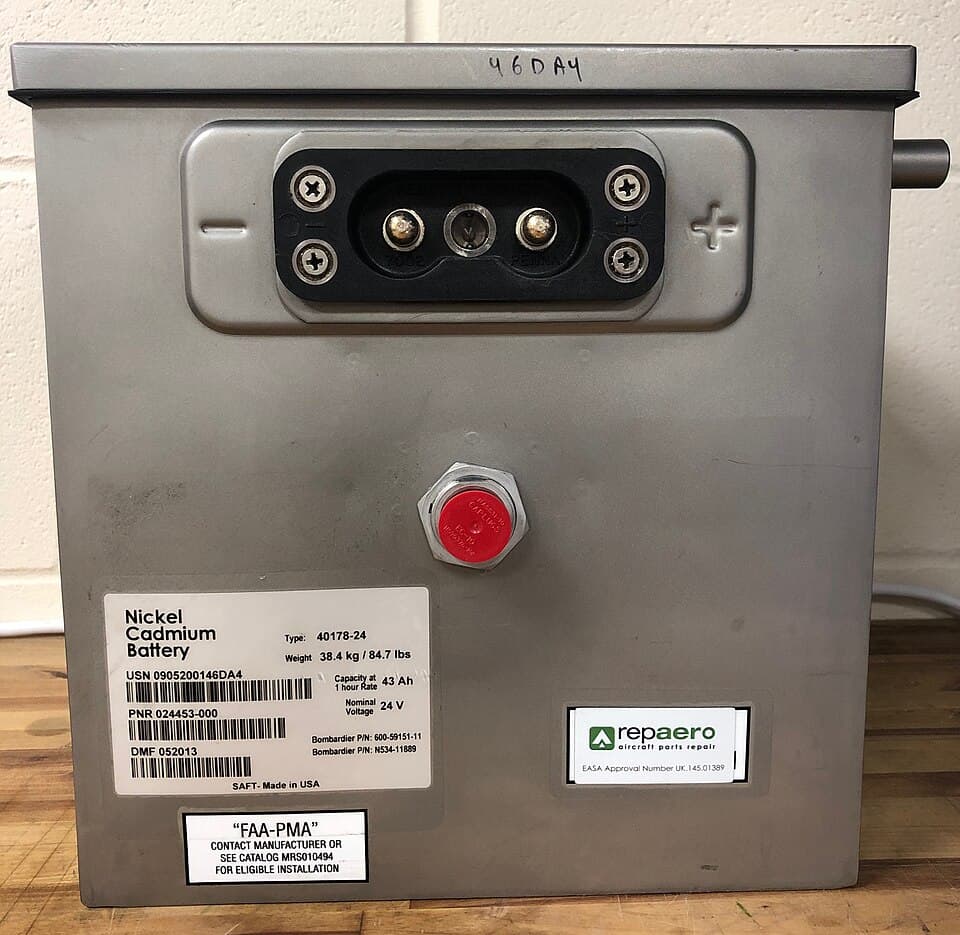
A shiny part in a sealed bag looks trustworthy. It has a fresh finish, a clean serial number, and a barcode that scans. None of that means it can legally go on your airplane. In aviation, the metal and the paperwork travel together, and the paperwork carries most of the weight. Aircraft part traceability documentation is the written history that proves a component came from an approved source, was maintained by approved people, and still has life left in it.
Mechanics call this the "trace package." Buyers call it the difference between a bargain and a boat anchor. Regulators call it evidence. When the file is complete, a part slides through receiving inspection in minutes. When the file has a hole in it, that part can sit in a quarantine cage for months while nobody gets paid.
The strange part is that a single sheet of paper can be worth more than the component it describes.
Key Takeaways
Aircraft part traceability documentation is the paper trail that shows where a part came from, who worked on it, and how much life it has left. The main documents are the FAA Form 8130-3 airworthiness approval tag, the EASA Form 1 used in Europe, a certificate of conformity from the manufacturer, an ATA Spec 106 form from the seller, and repair or teardown records for used parts. Life-limited parts need an unbroken record all the way back to the day they were made. If those records are missing or forged, the part cannot legally be installed, no matter how good it looks.
| Question | Short Answer |
| What is traceability documentation? | Records that link a part to an approved production source and to every repair or overhaul since. |
| What is the most common document? | FAA Form 8130-3, the airworthiness approval tag used in the United States. |
| What is the European equivalent? | EASA Form 1, accepted alongside the 8130-3 under bilateral agreements. |
| What does "back-to-birth" mean? | An unbroken history from manufacture through every install, removal, and repair. |
| Which parts need back-to-birth records? | Life-limited parts such as turbine disks, shafts, and certain rotating hardware. |
| Who issues the paperwork? | Manufacturers, approved repair stations, and accredited distributors. |
| What happens with no paperwork? | The part is treated as unapproved and cannot be installed on a certificated aircraft. |
| What is the biggest red flag? | A tag whose part number, serial number, or issuer details do not match the part in the box. |
Flying411 lists aircraft, engines, and certified parts from sellers across the industry, and every good listing starts with clean records.
What Aircraft Part Traceability Really Means
Traceability is a simple idea wrapped in a lot of forms. It answers three questions about any component:
- Where did it come from? Was it built by an approved production source, or by somebody in a garage?
- What has happened to it since? Every repair, overhaul, inspection, and installation should leave a mark.
- How much life is left? Hours, cycles, and calendar time all matter for certain components.
A part that answers all three questions cleanly is called traceable. A part that cannot answer them is not automatically fake. It is simply unproven, and in aviation, unproven and unusable land in the same place.
Approved and Traceable Are Two Different Things
People mix these up constantly. Approved means the part was produced under an accepted approval, such as a type certificate holder's production system, a Parts Manufacturer Approval, or a Technical Standard Order authorization. Traceable means you can prove it with documents.
A genuine factory bearing sitting loose in a coffee can is approved. It is not traceable. Without records tying that bearing to its production source, an inspector has no way to accept it. The reverse also happens. A part can arrive with a thick stack of paper that turns out to be worthless because the documents were created by a company with no authority to issue them.
Good to Know: The installer carries the burden of proof. A mechanic who signs off an installation is the person on the hook for the part's eligibility, not the seller, not the broker, and not the shipping company.
Why Traceability Documentation Matters So Much
Aviation is one of the few industries where a small metal fitting can bring down a full airplane. That is the safety reason. There are practical reasons too.
Safety. A counterfeit or worn-out component can fail in ways that engineers never modeled. Records are the industry's early warning system.
Legal exposure. Installing an unapproved part can cost a mechanic a certificate and cost a shop its repair station approval. Insurance carriers also look hard at maintenance records after a claim.
Money. Trace documents are worth real dollars. The same engine part can swing wildly in value based on nothing more than the completeness of its file. Missing back-to-birth records on a life-limited part often force the buyer to treat the part as having zero life remaining, which can turn a high-value component into scrap.
Resale. When an airplane or engine changes hands, the records go with it. A gap found during a pre-buy can stall a deal or knock a serious number off the price.
The rules do not scale with the size of the airplane. A bushing bound for a light twin needs the same source evidence as a part for a wide-body. Operators weighing two modern Boeing wide-bodies or comparing the A380 and the 747 still run the exact same receiving inspection on every box that shows up at the dock.
Why It Matters: Records outlive people. A turbine disk can stay in service for decades and pass through half a dozen owners. The file is the only witness that remembers all of it.
Aircraft Part Traceability Documentation Explained: The 9 Records That Matter Most
Here is the working list. Not every part needs all nine. The condition of the part, its criticality, and the buyer's own quality manual decide which ones apply.
1. FAA Form 8130-3, the Airworthiness Approval Tag
This is the document most people picture when they think of parts paperwork. In the United States, FAA Form 8130-3 serves as an authorized release certificate. It can be issued for a new part by an approved production source, or for a used part after a repair station performs maintenance on it.
What to look for on the tag:
- Part number and serial number matching the physical part
- A clear status block showing new, overhauled, repaired, or inspected
- The certificate number of the issuing organization
- An authorized signature and date
- Remarks that reference the work performed and the data used
The tag proves the part was released to an approved condition on a specific date by a specific organization. It does not, on its own, prove the part's full life history.
2. EASA Form 1 and Other Foreign Equivalents
Europe uses the EASA Form 1. It looks and functions much like the 8130-3, and the two are widely accepted across borders thanks to bilateral agreements between authorities. Other regions have their own versions, including forms issued by Transport Canada, Brazil, and China.
A term you will hear here is dual release. That means a single form is signed under two authorities at once, so the part is acceptable in both jurisdictions without extra work. Buyers who operate internationally often ask for dual release up front, because chasing it later is painful.
Pro Tip: If you sell parts internationally, ask your repair station about dual release before the work starts. Adding it after the fact usually means a second shop visit and a second bill.
3. Certificate of Conformity
A certificate of conformity, often written as C of C, is a manufacturer's statement that an item was produced to the applicable specification. It is common for raw materials, standard hardware, consumables, and for new surplus stock that never carried a release tag.
A C of C is only as strong as the company that signs it. One from the original manufacturer carries real weight. One from a third party that simply resold the item carries far less, because that company has no knowledge of how the part was made.
4. ATA Spec 106 Part or Material Certification Form
The ATA Spec 106 form is the industry's commercial handshake. It is a seller's signed statement describing the item, its condition, and what it is traceable to. Blocks on the form cover the manufacturer, part number, quantity, serial or batch number, status, and the last certificated agency that performed maintenance.
Two points people miss:
- The form is a commercial document, not a regulatory approval. It supports the trace package. It does not replace an airworthiness release.
- The signature binds the seller to the accuracy of everything on the page. That is exactly why a properly filled-out 106 is so useful, and why a sloppy one is a warning sign.
5. Teardown or Removal Report
When a part comes off an aircraft or engine, somebody should write down the story. A teardown report or removal tag captures:
- The aircraft or engine serial number the part came from
- The reason for removal, such as scheduled replacement, convenience, or a specific failure
- Total time and cycles at removal
- The name and certificate number of the facility that pulled it
This is the document that separates a healthy used part from one that came out of a wreck. A part removed during a routine overhaul has a very different value from one removed after an uncontained failure.
6. Back-to-Birth Records for Life-Limited Parts
Life-limited parts are components with a hard retirement limit measured in flight hours, cycles, or calendar time. Turbine disks, compressor disks, certain shafts, and many rotorcraft components fall in this group.
These parts need back-to-birth traceability, meaning an unbroken record from the day of manufacture forward. The chain usually includes:
- The original release document from the manufacturer showing part number and serial number
- Every installation and removal, with times and cycles at each event
- Every shop visit, repair, or modification along the way
- A running calculation of life used and life remaining
Break any link and the math stops working. When the remaining life cannot be proven, the safe assumption is that none remains.
Heads Up: Rotorcraft owners face this constantly. Many helicopter components carry historical record cards that must travel with the part for its entire life. Lose the card and you may lose the part.
7. Maintenance Release and Repair Records
Work orders, shop findings, and inspection reports fill in the middle of the story. They explain what was found, what was replaced, and what data the shop used. For a repaired part, the repair scope matters as much as the fact of the repair. A component repaired to a manufacturer's manual is a different animal from one repaired under a shop's own approved data.
Buyers of high-value rotables usually want the full work package, not just the release tag stapled to the box.
8. Airworthiness Directive and Service Bulletin Status
Some parts are affected by mandatory actions. An airworthiness approval tag tells you the part was released. It does not always tell you which directives and bulletins have been complied with.
For engine and rotor components especially, ask for a status list showing:
- Applicable directives and their compliance status
- Service bulletins incorporated, with revision levels
- Any modifications that changed the part number or configuration
A part that changed part numbers through modification needs paperwork explaining the change, or your receiving inspector will flag a mismatch that is really just a documentation gap.
9. Non-Incident and Source Statements
Many buyers require a signed statement that a part was never involved in an accident, fire, or major incident, and that it did not come from a government or military source unless disclosed. Parts with military history need extra care, because plenty of hardware built for defense programs never carried civil certification at all. Even famous prototype fighter programs produced components that would never be eligible for a certificated civil aircraft.
Chain of custody statements round this out by naming each company that held the part between the last approved maintenance event and the current sale.
Flying411 connects buyers with certified repair stations, A&P mechanics, and MRO providers who can review a trace package before you commit to a purchase.
How Traceability Changes by Part Condition
The paperwork you should expect depends heavily on the condition code on the listing. Here is a plain comparison.
| Condition | What It Means | Typical Documentation |
| New (NE) | Straight from an approved production source, never installed | Release tag from the manufacturer or a C of C |
| New Surplus (NS) | Never installed, but sitting in inventory for years | Original C of C when available, plus a seller certification form |
| Overhauled (OH) | Restored to a specified condition by an approved shop | Release tag showing overhauled status, plus the work package |
| Repaired (RP) | Fixed to a serviceable condition, not fully overhauled | Release tag showing repaired status, plus repair scope details |
| Serviceable (SV) | Inspected and found fit for use | Release tag showing inspected status |
| As Removed (AR) | Pulled from an aircraft or engine, condition unknown | Removal tag, teardown report, and last operator trace |
| Scrap | Not eligible for return to service | Mutilation or disposal record only |
A part marked "as removed" is not a bad part. It is an unknown part, priced accordingly, with the buyer taking on the cost of proving it out.
Keep in Mind: A cheaper condition code usually means you are buying the part and the risk. Budget for the shop visit that turns "as removed" into "serviceable" before you compare prices.
Who Issues the Paperwork
Three groups create most of the documents in a trace package.
Manufacturers. Type certificate holders and their approved production systems release new parts. Companies holding a Parts Manufacturer Approval do the same for approved replacement parts. If you want the details on that approval path, the way PMA parts are approved is worth understanding before you compare quotes.
Repair stations. Approved maintenance organizations perform the work and sign the release. Their certificate number on a tag is the anchor that lets an auditor verify the shop was authorized to do that specific work on that specific part.
Distributors. Brokers and distributors do not perform maintenance. They pass along documents and add their own certification. Many participate in a voluntary accreditation program described in FAA Advisory Circular 00-56, which sets expectations for a distributor's quality system and record keeping. Buying from an accredited distributor does not guarantee perfection, but it means somebody audited their process.
Fleet planners comparing the A350 against the 777 or looking at the 737-800 and the 737 MAX care about part commonality for exactly this reason. Shared part numbers across a fleet mean a shared pool of supply, shared documentation standards, and fewer surprises at the receiving dock.
Red Flags That Signal Broken Traceability
Most bad paperwork gives itself away if somebody slows down and reads it. Watch for:
- Mismatched numbers. The part number on the tag does not match the part, the data plate, or the packing slip. Knowing how manufacturer part numbers work makes these mismatches jump off the page.
- Copy quality. Blurry logos, pixelated signatures, or fonts that shift mid-document.
- Vague remarks. A release tag with an empty or generic remarks block on a part that clearly received significant work.
- Impossible dates. A release date before the part's manufacture date, or a removal date after the aircraft was already retired.
- Missing certificate numbers. No repair station number, or a number that does not resolve to a real organization.
- Gaps in the chain. Long unexplained stretches where nobody can say where the part was.
- Price that makes no sense. A hard-to-find component offered well below market, with short lead time and a seller nobody has heard of.
- Pressure to skip steps. Any seller who pushes you to install first and sort paperwork later.
Quick Tip: Call the organization named on the tag. A short phone call to confirm the release number is the single cheapest verification step available, and it is the step almost nobody takes.
What Happens When the Paperwork Is Missing or Fake
The industry got a hard lesson from a UK-based supplier that sold tens of thousands of engine parts with falsified release certificates over a period of several years. The parts went into widely used engine families that power common narrow-body jets. Well over a hundred engines were pulled into the review. Airlines around the world grounded aircraft, tore down engines, and hunted through inventories to find affected components. The company's director was later convicted and sentenced in a British court.
Two details from that case stick with people who handle parts for a living.
First, the forged documents looked convincing at a glance. The signatures resembled real ones. The formatting was close. The mismatches showed up in small details, such as reference numbers that did not follow the issuer's normal pattern.
Second, nobody caught it at receipt. It surfaced only when an operator dug into the paperwork after something else prompted a closer look. Fraud in this space is usually found late, not early.
The financial fallout ran into the tens of millions once you count groundings, teardowns, replacement parts, and legal costs. The safety consequences could have been far worse.
Fun fact: the forged certificates in that case were produced on ordinary office equipment, which tells you how thin the line between real and fake paperwork can be.
Fun Fact: Authorized release certificates have been allowed in digital form for well over a decade, yet much of the aftermarket still ships thick paper folders taped to the outside of a box.
How to Verify a Trace Package, Step by Step
You do not need a compliance department to do this well. You need a routine and the discipline to follow it every time.
- Read the listing carefully. Note the condition code, the claimed documentation, and the seller's certifications before you make an offer.
- Request the full package up front. Ask for scanned copies of every document before payment, not after delivery.
- Match the numbers. Compare part number, serial number, and revision level across the tag, the seller's certification form, the invoice, and the physical part.
- Check the issuer. Confirm the repair station or production approval number belongs to a real, currently approved organization.
- Read the remarks block. This is where the useful detail lives. Empty remarks on a complex repair deserve a question.
- Follow the chain backward. Track the part from today to its last approved maintenance event to its origin. Note any gap and ask about it specifically.
- Confirm life status on limited parts. For anything life-limited, verify that hours and cycles are documented at each event and that the running total makes sense.
- Verify directive compliance. Ask for the status list on parts affected by mandatory actions.
- Have a mechanic review it. A second set of trained eyes catches things a spreadsheet never will.
- Keep everything. Store the package with the aircraft or engine records. The next owner will ask for it, and so will your inspector.
For used inventory in particular, understanding how surplus stock compares to factory-new supply helps you judge when a documentation gap is normal and when it is a warning.
Ready to buy with confidence? Browse listings and connect with verified sellers on Flying411 before your next parts purchase.
Common Myths About Traceability
"Every part needs back-to-birth records." Not so. Full birth-to-present history is expected for life-limited parts. For many other components, the requirement is evidence that the part came from an approved source and was properly released.
"A release tag proves the part's whole history." A tag proves the condition at the moment of release by that organization. It says nothing about the twenty years before it.
"The seller is responsible if the part turns out bad." Commercially, maybe. Legally, the person who installs and signs for the part carries the regulatory responsibility.
"Used means risky." Used serviceable material is a normal and essential part of how the industry keeps aircraft flying affordably. Well-documented used parts are routine. Poorly documented parts are the problem, new or used.
"Digital copies are not acceptable." Digital authorized release certificates have been permitted for years. Adoption has simply been slow.
Where Parts Traceability Is Heading
The aftermarket is moving, slowly, from paper folders toward verifiable digital records. Several efforts are pushing in the same direction:
- Wider use of digital release certificates rather than scanned paper
- Shared industry databases for back-to-birth documentation on critical components
- Optical character recognition to process and cross-check documents faster
- Physical marking and digital fingerprinting so a part can be checked against a record with a phone
- Tighter receiving inspection standards at repair stations and airlines
None of this removes the need to read the documents. It makes reading them faster and harder to fool.
Pro Tip: Start scanning and indexing your own records now, even if your operation is small. When a buyer or an inspector asks for a specific document five years from now, a searchable folder beats a filing cabinet every time.
Final Approach
Aircraft part traceability documentation is the quiet backbone of aviation safety and aviation value. The tags, forms, and reports may look like bureaucracy from the outside. Inside the hangar, they are the only reliable way to know that the component in your hand is what the label claims and that it has the life left to do the job. Read every page, match every number, and question every gap. The extra hour you spend on paperwork is cheap compared to a grounded airplane.
Good records keep airplanes flying and deals closing, so make your next parts search a smart one at Flying411.
Frequently Asked Questions
How long should I keep aircraft part traceability records?
Keep them for as long as the part remains in service, and pass them to the next owner when the part or aircraft is sold. For life-limited parts, the records need to survive the entire life of the component, which can span decades.
Can I install a part that has no paperwork at all on my own aircraft?
Generally no. Without evidence that the part came from an approved source, a mechanic has no basis to determine eligibility, so the part cannot be installed on a certificated aircraft.
Does a serial number stamped on a part count as traceability?
Markings help, and in some cases part markings can support an eligibility determination, but a serial number alone does not establish maintenance history or remaining life. Documents fill that gap.
What is the difference between a release tag and a certificate of conformity?
A release tag is issued by an approved organization and certifies airworthiness status after production or maintenance. A certificate of conformity is a manufacturer's statement that an item was made to a specification, and it is common for materials and standard hardware.
Who should I contact if I suspect a part has falsified documentation?
Quarantine the part immediately so it cannot be installed, notify your seller in writing, and report the suspected unapproved part to your national aviation authority through their established reporting process.