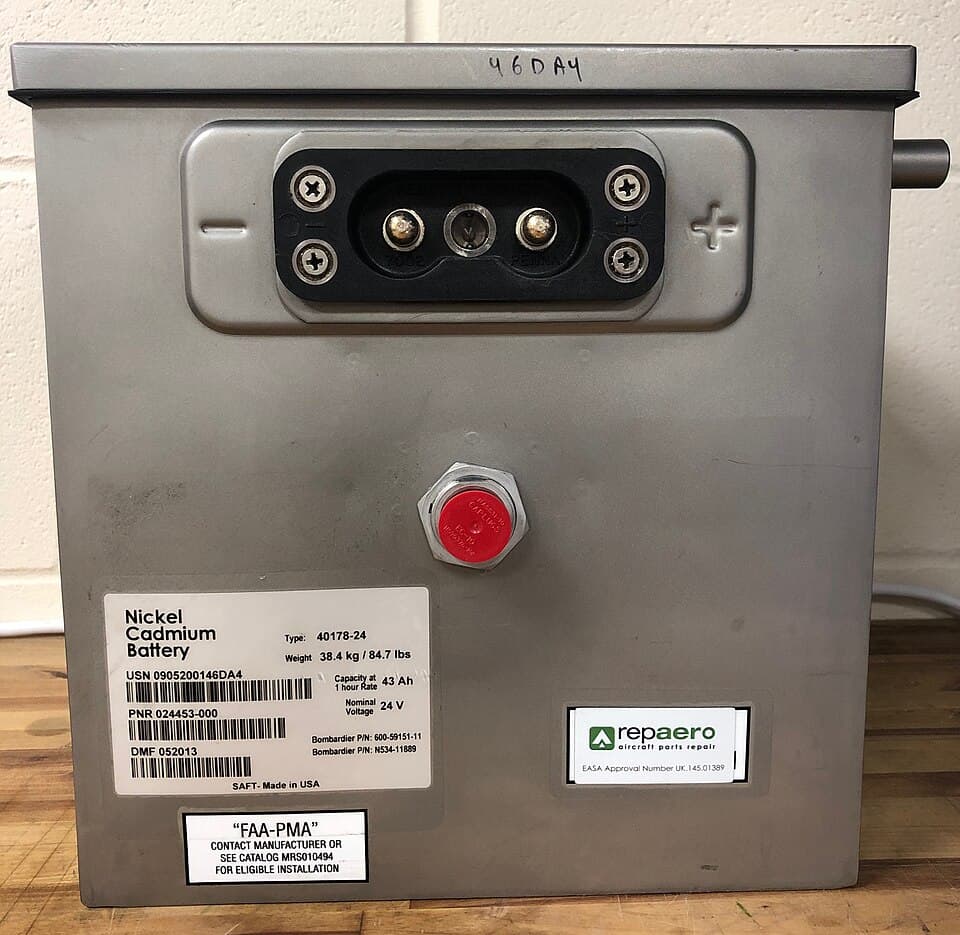
A small metal bracket sits on a workbench. Stamped into one edge is a string of characters that looks like someone fell asleep on a keyboard. Something like BACB30LU4-60. Or 65-19884-1. Or 411T0140-271. To most people, that string means nothing at all. To the right person, it says what the part is, what it is made from, how big it is, and which airplane it belongs on.
Learning how to identify Boeing part numbers is one of those skills that pays for itself the first time you use it. It keeps you from buying the wrong bracket. It keeps a mechanic from installing hardware that was never approved for the job. And it turns a shoebox of mystery hardware into an inventory you can actually sell.
Boeing has been building airplanes for over a century, and the numbering has picked up a few layers along the way. Some of those layers came from companies Boeing bought. Some came from military contracts. Some came from a draftsman in the 1940s who just needed the next available number. The good news is that the patterns are learnable, and once you see them, you cannot unsee them.
That bracket on the workbench has a story stamped right into it, and it takes about ten minutes to learn how to read it.
Key Takeaways
Boeing part numbers are identified by breaking them into three chunks: a prefix that tells you the standard or program, a base number that identifies the specific design, and a dash number that tells you the size, length, or variation. Most Boeing hardware falls into a handful of recognizable families, like the BAC standards for fasteners and the dash-style drawing numbers used for structure. Once you know which family a number belongs to, you can look it up in the right catalog and confirm it fits your airplane.
| What You Are Looking At | What It Tells You | Example Pattern |
| Prefix letters | The standard family or manufacturer | BACB, BACR, BACN, MS, NAS, AN |
| Base number | The specific design or drawing | The digits right after the prefix |
| Dash number or suffix | Size, length, finish, or left/right hand | The characters after the hyphen |
| CAGE code | Which company actually made it | 81205 for The Boeing Company |
| Serial number | This one physical item, not the design | Usually a separate stamp or tag |
| ATA chapter | Which aircraft system the part serves | Chapter 32 for landing gear, and so on |
Flying411 keeps aircraft, engines, and certified parts listed side by side, so a part number you decode here can be matched against real listings in a few clicks.
What a Boeing Part Number Actually Is
A part number is a name for a design. It is not a name for one specific object. Every bracket built from the same drawing carries the same part number, no matter when it was made or which factory made it.
Think of it like a book title. Every copy of the same book shares a title. Each individual copy might have a different owner, a different amount of coffee spilled on page 40, and a different life story. The title stays the same.
That distinction matters more than it sounds. Buyers get confused all the time because a part carries several numbers at once, and each one answers a different question.
Part Number vs. Serial Number vs. NSN
Here is how the three most common identifiers differ:
- Part number (P/N): Identifies the design. Shared by every unit built to that drawing.
- Serial number (S/N): Identifies one individual unit. Used to track hours, cycles, and repair history on rotable components.
- NSN (National Stock Number): A 13-digit number assigned by the U.S. government for supply purposes. Many Boeing parts have one because of military and government use.
You will also run into a Boeing CAGE code, which is a five-character identifier assigned by the Defense Logistics Agency. The Boeing Company is widely associated with CAGE code 81205, tied to a facility on East Marginal Way in Seattle. When a listing shows both a part number and a CAGE code, the CAGE code confirms who the manufacturer of record is.
Good to Know: A part number alone does not prove a part is airworthy. It only tells you what the part is supposed to be. Airworthiness comes from the paperwork that travels with it, which we cover further down.
Why Boeing Part Numbers Look So Different From Each Other
Open a Boeing parts catalog and you will see numbers that seem to follow no shared logic at all. One line reads BACR15BB5D9C. The next reads 25-73503-1. The next reads MS21042L3. They are all legitimate. They just come from different systems.
There are three big reasons for the variety.
First, age. Boeing's numbering practices go back to the era of hand-drawn blueprints and microfiche cards. Early drawing numbers were often assigned sequentially as draftsmen checked them out, so a bracket number could sit right next to a placard number with no relationship between them.
Second, mergers. Boeing absorbed other manufacturers over the decades, and those companies brought their own numbering habits with them. Parts with heritage from those programs often keep their original formats.
Third, standards. A lot of hardware on a Boeing airplane was never designed by Boeing at all. Industry-wide standards like AN, MS, and NAS cover common items such as nuts, bolts, and washers, and those keep their own prefixes.
Heritage Programs and Merged Companies
Boeing's commercial line, its defense line, and its acquired product lines all carry different numbering DNA. A part from a legacy widebody program may look nothing like a part from a modern composite airframe, even though both sit under the same corporate roof today.
The differences between airframe generations show up in the parts bins too. Comparing the structural approach of the 777 and 787 is a good example, since a shift from aluminum-heavy construction to composite construction changes the fastener families you find throughout the airplane.
Fun Fact: Boeing's commercial airplanes are widely known for the "7X7" naming pattern, but that is the model name, not a part number. A 737 part will rarely have "737" anywhere in its part number.
The Main Types of Boeing Part Numbers You Will Run Into
Most numbers you encounter will fall into one of four buckets. Learning the buckets is faster than memorizing numbers.
BAC Standard Parts
BAC stands for Boeing Aircraft Company, and it marks Boeing's own internal standards. These are the numbers you see on fasteners, fittings, seals, clamps, ferrules, and thousands of other repeat-use items.
BAC standard parts follow a fairly readable structure. A short prefix identifies the category. Then comes a number identifying the specific standard. Then a string of letters and numbers describing size, material, and finish.
A typical example looks like BACB30LU4-60. Broken apart, BACB tells you it is a bolt family, 30 narrows the standard, LU points to a specific design within that family, and the trailing characters describe diameter and length.
Drawing Based Structural Numbers
These are the numbers with a hyphen pattern, like 65-19884-1 or 25-66936-10. They come from engineering drawings and typically identify a specific structural or assembly part rather than a repeat-use standard.
The leading digits often relate to a drawing block or program area. The middle digits identify the drawing. The final dash number identifies which part on that drawing you mean, since a single drawing can define dozens of related parts.
You will also see letter-embedded versions like 113A3172-46 or 411T0140-271. Same idea, different generation of the system.
Industry Standard Hardware
Plenty of hardware on a Boeing airplane carries non-Boeing numbers:
- AN numbers come from the old Army-Navy standards.
- MS numbers come from Military Standard.
- NAS numbers come from National Aerospace Standards, maintained by the Aerospace Industries Association.
These standards are used across the industry, so an MS-numbered nut is not unique to Boeing at all. That is by design. Standardized hardware keeps costs down and keeps supply lines simple.
Vendor Parts Carried Under Boeing Numbers
Many components on a Boeing aircraft are designed and built by outside suppliers. Avionics boxes, valves, actuators, and pumps often carry a vendor part number and a Boeing part number at the same time. The two numbers point to the same physical item.
This is where a lot of buyers get tripped up. A listing might show only the vendor number, while your maintenance manual shows only the Boeing number. Both are correct.
Pro Tip: When a part has two numbers, save both. Cross-referencing them later is far easier than tracking down the missing half when a shop asks for the other one.
How to Identify Boeing Part Numbers Step by Step
Here is the practical process. Work through it in order and you will land on the right answer most of the time.
1. Find every number physically on the part. Look at all surfaces, including the back and the inside of flanges. Parts often carry a part number, a serial number, a manufacturer mark, an inspection stamp, and sometimes a date code. Photograph everything before you clean anything, since ink stamps can wipe away.
2. Separate the prefix from the rest. Read the leading characters. If it starts with BAC, you are in Boeing's own standards. If it starts with MS, NAS, or AN, you are in industry standards. If it starts with digits and a hyphen, you are probably looking at a drawing-based structural number.
3. Identify the category from the prefix. For BAC fasteners, the prefix narrows things down fast. A table further below covers the common ones.
4. Read the base number. This is the core identifier. It points at a specific standard sheet or drawing. Write it down exactly as printed, including any letters mixed into the digits.
5. Read the dash number or suffix. Everything after the base usually describes size, length, material, finish, or handedness. Two parts that look identical in a catalog can differ only in the final characters.
6. Confirm the manufacturer. Check for a CAGE code, a manufacturer logo, or a name stamp. A part number that matches a Boeing standard does not automatically mean Boeing built that particular unit. Approved suppliers build to Boeing standards too, and that is legitimate as long as the paperwork supports it.
7. Match the number against the correct catalog. The illustrated parts catalog for the specific aircraft model and variant is the authority. It shows the part in context, lists the effectivity, and names any alternates. Structural fastener codes are commonly detailed in the structural repair manual as well.
8. Check effectivity against your exact aircraft. This is the step people skip. A part number can be correct for a model and still be wrong for your tail number. Variants, blocks, and service bulletin changes all affect which part applies. Even within one family, differences between generations matter, which is easy to see when you compare changes across 737 generations and the systems that came with them.
9. Look for supersessions and alternates. Part numbers get replaced. A number stamped on a 30-year-old shelf item may have been superseded twice since. The catalog will usually show the current number and note interchangeability.
Heads Up: Interchangeability is not always two-way. Sometimes a new part can replace an old one, but the old one cannot replace the new one. Read the direction of the arrow in the catalog notes carefully.
Flying411 lists overhauled and serviceable engines, certified parts, and avionics from sellers across the industry, which makes cross-checking a part number against real availability much faster.
Reading BAC Fastener Codes
Fasteners are the most common thing people try to identify, and they follow the most consistent pattern. Boeing fastener part numbers use short classifying prefixes that tell you the hardware type before you read anything else.
| Prefix | General Hardware Type |
| BACB30 | Bolts, lockbolts, and Hi-Lok style fasteners |
| BACC30 | Collars |
| BACN10 | Nuts and nutplates |
| BACR15 | Rivets |
| BACW | Washers |
| BACS | Screws and shims |
| BACF | Fillers |
After the prefix and standard number, the remaining characters carry the details. In many bolt families, the last two digits before the final dash indicate diameter in sixteenths of an inch, and the number after the final dash relates to length. The letter sitting between the standard number and the size digits often points to the material family.
Material coding is where things get specific. Different BACB30 series numbers are associated with different alloy families, including corrosion-resistant steels, titanium alloys, and nickel alloys. The exact material and specification for a given series is documented in Boeing's structural repair manual, which is the source you should trust rather than a guess based on appearance.
A fastener that looks like plain steel and a fastener made from a titanium alloy can be nearly impossible to tell apart by eye, which is exactly why the number matters more than the look.
What the Dash Number at the End Means
The dash number is small, easy to overlook, and frequently the difference between a part that bolts on and a part that sits in a drawer forever.
Depending on the family, a dash number can indicate:
- Length, especially on bolts and pins
- Diameter or gauge on certain hardware
- Material or finish variation of an otherwise identical design
- Handedness, meaning left-hand or right-hand versions of a mirrored structural part
- Which specific item on a multi-part engineering drawing you are referring to
On many structural drawings, mirrored parts are assigned paired dash numbers, with one number for the left side and the adjacent number for the right. That convention is common, though it is not universal, so confirm it in the catalog rather than assuming.
Quick Tip: Never truncate a part number when you request a quote. Sending "BACB30LU4" instead of "BACB30LU4-60" turns a specific request into a guessing game, and the wrong length will arrive more often than not.
Where to Look Up a Boeing Part Number
An aircraft part number lookup can go a few different directions depending on what access you have.
Official Boeing channels. Boeing operates customer-facing systems and parts services for operators and maintenance organizations. Access is generally tied to an account relationship, and these sources are the most reliable for current numbers, supersessions, and availability.
The illustrated parts catalog. For anyone with access to the aircraft's technical library, the IPC is the primary reference. It ties the part to a figure, an item number, and an effectivity list.
The structural repair manual. Useful for fastener details, material callouts, and standard hardware substitutions in structure.
Distributors and marketplaces. Parts distributors publish searchable catalogs that let you enter a number and see descriptions, cross-references, and NSNs. These are helpful for orientation and for finding what is actually available on the market.
Government supply databases. If a part carries an NSN, public supply data can confirm the item name, the CAGE code, and often the physical description.
A word of caution about search engines: a part number pasted into a general search will pull up dozens of distributor pages, and many of them scrape data from each other. Treat them as a starting point, not as a source of truth.
Paperwork That Makes a Part Number Legitimate
Identifying a number correctly is half the job. The other half is confirming the part is legal to install.
Here is what typically travels with a serviceable part:
- An FAA Form 8130-3 or equivalent authorized release document, showing the part's status.
- A certificate of conformance from the manufacturer for new hardware.
- Traceability documentation showing the chain of custody back to an approved source.
- Repair or overhaul records for rotable components, tied to the serial number.
- Tags and packaging that match the numbers on the part itself.
If the numbers on the paperwork and the numbers on the part do not match exactly, stop. A single mismatched character is a real problem, not a typo to shrug off.
Why It Matters: Unapproved parts are one of the ongoing concerns in aviation maintenance. Careful aircraft parts identification and honest paperwork are what keep questionable hardware out of airplanes.
Common Mistakes When Identifying Boeing Part Numbers
Most part number errors come from a handful of repeat offenders.
Reading a serial number as a part number. Rotable components carry both, often stamped near each other on the same data plate.
Assuming the model is in the number. Boeing part numbers generally do not spell out the aircraft model. Do not go looking for "747" inside the string.
Ignoring spaces and hyphens. Some catalogs print numbers with spaces where others use hyphens. Search both ways before concluding a number does not exist.
Confusing similar characters. The digit 0 and the letter O, the digit 1 and the letter I, and the digit 5 and the letter S cause endless trouble on worn stamps. Magnify the stamp and compare character shapes.
Skipping effectivity. The number can be right for the type and wrong for the tail. This is the single most expensive mistake on the list.
Trusting a listing photo. Photos get reused. Confirm the number in writing before money moves.
Keep in Mind: A part that fits physically is not the same as a part that is approved. Fit is a mechanical question. Approval is a paperwork question. Both have to be satisfied.
Ready to turn a decoded part number into an actual purchase? Browse listings and connect with certified sellers and service providers on Flying411.
Boeing Part Numbers vs. Airbus Part Numbers
Buyers who work across both fleets notice the systems feel different, and they are.
| Aspect | Boeing Approach | Airbus Approach |
| Overall style | Multiple systems coexisting, including BAC standards and drawing numbers | Generally more consistent numeric structure |
| Prefixes | Often letter-based standard prefixes such as BAC families | Often tied to aircraft family and functional grouping |
| Variation coding | Dash numbers and suffix strings | Modification indices and identifier blocks |
| Common hardware | Heavy use of AN, MS, and NAS standards | Also uses industry standards, with European equivalents in the mix |
Neither system is better. They reflect different engineering histories and different eras of documentation practice. Anyone sourcing for mixed fleets learns both, and the comparison between widebody competitors like the A350 and the 777 shows how differently two manufacturers can solve similar problems, right down to the parts bin.
The same holds for the older generation of giants. Looking at the design contrasts between the A380 and 747 helps explain why parts inventories for those two aircraft share almost nothing in common.
Where Boeing Part Numbers Show Up Outside Commercial Aviation
Boeing's numbering habits also appear in defense programs, where military designations sit alongside commercial-style part numbers. Prototype and experimental programs add another layer, since parts built for a demonstrator often never enter the broader supply system at all.
Aviation history buffs run into this constantly. The prototypes behind modern fighter programs, including the competing X-32 and X-35 designs, produced hardware that exists in very small numbers with documentation that stayed inside the program.
For most buyers and owners, the practical takeaway is simple. If a number does not resolve in commercial catalogs, it may belong to a program outside commercial channels entirely.
What Drives the Cost of a Boeing Part
Pricing varies enormously, and anyone quoting you a single figure for "a Boeing part" is not being useful. A rivet and a landing gear component are both Boeing parts.
The main cost drivers include:
- Complexity and material. Titanium and nickel alloy hardware costs considerably more than aluminum equivalents.
- Condition. New, overhauled, serviceable, and as-removed all carry different values.
- Paperwork. A part with clean traceability and a current release document is worth substantially more than the same part with no records.
- Demand and availability. Parts for aircraft still in heavy service move differently than parts for retired types.
- Urgency. Aircraft-on-ground situations change the math on almost everything.
- Rotable status. Components with time-tracked histories are priced against remaining life, not just condition.
Getting the part number right is the first step in getting the price right. A vague request produces a vague quote.
Building a Habit That Saves You Money
The people who are fastest at this are not the ones who memorized the most numbers. They are the ones with good habits.
Keep a simple record for every part you buy or sell. Log the part number exactly as printed, the serial number if there is one, the CAGE code, the aircraft effectivity, the condition, and the paperwork on file. A basic spreadsheet is enough.
Photograph data plates and stamps as soon as parts arrive. Stamps fade, tags fall off, and boxes get separated from contents. A photo taken on day one settles arguments on day four hundred.
And when a number does not make sense, ask before you install. A five-minute phone call to a shop or a supplier costs nothing. A wrong part in a wing costs quite a lot.
Conclusion
Knowing how to identify Boeing part numbers turns a confusing string of characters into useful information. Break it into a prefix, a base number, and a suffix. Figure out which family it belongs to. Match it against the right catalog. Confirm effectivity for your specific aircraft. Then check that the paperwork agrees with the metal.
That process works on a rivet, a bracket, or a flight control component. It works on hardware you are buying and hardware you are selling. And it gets faster every time you do it.
The next time a mystery part lands on your bench, decode it, then see what it is worth on Flying411, where aircraft, engines, parts, and the professionals who work on them all live in one place.
Frequently Asked Questions
Can I use a Boeing part number to find out how old a part is?
Not directly, since a part number identifies the design rather than the individual item. Manufacturing dates are usually found in the serial number, a separate date code, or the accompanying certification paperwork.
Do Boeing part numbers ever get reused for different parts?
Reuse of an identical number for an unrelated part is not the normal practice, but numbers do get superseded and revised over time. Always confirm you are working from the current revision listed in the applicable catalog.
What does PMA mean when I see it next to a Boeing part number?
PMA stands for Parts Manufacturer Approval, which allows an approved company to produce a replacement part. A PMA part will carry its own part number and its own eligibility list showing which applications it is approved for.
Are Boeing part numbers the same as the numbers used in maintenance manuals?
Maintenance and repair manuals reference part numbers, but they organize information by ATA chapter and figure or item numbers. You often need both the chapter reference and the part number to land on the exact item.
Why do some Boeing parts have numbers with no letters at all?
Purely numeric formats usually come from drawing-based systems or from government supply listings such as NSNs. They are still valid identifiers, they simply come from a different numbering tradition than the lettered BAC standards.