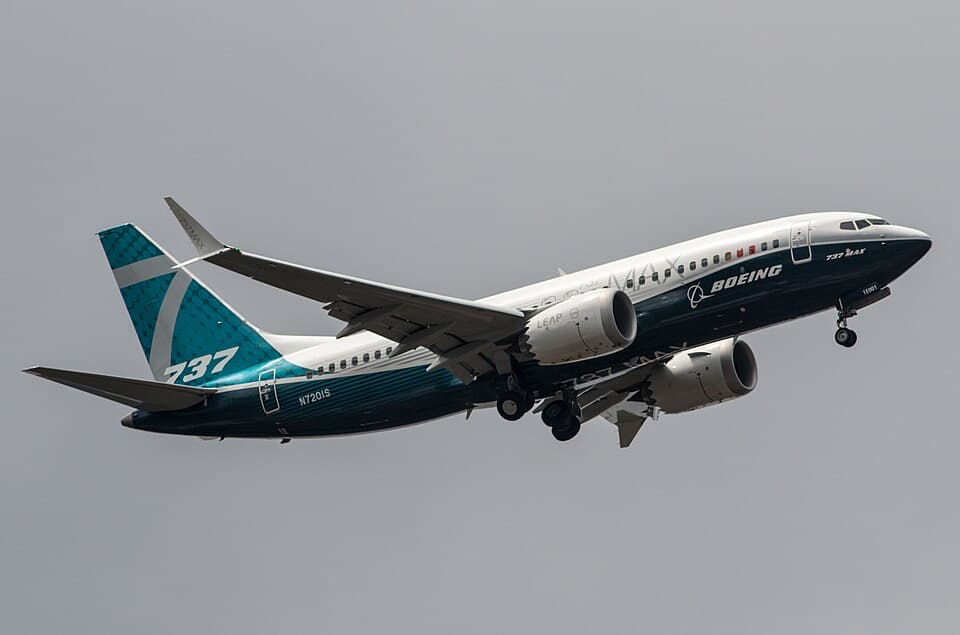
Park a Boeing 737-800 next to a Boeing 737 MAX 8 and most people would swear they are the same airplane. Same skinny fuselage. Same swept wings. Same low stance that lets ground crews load bags without a belt loader.
Boeing has been refining that basic shape since the 1960s, so the family resemblance runs deep. But the moment you start looking at the engines, the wingtips, the nose gear, and the screens in the cockpit, the Boeing 737 NG vs MAX differences start stacking up fast.
These two generations do the same job in very different ways. One was built to beat the original Airbus A320. The other was built to beat the A320neo. Twenty years of engineering separates them, and almost all of it went into burning less fuel. The rest went into making a very old design work with very new engines.
Two jets can look like twins from the terminal window and still tell completely different stories once you know where to look.
Key Takeaways
The main difference between the Boeing 737 NG and the 737 MAX is the engines. The MAX uses bigger, newer CFM LEAP-1B engines that burn noticeably less fuel than the CFM56-7B engines on the NG. Those larger engines forced Boeing to change the wingtips, raise the nose gear, and adjust how the airplane handles at high angles. Everything else, including the longer range, the newer cockpit screens, and the added flight control software, follows from that one big change.
| Area | Boeing 737 NG | Boeing 737 MAX |
| Main variants | 737-600, -700, -800, -900/-900ER | 737 MAX 7, 8, 8-200, 9, 10 |
| Engines | CFM56-7B | CFM LEAP-1B |
| Wingtips | Blended or split scimitar winglets | Advanced Technology split-tip winglets |
| Fuel burn per seat | Baseline | Roughly 14 percent better than late NGs |
| Typical range | Shorter | Several hundred nautical miles farther |
| Flight deck | Six smaller display units | Four large-format displays |
| Tail cone | Blunter, straight-cut | Longer, tapered with a divider fairing |
| Notable software | Standard NG flight controls | Adds MCAS, EOS, and TCMA logic |
| Entry into service | Late 1990s | 2017 |
Flying411 keeps an eye on the commercial side of aviation the same way it does the piston and turboprop world, so the trends shaping 737 values end up in the same place as the listings themselves.
Where the 737 NG and the 737 MAX Came From
The Boeing 737 has lived four lives. The Originals came first. Then came the Classics. Then the Next Generation, better known as the NG. The MAX is the fourth act.
Each generation kept the same type certificate lineage, which is a big part of why the 737 has stayed so popular. Airlines could add new jets without starting pilot training from scratch. That single fact has shaped nearly every design decision Boeing made along the way.
The NG Era
The Next Generation arrived in the late 1990s. Boeing gave the airplane a new wing, a bigger tail, more fuel capacity, and the CFM56-7B engine. Glass cockpit displays replaced most of the old round dials.
The 737 NG variants covered a wide spread of sizes:
- 737-600, the smallest and the slowest seller of the group
- 737-700, a workhorse for short and thin routes
- 737-800, the runaway favorite and the backbone of dozens of fleets
- 737-900 and the later 737-900ER, the stretched versions with extra exit doors on the ER
The 737-800 became one of the most widely delivered jetliners in history. Walk through almost any large airport and you will find several parked at gates.
The MAX Era
Boeing launched the MAX in 2011 after Airbus announced the A320neo. The plan was simple on paper. Hang new engines on the existing airframe, tidy up the aerodynamics, and deliver a big cut in fuel burn without forcing airlines into a whole new type rating.
The MAX 8 entered service in 2017. Then came two fatal crashes involving MAX 8 aircraft, and the worldwide fleet was grounded for roughly a year and a half. Boeing reworked the flight control software, changed the training requirements, and returned the airplane to service. The smallest and largest members of the family, the MAX 7 and MAX 10, have taken far longer to reach certification than anyone expected.
Good to Know: The MAX family is built around four sizes: the MAX 7, MAX 8 (including the high-density 8-200), MAX 9, and MAX 10. They line up roughly against the 737-700, -800, and -900ER, with the MAX 10 stretching past anything the NG offered.
What NG and MAX Really Mean on a Boeing 737
"NG" stands for Next Generation. "MAX" is a marketing name, not an acronym. Boeing officially calls the MAX jets the 737-7, 737-8, 737-9, and 737-10, though almost nobody outside of certification paperwork uses those labels.
The two generations share a type rating. A pilot certified on the NG can fly the MAX after completing required Boeing 737 differences training, rather than a full new type course. That shared rating was the whole business case for the MAX. It is also the reason the airplane was designed to feel as familiar as possible in the air.
Underneath that familiarity, though, the hardware changed quite a bit.
9 Boeing 737 NG and MAX Differences That Change How the Jet Flies
Here are the changes that carry real weight, starting with the one that drove all the others.
1. The Engines Are the Whole Story
The NG flies behind the CFM56-7B. The MAX flies behind the CFM LEAP-1B. Both come from CFM International, a joint venture between GE and Safran, but they are separated by a full generation of technology.
The LEAP-1B has a larger fan, a higher bypass ratio, and hotter, more efficient core temperatures. It uses advanced materials, including ceramic matrix composites in the hot section, that let it run hotter without melting. The result is a meaningful cut in fuel burn per seat.
The size increase created a problem. The 737 sits low to the ground, and a bigger fan needs more clearance. Boeing moved the engines slightly forward and up on the wing, and flattened the bottom of the nacelle. That flat-bottom look is one of the quickest ways to spot a MAX.
If you want a deeper breakdown of the powerplant side, the shift from one core to the next is covered well in this look at how the LEAP improved on the CFM56. The short version of CFM56 vs LEAP-1B engines is that the newer engine trades mechanical simplicity for efficiency, and airlines decided the trade was worth it.
Fun Fact: The chevrons on the back of a MAX engine nacelle, those sawtooth edges, are widely known for cutting noise by helping hot exhaust mix more smoothly with cooler outside air.
2. The Winglets Look Completely Different
This is the easiest visual tell from a distance.
Most NG aircraft in service carry either blended winglets that sweep up in a single curve, or split scimitar winglets with a small fin added below. Some older NGs have no winglets at all.
The MAX uses Boeing's Advanced Technology winglets, a split-tip design with a sharper upper element and a lower element that angles down. The two halves meet in a tight, distinct point. Once you have seen the shape, you cannot unsee it.
Boeing says the AT winglet design contributes a small but real drag reduction on top of the engine gains. On long, thin routes, small percentages add up over a year of flying.
3. The Nose Gear Is Taller on the MAX
To make room for the bigger fan, Boeing added roughly eight inches to the MAX nose landing gear. It is a subtle change, but it shows up in the airplane's stance.
A MAX sits a touch more nose-high on the ramp than an NG. Line the two up on a level surface and the difference is visible along the top of the fuselage.
The nose gear also uses a different retraction arrangement, which changes some of the procedures and indications crews see during gear operation.
4. The Tail Cone Was Redesigned
Look at the very back of the airplane. The NG tail cone ends fairly bluntly, with a straight cut across the rear.
The MAX tail cone is longer and tapers to a finer point, with a small divider fairing where the auxiliary power unit exhaust exits. The shape reduces drag in cruise.
It sounds like a tiny detail. On an airframe that will fly tens of thousands of hours, tiny details pay rent.
Pro Tip: If you are trying to identify a 737 from a distance and cannot see the winglets clearly, check the engines first. A flat-bottom nacelle with chevrons means MAX. A round nacelle with a straight rear edge means NG.
5. The Flight Deck Got Bigger Screens
Step into an NG cockpit and you see six display units arranged in the classic layout. Step into a MAX and you see four large-format displays that stretch across the panel.
The MAX also adds an integrated standby flight display as standard equipment, replacing separate backup instruments. Menus, formats, and system synoptics were updated to match.
The layout was kept deliberately familiar. Switches sit in the same places. The yoke feels the same. Boeing wanted crews moving between the two generations to feel at home, and by most accounts that goal was met.
6. Flight Control Software Changed
The bigger, repositioned engines changed how the airplane behaves at very high angles of attack. To smooth that out, Boeing added the MCAS system, short for Maneuvering Characteristics Augmentation System.
MCAS trims the horizontal stabilizer nose-down under certain conditions. In its original form, it relied on a single angle of attack sensor and could repeat its inputs. After the two accidents and the grounding, Boeing rewrote the logic. The revised system compares both sensors, limits its authority, and can be overridden by the crew.
The MAX also adds other systems the NG does not have, including electronic overspeed protection and thrust control malfunction accommodation logic that can shut down an engine running away on the ground. Spoiler control moved to a fly-by-wire arrangement rather than direct cable actuation.
7. Fuel Burn and Range Improved
This is the number airlines care about most. Boeing has stated that the MAX 8 reduces fuel use and carbon dioxide emissions by around 14 percent compared with the newest NG models, and by roughly 20 percent compared with the earliest ones.
That efficiency translates directly into distance. The 737 MAX range runs several hundred nautical miles farther than a comparable NG, which opens routes the older jet could not serve with a full load. Transatlantic hops from the US East Coast to western Europe became realistic for a narrowbody.
Published figures vary by variant, seating layout, and reserve assumptions, so treat any single number as a rough guide rather than gospel.
8. The Cabin Feels Newer
The MAX ships with the Boeing Sky Interior as standard, including sculpted sidewalls, larger pivot bins, and LED mood lighting. Many later NGs got the same interior, so this one is not a hard rule.
Other cabin notes worth knowing:
- MAX bins generally swallow more roll-aboard bags per row
- Window sizes and spacing are unchanged between the generations
- Seat width and pitch depend entirely on the airline, not the airframe
- Cabin noise on the MAX tends to be a bit lower thanks to the quieter engines
Passengers rarely notice the airframe. They notice the seat, and the seat is a customer choice.
9. The Size Lineup Shifted
The MAX family stretched further at the top end. The MAX 10 is longer than any NG ever built, which lets airlines put more seats on the same gate slot.
At the small end, the MAX 7 replaced the 737-700 role. It has taken years longer to certify than planned, which left operators like Southwest flying aging -700s well past their intended retirement.
Here is how the rough matchups line up:
| NG variant | Closest MAX variant |
| 737-700 | MAX 7 |
| 737-800 | MAX 8 |
| (no direct match) | MAX 8-200 high density |
| 737-900ER | MAX 9 |
| (no direct match) | MAX 10 |
Flying411 lists new and used aircraft across the general aviation spectrum, from Cessna and Piper singles to turboprops and jets, with search filters that let buyers compare airframes side by side.
Side by Side: 737-800 vs 737 MAX 8
Since these are the two most common members of each family, a direct comparison is useful. A closer head-to-head breakdown of the 737-800 and the MAX 8 covers the operational side in more depth, and the full MAX performance and dimension figures are worth a look if you need exact numbers.
| Feature | 737-800 | 737 MAX 8 |
| Engine | CFM56-7B | CFM LEAP-1B |
| Fan diameter | Smaller | Noticeably larger |
| Winglet | Blended or split scimitar | Advanced Technology split-tip |
| Nose gear | Standard height | Roughly eight inches taller |
| Displays | Six units | Four large-format units |
| Typical two-class seating | Around 160 | Around 160 to 178 |
| Max exit-limit seating | 189 | 189, or 200 on the 8-200 |
| Fuel burn per seat | Baseline | About 14 percent lower |
| First delivery | 1998 | 2017 |
Why It Matters: Seat count and fuel burn together drive cost per seat, which is the number airlines truly compete on. A jet that carries the same passengers on less fuel changes route economics on every single flight it operates.
How to Spot a 737 MAX at the Airport
You do not need a spotter's guide. Five things give it away.
- Winglets. Split-tip with a sharp point means MAX. Single blended curve or a scimitar fin means NG.
- Engine nacelle. MAX nacelles are wider at the inlet, flattened on the bottom, and finished with chevrons at the rear.
- Tail cone. MAX tail cones are longer and taper to a point, with a visible divider fairing.
- Stance. The MAX sits slightly nose-high compared with an NG on level ground.
- Sound. LEAP engines produce a different tone on spool-up, generally lower and smoother than the CFM56 whine.
Quick Tip Airline booking pages and flight tracking apps usually list the equipment type. Look for "738" for a 737-800 and "7M8" or "38M" for a MAX 8, depending on the system.
Pilot Training Between the Two Generations
Boeing built the MAX around a shared type rating with the NG. That has not changed. What has changed is how much extra training is required to move between them.
The FAA requires both ground and flight training for NG pilots transitioning to the MAX. The syllabus covers:
- Engine indications, start behavior, and thrust response on the LEAP
- MCAS function, failure modes, and crew response
- Runaway stabilizer and manual trim procedures
- Flight deck display formats and the integrated standby display
- Landing gear, brake, and cabin zoning changes
- Checklist logic and non-normal procedure differences
Line pilots often describe the two airplanes as feeling nearly identical to hand-fly. The differences show up in the details, not in the stick and rudder.
Heads Up: Differences training requirements have shifted over time and vary by regulator. Anyone planning a transition should confirm the current syllabus with their operator and civil aviation authority rather than relying on older published guidance.
Operating Costs and Value
Fuel is usually the largest single line item in a narrowbody's direct operating cost. A 14 percent cut is enormous at fleet scale. Understanding the split between fixed and variable operating expenses helps explain why airlines chased the MAX so aggressively, and why the metric airlines use to compare aircraft, cost per available seat mile, moved in the MAX's favor.
But fuel is not the whole picture. LEAP engines carry higher shop visit costs than mature CFM56s, and the CFM56 has decades of field data and a deep aftermarket behind it. Maintenance planning for a young MAX fleet looks different from planning for a well-understood NG fleet.
On the asset side, both generations hold value differently. Used NG values have stayed unusually firm, and there are good reasons secondhand 737s command strong prices, including tight production output and steady freighter conversion demand. That runs against the usual pattern, since most aircraft lose value quickly in their early years.
Anyone pricing either generation should also understand that catalog figures rarely reflect reality. The gap between published list prices and negotiated deals is wide, and a realistic starting point for what a 737 costs today depends heavily on age, hours, engine condition, and configuration.
For anyone modeling long-term ownership, projected value at the end of a lease term matters as much as purchase price. The broader set of factors that drive a commercial airframe's worth covers the rest, and a formal valuation follows a defined process that certified appraisers apply consistently.
Keep in Mind: Aircraft values move with fuel prices, interest rates, and delivery backlogs. A comparison that was accurate two years ago may not hold today, so current market data beats any published table.
Parts and Maintenance Across the Two Generations
The NG and MAX share a great deal of structure, but they are not interchangeable on the parts shelf. Engines, nacelles, winglets, nose gear components, and several avionics line replaceable units are specific to one generation or the other.
That matters for anyone sourcing components. A few practical points:
- Part number formats follow Boeing conventions, and knowing how to read a Boeing part number saves a lot of guesswork
- Buyers can choose between factory-original components and approved alternatives, and the tradeoffs between used serviceable and factory-new parts come down to cost, lead time, and documentation
- Some components are produced under a separate approval path, and understanding what a PMA approval covers helps avoid surprises during inspection
- Certain components carry hard retirement limits, and tracking parts with mandatory life limits is non-negotiable
- Inventory planning depends on the split between repairable rotables and single-use expendables
Paperwork carries as much weight as the hardware. Complete traceability records back to the source are what make a part usable, and the differences between European and US airworthiness release tags matter when parts cross borders. Before installation, following a clear method for confirming a component is airworthy protects both the airplane and the operator.
Counterfeit components remain a real risk in any high-volume fleet, and learning the warning signs of bogus parts is worth the time for anyone buying outside established channels.
Ready to put this into practice? Browse aircraft, engines, and certified parts listings on Flying411, or connect with A&P mechanics, avionics shops, and MRO providers through the platform's service directory.
Which Generation Makes More Sense Today
For airlines ordering new metal, the answer is straightforward. The NG is out of production for passenger service, and the MAX is the only 737 you can order.
For operators and investors shopping the used market, the picture is more interesting.
Arguments for the NG:
- Lower acquisition cost than a new MAX
- Deep global support network and abundant parts
- Decades of maintenance data and predictable shop visits
- Strong freighter conversion demand for the -800
- No MCAS-related training or public perception questions
Arguments for the MAX:
- Substantially better fuel burn per seat
- Longer range opens more route options
- Newer airframe with more remaining life
- Quieter operation, which matters at noise-restricted airports
- Better positioned against tightening emissions rules
Fuel price is the swing factor. When fuel is cheap, cheap NGs look great. When fuel climbs, the MAX advantage compounds on every flight.
If widebody comparisons are more your speed, the same logic shows up in matchups like the 777 against the 787, the ongoing rivalry between the A350 and the 777, and the four-engine era captured by the A380 and the 747. For the price side of that story, what a 747 costs on today's market makes an interesting contrast. And for something completely different, the fighter competition between the X-32 and the X-35 shows how differently Boeing approaches military design.
Conclusion
The Boeing 737 NG vs MAX differences all trace back to a single decision: fit a much larger, much more efficient engine onto an airframe designed when engines were small. Everything else, the taller nose gear, the split-tip winglets, the reshaped tail cone, the new flight control logic, exists to make that engine work on that airplane.
The result is a jet that flies farther on less fuel while feeling familiar to anyone who has spent time on an NG. The NG remains a workhorse with an enormous installed base and a support network that is not going anywhere. The MAX is where the fleet is heading. Both will be sharing gates for a long time.
Whichever end of the ramp you are shopping, Flying411 puts aircraft, engines, parts, and the professionals who service them in one place, because good decisions start with good listings.
Frequently Asked Questions
Can a 737 NG be converted into a MAX?
No. The two share a type certificate lineage but not interchangeable structure, and the engine, wing, gear, and systems changes are far too extensive to retrofit. Airlines replace NGs with MAX aircraft rather than upgrading them.
Do passengers need to know which one they are flying?
Both generations meet the same certification standards and are flown by the same crews under the same rules. The MAX is typically a bit quieter in the cabin, but the seat and service you get depend on the airline, not the airframe.
Are 737 NG aircraft still being built?
Passenger NG production ended, though Boeing has continued building the military P-8 Poseidon, which is based on the 737-800 airframe. New commercial 737 orders are filled with MAX aircraft.
How many 737 MAX variants are there?
Four main sizes are offered: the MAX 7, MAX 8 (with a high-density 8-200 subvariant), MAX 9, and MAX 10. The MAX 8 and MAX 9 have been in service for years, while the MAX 7 and MAX 10 have faced lengthy certification delays.
Which airlines fly the most 737 MAX aircraft?
Southwest, Ryanair, United, and American operate some of the largest MAX fleets, along with a long list of carriers in Europe, Asia, and Latin America. Fleet counts shift constantly as deliveries and retirements continue.