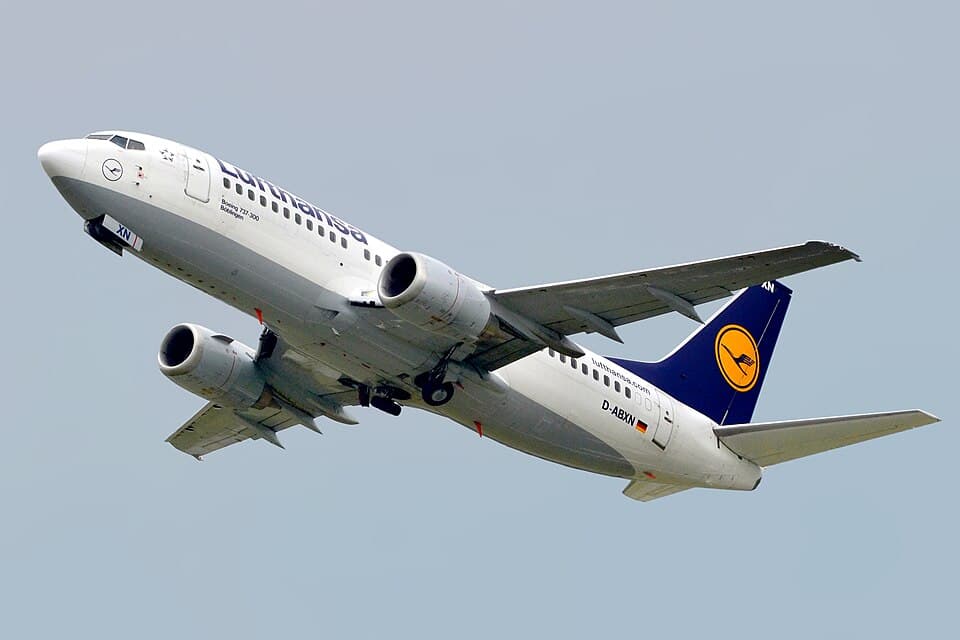
Ask ten people in aviation how much does a Boeing 737 cost, and you will get ten different answers. None of them will be wrong.
That sounds strange, but it makes sense once you understand how airplanes are sold. A 737 does not have a sticker on the window. There is no dealership. There is no final price printed anywhere you can look up. Instead, there is a published number that almost nobody pays, a real market value that shifts every quarter, and a private negotiated figure that both sides agree to keep quiet.
The gap between those numbers is enormous. A jet with a published price near $120 million might change hands for half that. A twenty-year-old version of the same airplane might sell for the price of a nice apartment building.
The number on the brochure and the number on the check have almost nothing to do with each other.
Key Takeaways
A new Boeing 737 MAX generally trades in the range of roughly $50 million to $70 million once discounts are applied, even though published list prices sat well above $100 million before Boeing stopped updating them. A used 737-800 typically lands somewhere in the $15 million to $30 million range depending on age and maintenance status, while older 737 Classic models can fall into the low millions. Leasing a new MAX 8 runs in the hundreds of thousands of dollars per month.
| Category | Typical Range | Notes |
| New 737 MAX (negotiated) | Roughly $50M to $70M | Varies heavily with order size |
| Last published list prices | Roughly $100M to $135M | No longer updated by Boeing |
| Used 737 MAX 8 | Roughly $40M to $70M | Young airframes, strong demand |
| Used 737-800 (NG) | Roughly $15M to $30M | Depends on engines and checks |
| 737 Classic (-300/-400) | Low single-digit millions | Often converted or parted out |
| Pre-owned BBJ 737 | Roughly $30M to $40M | Interior condition drives value |
| Monthly lease (new MAX 8) | Roughly $350K to $400K | Typical first lease near 12 years |
| Hourly operating cost | Roughly $5,000 to $8,500 | Fuel is the biggest single piece |
Flying411 keeps a running marketplace of aircraft, engines, and parts listings, which makes it a useful place to see how these ranges play out in real listings rather than in theory.
Why Boeing 737 Prices Are So Hard to Pin Down
Commercial airplanes are not sold like cars. They are sold like office towers.
Every deal is custom. Every buyer negotiates from a different position. A giant airline ordering two hundred jets does not pay what a small carrier ordering four jets pays. The airplanes might be identical. The invoices are not.
There are three separate numbers worth knowing, and mixing them up is the most common mistake people make.
List Price
This is the manufacturer's published sticker figure. It is the starting point for talks, and it is used to calculate deposits and pre-delivery payments. Almost nobody pays it.
Market Value
This is what an appraiser says the airplane is worth in a normal transaction between a willing buyer and a willing seller. It reflects real conditions.
Transaction Price
This is what the buyer really paid. It is private. It usually stays private.
Good to Know: Airbus dropped the practice of publishing catalogue prices in 2019, calling them close to meaningless compared to real deal values. Boeing has since gone quiet on published pricing as well. The figures still floating around online mostly trace back to those final published lists.
The reason for the silence is simple. When both makers publish a number, buyers can compare them side by side and use one against the other. Going quiet protects the negotiating position.
That leaves the rest of us working with market values, appraisal data, and the occasional order announcement where the total dollar figure and the aircraft count are both public. Divide one by the other and you get a rough sense of the real discount.
The Boeing 737 Family Explained
Before pricing anything, it helps to know which 737 someone is talking about. The name has been in continuous use for decades, and the airplane wearing it today shares little with the original.
There are four broad generations:
- Originals (-100, -200): The earliest jets. These are museum pieces and rare cargo haulers now.
- Classics (-300, -400, -500): Built through the 1980s and 1990s. Many have been converted to freighters or retired.
- Next Generation, or NG (-600, -700, -800, -900ER): The workhorse era. The 737-800 became one of the most widely produced airliners in history.
- MAX (MAX 7, MAX 8, MAX 9, MAX 10): The current family, with new engines and a redesigned wingtip.
Each step up the ladder brings better fuel burn and higher price. Each step down the ladder brings a cheaper airplane that burns more fuel. That trade sits at the center of nearly every 737 purchase decision.
Why It Matters: The generation gap explains most of the price spread. A 737-800 and a MAX 8 look almost the same from the terminal window. Their acquisition costs can differ by tens of millions of dollars, and their fuel bills differ every single flight hour.
The variant differences within the MAX family are worth understanding too, and the shift from the previous generation to the current one is covered well in a breakdown of how the 737-800 and MAX compare.
Boeing 737 Cost by Model and Condition
Here is where the numbers get specific. This section walks through the main versions of the airplane you might realistically buy, lease, or research, with the honest ranges rather than brochure figures.
1. Boeing 737 MAX 8 (New)
The MAX 8 is the volume seller and the heart of the family. The last published aircraft list price for it sat above $120 million. Real market value for a new one generally lands closer to the mid-$50 million range.
Why the gap? Order size, launch customer status, long relationships, and competitive pressure from the Airbus A320neo. Large fleet orders come with the steepest discounts.
2. Boeing 737 MAX 8-200 (New)
This is a higher-density version of the MAX 8 built to squeeze in more seats. Its published price carried a small premium over the standard MAX 8. In practice, it tends to move at similar real-world values, since the airlines buying it order in volume.
3. Boeing 737 MAX 9 (New)
A stretched version with more seats and more range flexibility. The published figure sat near $129 million. Real transaction values run higher than a MAX 8 but nowhere close to the list number.
4. Boeing 737 MAX 7 (New)
The smallest current variant. It carried the lowest published price in the MAX family, just under $100 million. Certification of the MAX 7 has taken years longer than planned, largely due to an engine anti-ice system redesign, and regulators have signaled approval is close.
5. Boeing 737 MAX 10 (New)
The longest member of the family, built to compete with the Airbus A321neo. It carried the highest published price of the group, near $135 million. Like the MAX 7, it has been working through the final stages of certification.
Heads Up: Certification timing affects pricing in a real way. Airlines waiting on undelivered variants often renegotiate, take compensation, or shift orders to available models. That churn ripples through the secondhand market for older jets, since carriers hold onto aging airframes longer than planned.
6. Used Boeing 737-800
This is the sweet spot for most secondhand buyers. The 737-800 cost on the used market typically falls between roughly $15 million and $30 million. Older or high-time examples can sit well below that.
The last published list price for a new 737-800 was around $106 million. That figure is now a historical curiosity, since production ended in 2020. What matters today is maintenance status, engine time, and how many cycles remain before major checks.
7. Used Boeing 737-700 and 737-900ER
The -700 is smaller and generally cheaper than the -800. The -900ER is longer and sells in smaller numbers, which can cut both ways on price. Fewer operators means fewer buyers, but it also means less supply.
Both trade at a discount to the -800 in most conditions, mainly because the -800 has the broadest operator base and the easiest resale path.
8. Boeing 737 Classic (-300, -400, -500)
These are the bargain end of the family. Passenger Classics have fallen to low single-digit millions in many cases, and some are worth more as parts than as flying airplanes.
Buyers here are usually cargo operators, charter outfits in developing markets, or teardown specialists harvesting components.
9. Boeing Business Jet (BBJ 737)
The private version. A pre-owned BBJ 737 tends to average somewhere in the mid-$30 million range, though the spread is wide. Interior condition, connectivity, and engine program enrollment swing the value dramatically.
A brand-new BBJ with a custom interior climbs far higher, because the cabin outfitting alone can run into the tens of millions.
10. Converted Freighter (737-800BCF and Similar)
Buying a used passenger 737-800 and converting it to cargo is a common path. The conversion work itself generally runs several million dollars on top of the airframe purchase.
Combined, a used feedstock airplane plus conversion often totals somewhere in the $15 million to $25 million range. Compare that to a new-build freighter and the appeal is obvious.
Fun Fact: The 737-800 has long been considered one of the most liquid airliners in the world, meaning it is easy to buy, easy to lease out, and easy to sell again. That liquidity is part of why lessors have favored it for decades.
Flying411 lists used airplanes, jets, turboprops, and helicopters from a wide range of manufacturers, which makes it a practical starting point when you are trying to match a budget to a real airframe.
What Drives the Price of a Used 737
Two 737-800s built in the same year can be worth millions apart. The airframe is only part of the story.
Here are the factors that move the needle most:
- Engine status. Time remaining before overhaul is often the single biggest value driver. A fresh engine is worth a fortune. A run-out engine is a bill waiting to happen.
- Maintenance checks. A jet that just came out of a heavy check is worth more than one heading into one.
- Total cycles. A cycle is one takeoff and landing. Short-haul jets rack up cycles fast, and structural life is measured in cycles as much as hours.
- Records quality. Missing or sloppy documentation can wreck a deal. Clean, complete, traceable records add real dollars.
- Configuration. Seat count, galley layout, and avionics fit affect how easily the next operator can put it to work.
- Modifications and compliance. Outstanding airworthiness directives or pending upgrades get priced straight into the offer.
- Market timing. Freight demand, fuel prices, and new-delivery delays all shift used values quarter to quarter.
Paperwork deserves special attention. In commercial aviation, the documents traveling with a part or an airframe carry real financial weight, and understanding how traceability documentation works can be the difference between a smooth sale and a stalled one.
Pro Tip: Get an independent appraisal before making an offer on any used transport-category jet. Appraisers work from transaction databases you cannot see from the outside, and their number gives you something concrete to negotiate against.
Leasing a Boeing 737 Instead of Buying
Most airlines do not own their whole fleet. Leasing spreads out the cost and keeps capital free for other things.
A new MAX 8 leases for roughly $350,000 to $400,000 per month in the mid-2020s. A first lease term commonly runs around twelve years. Older jets lease for far less. A converted 737-800 freighter, for example, has been leasing in the low hundreds of thousands per month.
Here is a simple comparison of the two paths:
| Factor | Buying | Leasing |
| Upfront capital | Very high | Low |
| Monthly cost | Financing only | Full lease payment |
| Residual value | You keep it | Lessor keeps it |
| Fleet flexibility | Lower | Higher |
| Best for | Long-term operators | Growth and short cycles |
Neither approach is better in the abstract. An airline planning to fly the same jet for twenty-five years usually comes out ahead owning. A carrier testing a new route or riding out an uncertain year usually prefers leasing.
Keep in Mind: Lease rates are quoted per month, but the real cost includes return conditions. Handing an airplane back requires meeting specific maintenance and cosmetic standards, and meeting them can be expensive.
What It Costs to Fly a Boeing 737
The purchase price is only the beginning. Boeing 737 operating cost is where the money really goes over an airplane's life.
Industry estimates put total operating cost for a 737-800 somewhere in the range of $5,000 to $8,500 per flight hour under typical airline conditions. That covers fuel, maintenance, crew, and the rest of the direct expenses.
Fuel
Fuel is usually the largest single line item, often accounting for roughly a quarter to two-fifths of total operating cost. A 737-800 burns somewhere in the neighborhood of 800 to 850 gallons per hour in cruise. Multiply that by whatever jet fuel costs this month and you can see why airlines hedge.
Maintenance
Scheduled inspections run on a ladder of increasing depth. Line checks happen between flights. Heavier checks pull the airplane out of service for weeks and cost seven figures. Spread across flight hours, maintenance often adds four figures per hour.
Crew
Two pilots plus cabin crew. Pay varies widely between carriers, which is one reason the same airplane costs different amounts to operate at different airlines.
Everything Else
Landing fees, navigation charges, ground handling, insurance, and training all stack on top.
Quick Tip: Utilization changes everything. Fixed costs get divided across flight hours, so an airplane flying twelve hours a day has a much lower cost per hour than one flying two. This is why private BBJ operations often see hourly costs well above $10,000 while airline operations do not.
Maintenance, Parts, and the Hidden Side of Ownership
Owning a 737 means owning a supply chain relationship. Parts move constantly, and knowing the market for them is part of the job.
A few concepts matter more than most:
- New versus used parts. Serviceable used material can save serious money, and the tradeoffs between used serviceable and factory-new components come up in almost every maintenance budget conversation.
- Approval basis. Parts made by approved third parties carry their own certification path, and understanding what a PMA part is helps explain why two similar components can carry very different prices.
- Paperwork format. Release documents differ by region, and the distinction between European and FAA release tags affects where a part can legally be installed.
- Airworthiness verification. Before anything goes on the airplane, someone has to confirm it belongs there. The process for confirming a part is airworthy is a routine but non-negotiable step.
- Life limits. Certain components must come off at a fixed number of cycles no matter their condition. Knowing which items are life-limited parts is essential to budgeting.
- Repairable versus throwaway. The split between rotable and expendable components shapes how an operator stocks inventory.
- Counterfeit risk. Bogus parts are rare but real, and learning how to spot counterfeit components protects both safety and money.
- Part identification. Boeing uses its own numbering conventions, and getting familiar with reading Boeing part numbers saves hours of guesswork.
Engines deserve their own mention. The move from the CFM56 on the NG family to the LEAP on the MAX changed maintenance economics considerably, and the differences between the CFM56 and LEAP show up directly in shop visit costs and fuel burn.
Good to Know: Engine overhaul reserves are often quoted separately from hourly operating cost. Operators typically set money aside per flight hour so the shop visit does not arrive as a surprise. Skipping that discipline is how owners get into trouble.
If you are ready to move from research to real numbers, browse current listings and connect with certified mechanics, avionics shops, and MRO providers through Flying411.
How the 737 Stacks Up Against Other Boeing Jets
Price context helps. The 737 is a single-aisle airplane, which puts it at the affordable end of Boeing's commercial lineup.
Move up to the widebodies and the numbers change scale entirely. The competition between Boeing's twin-aisle models is a study in tradeoffs, and comparisons like the 777 against the 787 or the A350 versus the 777 show how capability and cost climb together.
At the very top, the four-engine giants tell their own story. The A380 and 747 matchup is a reminder that bigger does not always mean better business.
Boeing's military side follows different rules altogether. The X-32 and X-35 competition was decided on capability and program strategy rather than unit sticker price.
Here is the rough hierarchy in commercial terms:
- Single-aisle (737 family): Lowest acquisition cost, highest production volume
- Mid-size widebody (767, 787): Significantly higher, longer range
- Large widebody (777, 777X): Higher still
- Very large aircraft (747-8, A380): Highest of all, and largely out of production
Heads Up: Cross-family price comparisons can mislead. A widebody costs more per airplane but often less per seat over long distances. Airlines buy based on route economics, not sticker price alone.
Who Buys a Boeing 737
The buyer pool is broader than most people expect.
- Major airlines order new jets directly, often hundreds at a time, and get the deepest discounts.
- Low-cost carriers build entire business models around a single 737 variant to simplify training and parts.
- Leasing companies buy in bulk and place aircraft with operators worldwide.
- Cargo operators buy used passenger jets and convert them.
- Charter and ACMI operators pick up mid-life airframes at lower capital cost.
- Corporate and government buyers purchase BBJ variants or converted airliners for private and official transport.
- Teardown specialists buy the oldest examples for their engines, landing gear, and components.
Each of these buyers is looking at a different number. A lessor cares about residual value in fifteen years. A teardown buyer cares about the value of the parts inside. A low-cost carrier cares about fuel burn per seat. None of them is answering the same pricing question.
Why It Matters: When you see a 737 price quoted somewhere, ask which buyer it applies to. A figure that makes sense for a hundred-airplane order tells you nothing about what a single used jet will cost you.
Production and Market Conditions
Supply shapes price. Boeing has been steadily raising 737 production through the mid-2020s, working up from the high thirties toward the mid-forties per month with higher targets beyond that.
When output rises, pressure on used values tends to increase, since airlines have more new options. When deliveries slow, older jets hold value longer because operators cannot replace them on schedule.
That dynamic has been unusually visible in recent years. Delivery delays kept plenty of aging narrowbodies flying well past their planned retirement, which supported secondhand prices across the NG family.
Conclusion
So, how much does a Boeing 737 cost? The honest answer is that it depends on which airplane, which condition, which buyer, and which week you ask.
A new MAX generally trades in the range of $50 million to $70 million despite published figures well above $100 million. A solid used 737-800 sits somewhere between $15 million and $30 million. An old Classic might cost less than a single new engine. And every one of those airplanes carries an operating bill that dwarfs the purchase price over a full service life.
The good news is that the market is more transparent than it used to be, at least on the secondhand side. Real listings, real appraisals, and real maintenance records tell you far more than any catalogue number ever did.
Ready to see what a 737, a turboprop, or a set of overhauled engines really costs today? Start browsing at Flying411 and let the listings do the talking.
FAQs
Can a private individual buy a Boeing 737?
Yes, private buyers can purchase 737 airframes, and the Boeing Business Jet variant exists specifically for that market. The larger challenge is ongoing cost, since crew, hangar space, maintenance, and insurance require a serious annual budget.
How long does a Boeing 737 last?
Commercial airframes are generally designed around a target number of flight cycles rather than calendar years, and many 737s stay in service for two to three decades. Actual retirement usually comes down to economics rather than structural life.
Is it cheaper to buy an Airbus A320 instead of a 737?
The two families compete directly and tend to price closely, since neither manufacturer can afford to be much more expensive than the other. The deciding factor for most buyers is fleet commonality, delivery timing, and the specific discount package on the table.
What is the cheapest way to get into 737 ownership?
Older Classic-generation airframes carry the lowest purchase prices by a wide margin. The catch is that they burn more fuel, face tighter noise and emissions rules in some regions, and can be harder to support with parts.
Do 737 prices go up or down over time?
New airplane list prices have historically drifted upward with inflation, while individual used airframes depreciate as they age and accumulate cycles. Market conditions can temporarily reverse that pattern, especially when new deliveries are delayed.