If you have flown on a narrowbody jet in the last forty years, there is a very good chance a CFM engine was hanging under the wing. Two engine families dominate that story. One is the CFM56, a workhorse that became the quiet backbone of short and medium haul flying. The other is the LEAP, the newer engine built for an era of expensive fuel and tighter emissions rules. The CFM56 vs leap engine differences show up in almost everything: the fan blades, the materials, the software, the shop visit schedule, and even the resale value of a used engine.
The two engines share a family name and a maker, but they were born in completely different worlds. One of them was designed on paper by engineers with slide rules and wind tunnels. The other was designed inside a computer, tested with artificial dust made to mimic desert sand.
Key Takeaways
The LEAP burns roughly 15% less fuel than the CFM56, uses a bigger fan with woven carbon fiber blades, runs at higher pressures and temperatures, and carries far more advanced electronics. The CFM56 is older, simpler, heavier on fuel, but proven over decades with a huge global support network. The LEAP is the modern replacement, and it powers the newest versions of the same aircraft families the CFM56 once ruled.
| Feature | CFM56 | LEAP |
| Era of design | 1970s through 1990s | Launched in the early 2010s |
| Design approach | Evolved over many variants | Clean-sheet design |
| Fan blades | Titanium, with mid-span shrouds on early models | Woven carbon fiber composite |
| Fan diameter (largest models) | Around 68 inches | Around 78 inches |
| Bypass ratio | Roughly 5:1 to 6:1 class | Roughly 9:1 to 11:1 class |
| Fuel burn | Baseline | About 15% lower per unit of thrust |
| Aircraft | 737 Classic, 737NG, A320ceo family | 737 MAX, A320neo family, COMAC C919 |
| Maturity | Decades of service, deep parts market | Newer, still maturing, upgrades rolling out |
| Support outlook | Strong aftermarket and used parts supply | Growing global MRO network |
Flying411 is an online aviation marketplace where buyers and sellers connect over aircraft, engines, and certified parts, along with the shops and mechanics that keep them running.
Who Builds These Engines, and Why Two Families Exist
Both engines come from CFM International engines, a joint venture between GE Aerospace in the United States and Safran Aircraft Engines in France. The partnership launched in the 1970s to build the CFM56. The name comes from GE's CF engine series and Safran's earlier M series, blended into one.
That joint venture has been one of the more durable partnerships in industrial history. GE Aerospace and Safran have extended it well into the future, which tells you something about how well the arrangement has worked.
The CFM56 came first and stayed in production for a remarkably long stretch. The LEAP, short for Leading Edge Aviation Propulsion, arrived much later. It was never meant to be a warmed-over CFM56. Safran has described it as a clean-sheet design that leans on advanced materials and digital manufacturing methods that simply did not exist when the CFM56 was drawn up.
Good to Know: Two engines can share a maker and a market without sharing much hardware. The LEAP and CFM56 mount in similar places on similar wings, but internally they have very little in common.
What the CFM56 Was Built to Do
The CFM56 was designed to solve a specific problem. Airlines in the 1970s and 1980s needed an engine that was quieter, cleaner, and thriftier than the smoky turbofans of the jet age's first decades. It also had to be dependable enough to fly dozens of short trips a day without drama.
It succeeded on both counts. Over its production life, CFM has delivered tens of thousands of CFM56 engines. They have piled up hundreds of millions of flight hours across every continent. That kind of scale creates its own gravity. Parts are everywhere. Mechanics know the engine cold. Shops have refined the repairs.
Key CFM56 variants you will run into:
- CFM56-2: Used on military tankers and some re-engined airliners.
- CFM56-3: The Boeing 737 Classic engine, with a flattened nacelle bottom to fit under short landing gear.
- CFM56-5 series: The Airbus A320ceo family engine, including the -5A, -5B, and the larger -5C for the A340.
- CFM56-7B: The Boeing 737 Next Generation engine, and one of the most widely produced variants.
Worth noting: not every CFM56 is the same generation of technology. The earliest -3 used a hydromechanical fuel control. The later -5 and -7B moved to full authority digital engine control, or FADEC. So when people say the CFM56 is "analog" and the LEAP is "digital," that is a simplification.
Heads Up: If someone quotes you a spec for "the CFM56," ask which variant. A -3 and a -7B are separated by more than a decade of engineering.
What the LEAP Was Built to Do
By the late 2000s, the pressure had changed. Fuel prices were high and volatile. Noise rules around airports were tightening. Emissions targets were becoming real regulatory constraints, not distant goals. Airlines wanted a step change, not a nudge.
CFM answered with the LEAP. The goal was straightforward on paper and brutally hard in practice: cut fuel burn significantly, cut noise, cut emissions, and do it in an engine that still fits under an existing wing.
The three main LEAP variants:
- LEAP-1A for the Airbus A320neo family.
- LEAP-1B for the Boeing 737 MAX.
- LEAP-1C for the COMAC C919.
The LEAP-1A vs LEAP-1B question comes up often. They are not the same engine. The -1A has a larger fan and higher bypass ratio, since the A320neo's taller landing gear leaves more ground clearance. The -1B was designed with a smaller fan to fit the 737's famously low stance. Same family, different compromises.
Fun fact: CFM engineers worked with geologists to create artificial dust that mimicked the abrasive grit engines encounter in different parts of the world, so they could test durability fixes realistically.
CFM56 vs LEAP Engine Differences That Matter Most
Here is where the two engines truly split. These are the changes that show up in fuel bills, maintenance plans, and the way a flight line sounds.
1. Fan Blades: Titanium Versus Woven Carbon Fiber
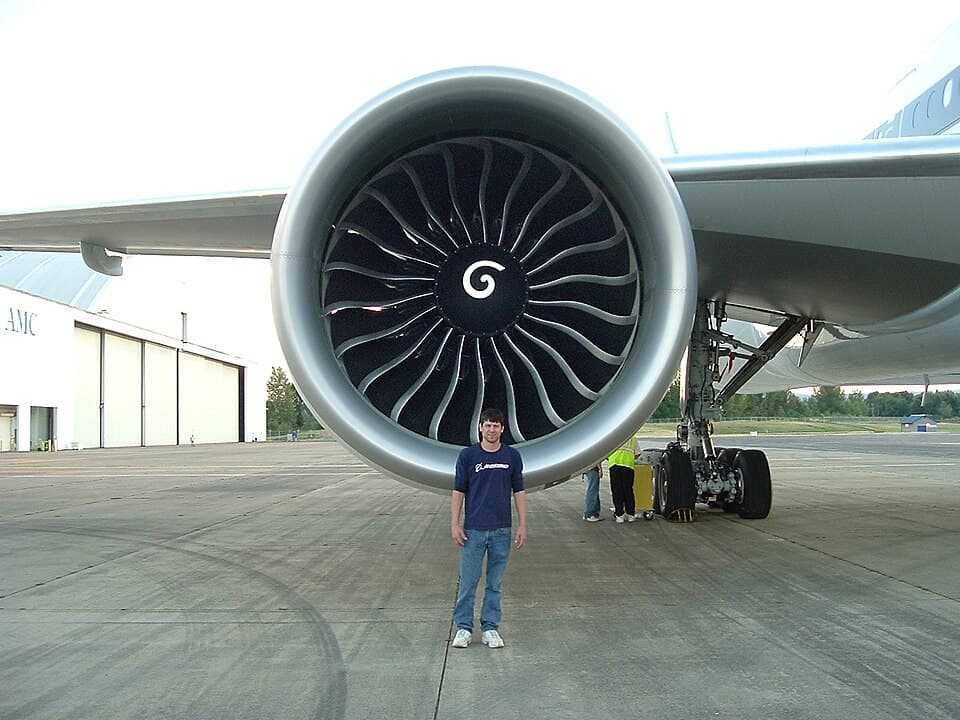
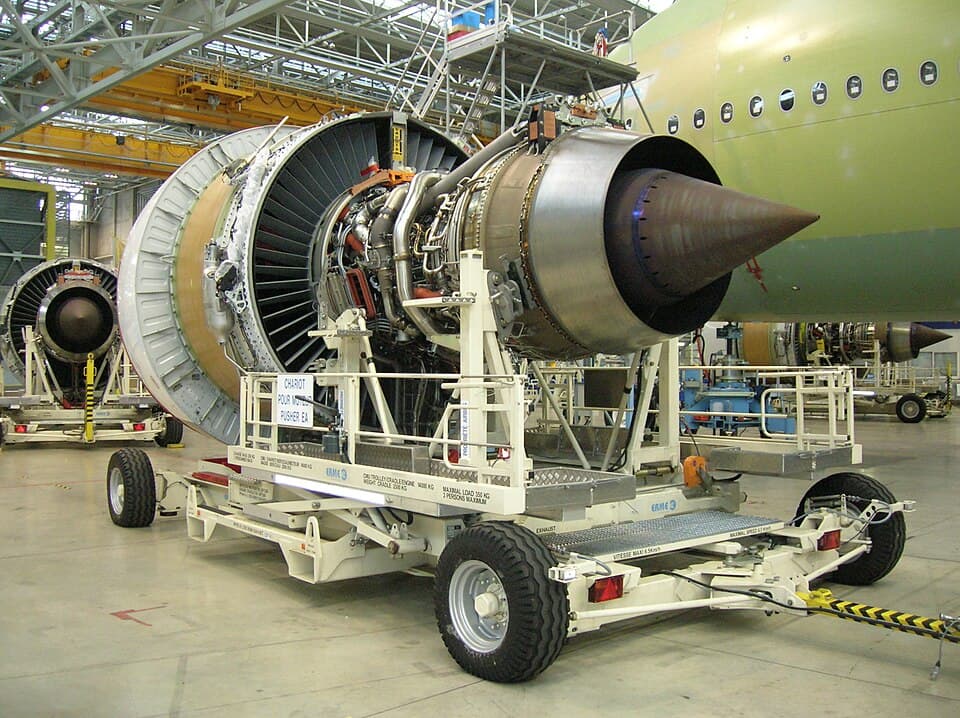
This is the most visible difference. The CFM56 uses titanium fan blades. Early variants used mid-span shrouds, those little bracing tabs partway up the blade that keep it stable but add drag.
The LEAP uses fan blades made from a woven carbon fiber composite, developed with a specialized composites partner. Weaving the fibers three-dimensionally, then setting them in resin, produces a blade that is thinner and lighter while staying strong enough to survive a bird strike.
Fewer blades, thinner profile, no shrouds. The LEAP's fan looks noticeably different once you know what to look for.
2. Fan Diameter and Bypass Ratio
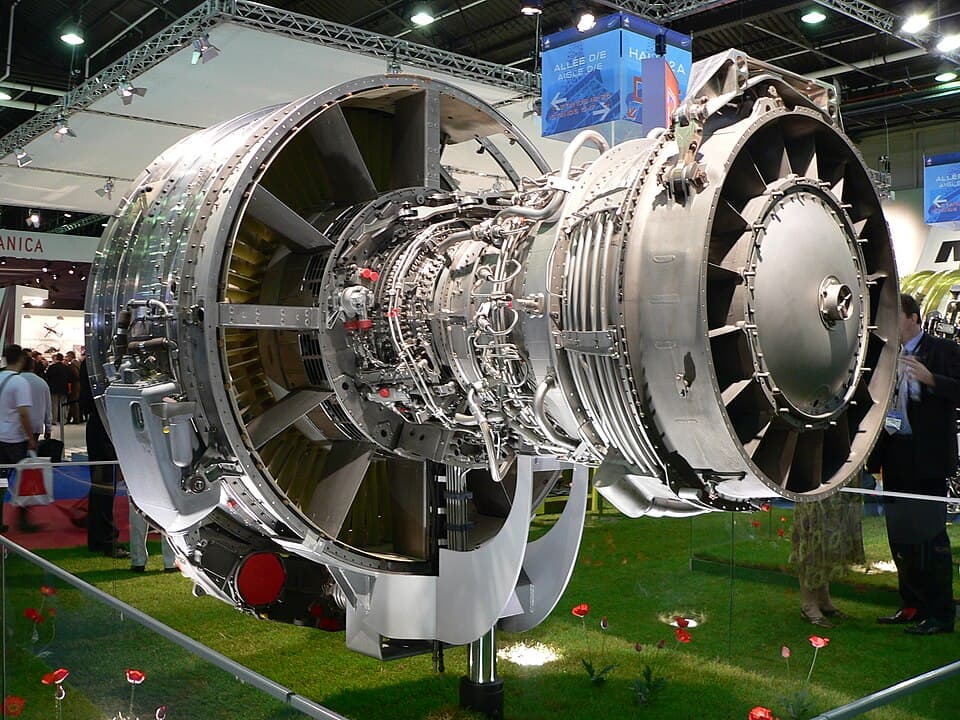
A turbofan makes most of its thrust by moving a large volume of air around the core rather than through it. Turbofan bypass ratio describes how much air goes around versus through.
Bigger fan, more bypass air, better fuel efficiency at cruise speeds. The largest CFM56 models use a fan of roughly 68 inches. The LEAP-1A stretches to about 78 inches. That extra diameter is a big part of the efficiency story.
Higher bypass also means quieter operation, since the slower bypass air acts as a cushion around the hot, fast core exhaust.
3. Fuel Burn
CFM International has stated that LEAP-powered aircraft see about a 15% improvement in fuel consumed per unit of thrust compared to previous CFM engines. On a narrowbody flying eight legs a day, that adds up fast.
Fuel is typically one of the largest line items for an airline. A double-digit percentage cut is the entire reason the re-engined A320neo and 737 MAX exist.
Why It Matters: A 15% fuel saving does not only lower cost. It extends range, raises payload options, and cuts carbon output per seat. One change, several downstream benefits.
4. Pressure Ratios and Core Temperatures
The LEAP runs at a considerably higher overall pressure ratio than the CFM56. Squeezing air harder before combustion improves thermal efficiency. It also drives temperatures up inside the hot section.
That is the tradeoff at the heart of modern engine design. Efficiency comes from heat, and heat is the enemy of metal parts. The LEAP's answer was better materials, better cooling, and smarter internal airflow.
5. Ceramic Matrix Composites in the Hot Section
The CFM56 relies on advanced metal alloys in the turbine, refined across several generations of blade design. The LEAP added ceramic matrix composites in parts of the hot section. These materials tolerate very high temperatures at a fraction of the weight of comparable metal parts, and they need less cooling air.
Less cooling air diverted from the core means more air doing useful work. Small change, meaningful gain.
6. Additive Manufacturing
The LEAP was among the first commercial engines to use 3D printed fuel nozzles in volume. Printing the nozzle as a single piece replaced an assembly of many brazed and welded components. That means fewer joints, fewer failure points, and a shape that would be difficult to produce any other way.
The CFM56 was designed and built in an era when every part was machined, cast, or forged. The manufacturing philosophy behind the two engines is genuinely different, not incrementally different.
For anyone tracking part identity across these families, the printed and composite parts introduce new documentation habits. Knowing how to read a part number becomes more useful, not less, as construction methods change.
7. Debris Handling and Core Protection
The LEAP uses a redesigned spinner cone shape that helps push ingested debris outward into the bypass stream instead of down the core. Keeping sand, dust, and runway grit away from the compressor protects the engine over thousands of takeoff and landing cycles.
Ground debris is one of the quiet killers of engine life. Every particle that reaches the core is a tiny sandblast on precision parts.
8. Engine Controls and Digital Health Monitoring
Later CFM56 variants use FADEC, so the LEAP did not invent digital control. What the LEAP brought is a newer generation of it, along with far more sensors and far more data streaming off the engine.
Modern LEAP operators get detailed trend data that helps predict problems before they become removals. The CFM56 world does this too, but the LEAP was designed for it from the start.
9. Emissions and Noise
The LEAP produces lower carbon dioxide and nitrogen oxide output than the CFM56 for the same job. It is also quieter, thanks to the higher bypass ratio and a redesigned exhaust. Airports with strict night curfews and noise-based landing fees care about this a great deal.
Flying411 lists overhauled and serviceable engines alongside certified parts, so operators comparing powerplant options can see what is currently available on the market.
Which Aircraft Use Each Engine
The aircraft split is the easiest way to keep these engines straight.
| Aircraft | Engine |
| Boeing 737 Classic (300/400/500) | CFM56-3 |
| Boeing 737 Next Generation (600 to 900) | CFM56-7B |
| Airbus A320ceo family | CFM56-5 series (or the competing V2500) |
| Airbus A340-200/300 | CFM56-5C |
| Boeing 737 MAX | LEAP-1B |
| Airbus A320neo family | LEAP-1A (or the competing geared turbofan) |
| COMAC C919 | LEAP-1C |
One important note on the Airbus side: A320 family operators have always had an engine choice. Boeing narrowbody operators have not. The 737 MAX is LEAP only.
If you want the airframe side of that story, the generational jump between 737 variants explains a lot about why the engine change happened when it did. Similar generational shifts show up across the widebody world too, from the switch to composite widebodies to the two very different four-engine giants that defined the previous era.
Keep in Mind: An engine swap is never only about the engine. Bigger fans need ground clearance, new pylons, and often changes to the landing gear or wing. That is why re-engining an existing airframe is such a serious engineering project.
Maintenance, Time on Wing, and the Durability Story
This is the part that gets argued about most, and it deserves a fair telling.
The CFM56 earned a reputation for long CFM56 time on wing. Airlines got used to engines staying installed for long stretches between shop visits. That became the benchmark everyone measures against.
When the LEAP entered service, operators in hot and dusty regions found that high-pressure turbine blades were wearing faster than expected. That meant earlier shop visits and higher maintenance bills for some fleets. Fuel savings were real, but LEAP engine maintenance costs ran higher than airlines had planned for in those environments.
CFM's response came in two main pieces:
- An HPT durability kit, including improved stage 1 blades, stage 1 nozzles, and forward inner nozzle supports. CFM has said this can more than double time on wing in severe environments.
- A reverse bleed system (RBS), a cooling approach designed to cut down on fuel nozzle coking after shutdown, reducing on-wing nozzle replacements.
Those upgrades were certified for the LEAP-1A first, then extended to the LEAP-1B. By 2026, a large share of the LEAP-1A fleet was flying with the reverse bleed system, and a substantial portion had the HPT durability kit installed. CFM has described these changes as solving the large majority of the durability trouble, with revised operating practices covering much of the rest, including new engine wash procedures and the option to use climb thrust derate in certain conditions.
The Historical Context People Forget
Here is the part worth remembering. The CFM56 had a rough start too.
Early CFM56 engines suffered serious problems, including a widely studied incident where both engines flamed out in heavy rain and hail, and the crew glided the aircraft to a safe landing on a riverbank. The fix involved changes to the fan, spinner, and booster bleed system. The engine also went through several generations of high-pressure turbine blade design before cracking and deterioration were fully sorted out, eventually landing on single crystal blades.
In other words, the benchmark everyone holds the LEAP against was itself the product of years of hard-won fixes. New engines almost always go through this.
Pro Tip: When evaluating engine reliability data, always ask how many years of service the fleet has behind it. Comparing a ten-year-old engine program to a forty-year-old one without adjusting for maturity gives a misleading picture.
Cost, Value, and the Used Parts Market
For owners, lessors, and buyers, the practical differences show up on a balance sheet.
The CFM56 aftermarket is deep and busy. With thousands of engines still flying, demand for overhauls, spare engines, and life-limited parts remains strong. Green-time engines, meaning engines with useful cycles remaining before their next major shop visit, are actively traded. CFM56 used serviceable material has become a major segment of the aviation parts economy, letting shops build cost-effective workscopes without buying every part new.
Some general market patterns worth knowing:
- Shop visit turnaround times for mature engines have stretched out in recent years due to supply chain pressure.
- Serviceable engine supply has struggled to keep pace with demand in several segments.
- Power-by-the-hour maintenance agreements cover a meaningful share of the active CFM56 fleet.
- Older variants like the CFM56-3 have moved into a niche part of the market as the fleet shrinks.
The LEAP aftermarket is still forming. The installed base has grown quickly, and CFM's global network of shops and technical training centers has expanded to match. As more LEAP engines reach their first and second shop visits, the used parts market for them will mature the same way the CFM56 market did.
If you buy or sell in this space, documentation is where deals live or die. Understanding what makes a PMA part legitimate, how used serviceable parts compare to factory-new material, and what a proper paper trail looks like will save you far more than it costs. The difference between an EASA and FAA release document matters when parts cross borders, and knowing how to confirm a part is airworthy is the last checkpoint before money changes hands.
Quick Tip: Ask for life-limited part status sheets early in any engine conversation. Cycles remaining on LLPs often drive value more than total hours do.
Ready to see what is on the market? Browse engine and parts listings on Flying411 and connect directly with sellers, MRO providers, and certified mechanics.
What Comes After the LEAP
CFM is already working on the next step. The RISE program, short for Revolutionary Innovation for Sustainable Engines, covers a suite of technologies including an open fan architecture, a compact core, and hybrid electric systems.
The open fan concept removes the nacelle around the fan entirely, allowing a much larger fan diameter than a ducted design permits. In theory that means another significant efficiency gain. CFM has run hundreds of test campaigns across these architectures and has been maturing the technology toward ground and flight testing.
Nothing about RISE is a product yet. But it signals where narrowbody propulsion is heading, and it explains why CFM keeps investing in LEAP durability rather than rushing a replacement. The LEAP has a long service life ahead.
Fun Fact: The idea of an unducted fan is not new. Engineers tested open rotor concepts back in the 1980s during an earlier fuel crisis. The concept was shelved when oil prices fell, and it has resurfaced now that efficiency and emissions carry more weight.
Common Misconceptions Worth Clearing Up
A few ideas float around that deserve correction.
"The LEAP is a modernized CFM56." It is not. Safran has been clear that LEAP was a clean-sheet design, not an evolution of the older engine.
"The CFM56 is fully mechanical." Later CFM56 variants use FADEC digital control. Only the earliest variant relied on hydromechanical fuel control.
"The LEAP is unreliable." Dispatch reliability and durability are different measures. The LEAP has had real durability issues in harsh environments, and CFM has addressed them with certified hardware upgrades. Comparing a young program to a mature one without that context is unfair to both.
"Composite fan blades are fragile." Woven composite blades are engineered to survive bird strikes and are certified to the same demanding standards as metal blades. Different material, same rulebook.
Design philosophy debates like this are common across aviation. The same tension between proven and new plays out in airframes, from competing widebody approaches to the prototypes that shaped modern fighter design.
Conclusion
The CFM56 vs leap engine differences come down to one honest sentence: these engines were built to solve different problems in different decades. The CFM56 was designed for reliability and reach in an era when fuel was cheaper and materials science had limits. The LEAP was designed for efficiency and emissions in an era where every percentage point of fuel burn matters and where carbon fiber, ceramics, and printed metal parts are on the table.
Neither one makes the other irrelevant. Thousands of CFM56 engines will keep flying and keep getting overhauled for years. Thousands of LEAP engines are getting more durable with every upgrade cycle. If you own, operate, or trade in this market, the smart move is understanding both, since the parts, the shops, and the money flow through both at once.
Hunting for a green-time engine or listing a fleet of serviceable parts, Flying411 puts buyers, sellers, and certified aviation pros in the same place, no cold calls required.
FAQs
Can a CFM56 be replaced with a LEAP on the same aircraft?
No. The two engines are not interchangeable, since the LEAP's larger fan, different mounting, and different systems require an aircraft designed or heavily modified for it. That is why the 737 MAX and A320neo are distinct aircraft variants rather than simple engine swaps.
How long does a LEAP engine typically stay on wing?
Time on wing varies widely by route length, climate, and how the engine is operated, so there is no single number. Engines flying short cycles in hot, dusty regions generally see shorter intervals than those on longer sectors in mild conditions.
Does the LEAP compete with the Pratt & Whitney geared turbofan?
Yes, on the Airbus A320neo family, where operators can choose between the LEAP-1A and the geared turbofan. On the Boeing 737 MAX there is no choice, since the LEAP-1B is the only option offered.
Are CFM56 engines still being produced?
New CFM56 production for commercial airliners has wound down, with CFM focusing manufacturing on the LEAP family. Support, overhaul, and parts supply for the CFM56 fleet continue, since a very large installed base remains in service.
What happens to CFM56 engines when they retire from airline service?
Many are torn down for serviceable parts that feed the repair market, while others find second lives in leasing pools or non-flying applications. There has also been interest in converting retired units into ground-based power generation turbines.