Few airplanes turn heads like the Queen of the Skies. The hump, the four engines, the sheer size of the thing sitting at a gate. It looks expensive because it is expensive, but the real answer to how much does a Boeing 747 cost depends almost entirely on which 747 you mean and what condition it is in. A brand new one carried a price tag close to half a billion dollars. A tired one sitting in the desert might be worth less than a nice apartment building.
That gap between the sticker and the reality is where the whole story lives.
Key Takeaways
A Boeing 747 costs anywhere from a few million dollars to well over $400 million. The newest model, the 747-8, carried a published list price in the low $400 million range before production ended. Used 747-400s often trade for a fraction of that, sometimes under $25 million. Airlines almost never paid full list price, and the real cost of a 747 includes fuel, crew, maintenance, and engines that can each cost more than a small business.
| Cost Item | Typical Range | Notes |
| New 747-8 (published list price) | Roughly $400 million to $420 million | Production ended in 2023 |
| New 747-8 VIP / BBJ (green) | Around $367 million reported | No interior included |
| VIP interior completion | Tens of millions and up | Can rival the airframe cost |
| Used 747-400 (passenger) | Often under $25 million | Condition drives everything |
| Used 747-400 freighter | Higher than passenger models | Cargo demand keeps values up |
| Used 747-8 | Widely reported in the tens to low hundreds of millions | Scarce supply, strong demand |
| Operating cost per flight hour | Commonly estimated near $20,000 or more | Fuel is the biggest slice |
| New GEnx-2B engine | Reported around $25 million to $30 million each | Four per aircraft |
| Heavy maintenance visit (D check) | Often several million dollars | Legacy widebodies run high |
If you have ever wondered what a real aircraft listing looks like behind the headlines, Flying411 keeps a running marketplace of airplanes, engines, and parts from sellers around the world. It is a useful window into what buyers are paying right now.
The Short Answer on Boeing 747 Prices
There are two very different numbers people mean when they ask about the price of a 747.
The first is the list price, which is the number Boeing published. Think of it like the sticker on a car window. For the final passenger model, the 747-8 Intercontinental, that figure sat in the low $400 million range near the end of production. The freighter version was priced right alongside it.
The second is the market price, which is what someone truly pays. That number is almost always lower, and sometimes dramatically lower.
Airlines buying multiple aircraft negotiated hard. Industry reporting has long suggested large customers routinely secured discounts of half off list, sometimes more. So a jet with a $400 million sticker might have changed hands closer to $200 million.
Then time does its work. A 747 that flew for fifteen years and racked up thousands of cycles is a different asset entirely. Its value is tied to hours flown, engine condition, maintenance status, and how badly someone needs that exact airframe.
Good to Know A "cycle" in aviation means one takeoff and landing. Cycles matter as much as hours on a big jet, because pressurizing and depressurizing the fuselage is what stresses the structure over time.
A Price History of the Jumbo Jet
The 747 has been around since the late 1960s, and its price tag tells a story about aviation itself.
From 1970 to the Final Delivery
When Pan Am launched the type, the numbers looked almost quaint by today's standards.
- 747-100 (1970): Early aircraft were widely reported around $21 million to $24 million each. Adjusted for inflation, that lands somewhere in the $150 million to $190 million range depending on the calculation used.
- 747-200 (1970s): Prices climbed with capability, moving into the high $30 million range at the time.
- 747-300 (1980s): The stretched upper deck version pushed prices higher again.
- 747-400 (1989 onward): This became the volume seller of the family. List prices climbed well past $200 million during its production run.
- 747-8 (2008 onward): The final family member launched with a list price reported near $315 million and finished in the low $400 millions.
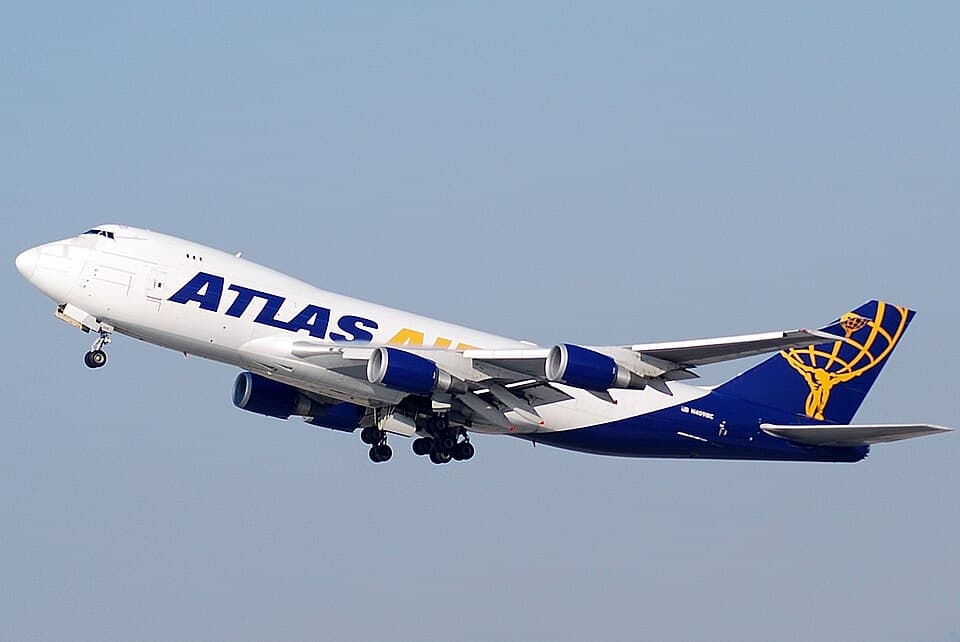
Production of the 747 ended in early 2023, when the last aircraft, a freighter, was handed over to Atlas Air. The last passenger 747-8 had already gone to Korean Air years earlier.
One thing worth noting: after adjusting for inflation, the 747-8 was not wildly more expensive than the original 747-100. The plane got far more capable while the real price stayed within a recognizable range.
Why List Prices Were Never the Real Price
Manufacturer list prices serve a purpose. They anchor negotiations, they set a public benchmark, and they help value fleets on paper.
But nobody treated them as gospel. Boeing eventually stopped publishing list prices at all, which tells you how loosely connected they had become to real transactions.
Here is what shaped the actual invoice:
- Order size. Twenty aircraft got a better rate than two.
- Customer relationship. Repeat buyers had leverage.
- Timing. Slow order periods meant softer pricing.
- Configuration. Engines, seats, and avionics were priced separately in practice.
- Support packages. Spares, training, and warranties were part of the deal.
Why It Matters When you see a headline price for any airliner, treat it as a ceiling, not a quote. The gap between published and paid can be enormous, and that gap follows the aircraft into the used market too.
How Much a Boeing 747 Costs: 8 Factors That Set the Final Price
The Boeing 747 price on any given day comes down to a handful of variables. Two aircraft that look identical on the ramp can be separated by tens of millions of dollars once you open the logbooks. Here are the eight that matter most.
1. Which Variant You Are Buying
This is the biggest single lever. The family spans more than five decades of engineering.
| Variant | Status | General Value Position |
| 747-100 / -200 | Retired from most commercial service | Very low, often scrap or museum candidates |
| 747SP | Rare shortened version | Niche, collector and VIP interest |
| 747-300 | Largely retired | Low |
| 747-400 | Still flying, mostly freight | Moderate, freighters hold value best |
| 747-8 | Newest, small fleet | Highest by a wide margin |
A 747-8 and a 747-200 are both 747s in name only when it comes to money. The jumbo jet price for a modern -8 can be more than ten times what an early variant fetches.
2. Passenger or Freighter
Cargo has quietly become the 747's retirement plan.
Passenger 747s have been pushed out of airline fleets by efficient twin-engine widebodies. Freighters are a different story. The 747 freighter has a nose that swings open, which lets operators load long, awkward cargo that simply will not fit through a side door.
That capability has no direct replacement. So freighter airframes tend to command stronger prices than passenger versions of the same age.
3. Engines and Remaining Green Time
On an aging widebody, the engines can be worth more than the airplane bolted around them.
"Green time" means the hours left before an engine needs a shop visit. An engine with plenty of green time is an asset. One that is due for overhaul is a liability, because the overhaul bill on a large turbofan runs into the millions.
- New GEnx-2B engines for the 747-8 have been reported in the $25 million to $30 million range each.
- Used, serviceable CF6 or PW4000 engines for the 747-400 have been reported anywhere from roughly $2 million to $8 million depending on condition.
- A major overhaul on a large turbofan is commonly cited in the multi-million dollar range per engine.
Multiply by four. That is the 747 math nobody warns you about.
Heads Up On older 747-400s, an engine overhaul can cost more than the airframe is worth on the open market. That single fact explains why so many of these jets get parted out instead of repaired.
4. Time Since Heavy Maintenance
Big jets go through a schedule of checks, and the heaviest one takes the aircraft apart down to the structure.
A heavy maintenance visit on a legacy widebody is a serious expense, often quoted in the millions, and it can take the aircraft out of service for weeks or months. An airplane fresh out of heavy check is worth considerably more than the same airplane due to go in next quarter.
Buyers price this in ruthlessly. A seller who just spent millions on a check expects to recover it. A buyer facing that bill expects a discount.
5. Landing Gear and Life-Limited Parts
Certain components have a hard expiration date measured in hours or cycles. When they hit that limit, they come off, no exceptions.
Landing gear overhauls are a classic example, and they are expensive. Understanding how life-limited components work is essential before signing anything, because those due dates transfer with the aircraft.
The same goes for the difference between repairable and throwaway components, which affects how you budget for the first few years of ownership.
6. Records, Traceability, and Paperwork
This one surprises people. Paperwork can be worth millions.
An aircraft with complete, clean, traceable records is financeable and insurable. One with gaps is a problem. Buyers discount heavily for missing history, and some walk away entirely.
Solid documentation and traceability practices are what separate a smooth transaction from a stalled one. If you are buying across borders, knowing the difference between European and FAA release paperwork saves real headaches during the pre-purchase review.
Pro Tip Ask for the records package before you ask for the price. If the seller hesitates on documentation, the price conversation is premature.
Flying411 connects buyers with certified A&P mechanics, avionics specialists, and MRO providers who handle pre-purchase inspections, which is exactly the kind of help a records review calls for.
7. Interior and Configuration
For airlines, cabin layout affects value modestly. For private buyers, it can dominate the entire deal.
A VIP 747 leaves the factory as a "green" aircraft, meaning bare metal and wiring with no interior at all. The completion work happens afterward at a specialist shop, and it can add tens of millions of dollars. For head of state aircraft, the completion cost has been reported to approach or even exceed the cost of the airframe.
So the honest answer for a private 747 is that the airplane is the down payment and the interior is the mortgage.
8. Who Else Wants It
Scarcity moves prices, and the 747 has become scarce.
Cargo operators want good airframes. Governments and defense programs want them for specialized conversions. Those buyers are not price-shopping the way a startup airline would, and their demand has pushed values for the best remaining aircraft upward in recent years.
That is a strange twist for a plane that was written off as obsolete a decade ago.
Used Boeing 747 Prices by Variant
Here is a general picture of the secondhand market. Treat these as broad ranges, because individual aircraft vary enormously.
| Variant | Typical Condition Today | General Price Picture |
| 747-100 / -200 | Retired, stored, or scrapped | Minimal, often valued for parts alone |
| 747SP | Rare, some VIP history | Highly variable, listings have appeared in the mid seven figures to low eight figures |
| 747-300 | Almost entirely retired | Low |
| 747-400 passenger | Aging, many stored | Often reported under $25 million |
| 747-400 freighter | Working aircraft | Stronger than passenger equivalents |
| 747-8 passenger | Small fleet, high demand | Tens of millions to well over $100 million reported |
| 747-8 freighter | Prized, few available | Highest in the used family |
The Boeing 747-400 value picture is the most volatile part of this table. Some airframes are genuinely useful for cargo work. Others are worth roughly what their engines and rotable parts bring at teardown.
Keep in Mind A low purchase price on a widebody is not a bargain by itself. The cheapest 747s are usually cheap because someone else already calculated the maintenance bill and decided to pass.
What It Costs to Fly a 747 Every Hour
Buying is the easy part. Flying is where the money goes.
Published estimates for the 747 operating cost per hour commonly land near $20,000 or more, with some sources going higher for VIP operations. That number swings based on fuel prices, route, weight, and how the aircraft is maintained.
Here is how that hour breaks down in practice:
- Fuel. By far the largest line item. A long international sector can burn through a six-figure fuel bill on its own.
- Crew. Two or more pilots up front, all type-rated on the 747, plus cabin crew. Type ratings are expensive and limit the hiring pool.
- Maintenance reserves. Money set aside every hour for the checks and overhauls coming later.
- Insurance. Scales with hull value and mission profile.
- Landing, handling, and parking fees. Airports charge by weight, and the 747 is heavy.
- Navigation charges. Also weight-based in many regions.
Fun fact: a full fuel load on a 747 can weigh well over 300,000 pounds, which is heavier than an entire empty narrow-body airliner.
Four engines are the core issue. Twin-engine widebodies do similar work while burning less fuel and requiring half the engine maintenance events. That economic reality, more than any engineering flaw, is what ended the 747's passenger career.
What 747 Engines Cost
Engines deserve their own section because they drive so much of the total.
A new GEnx-2B for the 747-8 has been reported in the $25 million to $30 million range per unit. Fit four and you are looking at an engine investment that can approach a quarter of the aircraft's value.
Older engines tell a different story:
| Engine Situation | Reported Range |
| New GEnx-2B (747-8) | Roughly $25 million to $30 million |
| Used serviceable CF6 / PW4000 (747-400) | Roughly $2 million to $8 million |
| Major overhaul, large turbofan | Commonly several million per engine |
| Removal and installation event | Tens of thousands |
Because overhauls are so costly, many 747-400 operators now buy used engines with green time remaining and part out their old units instead. It is a practical strategy for keeping an aging fleet economically alive.
Engine technology in general has moved fast, and comparing generations helps explain the gap. The shift from older powerplants to modern designs, visible in the differences between CFM56 and LEAP engines on smaller jets, mirrors what happened at the widebody level.
Quick Tip When evaluating any large jet, ask for engine records before airframe records. On an older widebody, the engines often carry most of the asset value.
Parts, Paperwork, and the Hidden Bills
Owning a 747 means feeding it parts for as long as you keep it. This is where a lot of first-time buyers underestimate the budget.
A few things worth understanding before you commit:
- Part identification. Large aircraft use enormous parts catalogs. Learning how Boeing part numbers are structured makes sourcing far less painful.
- Approved alternatives. Not every part has to come from the original manufacturer. Knowing what a PMA part is can meaningfully lower your parts spend.
- Used serviceable material. The trade-offs between used serviceable and OEM parts matter enormously on out-of-production aircraft, where new stock may simply not exist.
- Airworthiness verification. Every part needs to be legitimate and properly documented. There are clear steps for confirming a part is airworthy before it goes anywhere near an aircraft.
- Counterfeit risk. Bogus parts are a real hazard in aviation supply chains. Learning how to spot counterfeit components protects both safety and resale value.
For an out-of-production airplane like the 747, parts availability becomes a strategic question. Teardowns of retired airframes feed the supply chain, which is good news for operators and part of why old 747s still have value even when they will never fly again.
Fun Fact A retired widebody is worth real money as a parts donor. Landing gear, engines, avionics, and rotable components all find second lives on aircraft still in service.
How the 747 Compares to Other Widebodies
Cost only makes sense in context. The 747 lost its market to airplanes that do most of the job for less money.
Against the A380. The two four-engine giants competed for the same shrinking niche. Both faced the same problem, which is that very large aircraft need consistently full cabins to justify their economics. The head-to-head comparison of the A380 and 747 shows how similar their fates ended up being.
Against modern twins. This is where the 747 lost. Two engines instead of four means lower fuel burn and fewer maintenance events. The efficiency gap between the 777 and 787 illustrates how quickly airlines moved toward smaller, more efficient widebodies. Airbus pushed the same direction, and the matchup between the A350 and 777 shows how competitive that segment became.
Down the size scale. The same efficiency logic played out in narrow-bodies too, visible in the changes between the 737-800 and 737 MAX. Better engines, better aerodynamics, lower cost per seat.
Here is a simple way to think about it:
| Consideration | 747-8 | Modern Twin Widebody |
| Engines | Four | Two |
| Fuel burn | Higher | Lower |
| Maintenance events | More | Fewer |
| Capacity | Very high | High |
| Cargo flexibility | Outstanding, nose door on freighters | Good, side door only |
| Crew availability | Limited type-rated pool | Broad |
The 747 still wins on outsized cargo. That is a narrow but genuinely valuable advantage.
Who Still Buys 747s Today
The buyer list is shorter than it used to be, but it is not empty.
- Cargo airlines. The nose door capability keeps freighters in demand for oversized loads.
- Government and defense programs. Specialized missions need a large, proven airframe with a long service history.
- Heads of state. VIP 747s remain a symbol of national capability.
- Ultra high net worth individuals. A small group, and mostly for aircraft already converted.
- Part-out specialists. Teardown operations that harvest engines and components.
- Museums and preservation groups. Usually acquiring aircraft at the end of their flying life.
- Charter and ACMI operators. Wet-lease providers who move capacity around the world.
Defense-related interest in particular has firmed up prices for the best remaining airframes. When a government program needs several high-quality jets and only a few dozen exist worldwide, sellers gain leverage quickly.
Ready to see what large aircraft, engines, and certified parts are on the market right now? Browse the listings on Flying411 and connect directly with sellers and aviation service providers.
Is a Boeing 747 Worth the Money?
That depends entirely on the mission.
For a passenger airline in 2026, almost certainly not. The economics favor twins, and they favor them by a wide margin. Airlines want the lowest possible cost per seat, and four engines make that hard.
For a cargo operator hauling oversized freight, the answer can be yes. There is no direct replacement for a nose-loading freighter, and that unique capability supports pricing that would look irrational on a passenger balance sheet.
For a government or head of state operation, the calculation is not commercial at all. Capability, range, and presence matter more than cost per hour.
For a private buyer, it is a lifestyle decision with a nine-figure price tag attached. The airframe is the smaller half of the bill once completion and operating costs come in.
Keep in Mind Purchase price is the entry fee, not the total. On a 747, the first five years of fuel, crew, and maintenance can easily exceed what you paid for a used airframe.
Conclusion
So how much does a Boeing 747 cost? Somewhere between the price of a nice house and the price of a small city budget, depending on which one you point at. A new 747-8 carried a list price in the low $400 million range, real buyers paid far less, and today a used 747-400 can change hands for a small fraction of that. The engines, the paperwork, and the maintenance status matter as much as the sticker.
The Queen of the Skies never stopped being impressive. She just stopped being cheap to keep around, which is a different thing entirely.
Whatever your budget looks like, from a set of certified parts to an entire airframe, Flying411 is where buyers, sellers, and aviation professionals find each other.
Frequently Asked Questions
Can a private individual legally buy a Boeing 747?
Yes, private ownership is legal, and several 747s are operated privately or by heads of state. The bigger obstacles are crew, hangar space, and airports capable of handling the aircraft.
How many Boeing 747s are still flying?
Several hundred remain airworthy worldwide, with the majority now doing cargo work rather than carrying passengers. The number continues to decline as older airframes retire.
Is it cheaper to lease a 747 than to buy one?
Leasing shifts a large upfront cost into monthly payments and can include maintenance support, which appeals to operators with short-term or seasonal needs. Long-term operators often find ownership more economical if utilization is high.
What happens to a Boeing 747 at the end of its life?
Most are disassembled at teardown facilities, where engines, landing gear, avionics, and rotable components are removed for resale. The remaining structure is recycled for metal.
Why did Boeing stop making the 747?
Airline demand shifted decisively toward twin-engine widebodies that burn less fuel and cost less to maintain. Orders dried up, and Boeing delivered the final aircraft, a freighter, in early 2023.