Two Boeing widebodies. One has four engines and a hump on its nose. The other has two engines so big that a person can stand inside the fan. Ask a crowd of aviation fans about the Boeing 747 vs 777 and you will get strong opinions, fast. Some people love the romance of the jumbo. Others love the math behind the twin.
Both jets carry a lot of people a long way. Both changed how airlines built their route maps. But they solve the same problem in very different ways, and the airline world has already picked a favorite. The reason has less to do with beauty and more to do with what happens on a spreadsheet at the end of every flight.
Four engines feel powerful. Two engines feel profitable. That difference tells most of the story.
Key Takeaways
For most airlines today, the Boeing 777 is the better aircraft. It carries a similar number of passengers over a similar distance while burning less fuel, because it has two engines instead of four. The 747 still holds an edge in a few places, mostly in heavy freight and in nose-loading cargo work. New 747s are no longer built, while the 777 family continues with the newer 777X models.
| Category | Boeing 747 | Boeing 777 |
| Engines | Four | Two |
| Best known variant | 747-400 and 747-8 | 777-300ER |
| Typical seating | Roughly 350 to 450 in mixed layouts | Roughly 300 to 400 in mixed layouts |
| Range | Very long, similar to the 777 | Very long, among the best in its class |
| Fuel burn per seat | Higher | Lower |
| Production status | Ended in early 2023 | Classic models ended, 777X in progress |
| Strongest use case | Outsize and nose-loading cargo | Long-haul passenger routes |
| General verdict | Iconic, costly to run | Efficient, still in demand |
Flying411 keeps a running view of the widebody market, from listings and engines to the certified parts that keep these jets flying. It is a useful place to start when a comparison turns into a real buying decision.
The Queen of the Skies: A Quick Look at the Boeing 747
The 747 arrived at the end of the 1960s and changed air travel almost overnight. It was the first widebody, the first true jumbo jet, and it made long-distance flying affordable for regular families instead of only the rich.
That famous hump was not styling. Boeing raised the cockpit so the nose could swing open for cargo, since many people at the time believed supersonic jets would take over passenger flying and the 747 would end its life hauling freight. The prediction was wrong. The design choice stuck anyway, and it gave the plane its face.
Over the years the family grew:
- 747-100 and 747-200: the early models that opened up long-haul travel
- 747-SP: a shortened, longer-legged version built for thin, very long routes
- 747-400: the digital-era update with a two-pilot cockpit and winglets
- 747-8: the final stretch, with new engines and a longer body
Boeing built a little over 1,500 of them across more than five decades. The last one, a 747-8 Freighter, went to Atlas Air in early 2023. That closed the production line for good.
Fun Fact: The 747 earned the nickname Queen of the Skies long before marketing teams got involved. Crews and passengers simply started calling it that, and the name stuck for more than fifty years.
Passenger 747s are rare now. A handful of carriers still fly them, and freight operators still love them. But the airplane that once defined the front of every airline brochure has moved to the edges of the schedule.
The Boeing 777: Boeing's Twin-Engine Workhorse
The 777 showed up in the mid-1990s with a very different idea. Instead of four engines, it used two. Instead of paper drawings, Boeing designed it on computers. Instead of guessing what airlines wanted, Boeing brought carriers into the design room early.
The result was a widebody aircraft that hauled nearly as many people as a 747 while running on half the number of engines. Airlines noticed right away.
Key members of the family include:
- 777-200: the original, sized for long routes with strong demand
- 777-200ER: an extended-range version that opened up transatlantic and transpacific flying
- 777-200LR: built for ultra-long routes and widely known for record-setting distance flights
- 777-300: a stretched model for high-capacity regional and long-haul work
- 777-300ER: the big-selling version that replaced many four-engine jets
- 777F: the freighter, a favorite for long-range cargo
- 777X (777-8 and 777-9): the newest generation, still working through certification
The Boeing 777-300ER became the star. It offered close to jumbo-sized capacity with two engines, and it arrived just as fuel prices and environmental pressure were climbing. Boeing delivered more than 800 of them before wrapping up that line, and hundreds remain in daily service.
Why It Matters: The 777 did not beat the 747 with speed or glamour. It won on cost per flight. In commercial aviation, that is usually the argument that ends the debate.
Boeing 747 vs 777: The 8 Differences That Decide Which Is Better
Here is where the two jets separate. Some gaps are small. A few are large enough to reshape an airline's entire fleet plan.
1. Engines: Four Versus Two
This is the heart of the twin-engine vs four-engine debate, and everything else flows from it.
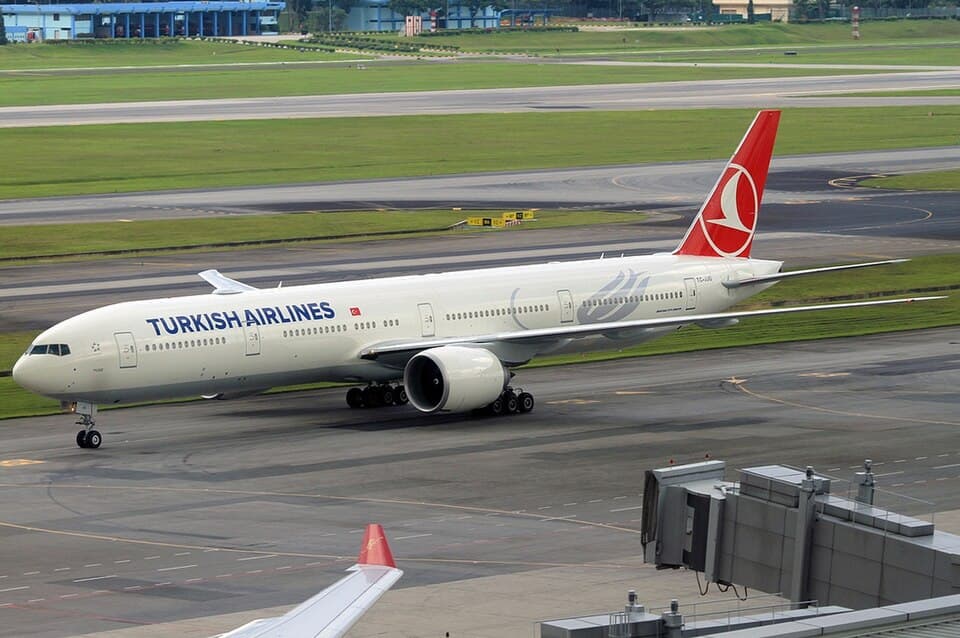
The 747 uses four engines. The 777 uses two, and they are enormous. The engines on the 777-300ER are among the most powerful commercial jet engines ever put into service, with a fan diameter close to the width of a narrowbody fuselage.
Fewer engines means:
- Fewer parts to inspect
- Fewer overhauls to schedule
- Fewer spare engines to own or lease
- Less fuel burned per mile
Modern engines are also far more reliable than the ones available when the 747 was designed. That reliability is what made long-range twin flying normal in the first place. Rules known as ETOPS let twins fly long stretches away from a diversion airport, and once those approvals became routine, the main safety argument for four engines faded.
2. Size and Seating
The 747 is the taller, wider-feeling airplane thanks to its upper deck. In a typical three-class layout, a 747-8 can seat a bit more than a 777-300ER. In dense single-class setups, the gap grows.
But the difference is smaller than most people expect. A well-configured 777-300ER lands close to jumbo territory. For most routes, that extra handful of seats on the 747 does not cover the extra cost of two more engines.
| Aspect | Boeing 747-8 | Boeing 777-300ER |
| Decks used for seating | Main deck plus upper deck | Single main deck |
| Typical three-class seats | Roughly 400 to 450 | Roughly 350 to 400 |
| Cabin feel | Two distinct zones | One long, wide cabin |
| Boarding and turnaround | Slower, more doors and stairs | Faster, simpler flow |
3. Range
Both jets fly very far. The Boeing 747-8 and the 777-300ER have broadly similar range figures, which surprises people who assume the four-engine jet must go farther.
The 777-200LR pushed range even further and became known for some of the longest nonstop flights ever flown by a commercial airliner. Range, then, is close to a tie. Neither aircraft loses this round in a way that changes a fleet decision.
4. Fuel Burn and Cost Per Seat
This is the round that ends the fight.
The 777 burns notably less fuel on a comparable mission. Spread across a full cabin, the fuel efficiency per seat advantage adds up fast. On a long-haul route flown daily, that gap can translate into a very large annual difference in fuel spending.
Airlines track this using measures like cost per available seat mile. Understanding how seat-mile costs are calculated explains why so many carriers quietly moved their flagship routes to twins. Fuel is often the single largest line item in an airline's budget, and a smaller number there flows straight to the bottom line.
Good to Know: Fuel is not the only cost that scales with engine count. Insurance, spares, engine leases, and shop visits all rise when there are four powerplants instead of two.
5. Maintenance and Parts
A four-engine jet demands more of a maintenance department. More engine changes. More borescope inspections. More line items on every check.
The 777 also benefits from being younger. Its parts supply chain is deep and active, with strong support for both new and used serviceable material. Anyone comparing used and OEM aircraft parts will find far more 777 inventory moving through the market than 747 inventory.
Sourcing matters here. Buyers need clean paperwork, correct part numbers, and confidence that a component is what the tag says it is. That means knowing how Boeing part numbers work and how to read the release documents that follow a part through its life. The differences between an EASA Form 1 and an FAA 8130-3 come up constantly in widebody support work.
Flying411 lists certified parts, avionics, and overhauled engines from verified sellers, which makes sourcing for a widebody fleet far less of a guessing game.
6. Cargo Ability
Here the 747 fights back, and it wins.
The 747 Freighter can open its nose. That single feature lets operators load long, awkward items that simply will not fit through a side door. Machinery, turbine blades, helicopter fuselages, and oversized industrial gear all travel this way.
The 777F is efficient and popular, and it carries a strong payload over long distances. But it cannot swallow outsize freight the way a nose-loading 747 can. For specialty charter cargo, the jumbo remains hard to replace.
Heads Up: Freighter demand is a big reason 747s stayed valuable long after passenger airlines moved on. Cargo economics follow different rules than passenger economics.
7. Purchase Price and Value
Both aircraft carry large price tags when new, and both fall in value over time. Published list prices rarely match what a buyer pays, since list price and real transaction price can differ sharply once volume discounts and delivery timing enter the picture.
On the used side, the picture splits:
- 747: limited passenger demand, strong freighter demand, thin buyer pool overall
- 777: deep buyer pool, active leasing market, steady demand for both passenger and freight roles
Age, hours, cycles, engine condition, and maintenance status drive value more than model name alone. The factors behind what a commercial aircraft is worth apply to both jets, but they bite harder on an aircraft with a small resale market.
8. Passenger Experience
Passengers often prefer the 747, and it is easy to see why.
- The upper deck feels private and quiet
- The nose section offers a distinctive first-class experience
- The cabin breaks into smaller, cozier zones
- The four-engine sound has a following of its own
The 777 counters with a very wide cabin, big overhead bins, large windows on newer builds, and a smoother, quieter ride on modern interiors. Comfort now depends far more on how an airline configures the seats than on which jet is under them.
Keep in Mind: A ten-abreast 777 in economy can feel tighter than a nine-abreast 747. Seat layout choices often matter more to comfort than the airplane type.
Side by Side: The Short Version
| Question | Winner |
| Which burns less fuel? | 777 |
| Which carries more passengers? | 747 |
| Which flies farther? | Close to even |
| Which costs less to maintain? | 777 |
| Which handles outsize cargo? | 747 |
| Which has better resale demand? | 777 |
| Which is still being built? | 777, through the 777X |
| Which do passengers love more? | 747, by a wide margin |
That table sums up the 747 vs 777 comparison neatly. The 747 wins the heart. The 777 wins the business case.
Why Airlines Moved to the 777
Airlines did not abandon the jumbo out of dislike. Several trends stacked up at once.
Point-to-point flying grew. Passengers stopped wanting to connect through giant hubs when a direct flight existed. Smaller widebodies opened thin long-haul routes that never could have filled a 747.
Fuel prices climbed. Every extra gallon burned became harder to justify. Four-engine jets felt the squeeze first.
Engine reliability improved. Once twins could fly long overwater legs routinely, the safety case for four engines lost its force.
Filling the jumbo got harder. A 747 needs a full cabin to make money. Miss that mark a few times a week and the route stops working.
The same forces hit the Airbus superjumbo. Anyone curious about how the two giants stacked up will find the A380 and 747 matchup covers the four-engine era from a different angle.
Pro Tip: When evaluating any widebody, look past fuel numbers and study utilization. An efficient aircraft that flies half full loses money faster than a thirsty aircraft that flies full.
Where the 747 Still Holds Its Ground
The jumbo is not finished. It simply moved into roles where its shape matters more than its fuel bill.
- Outsize freight: the nose door remains a genuine advantage
- Charter and special missions: high capacity on demand
- Government and head-of-state transport: the airframe still serves in specialized roles
- Modified and testbed aircraft: the 747 has long served as a platform for unusual projects
Freight operators built entire businesses around the type. As long as those aircraft can be maintained and supported, they will keep flying. Owners planning for that horizon need a clear view of life-limited parts and their tracking, since aging widebodies live and die by their component records.
Quick Tip: For any older widebody, ask for the maintenance records before you ask for the price. Paperwork gaps cost far more than a strong negotiating position can save.
What About the 777X?
The 777 story is still being written. Boeing's newest version, the 777X, comes in 777-8 and 777-9 forms. It uses new engines, a longer body, and a composite wing so wide that the tips fold up on the ground so the jet fits standard gates.
The program has run years behind its original schedule and has cost Boeing heavily. As of 2026, Boeing has continued flight testing and has pointed to first deliveries in 2027, with launch customers still waiting. Certification work has repeatedly stretched the timeline.
What it means for the comparison:
- The 777 line continues, while the 747 line is closed
- The 777-9 will be the largest twin-engine airliner in service
- Airlines waiting on the 777X have been keeping older widebodies flying longer
- Support, training, and parts investment in the 777 family will continue for decades
If you want to see how the 777 stacks up against Boeing's other modern widebody, the 777 and 787 breakdown covers the tradeoffs between size and efficiency. The 777 versus the Airbus A350 tackles the direct competitive fight.
Cost of Ownership: What Buyers Should Look At
Comparing two jets by list price is a trap. Ownership cost is where the real gap appears, and it stretches across the entire life of the aircraft.
Direct costs include fuel, crew, maintenance, and landing fees. Indirect costs cover things like ground handling, insurance, and administration. Splitting them properly, as covered in this look at direct and indirect operating costs, keeps a budget honest.
Other numbers to weigh:
- Engine reserves. Four engines means four sets of shop visits and four overhaul funds.
- Depreciation. Widebodies lose value quickly in the early years, and the reasons behind fast aircraft depreciation apply to both types.
- Residual value. Expected worth at the end of a lease or ownership term. The concept of residual value in aviation drives lease pricing more than most buyers realize.
- Appraisal accuracy. Knowing how commercial aircraft appraisals work protects you at the negotiating table.
- Parts availability. A cheap airframe with scarce parts is not cheap.
- Airworthiness verification. Confirming that a part is airworthy is a routine, non-negotiable step in widebody support.
Fun Fact: Jumbo jets are said to be among the most expensive aircraft to park. Storage space, environmental protection, and periodic system runs add up, even when the airplane never leaves the ground.
Ready to move from comparing to buying? Browse aircraft, engines, and certified parts on Flying411 and connect with verified sellers and service providers in one place.
So Which One Is Better for You?
The right answer depends on the mission.
Choose the 777 if you need:
- Long-haul passenger routes with strong economics
- Lower fuel burn per seat
- A deep parts and support network
- Better resale demand and lease options
- A type with a future production line behind it
Choose the 747 if you need:
- Nose-loading capability for outsize freight
- Maximum passenger capacity on a very dense route
- A specialty charter or mission platform
- An iconic aircraft where presence carries real value
For an airline building a modern long-haul network, the 777 is the practical pick, and the market has already voted with its wallet. For a cargo operator moving equipment that will not fit through a side door, the 747 stays in a league of its own.
Conclusion
The Boeing 747 vs 777 question has a clear answer for most operators and a sentimental answer for almost everyone else. The 777 flies the same distances with fewer engines, lower costs, and stronger resale support, which is why it took over the routes the jumbo once owned. The 747 keeps its crown in outsize cargo and in the memory of anyone who ever climbed the stairs to that upper deck.
Better does not always mean beloved. In this case, the numbers and the nostalgia landed on different airplanes.
Whichever side of the debate you fall on, the next step is the same: see what is available right now. Start your search at Flying411 and let the listings settle the argument.
FAQs
Is the Boeing 777 safer than the 747?
Both aircraft have strong safety records, and modern twin-engine jets meet strict reliability standards for long overwater flights. Engine count alone is not a meaningful safety measure today.
Can I still fly on a passenger Boeing 747?
A small number of airlines still operate passenger 747s on select routes, though the count has shrunk steadily. Schedules change often, so check current airline fleet information before booking.
How many pilots does each aircraft need?
Both the 747-400 and 747-8 and all 777 models are flown by two pilots. Very long flights on either type may carry additional relief pilots to meet duty time rules.
Why does the 747 have a hump?
Boeing raised the cockpit so the nose could hinge open for cargo loading. The space behind the flight deck became the upper passenger deck that gave the aircraft its famous profile.
Will Boeing ever build the 747 again?
There is no indication that Boeing plans to restart the line. Production ended in early 2023, and the tooling and supply chain have moved on to other programs.