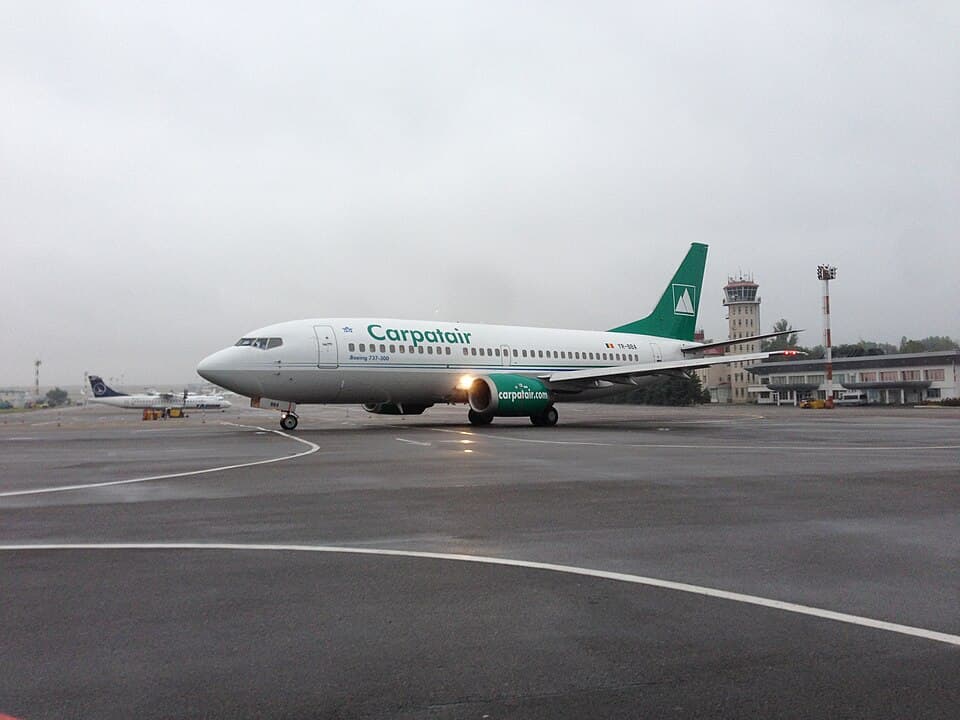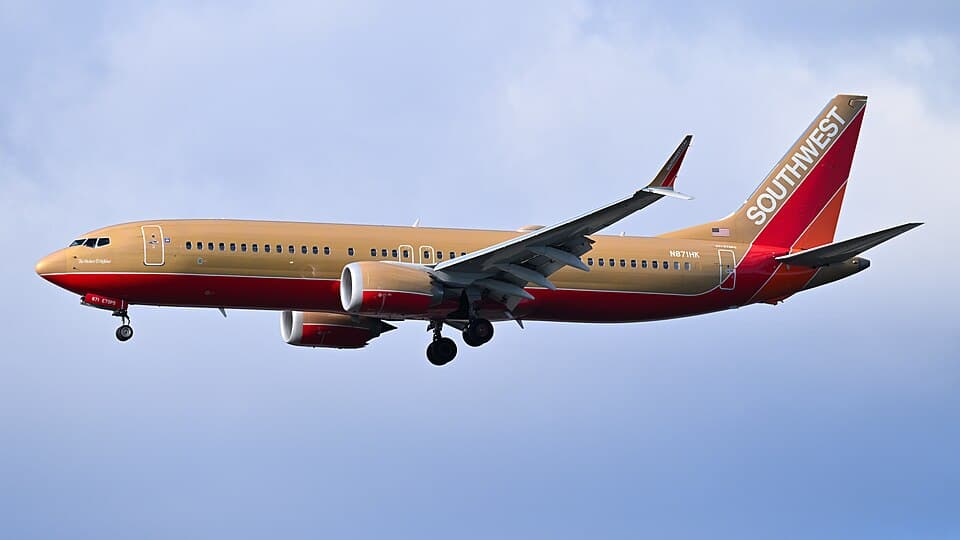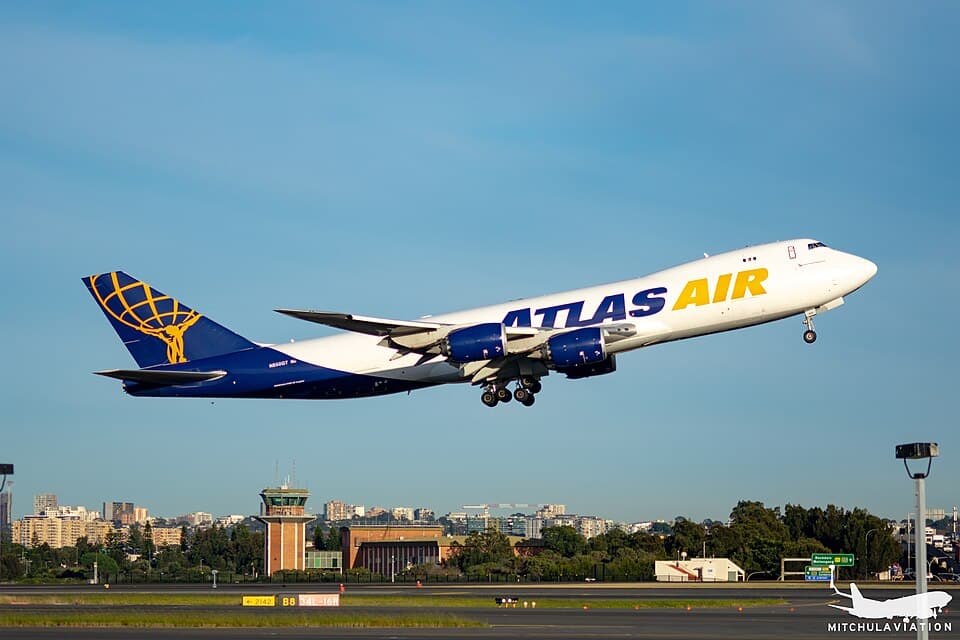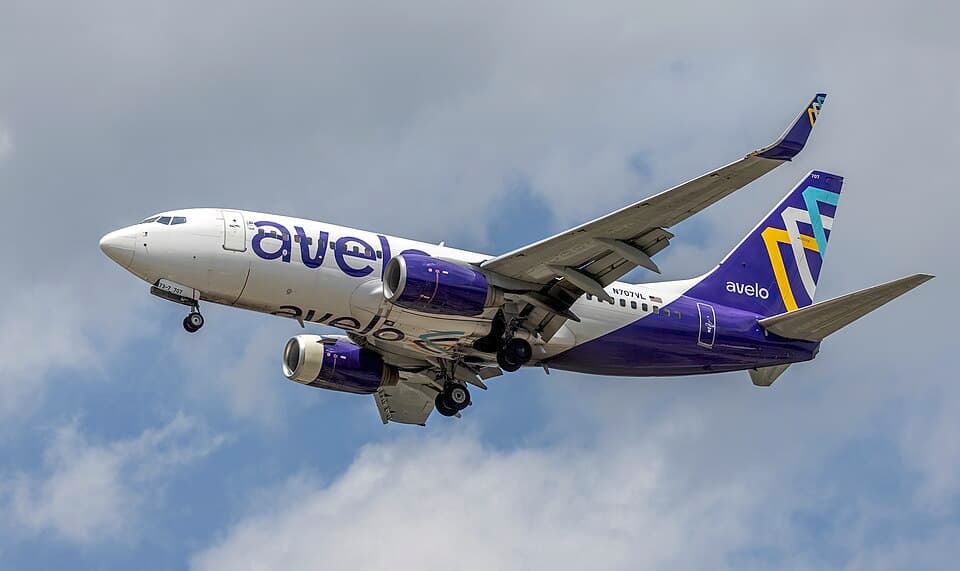
Look up at almost any big passenger jet built in the United States and you will see a familiar pattern. A seven at the front. A seven at the back. Something in the middle. The 707, the 737, the 747, the 787. Boeing model numbers follow that shape so faithfully that most travelers assume there must be a deep reason behind it. Maybe seven is lucky. Maybe it stands for the number of seats, or the sweep of the wing, or some secret engineering constant.
None of those guesses are right. The real story starts with a filing system, a marketing department, and one airplane that needed a boring name to keep a secret.
Key Takeaways
Boeing uses 7x7 numbers because the company divided its products into number blocks after World War II, and the 700 block was assigned to jet transport aircraft. The first commercial jet should have been the Model 700. Marketing thought that sounded flat, so they moved to 707, and the rhythm of that name stuck for the next seventy years.
| Question | Short Answer |
| Why does Boeing use 7x7? | The 700 number block was set aside for jet transports in the company's postwar filing system |
| Why 707 and not 700? | Marketing preferred the sound of "seven-oh-seven" over "seven hundred" |
| Do the middle digits mean anything? | No. They simply count upward as new jet families were launched |
| What do the dash numbers mean? | They identify the variant, such as the 737-800 or 777-300ER |
| What happened to the 717? | It was first assigned to a military tanker, then reused decades later for a small jetliner |
| Is there a Boeing 797? | Not yet. It is an unofficial nickname for a proposed midsize jet |
| Do all Boeing aircraft use 7x7? | No. Military types, helicopters, and space products use different systems |
Flying411 keeps track of these families every day, since the model number on a listing is the first thing that tells a buyer what they are looking at.
Where Boeing's Numbering System Came From
The answer sits in the years right after World War II. Boeing had spent the war building bombers at enormous scale. When peace arrived, the company had to reorganize around a much wider set of products.
Under company president William Allen, Boeing sorted its engineering work into blocks of three-digit numbers. Each block covered a category. It was a filing system, plain and simple, meant to help engineers keep track of what was what.
What Each Number Block Covered
The blocks broke down roughly like this:
| Number Block | What It Covered |
| 100s and 200s | Early Boeing aircraft, including some of the first all-metal airliners |
| 300s and 400s | Propeller-driven commercial and transport aircraft |
| 500s | Gas turbine engines and related industrial work |
| 600s | Rockets and missiles |
| 700s | Jet-powered transport aircraft |
| 800s | Held in reserve and never widely used |
| 900s | Marine craft, including hydrofoil projects |
That table is the whole secret. The Boeing 7x7 naming system has no hidden meaning. Jets landed in the 700 block because that is where jets went.
Fun Fact: The 900 block was not decoration. Boeing built passenger-carrying hydrofoil boats under a model number in that range, which means the same company behind the 747 also put numbered vessels on the water.
Some of Boeing's most famous prewar and wartime aircraft came from the earlier blocks. The Model 247 is often described as one of the first modern airliners. The Model 314 Clipper was the big flying boat of the 1930s. The Model 377 Stratocruiser carried passengers in double-deck comfort after the war. None of them start and end with a seven, because none of them were jets.
Why the First Jet Became the 707 and Not the 700
Boeing gambled its own money on a prototype jet transport in the early 1950s. That aircraft is remembered as the Dash 80.
Its official designation was Model 367-80. The 367 was the model number of the C-97 Stratofreighter, a propeller aircraft. Calling the new jet the "eightieth design study of the 367" made it sound like a minor variant of an existing plane. The naming choice is widely said to have helped keep a very expensive gamble quiet while it was still on the drawing board.
The Dash 80 led to two children. One became an Air Force tanker. The other became the first Boeing jetliner sold to airlines. Both were jet transports, so both belonged in the 700 block.
The Marketing Decision That Set Seventy Years of Naming
The commercial version should have been the Model 700. Boeing's marketing team pushed back. "Seven hundred" landed flat. "Seven-oh-seven" had rhythm, symmetry, and a beat you could say out loud in a ticket office.
So the number skipped ahead to 707. The tanker took 717.
Nobody at the time was designing a seventy-year branding scheme. They picked a number that sounded good. Then the 707 succeeded so completely that Boeing had every reason to keep the shape and never had a reason to break it.
Why It Matters: Once the 707 became a household name, the pattern turned into an asset. Airlines, mechanics, and passengers could all recognize a Boeing product from three digits alone, and that recognition became worth more than any change to the system could have gained.
Every Boeing 7x7 Model Number Explained, From 707 to 797
Here is the family, in order, with what each number represents. The middle digit carries no meaning of its own. It counts upward as new families arrived.
707: The One That Started It
The 707 was Boeing's first commercial jetliner and the aircraft that pushed the airline industry into the jet age during the late 1950s. It set the template for what a large jet transport looked like: swept wings, engines slung under the wings on pylons, and a long tube of a fuselage. Nearly every airliner since has borrowed that layout.
717: The Number With Two Lives
The 717 has one of the odder histories in Boeing aircraft designations. It was first handed to the Air Force tanker version of the Dash 80, the aircraft the military called the KC-135. The company number faded from use almost immediately, since the military designation was what everyone said out loud.
The number sat unused for decades. After Boeing acquired McDonnell Douglas in the late 1990s, the small MD-95 jetliner needed a Boeing name. The empty 717 slot was waiting. That is how a short-range twinjet designed by another company ended up wearing a number originally meant for a tanker.
Good to Know: This is why the 717 does not fit the timeline. It came to market long after the 737 and 747, so seeing it out of sequence is normal rather than a mistake in your reference book.
720: The Odd One Out
The 720 was a shorter, lighter derivative of the 707 built for airfields that could not handle the full-size aircraft. It began development under a 717 designation, briefly became the 707-020, and was finally shortened to 720 for marketing.
It is one of the few Boeing jetliners that does not end in a seven, which makes it a favorite piece of trivia among aviation fans.
727: The Trijet
The 727 arrived in the 1960s with three engines mounted at the tail and a T-tail above them. It was designed for shorter runways and smaller airports, and it gave airlines jet service in places that had been limited to propeller aircraft.
737: The Workhorse
The 737 started as a small, low-slung twinjet and grew into the most produced jetliner family in commercial aviation. Its low ground clearance is a direct result of the original 1960s design, which let ground crews load bags by hand without special equipment.
That single design choice echoed forward for decades. It shaped engine placement on later versions and drove much of the engineering behind the newest generation. Buyers comparing the two most common recent versions often start with the differences between the 737-800 and the MAX, then move into the finer points that separate the NG and MAX airframes.
747: The Jumbo
The 747 gave the world the upper deck hump and the phrase "jumbo jet." It was built at a time when Boeing expected supersonic travel to take over long-haul flying, so the design was made easy to convert to freight. That freighter-friendly nose is one reason the type stayed in cargo service long after passenger versions started to retire.
It also spent decades in a very public size rivalry, and comparisons between the A380 and the 747 still come up any time the subject of big airplanes does.
757: The Narrow-Body With Long Legs
The 757 was a single-aisle jet with unusually strong performance. It could climb quickly, work out of short and hot runways, and fly routes that most narrow-bodies could not reach. Production ended years ago, but airlines have never quite replaced what it did.
767: The First Boeing Twin-Aisle Twinjet
The 767 was developed alongside the 757 and shares a great deal of its cockpit design. It became a mainstay of transatlantic flying and remains in production in freighter and tanker forms.
777: The Big Twin
The 777 proved that two engines could do the work of four on long-haul routes. It was designed heavily with digital tools and with airline input from the start. Today it sits at the center of most wide-body fleet decisions, which is why side-by-side looks at the 777 against the 787 and at how the 777 stacks up to the A350 get so much attention.
787: The Number That Was Almost a Letter
The 787 spent its early life as the 7E7. The "E" stood for efficiency, and the placeholder let Boeing talk about the program before the final number was locked in.
Boeing then did something unusual. The company ran a public vote on a name for the aircraft, drawing hundreds of thousands of votes from around the world. Dreamliner won by a narrow margin over the other finalists. The model number was settled as 787 in the mid-2000s, and the E quietly retired.
Keep in Mind: Dreamliner is a marketing name, not a model number. The certificate, the maintenance manuals, and the sales listings all use 787-8, 787-9, and 787-10.
797: The Number Everyone Is Waiting On
There is no Boeing 797 in service. The number has become shorthand in the press for a proposed midsize aircraft that would sit between the 737 and the 787, a concept Boeing has referred to as the New Midsize Airplane.
The idea has been discussed for years without a firm commitment, a finalized design, or a confirmed launch date. Until Boeing says otherwise, 797 remains a placeholder that the internet assigned rather than a name the company has adopted.
Heads Up: Treat any specification chart for a "Boeing 797" with caution. Those numbers come from concept studies and reporting, not from a certified aircraft, and they have shifted repeatedly over the years.
What the Numbers After the Dash Mean
The three-digit model number tells you the family. Everything after the dash tells you which member of the family you are dealing with. Boeing variant numbers carry real weight in that second half.
The Series Number
The first digit after the dash identifies the series, usually in the order the variants were launched.
- 737-200 is an early generation
- 737-800 is a later generation
- 747-400 came after the 747-300
- 777-300 is a stretched version of the 777-200
Longer numbers are usually stretches, but not always. The 747SP was a shortened version built for range, and its name uses letters instead of a higher series number.
Customer Codes: The Digits That Confuse Everyone
For decades, Boeing added two characters to the model designation to identify the airline that originally ordered the aircraft. A 747-400 built for British Airways was a 747-436. A 737-800 built for a given carrier carried that carrier's code in the last two positions.
A few things about Boeing customer codes are worth remembering:
- The code reflects the original buyer, not the current operator
- It does not change when the aircraft is sold or leased to someone else
- It stays with the airframe even after a passenger-to-freighter conversion
- Codes were issued in sequences, and later ones mixed letters and digits
- Boeing retired the practice during the mid-2010s
That retirement is why newer aircraft carry clean designations. A recent wide-body is simply a 777-300ER rather than a 777-3 plus two mystery characters. Leasing changed the industry so much that tying an airframe's official name to its first customer stopped making sense.
Pro Tip: When you see a five-character designation like 737-8H4 in a logbook or listing, read the first two digits as the series and the last two as the original customer. It is a quick way to trace an airframe's history before you ever open the records.
Letters and Suffixes
Letters do the fine-tuning. A few of the common ones:
| Suffix | Meaning |
| ER | Extended Range |
| LR | Longer Range |
| SP | Special Performance, a shortened long-range 747 |
| F | Freighter, built as cargo from the factory |
| BCF | Converted Freighter, changed after passenger service |
| SF | Special Freighter, another conversion designation |
| MAX | The current 737 generation |
| X | The current 777 development program |
The 737 MAX broke the old habit in a small way. Its variants are the MAX 7, MAX 8, MAX 9, and MAX 10, and the formal designations read as 737-7 through 737-10 rather than the older three-digit style. If you want the full picture on how the newest generation is laid out, the breakdown of MAX specifications by variant covers the details.
Common Myths About the 7x7 System
The real explanation is so mundane that better stories filled the gap. Here are the ones that come up most often.
Seven is a lucky number. Appealing, but backwards. Boeing has never claimed any superstition behind the choice. The association with luck grew after the aircraft became successful, not before.
707 stands for the passenger count. This one borrows logic from elsewhere in the industry, since some manufacturers have used approximate capacity in their names. The 707 never carried anywhere near 707 people.
It comes from the sine and cosine of 45 degrees. The value 0.707 is familiar to every engineer, and the coincidence is genuinely charming. It is still a coincidence.
The wings are swept to match the number 7. They are not, and no Boeing wing has ever been shaped to resemble a digit.
Every Boeing aircraft uses 7x7. Far from it. Military programs, helicopters, and space hardware follow entirely different naming rules. Experimental military aircraft carry X-series designations, and the story behind the X-32 and X-35 fighter competition is a good example of a completely separate system.
Quick Tip: If someone tells you a Boeing number has a hidden meaning, ask which block it came from. Almost every myth falls apart the moment the postwar filing system enters the conversation.
Boeing has also broken its own pattern when it suited the moment. The company's supersonic transport project of the 1960s was designated 2707, a four-digit number that sat outside the usual scheme entirely. The project was cancelled before any aircraft flew.
How Boeing's System Compares to Airbus
Airbus took a different road. Its aircraft use an A followed by three digits, starting with the A300. The story there is that the number pointed loosely at intended capacity, though the aircraft grew past it in practice.
| Feature | Boeing | Airbus |
| Prefix | Number only | Letter A |
| Pattern | 7x7 | A3xx |
| Origin | Postwar product number blocks | Capacity reference on the first model |
| Variant style | Dash number, such as 737-800 | Dash number, such as A320-200 |
| Modern updates | MAX, X | neo, XWB |
Both systems now lean on suffixes to signal new engine and airframe generations. Boeing uses MAX and X. Airbus uses neo and XWB. The head-to-head between the 737 MAX and the A320neo is where those two naming philosophies meet most directly in today's market.
Flying411 lists aircraft from across both families, which makes it easier to line up comparable models when you are narrowing down a purchase.
Why Boeing Model Numbers Matter Beyond Trivia
A three-digit number is not just a label. It is the key that unlocks parts catalogs, maintenance schedules, valuations, and operating cost models. Get the number wrong and everything downstream goes wrong with it.
Parts and Traceability
Every component approved for a given model traces back to that designation. A part cleared for one series may be wrong for the next one, even inside the same family.
That makes the paperwork chain critical. Working through Boeing part numbering conventions is usually the first step, followed by confirming what kind of approval a component carries. Buyers often need to know what a PMA-approved component is, how used serviceable material compares to OEM stock, and what a complete traceability document package should contain.
The release paperwork matters just as much. The differences between an EASA Form 1 and an FAA 8130-3 affect where a part can legally be installed, and knowing how to confirm a component is airworthy protects you before money changes hands.
Beyond that, inventory decisions turn on category. Parts with hard retirement times fall under life-limited component rules, while the split between rotable and expendable items drives how a shop stocks its shelves. Anyone sourcing from unfamiliar suppliers should also know the warning signs that help in spotting counterfeit components.
Heads Up: Two aircraft with the same three-digit model number can take different parts. The series and the engine fit both matter, so always match the full designation before ordering.
Engines
Engine choice is tied closely to model and generation. The move from one 737 generation to the next brought a new powerplant, and the contrast between the CFM56 and LEAP families explains much of what changed in fuel burn and maintenance planning.
Value and Depreciation
Model numbers drive market value more than almost any other single factor. Two airframes of similar age can be worth very different amounts based on the series alone.
Buyers researching acquisition costs usually start with questions like what a 737 costs or what a 747 costs, then run into the reason used 737s hold their price so well. From there, the useful reading covers what sets a commercial aircraft's value, how formal appraisals are conducted, and why aircraft lose value quickly in their early years.
Two more pieces round it out. The gap between published list prices and real transaction prices surprises most first-time buyers, and understanding residual value forecasting matters for anyone financing or leasing.
Operating Costs
Once an aircraft is flying, the model number shapes the economics. The split between direct and indirect operating costs is the standard framework, and airlines fold everything into a single metric using the math behind cost per available seat mile.
Ready to put the numbers to work? Browse aircraft, engines, and certified parts on Flying411 and connect with the shops and specialists who support them.
What Comes After the 787
Boeing has one obvious problem. The 700 block runs from 707 to 797, and almost every slot is taken.
The company has some room to maneuver. It has already shown a willingness to reuse a retired number, as it did with the 717. It has stretched the pattern with suffixes like MAX and X instead of new base numbers. And it has stepped outside the scheme before, as the 2707 project showed.
Comparisons between generations are where most of the current interest sits. The long-running debate over the 747 and the 777 tends to end with a note that the numbering pattern outlasted one of the two.
Fun aside: the 787 skipped a dash number. The family went 787-8, 787-9, and 787-10, with no 787-7 ever reaching production.
The 777X program is another sign of the strategy. Rather than launching a new base number, Boeing kept the 777 name and added a letter, with the variants known as the 777-8 and 777-9. Certification has taken far longer than planned and first deliveries have slipped repeatedly, but the naming approach tells you something. Boeing would rather extend a trusted number than start a new one.
Good to Know: Reusing and extending numbers is not laziness. A familiar model number carries decades of pilot type ratings, maintenance infrastructure, and airline familiarity, all of which have real financial value.
Conclusion
Boeing model numbers look like a code because they are one, just a much simpler code than most people expect. Jets went in the 700 block. The marketing team liked how 707 sounded. Success did the rest, and seventy years later the pattern is one of the most recognizable naming conventions in any industry.
The next time someone at the gate tells you the seven means luck, you will know the truth involves a filing cabinet, a disguised prototype called the Dash 80, and a naming decision made because it sounded better out loud.
Numbers tell you what an aircraft is. Flying411 helps you find out what it is worth, what it needs, and who can keep it flying.
Frequently Asked Questions
Why did Boeing name the 720 without ending it in a seven?
The 720 was a derivative of the 707 that went through several designations during development, and the shortened form was chosen for marketing simplicity. It remains one of the few Boeing jetliners that breaks the 7x7 shape.
Does the middle digit in a Boeing model number mean anything?
No. It simply counts upward as each new jet family was launched, so the 737 came after the 727 and before the 747 in sequence rather than in size or capability.
Are Boeing military aircraft numbered the same way?
They are not. Military aircraft carry designations assigned under separate United States armed forces systems, such as the KC-135 or the P-8, even when the airframe is based on a commercial 7x7 model.
Can two aircraft share a model number but need different parts?
Yes, and this trips up buyers regularly. The series number, the engine selection, and the production block all affect which components are approved for a given airframe.
What will Boeing call its next new jetliner?
Nothing has been confirmed. The 797 name circulates widely in the press, but Boeing has not officially adopted it, and the company has previously reused older numbers or added suffixes instead of introducing new ones.