There is a sweet spot in aviation that sits right between humble piston singles and expensive private jets. That sweet spot is filled by small turboprop planes, and they have quietly become some of the most useful aircraft in the sky.
They fly fast, sip fuel for what they deliver, and land at airports a jet would never touch. Owners love them. Charter operators rely on them. Cargo haulers swear by them.
Pound for pound, a turbine engine spinning a propeller can outwork a much bigger piston engine, and that single fact reshapes everything from runway choice to fuel bills.
Key Takeaways
A small turboprop plane is a light aircraft powered by one or two turbine engines that spin propellers, giving it jet-like speed and reliability while still using short runways and burning less fuel than a jet. These planes serve owner-pilots, businesses, charter fleets, and cargo operators who need speed, range, and rugged access without the cost of a private jet.
| Topic | The Short Answer |
| What it is | A light plane powered by turbine engines driving propellers |
| Typical cruise speed | Roughly 250 to 330 knots, faster than most piston planes |
| Runway needs | Short, often unpaved, far less than a jet requires |
| Common engines | Pratt & Whitney Canada PT6A, Honeywell TPE331, GE Catalyst |
| Seats | Usually 4 to 11 people, depending on the model |
| Popular uses | Personal travel, business, charter, cargo, medevac, training |
| Price range | Roughly a few million to high single-digit millions when new |
Flying411 is an online aviation marketplace where buyers and sellers connect over aircraft, engines, and parts, which makes getting comfortable with the turboprop world a smart first move before you start shopping.
What Is a Small Turboprop Plane?
A turboprop is a turbine engine that spins a propeller. The turbine works like the core of a jet engine, but instead of pushing the plane forward with hot exhaust, most of its power goes into turning a prop through a gearbox. The propeller does the heavy lifting, and a little extra push comes from the exhaust.
A "small" turboprop usually means a light aircraft that seats anywhere from four to about eleven people. Some are flown by a single pilot. Some carry families on weekend trips. Others move boxes, fish, mail, or medical patients into places with rough little airstrips.
These planes fill the gap between two worlds. They are faster, higher-flying, and more capable than piston planes. They are cheaper and more flexible than jets. If you want to understand where they sit among the different small plane categories, the turboprop is the workhorse in the middle.
How a Turboprop Engine Works
The basic idea is simple. Air gets pulled in and squeezed by a compressor. Fuel is added and lit, which creates hot, fast-moving gas. That gas spins a turbine. The turbine drives the propeller through a reduction gearbox, since the turbine spins far too fast to turn a prop directly.
A turboprop engine burns jet fuel (Jet-A), not the avgas that piston planes use. Jet fuel is usually cheaper and easier to find around the world. Turbine engines also tend to be very reliable, with fewer moving parts than a big piston engine and long stretches between major overhauls.
Three engine families power most of these planes. The Pratt & Whitney Canada PT6A is the most common turboprop engine in general aviation by a wide margin. The Honeywell TPE331 shows up on many fast singles and older twins. The newer GE Catalyst is the first clean-sheet turboprop engine of its kind in decades, and it brings full digital engine control to the class.
Good to Know: The PT6 family has been in service for decades and has racked up an enormous number of flight hours across many aircraft types. That long track record is one big reason owners trust it.
Single-Engine vs Twin-Engine Turboprops
There are two flavors here, and the difference matters a lot for cost, training, and peace of mind.
A single-engine turboprop has one turbine up front. These planes are lighter, cheaper to buy, cheaper to run, and very popular with owner-pilots. Modern examples are loaded with safety tech, including automatic landing systems that can bring the plane down by themselves in an emergency. If you want a deeper look at this group, the world of single-engine designs is where most owner-flown turboprops live.
Twin-engine turboprops carry two turbines, one on each wing. They cost more and burn more fuel, but they offer a second engine for redundancy, more power, and usually a bigger cabin. Businesses and charter operators often prefer them for the extra margin. You can compare the trade-offs of stronger twin-engine options and the lighter light twin-engine props to see which style fits a given mission.
Why Pilots and Owners Choose Small Turboprops
So what makes these planes so beloved? It comes down to a handful of very practical strengths. A turboprop gives you a lot of capability without forcing you into jet-level spending.
Here are the big reasons people pick them:
- Speed that feels like a jet. Many small turboprops cruise in the 250 to 330 knot range. That is much faster than a typical piston single and fast enough to make long trips feel reasonable.
- Short and rough runway access. Turboprops thrive on short runways, including grass, gravel, and dirt strips. Jets simply cannot do that. This opens up thousands of small airports and remote spots.
- Lower running costs than a jet. They burn less fuel and often cost less to maintain than light jets, while still flying high above bad weather.
- A comfortable, pressurized ride. Most have a pressurized cabin, so passengers stay comfortable at high altitude without oxygen masks.
- Reliable turbine power. Turbine engines are known for dependability and long service life.
- Strong resale value. Popular models hold their value well, which matters a lot when you eventually sell.
Why It Matters: The ability to land on a short or unpaved strip is not a small perk. It means a turboprop owner can fly directly to a ranch, an island, a mountain town, or a job site, while a jet owner has to land far away and drive the rest. That is the kind of freedom that sells these planes.
This same flexibility is why turboprops show up in so many roles, from rugged backcountry flying to corporate shuttles and air ambulance work.
Top Small Turboprop Planes Worth Knowing
Now for the fun part. There are many strong choices in this class, and the right one depends entirely on your mission. Below are eight standout small turboprop planes, covering both singles and twins, fast cruisers and rugged haulers. Specs are given as general figures and can vary by model year and configuration.
| Model | Engines | Typical Seats | Known For |
| Pilatus PC-12 | Single | Up to 9 | Versatile cabin, rough-field ability |
| Daher TBM 960 | Single | Up to 6 | Speed and modern avionics |
| Piper M700 Fury | Single | Up to 6 | Fast climb and cruise |
| Cessna Grand Caravan EX | Single | Up to ~14 | Hauling people and cargo |
| Epic E1000 GX | Single | Up to 6 | Carbon-fiber speed |
| King Air 260 / 360 | Twin | Up to 9 to 11 | Proven twin comfort |
| Beechcraft Denali | Single | Up to 9 | New clean-sheet design |
| Piper M500 | Single | Up to 6 | Friendly entry point |
Pilatus PC-12
The Swiss-built Pilatus PC-12 is one of the most respected single-engine turboprops ever made. It has a large, flat-floor cabin that can hold up to nine people or fold down to carry cargo. It is widely known for landing on rough and unpaved strips, which is why ranchers, charter fleets, and remote operators love it.
The latest generation, the PC-12 PRO, was introduced in 2025 with a modern Garmin glass cockpit and an emergency autoland system. New examples typically run in the range of six million dollars or more, depending on options.
Daher TBM 960
The French-built Daher TBM 960 is a speed star. This fast single carries up to six people and cruises at speeds that rival some light jets. It uses a modern Pratt & Whitney Canada engine with full digital control, which makes power management almost automatic for the pilot.
The TBM 960 also includes an emergency autoland feature and a luxurious cabin. New list prices have sat in the four million dollar range, give or take, making it a favorite among owner-pilots who want jet-like speed in a single.
Piper M700 Fury
The Piper M700 Fury is the newest and fastest single-engine turboprop in Piper's long-running M-Class family. It replaced the earlier M600 and is built around a more powerful engine, which gives it a strong climb and a cruise speed widely reported around 300 knots.
It keeps a modern Garmin flight deck and offers an optional automatic landing safety system. The Fury is aimed at experienced pilots who want top-tier performance in a six-seat single.
Cessna Grand Caravan EX
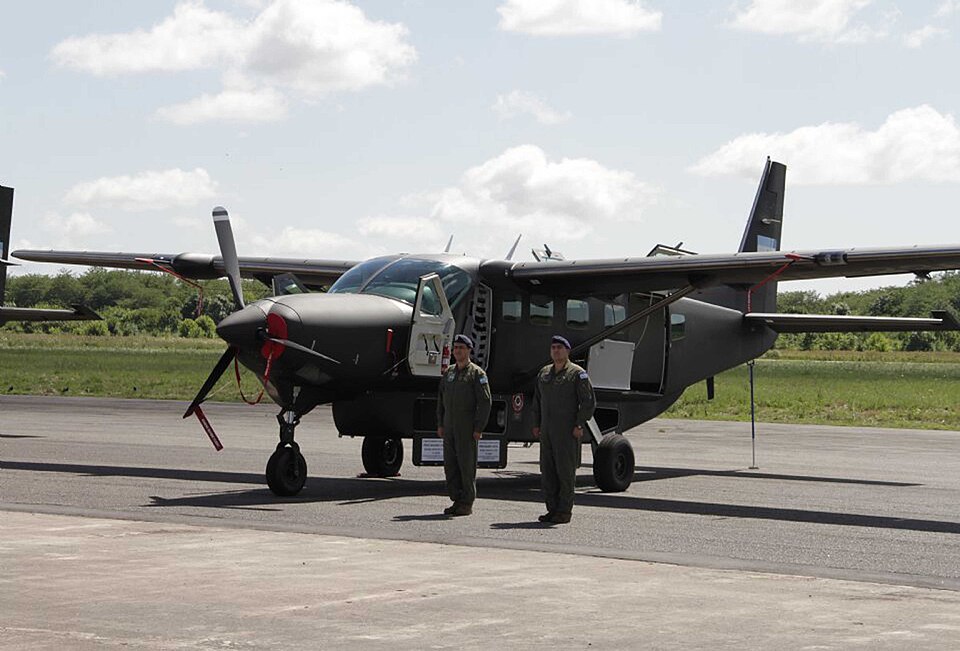
If your mission involves hauling rather than racing, the Cessna 208 Caravan and its bigger sibling, the Grand Caravan EX, are hard to beat. These rugged single-engine turboprops can carry a large group of passengers or a heavy load of cargo into short, rough airfields.
The Caravan is a global workhorse. You will find it flying skydivers, delivering mail, running island commuter routes, and serving as a bush plane. New examples sit in the low millions, which is reasonable for what they deliver. For buyers focused on payload, the Caravan is one of the great heavy-hauling single-engine planes.
Fun Fact: The Caravan family is said to be one of the most widely used utility turboprops in the world, flying in remote regions where few other aircraft can operate reliably.
Epic E1000 GX
The Epic E1000 GX is a sleek, carbon-fiber single that focuses on speed and range. Its all-composite body helps it move quickly and efficiently. It seats up to six and offers a roomy cabin for its class.
The E1000 GX competes closely with the TBM on speed and has built a loyal following among pilots who want a fast, modern single. New prices generally land in the four million dollar range.
Flying411 also connects you with certified professionals like A&P mechanics and avionics specialists, which matters when a turboprop needs a fresh inspection or a panel upgrade before it earns its keep.
Beechcraft King Air 260 and 360
The Beechcraft King Air is the most familiar name in light twin turboprops, and for good reason. The current King Air 260 and King Air 360 carry up to nine or more people in a comfortable, quiet, pressurized cabin. Two Pratt & Whitney Canada engines provide redundancy and strong performance, with a cruise speed widely reported around 310 knots and a range in the area of 1,700 nautical miles.
These are larger and pricier than the singles above, with new examples reaching into the high single-digit millions. Still, the King Air family has been a business-aviation staple for decades, which speaks to its reliability.
Heads Up: The King Air 260 and 360 sit at the upper edge of what most people call "small." They are light twins, not jets, but they are bigger and more expensive to run than the single-engine models on this list. Match the plane to the mission and the budget.
Beechcraft Denali
The Beechcraft Denali is a clean-sheet single-engine turboprop from Textron Aviation, built around the new GE Catalyst engine with full digital control. It promises a large flat-floor cabin, a modern Garmin cockpit, and an emergency autoland system.
The engine earned its certification in early 2025, and the aircraft itself has been working toward full certification with an expected entry into service around 2026. Forecast pricing has been in the six million dollar range. As of this writing, the Denali is still completing certification, so figures may shift once it reaches customers.
Piper M500
The Piper M500 is a friendlier entry point into turboprop ownership. It is a six-seat single with a pressurized cabin and a track record going back through Piper's Meridian line. It cruises slower than the speed champions, but it is easier on the wallet and a comfortable step up from high-end piston singles.
For buyers moving up from pistons, the M500 is a gentle on-ramp. It also pairs well with a study of private planes worth owning for anyone weighing long-term value.
How Much Do Small Turboprop Planes Cost?
Price is usually the first real question, and the honest answer is that it covers a wide range. A new small turboprop can cost a few million dollars on the low end and climb into the high single-digit millions for a well-equipped twin. Used examples can cost far less, which is where many first-time buyers start.
Here is a rough guide to new pricing. Treat these as ballpark figures that shift with options, model year, and market conditions.
| Model | Configuration | Approximate New Price (USD) |
| Cessna Grand Caravan EX | Single | Low millions |
| Piper M500 | Single | A few million |
| Daher TBM 960 | Single | Around four million or more |
| Epic E1000 GX | Single | Around four million or more |
| Pilatus PC-12 PRO | Single | Around six million or more |
| Beechcraft Denali | Single | Around six million (forecast) |
| King Air 260 / 360 | Twin | High single-digit millions |
The sticker price is only part of the story. Operating costs include fuel, insurance, hangar space, regular inspections, and engine reserves. Engine overhauls are a big one. Many owners set aside money per flight hour so that a future overhaul does not become a nasty surprise.
A few things push costs up or down:
- Single vs twin. Twins burn more fuel and need two engines maintained, so they cost more to run.
- How much you fly. Fixed costs like insurance and hangar fees hurt less when spread over more flight hours.
- Engine programs. Many owners enroll in hourly engine maintenance programs for predictable budgeting.
- Age and condition. A well-kept used plane with fresh inspections can be a smart value.
Keep in Mind: Operating costs vary a lot from owner to owner. The same model can cost very different amounts to run depending on hours flown, fuel prices, and maintenance choices. Always build your own budget rather than trusting a single quoted number.
When you start comparing real listings, you will see how widely turboprop aircraft for sale can range in price based on hours, avionics, and overall condition. For a broader sense of the numbers, it helps to study what small planes cost across the whole light-aircraft market.
Turboprop vs Jet vs Piston: How They Compare
People often ask where turboprops fit between piston planes and jets. The simplest way to see it is side by side. Each type wins in different situations.
| Feature | Piston Single | Small Turboprop | Light Jet |
| Engine | Avgas piston | Turbine and propeller | Turbofan jet |
| Typical cruise speed | Around 120 to 200 knots | Around 250 to 330 knots | Around 400 to 480 knots |
| Runway needs | Very short | Short, often unpaved | Longer, usually paved |
| Operating cost | Lowest | Moderate | Highest |
| Cabin | Small | Medium, often pressurized | Medium to large, pressurized |
| Best for | Training, short hops | Regional trips, utility, owner flying | Fast long-distance travel |
The takeaway is that a turboprop gives you most of the comfort and speed of a jet at a lower cost, plus access to airports a jet cannot use. A jet wins on outright speed and high-altitude smoothness over long distances. A piston single wins on price for short, local flying. If you are still weighing the leap, comparing turboprops against light jets is a useful exercise.
What to Consider Before Buying a Small Turboprop
Buying a turboprop is a big step, so it pays to think it through. The goal is to match the plane to your real mission, not the mission you imagine. Here are the key questions to answer first.
- What is your typical trip? Count your real passengers, your usual distance, and the airports you actually use. A short-runway home base points toward the Caravan or PC-12. A speed-focused mission points toward a TBM or Fury.
- Single or twin? Decide how you feel about engine redundancy. A single is cheaper and simpler. A twin offers a backup engine and more cabin.
- What is your full budget? Add fuel, insurance, hangar, inspections, and engine reserves to the purchase price. The plane you can afford to buy is not always the plane you can afford to fly.
- New or used? A used turboprop can save a lot of money, as long as the logbooks are clean and the inspections are current.
- What about training and insurance? Many turboprops require specific training and a certain pilot experience level, which affects insurance cost and availability.
- How is the maintenance support? Check that parts, service centers, and qualified mechanics are within reach of your base.
A thorough pre-purchase inspection is the single most important step. It can reveal hidden engine issues, corrosion, or avionics problems before you sign anything.
Pro Tip: Always pay for an independent pre-purchase inspection by a mechanic who knows that exact model. The few thousand dollars you spend can save you from a six-figure surprise after the sale closes.
Safety is another common worry, especially with single-engine designs. Modern turboprops carry advanced safety systems, including automatic emergency landing tech on several models. While some light piston planes rely on whole-airframe parachute systems, most turboprops lean on autoland and turbine reliability instead. If safety is top of mind, it is worth reading up on small plane safety before you decide.
Ready to compare real options? Browse current listings on Flying411 and see which single and twin turboprops are on the market right now.
Limitations and Things to Keep in Mind
No aircraft is perfect, and turboprops have their trade-offs. Knowing them up front helps you buy with clear eyes.
- They cost more than pistons. Both the purchase price and the running costs sit above piston planes, so they are a real financial commitment.
- They are slower than jets. If your trips are very long, a jet will save real time, though at a much higher cost.
- Training is required. Most turboprops demand specific training and a certain experience level before insurance will cover you.
- Single-engine nerves. Some buyers feel uneasy flying over water or rough terrain with one engine, even though turbine reliability is very high and autoland systems add a strong safety net.
- Maintenance access matters. In remote areas, finding qualified turbine mechanics and parts can take planning.
None of these are deal-breakers for the right buyer. They are simply the realities of stepping up into turbine ownership. Many owners find the freedom and capability well worth it once they match the plane to their needs. Browsing the wider field of private aircraft options can help you confirm that a turboprop is truly the right tier for you.
Conclusion
Small turboprop planes hit a rare balance. They give you jet-like speed and a comfortable, pressurized cabin, while still landing on short, rugged strips and burning less fuel than a jet. From the rugged Cessna Caravan to the speedy TBM 960, the proven King Air twins, and the brand-new Beechcraft Denali, there is a turboprop for almost every mission and budget. The key is to match the plane to the trips you actually fly, then build a realistic budget that covers fuel, inspections, and engine reserves.
Once you have a clear picture of your mission, the next move is simple: go look at what is out there.
Your next turboprop might be one search away, so head over to Flying411 and see which singles and twins are ready to fly today.
FAQs
What is the most popular small turboprop plane?
The Pilatus PC-12 and the Beechcraft King Air family are among the most widely flown small turboprops, prized for their versatility, comfort, and strong resale value.
Can one pilot fly a small turboprop alone?
Yes. Many single-engine turboprops, like the TBM 960 and Piper M700 Fury, are certified for single-pilot operation, though they usually require model-specific training and a certain experience level for insurance.
How fast do small turboprop planes fly?
Most cruise in the range of roughly 250 to 330 knots, which is noticeably faster than typical piston singles and fast enough to make long cross-country trips practical.
Are turboprops cheaper to operate than jets?
Generally yes. Turboprops usually burn less fuel and cost less to maintain than light jets, while still flying high enough to stay above much of the weather.
Do small turboprops need long runways?
No, and that is one of their biggest strengths. Many can operate from short, unpaved strips that jets cannot use, which opens up far more airports and remote destinations.