Small planes with parachutes sound like something from a cartoon, but they are very real, and they have changed the way many people think about flying. Picture a single rocket firing out of the back of an airplane, yanking a giant chute into the sky, and then floating the entire plane, people and all, gently down to the ground. No bailing out. No jumping. Everyone stays buckled in their seats the whole time.
For most of aviation history, a pilot in a failing aircraft had only their skill and a bit of luck. A whole-airframe parachute hands them one more option when everything else has gone wrong.
The idea sounds almost too simple to be real, and yet it has carried full airplanes safely back to earth again and again.
Key Takeaways
Small planes with parachutes use a rocket-powered chute that lowers the whole aircraft, with everyone inside, safely to the ground during an emergency. The pilot pulls a handle in the cockpit, a rocket drags the parachute out, and the plane floats down at a slow, survivable speed. These systems work best when there is enough height for the chute to open fully, and they have been credited with saving hundreds of lives.
| Topic | Quick Answer |
| What it is | A parachute attached to the whole airplane, not the person |
| How it deploys | A solid-fuel rocket pulls the chute out in seconds |
| Who made it famous | Cirrus Aircraft, with its CAPS system |
| Best-known planes | Cirrus SR20, SR22, and the Vision Jet |
| When to use it | Engine failure, loss of control, midair collision, bad weather |
| Key limit | Needs enough altitude for the chute to open |
| Track record | Linked to a large drop in fatal accidents when used in time |
Curious about the planes that carry this kind of safety gear? Flying411 is an online aviation marketplace where everyday pilots and buyers can look at real aircraft, parachute systems included, all in one place.
What Is a Whole-Airframe Parachute?
A whole-airframe parachute is exactly what it sounds like. Instead of the pilot wearing a parachute and jumping out, the airplane itself wears the parachute. When trouble hits, the chute deploys and lowers the entire aircraft to the ground.
This is very different from the parachutes you see skydivers use. Skydivers leave the plane. With a whole-airframe parachute system, nobody leaves anything. The seats, the wings, the engine, and the passengers all come down together as one piece.
The general name for this technology is a ballistic parachute. The word "ballistic" points to the small rocket that shoots the chute out fast. Speed matters here. In an emergency, a parachute that opens slowly is not much help. The rocket makes sure the chute is out and filling with air within a couple of seconds.
These systems show up across many different types of small planes, from two-seat trainers to single-engine personal aircraft and even a small jet. They are most common on lighter aircraft because a smaller, lighter plane is easier to slow down with a chute.
Good to Know: A whole-airframe parachute does not promise a perfect, damage-free landing. Its main job is to keep the people inside alive. The plane may still get banged up on touchdown, but the occupants have a strong chance of walking away.
How a Whole-Airframe Parachute Works
The whole process is fast and surprisingly simple from the pilot's seat. There is one handle, usually mounted on the ceiling between the two front seats. When the pilot pulls it, a chain of events kicks off in about two seconds.
This kind of setup is known as a ballistic recovery system, and the steps work like this:
- The pilot pulls the red handle in the cockpit.
- A cable fires an igniter, which lights a small solid-fuel rocket.
- The rocket blasts out of the aircraft, dragging the folded parachute behind it.
- The chute lines pull tight, and the canopy starts to open.
- A sliding ring controls how fast the chute fills, so it does not rip open too quickly.
- The plane settles under the canopy and begins a slow, steady descent.
The Rocket Does the Heavy Lifting
The rocket is the secret to making this work. A parachute packed inside the plane needs a strong, fast pull to get clear of the aircraft and open in the rushing air. The rocket accelerates to over 100 miles per hour almost instantly, which yanks the chute well away from the tail before it inflates.
The parachute itself is huge, but it is not made of heavy fabric. If a chute this size were made from the same nylon used for skydiving gear, it would weigh hundreds of pounds. Instead, engineers use lightweight composite material so the whole system stays light enough for a small plane to carry.
A Gentle Ride Down
Once the canopy is full, the airplane slows down and settles into a slightly nose-low position. This angle is on purpose. It lets the landing gear and the front of the plane take the hit first, which spreads out the force of landing.
The plane comes down at roughly 15 to 28 feet per second, depending on the system and the aircraft. That is a firm landing, similar to jumping off a low wall, but it is one the human body can handle when strapped into a proper seat.
Fun Fact: The idea of a parachute for a whole airplane is far older than most people think. An inventor is said to have patented a full-airframe parachute concept back in 1909, only a handful of years after the very first powered flights. The modern rocket-powered version simply made the old dream practical.
From Hang Glider to Whole-Plane Chute
The modern story starts with a scary fall. Boris Popov survived a serious hang glider accident in the 1970s, dropping a long way before somehow walking away. That brush with death set him thinking. Why should a flier have no backup at all when something breaks?
In 1980, Popov founded a company called Ballistic Recovery Systems, often shortened to BRS. The company put its first parachute on the market in the early 1980s and recorded its first real-life save not long after. Early systems were aimed at ultralights and very light aircraft, the smallest and simplest fliers in the sky.
The big leap came when Cirrus Aircraft decided to build a ballistic parachute into a full production airplane as standard gear. Working together with BRS, Cirrus put the system on its SR20, and federal regulators certified it in the late 1990s. That made it the first whole-plane chute approved as standard equipment on a certified aircraft.
There was a personal reason behind that choice, too. One of the Cirrus founders had survived a midair collision earlier in his career, an event that left part of his wing torn away. After living through that, he committed to giving future pilots a safety net he once wished he had.
Why It Matters: A safety feature born from two near-fatal accidents went on to protect thousands of other fliers. Hard experiences from a few people shaped a tool that the whole light-aircraft world now uses.
The Cirrus Airframe Parachute System (CAPS)
When people talk about small planes with parachutes, they are usually thinking of Cirrus. The Cirrus Airframe Parachute System (CAPS) is the most famous version of this technology, and for good reason. It comes standard on every Cirrus aircraft, from the trainers up to the jet.
The whole CAPS unit is light for what it does, and it tucks neatly into the airframe so it does not eat up cabin space. The handle sits overhead between the pilot and front passenger, painted bright red so nobody can miss it in a crisis.
Cirrus did more than bolt on a chute, though. The company also designed its wings with a special cuffed leading edge meant to resist spins. The thinking was simple. The fewer ways a plane can lose control, the fewer times anyone has to reach for that red handle. You can read more about aircraft built to handle aerobatic maneuvers and unusual flight, which use related design ideas to stay controllable.
Cirrus also learned that a parachute is only useful if pilots actually pull it. Early on, some pilots crashed without ever trying the chute, often because they were sure they could fix the problem themselves. The company responded with heavy training that drills one lesson into every Cirrus pilot: when in doubt, pull. As the training took hold, parachute pulls went up and fatal crashes went down. Today the Cirrus line is often pointed to as having one of the strongest safety records among similar top light aircraft.
Notable Small Planes With Parachutes
Cirrus may be the headline name, but plenty of other aircraft carry whole-airframe chutes. Some come with the system built in. Others can have it added later. Here are several worth knowing, covering trainers, sport planes, and a jet.
- Cirrus SR20. The plane that started the production-aircraft trend. A four-seat, single-engine design with CAPS as standard gear from the factory.
- Cirrus SR22. The bigger, faster sibling of the SR20 and one of the best-selling personal aircraft in its class. It also carries CAPS as standard, and it accounts for a large share of all real-world parachute saves.
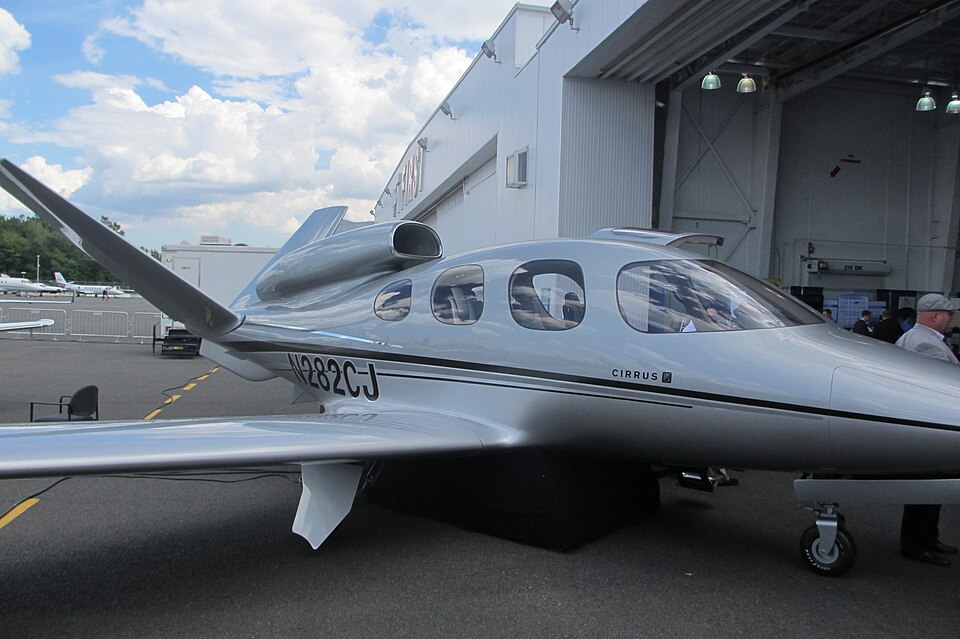
- Cirrus Vision Jet (SF50). A small single-engine jet and the first jet ever certified with a whole-plane parachute. On this aircraft the chute deploys from the nose instead of the tail. If you like the idea of compact jets, this is the one that brought the parachute concept into the jet world.
- ICON A5. A sporty amphibious light plane that can fly off land or water. Every A5 comes with a BRS parachute as standard, paired with a spin-resistant airframe.
- Flight Design CT series. Popular light sport aircraft, including the CTSW and CTLS, that have long offered ballistic parachute systems.
- Cessna 172 and 182. Two of the most common general aviation planes ever built. They cannot leave the factory with a parachute, but a certified retrofit system can be installed on existing aircraft, adding a chute to a classic design.
- Pipistrel light aircraft. Several models from this maker, including popular trainers, include a full airframe recovery parachute as standard equipment.
- Experimental and kit planes. A long list of homebuilt and kit aircraft can carry these chutes, including models from Kitfox, Van's RV, CubCrafters, Glasair, and Zenair. Builders often add the system as an option during construction.
The mix is wide, covering everything from humble trainers to capable small private planes. It even reaches into the world of small military trainers, where recovery chutes can protect student pilots.
Quick Tip: A whole-airframe chute is one feature among many when shopping for a plane. Pair it with the model's range, useful load, and running costs to get the full picture of what you are buying.
Looking at a Cirrus, an ICON, or a chute-equipped Cessna? On Flying411 you can browse new and used aircraft listings and even line up a pre-purchase inspection with a certified mechanic before you commit.
When Should a Pilot Pull the Handle?
A parachute is only as good as the moment it is used. Pull too late or too low, and the chute may not have time to open all the way. This is why timing is the heart of flying with a recovery system.
The most important factor is height. The chute needs room to deploy, fill with air, and slow the plane before it reaches the ground. Pull the handle near the dirt, and physics simply runs out of time.
General guidance from makers and pilot groups tends to follow a few clear ideas:
- There is an official minimum height for level flight, often around a few hundred feet above the ground.
- Higher is always safer, and many trainers suggest aiming to pull well above a thousand feet when possible.
- A plane in a spin needs more height than a plane flying level, since it is falling faster and in a worse position.
- Each aircraft also has a top speed for safe deployment, so pulling at very high speed can overload the chute.
There is a saying in the Cirrus community that sums it up: pull early, pull often. It is meant to fight the natural urge to keep wrestling with a broken airplane. The pilots who hesitate are often the ones who run out of altitude.
A chute is a strong answer for the worst moments, such as engine failure over rough country. Pilots who fly over forests, water, or mountains, the kind of ground that makes bush flying demanding, sometimes value a parachute the most, since a normal emergency landing might not be an option below them.
Pro Tip: Smart pilots decide in advance when they would pull the chute, before they ever take off. Making that choice calmly on the ground means the decision is already made if a real emergency hits in the air.
What Happens to the Plane After Deployment?
A common myth is that pulling the chute destroys the airplane every time. The reality is kinder than that. The system is built to protect people first, and the plane often survives in better shape than expected.
The landing gear and lower structure are designed to crush on impact, soaking up energy the way a car's crumple zones do. That crushing is a feature, not a flaw. It means less force reaches the people inside.
Plenty of planes that came down under a chute have been repaired and flown again. A fair number of parachute-landed aircraft have returned to service after being fixed up. Of course, much depends on where the plane lands. Touching down in a soft field is very different from coming down on rocks or into water.
Heads Up: A parachute is a last resort, not a license to take risks. Some critics worried these chutes might tempt pilots into bad weather or careless flying. Good training treats the chute as backup for a true emergency, never as a reason to fly into trouble on purpose.
Do These Parachutes Actually Save Lives?
This is the question that matters most, and the evidence is encouraging. An emergency parachute built into a small plane has a real, measurable effect on survival when it is used the right way.
An independent university study looked at accidents with and without parachute use. The researchers found a large drop in the odds of a fatal outcome when the chute was deployed compared with similar accidents where it was not. The study also noted fewer severe injuries and fewer fires after these landings.
The raw numbers tell a similar story. Across all Cirrus aircraft, the CAPS system has been credited with saving hundreds of lives over well past a hundred real deployments. Looking at the wider world of BRS systems on many kinds of aircraft, the total climbs even higher.
There is one striking pattern in the data. When the chute is pulled within its safe limits, meaning enough height and a reasonable speed, fatalities are extremely rare. Most of the tragic outcomes came from pulls that happened too low or too late, not from the system failing.
A few real situations show what this looks like in practice:
- An engine quits right after takeoff over a city, with houses everywhere and no runway in reach. The pilot pulls the chute, and the plane floats down without serious injury to anyone aboard.
- A pilot reports losing oil pressure in cruise, deploys the system, and survives even after the plane comes to rest in trees.
- A jet loses power over open water far from land, the chute brings it down, and the crew climbs into a raft to await rescue.
Why It Matters: The single biggest threat to a parachute working is a pilot who waits too long to use it. The hardware is reliable. The hard part is the human decision to give up control and trust the chute.
Costs, Weight, and Maintenance
A whole-airframe parachute is not free, and it is fair to weigh the costs against the benefits. There are three things to think about: the price of the system, the weight it adds, and the upkeep it needs over time.
Up-Front Cost and Weight
On aircraft where the chute comes standard, the cost is simply baked into the purchase price. For planes that can have one added, the system can range from a few thousand dollars on the smallest ultralights up into the tens of thousands for larger general aviation retrofits. If you are mapping out what small planes cost overall, the chute is one more line in the budget.
Then there is weight. A parachute system adds pounds, and on a small plane every pound matters. That weight cuts into how much fuel, cargo, or how many passengers you can carry. Buyers who care about hauling capacity often check a model's useful load to see how much room the chute leaves for everything else.
Repacks and Rockets
A ballistic parachute is a time-limited piece of equipment. The folded chute and the rocket do not last forever, so they must be serviced on a schedule. For many systems, the chute gets repacked and the rocket gets replaced about every ten years. Some systems also call for replacing small parts, like a line cutter, on a shorter cycle.
This service is not cheap, and it is usually treated as routine maintenance rather than something insurance covers. On a popular four-seat model, a full repack and rocket replacement can run into the low tens of thousands of dollars. That is a real cost of ownership to plan for, much like an engine overhaul or avionics upgrade.
Keep in Mind: A parachute repack is a known, scheduled expense, not a surprise. Factoring it into your ownership budget from day one keeps it from feeling like a shock when the ten-year mark rolls around.
The good news is that this work must be done by trained professionals, and finding the right shop is part of smart ownership.
Need a certified mechanic or service center to handle a parachute repack or a routine inspection? Flying411 connects you with trusted A&P mechanics and maintenance providers who know these systems inside and out.
Pros and Cons of Flying With a Parachute
No single feature is perfect for everyone. A whole-airframe chute brings clear strengths and a few real trade-offs. Looking at both sides helps you decide how much it matters for the kind of flying you plan to do.
The upsides:
- It offers a survivable option in moments that might otherwise be hopeless, like a structural failure or a midair collision.
- It works even if the pilot cannot fly the plane, since deploying it only takes a handle pull.
- It can function in a spin, in bad weather, or when the pilot is overwhelmed.
- It can lower stress for nervous passengers who feel better knowing a backup exists.
The trade-offs:
- It needs enough altitude to work, so it is no help in a very low emergency.
- The pilot gives up all control once it deploys and cannot steer to a chosen spot.
- It adds weight and cost, both up front and over the life of the plane.
- Wind can push the descending plane sideways, so the landing spot is not exactly predictable.
For some buyers, the peace of mind is worth every penny, which is why parachute-equipped models rank high among private planes worth owning. Others prefer the redundancy of a second engine and lean toward twin-engine designs instead. There is also a budget angle, since adding a chute or buying a model that includes one affects where a plane lands among budget-friendly options.
It is worth remembering that a chute is one layer of safety, not the only one. Spin-resistant wings, modern avionics, solid training, and good judgment all work together. The parachute is the backstop for when those other layers are not enough.
These systems also keep spreading. Makers continue adding them to new light sport models and even exploring uses on drones and future aircraft. As the technology improves, you can expect to see chutes on a growing share of small passenger planes and personal aircraft in the years ahead.
Thinking about owning an aircraft with this kind of safety built in? Start your search on Flying411 today, compare real listings, and find the plane that fits both your mission and your peace of mind.
Conclusion
Small planes with parachutes turn a frightening idea, losing control in the air, into something a pilot can plan for and act on. A single handle, a quick rocket burst, and a giant chute can carry an entire airplane back to the ground with everyone still inside. It is a beautifully simple answer to one of flying's oldest fears.
The technology is not magic. It needs altitude, training, and a pilot willing to trust it. But the record speaks for itself. When these systems are used in time, far more people walk away than would have otherwise. That is a powerful reason this once-doubted feature has become a selling point across the light-aircraft world.
Whichever plane wins your heart, the right safety gear and the right seller make all the difference. Browse aircraft, parts, and trusted aviation pros at Flying411, and find your next flight with confidence.
FAQs
Can a small plane parachute fail to open?
The chute can fail to open properly if it is deployed too low, too fast, or outside the system's limits, which is why pulling within the recommended height and speed is so important. Within those limits, the systems have proven highly reliable.
Does the pilot need special training to use the parachute?
Yes, makers strongly recommend training so pilots know exactly when and how to pull the handle. The hardest part is the decision to deploy, and training helps pilots make that call quickly under pressure.
Can you steer the plane while it is under the parachute?
No, once the chute is out the pilot becomes a passenger and cannot steer the aircraft. The plane drifts with the wind and comes down wherever the canopy takes it.
Are whole-airframe parachutes only for emergencies?
Yes, they are strictly a last-resort tool for situations like engine failure, loss of control, or structural damage. They are never used for normal landings or routine flying.
Will having a parachute lower my aircraft insurance?
It may, since some insurers view a recovery parachute as a safety plus, though policies vary widely. It is best to ask your own insurance provider how a chute affects your specific premium.