When most people picture a military aircraft, they think of a roaring fighter jet or a giant cargo hauler. A huge share of the real work in the sky gets done by something far smaller.
Small military planes train new pilots, watch over troops on the ground, chase insurgents, and fly missions that big jets would find clumsy or far too expensive.
These compact aircraft punch well above their weight. Air forces all over the world keep buying them, and they do it for good reasons. A light turboprop can circle over a battlefield for hours, land on a short dirt strip, and do it all for a sliver of the cost of a fast jet.
The little plane humming quietly above a special operations team often matters more than the supersonic one that never shows up.
Key Takeaways
Small military planes are compact, lightweight aircraft built for jobs like pilot training, light attack, surveillance, and moving small loads, rather than high-speed dogfighting or heavy bombing. Most are single-engine or twin-engine designs powered by turboprops or small jets. They cost less to buy and fly, they can use rough airfields, and they shine in low-threat missions where a costly fighter would be overkill. Their main weakness is survivability against modern air defenses, so they work best in skies that friendly forces already control.
| Category | What it does | Example aircraft |
| Trainers | Teach pilots basic and advanced flying | T-6 Texan II, Pilatus PC-21, T-38 Talon |
| Light attack / COIN | Strike ground targets in low-threat areas | A-29 Super Tucano, AT-6 Wolverine |
| Armed ISR / overwatch | Watch, track, and strike for ground teams | OA-1K Skyraider II |
| Lead-in fighter trainers | Bridge to frontline jets, can fight if needed | KAI T-50, BAE Hawk, L-39 |
| Light utility | Move small crews, cargo, or sensors | Militarized Cessna Caravan |
Flying411 is an online aviation marketplace where buyers, sellers, and pilots come together around aircraft, engines, parts, and trusted services. It is a handy home base if planes like these spark your curiosity.
What Counts as a Small Military Plane?
There is no official rulebook that stamps an aircraft "small." In plain terms, a small military plane is a light, low-weight design that carries a small crew and a modest payload. Most weigh a few tons at takeoff, not dozens. Many seat just one or two people. They are the lightweights of the military world, sitting well below fighters, bombers, and transports in both size and price.
Size alone does not tell the whole story. The mission matters just as much. These planes are built for tasks where being nimble and cheap beats being fast and heavy. Many of them share DNA with civilian aircraft, and a few started life as crop dusters or trainers before someone bolted on sensors and weapons. If you have read about the everyday types of small planes, a lot of the same airframes show up in uniform.
Good to Know: Many small military planes are direct cousins of civilian aircraft. The T-6 Texan II grew out of a Swiss trainer, and one modern attack plane started as a farm crop duster. Strap on armor, sensors, and hardpoints, and a humble airframe becomes a war machine.
The Main Jobs Small Military Planes Do
Small does not mean simple. These aircraft cover a wide spread of missions, and a single airframe can often handle several. Here are the main roles they fill.
Training new pilots
This is the bread and butter of small military aviation. Before a pilot ever touches a fighter, they spend hundreds of hours in a trainer. A good military trainer aircraft mimics the feel of a frontline jet without the eye-watering cost of flying one. Students learn basic flying, instrument work, formation, aerobatics, and weapons delivery on these planes first.
Light attack and counterinsurgency
A light attack aircraft carries bombs, rockets, guns, and sometimes missiles to hit targets on the ground. These planes earn their keep in low-intensity fights against insurgents, smugglers, and small armed groups. A turboprop loitering low and slow can spot a target, talk to the troops below, and put a precise weapon on it minutes later.
Armed surveillance and overwatch
Some small planes are flying eyeballs. Loaded with electro-optical and infrared cameras, they perform armed reconnaissance, tracking vehicles and people for hours and striking when needed. This overwatch role blends intelligence, surveillance, reconnaissance (ISR), and precision strike into one quiet, patient aircraft.
Light transport and utility
Not every mission involves weapons. Small planes shuttle a handful of troops, carry light cargo, drop supplies, and move sensors. The lightest workhorses in this lane share a lot with the small cargo planes used by civilian operators, just painted in different colors.
Liaison and forward air control
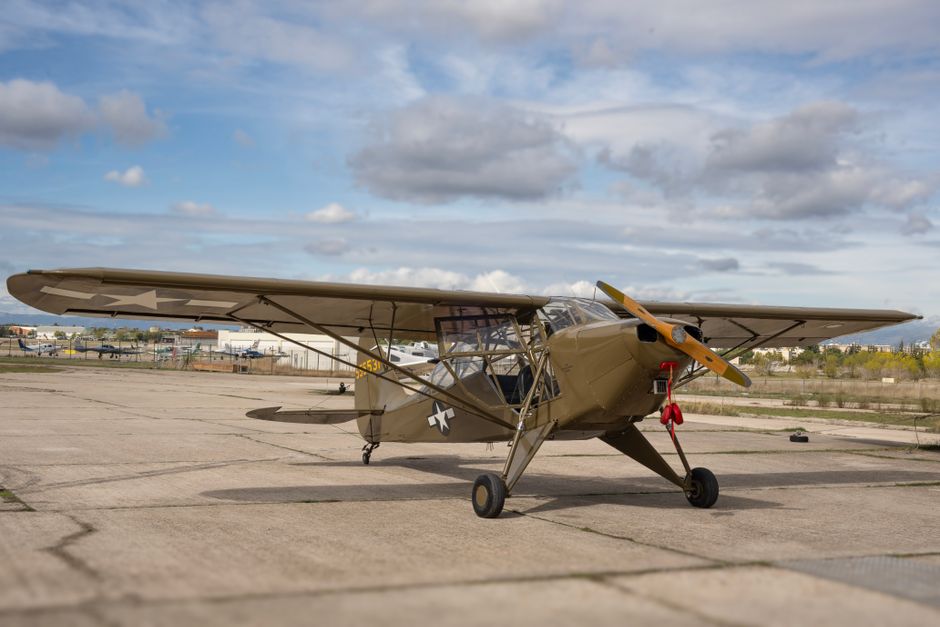
Going back decades, tiny observation planes flew low over the front lines to spot the enemy and direct artillery or airstrikes. Classic types like the Cessna O-1 Bird Dog and the twin-boom OV-10 Bronco built their reputation here. The role still exists today, often blended into the ISR and overwatch missions above.
Why It Matters: A fighter jet streaking past at the speed of sound has only seconds over a target. A light turboprop can stay overhead for hours. For troops on the ground waiting on air support, time on station can matter more than raw speed.
Why Air Forces Still Rely on Small Planes
In an age of stealth fighters and drones, it is fair to ask why anyone bothers with a small propeller plane. The answer comes down to cost, flexibility, and reach. Here is what these aircraft bring to the table.
- Low price to buy. A simple trainer or light attack plane costs a fraction of a frontline fighter. A nation on a tight budget can field a whole squadron for the price of one jet.
- Cheap to fly. The gap in operating cost per flight hour between a light turboprop and a fast jet is enormous. That difference is the line between air support that exists on paper and air support that actually flies.
- Rough field friendly. Many of these planes take off and land on short, unpaved strips. They do not need long, pristine runways or a small army of support crews.
- Long loiter time. Sipping fuel slowly, a light plane can stay airborne for many hours, watching and waiting.
- Easy to maintain. Fewer complex parts means fewer headaches and faster turnarounds in the field.
- Great for training. Their forgiving handling makes them ideal classrooms in the sky.
- Right-sized for small wars. Against insurgents or traffickers, a fighter is often overkill. A light plane does the job without breaking the bank.
That mix of strengths explains why so many of these planes lean on the proven, reliable single-engine planes that pilots already trust. Simplicity is a feature, not a flaw.
Fun Fact: Pilots in Ukraine have reportedly used a humble propeller trainer, the Yak-52, to chase down and shoot at enemy drones. It is a vivid reminder that small, cheap aircraft keep finding new tricks long after their first flight.
Turboprop or Jet: How Small Military Planes Differ
Small military planes split into two broad camps based on what spins up front. Each has a sweet spot.
Turboprops use a turbine engine to turn a propeller. They are fuel sipping, rugged, and cheap to run. They handle short and rough fields with ease. The trade-off is speed, since they cruise much slower than jets. Most light attack and basic training planes are turboprops.
Small jets trade fuel economy for speed and altitude. They scream toward the sound barrier, and some push past it. This makes them perfect for advanced training, where students need the feel of a real fighter. The cost is higher fuel use and a thirstier maintenance bill. If you enjoy the engineering side, the world of small jet designs shows how compact a capable jet can get.
Here is a quick side-by-side.
| Feature | Turboprop | Small jet |
| Speed | Slower, great for loitering | Fast, near or past Mach 1 |
| Fuel use | Very efficient | Thirsty |
| Field needs | Short, rough strips | Longer paved runways |
| Typical role | Light attack, basic training | Advanced and lead-in training |
| Operating cost | Low | Higher |
Keep in Mind: Faster is not always better. A slow turboprop that can hang over a target for six hours often delivers more value in a small war than a fast jet that burns through fuel in minutes.
Notable Small Military Planes in Service Today
Now for the planes themselves. The list below gathers some of the most recognized small military planes flying today, across training, light attack, and surveillance roles. Each one shows a different way to do a lot with a little. These are widely respected aircraft, though every air force tailors them to its own needs.
Beechcraft T-6 Texan II (and AT-6 Wolverine)
The T-6 Texan II is one of the most common trainers in Western service. It is a single-engine turboprop with tandem seats, built by Textron Aviation and based on the Swiss Pilatus PC-9. The United States Air Force and Navy use it to teach the basics, and many allied nations fly it too. Its glass cockpit mirrors the displays a student will later see in a real fighter.
Its armed cousin, the AT-6 Wolverine, beefs up the engine and adds wing hardpoints for rockets, gun pods, and guided bombs. That makes it a light combat aircraft that can train pilots one day and fly close air support the next. The Royal Thai Air Force is among the operators that have taken delivery of armed Wolverines.
Fun Fact: The "Texan II" name is a nod to the World War II era North American T-6 Texan, one of the most widely flown training planes in history. Beechcraft revived the proud name for its modern turboprop.
Embraer A-29 Super Tucano
The A-29 Super Tucano is perhaps the best known turboprop counterinsurgency aircraft in the world. Built by Brazil's Embraer, with a production line in the United States through Sierra Nevada Corporation, it has been adopted by more than a dozen air forces. It is rugged, cheap to run, and built to operate from hot, high, and rough airfields.
The Super Tucano has a serious combat record. It has flown missions in Afghanistan, Colombia, Nigeria, the Philippines, and Lebanon, hunting insurgents and traffickers. It carries machine guns, rockets, and precision-guided bombs across several hardpoints, and a two-seat version doubles as an advanced trainer. Pilots prize its long loiter time and its accurate targeting for tricky, close-quarters fights.
OA-1K Skyraider II (AT-802U Sky Warden)
The newest face on this list has the humblest roots. The OA-1K Skyraider II started as the Air Tractor AT-802, a crop duster and firefighting plane. Air Tractor and L3Harris militarized it into the AT-802U Sky Warden, and it won the United States Special Operations Command Armed Overwatch program. It entered service with Air Force Special Operations Command in 2025.
This single-engine turboprop is built for special operations support in remote places. It carries advanced sensors, can loiter for many hours, and lands on short dirt strips that fighters cannot touch. Its job blends ISR with close air support and precision strike, packing the work of several aircraft into one affordable airframe.
Heads Up: The OA-1K can be taken apart and loaded into a large transport plane, then reassembled in the field within hours. That lets it pop up almost anywhere in the world on short notice, a rare trick for a combat aircraft.
Pilatus PC-21
Switzerland's Pilatus PC-21 is a high-performance turboprop trainer that pushes the line between prop and jet training. Its powerful engine and fighter-style cockpit let air forces teach advanced skills on a turboprop, saving expensive jet hours for later. Many air forces around the globe have adopted it for exactly that reason. Its forgiving yet capable nature also makes it a star at airshows, where aerobatic trainers like this routinely fly upside down for the crowd.
BAE Systems Hawk
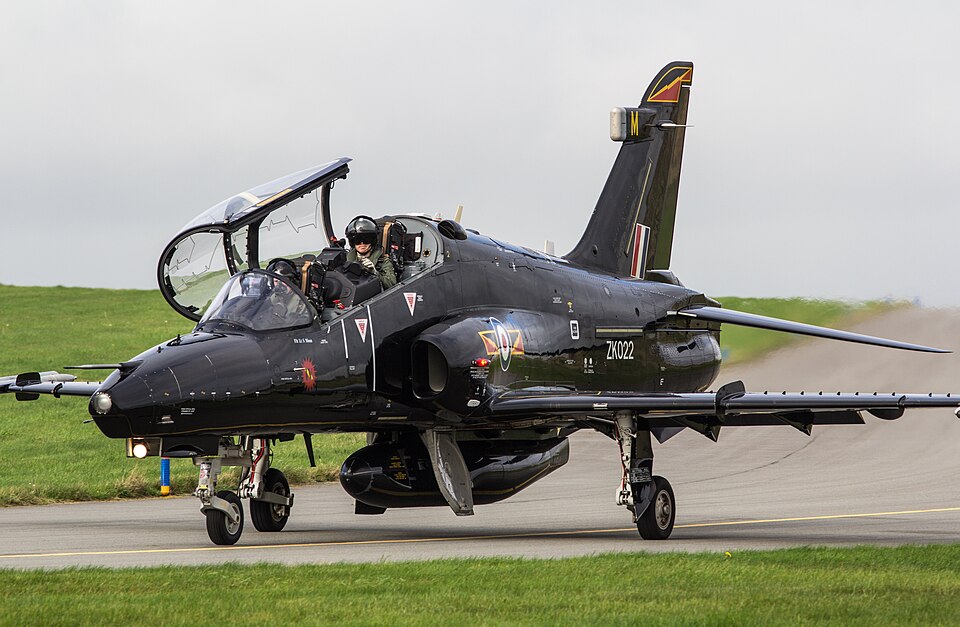
The British BAE Systems Hawk is a single-engine advanced jet trainer that first flew in the 1970s and never really stopped. It teaches pilots the feel of a jet, and armed versions can fly light strike missions. The Hawk is famous as the mount of the Royal Air Force Red Arrows display team, who paint the sky in red, white, and blue smoke. Decades of upgrades have kept it relevant far longer than anyone expected.
Aero L-39 Albatros
The Czech Aero L-39 Albatros became the standard jet trainer across much of the former Eastern Bloc, and thousands were built. It is tough, simple, and cheap to run, which is why so many still fly today in military and civilian hands. A modern update, the L-39NG, keeps the family going with fresh avionics and engines for training and light attack work.
Pro Tip: Retired L-39s are among the more attainable ex-military jets on the civilian market. They show up at airshows and in private collections, though owning one means budgeting carefully for fuel, parts, and specialized maintenance.
Northrop T-38 Talon
The Northrop T-38 Talon is a twin-engine supersonic trainer that has shaped generations of American fighter and bomber pilots. Sleek and fast, it teaches students to handle a jet that flies faster than the speed of sound. It has served for decades and is slowly handing off duty to a newer design, but its long career makes it one of the most influential trainers ever built.
KAI T-50 Golden Eagle and FA-50
South Korea's KAI T-50 Golden Eagle, built with Lockheed Martin, is a supersonic advanced trainer that blurs into a real fighter. Its armed sibling, the FA-50, is a genuine light fighter with radar and missiles. The family has sold well on the export market, with operators including Poland, the Philippines, Indonesia, Iraq, Thailand, and Malaysia. For smaller air forces, it offers frontline punch at a friendlier price than a top-tier jet.
Boeing T-7A Red Hawk
The newest trainer in the bunch, the Boeing T-7A Red Hawk, was developed with Sweden's Saab to replace the aging T-38. It is a modern supersonic jet trainer built around digital design and an advanced cockpit, meant to prepare pilots for fifth-generation fighters. As it enters service, it represents the next chapter in how air forces grow their pilots.
Looking to put a real airframe in your hangar? Flying411 lists new and used airplanes, jets, turboprops, and helicopters, plus overhauled engines and certified parts to keep them flying.
How Much Do Small Military Planes Cost?
Price is one of the biggest reasons small military planes exist, so it deserves a closer look. Exact figures swing widely based on the model, the avionics, and the weapons fit, so treat any number as a ballpark.
In general, basic turboprop trainers tend to be the most affordable, often landing in the low millions of dollars per aircraft. Armed light attack turboprops cost more, frequently climbing into the higher single-digit or low double-digit millions once sensors and weapons are added. Advanced jet trainers and light fighters sit higher still. Even so, all of them remain far cheaper than a modern frontline fighter, which can cost many times more.
The bigger savings often show up in daily operating costs. A light turboprop can fly for a small fraction of what it takes to keep a fast jet in the air each hour. Over years of service, those savings add up fast. If you want a feel for how purchase prices scale across the lighter end of aviation, this breakdown of what small planes cost offers a useful civilian comparison.
Quick Tip: When comparing aircraft costs, always look past the sticker price. Fuel, maintenance, crew, and parts over the life of the plane usually dwarf the original purchase. A cheap-to-buy plane that is expensive to run can cost more in the long haul.
The Limits of Small Military Planes
For all their strengths, these aircraft are not miracle workers. Honesty about their limits is part of using them well.
The biggest catch is survivability. A slow, lightly protected plane is vulnerable against modern surface-to-air missiles and enemy fighters. Against a well-armed peer enemy, sending a turboprop into contested skies would be risky at best. Military leaders are clear about this. Small attack planes are built for skies that friendly forces already control, not for slugging it out with advanced air defenses.
Payload is another limit. A light plane carries far less than a dedicated bomber or heavy strike jet. Range and speed are modest too. These are tools for specific jobs, not all-purpose war machines. Used in the right place, they are superb. Used in the wrong place, they are exposed.
Good to Know: When air forces talk about "permissive" or "semi-permissive" environments, they mean skies where the enemy cannot seriously threaten aircraft. Small military planes thrive there. In contested airspace against a major power, they step aside for stealth jets and drones.
Can Civilians Own Military Planes?
Plenty of people fall in love with these aircraft and wonder if they can own one. The short answer is sometimes. Many retired trainers and light jets end up on the civilian market, where collectors, airshow pilots, and warbird fans fly them for the sheer joy of it. Demilitarized L-39s, T-6 Texans, and older trainers turn up for sale fairly often.
Owning one is a serious commitment. The weapons are removed, paperwork and certifications can be complex, and the running costs are steep. Parts for older or foreign aircraft can be hard to find. Still, for the right buyer, few things beat flying a piece of aviation history. Those drawn to the lighter, more practical side of ownership often start instead with the gentler world of small private planes before working up to something exotic.
If a warbird feels like a leap, the same skills and gear that keep these planes flying apply across general aviation. From rugged taildraggers similar to bush planes to efficient cruisers with strong useful load, the civilian fleet borrows plenty from military design.
Ready to start the hunt for your own aircraft? Browse the listings on Flying411 and connect with sellers, mechanics, and aviation pros who can help you take the first step.
Small Planes, Big Roles
Small military planes prove that size is not the same as importance. From turboprop trainers shaping tomorrow's fighter pilots to nimble attack planes guarding troops on the ground, these compact aircraft carry a workload far larger than their frames suggest. They are affordable, flexible, and tough, and they fill jobs that bigger, faster aircraft simply cannot do as well.
As long as air forces need cheap, capable wings for the everyday fight, the little planes will keep flying.
Curious where these aircraft fit into the wider world of flight? Take your next step with Flying411, where aircraft, engines, parts, and trusted aviation services all live under one roof.
Frequently Asked Questions
What is the smallest plane in military service?
Some of the smallest are tiny observation and liaison aircraft, historically light two-seaters used to spot targets, along with modern compact trainers. Many of the very smallest "eyes in the sky" roles have shifted to drones today.
Can small military planes carry missiles?
Yes, many light attack types carry guided rockets, bombs, and gun pods, and some can be fitted with air-to-air or air-to-ground missiles. The exact loadout depends on the model and its hardpoints.
How many crew do small military planes usually carry?
Most carry just one or two people. Trainers seat a student and an instructor, while many light attack and surveillance planes fly with a pilot and sometimes a second crew member to run sensors and weapons.
Are small military planes used in major wars against powerful enemies?
They are best suited to low-intensity conflicts and skies that friendly forces control. Against a major power with advanced air defenses, they are too vulnerable and usually give way to stealth jets and drones.
What is the most widely used small military trainer?
The T-6 Texan II family and Pilatus turboprop trainers are among the most common in Western and allied service. The right choice for any air force depends on budget, mission, and how far pilots need to progress.