Big jumbo jets get all the attention, but a huge share of the world's air freight moves on planes you could almost park in a large garage.
These little haulers land on gravel, ice, and grass strips where bigger aircraft would never dare to touch down. They carry mail, medicine, fresh fish, car parts, and just about anything else that needs to get somewhere fast.
The best small cargo planes are the quiet backbone of regional shipping. They fly the short hops that connect tiny towns to major hubs. They reach islands, mountain villages, and mining camps that have no roads at all.
Many of them have been doing this exact job, reliably, for decades.
When a package absolutely has to reach a village with a short dirt runway, the answer is almost never a 747.
Key Takeaways
The best small cargo planes are tough single-engine and twin-engine aircraft built to haul freight into short and remote runways. Top picks include the Cessna 208 Caravan, the Cessna 408 SkyCourier, the Daher Kodiak 100, the Pilatus PC-12, and the de Havilland Canada Twin Otter. These planes trade speed and size for the ability to carry a useful load almost anywhere, often on rough fields that big freighters cannot use. Buyers usually pick one based on payload, range, runway needs, and how much it costs to run.
| Aircraft | Engine Setup | Known For |
| Cessna 208 Caravan / Super Cargomaster | Single turboprop | The classic feeder freighter |
| Cessna 408 SkyCourier | Twin turboprop | Carries full shipping containers |
| Daher Kodiak 100 | Single turboprop | Rough-field toughness |
| Pilatus PC-12 | Single turboprop | Speed, range, and a big door |
| de Havilland Canada DHC-6 Twin Otter | Twin turboprop | Lands almost anywhere |
| Britten-Norman BN-2 Islander | Twin piston/turbine | Short island hops |
| Beechcraft 1900 | Twin turboprop | Pressurized regional hauling |
| Let L-410 Turbolet | Twin turboprop | Cheap, rugged, everywhere |
| Antonov An-2 | Single radial | Huge load, tiny runway |
At Flying411, we keep a close eye on the utility and cargo aircraft that keep regional shipping moving, so buyers and operators always know what their real options are.
What Counts as a Small Cargo Plane?
A small cargo plane is a light aircraft built or converted to carry freight instead of passengers. Most fall into the world of small cargo aircraft that move loads from a few hundred pounds up to a few tons. They usually fly short distances, often under a few hundred miles, and connect small airports to larger sorting hubs.
These planes are tiny next to the machines most people picture when they think of air freight. Compared to the largest airliners carrying hundreds of tons, a small freighter might haul the weight of a single car. That is the whole point. They go where the big planes cannot.
Most small cargo planes share a few common traits:
- High wings that keep propellers clear of the ground and make loading easier
- Big cargo doors so workers can slide in boxes, pallets, and odd-shaped freight
- Flat cabin floors that handle heavy loads without seats in the way
- Fixed landing gear built to take a beating on rough strips
- Turboprop engines that sip fuel and start in cold weather
Good to Know: Many small cargo planes started life as passenger aircraft. Operators pull out the seats, add tie-down rails, and turn a regional commuter plane into a freighter in a matter of hours.
The line between "small" and "medium" is fuzzy. For this list, the focus stays on aircraft that one or two pilots can fly, that work from short fields, and that carry roughly up to a few tons of cargo.
Why Small Cargo Planes Still Matter
Air freight is a relay race. A package might start on a jumbo freighter crossing an ocean, then land at a hub where big jets like Boeing's freight lineup take over the long hauls. But that last short leg into a small town often needs a smaller plane.
This is where regional freight lives. Small cargo planes fly the feeder routes that stitch the whole network together. They pick up boxes from sorting centers and drop them at airports too small for anything larger. Without them, overnight delivery to remote areas simply would not work.
Think about the kinds of places these planes serve:
- Island communities with no bridges and short runways
- Mountain towns cut off by snow for months at a time
- Mining and oil camps deep in the wilderness
- Rural medical routes carrying blood, organs, and urgent supplies
- Fishing villages that fly fresh catch to market the same day
Why It Matters: For many isolated communities, a small cargo plane is the only reliable link to the outside world. When the weather closes the seas or the roads, that single-engine freighter becomes a lifeline for food, mail, and medicine.
Big delivery companies lean on these planes too. Major parcel carriers have long used fleets of small feeders to reach the corners of their networks. The humble single-engine freighter is one reason a package can leave a city one evening and land in a tiny town the next morning.
Best Small Cargo Planes for Short-Haul Freight
Here are nine standout small cargo planes, from single-engine workhorses to rugged twins. Each one earns its spot through reliability, payload, and the ability to land where it counts.
1. Cessna 208 Caravan and Super Cargomaster
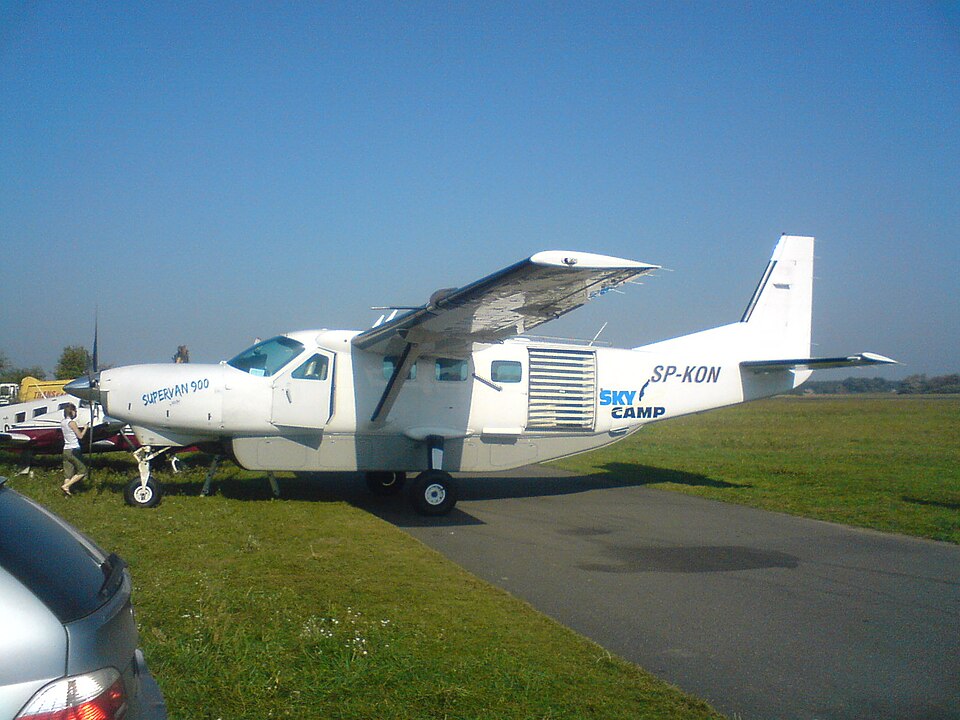
The Cessna 208 Caravan is the plane most people picture when they hear "small freighter." It is a single-engine turboprop with a high wing, a roomy cabin, and a famously tough Pratt & Whitney PT6A engine. Thousands have been built since the 1980s, and they fly in roughly a hundred countries.
The cargo story really took off when FedEx asked Cessna to build a windowless freight version. That became the Cargomaster, and later the stretched 208B Super Cargomaster with a belly pod for extra space. A Caravan can haul somewhere around 3,500 pounds of useful load, which is huge for one engine. For buyers who care about hauling weight on a budget, it ranks among the planes with the highest useful load single-engine designs on the market.
Fun Fact: The Caravan was first dreamed up as a modern replacement for older bush planes hauling freight into remote parts of Africa, where fuel and smooth runways were both hard to find. That rugged, go-anywhere DNA is still baked into the design today.
It is not fast, and it is not pressurized. But it is simple, dependable, and cheap to run for its size. That mix is why the Caravan remains a favorite for feeder cargo around the world.
2. Cessna 408 SkyCourier
The Cessna 408 SkyCourier is the new kid, and it was built from a clean sheet for exactly one job: hauling freight. This twin-engine turboprop was designed hand in hand with FedEx, which wanted an aircraft that could carry about double the Caravan's load and swallow full shipping containers.
The freighter version can hold three LD3 containers, the same kind used on big airliners, and carry roughly 6,000 pounds of cargo. It has a wide flat floor, a large rear cargo door, and a single-point fueling system that speeds up turnarounds. Two PT6A engines give it more power and a second engine for peace of mind over water and rough country.
The SkyCourier first entered service in the early 2020s and has been rolling out to operators since. It slots neatly into the gap between small single-engine haulers and larger regional freighters.
Pro Tip: If your loads come palletized or boxed in standard containers, an aircraft sized for LD3s can save real time and money. You load the same container that came off the big jet instead of repacking every parcel by hand.
3. Daher Kodiak 100
The Daher Kodiak 100, first built by Quest Aircraft, is a single-engine turboprop made for one thing: working hard in rough places. It looks a lot like a Caravan, and it competes in the same class, but it leans even harder into short-field and backcountry flying.
The Kodiak carries roughly 3,500 pounds of payload and gets off the ground in a very short distance, even when fully loaded. Its landing gear is built tall and sturdy to soak up bad runways. An optional belly pod adds cargo room, and the design pairs naturally with floats for water operations.
One neat feature is the way it handles loading. Pilots can keep the engine running while freight goes in and out on one side, a trick that saves time on quick stops. The Kodiak has found fans among bush operators, humanitarian groups, and anyone who flies into places that punish weaker aircraft. It sits comfortably among the best rugged bush planes flying today.
4. Pilatus PC-12
The Pilatus PC-12 is the polished, fast cousin in this group. It is a single-engine turboprop from Switzerland, and it is known for blending speed, range, and comfort with real cargo ability. It is pressurized, which most planes on this list are not, so it can fly higher and faster over weather.
What makes the PC-12 a strong freighter is its large rear cargo door and flat floor. Operators can load big, bulky items that would never fit through a normal passenger door. The cabin converts between passengers and cargo with ease, which is why so many companies use it as a flexible "do everything" aircraft.
It costs more than a Caravan or Kodiak, both to buy and to run, but it gives you more speed and range in return. For buyers weighing utility against comfort, it often shows up on lists of the best private turboprops to own.
Heads Up: Most small cargo planes are unpressurized, which limits how high they fly and how smooth the ride is over weather. A pressurized aircraft like the PC-12 fixes that, but you pay for it in higher purchase and operating costs.
5. de Havilland Canada DHC-6 Twin Otter
The Twin Otter is a legend. This twin-engine turboprop has been hauling people and freight into the world's worst airstrips since the 1960s, and a modern version is still being built today. If a runway is short, icy, gravelly, or perched on a mountainside, the Twin Otter has probably landed on it.
It can fly with wheels, skis, or floats, which makes it one of the most adaptable aircraft ever made. Operators in the Arctic, the Himalayas, and remote islands rely on it for supplies that arrive no other way. With both engines, it offers a safety margin that single-engine planes cannot match over open water.
The Twin Otter is not quick, and its boxy shape is not pretty. But few aircraft can match its ability to land heavy in tiny spaces and walk away from rough conditions. That reputation keeps it in steady demand.
Keep in Mind: A second engine adds safety over water and hostile terrain, but it also doubles a lot of your maintenance. Twins cost more to own and run, so the choice between one engine and two is really about your routes and your budget.
6. Britten-Norman BN-2 Islander
The Britten-Norman Islander is a small twin built in Britain for one clear purpose: short hops between islands and small towns. It is simple, sturdy, and cheap to operate, with fixed landing gear and an honest, no-frills design.
The Islander carries modest loads, but it shines on very short routes where bigger planes make no sense. Some flights between tiny island groups last only a few minutes. The plane handles full freight runs as easily as it carries passengers, and operators often swap between the two by the hour. It also overlaps with the world of small passenger aircraft seating around six people, which makes it a flexible little machine.
You will find Islanders working the Scottish isles, the Caribbean, and remote corners of every continent. Decades after it first flew, it remains a practical choice for the shortest, toughest routes in aviation.
7. Beechcraft 1900
The Beechcraft 1900 is a step up in size and comfort. It is a pressurized twin-engine turboprop that started life as a regional airliner, then found a busy second career as a freighter. With pressurization, it flies higher and faster than most planes on this list.
As a cargo hauler, the 1900 carries more than the Caravan-class singles while still working from fairly short runways. Operators value its proven systems, its solid range, and the cabin space for boxes and small pallets. Many former passenger 1900s now spend their nights flying freight between hubs.
It costs more to run than a single, but it brings range, speed, and all-weather ability. For operators who need to move a bit more cargo a bit farther, it fills a useful middle ground.
Need to move cargo aircraft, engines, or parts? Flying411's aviation marketplace lists everything from utility turboprops like these to overhauled engines and certified avionics, all in one place.
8. Let L-410 Turbolet
The Let L-410 Turbolet comes from the Czech Republic and is one of the most widely used small twins in the world. It is a twin turboprop built to be tough, simple, and affordable, which is exactly why so many operators in challenging regions love it.
The L-410 handles short and rough runways with ease, and it shrugs off cold weather that would ground softer aircraft. It carries a useful load of passengers or freight, and its low purchase price makes it popular where budgets are tight. Thousands have been built, and new versions keep the design current.
For buyers who want twin-engine safety without a luxury price tag, the L-410 is hard to beat. It quietly does heavy work across Africa, Asia, South America, and Eastern Europe every single day.
9. Antonov An-2
The Antonov An-2 is the wild card, and it is impossible to leave off. This single-engine biplane was first built in the late 1940s, and it is one of the most produced aircraft in history. It looks ancient, and it kind of is, but it does things modern planes struggle to match.
The An-2 can lift a surprisingly heavy load and get off the ground in an absurdly short distance. It flies so slowly that it can almost hover into a stiff wind, and it can land on fields barely longer than a soccer pitch. Its big radial engine is loud and thirsty, but it is also famously hard to break.
Pilots like to joke that the An-2 has no listed stall speed because it barely stalls at all. For hauling bulky freight into a rough patch of dirt with no real runway, this old biplane still earns its keep.
Quick Tip: When you size up any small freighter, look past the brochure cruise speed. For cargo work, short-field performance, door size, and useful load usually matter far more than how fast the plane goes.
How to Choose the Right Small Cargo Plane
Picking the best small cargo plane is all about matching the aircraft to the mission. There is no single winner. The right plane for a snowy mountain route is the wrong plane for hot-and-high desert work. Here are the factors that matter most.
Payload. Start with how much weight you need to carry on a typical day. Payload capacity is the number that decides if a plane can even do your job. Be honest about your heaviest regular loads, not just your average ones.
Range. How far between stops? Short island hops need very little range. Long runs across empty country need more fuel and often a second engine. If range is your main worry, it helps to study how long-range aircraft trade payload for distance, since the same rules apply to turboprops.
Runway and field type. This is huge. Paved runways open up almost any plane. Short, soft, or unpaved runways narrow your choices fast. Aircraft built for short takeoff and landing work, with high wings and tough gear, become essential off the pavement.
Single engine or two. One engine is cheaper to buy and maintain. Two engines add safety over water and wild terrain. Your routes should make this call for you, not the brochure. It is worth comparing your single-engine picks against twin-engine options before you commit.
Operating cost. Fuel, maintenance, insurance, and crew add up fast. A plane that is cheap to buy can still be expensive to run. Always think in cost per flight hour, not just sticker price.
Keep in Mind: The most capable aircraft is not always the smartest buy. A plane that perfectly fits your routes and your budget will earn more money than a fancier machine you cannot keep busy or afford to feed.
Many buyers also weigh how easy a plane is to convert between passengers and cargo. A flexible aircraft can chase whatever work is available, which makes it easier to keep flying and earning.
Not sure which aircraft fits your routes? Browse current listings and connect with trusted sellers and aviation pros on Flying411 to find the right cargo plane for your operation.
What Small Cargo Planes Cost to Buy and Operate
Cost is where dreams meet reality. Small cargo planes span a wide price range, and the purchase price is only the beginning. Operating costs often decide which aircraft actually makes sense.
On the buying side, prices swing based on age, hours, condition, and equipment. A well-used older single can be surprisingly affordable. A brand-new, purpose-built twin freighter runs into the millions. Rugged classics like the Antonov An-2 sit at the cheap end, while modern designs command much higher prices.
Operating costs usually break down like this:
- Fuel, which depends on engine size and how much you fly
- Maintenance, including inspections, parts, and engine overhauls
- Insurance, shaped by the plane, the routes, and the pilots
- Crew, since some planes need two pilots and others just one
- Storage, like hangar fees and tie-downs
Single-engine turboprops tend to be the most affordable to run, which is a big reason they dominate feeder cargo. Twins cost more because you are feeding and maintaining two engines. Pressurized planes add complexity and expense on top of that.
It helps to compare these humble haulers with the high end of aviation to see the full picture. The eye-watering numbers behind what private jets cost to run show why operators love cheap, simple turboprops for cargo. Where a luxury jet burns money by the minute, a Caravan keeps costs low and steady.
Heads Up: Engine overhauls are one of the biggest hidden costs in any turboprop. Before you buy, always check how many hours are left on the engine. A cheap plane with a tired engine can turn pricey in a hurry.
The smart move is to think about cost per mission. A plane that costs more per hour but carries double the load can still be cheaper per pound delivered. Run the real numbers for your routes before you fall in love with a price tag.
Single-Engine vs Twin-Engine Cargo Planes
One of the biggest choices in this whole category is one engine or two. Both setups have earned their place, and the right answer depends entirely on where and how you fly.
| Factor | Single Engine | Twin Engine |
| Purchase price | Lower | Higher |
| Operating cost | Lower | Higher |
| Safety over water | Less margin | More margin |
| Maintenance | Simpler | More involved |
| Best for | Short feeders, land routes | Long legs, water, rough country |
Single-engine planes like the Caravan and Kodiak win on cost. They are cheaper to buy, cheaper to maintain, and simple to operate. For short hops over land, where a glide to a field is always possible, one engine is often plenty.
Twin-engine planes like the SkyCourier, Twin Otter, and Beechcraft 1900 win on safety margin and capability. If one engine quits over open water or jagged mountains, the second engine gets you home. That peace of mind costs money, but for some routes it is non-negotiable.
Aviation is full of machines built for one specific extreme. There are aircraft designed to fly into hurricanes, planes that can reach the edge of space, and aerobatic types that happily fly upside down. Small cargo planes sit at the opposite, humble end of that spectrum. Their whole job is quiet, dependable hauling, day after day.
Speed and luxury live in a different world entirely. The fastest private jets, the biggest private jets, and the most refined high-end private jets chase comfort and pace. Cargo haulers chase value and reliability. Both matter, but they answer very different questions.
Safety records also shape these choices. Studying major aviation accidents over the years has pushed every category, including cargo, toward better training, better gear, and smarter operations.
The Bottom Line on Small Cargo Planes
The best small cargo planes are not the flashiest aircraft in the sky, and they were never meant to be. They are the dependable workhorses that move freight to the places everything else forgets. From the everywhere-you-look Cessna Caravan to the brawny Cessna SkyCourier, the rugged Kodiak, and the unstoppable Twin Otter, each one earns its keep by doing a hard job well.
The right pick comes down to your routes, your loads, and your budget. Match the plane to the mission, watch your operating costs, and check that engine before you buy. Do that, and a small freighter can be one of the most productive aircraft an operator can own.
When you are ready to find your next cargo hauler, engine, or part, browse trusted listings and connect with certified aviation pros at Flying411, where the right aircraft and the right people are only a search away.
Frequently Asked Questions
What is the most popular small cargo plane?
The Cessna 208 Caravan is widely considered one of the most popular small cargo planes in the world, with thousands built and operators in roughly a hundred countries. Its low cost, simple design, and strong payload make it a go-to feeder freighter.
Can one pilot fly a small cargo plane?
Yes, many small cargo planes are certified for single-pilot operation, including the Cessna Caravan, the Kodiak, and the Pilatus PC-12. Larger or older twins may need two pilots depending on the type and the rules where they fly.
How much cargo can a small plane carry?
Small cargo planes typically carry anywhere from a few hundred pounds to a few tons. Single-engine types like the Caravan haul roughly 3,500 pounds, while a purpose-built twin such as the Cessna SkyCourier can carry around 6,000 pounds.
Are small cargo planes safe?
Small cargo planes have a long, proven track record, and turboprop engines are known for their reliability. As with any aircraft, safety depends heavily on good maintenance, well-trained pilots, and careful operations.
Why do cargo planes have high wings?
High wings keep the propellers and engines clear of the ground, which protects them on rough strips. They also place the cabin floor closer to the ground, making it much easier to load heavy and bulky freight.