Just think of boarding a plane in New York and stepping off in Hong Kong without a single fuel stop. That is the everyday promise of the longest range private jets, a small group of aircraft built to cross oceans and continents in one smooth flight.
These jets pack huge fuel tanks, advanced wings, and quiet cabins designed for travelers who spend long hours in the air.
Most private planes can hop between cities or countries. Only a handful can link almost any two points on Earth nonstop.
The gap between an eight-hour flight and a sixteen-hour flight comes down to engineering choices most passengers never see. The difference between a good private jet and a record-setting one often hides inside the wings.
Key Takeaways
The longest range private jets today can fly roughly 7,500 to 8,200 nautical miles without stopping, which is enough to connect distant cities like Hong Kong and New York or London and Perth in a single trip. The Gulfstream G800 and Bombardier Global 8000 lead the pack, with several Gulfstream and Bombardier models close behind. Range depends on fuel capacity, engine efficiency, and how heavy the plane is when it takes off.
| Aircraft | Approx. Max Range | Known For |
| Gulfstream G800 | ~8,200 nm | Current range leader |
| Bombardier Global 8000 | ~8,000 nm | Fastest business jet, very low cabin altitude |
| Bombardier Global 7500 | ~7,700 nm | Four-zone cabin, proven track record |
| Gulfstream G700 | ~7,500–7,750 nm | Longest cabin, top speed near Mach 0.935 |
| Gulfstream G650ER | ~7,500 nm | Record-setting endurance flights |
| Dassault Falcon 10X | ~7,500 nm (planned) | Wide cabin, still in development |
| Dassault Falcon 8X | ~6,450 nm | Three engines, short-runway friendly |
| Bombardier Global 6500 | ~6,600 nm | Strong range at a lower entry point |
Flying411 brings together aircraft listings, trusted aviation services, and industry insights in one place, so the world of private jets feels a little less out of reach.
What Makes a Private Jet Long Range
Range is simply how far a plane can fly before it needs more fuel. For private jets, range is usually measured in nautical miles, which are slightly longer than the miles you see on a car odometer. One nautical mile equals about 1.15 regular miles.
A short-range private jet might fly 1,000 to 3,000 nautical miles. That covers trips like New York to Miami or London to Athens. The ultra-long-range business jets on this list play in a completely different league. They start near 6,500 nautical miles and climb past 8,000.
To reach those numbers, builders focus on a few key things:
- Fuel capacity. Bigger tanks mean more flying time. These jets carry tens of thousands of pounds of fuel.
- Engine efficiency. Modern engines burn less fuel for the same thrust, stretching every gallon further.
- Aerodynamic wings. Smooth, advanced wing shapes cut drag and help the plane glide farther on less power.
- Weight control. Lighter materials let the plane carry more fuel and people without wasting energy.
When all four come together, the result is a jet that can stay airborne for fifteen hours or more.
Fun Fact: A Gulfstream G650ER is widely credited with one of the longest nonstop business jet flights on record, covering roughly 8,379 nautical miles from Singapore to Tucson, Arizona back in 2019. That is about as far as some commercial airliners fly.
How Private Jet Range Is Measured
Here is where things get tricky. The range printed in a brochure is almost never the range you get on a real trip. Brochure numbers come from near-perfect test conditions. Think light payload, calm winds, and the most fuel-friendly cruise speed.
Real flights rarely line up that neatly. A full cabin, heavy luggage, strong headwinds, and required fuel reserves all eat into the maximum range a jet can actually deliver.
Industry planners use a standard called NBAA IFR reserves. In plain terms, the plane must always land with extra fuel in the tank for safety. That reserve is non-negotiable, so it shrinks the usable distance.
A simple way to think about it:
- Start with the brochure range, say 8,000 nautical miles.
- Add passengers, bags, and gear. The number drops.
- Account for headwinds and weather. It drops again.
- Hold back safety fuel reserves. It drops once more.
By the end, a jet rated for 8,000 nautical miles might comfortably fly 6,500 to 7,000 with a full load. That is still incredible, but it is good to know the gap exists.
Good to Know: When operators quote range "at Mach 0.85," they mean long-range cruise speed. Push the throttle to a faster Mach 0.90 and the same jet covers less distance, because faster flight burns fuel quicker.
The 8 Longest Range Private Jets Flying Today
Now for the main event. These eight aircraft sit at the very top of the longest range private jets category. A few are brand new, one is still in development, and all of them can shrink the globe in ways most travelers only dream about. They rank among the biggest private jets in the world, and the engineering shows.
1. Gulfstream G800
The Gulfstream G800 currently holds the range crown among purpose-built business jets. It can fly roughly 8,200 nautical miles at long-range cruise speed. That kind of reach makes brutal routes like Hong Kong to New York doable nonstop with room to spare.
The G800 uses the same Pratt & Whitney engines as its sibling, the G700, but pairs them with a refined wing for extra distance. It can carry up to 19 passengers, though long-range trips usually fly with around 12 to 14 so there is space for a bedroom and crew rest. Top speed sits near Mach 0.925.
For buyers who need the absolute farthest reach with a full load, the G800 is hard to beat right now.
2. Bombardier Global 8000
Bombardier's newest flagship, the Global 8000, offers around 8,000 nautical miles of range and the title of fastest business jet in the sky. Its top speed reaches Mach 0.95, which no civilian aircraft has matched since the Concorde retired.
The Global 8000 is a refined evolution of the proven Global 7500 rather than a clean-sheet design. That means it keeps the popular four-zone cabin while adding extra range and speed. It is among the fastest private jets you can buy.
Why It Matters: The Global 8000 cruises with a cabin altitude as low as about 2,691 feet. Lower cabin altitude means more oxygen in your blood, which cuts fatigue, headaches, and jet lag. You arrive feeling closer to rested than wrecked.
3. Bombardier Global 7500
The Global 7500 is the foundation the Global 8000 was built on, and it remains a heavy hitter. It delivers about 7,700 nautical miles of range and was the first purpose-built business jet with a true four-zone cabin.
Since entering service in 2018, the 7500 has become one of the most chartered ultra-long-range jets in the world. It has a long track record, a strong resale market, and an upgrade path toward Global 8000 performance. Powered by GE Passport engines, it balances range, comfort, and reliability in a way that keeps it popular years after launch.
4. Gulfstream G700
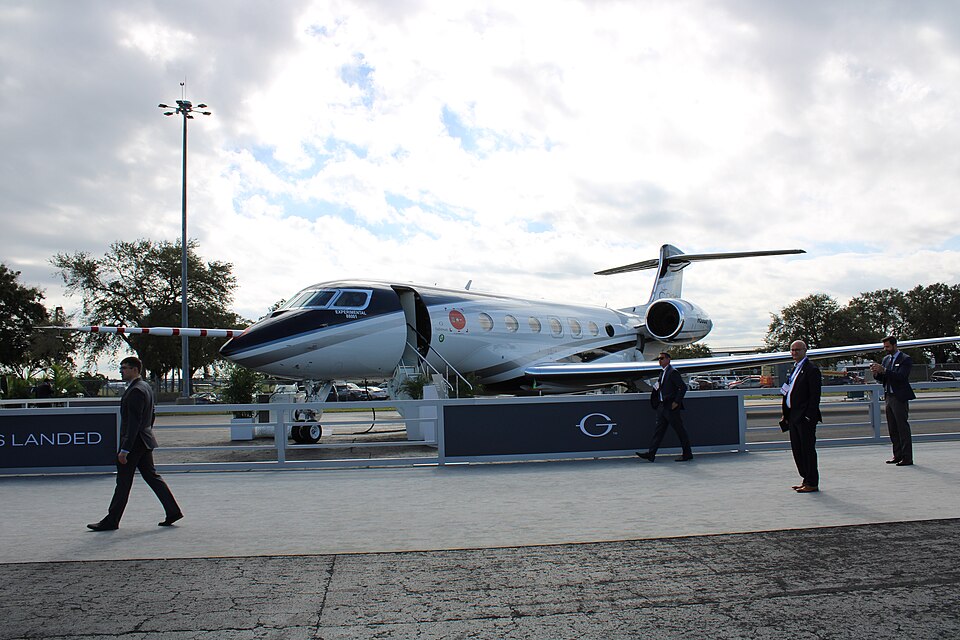
The Gulfstream G700 pairs huge range with the largest cabin in the Gulfstream family. Range lands somewhere around 7,500 to 7,750 nautical miles at long-range cruise, depending on configuration and how it is flown.
Speed is where the G700 shows off. Its maximum operating speed reaches Mach 0.935, among the fastest in its class. Routes like Los Angeles to Singapore or Dubai to New York fall within its reach. With a cabin stretching well past 50 feet and up to five living zones, it feels like a flying apartment. It easily ranks among the best private planes to own for travelers who want space and reach together.
5. Gulfstream G650ER
The G650ER is the jet that redefined ultra-long-range travel when it arrived. Its extended-range design pushes distance to roughly 7,500 nautical miles, and it has set distance records that still impress today.
This is a twin-engine plane built around two Rolls-Royce engines, with a wider cabin that many travelers love for long hauls. Even as newer flagships arrive, the G650ER offers close to flagship range at a friendlier price, especially on the pre-owned market. It holds dozens of speed and distance records and remains a benchmark in business aviation.
6. Dassault Falcon 10X
The Falcon 10X is Dassault's upcoming flagship, and it aims squarely at the top tier. The target range is about 7,500 nautical miles, with a planned top speed near Mach 0.925.
A quick honesty note: the 10X is still in development. Deliveries are expected later this decade rather than today. What makes it exciting is the cabin. Dassault is promising one of the widest cabins in the class, with a flat floor and stand-up height throughout. If the final aircraft hits its targets, it will be a serious rival to Gulfstream and Bombardier.
7. Dassault Falcon 8X
The Falcon 8X trades a bit of range for unusual flexibility. It flies around 6,450 nautical miles, which still links city pairs like Beijing to New York or Singapore to London nonstop.
What sets the 8X apart is its three-engine design and short-runway talent. It can operate from tricky airports that larger jets cannot touch, including tight strips near mountains and city centers. The tri-jet layout also gives some travelers extra peace of mind on long overwater flights. It tends to carry lower per-hour operating costs than some twin-engine rivals, too.
8. Bombardier Global 6500
Rounding out the list, the Global 6500 offers roughly 6,600 nautical miles of range with strong comfort and a friendlier entry point than the flagship Globals. It connects much of the world nonstop, including long routes across continents.
The 6500 is a popular pick for buyers who want serious long-range capability without stepping all the way up to the 7500 or 8000. It proves that you do not always need the absolute longest range to reach almost anywhere you need to go.
Pro Tip: When comparing these jets, look past the headline range number. A jet's real value shows in how far it flies with your actual passenger count, your typical routes, and your usual headwinds. The best fit is the one that flies your missions, not someone else's brochure example.
Flying411's aircraft marketplace lets you browse listings for jets, turboprops, and helicopters from major manufacturers, so you can compare real aircraft side by side instead of guessing.
What These Ultra-Long-Range Jets Cost to Own
Range like this does not come cheap. The newest flagship jets carry list prices in the tens of millions of dollars when new. Some of the top models in this group sit around the high-$70 million mark before options, and prices shift with the market.
Buying the plane is only the start. Owning an ultra-long-range jet means budgeting for a lot more:
- Crew. These jets need professional pilots, and long missions often need a relief pilot and cabin staff.
- Fuel. Big tanks burn big fuel bills, especially on long hauls.
- Maintenance. Inspections, parts, and engine programs add up every year.
- Hangar and insurance. Storing and protecting a multimillion-dollar aircraft is its own line item.
Pre-owned options can lower the entry price quite a bit. An older G650ER or Falcon 8X can cost noticeably less than a new flagship while still delivering most of the range. For many buyers, that trade makes a lot of sense. If you are weighing options, it helps to study a wider range of private planes to own before settling on a flagship.
Because real costs depend on usage, routes, and the specific aircraft, treat any single number as a starting point rather than a promise. Annual budgets for these jets often run well into the millions once everything is added up.
Range vs Reality: What Affects Nonstop Distance
It is worth saying again, because it surprises people. The farthest a jet can fly on paper and the farthest it flies on your trip are two different numbers.
Several things shrink that nonstop range:
- Payload. More passengers and bags mean more weight and less distance.
- Winds. Strong headwinds can knock hundreds of miles off a planned route.
- Cruise speed. Flying faster burns more fuel, so pushing speed costs you distance.
- Altitude and weather. Storms, detours, and air traffic routing all add miles.
Good operators plan with conservative numbers, not brochure figures. They assume real loads and real weather, then confirm a route can be flown nonstop before anyone takes off. That careful planning is what keeps long flights safe and predictable. Weather can even reshape a flight plan completely, which is part of why some planes built to fly through hurricanes exist as a separate breed entirely.
Heads Up: A jet advertised at 8,000 nautical miles will not always fly 8,000 nautical miles with your group on board. If nonstop service on a specific route matters to you, ask the operator to confirm it with your real passenger count and the season's typical winds.
Who Needs a Long Range Private Jet
Not everyone needs to cross an ocean nonstop. So who actually buys these jets? A few clear groups stand out.
Global executives and corporations top the list. When a leadership team needs to reach a distant market for a meeting and return without losing days to layovers, ultra-long range pays for itself in time saved.
Heads of state and high-net-worth travelers also value the reach. So do families who split their lives across continents and want to travel together in comfort.
The common thread is simple. These buyers fly long distances often, usually with several people on board. A jet that seats eight to twelve in long-range trim suits them better than a smaller cabin would. Travelers who fly with fewer companions sometimes find a six-passenger plane or a smaller cabin jet covers their needs at a fraction of the cost.
Keep in Mind: Buying more range than you use is a common and expensive mistake. If most of your trips are regional with the occasional long haul, a mid-tier jet plus an occasional charter may cost far less than owning a flagship that flies near its limit only a few times a year.
Ready to find the right aircraft for your missions? Browse Flying411's listings and connect with certified aviation professionals who can help match a jet to how you actually fly.
How Private Jets Compare to Bigger Aircraft
It is easy to forget how impressive these ranges are until you stack them against other aircraft. The longest range business jets fly distances that rival some commercial airliners, yet they do it for a dozen passengers instead of hundreds.
Compared to the biggest passenger planes in the world, a flagship business jet trades raw capacity for privacy, speed of boarding, and door-to-door convenience. You skip the crowded terminal and fly closer to your final destination, often into smaller airports the big jets cannot use.
Against the wider field of top commercial planes, private jets cruise at similar speeds and altitudes. The big difference is the experience. A private cabin is yours alone, the schedule is yours, and the route bends to your needs.
These jets even open up smoother intercontinental flights for small groups, linking remote business hubs and far-flung family homes that scheduled airlines serve poorly or not at all. For aviation fans who like comparing capabilities, the contrast with the best Boeing planes shows just how far business jet engineering has come.
Quick Tip: If you love comparing aircraft specs, focus on three numbers together: range, cabin size, and speed. A jet that wins one category often gives ground in another, so the best overall pick balances all three for your mission.
Here is a quick side-by-side of the range leaders:
| Aircraft | Engines | Approx. Range | Top Speed |
| Gulfstream G800 | 2 | ~8,200 nm | ~Mach 0.925 |
| Bombardier Global 8000 | 2 | ~8,000 nm | ~Mach 0.95 |
| Bombardier Global 7500 | 2 | ~7,700 nm | ~Mach 0.925 |
| Gulfstream G700 | 2 | ~7,500–7,750 nm | ~Mach 0.935 |
| Gulfstream G650ER | 2 | ~7,500 nm | ~Mach 0.90+ |
| Dassault Falcon 8X | 3 | ~6,450 nm | ~Mach 0.90 |
Conclusion
The longest range private jets sit at the cutting edge of what flight can do for a small group of travelers. Aircraft like the Gulfstream G800, the Bombardier Global 8000, and the Gulfstream G700 can link almost any two cities on Earth in a single nonstop flight, all while keeping passengers rested in quiet, comfortable cabins. Behind those impressive range numbers are smart wings, efficient engines, and careful flight planning that turns a brochure figure into a real journey.
For most of us, these jets are a fascinating peek into the high end of aviation. For a few, they are simply the most practical way to do business across the globe. Either way, the technology only keeps getting better, with new flagships pushing range, speed, and comfort a little further every year.
Curious about what is out there or thinking about owning a piece of the sky? Start your search at Flying411, where aircraft listings, aviation services, and industry know-how all live under one roof.
FAQs
What is the longest range private jet available right now?
The Gulfstream G800 currently leads the category with a maximum range of roughly 8,200 nautical miles, followed closely by the Bombardier Global 8000 at around 8,000 nautical miles.
How many hours can a long range private jet fly nonstop?
The top flagship jets can stay in the air for roughly 15 to 19 hours nonstop under the right conditions, which is enough to cross most ocean and continent pairings without stopping for fuel.
Why is the brochure range different from the real flight range?
Brochure numbers assume near-perfect conditions with light loads and calm winds, while real flights carry full passengers, face headwinds, and must hold safety fuel reserves, all of which reduce the usable distance.
Are these jets faster than commercial airliners?
Many ultra-long-range business jets cruise at similar or slightly higher speeds than airliners, with the Bombardier Global 8000 reaching around Mach 0.95, making it one of the fastest civilian aircraft in service.
Is it cheaper to buy a used long range private jet?
Pre-owned models like the Gulfstream G650ER or Dassault Falcon 8X often cost noticeably less than a new flagship while still offering most of the range, which makes them popular with budget-conscious buyers.