Private jets sit at the top of the aviation world for a good reason. They turn a long day of airport lines into a quiet morning hop. They do it with cabins that feel more like living rooms than airplanes.
Choosing among the best private jets means looking past the shiny paint and asking real questions about range, speed, cabin size, and cost.
The market has shifted fast over the last few years. New flagships now fly farther and quieter than anything that came before them.
At the same time, small single-engine jets have made ownership possible for pilots who once thought it was out of reach. So the "best" jet depends a lot on how you actually fly.
This piece sorts the standout models by class, so you can match the right airplane to the right mission. The gap between the cheapest jet here and the priciest could buy a small fleet of supercars, and the reasons why are written into every wing, engine, and cabin inch.
Key Takeaways
The best private jet for you depends on how far you fly, how many people you carry, and what you want to spend. Ultra-long-range flagships like the Gulfstream G700 and Bombardier Global 8000 can connect almost any two cities on Earth nonstop. Light jets like the Embraer Phenom 300E handle short regional hops with low costs. Most buyers do best by matching a jet's range and cabin to their real travel pattern, not the longest number on the spec sheet.
| Jet Class | Typical Range | Best For | Example Models |
| Very light / personal | Up to ~1,200 nm | Owner-pilots, short hops | Cirrus Vision Jet G2+ |
| Light jets | ~1,500–2,000 nm | Regional travel, small groups | Phenom 300E, HondaJet Elite II |
| Super-midsize | ~3,400–4,000 nm | Coast-to-coast, small teams | Praetor 600, Citation Longitude, Challenger 3500 |
| Large cabin | ~5,500–6,500 nm | Comfort and long trips | Falcon 6X, Falcon 8X |
| Ultra-long-range | ~7,500–8,000 nm | Intercontinental nonstop | G700, G800, Global 7500, Global 8000 |
Flying411 brings together listings for aircraft, engines, and parts in one place, so it is easier to see what is really on the market the moment curiosity turns into a serious search.
What Makes a Private Jet One of the Best?
A great private jet is not simply the most expensive one. The best aircraft in any class hits a smart balance between several traits. When buyers and brokers size up a model, they tend to weigh the same handful of things.
Here are the core factors that separate a standout jet from an average one:
- Range: How far it can fly nonstop, measured in nautical miles. This decides which trips you can make without stopping for fuel.
- Speed: Usually given as a Mach number. A faster jet shaves time off long trips, though the real-world savings can be smaller than they look.
- Cabin size: Width, height, and length shape how comfortable a long flight feels. A flat floor and stand-up headroom matter more than most people expect.
- Operating cost: Fuel, crew, maintenance, and hangar fees per flight hour. This is the number that quietly defines ownership.
- Reliability and support: A strong service network keeps the jet flying and protects its resale value.
When a model nails most of these at once, it earns a spot on best-of lists across the industry. The names below show up again and again because they do exactly that.
Why It Matters: A jet with a huge maximum range still needs a service center near your home base. The best aircraft on paper can become a headache if parts and mechanics are hard to reach. Support is part of performance.
Private Jet Categories Explained
Private jets are grouped into a few broad classes. Each class targets a different mix of distance, cabin space, and budget. Knowing the categories makes the rest of this list far easier to read.
The most common way to sort business aviation aircraft looks like this:
- Very light and personal jets: The smallest and most affordable jets, often flown by their owners. Great for short trips with a few passengers.
- Light jets: Efficient regional workhorses. They handle trips of a few hours with low running costs.
- Midsize and super-midsize jets: A jump in cabin space and range. Many can cross the United States nonstop.
- Large cabin jets: Roomy interiors built for comfort on longer flights, with stand-up cabins and full galleys.
- Ultra-long-range jets: The flagships. These connect distant continents nonstop and carry the highest price tags.
Each step up adds range and cabin room, and each step adds cost. The trick is finding the smallest jet that still covers your real trips. Buying more airplane than you need is one of the most common and most expensive mistakes in private jet ownership.
Good to Know: The purchase price is often the cheapest part of owning a jet. Fuel, crew, maintenance, insurance, and hangar space can add up to a large yearly figure no matter which model you pick. Plan for the running costs, not just the sticker.
The 12 Best Private Jets Flying in 2026
This is the heart of the list. These twelve models stand out in their classes for range, comfort, efficiency, or sheer capability. They are grouped roughly from the longest-range flagships down to the nimble light jets, so you can find your slice of the market quickly.
1. Gulfstream G700 (Ultra-Long-Range Flagship)
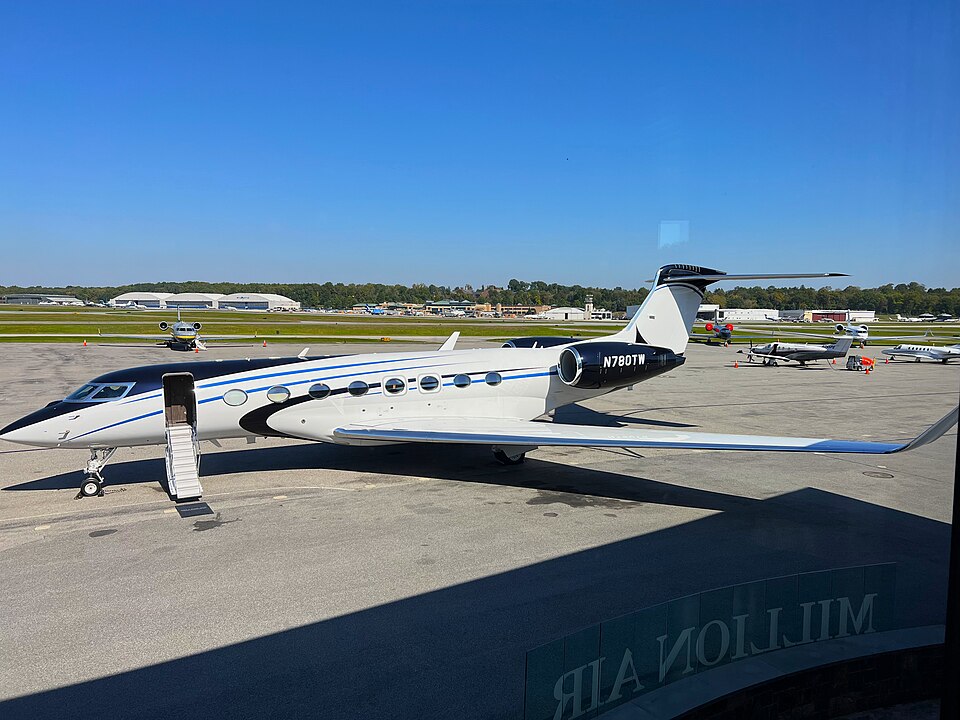
The Gulfstream G700 is the brand's modern flagship and one of the most complete large jets you can buy. It offers a maximum range of roughly 7,750 nautical miles, which links most major city pairs nonstop. It cruises comfortably around Mach 0.85 and can push toward Mach 0.935 when speed matters.
The cabin is the real headline. The G700 stretches the proven G650 fuselage and adds five living zones plus a long row of large oval windows. Power comes from twin Rolls-Royce Pearl 700 engines. New examples have often been listed around the mid-to-upper $70 million range, with final prices shaped by interior and avionics choices. It sits firmly among today's ultra-long-range jets.
2. Gulfstream G800 (Maximum Range)
Think of the G800 as the G700's marathon-running sibling. It shares the same Pearl 700 engines and flight deck but trades some cabin length for extra distance. Its certified range reaches around 8,000 nautical miles, among the longest of any business jet flying today.
The G800 earned FAA and EASA certification in 2025, with deliveries starting later that year. It uses the same cabin cross-section as the retired G650, paired with a modern wing for strong efficiency. For buyers who want to connect nearly any two cities on Earth without a fuel stop, this is the tool for the job.
3. Bombardier Global 7500 (Ultra-Long-Range Comfort)
The Bombardier Global 7500 built its reputation on space and ride quality. It offers a range of about 7,700 nautical miles and is known for four true living zones, including a full rear suite. The signature Nuage seat is widely praised as one of the most comfortable in any cabin.
New Global 7500s have typically traded in the high $70 million range depending on specification. For long-haul travelers who value a genuine separate bedroom and a quiet ride, it remains a benchmark. It is one of the few jets that can make a 14-hour flight feel almost restful.
4. Bombardier Global 8000 (The Speed King)
If bragging rights matter, the Global 8000 has them. Bombardier lists a top speed of Mach 0.95, which the company describes as the fastest of any civil aircraft since the Concorde. It pairs that pace with a range of around 8,000 nautical miles and one of the lowest cabin altitudes in the sky, which helps reduce fatigue on long trips.
The Global 8000 began entering service in the mid-2020s as Bombardier's new flagship. It keeps the four-zone cabin layout that made the 7500 popular and adds extra reach and speed. It comfortably ranks among the fastest private jets in the world.
Fun Fact: During high-speed testing, a Global 8000 development aircraft is said to have briefly exceeded the speed of sound in a controlled dive, reportedly with a chase plane confirming the moment. Few business jets can make a claim anywhere close to that.
5. Dassault Falcon 6X (Widest Cabin Comfort)
The Dassault Falcon 6X entered service in late 2023 and quickly drew attention for its cabin. It offers one of the widest and tallest purpose-built cabins in business aviation, which makes a real difference on a long flight. Its range sits around 5,500 nautical miles, enough to link many transatlantic city pairs.
The 6X cruises efficiently and tops out near Mach 0.90. Dassault is known for smooth-flying, fuel-sipping designs, and the 6X carries that tradition forward. For buyers who care more about cabin room than the absolute longest range, it is a strong pick.
6. Dassault Falcon 8X (The Trijet Specialist)
The Falcon 8X stands out for its three-engine layout, a Dassault signature. That design gives it excellent short-field performance, letting it use tricky airports that some larger jets cannot. Its range runs to roughly 6,450 nautical miles, with a long, quiet cabin.
The 8X is no longer the newest design on the ramp, but it remains a favorite for operators who fly into challenging airfields. Its blend of reach, efficiency, and runway flexibility keeps it in demand on the pre-owned market.
7. Gulfstream G650ER (Best Pre-Owned Value)
The G650ER is the jet that defined the ultra-long-range class for a decade. New production wound down in 2025 after a long and successful run, with several hundred aircraft built. That large fleet now feeds one of the healthiest pre-owned markets in business aviation.
Its range of about 7,500 nautical miles still covers the vast majority of long missions. For buyers chasing flagship-level capability at a price that undercuts brand-new rivals, a well-kept G650ER is hard to beat. It is proven, well supported, and still turns heads on the ramp.
Pro Tip: When a flagship goes out of production, its pre-owned values often steady out and the support network stays strong for years. A late-model used example can deliver most of the newest jet's capability for a meaningfully smaller outlay.
8. Embraer Praetor 600 (Super-Midsize Overachiever)
The Embraer Praetor 600 punches well above its class. It delivers intercontinental-leaning range of roughly 4,000 nautical miles, which is rare for a super-midsize jet. It cruises around 466 knots and uses fly-by-wire controls for a smooth, modern feel.
New examples have often been listed in the low $20 million range, which makes the Praetor 600 a value standout. For teams that need to cross oceans now and then without stepping up to a large-cabin price, it covers a lot of ground. The cabin is quiet and well finished for its size.
9. Cessna Citation Longitude (Super-Midsize Comfort)
The Cessna Citation Longitude brings a flat-floor, stand-up cabin to the super-midsize class. That layout makes a real difference on a four-hour flight. It pairs strong transcontinental range with one of the quieter cabins in its segment.
The Longitude is a popular choice for operators who want large-cabin comfort cues without large-cabin running costs. Its low cabin noise and clean design have earned it a loyal following among charter fleets and private owners alike.
10. Bombardier Challenger 3500 (Super-Midsize Refinement)
The Challenger 3500 replaced the long-running Challenger 350, building on one of the best-selling super-midsize designs in history. It offers a range of about 3,400 nautical miles, a wide cabin near 7.7 feet, and a list of modern touches like a voice-controlled cabin and wireless charging.
New examples have typically been priced around the high $20 million range. The wide, comfortable cabin is its calling card, giving passengers more elbow room than many rivals in the class. It is a smart pick for frequent domestic flyers who want polish.
11. Embraer Phenom 300E (The Light Jet Champion)
The Embraer Phenom 300E has topped light jet delivery charts year after year, and for good reason. It blends light-jet running costs with a cabin and range closer to a larger jet. It is certified for single-pilot operation, which appeals to owner-flyers and keeps crew costs down.
With a range of roughly 2,000 nautical miles, it handles most regional and many cross-country trips with ease. It is fast, efficient, and well supported. For many first-time jet buyers, the Phenom 300E is the natural starting point. Buyers weighing smaller cabins often compare it against other six-passenger aircraft before deciding.
12. HondaJet Elite II (The Efficient Newcomer)
The HondaJet Elite II, introduced in the mid-2020s, brought class-leading numbers to the light jet world. It offers a range of around 1,547 nautical miles and a cruise speed near 420 knots. Its distinctive over-the-wing engine mounts free up cabin and baggage space while cutting drag.
Honda built its reputation in this class on efficiency, and the Elite II continues that story with improved avionics and payload. For owner-pilots who want strong performance and low running costs in a small package, it is a compelling option.
If you want to see how the largest cabins compare with these compact jets, our roundup of the biggest private jets lays the size differences out clearly, and the matching look at the fastest private jets shows where speed records really stand.
How Much Do the Best Private Jets Cost?
Price is where the dream meets the spreadsheet. Private jets span an enormous range, from a couple of million dollars to well over seventy million. The table below gives rough new-aircraft figures by class. Real prices move with the market, options, and demand, so treat these as ballpark numbers, not quotes.
| Jet Class | Approximate New Price | Approximate Operating Cost |
| Very light / personal | ~$3M–$7M | ~$1,800–$2,500 per hour |
| Light jets | ~$8M–$16M | ~$2,800–$4,200 per hour |
| Midsize / super-midsize | ~$16M–$38M | ~$3,800–$7,000 per hour |
| Large cabin | ~$40M–$62M | ~$6,500–$9,500 per hour |
| Ultra-long-range | ~$65M–$80M | ~$8,500–$12,500 per hour |
Two numbers matter here, not one. The purchase price is the headline. The operating costs are the story that plays out every year you own the jet. A flagship can burn through millions a year in fuel, crew, and upkeep before it ever changes hands again.
That is why many buyers focus on the smallest jet that fits their travel pattern. A light jet flown often can deliver far better value than a flagship that sits in a hangar most of the month. Matching the airplane to the mission protects your wallet on both ends.
Heads Up: Maintenance events on large jets can be costly and can ground an aircraft for weeks. A solid pre-purchase inspection and a clear maintenance history protect you from buying someone else's looming repair bill.
Through Flying411, you can connect with certified A&P mechanics and MRO providers who keep these aircraft safe and ready between trips, so upkeep never becomes a guessing game.
Most Affordable Private Jets for First-Time Buyers
Not every buyer wants a flagship. For pilots and small businesses stepping into jet ownership, the entry-level end of the market has grown a lot. These aircraft make the leap from turboprop to jet far more reachable.
The standout here is the Cirrus Vision Jet G2+. It is widely known as the only single-engine personal jet certified by the FAA, and new examples have started around the low single-digit millions. It carries a whole-airframe parachute system, a safety feature that has helped win over nervous first-time owners.
Other reachable options include well-kept pre-owned very light jets and entry-level light jets. Buyers moving up from piston aircraft often weigh a small jet against a high-performance single, so it helps to understand single-engine payload tradeoffs before committing. Many shoppers also browse a broader list of private planes worth owning to see how jets stack up against propeller aircraft on cost.
Keep in Mind: A single-engine personal jet asks a lot of an owner-pilot. Training, currency, and recurrent checks are part of the deal. The lower purchase price is real, but the responsibility behind the controls is real too.
How to Choose the Right Private Jet
With so many strong options, the choice can feel overwhelming. The good news is that a few simple questions narrow the field fast. Smart buyers start with how they fly, not with which jet looks best on paper.
Work through these steps in order:
- Map your real trips. Look at where you actually fly and how often. Your longest common route sets your minimum range, not the rare dream trip.
- Count your usual passengers. A jet sized for a full load you rarely carry wastes money on every flight. Match the cabin to your normal group.
- Set a true budget. Include purchase, operating cost, crew, hangar, and insurance. The yearly figure matters more than the sticker.
- Check the support network. Make sure parts and qualified mechanics are reachable near your home base.
- Plan for resale. Popular models from major makers tend to hold value better and sell faster when the time comes.
Mission first, airplane second. That order keeps buyers out of trouble. The jet world is full of extremes, from aircraft that fly through hurricanes to designs that can reach the edge of space, but your jet only needs to do your job well.
It also helps to know the wider field before you decide. Some buyers cross-shop against twin-engine options for shorter trips, while large-group flyers sometimes look at how private cabins compare with commercial airliners or even the largest passenger plane on the longest routes.
Ready to see what is out there? Browse current jet listings on Flying411 and compare models side by side before you ever pick up the phone.
Buying vs. Chartering vs. Fractional Ownership
Owning a jet outright is only one path to the cabin. Many flyers reach the same comfort through other routes that spread out the cost. The right choice depends on how many hours you fly each year.
Here is how the main options compare:
- Full ownership: You buy and run the jet. This makes sense for heavy flyers, often those logging hundreds of hours a year. You get full control and full responsibility.
- Fractional ownership: You buy a share of a jet and a set number of hours. Fractional ownership suits flyers who want consistent access without the full burden of running an aircraft.
- Jet card or charter: You pay per trip or buy hours in a block. This works well for lighter or seasonal flyers who want flagship-level cabin comfort without a long-term commitment.
A simple rule helps. Light flyers tend to charter. Steady flyers often go fractional. Heavy flyers usually own. There is no single right answer, only the one that matches your flight hours and goals.
Quick Tip: Before you commit to any path, try the aircraft type you are eyeing through a charter or jet card. A few real flights tell you more about cabin fit and comfort than any brochure ever will.
Final Thoughts
The world of the best private jets has never offered more range, comfort, and choice than it does right now. Flagships like the Gulfstream G800 and Bombardier Global 8000 connect distant continents nonstop, while light jets like the Phenom 300E and HondaJet Elite II make ownership reachable for owner-pilots.
The right jet is the one that fits your trips, your group, and your budget, not the one with the biggest number on the page.
Take your time, map your missions, and weigh the running costs as carefully as the purchase price. The smartest buyers treat a jet like a tool, and the best tool is the one matched to the job.
When you are ready to turn admiration into action, Flying411 is where the search for your next aircraft begins.
Frequently Asked Questions
What is currently the longest-range private jet?
The Gulfstream G800 and Bombardier Global 8000 sit at the top, each offering a range of around 8,000 nautical miles. That is enough to connect nearly any two cities on Earth without a fuel stop.
How many passengers can a large private jet carry?
Most large-cabin and ultra-long-range jets seat between 12 and 19 passengers depending on the cabin layout. Some flagship models can be configured for even more in a high-density arrangement, though owners usually trade seats for living space.
Is it cheaper to charter or own a private jet?
Chartering is usually cheaper for people who fly only a handful of times a year. Full ownership tends to pay off for those flying many hundreds of hours annually, where the per-hour math starts to favor owning.
What is the most affordable private jet to own?
The Cirrus Vision Jet G2+ is widely cited as the most affordable new jet, starting in the low single-digit millions. Well-kept pre-owned very light jets can offer an even lower entry point for budget-minded buyers.
Do private jets hold their value well?
Popular models from major makers like Gulfstream, Bombardier, Cessna, and Embraer tend to hold value better than niche aircraft. A strong service network, clean maintenance records, and steady demand all help protect resale value over time.