Owning an airplane sounds like something reserved for the wealthy. The price tags on plenty of cheap small planes tell a very different story. Some of the most popular two-seaters in the sky change hands for less than a decent used truck, and they have been doing exactly that for decades.
These are not flimsy toys. Many are sturdy, well-built aircraft that have logged thousands of safe hours and still have plenty of life left in them. The trick is knowing which models hold their value, which ones are cheap to feed and fix, and what it really costs once the plane is parked in your name.
Some of these planes have been flying since before color television, and they still cost less than a brand-new pickup.
Key Takeaways
The cheapest small planes to buy and own are simple, older, single-engine two-seaters like the Cessna 150, the Ercoupe, and the Aeronca Champ. These planes often sell for far less than a new car, sip fuel, and are easy to maintain because parts and mechanics are everywhere. The purchase price is only part of the picture. Fuel, insurance, storage, and yearly inspections all add to the real cost of flying.
| What to know | The short answer |
| Cheapest type | Older single-engine two-seaters and vintage taildraggers |
| Typical entry models | Cessna 150/152, Ercoupe, Aeronca Champ, Cessna 140 |
| Rough buy-in | Often the low tens of thousands for a flyable plane |
| Biggest hidden cost | Yearly inspections, engine overhauls, and storage |
| Best money-saver | Buying used, joining a club, and choosing common models |
| New rule that helps | The MOSAIC rule expanded what sport pilots can fly |
Flying411 is an online aviation marketplace where buyers and sellers connect over aircraft, engines, and parts, so a few minutes of browsing real listings can turn a daydream into a shortlist.
What Counts as a Cheap Small Plane?
A cheap small plane usually means a light, single-engine aircraft built to carry two to four people for short trips and weekend flying. Most have a piston engine, fixed landing gear, and simple systems that have barely changed in fifty years. That simplicity is the whole point. Fewer moving parts means fewer things to break and fewer expensive fixes.
Price is relative in aviation. A plane that costs as much as a used sedan is considered cheap when you remember that a brand-new four-seater can cost as much as a house. When people talk about affordable flying, they almost always mean older aircraft bought on the used market, not new ones rolling off a factory line.
These planes fall into a few familiar groups, and the different types of small planes each come with their own trade-offs in speed, space, and cost. Two-seat trainers are the cheapest to buy and run. Four-seat singles cost more but carry the family. Vintage taildraggers offer charm and low operating costs but ask more of the pilot.
Good to Know: "Cheap" in aviation almost always points to the used market. A 40 or 50-year-old airframe can still be perfectly airworthy, because aircraft are inspected and maintained to standards that keep them flying long after most cars have been scrapped.
What Makes a Small Plane Affordable?
Not every old plane is a bargain, and not every low sticker price is a good deal. A few things separate a truly affordable aircraft from one that drains your wallet slowly.
- A simple engine. Small four-cylinder piston engines burn less fuel and cost less to overhaul than big or complex powerplants.
- Common parts. Planes built in large numbers have spare parts on the shelf everywhere, which keeps repair bills down.
- Fixed gear and a fixed-pitch prop. Retractable wheels and adjustable propellers add speed, but they also add cost and maintenance.
- A strong owner community. Popular models come with active clubs, forums, and mechanics who know the plane inside and out.
- Light weight. Smaller, lighter planes need less fuel and smaller hangars, which trims recurring costs.
A reliable single-engine plane with all of these traits will almost always be cheaper to own than a faster, fancier machine. If you want a sense of the numbers, this look at what small planes cost breaks down the spread between basic trainers and more capable singles.
Why It Matters: The cheapest plane to buy is not always the cheapest to own. A well-kept aircraft with a fresh engine can cost less over five years than a rough bargain that needs constant work.
10 Affordable Small Planes Worth Owning
Here are ten of the most budget-friendly small aircraft you can actually find for sale. Each one has earned a loyal following for being easy on the wallet, easy to fix, or both. Prices move with the market, so treat these as starting points and confirm real numbers before you buy.
1. Cessna 150 and 152
The Cessna 150 and its updated cousin the 152 are about as classic as cheap small planes get. This compact two-seat trainer has taught generations of pilots to fly, which means there are thousands of them out there and parts are everywhere.
It is forgiving, stable, and famously cheap to run. The small engine sips fuel, the systems are dead simple, and almost any mechanic can work on one. For a first plane, it is hard to beat. The cabin is snug and it is no speed demon, but for local flying and building hours, the 150 delivers more value per dollar than almost anything else in the sky.
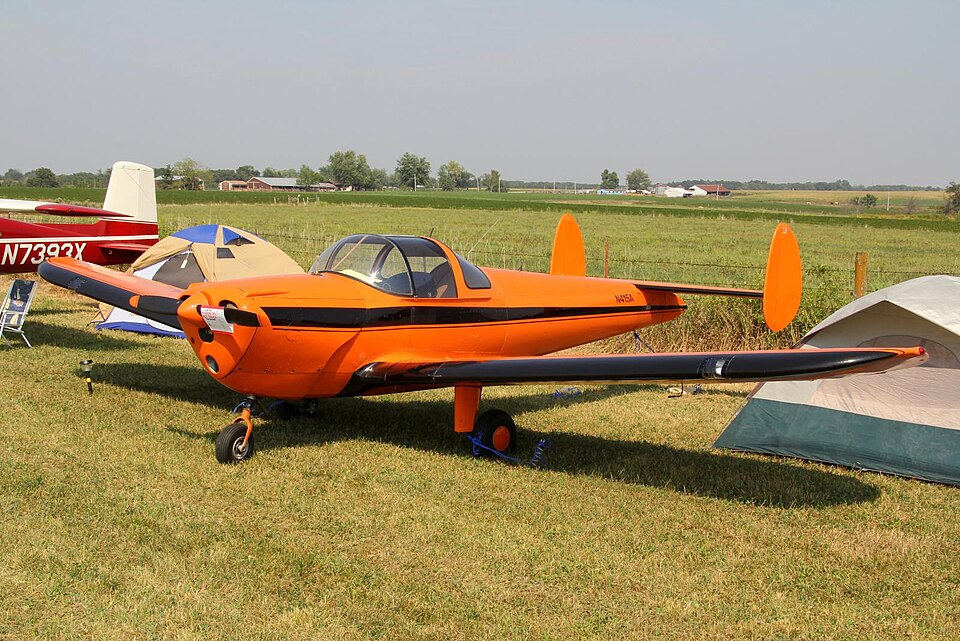
2. Ercoupe 415
The Ercoupe is one of the quirkiest planes you can buy, and one of the most affordable. Its claim to fame is a simplified control system. Many models were built without separate rudder pedals, with the rudder and ailerons linked together.
That design was meant to make the plane resist spins and feel approachable to new pilots. Fans love how easy it is to handle, especially in a crosswind, and it remains one of the few classic aircraft that routinely sells at the low end of the price range. It is a true conversation starter on any ramp.
Fun Fact: The Ercoupe was marketed in its early days as a plane so simple that almost anyone could learn to fly it, and some were even sold through department-store-style channels back in their heyday.
3. Aeronca Champ
The Aeronca Champ is a vintage tailwheel aircraft with a fabric-covered body and a personality to match. It was built as a no-frills trainer, and that is exactly why it stays affordable and beloved.
The Champ is a favorite for learning tailwheel flying. Pilots sit up front with great visibility, and the plane is forgiving for what it is. It cruises slowly, so it is better suited to local sightseeing than long cross-country hops. What it lacks in speed it makes up for in low operating costs and old-school charm.
4. Cessna 140
The Cessna 140 is a postwar taildragger that has stayed reasonably priced even as other vintage planes climbed. It pairs a metal fuselage with simple systems and a reputation for excellent fuel economy.
Owners love how cheap it is to feed and how easy it is to work on. The small engine and basic design keep both fuel and maintenance bills low. It takes a little more skill to land than a tricycle-gear plane, but pilots who master it tend to keep them for life. It is one of the best value picks among classic two-seaters.
5. Luscombe 8 Silvaire
The Luscombe 8, often called the Silvaire, is a sleek, all-metal two-seater that looks faster than it is. It has a sporty feel and a devoted fan base, and it usually lands at the affordable end of the market.
A word of caution comes with this one. Its narrow landing gear and responsive controls make it trickier to land, so it is not the easiest first plane for a brand-new pilot. For someone with a little tailwheel time, though, the Luscombe is a rewarding and economical ride with a lot of character.
6. Piper Cherokee 140
The Piper Cherokee 140 is a low-wing single that was designed to compete head-on with the Cessna 150, and it has been doing so for decades. It offers a bit more room and a bit more muscle, which makes it a great step up.
With so many built, parts are easy to find and many used examples come with upgraded radios. The Cherokee is known for being stable, easy to fly, and reasonably cheap to maintain. The four-seat versions give you room for friends, though loading it up means watching your weight and balance carefully. It is a strong pick among affordable small private planes.
Pro Tip: When comparing a two-seater to a four-seater, look at the real useful load, not just the number of seats. A plane that seats four but cannot carry four adults plus full fuel is really a two-person plane with extra cushions. The numbers behind useful load matter more than the seat count.
7. Grumman AA-1 Yankee
The Grumman AA-1, nicknamed the Yankee, is the sporty pick on this list. With a bubble canopy and crisp, responsive controls, it feels more like a little fighter than a trainer, and it is surprisingly quick for its size.
That sportiness comes with a trade-off. The Yankee is less forgiving on landing than a Cessna 150, so it rewards a pilot who flies it by the numbers. For someone who wants fun handling on a small budget, it is one of the most spirited cheap planes around. It is not built for aerobatics, so leave the kind of flying done by planes that fly upside down to purpose-built aircraft.
8. Piper J-3 Cub
The Piper J-3 Cub is one of the most recognizable airplanes ever built. With its bright yellow paint and simple fabric body, it is the picture most people imagine when they think of a small plane.
The Cub offers a pure, hands-on flying experience that pilots adore. It is slow and basic, with no creature comforts to speak of, but it shines at short-field and low-and-slow flying. Prices have crept up over the years because demand stays strong, yet it is still considered one of the best value buys on the vintage market. Its short-field talent also makes it a cousin to the modern bush plane crowd.
Keep in Mind: Iconic vintage planes like the Cub can hold or even grow their value over time, which is rare. A well-maintained classic is sometimes as much a stored asset as it is a toy.
9. Stinson 108
The Stinson 108 is a roomier, four-seat classic from the postwar boom. It was built to carry a small family, and it still does that job well at a price that stays friendly compared to newer four-seaters.
It cruises faster than the little two-seaters and offers real cabin space, making it a comfortable choice for weekend trips. Like other planes of its era, it has a fabric-covered structure that needs proper care, but owners who keep up with it enjoy a capable and characterful machine. If a growing family is part of the plan, larger options like six-passenger planes are worth a look too.
10. Cessna 172 (Older Models)
The Cessna 172 Skyhawk is one of the most-produced aircraft in history, and that popularity is exactly why older ones can still be affordable. It is the four-seat workhorse of general aviation, used by flight schools everywhere.
The 172 is famous for being easy to fly, tough, and simple to maintain, with a huge supply of parts and mechanics who know it well. Newer models with glass cockpits get pricey fast, but earlier examples remain within reach and offer real utility. It carries more, flies farther, and feels more solid than the two-seaters, which makes it a favorite first family plane. Browsing other best small planes is a good way to see how the 172 stacks up.
When you are ready to compare real prices, Flying411 lists used single-engine planes, overhauled engines, and certified parts in one place, so you can match a plane to your budget without bouncing between a dozen sites.
Other Affordable Ways Into the Sky
Buying a certified single is not the only path to ownership. Three other routes can put you in the air for less, each with its own rules and trade-offs.
Ultralights
Ultralights are the lightest, simplest aircraft you can own. Under the rules, a single-seat ultralight must stay under a strict weight limit, carry a small amount of fuel, and fly slowly. The big draw is that, as recreational vehicles, they do not require a pilot certificate to fly under the basic rules.
That makes them one of the cheapest possible entries into aviation. They are built purely for fun and short hops, not travel, but for pure low-cost flying they are tough to beat.
Light Sport Aircraft
A light sport aircraft, or LSA, sits between an ultralight and a full certified plane. These can be flown with a sport pilot certificate, which takes less training and, in many cases, no aviation medical exam. You can fly with just a valid driver's license for daytime trips.
LSAs are simple and economical to operate. Older or used models are usually the most affordable, and they make a great option for recreational pilots who want a modern, easy plane without the cost of a four-seat single.
Kit and Experimental Planes
Building your own plane sounds intimidating, but it is a real and popular way to save money. Experimental aircraft built from kits, like the well-known Van's RV series, let you spread the cost over time and learn the machine inside and out as you build it.
The trade-off is time and effort. A kit can take hundreds or even thousands of hours to finish. The payoff is a modern, capable plane that often costs less than buying a comparable certified aircraft, plus a special privilege. As the builder, you can usually do much of your own maintenance.
Heads Up: Building a kit plane is a serious time commitment, not a weekend project. Be honest about your free time before you order a box of parts, because a half-finished airframe in the garage helps no one fly.
How the MOSAIC Rule Changed the Game
A big shift hit affordable flying recently, and it is worth understanding before you shop. The FAA's MOSAIC rule, short for Modernization of Special Airworthiness Certification, started taking effect in phases beginning in late 2025.
The headline change is that sport pilots can now fly a much wider range of aircraft. The old light sport rules were tied to a strict weight limit. MOSAIC replaced that with a performance-based standard built around stall speed instead. The result is that many common, older general aviation planes now fall within reach of a sport pilot.
Here is why that matters for your budget:
- More planes, no medical for many flights. Pilots flying under sport pilot privileges can often use a driver's license instead of an aviation medical for daytime flying, which removes a real barrier and ongoing cost.
- Four-seat planes count now. The rules opened the door to aircraft with up to four seats, though a sport pilot can still carry only one passenger.
- Legacy classics qualify. Many beloved older singles now meet the standard, so a used plane you already wanted to buy may be flyable on a simpler certificate.
A second phase, set for mid-2026, changes how new light sport planes get certified, which could bring fresh, more capable models to market over time. For budget-minded buyers, the near-term win is simple. The pool of planes you can legally fly without a full medical just got a lot bigger.
Good to Know: A plane does not become a light sport aircraft just because a sport pilot flies it. A certified airplane keeps its original certification and maintenance rules. MOSAIC changes what you are allowed to fly, not what the airplane legally is.
The Real Cost of Owning a Small Plane
The sticker price is just the entry fee. The total cost of ownership is what catches new owners off guard, so it pays to budget for it before you buy. Here are the recurring costs that come with any plane, big or small.
| Cost | What it covers | Rough range |
| Fuel and oil | Avgas and oil changes, tied to how much you fly | Varies widely by hours flown |
| Insurance | Liability and hull coverage | Often a four-figure annual premium for a basic single |
| Storage | Hangar or outdoor tie-down | Often a couple hundred dollars a month or more |
| Annual inspection | Required yearly check by a mechanic | Often a few hundred to a couple thousand dollars |
| Maintenance and repairs | Routine fixes and unexpected ones | Highly variable, save a reserve |
| Engine reserve | Saving toward a future overhaul | Set aside money per flight hour |
Every plane needs an annual inspection by a certified mechanic to stay legal. Beyond that, the single biggest surprise expense is usually the engine. Piston engines have a recommended life, and a major overhaul can cost a serious chunk of what a cheap plane is worth. Always check how many hours are left before that bill comes due.
Insurance, storage, and fuel are the steady drumbeat of costs that hit even if you barely fly. A plane that costs little to buy can still cost a fair amount to keep, which is why the simplest, most common models win on long-term value. If you are weighing a single against a twin, remember that a second engine roughly doubles much of this, so compare carefully against a twin-engine plane before you decide.
Why It Matters: A reasonable rule of thumb is to budget for ongoing costs that can rival or exceed your loan payment over a year. Owners who plan for inspections and an engine fund rarely get ambushed. Owners who only plan for the purchase price often do.
How to Keep Your Flying Costs Down
You can shave real money off the cost of ownership with a few smart choices. None of these require deep pockets, just a bit of planning.
- Buy used, not new. A used plane has already taken its biggest depreciation hit, so your money goes further.
- Pick a common model. More parts, more mechanics, and more know-how mean lower bills and less downtime.
- Join a flying club. A flying club lets a group share one or more planes, splitting the fixed costs many ways.
- Consider co-ownership. Splitting a plane with one or two trusted partners cuts your share of every fixed cost.
- Do allowed maintenance yourself. Owners can legally perform certain preventive tasks, like oil changes, which adds up over time.
- Fly regularly. Engines and seals actually last longer with steady use, so a plane that sits can cost more in the long run.
Sharing the load is the secret weapon for most budget pilots. A club or partnership turns a plane you could not quite afford alone into one you can. If you are still deciding what fits your mission, comparing the best private planes to own against simpler trainers helps set realistic expectations.
Ready to find your first plane? Start your search on Flying411, line up a pre-buy inspection, and talk to an A&P mechanic before you sign anything.
Mistakes to Avoid When Buying a Cheap Small Plane
A bargain plane can turn into a money pit fast if you skip a few basic steps. Watch out for these common traps.
- Skipping the pre-buy inspection. Never buy a plane on looks alone. A trusted mechanic can spot hidden problems that cost far more than the inspection.
- Ignoring engine time. Find out how many hours are left before a major overhaul. A cheap plane with a tired engine is not cheap at all.
- Chasing the lowest price. A neglected plane with a great price can cost more to fix than a well-kept one that costs a little more up front.
- Underestimating recurring costs. Budget for fuel, insurance, storage, and inspections from day one, not after the bills arrive.
- Buying a rare model. A unique plane is fun until you need a part nobody makes anymore. Stick to common models with strong support.
- Trusting incomplete logbooks. A solid maintenance history protects you. Gaps in the records are a warning sign worth taking seriously.
Quick Tip: Bring an independent mechanic to any serious viewing. The few hundred dollars a pre-buy inspection costs is the cheapest insurance you will ever buy in aviation.
If you are still researching the broader market, it helps to compare across categories, from basic trainers to small jet planes and small passenger planes, so you can see exactly where the affordable singles fit. For perspective, even the cheapest used jet sits a world apart from a Cessna 150 once you read up on private jet costs.
Conclusion
Cheap small planes prove that the dream of owning an aircraft is closer to reach than most people think. Simple two-seaters like the Cessna 150, the Ercoupe, and the Aeronca Champ can cost less than a used car, sip fuel, and keep maintenance bills low because parts and mechanics are easy to find. The newer MOSAIC rule only widens the door, putting more planes within reach of more pilots than before.
The smartest buyers look past the sticker price and plan for the full cost of flying, from inspections to insurance to that eventual engine fund. Do that, pick a common and well-kept model, and ownership stops being a fantasy and starts being a Saturday morning routine.
Your first plane is out there waiting, and finding it starts with a single search. Browse real listings, compare prices, and connect with trusted aviation pros at Flying411, where the path from window-shopping to wheels-up is shorter than you think.
Frequently Asked Questions
What is the cheapest plane you can legally fly?
Ultralights are typically the cheapest path into the air, since single-seat models under the basic weight and speed limits do not require a pilot certificate to fly recreationally. They are built for fun and short hops, not travel.
Can you really buy a plane for the price of a used car?
Yes, flyable older two-seaters like the Cessna 150, Ercoupe, and Cessna 140 are often listed in the low tens of thousands. Just remember the purchase price is only the start, since fuel, storage, and inspections add to the yearly cost.
Is it cheaper to buy a used plane or build a kit?
Building an experimental kit plane can cost less than buying a comparable certified aircraft, and it lets you spread payments over time. The catch is the hundreds or thousands of hours of labor it takes to finish.
Do you need a medical certificate to fly a cheap small plane?
Not always. Flying under sport pilot privileges often lets you use a valid driver's license instead of an aviation medical for daytime trips, and the MOSAIC rule recently expanded the range of planes this covers.
What is the most important step before buying a small plane?
A thorough pre-buy inspection by an independent mechanic is the single most important step. It can reveal hidden engine or structural problems that cost far more to fix than the inspection itself.