Small planes do a lot of quiet, important work. They carry families on weekend trips, fly business owners to meetings, and link small towns that big jets skip. Some seat just four people. Others can hold a dozen or more.
The best small passenger planes share a few traits. They are safe, friendly to fly, and built to use airports the airlines never touch.
This kind of flying feels personal. You can park close to the building, skip the long lines, and reach grass strips or mountain runways that would scare off an airliner. The real trick is matching the plane to the job.
A two-seat trainer and a pressurized turboprop both count as small planes, yet they live in very different worlds.
Here is the surprising part. The gap between the cheapest seat in the sky and the priciest one can be the size of a house, and the plane making the trip might be smaller than your living room.
Key Takeaways
The best small passenger planes range from simple trainers like the Cessna 172 to fast turboprops like the Pilatus PC-12 and light jets like the HondaJet. The right plane depends on how many seats you need, how far you fly, and your budget. Piston singles cost the least to own and fly. Turboprops carry more people farther and faster. Light jets add speed and comfort at a higher price.
| Category | Typical seats | Typical range | Best for |
| Piston single | 2 to 6 | 500 to 1,000 nm | Training, short trips, first-time owners |
| Utility piston | 6 | Around 700 nm | Hauling people and gear from rough fields |
| Single turboprop | 5 to 9 | 1,400 to 1,800 nm | Fast regional travel with a roomy cabin |
| Twin turboprop | 7 to 9 | 1,500 nm or more | Comfort plus the backup of two engines |
| Light jet | 4 to 6 | 1,100 to 1,500 nm | Speed and a stand-up cabin for business trips |
Flying411 brings buyers, sellers, and aviation pros together in one place, so tracking down the right small plane feels a lot less overwhelming.
What Counts as a Small Passenger Plane?
A small passenger plane is a light aircraft built to fly a handful of people, not a planeload. In the United States, regulators often draw the line for small aircraft at a maximum takeoff weight of about 12,500 pounds. That covers a huge slice of the general aviation world, from a two-seat trainer up to a roomy turboprop.
Seat counts usually run from 2 to around 9. Some utility turboprops stretch that to 14 in a tight commuter layout. These planes sit far below the big jets in size. For a sense of scale, it helps to picture how big the largest airliners get before zooming back down to a four-seat cabin.
Good to Know: Small planes trade range and payload for access and low cost. They can land at thousands of little airports that larger commercial airliners simply cannot use, which is a big reason they matter for small communities.
The point of a small passenger plane is freedom. You fly closer to where you actually need to go. You set your own schedule. And you can reach places that map out as a long, slow drive from the nearest big airport.
The Main Types of Small Passenger Planes
Most small passenger planes fall into three buckets. Knowing the buckets makes the rest of this list click into place.
Piston Singles
A single-engine piston aircraft uses a gas engine and a propeller, much like a car engine turning a fan. These planes are the backbone of light flying. They are affordable, simple, and forgiving for new pilots. Cruise speeds usually sit between 120 and 210 knots, and most seat 2 to 6 people.
Turboprops
A turboprop swaps the piston engine for a small jet-style turbine that spins a propeller. The result is more power, more speed, and a smoother ride. Many add a pressurized cabin, so you can fly high and stay comfortable. A single-engine turboprop like the Pilatus PC-12 can carry up to nine people across a whole region.
Light Jets and Very Light Jets
A light jet trades the propeller for true jet engines. These are the fastest small planes, often cruising above 400 knots with a quiet, stand-up cabin. They cost the most to buy and run, but they shrink long trips into short ones. If you like this category, the wider world of top private jets shows how far it stretches.
Why It Matters: The engine type shapes everything else. It sets the price, the speed, the cabin comfort, and the kind of pilot training you need. Pick the category first, then pick the plane.
11 Best Small Passenger Planes Worth Knowing
Here are eleven standout small passenger planes, sorted roughly from the simplest trainers up to a sleek light jet. Each one earns its spot for a clear reason, so you can match the plane to the mission.
1. Cessna 172 Skyhawk
The Cessna 172 is the plane most pilots learn on. It first flew in the 1950s and is widely regarded as one of the most-produced aircraft in history, with tens of thousands built. The high wing gives great visibility and steady, gentle handling.
- Seats: 4
- Cruise: Around 120 to 130 knots
- Range: Roughly 600 to 700 nm
- Best for: Training and first-time owners
It is not fast, and it will not carry four big adults with full fuel. But it is honest, cheap to run, and easy to fly.
Fun Fact: The Skyhawk is so common at flight schools that many airline pilots took their very first lesson in one. It has long been considered the classroom of the sky.
2. Piper PA-28 Archer
The Piper Archer comes from the well-loved Cherokee family. It is a low-wing four-seater with a reputation for being tough and easy to own. Pilots like how predictable it feels in the pattern.
- Seats: 4
- Cruise: Around 125 to 130 knots
- Range: Roughly 500 to 600 nm
- Best for: Budget-minded owners and schools
The Archer trades a little speed for low costs and simple upkeep. For someone moving up from a trainer to their own plane, it is a friendly next step.
3. Cirrus SR22T
The Cirrus SR22T sets the modern bar for high-performance piston singles. It pairs a turbocharged engine with a glass cockpit and the famous whole-airframe parachute, which can lower the entire plane to the ground in a serious emergency.
- Seats: 4 to 5
- Cruise: Around 180 to 210 knots
- Range: Roughly 1,000 nm or more
- Best for: Fast personal and light business travel
It has been one of the best-selling personal aircraft for years, and the safety story is a big reason why.
Pro Tip: The parachute is a backup, not a free pass. Cirrus owners get the most value from solid transition training, which teaches when to pull the handle and, just as important, when to keep flying the plane.
4. Diamond DA40 NG
The Diamond DA40 NG is a composite four-seater with a strong safety record and a diesel engine that sips fuel. It burns Jet-A instead of avgas, which can lower running costs and is easier to find in many parts of the world.
- Seats: 4
- Cruise: Around 150 to 155 knots
- Range: Roughly 900 nm or more
- Best for: Cost-conscious owners and modern flight schools
If you want a clean, efficient single with a great reputation for keeping people safe, the DA40 belongs on your short list.
5. Beechcraft Bonanza G36
The Beechcraft Bonanza is a classic with deep roots, flying in one form or another since the 1940s. The modern G36 is a roomy six-seater with strong build quality and a loyal following. It feels like a luxury car of the air.
- Seats: 6
- Cruise: Around 170 to 176 knots
- Range: Roughly 900 nm
- Best for: Families and owners who want room plus speed
The Bonanza shows up often on lists of popular six-seat planes because it blends comfort, pace, and a cabin that fits real luggage.
6. Cessna 206 Turbo Stationair
The Cessna 206 is the pickup truck of small planes. Big doors, a strong airframe, and a high useful load make it a favorite for hauling people and gear into tight places. Many owners fit it with floats or rugged tires.
- Seats: 6
- Cruise: Around 160 knots
- Useful load: Often around 1,400 pounds
- Best for: Backcountry trips and heavy loads
Its short-field manners and tough build make it a star of rugged bush flying. When you need to carry a lot from a short, rough strip, the 206 answers the call.
Keep in Mind: A high useful load does not mean you can fill every seat and the fuel tanks at the same time. On any small plane, weight and fuel are a balancing act, so plan each trip around real numbers.
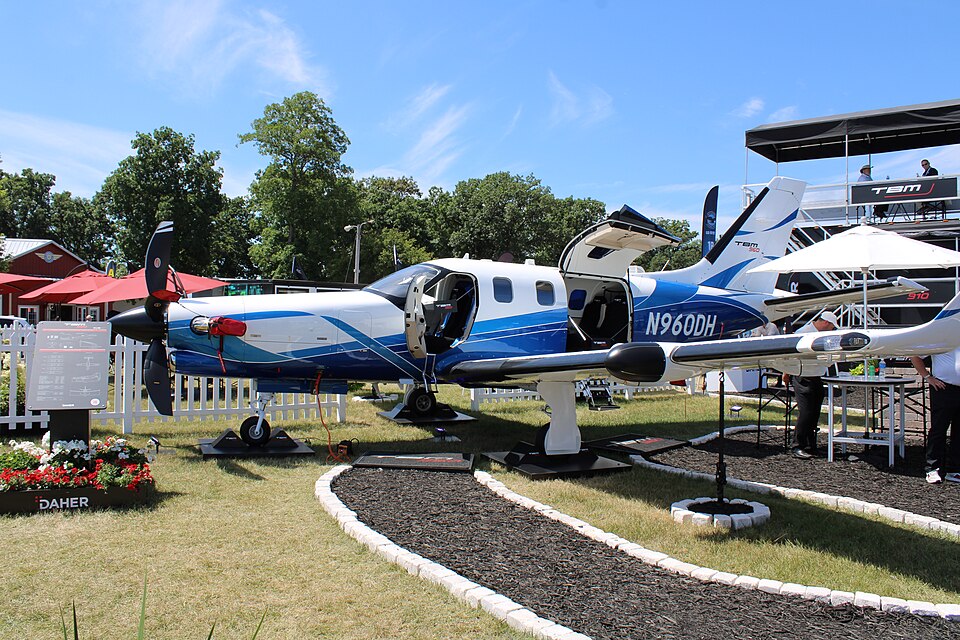
7. Daher TBM 960
The Daher TBM 960 is a fast single-engine turboprop built for owners who want jet-like speed without jet-like costs. It is pressurized, modern, and quick, with a top cruise that pushes toward the speed of a small jet.
- Seats: Up to 5 passengers plus a pilot
- Cruise: Around 308 knots, with a max near 330 knots
- Range: Roughly 1,400 to 1,730 nm, depending on speed
- Best for: Owner-pilots who value speed and efficiency
It also includes an emergency autoland system that can fly the plane to a runway by itself if the pilot becomes unable to fly. For pure pace, it competes with some of the fastest private jets in real-world trip times.
8. Pilatus PC-12 NGX
The Pilatus PC-12 is a do-everything single-engine turboprop with a big, comfortable cabin. It carries more people than most singles, lands on short rough strips, and even has a large cargo door. That mix has made it a favorite for business flying, air ambulance work, and small charter fleets.
- Seats: 6 to 9
- Cruise: Around 285 to 290 knots
- Range: Roughly 1,800 nm
- Best for: Regional business travel and flexible missions
Its pressurized cabin, roomy seats, and long legs let it cover trips that would normally call for a jet. It is one of the private planes worth owning for buyers who want one aircraft to do many jobs.
9. Beechcraft King Air 360
The Beechcraft King Air 360 is a twin turboprop, which means two engines instead of one. That brings extra power, a roomy cabin, and the comfort of a backup if one engine quits. The King Air family has been a business-aviation staple for decades.
- Seats: 7 to 9
- Cruise: Strong turboprop speeds in the same league as its rivals
- Range: Roughly 1,500 nm or more
- Best for: Companies that want cabin room plus engine redundancy
If two engines are a must for your peace of mind, the wider field of twin-engine options is worth a close look.
Heads Up: Two engines also mean two of everything to maintain and fuel. A twin like the King Air usually costs more per hour to run than a single turboprop, so the safety margin comes with a real price tag.
10. Cessna 208 Grand Caravan
The Cessna 208 Grand Caravan is the workhorse that keeps small communities connected. It is a rugged single-engine turboprop with a high wing, fixed gear, and a cabin that can seat a lot of people or swallow a pile of cargo. You will find it flying tourists, skydivers, freight, and regular regional airline service all over the globe.
- Seats: 9 to 14, depending on layout
- Cruise: Around 160 to 185 knots
- Range: Roughly 900 to 1,000 nm
- Best for: Commuter routes, cargo, and remote airstrips
It is not fast, and the cabin is not pressurized, so it flies lower than the sleek turboprops. The payoff is toughness and short-field grit that few planes can match.
Quick Tip: If your mission is moving the most people or boxes from short, basic runways, the Caravan often beats fancier planes on cost per seat. Match the tool to the task and the numbers usually win.
11. HondaJet Elite II
The HondaJet Elite II is a light jet with a clever twist. Its engines sit on top of the wings instead of the tail, which frees up cabin space and helps it fly efficiently. It is fast, modern, and surprisingly roomy for its size.
- Seats: Up to about 5 passengers
- Cruise: Around 420 knots or more
- Range: Roughly 1,500 nm
- Best for: Quick business hops with jet speed and a real lavatory
It even includes an autoland feature for emergencies. For buyers stepping up from pistons or turboprops, it is a clean entry point into true jet travel.
When you spot a plane you like on Flying411, you can also line up a certified A&P mechanic for a pre-buy inspection through the same platform, so you know what you are really buying.
How to Choose the Right Small Passenger Plane
There is no single best plane for everyone. The right choice comes down to your mission, your skills, and your wallet. Here is a simple way to think it through.
- Count your seats. Be honest about how many people you fly with most often. Buying a six-seater for trips you almost always make alone wastes money.
- Measure your typical trip. A 200-mile hop and a 1,200-mile haul call for very different planes. Pick a range that covers your common flights with fuel to spare.
- Decide on speed. Faster planes save time but cost more. A turboprop or jet earns its keep only if you fly far and often.
- Single or twin. One engine keeps costs down. Two engines add a backup and a bigger bill. Both can be very safe.
- Check the pilot rating. Bigger and faster planes need more training, like a high-performance or instrument rating, and sometimes a type rating for jets.
- Add up the real costs. The purchase price is just the start. Fuel, hangar, insurance, and upkeep all add up every year, flown or not.
Good to Know: Many first-time buyers start small and trade up later. A Cessna 172 or Piper Archer builds skills and confidence, and both hold their value well when it is time to move on.
What Small Passenger Planes Cost to Own
Costs swing widely, so treat any number as a rough guide that changes with age, hours, and condition. Still, the big picture is helpful.
- Used trainers like an older Cessna 172 or Piper Archer often sit in the lower range of the market, which puts ownership within reach for many pilots.
- High-performance singles like the Cirrus SR22T cost more, with new examples running well into the high six figures.
- Turboprops like the PC-12, TBM 960, and King Air jump into the millions, both to buy and to run.
- Light jets like the HondaJet sit at the top of this list, with prices and hourly costs to match.
Every plane also has running costs beyond the sticker price. Fuel is the obvious one, but insurance, hangar rent, yearly inspections, and engine reserves all add up. The deeper world of what private jets cost shows how fast the numbers climb at the top end, and even small planes follow the same pattern on a smaller scale.
Heads Up: A cheap purchase price can hide an expensive plane. An old engine, dated avionics, or skipped maintenance can cost more to fix than you saved at the sale. A good pre-buy inspection is money well spent.
A smart buyer looks past the headline price and weighs the full yearly budget. The same thinking applies to a four-seat piston and to one of the largest private jets on the market.
Browse current small plane listings on Flying411 and connect with sellers and certified inspectors before you make a move.
Conclusion
Choosing among the best small passenger planes comes down to one simple question. What do you actually need the plane to do? A new pilot is happiest in a steady Cessna 172. A busy family might love the room of a Bonanza or PC-12. A frequent business flyer may want the speed of a TBM 960 or a HondaJet. There is a right answer for every mission, and a lot of joy in finding it.
The good news is that the market is full of solid choices at every price point. Take your time, fly a few, and lean on the pros for a careful inspection before you sign.
Ready to find the plane that fits your mission? Start your search on Flying411 and turn that runway daydream into a tail number of your own.
Frequently Asked Questions
Do small passenger planes have bathrooms?
Most piston singles do not, though some larger ones offer a simple portable seat. Turboprops like the PC-12 and light jets like the HondaJet often include a small enclosed lavatory.
How fast do small passenger planes fly?
Piston singles usually cruise between 120 and 210 knots, turboprops between roughly 280 and 330 knots, and light jets above 400 knots. Speed climbs with engine power and price.
Can a small passenger plane fly across the country nonstop?
A few can come close in calm air, but most need at least one fuel stop on a true coast-to-coast trip. Wind, weight, and the number of passengers all shorten how far you can go.
What is the difference between a turboprop and a piston plane?
A piston plane uses a car-style engine to spin its propeller, while a turboprop uses a small turbine. Turboprops are usually faster, smoother, and able to fly higher, but they cost more to buy and run.
How long does it take to learn to fly one?
Many students earn a private pilot certificate in a few months of regular lessons, often around 50 to 70 flight hours. Bigger or faster planes call for extra training and ratings on top of that.