A jetliner can look perfectly healthy sitting at the gate. Fresh paint. Clean cabin. Engines that start every single morning. Then one day it flies its last passenger flight and heads for a desert storage yard, decades before anyone expected. That is the puzzle behind why airlines retire aircraft early, and the answer has very little to do with the plane being worn out. Airplanes rarely die of old age. They get voted off the fleet by a spreadsheet.
Key Takeaways
Airlines retire aircraft early because keeping an older jet flying costs more than replacing it. Fuel burn, heavy maintenance checks, engine repairs, and spare parts add up fast. At some point, the money saved by flying a newer plane beats the money spent keeping the old one in the air. The plane can still be safe and legal to fly. It simply stops making financial sense.
| Question | Short Answer |
| What is early retirement? | Pulling an airworthy aircraft from service before it reaches its design life |
| Main reason | Operating costs climb faster than the value the aircraft brings in |
| Typical passenger retirement age | Often somewhere in the 20 to 30 year range, though it varies a lot by type |
| Is it a safety issue? | Rarely. Unsafe aircraft get grounded by regulators, not quietly retired |
| Biggest cost drivers | Fuel burn, heavy checks, engine shop visits, and parts availability |
| Where the planes go | Storage, freighter conversion, part-out, recycling, or resale |
| Who decides | Airlines and leasing companies, working from cost per flight hour models |
Flying411 keeps an eye on this side of aviation every day, since the aircraft, engines, and parts leaving one fleet often become the best value on the market for someone else.
What Early Aircraft Retirement Means
Retirement in aviation does not mean an aircraft is broken. It means the operator has decided to stop using it for revenue flights. The plane may still hold a valid airworthiness certificate. It may still have thousands of safe flights left in the airframe.
Early retirement simply means the aircraft leaves service ahead of the plan. Maybe the fleet plan said 25 years and it left at 17. Maybe a lease had eight years to run and the lessor pulled the plug at year six.
There are two very different clocks running on every airliner, and mixing them up is where most confusion starts.
Design Life vs Economic Life
Design life is the engineering answer. Manufacturers build airframes to survive a certain number of flight hours, flight cycles, and calendar years. Many modern airliners are certified for service lives measured in decades and tens of thousands of cycles.
Economic life is the accounting answer. It is the point where the aircraft stops earning more than it costs. That number moves with fuel prices, interest rates, travel demand, and parts supply.
Design life is fairly fixed. Economic life is not. A jet built for 30 years of flying can hit the end of its economic life in year 15 if the market turns. If you want a sense of how long a modern narrowbody can hold up, how long a 737 lasts shows the gap between what an airframe can do and what an operator chooses to do.
Good to Know: An aircraft leaving one airline's fleet is often nowhere near finished. Plenty of retired jets go on to fly another decade with cargo carriers, charter operators, or airlines in different markets.
Why Flight Cycles Matter More Than Age
Here is the part most passengers never hear. Airframes age by pressure, not by calendar.
Every flight pressurizes the fuselage on climb and depressurizes it on descent. That flexing is what wears out the structure. One takeoff and one landing equals one flight cycle.
So two identical airplanes can age at completely different speeds:
- A short-haul jet doing six or seven flights a day racks up cycles quickly
- A long-haul widebody doing one flight a day builds hours instead of cycles
- A cargo aircraft flying a few long legs per week ages slowest of all
This is why some 20-year-old widebodies are considered young while some 12-year-old regional jets are considered tired. Age in years is the least useful number on the sheet.
Fun fact: a busy narrowbody can accumulate more pressurization cycles in a single year than a long-haul widebody does in three.
9 Reasons Airlines Retire Aircraft Early
No single factor sends a jet to the desert. Retirement decisions stack up like weights on a scale until one side drops. These are the nine that carry the most weight.
1. The Fuel Burn Gap Gets Too Wide
Fuel is one of the largest line items an airline carries. When a newer generation aircraft burns noticeably less fuel per seat on the same route, the older jet starts losing money on every single flight it operates.
The savings look small per hour. Multiply by thousands of hours per year across dozens of aircraft and the picture changes fast. Newer types often deliver double digit percentage improvements in fuel efficiency compared with the models they replace.
Comparisons like the 777 against the 787 and the 737-800 versus the MAX show exactly where those gaps come from. Better engines. Better wings. Lighter structures.
2. Heavy Maintenance Checks Get Expensive
Aircraft maintenance runs on a schedule of increasing intensity. Light checks happen often and take hours. Heavy checks happen rarely and take weeks.
A heavy check means the aircraft is stripped down, inspected, repaired, and reassembled. The plane earns nothing during that time, and the bill can run into the millions depending on type and condition. The breakdown of routine check intervals shows how those visits scale up as an airframe ages.
Airlines face a simple choice when a big check comes due on an older jet:
- Spend the money and keep flying an aircraft with limited years left
- Retire it now and put that cash toward a newer aircraft
- Sell or part it out before the check is due and let someone else decide
Option three happens more often than people think. Aircraft are frequently retired right before a major check, not after one.
Heads Up: The timing of a heavy check can single-handedly decide an aircraft's fate. An otherwise healthy jet with a costly inspection due may be worth more taken apart than repaired.
3. Engine Trouble and Spare Engine Shortages
Engines are the most valuable pieces bolted to any airliner, and in recent years they have become the biggest headache in fleet planning.
Newer high-efficiency engine designs have run into inspection and repair backlogs. Aircraft have been left sitting on the ground for months waiting for shop slots or spare engines. Some carriers have reported grounding otherwise flyable jets purely because no serviceable engine was available.
That shortage flipped the math. Serviceable spare engines became so valuable that pulling engines off an aircraft and leasing or selling them can beat operating the aircraft. Understanding how engine overhauls work helps explain why a single powerplant can be worth a large share of a whole airframe's value.
The result is unusual. Some fairly young aircraft have been retired and dismantled, not because the airframe failed, but because the engines were worth more elsewhere.
4. Fleet Simplification
Every extra aircraft type an airline operates adds cost that never shows up on a fuel bill:
- Separate pilot training and type ratings
- Separate mechanic training and tooling
- Separate spare parts inventories
- Separate manuals, procedures, and simulator time
Fleet simplification is the practice of cutting the number of types down to as few as possible. When an airline decides a small subfleet has to go, those aircraft leave regardless of their remaining life. A group of ten jets in an otherwise standard fleet can cost more in overhead than it earns in revenue.
This is why you sometimes see healthy aircraft retired while older ones from a larger subfleet keep flying.
5. Lease Returns and Residual Value Math
A large share of the world's airliners are owned by leasing companies rather than airlines. Leasing changes the incentives completely.
Lessors price every deal around residual value, the expected worth of the aircraft when the lease ends. If that projected value slips, the smartest move may be to end the aircraft's flying career early and capture value another way.
Lessors weigh a few exits:
| Exit Route | When It Makes Sense |
| Lease extension | Demand is steady and the aircraft is easy to keep placed |
| Sale to another operator | A buyer values the type more than the current market does |
| Freighter conversion | Cargo demand is strong for that airframe |
| Part-out | Component and engine value beats what the whole aircraft can earn |
Returning an aircraft at lease end also triggers redelivery conditions. Meeting those conditions can be expensive enough that everyone involved would rather retire the asset than restore it.
Pro Tip: Complete, well-organized paperwork protects value at every stage of an aircraft's life. The link between maintenance records and resale value is one of the most underrated factors in how an aircraft sells, or if it gets scrapped instead.
6. Part-Out Value Beats Flying Value
At some point, an aircraft is worth more in pieces than in one piece. That crossover is the moment retirement becomes a business decision rather than a sad one.
Part-out value is the estimated total of every marketable component that can be pulled, certified, and resold. Engines usually lead by a wide margin. Landing gear, auxiliary power units, avionics, and flight controls follow.
Those harvested parts enter the used serviceable material market, where operators buy certified components at a discount to new. With supply chains under pressure, demand for those parts has stayed strong. A walkthrough of how parting out works shows just how organized this process has become, and what a retired 747 is worth in parts puts real structure around the numbers.
Keep in Mind: Part-out value depends heavily on maintenance condition. Two identical airframes can be worth very different amounts depending on how much life remains on their engines and major components.
7. Cabin Revenue and Passenger Expectations
Older cabins are harder to sell. Passengers notice the seats, the screens, the bins, the power outlets, and the lighting long before they notice the engines.
Retrofitting an old cabin is not cheap. Airlines have to weigh:
- The cost of a full interior refresh
- The downtime while the aircraft sits in a hangar
- How many years of service remain to earn that money back
Newer aircraft often arrive with modern layouts already built in, including larger premium cabins that generate a large share of long-haul revenue. When the retrofit bill approaches the value of the aircraft itself, retirement wins.
Fun fact: cabin interiors are widely considered one of the most expensive upgrades an airline can perform relative to the value they add to an aging airframe.
8. Route Networks and Market Shifts
Airplanes are tools built for specific missions. When the missions change, the tools stop fitting.
Two shifts have done the most damage to older fleets:
Four engines gave way to two. Modern twin-engine widebodies can fly the same long routes with lower fuel and maintenance costs. The story behind the 747's exit from production and the matchup between the A380 and the 747 is largely a story about engine count and economics.
Hubs gave way to point-to-point flying. Very large aircraft made sense when passengers funneled through a few giant hubs. Smaller, efficient jets made direct routes possible, and demand followed. The question of what took over the 757's routes is a good example of a niche being refilled by newer, smaller equipment.
Newer widebodies changed the math further. Comparisons such as the A350 against the 777 show how quickly a capable aircraft can be pushed down the pecking order by a newer arrival.
Flying411's marketplace lists aircraft, engines, and certified parts from operators making exactly these kinds of fleet changes, which is often where the best value shows up.
9. Rules, Directives, and Emissions Pressure
Regulators issue airworthiness directives when a fleetwide issue is found. Older types tend to collect more of them over time.
Some directives are simple inspections. Others require structural modifications that cost real money. When a mandatory fix lands on an aging fleet, operators run the numbers again. If the aircraft has only a few years left, the fix rarely justifies itself.
Environmental targets add another layer. Airlines reporting on emissions performance have an incentive to move fleet averages in the right direction, and retiring the least efficient aircraft is the fastest way to do that. Noise rules at certain airports push in the same direction.
How Airlines Decide: The Retirement Math Step by Step
Fleet planning teams do not guess. They build models and compare options side by side. The process usually runs something like this:
- Calculate cost per flight hour for the aircraft, covering fuel, maintenance reserves, crew, ownership, and insurance
- Project upcoming maintenance events, including heavy checks, engine shop visits, and landing gear overhauls
- Estimate remaining revenue potential based on the routes the aircraft can serve profitably
- Compare against replacement options, including new deliveries, used purchases, and leases
- Check market value today against expected value after the next major maintenance event
- Weigh the exit routes, from resale to conversion to teardown
- Pick the timing that captures the most value, which often means acting before a big bill lands
The answer changes with conditions. A fuel price spike can pull retirements forward by years. A shortage of new deliveries can push them back just as fast. Airlines have kept older jets flying longer than planned simply because replacements were delayed.
Why It Matters: Aircraft retirement decisions are reversible right up until the moment the tools come out. Plenty of jets have been parked, written off in fleet plans, then brought back when demand recovered.
What Retirement Costs and What It Pays Back
Retiring an aircraft is not free. There are real expenses on the way out:
- Ferry flights to a storage or teardown facility
- Preservation and parking fees while the aircraft waits
- Records review and certification work for harvested parts
- Disassembly labor and facility costs
- Environmental handling of fluids and materials
- Accounting write-downs if book value sits above market value
On the return side, value comes from engines, rotable components, avionics, interiors, and recyclable metals. Modern teardown operations recover the large majority of an airframe by weight, and accredited facilities follow established best practice guides to keep parts traceable.
The financial goal is straightforward. Capture more value on the way out than the aircraft would have earned by continuing to fly.
Types of Retirement: Not Every Ending Looks the Same
"Retired" covers several very different outcomes. Knowing them apart makes fleet news much easier to read.
| Type | What Happens | Reversible? |
| Temporary storage | Parked in dry climate, preserved, engines protected | Yes |
| Long-term storage | Held for possible sale or conversion, minimal upkeep | Sometimes |
| Freighter conversion | Cabin removed, cargo door installed, floor reinforced | New career begins |
| Part-out | Components harvested and recertified for resale | No |
| Full teardown and recycling | Airframe dismantled, materials recovered | No |
| Preservation | Museum display, training aid, or ground trainer | No |
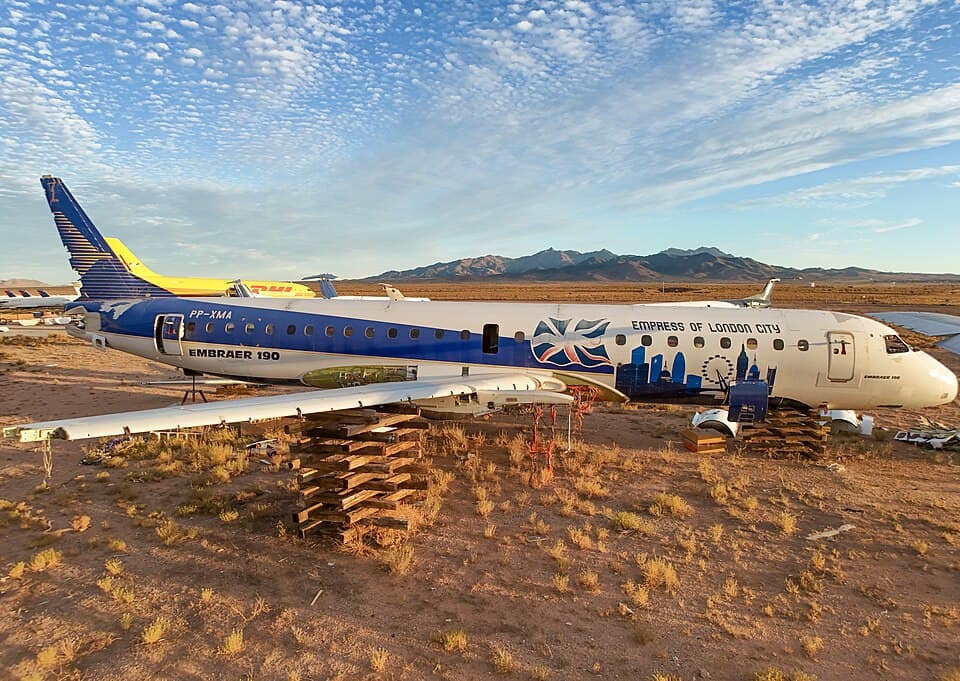
A jet sitting in the desert has not necessarily reached the end. Storage yards in dry regions exist precisely because aircraft parked there can wait years and still return to service.
What Happens to a Retired Airliner
This is where retirement gets interesting. A rundown of where retired airliners end up covers the full range, but three paths dominate.
Passenger to Freighter Conversion
Cargo demand has given many aging passenger jets a second career. Passenger-to-freighter conversion strips the interior, installs a large cargo door, reinforces the floor, and adds cargo handling systems.
Some airframes are far better suited to this than others. The details behind how P2F conversions are done explain why certain models keep showing up in conversion lines while others never do.
- The 767's strength as a conversion candidate comes from its size, range, and pallet-friendly cross section
- The 757's hold on express cargo routes comes from range and runway performance in a narrowbody package
- Payload matters too, and what a 767 can carry is a big part of its appeal
Conversion is a serious investment, and the cost breakdown of a P2F program shows why operators only commit when the cargo market supports it. There is also a real trade-off between converted freighters and factory-built ones, which shapes what airlines choose.
Done at the right moment, conversion can extend an aircraft's working life by a decade or more.
Part-Out and the Used Parts Market
When conversion does not pencil out, the aircraft heads for disassembly. Skilled teams remove components in a planned sequence, verify records, and route parts through certification.
Engines lead the value list by a wide margin. After that come landing gear assemblies, auxiliary power units, avionics boxes, flight control surfaces, and cabin equipment. Buyers get certified parts at a discount, and operators of the same type gain a supply source that keeps their own fleets flying.
Recycling and Second Lives
Whatever cannot be resold gets recycled. Aluminum goes back into the metals supply. Wiring, fluids, and composites are handled under environmental rules.
A small number of airframes avoid the torch entirely. Some become museum pieces. Others become fire training rigs, maintenance trainers, restaurants, or film sets.
Ready to put a number on your own aircraft? Flying411's aircraft valuation tool gives owners a clear starting point before making any sell, keep, or upgrade decision.
Real World Examples of Early Retirements
The 2020 travel collapse produced the clearest examples in living memory. Demand fell off a cliff, and airlines made years' worth of fleet decisions in a matter of weeks.
- British Airways retired its entire 747-400 fleet, years ahead of the previously announced plan
- American Airlines accelerated the exit of its 757, 767, and other older types that were already scheduled to leave
- Delta moved up the retirement of its MD-88 and MD-90 fleets and simplified its widebody lineup
- Lufthansa parked and phased out portions of its four-engine fleet as part of a broader downsizing
None of those aircraft were unsafe. They were removed because the recovery was expected to favor smaller, more efficient jets, and because keeping idle aircraft airworthy costs money every month.
Something similar has happened more recently with newer narrowbodies. Engine backlogs and high spare engine values have pushed some relatively young aircraft toward teardown, which would have been almost unthinkable a decade ago.
Quick Tip: Watch the freighter conversion lines and teardown yards to see where fleet value is moving. When conversion slots fill up, airframes hold value. When teardowns accelerate, parts get cheaper and whole aircraft get harder to sell.
Early Retirement vs Flying an Aircraft to the End
Both approaches exist, and both can be correct depending on the operator.
| Factor | Retire Early | Fly to End of Life |
| Fuel costs | Lower with newer equipment | Higher per seat |
| Maintenance | Predictable, fewer surprises | Rising and less predictable |
| Capital needed | High upfront for replacements | Low, since the asset is paid off |
| Downtime risk | Lower | Higher as parts get scarce |
| Residual value | Captured while it still exists | Mostly gone |
| Best fit | Large carriers on competitive routes | Operators with low utilization or cheap capital |
Charter operators, cargo carriers, and airlines in markets with lower fuel exposure often run aircraft far longer than major network carriers. The aircraft has not changed. The business model has.
Common Myths About Early Aircraft Retirement
Myth: retired planes are unsafe. Regulators ground unsafe aircraft on the spot. An aircraft flying today meets the same standards no matter its age. Retirement is a money decision, not a safety verdict.
Myth: the airframe wears out first. Engines, systems, and economics almost always run out before the structure does.
Myth: retirement means the scrapyard. Many retired aircraft fly again with new operators or as freighters.
Myth: newer always means cheaper. New aircraft carry high ownership costs. An older, paid-off jet on the right route can still be the more profitable option.
Myth: age in years tells you the story. Cycles, hours, maintenance status, and engine condition matter far more than a birth date. Even naming conventions cause confusion, which is part of why Boeing's model numbering system trips people up when comparing generations.
What This Means for Aircraft Buyers, Owners, and Sellers
Fleet retirements ripple straight into the general aviation and used aircraft markets. When large operators move on, supply arrives.
For buyers:
- More used serviceable parts hit the market at better prices
- Airframes and engines with real life remaining become available
- Timing matters, since prices soften when retirements cluster
For owners:
- Records and maintenance status drive value more than paint and interior
- Knowing where your aircraft sits on its maintenance curve helps you plan an exit
- The gap between market value and part-out value is worth tracking
For sellers:
- Selling before a major maintenance event usually beats selling after
- Complete documentation removes buyer hesitation
- A realistic valuation attracts serious offers faster than an optimistic one
Thinking about listing an aircraft, engine, or set of parts? Flying411 connects sellers with buyers, brokers, and service providers across the aviation market.
Conclusion
Understanding why airlines retire aircraft early comes down to accepting one idea. An airliner is a working asset, and every asset has a point where the cost of keeping it passes the value of using it. Fuel, heavy checks, engine availability, fleet complexity, and the value locked inside the aircraft itself all push toward that moment.
The good news is that retirement is rarely the end. A jet leaving one fleet often becomes a freighter, a source of certified parts, or a bargain for a smaller operator. Value keeps moving. It just changes hands.
When an aircraft finishes one career, its next one usually starts on a listing page. Find your next aircraft, engine, or hard-to-source part at Flying411.
Frequently Asked Questions
Can a retired airliner be brought back into service?
Yes, as long as it was properly preserved and the paperwork is intact. Aircraft in long-term storage have been returned to flying status when demand recovered, though the reactivation process takes time and money.
Who owns an aircraft once an airline retires it?
It depends on the original arrangement. If the airline owned the aircraft, it can sell or scrap it. If a leasing company owned it, the aircraft returns to the lessor, which then decides on resale, conversion, or teardown.
Do airlines lose money when they retire an aircraft early?
Sometimes. If the aircraft's book value is higher than its market value, the airline records a write-down. Airlines accept that hit when the ongoing savings outweigh the one-time accounting loss.
Why are so many retired aircraft stored in deserts?
Dry air and low humidity slow corrosion, and hard desert ground supports parked aircraft without special surfaces. Those conditions keep stored airframes and components in far better shape than damp climates would.
Does early retirement affect ticket prices?
Not directly, but it can help indirectly. Newer aircraft usually cost less to operate per seat, and lower operating costs give airlines more room to compete on fares in busy markets.