If you have ever stood near an airfield and watched both lift off, you may have wondered: is it easier to fly a plane or helicopter? It looks simple from the ground. One rolls down a runway and climbs into the sky.
The other rises straight up and hangs in the air like it forgot about gravity. But the feeling from inside the cockpit tells a very different story.
Most pilots will tell you the two aircraft ask very different things from your hands, your feet, and your brain.
A plane and a helicopter both get you off the ground, yet the path each one takes is worlds apart. One of them basically wants to stay in the air. The other is doing everything it can to fall out of it.
Key Takeaways
For most people, a plane is easier to fly than a helicopter, especially when you are first learning. A plane is built to be stable, so it tends to keep flying straight and level even if you take your hands off the controls for a moment. A helicopter is the opposite. It needs constant, gentle input on several controls at once just to stay still in the air, which makes the early lessons much harder.
| Question | Plane | Helicopter |
| Easier for beginners? | Yes, usually | No, harder at first |
| Naturally stable? | Yes, wants to fly | No, needs constant input |
| Hardest single skill | Smooth landings | Hovering in place |
| Controls to manage | Yoke, rudder, throttle | Cyclic, collective, pedals |
| Minimum hours (private, Part 61) | 40 hours | 40 hours |
| Typical training cost | Lower | Higher |
| Best at | Speed and distance | Hover and tight spaces |
If you are weighing your options, Flying411 is a friendly place to look at real aircraft, training resources, and the professionals who fly for a living, all in one spot.
How Planes and Helicopters Actually Fly
Before you can judge which is harder, it helps to understand how each one stays in the air. They both make lift, but they go about it in completely different ways.
What Keeps a Plane in the Air
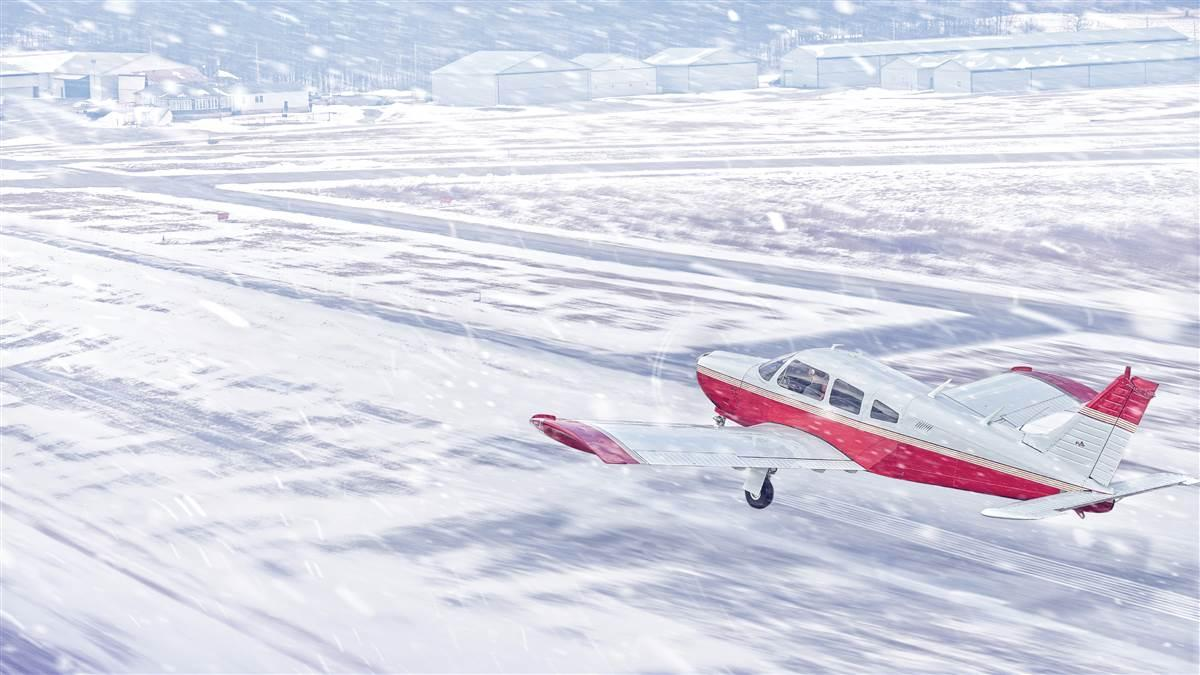
A plane makes lift with its wings. As the plane moves forward fast enough, air rushes over and under the wings. The shape of the wing creates a pressure difference, and that difference pulls the plane upward. The faster it goes, the more lift it makes.
This is why a plane needs a runway. It has to build up speed before the wings can do their job. Once it is moving and climbing, the wings keep working as long as there is enough forward speed. A fixed-wing aircraft is named for exactly this reason. The wings do not move, so they only make lift when the whole plane is moving through the air.
Good to Know: A well-trimmed plane can often fly nearly hands-off for short stretches. That built-in steadiness is one big reason planes feel friendlier to brand-new students.
What Keeps a Helicopter in the Air
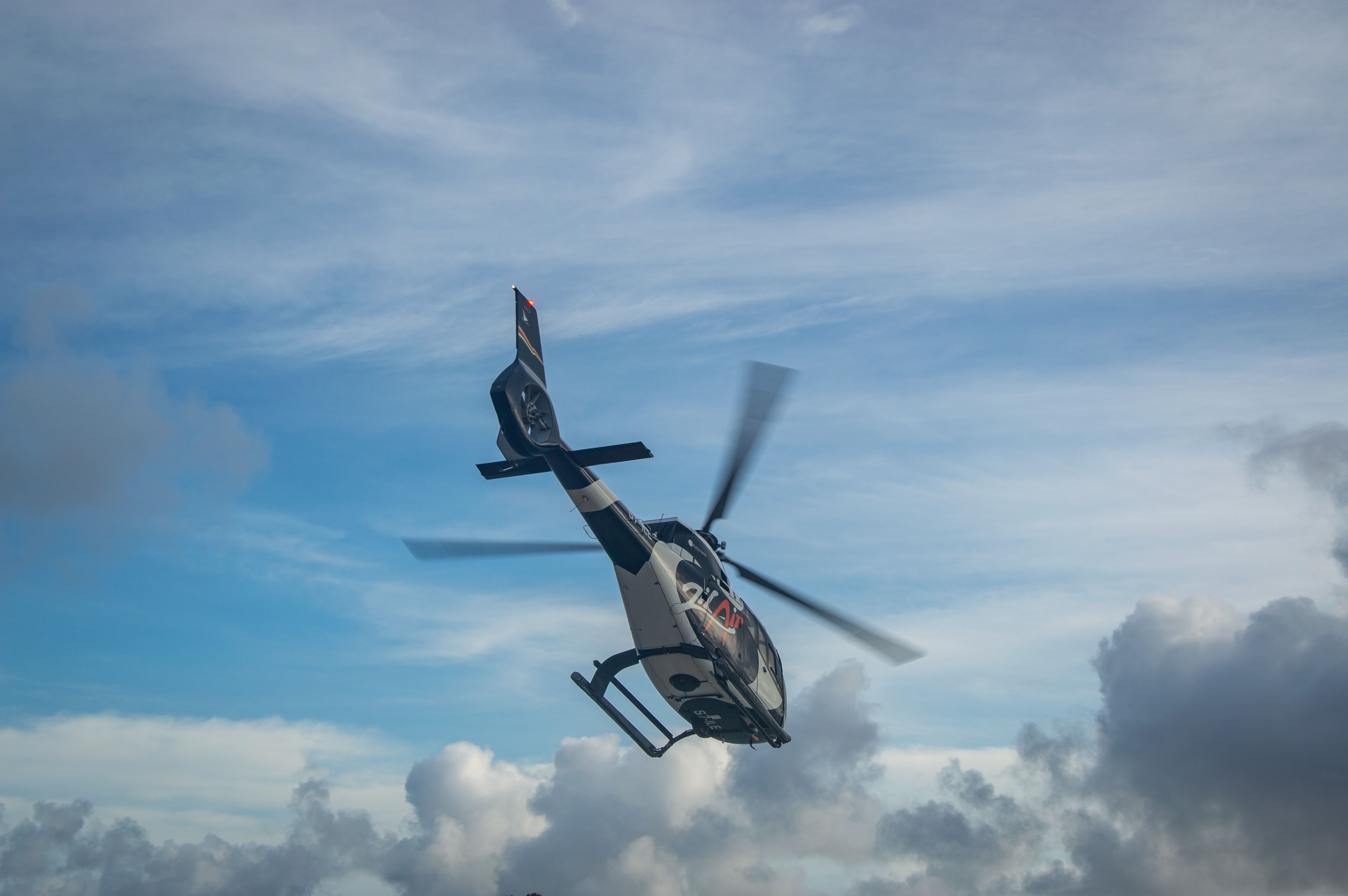
A helicopter makes lift with its spinning rotor blades. Each blade is shaped a lot like a small wing. As the rotor spins, the blades slice through the air and create lift, even when the helicopter is not moving forward at all. That is the magic trick that lets a helicopter take off straight up and hover in one place.
The catch is balance. A helicopter is held up by several forces all working against each other at the same time. If any one of them slips out of line, the aircraft reacts right away. There is no coasting and no settling into a calm groove on its own. The pilot is part of the balancing act every second the rotor is turning.
Fun Fact: A helicopter does not glide the way a plane does. If the engine quits, pilots use a maneuver called autorotation, where the falling air keeps the rotor spinning so they can make a controlled landing.
The Controls: Two Hands, Two Feet, and Plenty of Coordination
A huge part of the answer to how hard is it to fly a helicopter comes down to the controls. The number of inputs, and how they all interact, is where the two aircraft really split apart.
Flying a Plane: The Main Controls
A plane keeps things fairly simple for your hands and feet. The basic controls are:
- Yoke or stick: Pull or push to point the nose up or down. Turn it left or right to roll into a bank.
- Rudder pedals: Press with your feet to keep the nose pointed where it should be, mostly during turns, takeoff, and landing.
- Throttle: Push forward for more power, pull back for less.
Each control does a fairly clear job. When you move one, the plane responds in a way that feels logical after a few hours of practice. You still have to coordinate them, but the plane forgives small mistakes and tends to settle back down on its own.
Flying a Helicopter: The Main Controls
A helicopter asks much more from you, and it asks for all of it at once. The main controls are:
- Cyclic: The stick between your knees. It tilts the rotor to move you forward, backward, left, or right.
- Collective: A lever by your left side. Raise it to make all the blades grab more air and lift you up. Lower it to come down.
- Anti-torque pedals: Your feet control the tail rotor, which keeps the nose from spinning in circles.
- Throttle: Often a twist grip on the collective that manages engine and rotor speed.
Here is the tricky part. Moving one control upsets the others. Raise the collective to climb, and the nose wants to swing, so your feet have to answer. Tilt the cyclic, and the power balance shifts. Every input creates a ripple, and you have to smooth out every ripple in real time. Getting comfortable with plane vs helicopter controls is one of the clearest ways to feel the gap in difficulty.
Why It Matters: A plane lets you focus on one thing at a time while you learn. A helicopter makes you juggle several inputs together from your very first lesson, which is exactly why early progress feels slower.
Is It Easier to Fly a Plane or Helicopter? What Really Makes the Difference
Time for the heart of the matter. When pilots and instructors compare the two, the same handful of reasons come up again and again. Here are eight things that decide which one is harder to fly.
- Stability. This is the biggest factor by far. A plane is built to want to fly. Hit a bump of turbulence and it usually returns to steady flight on its own. A helicopter is built without that natural steadiness, so it relies on the pilot to hold it in line at all times.
- The hover. Holding a helicopter still in the air, a few feet off the ground, is famously the hardest skill in early training. Students often compare it to balancing on a beach ball while patting your head and rubbing your stomach. Planes have no equal to this challenge.
- Coordination. A plane usually lets you handle one input at a time. A helicopter demands both hands and both feet working together, constantly, with tiny corrections. That mental load is a lot to carry at first.
- Margin for error. Planes tend to be forgiving. Small mistakes often fix themselves. Helicopters react quickly to every input, so a clumsy move shows up right away and has to be caught fast.
- Emergencies. If a plane loses engine power, it can glide and the pilot has time to pick a landing spot. A helicopter has no glide, so an engine failure means dropping into autorotation quickly and precisely. Both are trainable, but the helicopter version leaves less room to think.
- Workload in cruise. Once a plane is up and trimmed, the cruise portion is calm. You can relax your grip and breathe. A helicopter in forward flight is steadier than a hover, yet it still wants more attention than a plane does.
- Takeoff and landing. A plane needs runway space and good speed control, but the runway gives you a long, clear target. A helicopter can land almost anywhere, which sounds easier but actually demands very fine control to set down softly and level.
- The learning curve. New plane students often solo sooner because the basics click faster. New helicopter students usually spend more time fighting the hover before things start to feel natural. The payoff comes later, once the coordination finally locks in.
Put all of that together, and the pattern is clear. A plane is the gentler starting point for most people. A helicopter is the steeper climb that rewards patience. If you want a closer look at how a helicopter is flown step by step, the hands-on routine is a great window into why the hover takes so much practice.
Keep in Mind: "Harder to learn" does not mean "impossible." Plenty of everyday people earn helicopter ratings. It simply takes more focused practice in the early stages.
Plane vs Helicopter at a Glance
Sometimes a quick side-by-side makes the differences easier to picture. Here is a simple comparison of how the two aircraft stack up on the things that matter most to a new pilot.
| Feature | Plane | Helicopter |
| Stays steady on its own | Yes | No |
| Can hover | No | Yes |
| Needs a runway | Usually | No |
| Glides without power | Yes | No (uses autorotation) |
| Controls to coordinate | Fewer | More |
| First solo timing | Often sooner | Often later |
| Strength | Speed, range, comfort | Access, precision, hovering |
A plane wins on calm, predictable flying and long trips. A helicopter wins on going places a plane simply cannot reach. Neither is "better." They are tools built for different jobs.
Learning to Fly: Training, Time, and Cost
A big part of choosing between the two is knowing what training looks like. The good news is that the path is well marked for both. The honest news is that one path tends to cost more.
How Many Hours You Need
In the United States, the FAA sets minimum flight hours. For a private pilot certificate under Part 61, both a single-engine plane and a helicopter require at least 40 hours of flight time. That includes at least 20 hours with an instructor and 10 hours of solo flying for each.
The minimums are the same, but the real-world numbers often differ. Many helicopter students need more total practice to feel ready, mostly because the hover and the constant coordination take longer to master. Flight training hours for real students often run above the legal minimum for both aircraft, and a bit higher on the helicopter side.
If you plan to fly for a living, the gap shifts. Under Part 61, a commercial airplane certificate calls for at least 250 hours, while a commercial helicopter certificate calls for at least 150 hours. Anyone serious about a career should look into the full requirements for helicopter pilot training, including the steps for earning a helicopter license and the practical route to becoming a helicopter pilot.
Heads Up: Helicopter training usually costs noticeably more per hour than airplane training. Rotorcraft are more expensive to operate and maintain, and that shows up in your lesson bill. Budget accordingly before you commit.
What Training Typically Costs
Exact prices change by region, school, and aircraft, so treat any number you see as a rough guide rather than a promise. As a general rule, plane training tends to be the more affordable starting point, and helicopter training tends to sit higher because of the cost of running a rotorcraft.
A practical way to compare is to think in terms of value, not just price. A plane gives you cheaper hours and faster early progress. A helicopter gives you a rare skill and abilities a plane cannot match. The right choice depends on what you want to do once you have your wings.
Looking to take the next step? Flying411 connects you with flight schools and certified instructors who train both fixed-wing and rotorcraft pilots, so you can compare programs in one place.
Which One Should You Learn First?
This question comes up a lot, and there is no single right answer. It depends on your goals, your budget, and the kind of flying that excites you.
Learn a plane first if you want:
- A gentler, more forgiving introduction to flying.
- Lower training costs while you build confidence.
- Long cross-country trips and faster travel.
- A faster route to your first solo flight.
Learn a helicopter first if you want:
- A career that uses vertical flight, like tours, news, or emergency services.
- The ability to land in tight spaces and remote areas.
- A skill set that fewer pilots have.
- The personal challenge of mastering the hover.
Some pilots do both over time. Skills like reading weather, talking on the radio, and planning a flight carry over from one aircraft to the other. Career paths can pay well too. Specialized rotor jobs exist in many fields, and you can get a feel for the range by looking at what helicopter linemen earn in the power-line industry.
Pro Tip: Before you sign up for a full course, book a short discovery flight in each aircraft. One hour in the seat will tell you more about which one fits you than any article ever could.
Where Each Aircraft Shines
Difficulty is only part of the picture. Each machine has a purpose, and understanding those purposes makes the comparison feel a lot more real.
When a Plane Makes More Sense
Planes are the long-distance champions. They fly higher, faster, and farther on the same fuel, which makes them ideal for travel and training. They are comfortable, predictable, and widely available, so finding a school and a rental is usually easier. If your dream is hopping between cities or building hours efficiently, a plane is a natural fit.
When a Helicopter Makes More Sense
Helicopters trade speed and range for access and precision. They can take off straight up, hover over a single point, and land where no runway exists. That makes them perfect for rescue work, sightseeing, filming, construction lifts, and reaching places planes never could. Curious minds often ask how high they can climb and how far they can travel, and the honest answer is that helicopters are built for reach and flexibility rather than raw distance.
The helicopter world is also wonderfully varied. There is a reason people debate the friendly chopper nickname versus the proper term. Designs range from tiny two-seat trainers to powerful military machines. Heavy lifters like the Chinook, agile attack helicopters like the Apache, classic workhorses like the Huey, and storied designs such as the Apache and Comanche all fly with their own personalities. Some comparisons get truly creative, pitting a helicopter against a tank or even imagining it next to a flapping-wing ornithopter.
Modern technology keeps adding new branches to the family tree too. Electric eVTOL aircraft promise quiet vertical flight for short city hops, and small quadcopter drones borrow the same multi-rotor idea on a tiny scale. Each one handles differently, which is a good reminder that "easy" and "hard" always depend on the specific machine in front of you.
Ready to find your first aircraft or your next one? Browse the listings on Flying411 and see what is out there today.
So, What Is the Verdict?
If you only remember one thing, remember this. A plane is generally easier to learn because it is stable and forgiving. A helicopter is generally harder to learn because it is unstable and demands constant, coordinated control. The hover is the great equalizer, and it humbles nearly every new helicopter student for a while.
That said, "harder" is not "worse." Many pilots fall in love with helicopters precisely because they are a challenge. The day the hover finally clicks is one of the proudest moments in aviation. And plenty of plane pilots eventually crave the freedom of vertical flight.
Quick Tip: Match the aircraft to your goal, not to the difficulty rating. The "hard" path is worth it if it leads exactly where you want to go.
Conclusion
So, is it easier to fly a plane or helicopter? For most beginners, the plane takes the easier crown thanks to its built-in stability and gentle learning curve. The helicopter is the tougher teacher, asking for constant coordination and patience while you tame the hover.
Both deliver the same reward in the end, which is the simple joy of leaving the ground under your own command.
Whichever one calls to you, the smartest first step is to get clear on your goals, then find the right aircraft, training, and people to support the journey.
From long horizons to hovering over a city skyline, Flying411 can help you find the aircraft, parts, and professionals to get you flying.
FAQs
Can you fly both a plane and a helicopter with one license?
No, each one requires its own rating, since the controls and skills are different. Many pilots earn both over time by adding a second rating to their existing certificate.
Does flying a helicopter require more physical strength than a plane?
Not really, because both rely on light, precise control inputs rather than brute force. The bigger demand for helicopter pilots is mental focus and coordination, not muscle.
Is a helicopter more dangerous than a plane?
Both are very safe when flown by trained pilots and properly maintained. The risks are different rather than simply higher, and good training is the key factor for either aircraft.
How long does it take to learn to fly a plane or a helicopter?
It varies by person, but many students reach a private rating in a few months of regular lessons. Helicopter students often need a bit more practice time because the hover takes longer to master.
Which is cheaper to learn, a plane or a helicopter?
Plane training is usually the more affordable option because aircraft operating costs are lower. Helicopter training tends to cost more per hour, though prices vary by school and region.