Helicopters have ruled the skies for vertical flight for decades. They carry rescue crews into mountains, whisk executives across cities, and show up in just about every action movie ever made. Now a new kind of aircraft is entering the picture, and it's sparking one of the biggest debates in aviation today.
Electric Vertical Takeoff and Landing aircraft — known as eVTOLs — are being called the future of urban air travel. They're quieter, run on electricity, and companies like Joby Aviation and Archer are already racking up thousands of test flights. But can they really replace the helicopter? That depends on what you need and where you're flying.
The eVTOL vs helicopter debate is more than a tech conversation. It touches on cost, safety, regulation, range, and the kind of flying that each machine is actually built for. This guide breaks it all down so you can see exactly how these two types of aircraft stack up.
Key Takeaways
eVTOLs and helicopters both take off and land vertically, but they work very differently. Helicopters run on fuel, carry more passengers, and fly farther. eVTOLs run on electricity, make less noise, and may cost less to operate in the long run. Right now, helicopters are the more versatile option for most missions. But eVTOLs are advancing fast and are expected to take over many short urban routes within the next decade.
| Feature | eVTOL | Helicopter |
| Power source | Electric battery | Fuel (jet or piston) |
| Noise level | Significantly quieter | Loud |
| Typical range | Up to around 150 miles | 300+ miles |
| Passenger capacity | 2 to 6 | Up to 12+ |
| Maintenance complexity | Lower (fewer moving parts) | Higher |
| Purchase price (approx.) | $1M to $5M+ | $2.5M to $27M+ |
| Best use | Short urban routes | Long range, heavy lift, remote access |
| FAA certification | Still in progress | Established |
Flying411 covers everything from aircraft comparisons to general aviation news, so whether you're a curious flyer or a seasoned pilot, you'll find something useful here.
What Is an eVTOL, Exactly?
Before comparing the two, it helps to get clear on what an eVTOL actually is.
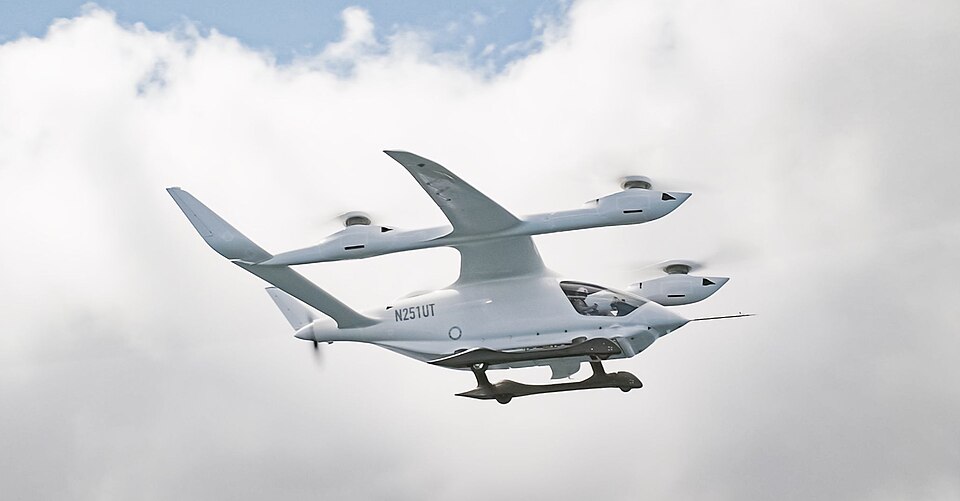
eVTOL stands for Electric Vertical Takeoff and Landing. These aircraft use electric motors and battery power to lift straight up, hover, and land — no runway needed. They look a bit like a cross between a helicopter and a large drone. Some models have fixed wings that help with forward flight efficiency.
Most eVTOLs are designed to carry two to six passengers on short urban trips. Think of them as air taxis. Companies like Joby Aviation, Archer Aviation, Wisk Aero, and Volocopter are among the most well-known names currently developing and testing these aircraft.
Good to Know: A helicopter is technically a type of VTOL (Vertical Takeoff and Landing) aircraft. The "e" in eVTOL stands for electric — that's the key difference.
eVTOLs typically feature multiple rotors spread across the aircraft frame. Some models use four rotors for balance and simplicity. Others use eight or more for added redundancy, which can improve safety by giving the aircraft backup lift if one motor fails.
What Makes a Helicopter Different?
Helicopters are the original VTOL workhorses. They've been around since the mid-20th century and have proven themselves in some of the most demanding environments on earth — from offshore oil rigs to Antarctic research stations to military combat zones.
A traditional helicopter uses a main rotor powered by a combustion engine, either a piston engine or a turboshaft. The main rotor generates both lift and forward thrust. A tail rotor counteracts the spinning torque to keep the fuselage from rotating.
This mechanical system is effective and proven, but it is also complex. Helicopters require frequent maintenance, consume significant amounts of fuel, and produce both noise and emissions.
Fun Fact: Helicopter gearboxes are considered some of the most mechanically complex components in aviation, and they are a major factor in maintenance costs for operators worldwide.
The range and versatility of helicopters are genuinely impressive. Depending on the model, they can carry anywhere from two to more than twelve passengers, lift heavy cargo, and fly distances well beyond 300 miles on a single tank. These capabilities have kept helicopters relevant across search-and-rescue, medical evacuation, offshore transport, agriculture, law enforcement, and executive travel.
For a closer look at how helicopters compare to other types of aircraft, guides on the Seahawk vs Black Hawk and the gyrocopter vs helicopter debate offer solid side-by-side context.
eVTOL vs Helicopter: The Key Differences That Actually Matter
Here is where the comparison gets interesting. These two types of aircraft are built on different principles, and those principles lead to very different strengths.
Noise and Community Impact
Helicopters are loud. That noise comes from their large main rotor blades cutting through the air at high speed and from the combustion engines powering them. In cities, helicopter noise is a real issue for residents near heliports and flight paths.
eVTOLs are considerably quieter. Their electric motors produce less noise, and the sound they do make tends to be higher in pitch and less disruptive than the deep thump of a helicopter. This is one of the biggest reasons cities and communities are excited about eVTOLs.
Why It Matters: Reduced noise is not just a comfort issue. It could open up new routes and landing zones in urban areas where helicopter noise restrictions currently limit operations.
Range and Flight Duration
This is one of the clearest advantages helicopters hold right now. Battery technology — the same limitation that affects electric cars — also limits how far eVTOLs can fly on a single charge.
Current leading eVTOL models are targeting ranges of around 100 to 150 miles per charge. The Joby S4, for example, has a target range of around 150 miles. Archer's Midnight aims for roughly 100 miles per charge. Helicopters can often fly two to three times that distance without refueling.
Recharging an eVTOL battery also takes time. Fast-charging technology is improving, but turnaround times are still a consideration for high-frequency operations.
Passenger Capacity and Payload
Helicopters win on capacity, especially for larger models. A light helicopter might carry four passengers, while executive models can carry up to twelve or more. Heavy-lift helicopters can haul enormous cargo loads.
Most eVTOLs are currently designed for two to six passengers. That works fine for an urban air taxi service but falls short for missions that require moving larger groups or heavy equipment.
Keep in Mind: Payload and range are closely linked for eVTOLs. Carrying more passengers means faster battery drain and shorter range.
Maintenance and Operating Costs
Helicopters are notoriously expensive to maintain. Their complex gearboxes, rotor systems, and combustion engines require inspections and overhauls on strict schedules. Maintenance costs can run into tens of thousands of dollars per month for active operators.
eVTOLs have far fewer moving parts. Electric motors are simpler by design, and fewer mechanical components mean fewer things that can wear out or break down. This theoretically translates to lower maintenance costs — though the eVTOL industry is still young, and real-world long-term maintenance data is limited.
Battery replacement is one cost that is unique to eVTOLs. Lithium-ion batteries degrade over time and will eventually need to be replaced, which represents a significant expense.
Pro Tip: When comparing operating costs, always factor in battery replacement cycles alongside fuel savings. The math looks different depending on how many flight hours the aircraft logs per year.
Purchase Price
Light helicopters can cost roughly $2.5 million to $3 million or more. Larger turbine models push into the $10 million range, and heavy-lift variants can exceed $27 million. These are established, mature products with stable pricing.
eVTOLs currently sit in the $1 million to $5 million range for most models entering the market, though prices are still in flux as the technology matures and production scales up. Some developers have targeted lower price points as production increases, while real-world market prices have sometimes come in higher than initial estimates.
Environmental Impact
eVTOLs produce zero direct emissions during flight. They run entirely on electricity, which means no exhaust from combustion. Helicopters burn jet fuel or aviation gasoline and produce both carbon dioxide and other emissions.
The full environmental picture for eVTOLs depends on how the electricity they use is generated — but even with a mixed power grid, electric flight tends to have a smaller carbon footprint than fuel combustion at altitude.
Safety Systems and Redundancy
Helicopters have a well-established safety record built over many decades. They also have autorotation — a passive mechanical safety feature that allows the rotor to keep spinning without engine power, letting a pilot glide down and land safely in the event of engine failure.
eVTOLs use multiple redundant electric motors. If one fails, the others continue providing lift. Advanced automation and fly-by-wire systems add further layers of protection. However, this approach is newer, and building a comparable safety database will take time and flight hours.
Heads Up: eVTOL certification is still in progress with the FAA. Joby and Archer are among the companies working closely with the agency toward approval. Expect commercial air taxi services to expand gradually rather than all at once.
Urban Air Mobility Potential
This is where eVTOLs have a clear edge. They are specifically designed for short urban trips — airport transfers, cross-city commutes, and point-to-point routes in dense metropolitan areas. Their small footprint, low noise, and ability to land at compact vertiports (small urban landing pads) make them ideal for city use.
Helicopters can do these routes too, but the noise, cost, and infrastructure demands have always limited how widely they are used for everyday urban transport.
Flying411 covers the full range of aircraft comparisons and aviation topics — it is a great resource if you are trying to make sense of how different aircraft categories fit different missions.
How Do They Compare in Real-World Use Cases?
Different aircraft thrive in different environments. Here is a practical breakdown:
Where helicopters are still the clear choice:
- Search and rescue in remote or mountainous terrain
- Medical evacuation with heavy equipment
- Long-range offshore transport (oil platforms, etc.)
- Heavy cargo lift
- Law enforcement and military operations
- Rural and remote areas without charging infrastructure
Where eVTOLs are expected to take over:
- Urban airport-to-city transfers
- Short inter-city routes (under 100 miles)
- Premium commuter services in dense metro areas
- Tourism and sightseeing in noise-sensitive areas
- Routes where noise restrictions currently limit helicopter operations
For a broader sense of how vertical-lift aircraft compare to fixed-wing options, the breakdown of helicopter vs jet is worth reading.
The Regulatory Picture: Where Things Stand
The FAA's certification process for eVTOLs is one of the most closely watched developments in aviation. These aircraft do not fit neatly into existing categories, so the agency has had to create new frameworks for how they are certified and operated.
Joby Aviation and Archer Aviation are among the furthest along in seeking FAA type certification. Both companies have completed thousands of test flights and are working toward commercial service launches.
Fun Fact: In June 2025, President Trump signed an executive order directing federal agencies to accelerate the development and integration of eVTOLs into U.S. airspace — a signal of growing federal support for the industry.
Infrastructure is another piece of the puzzle. eVTOLs need vertiports — purpose-built landing and charging stations — to operate at scale. Building out that infrastructure in cities takes time, investment, and cooperation from local governments.
Helicopter infrastructure (heliports, refueling stations) is already in place across the U.S., which remains a practical advantage for helicopter operators in the near term.
The Companies Shaping the eVTOL Industry
A number of major players are defining where eVTOL technology is headed.
Joby Aviation is one of the most advanced in terms of FAA certification progress and has logged an impressive number of full-scale test flights. The company has announced plans for air taxi service connecting Manhattan and Newark Liberty International Airport.
Archer Aviation is another frontrunner, with plans for a large-scale factory in Georgia and a target to produce hundreds of aircraft annually once certified. Archer's Midnight aircraft targets a range of around 100 miles per charge.
Wisk Aero (a collaboration with Boeing) is developing a fully autonomous four-seat eVTOL with a focus on self-flying capability and fast charging.
Volocopter has been active in demonstrating its VoloCity air taxi and has targeted major international cities for early service deployments.
It is worth noting that the eVTOL industry has also seen some setbacks. Lilium, a German developer, filed for bankruptcy in late 2024 and ultimately ceased operations in early 2025, underscoring that the path to commercialization is not guaranteed for everyone in the field.
Good to Know: With hundreds of companies developing eVTOL aircraft globally, not all of them will reach commercial service. The industry is expected to consolidate significantly over the coming years.
If you want to stay current on how the aviation landscape is shifting across different aircraft categories, Flying411 covers topics across the full spectrum of general aviation.
How Does Pilot Licensing Work for eVTOLs?
This is a common question and one worth addressing directly. Currently, eVTOLs still require pilots. The FAA has been working on training and certification requirements for powered-lift aircraft, which is the category that covers most eVTOLs.
A traditional helicopter pilot license and an eVTOL rating are not the same thing. Pilots will need specific training for each aircraft type, similar to how fixed-wing and rotorcraft ratings are handled today. The details of how licensing requirements for helicopter vs pilot license frameworks will evolve for powered-lift aircraft are still being worked out by the FAA.
The long-term vision for many eVTOL companies is fully autonomous flight — meaning no pilot at all. But that is still years away from regulatory approval and wide deployment. For a deeper look at how aviation licensing categories work, the guide on helicopter license vs pilot license offers helpful background.
eVTOL vs Helicopter: Side-by-Side Summary Table
| Category | eVTOL | Helicopter |
| Propulsion | Electric battery | Combustion engine (jet or piston) |
| Noise | Low | High |
| Range | ~100 to 150 miles | 300+ miles |
| Passengers | 2 to 6 (typical) | 2 to 12+ |
| Payload | Limited | High (especially larger models) |
| Emissions | Zero in flight | Yes (CO2 and other) |
| Maintenance cost | Expected lower | High |
| Certification status | In progress (FAA) | Fully certified |
| Infrastructure | Vertiports (still being built) | Established heliports |
| Best mission | Urban short-range | Long-range, heavy lift, remote |
For a sense of how helicopters compare to other traditional aircraft, the comparison between Apache helicopter vs fighter jet and the drone vs helicopter breakdown both offer useful context.
What the Future Looks Like for Both Aircraft
Most aviation analysts expect both aircraft types to coexist for many years. eVTOLs are not going to replace every helicopter overnight — or perhaps ever, for certain missions. But they are expected to take a significant share of urban short-range passenger transport as infrastructure builds out and certification is achieved.
Battery technology is the single biggest variable. As energy density improves, eVTOL range will increase, and the economics will shift further in their favor. Hydrogen fuel cells are also being explored as a way to extend range while keeping emissions low.
Helicopters, meanwhile, are not standing still. Hybrid-electric designs are being developed that blend combustion and electric propulsion for greater efficiency. These could extend helicopter life in roles where full electric power is not yet feasible.
The urban air mobility market is expected to grow significantly over the coming decade. Companies like Joby and Archer are planning commercial launches in major U.S. cities, with broader rollout anticipated through the late 2020s and beyond.
Why It Matters: The eVTOL vs helicopter conversation is really about the right tool for the right job — and in urban environments, eVTOLs are increasingly looking like the better fit.
Conclusion
The eVTOL vs helicopter debate does not have a single winner — at least not yet. Helicopters remain the more capable and versatile aircraft for long-range, high-capacity, and remote-access missions. They are certified, proven, and supported by established infrastructure across the country.
eVTOLs bring something genuinely new to the table: quieter flight, electric efficiency, and the potential for a whole new category of urban air travel. They are advancing fast and have real momentum behind them from regulators, investors, and major aviation companies.
The clearest answer is this: if you need to fly across a city with a small group, eVTOLs are likely the future of that route. If you need to fly farther, carry more, or operate in remote terrain, helicopters are still the go-to aircraft.
For everything from aircraft comparisons to general aviation news and guides, Flying411 is the resource to bookmark. Stay current, stay informed, and fly smart.
FAQ
What is the main difference between an eVTOL and a helicopter?
A helicopter uses a combustion engine and a large main rotor to generate lift, while an eVTOL uses electric motors and multiple smaller rotors powered by a battery. eVTOLs are quieter and produce zero direct emissions during flight.
Can eVTOLs fly as far as helicopters?
Not yet. Most current eVTOL designs target ranges of around 100 to 150 miles per charge, while helicopters can typically fly 300 miles or more on a full tank. Battery technology is improving, which may extend eVTOL range over time.
Are eVTOLs safer than helicopters?
Both have safety advantages. Helicopters have decades of real-world safety data and a passive safety feature called autorotation. eVTOLs are designed with multiple redundant motors so that one failure does not bring the aircraft down. Which is "safer" overall depends on the specific mission and conditions.
When will eVTOL air taxi services be available in the United States?
Several companies, including Joby and Archer, have announced plans for commercial service in major U.S. cities, with initial routes potentially launching as soon as 2025 or 2026, pending FAA certification. Widespread service is expected to roll out gradually through the late 2020s.
Do you need a special license to fly an eVTOL?
Currently, eVTOLs require a pilot, and the FAA is developing specific training and certification requirements for powered-lift aircraft, which is the category that covers most eVTOLs. The long-term plan for many developers involves autonomous flight, which would eventually remove the need for an onboard pilot, but full autonomy is still years away from approval.