You're standing at the crossroads of two very different flying experiences. One aircraft hovers, twists, and sets down in a parking lot. The other blasts across the sky at hundreds of miles per hour and doesn't stop until it's covered a continent. Both are remarkable machines. But they are built for entirely different jobs.
Helicopters and jets are two aircraft that represent opposite ends of the flexibility-versus-speed spectrum. Understanding where each one excels — and where it falls short — helps you make smarter decisions, whether you're planning a charter flight, considering aircraft ownership, or just curious about how they stack up.
Here's a closer look at the real differences between a helicopter vs jet, from how they fly to how much they cost to keep in the air.
Key Takeaways
When comparing a helicopter vs jet, the right choice depends almost entirely on your mission. Helicopters win when you need to land somewhere a jet never could — a rooftop, a mountain clearing, a ship deck, or a hospital helipad. Jets win when you need to cover serious distance quickly and in comfort. For short hops under roughly 200 miles to hard-to-reach destinations, helicopters are often faster and more practical. For anything longer, jets offer better speed, range, fuel efficiency per mile, and far more cabin comfort.
| Factor | Helicopter | Jet |
| Speed | Typically 100-160 mph cruise | 400-600+ mph cruise |
| Range | Generally under 400 miles | 1,000 to 4,000+ miles depending on type |
| Landing flexibility | Virtually anywhere flat | Requires airport runway |
| Cabin comfort | Compact, limited amenities | Spacious, often full amenities |
| Hourly charter cost (approx.) | $1,500-$5,000 | $4,000-$15,000+ |
| Best use case | Short trips, remote access | Long-distance travel |
| Maintenance complexity | High (many moving parts) | Lower per flight hour at scale |
| Noise & vibration | Noticeable | Much quieter at cruise |
Flying411 covers the full spectrum of general aviation, from rotorcraft to business jets. If you're weighing your options for a new aircraft purchase or charter flight, Flying411 is a solid place to start your research.
How Helicopters and Jets Actually Fly
Before comparing performance, it helps to understand what makes these two aircraft fundamentally different.
A jet is a fixed-wing aircraft. Its wings are stationary, and they generate lift only when air moves across them — which means the aircraft must move forward to stay airborne. That forward movement comes from powerful jet engines that push the plane at high speed. Jets need runways for this reason.
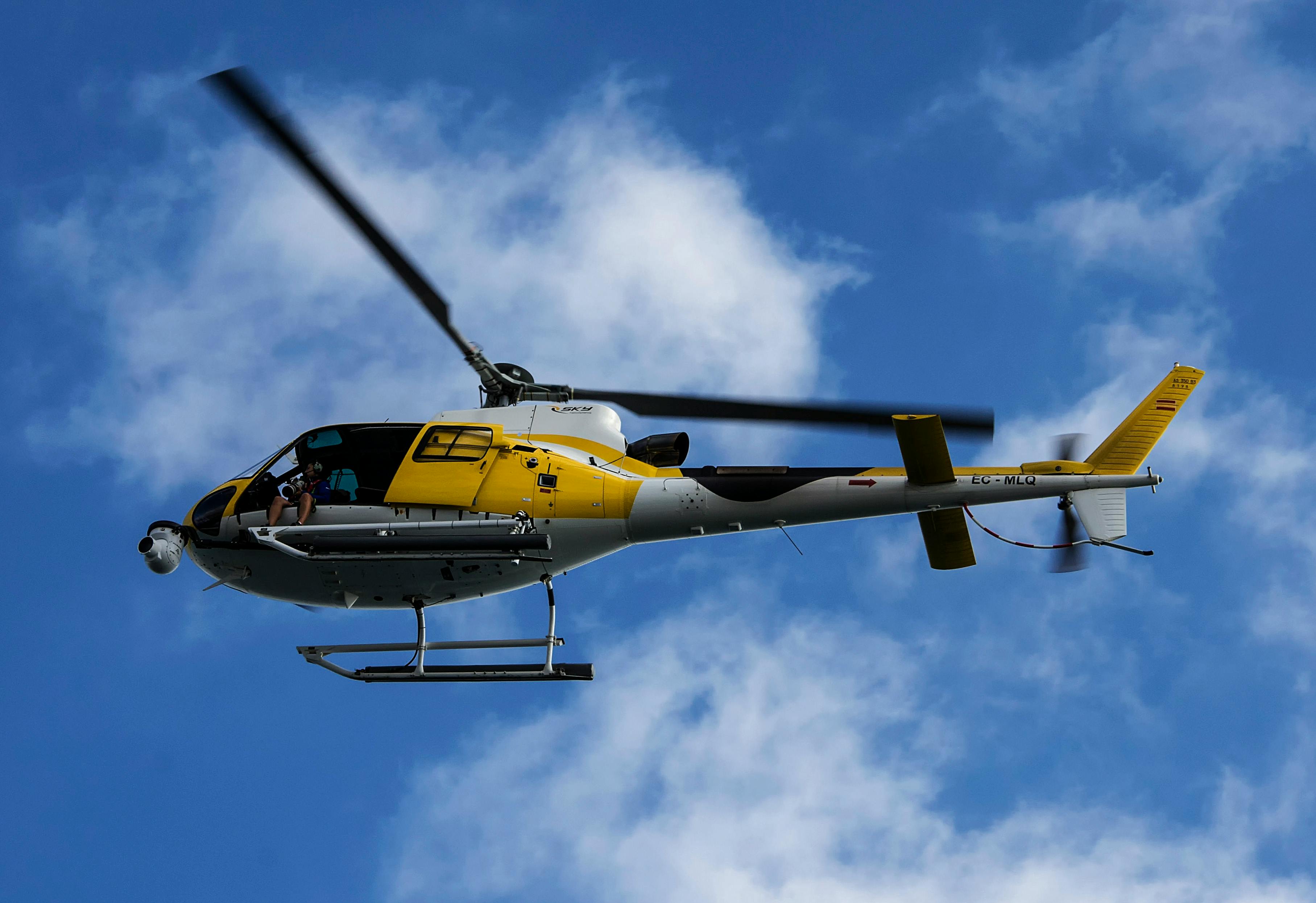
A helicopter is a rotary-wing aircraft. Instead of stationary wings, it has spinning rotor blades that constantly push air downward to generate lift. This means the helicopter doesn't need forward momentum to stay in the air. It can rise straight up, hover in place, and even fly sideways or backward. That single design difference changes everything about what each aircraft can do.
Fun Fact: The concept of vertical flight fascinated inventors for centuries. Leonardo da Vinci sketched an aerial screw device in the late 1400s that is widely considered an early conceptual ancestor of the modern helicopter.
Speed: Jets Are in a Different League
Speed is one of the clearest separators in the helicopter vs jet comparison.
A typical piston helicopter cruises somewhere in the 100 to 140 mph range. High-performance turbine helicopters — the kind used in offshore oil work and military operations — can push toward 160 to 200 mph in level flight. That is genuinely fast for many missions.
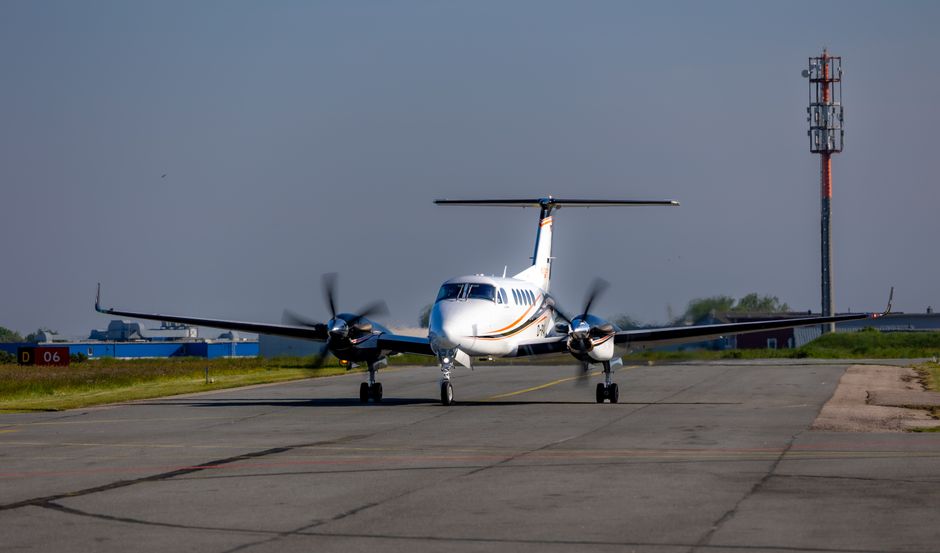
But jets operate at a completely different level. Light business jets commonly cruise at 400 to 500 mph. Large long-range jets can cruise above 500 mph, allowing them to cross the country in just a few hours. Commercial airliners operate at similar speeds.
The reason helicopters can't simply go faster comes down to rotor physics. As the helicopter moves forward, one side of the rotor spins into the airflow (the advancing blade) and the other spins away from it (the retreating blade). At higher speeds, the retreating blade loses lift, creating an instability called retreating blade stall. This puts a hard ceiling on how fast a conventional helicopter can safely travel.
Keep in Mind: Some experimental and military designs have pushed past conventional helicopter speed limits using compound rotor systems or other hybrid approaches. But for practical civilian use, the speed ceiling of a helicopter remains well below what any jet can achieve.
Range: Jets Win the Long Game
Speed and range go hand in hand. Because jets fly faster and burn fuel more efficiently per mile traveled, they can cover enormous distances.
A light jet might carry enough fuel to travel 1,500 to 2,000 miles nonstop. Mid-size and large business jets stretch that to 3,000 or even 4,000 miles or more, which means coast-to-coast flights without stopping. Long-range and ultra-long-range jets can cross oceans.
Helicopters carry far less fuel relative to their burn rate. Most civilian helicopters have a practical range of somewhere between 200 and 400 miles before needing to refuel. A longer trip in a helicopter means multiple fuel stops, which adds time and cost — quickly eliminating any flexibility advantage the helicopter offered in the first place.
Good to Know: For any trip over roughly 300 miles, a fixed-wing aircraft or jet will almost always be the faster, cheaper, and more comfortable option per mile traveled. The helicopter's advantage kicks in at shorter distances, especially when the destination is far from an airport.
Where Helicopters Have Jets Beat: Access and Flexibility
Here is where the comparison shifts decisively in the helicopter's favor.
Jets need runways. A typical business jet requires a paved runway of at least several thousand feet to take off and land safely. That limits them to airports, and not every destination has one nearby. If you need to get from a city center to a remote mountain site, an offshore platform, a private estate, or a hospital rooftop, a jet cannot help you.
A helicopter can land almost anywhere with a reasonably flat, open surface large enough for its rotor diameter. That includes:
- Hospital helipads
- Rooftops and building terraces
- Ship decks and oil platforms
- Mountain ridges and backcountry clearings
- Yacht helipads
- Private estates and remote ranches
This kind of access is why helicopters are essential in search and rescue, emergency medical services, offshore oil operations, firefighting, and military missions where getting exactly to the right spot matters more than getting there fast.
For urban travel, a helicopter can also bypass ground traffic entirely. Flying from a Manhattan helipad to a Hamptons estate, for example, takes a fraction of the time that the same drive would require on a summer weekend.
Why It Matters: In disaster zones where roads are destroyed and airports are damaged, a helicopter is often the only aircraft that can reach the people who need help. That flexibility has saved countless lives across search-and-rescue and medevac operations.
If you're curious how different landing gear setups affect helicopter flexibility in tight spots, this breakdown of helicopters with wheels vs skids is worth a read — it covers how the landing configuration affects where and how a helicopter can operate.
Helicopter vs Jet: A Full Performance Comparison
Here is a side-by-side look at how helicopters and jets compare across the most important performance categories:
Speed and Altitude
| Metric | Helicopter | Business Jet |
| Typical cruise speed | 100-200 mph | 400-600+ mph |
| Cruise altitude | 5,000-10,000 ft typical | 35,000-45,000 ft typical |
| Top speed (approx.) | Under 250 mph for most types | 500+ mph common |
Jets cruise at much higher altitudes, which lets them fly above most weather, turbulence, and air traffic congestion. Helicopters fly at lower altitudes where weather, terrain, and airspace are all more complex factors to manage.
Range and Fuel
| Metric | Helicopter | Business Jet |
| Typical range | 200-400 miles | 1,500-4,000+ miles |
| Fuel efficiency per mile | Lower | Higher |
| Refueling stops for long trips | Often required | Usually not needed |
Cabin and Comfort
Helicopters are built compact. Even the nicest VIP-configured helicopters are small by jet standards. Seating is typically four to nine passengers, there is rarely a lavatory, and the noise and vibration from the rotor system are noticeable even with noise-cancelling headsets.
Jets are designed for extended comfort. Depending on the size, a business jet can have reclining leather seats, a full galley for catering, a lavatory, and on larger aircraft, private bedrooms and separate lounges. The cabin is pressurized and quiet at cruise altitude.
Pro Tip: For any flight over 90 minutes, most passengers find the added comfort of a jet significantly more enjoyable. For shorter hops where the destination is hard to reach by any other means, the helicopter's intimacy and panoramic views more than make up for the tighter quarters.
Helicopter vs Jet Cost: What You'll Actually Pay
Cost is often the deciding factor — and it's more nuanced than a simple hourly rate comparison.
Charter Costs
For chartering, the general picture looks like this:
- Helicopter charter: Roughly $1,500 to $5,000 per hour, depending on aircraft type and operator. A half-day charter might run $7,000 to $15,000.
- Light jet charter: Roughly $4,000 to $8,000 per hour.
- Mid-size to large jet: $8,000 to $15,000 or more per hour.
At first glance, the helicopter looks cheaper. But those numbers need context. A helicopter covering 150 miles might take an hour. A jet covering 1,500 miles might also take about three hours. The cost per mile can shift dramatically based on the trip length.
For short trips, especially to destinations near no airport, a helicopter charter can actually be the most cost-effective option. For longer distances, the jet's speed and efficiency make it the better value even at the higher hourly rate.
Ownership Costs
Owning either aircraft is a significant commitment. Some general considerations:
- Helicopter maintenance is intensive. Rotor systems, gearboxes, swashplates, and tail rotor assemblies all require frequent inspections and scheduled overhauls. Maintenance costs per flight hour tend to be higher than for comparable fixed-wing aircraft.
- Jet maintenance is also expensive at purchase, but large commercial operators benefit from economies of scale. For private owners, a business jet involves significant fixed costs including hangar fees, crew salaries, and insurance.
Heads Up: Turbine-powered helicopters can cost as much as light jets to purchase new, and their maintenance expenses per hour often exceed what you'd pay to operate a comparable light jet. Always run a full ownership cost analysis before committing to either type.
For pilots interested in the engineering behind high-performance helicopters, this look at the best turboshaft engine helicopters breaks down some of the most capable rotorcraft powerplants available.
Flying411 has resources to help you evaluate both helicopter and jet ownership, from aircraft comparisons to market insights. Browse the Flying411 blog to find the information that fits your aviation goals.
Safety: Understanding the Real Numbers
Safety is the question most people want answered honestly, and the data is more nuanced than a simple "one is safer than the other."
Commercial jets have an extraordinarily low accident rate. Data from the International Air Transport Association (IATA) and other aviation bodies consistently shows commercial jet operations among the safest forms of transportation on the planet.
Helicopters have a higher accident rate per flight hour than commercial jets. According to data cited by aviation safety researchers, the U.S. commercial helicopter industry averaged roughly 0.77 fatal accidents per 100,000 flight hours over a recent five-year period, while general aviation fixed-wing averaged around 0.88 over the same period. Private jets typically show lower rates than either.
However, these numbers need important context:
- Helicopters are disproportionately used in high-risk missions — search and rescue, firefighting, emergency medical transport — where some operations run regardless of poor weather and challenging conditions.
- A large portion of helicopter accidents occurs during the most dangerous operations in aviation: search and rescue, agricultural work, and utility inspection.
- A well-maintained helicopter flown by an experienced crew in good conditions has a strong safety record.
Good to Know: Weather is a significant factor in helicopter accidents. Research suggests that a substantial share of helicopter accidents involve weather-related issues. Jets flying at high altitude typically cruise above most weather systems entirely.
The important takeaway: both aircraft types are safe when operated by trained, experienced crews in appropriate conditions. The risk profile of each is shaped heavily by the missions they fly, not just the aircraft themselves.
For a broader perspective on helicopter safety in everyday context, this comparison of helicopter death rates vs car travel offers a useful reference point.
Real-World Use Cases: When to Choose Each
The best way to think about this decision is by matching the aircraft to the mission, not the other way around.
Choose a Helicopter When:
- Your destination has no nearby airport or runway access
- The trip is under 200-300 miles
- You need to land at a specific building, vessel, or remote site
- You are conducting search and rescue, medevac, or emergency response
- You want the lowest-altitude sightseeing experience with hovering capability
- Ground traffic makes point-to-point helicopter routing faster than any ground option
Choose a Jet When:
- Your trip covers more than 300 miles
- You are traveling with a group of four or more passengers and need baggage space
- You need onboard amenities like a lavatory, catering, or Wi-Fi for productivity
- You want maximum speed and the ability to avoid weather at high altitude
- Your destinations are served by airports
Consider Combining Both:
One increasingly common approach in private aviation is using both aircraft for a single trip. A jet handles the long-distance leg efficiently, and a helicopter transfers passengers from the arrival airport directly to the final destination — a yacht, a resort, or a downtown helipad. This "first-mile, last-mile" approach gets the best out of both aircraft types.
Pro Tip: If you're chartering for an event or business trip and the final destination is more than a short drive from the nearest airport, ask your charter broker whether a helicopter transfer makes sense for the last leg. It often saves significant time.
For those interested in how different helicopter designs affect mission performance, this overview of synchropter advantages and disadvantages explores one of the more unusual rotor configurations you'll encounter in rotorcraft.
Military Helicopters vs Military Jets: A Different Kind of Comparison
The helicopter vs jet comparison takes on a different dimension entirely in military aviation. Here, both aircraft types fill highly specialized roles that civilian aircraft don't touch.
Military helicopters like the AH-64 Apache, UH-60 Black Hawk, and AH-1 Cobra are designed for missions that no jet can perform: hovering fire support, troop insertion in confined areas, nap-of-the-earth flight below radar coverage, and medical evacuation from active combat zones.
Military jets — fighters, strike aircraft, and bombers — operate at an entirely different scale of speed, altitude, and destructive capability. A fighter jet like the F-16 or F/A-18 operates at speeds that make even the fastest military helicopter look stationary by comparison.
These two aircraft types don't really compete in military contexts. They are built for fundamentally different missions that complement each other in combined-arms operations.
If you're interested in the military side of the helicopter world, there are detailed comparisons available on some of the most iconic military rotorcraft. This breakdown of the Apache helicopter vs the Black Hawk covers two of the most capable U.S. Army helicopters side by side, and this comparison of the Cobra helicopter vs the Apache looks at how the attack helicopter lineage evolved over time.
Fun Fact: The Bell AH-1 Cobra, which entered service in the 1960s, is often considered one of the first purpose-built attack helicopters. Its design principles influenced generations of military rotorcraft that followed.
Pilot Training: Two Very Different Skill Sets
Flying a helicopter and flying a jet are not the same thing. They require different licenses, different training paths, and genuinely different skill sets.
Helicopter Pilot Training
Helicopter flight is considered mechanically demanding. The aircraft is inherently unstable and requires continuous, coordinated inputs across three sets of controls: the collective (which controls overall lift), the cyclic (which controls direction), and the anti-torque pedals (which control yaw). New helicopter students often find the first hours of training counterintuitive because small corrections in one control require compensating adjustments in the others.
A private helicopter pilot certificate in the U.S. typically requires at least 40 flight hours, though most students need more time to reach practical test standards. Commercial helicopter certificates require additional hours and flight experience.
Jet Pilot Training
Flying a jet requires a solid fixed-wing foundation. Most jet pilots start with a private pilot certificate for single-engine aircraft, build hours, add instrument and multi-engine ratings, and eventually earn an Airline Transport Pilot (ATP) certificate. The ATP requires at least 1,500 flight hours in the U.S. under FAA regulations.
Type ratings are required to fly specific jet aircraft, and these involve extensive aircraft-specific ground school and simulator training.
Keep in Mind: Some pilots earn both fixed-wing and helicopter ratings over their careers, particularly those with military backgrounds. Transitioning between the two requires genuine retraining — the skills don't transfer as directly as you might expect.
Conclusion
The helicopter vs jet debate doesn't have a single winner. It has two very capable aircraft that are each exceptional at doing different things. Helicopters give you access, flexibility, and the ability to operate in places no jet will ever reach. Jets give you speed, range, comfort, and the ability to cover continents efficiently.
For short trips to hard-to-reach places, the helicopter is often the smarter choice. For longer journeys with more passengers and a need for onboard comfort, the jet is the right tool. And for many real-world trips, the best answer is a combination of both.
Understanding these tradeoffs is what separates informed aviation decisions from guesswork.
Whether you're researching aircraft ownership, planning a charter flight, or just deepening your aviation knowledge, Flying411 is the resource built to help you fly smarter.
Frequently Asked Questions
Is a helicopter faster than a jet for short trips?
For very short trips — particularly to destinations without nearby airport access — a helicopter can be faster door-to-door because it eliminates ground transportation time. However, in terms of airspeed alone, jets are significantly faster than helicopters at every size class.
Can a helicopter fly as far as a jet?
No. Most civilian helicopters have a practical range of roughly 200 to 400 miles before needing to refuel. Jets can travel 1,500 to 4,000 miles or more without stopping, making them far better suited for long-distance travel.
Are private jets safer than helicopters?
Private jets generally show lower accident rates per flight hour than helicopters. However, context matters — helicopters are disproportionately used in high-risk missions like search and rescue and emergency medical transport, which influences overall statistics. Both aircraft are safe when operated by well-trained crews in appropriate conditions.
What is the main reason someone would choose a helicopter over a jet?
The primary reason is access. Helicopters can land at helipads, rooftops, ship decks, remote clearings, and other locations where no airport or runway exists. For destinations that jets simply cannot reach, a helicopter is the only practical air option.
How much does it cost to charter a helicopter vs a jet?
Helicopter charter rates generally run from roughly $1,500 to $5,000 per hour depending on the aircraft type. Light jet charters typically start around $4,000 per hour and go up significantly for larger or longer-range jets. For short trips, helicopters can be more economical; for longer distances, jets often deliver better value per mile despite the higher hourly rate.