Picture a helicopter sitting on a helipad. Is it resting on two curved metal rails, or does it have proper rolling wheels? That small detail tells you a lot about what that helicopter was built to do. The difference between helicopters with wheels vs skids is more than just looks. It shapes how a helicopter operates, where it can land, and who is buying it.
From the light two-seaters you see at flight schools to the massive cargo lifters on construction sites, every helicopter designer makes a deliberate choice between these two systems.
Understanding that choice helps you make sense of the helicopter world in a much more satisfying way.
Key Takeaways
Helicopters use either skids or wheels depending on their size, purpose, and how often they need to move on the ground. Skids are the lighter, simpler option and are found on most small and medium helicopters. Wheels add weight and complexity but are essential for heavy helicopters that need to taxi, roll across large ramps, or carry enormous loads. Neither system is universally better -- the right choice depends entirely on the mission.
| Feature | Skids | Wheels |
| Weight | Lighter | Heavier |
| Ground movement | Requires external dollies | Self-propelled taxiing possible |
| Maintenance | Simpler, fewer parts | More complex, more parts |
| Landing surfaces | Firm, flat ground | Can handle more terrain types |
| Typical aircraft | Light to medium helicopters | Medium to heavy helicopters |
| Cost | Lower | Higher |
| Common users | Flight schools, private owners, EMS | Military, heavy lift, airline operators |
If you are curious about helicopters and how to get into aviation, Flying411 is a great place to start. The site covers everything from flight schools to the most specialized rotorcraft in the sky.
What Are Helicopter Skids?
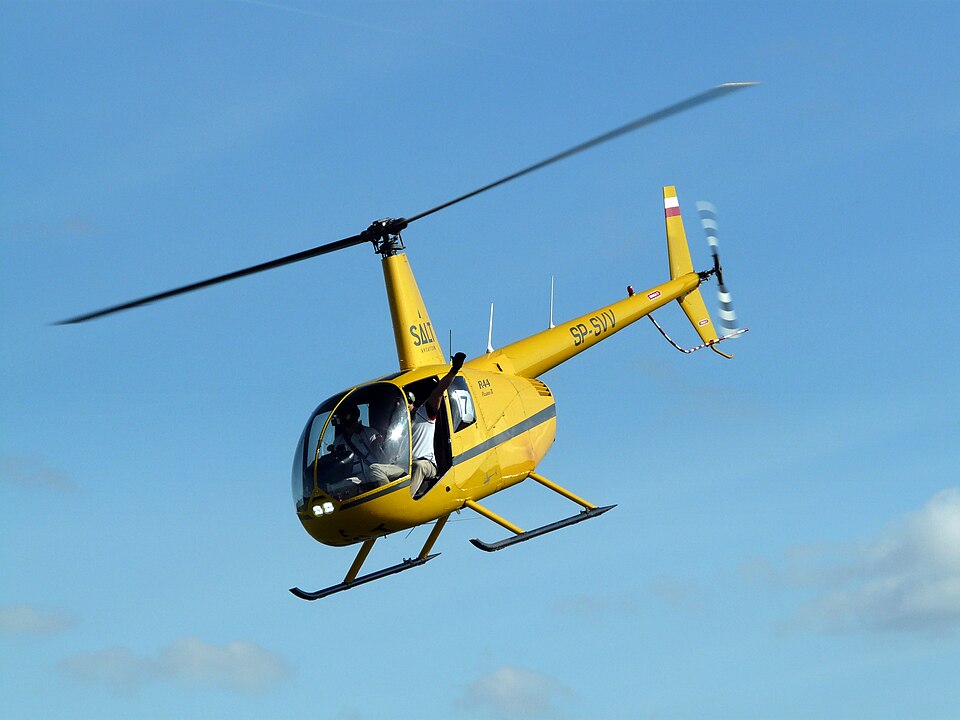
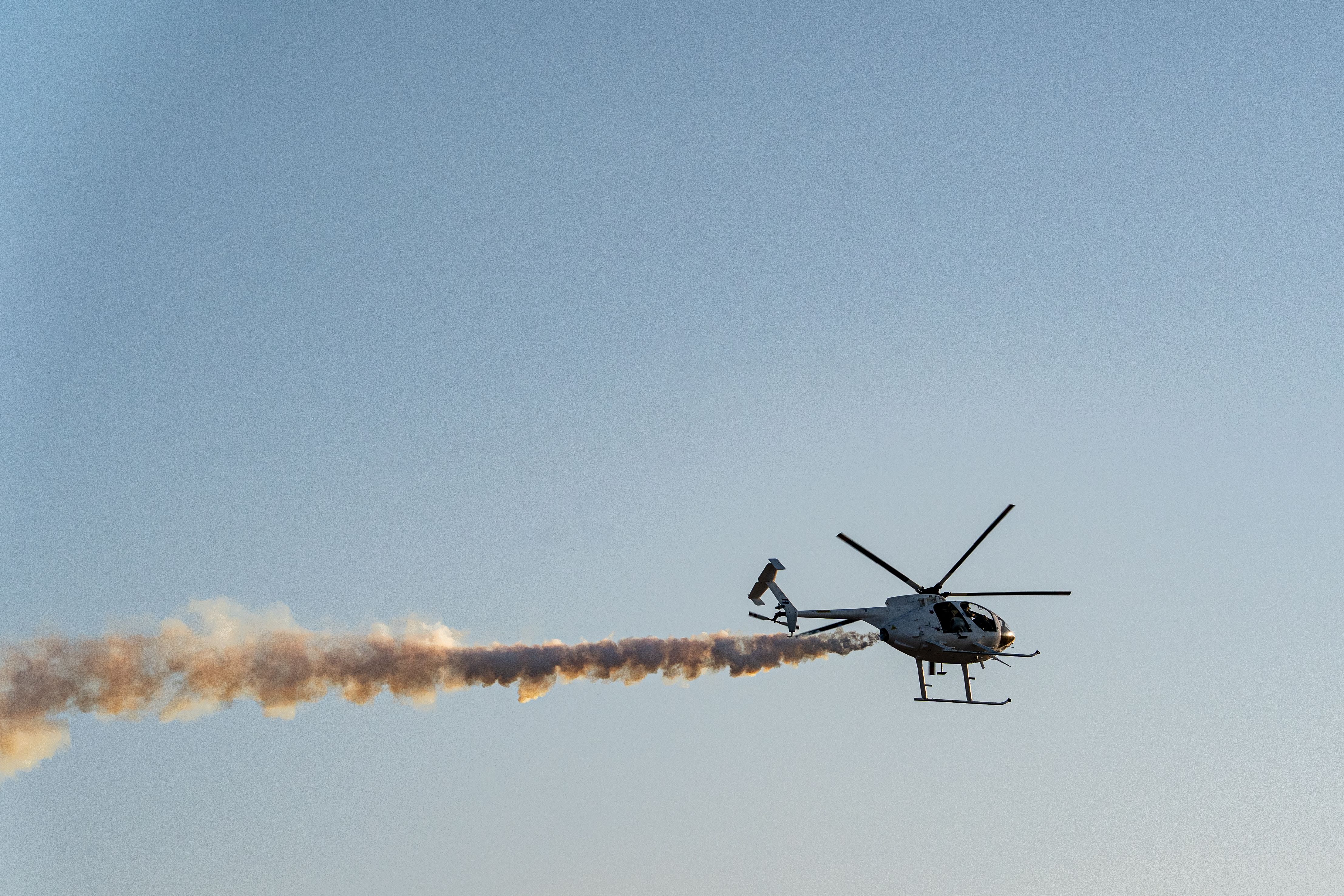
Skids are the two parallel metal tubes or rails that run lengthwise under the fuselage of a helicopter. They look simple because they are simple -- and that is a feature, not a flaw.
How skids work
When a helicopter with skids lands, those metal rails absorb the landing load and spread it across the ground surface. There are no moving parts, no hydraulic lines, and nothing to retract. The skids just sit there doing their job.
Most skid systems are made from steel or aluminum tubes that are curved upward at the front. That upward curve helps prevent the nose from digging in during forward-sliding landings, which can happen off-airport. The tubes connect to the fuselage through cross-tubes that also act as shock absorbers on some designs.
Fun Fact: Some skid-equipped helicopters can be fitted with pontoons for water landings or skis for snow operations. The skid system is the base -- you just swap out the gear depending on where you are flying.
Which helicopters use skids?
Skids are by far the most common landing gear setup in general aviation helicopters. Some well-known examples include:
- The Robinson R22 and R44, which are among the most widely flown training and private helicopters in the world
- The Bell 206 JetRanger, a beloved light turbine helicopter used for tours, news, and charter flights
- The Airbus H125 (formerly the Eurocopter AS350), a popular single-engine turbine machine used for tours and utility work
- The Sikorsky UH-60 Black Hawk, which uses a fixed tricycle gear -- but many military utility helicopters in the medium class still rely on skids
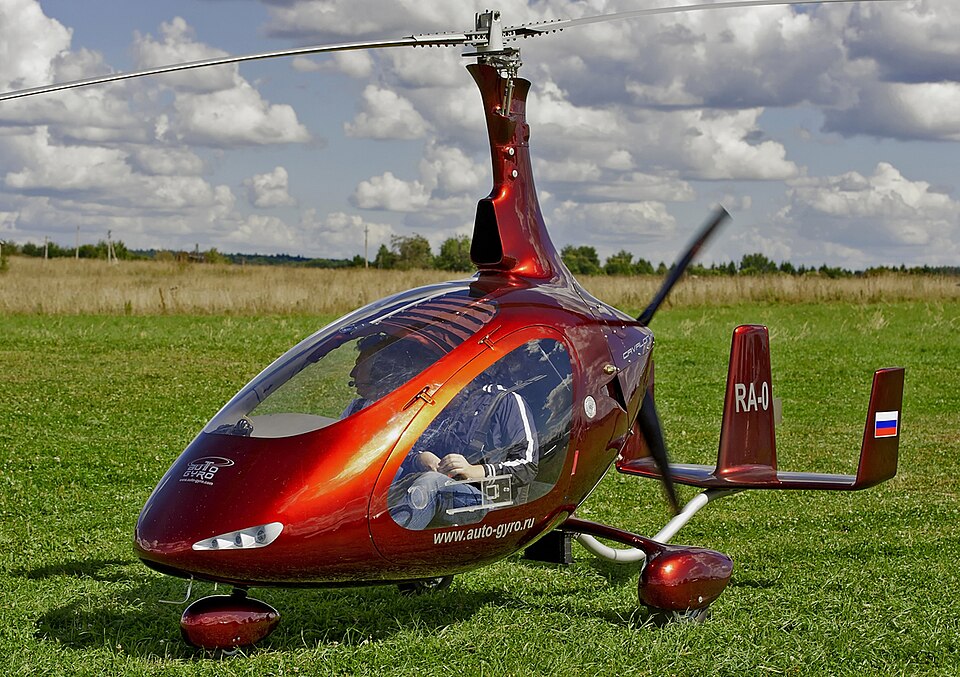
- Most light experimental and kit helicopters
If you have ever visited a helicopter flight school, the helicopter on the ramp was almost certainly resting on skids.
What Are Helicopter Wheels?
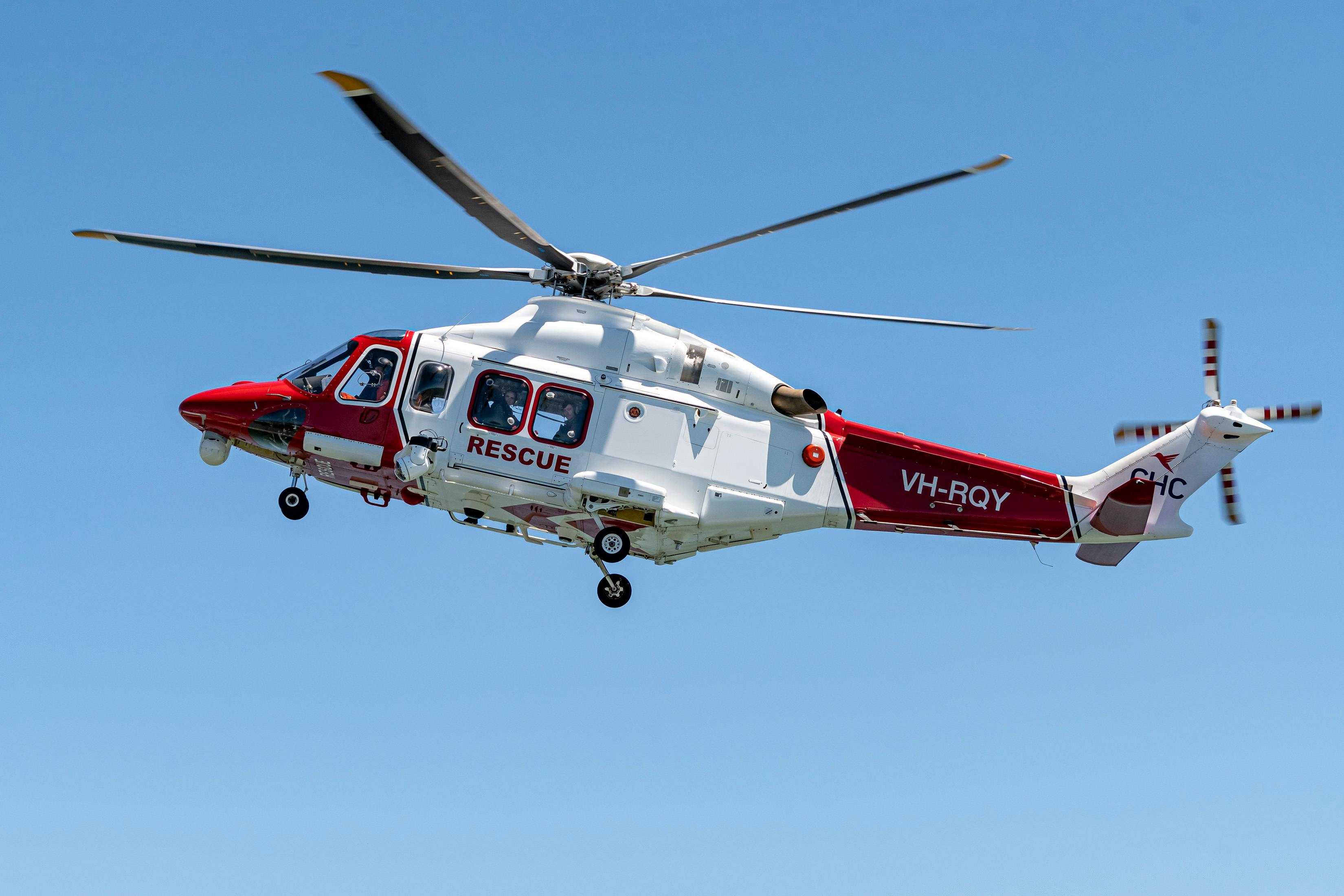
Wheeled landing gear on a helicopter works much like the gear on a fixed-wing aircraft -- with some important differences. Helicopter wheels can be fixed (always down) or retractable (tucked away in flight). Either way, they allow the aircraft to roll freely on the ground.
Why wheels matter on large helicopters
On a small helicopter, the ability to roll around on the ground is not very important. The crew can just pick it up on its skids and carry it into the hangar. But try doing that with a helicopter that weighs tens of thousands of pounds. You need wheels.
Large helicopters often operate from airports or military bases with long paved ramps. Wheels let pilots taxi from one spot to another without shutting down. Ground crews can also tow the aircraft just like a fixed-wing airplane. That saves a lot of time and effort during high-tempo operations.
Good to Know: Retractable wheels improve aerodynamic performance because the gear is tucked away in flight, reducing drag. Fixed wheels are simpler and lighter but create a small amount of drag during cruise.
Fixed vs retractable wheels
| Type | Pros | Cons |
| Fixed wheels | Simple, lighter, lower cost | Adds some aerodynamic drag |
| Retractable wheels | Better performance, cleaner airframe | More complex, higher maintenance |
Some medium helicopters use a compromise: a fixed tricycle gear with small fairings to reduce drag. The Bell 412 and similar medium-lift machines often use this approach.
What Are Tandem Rotor Helicopters?
Before going deeper on landing gear, it helps to understand one special family of helicopters where the wheels-vs-skids question gets particularly interesting: tandem rotor helicopters.
A tandem rotor helicopter has two large rotors mounted one behind the other -- front and rear -- instead of the single main rotor and tail rotor combination most people picture when they think of a helicopter.
Why tandem rotors change the landing gear equation
Tandem rotor helicopters tend to be big. Really big. The most famous example, the Boeing CH-47 Chinook, has been a backbone of military heavy-lift operations for decades. Aircraft like the Chinook routinely carry external loads weighing many thousands of pounds. They operate from forward operating bases, ship decks, and large military airfields.
At that size and operational tempo, skids are simply not practical. These aircraft need wheels to:
- Taxi to loading areas under their own power
- Back into position on ship decks
- Be towed quickly during ground operations
- Handle rough and unprepared surfaces
Why It Matters: The heavy payloads that tandem rotor helicopters carry are part of why they can transport tanks and other massive military equipment. The right landing gear is part of what makes that possible.
The Chinook uses a rear-loading ramp that drops to the ground, and the wheeled gear -- a quadricycle arrangement with four main gear assemblies -- keeps the aircraft level for loading. Skids could not offer that stability during cargo operations.
Helicopters with Wheels vs Skids: A Deep Comparison
Here is a section-by-section look at how these two systems stack up across the factors that matter most to pilots, operators, and enthusiasts.
1. Weight and payload impact
Skids weigh less. That is simply a fact of physics -- fewer parts, no actuators, no hydraulic lines. On a small helicopter where every pound of useful load counts, the skid system wins easily.
Wheels add meaningful weight, especially if the gear is retractable. However, on a large helicopter, the extra weight of the gear system is a small fraction of the total aircraft weight. The operational benefits of wheels far outweigh the weight penalty at that scale.
2. Ground mobility
Helicopters on skids cannot move on the ground by themselves. They have to be picked up by hand (for very small machines), placed on ground-handling dollies, or hovered to a new spot. None of those options are fast or easy.
Wheeled helicopters can taxi on their own power or be towed by a standard aircraft tug. On a busy flight line or ramp, that matters enormously.
Pro Tip: If you plan to base your helicopter at a busy airport or FBO, check what ground handling services are available. Some facilities have dollies for skid-equipped helicopters, but it is worth confirming before you fly in.
3. Landing surface requirements
Skids work best on firm, flat surfaces. That includes helipads, paved ramps, grassy fields, and most unprepared surfaces that a light helicopter would reasonably use.
Wheels, paradoxically, can handle a wider variety of terrain on large aircraft because the gear can be designed with high-flotation tires for soft ground. Some military helicopters use tundra-style tires that spread weight across a large footprint.
On the other hand, skids can land on sloped terrain more safely in some conditions. A skid helicopter can set one skid down on a hillside and let the pilot maintain partial hover while loading or unloading -- a technique called a slope landing or pinnacle approach that wheeled helicopters generally cannot replicate.
4. Maintenance and inspection requirements
Skid systems are almost maintenance-free by comparison to wheeled gear. There are no tires to check and inflate, no brake systems to inspect, no gear actuators to service, and no wheel bearings to grease. A visual inspection for cracks, dents, and corrosion is essentially the maintenance program.
Wheeled gear requires all of the above -- tires, brakes, hydraulic lines, actuators on retractable systems, and regular checks of the gear doors. The maintenance burden is real, and it adds to operating costs.
Keep in Mind: For operators who track every maintenance dollar, the simpler skid system can represent meaningful savings over years of operation. But those savings have to be weighed against the operational limitations of not being able to taxi.
5. Cost differences
At the purchase level, skid-equipped helicopters are generally less expensive than their wheeled counterparts -- though aircraft size and turbine vs piston engine play a much larger role in price than landing gear type alone.
For retractable-gear helicopters, expect higher acquisition costs, higher insurance costs in some cases, and higher maintenance costs over the life of the aircraft.
6. Operational environment
The mission environment drives the decision more than anything else. Consider these use cases:
Skids make sense for:
- Flight training operations
- Personal and private ownership
- Tour and charter operations from dedicated helipads
- Search and rescue in remote terrain
- Agricultural spraying
- Film and photography work
Wheels make sense for:
- Military heavy-lift and assault operations
- Offshore oil platform support (some platforms require wheeled aircraft)
- Large EMS and air ambulance helicopters operating from hospital ramps
- VIP and executive transport on large aircraft
- Tandem rotor and heavy-lift cargo operations
Firefighting helicopters are an interesting case -- many use skids because they operate from remote staging areas without paved surfaces, while larger firefighting aircraft with heavy water buckets may use wheels for ground stability.
7. Aerobatic and special-mission considerations
Landing gear type can even come into play in more unusual helicopter missions. Some aerobatic and high-performance helicopters use skids for weight savings, since the gear never needs to retract and simplicity is a virtue in those designs.
8. Availability and licensing considerations
For pilots thinking about getting into personal helicopter ownership or flying helicopters without a full license, the vast majority of ultralight and light-sport helicopters use skids. Wheels on small personal helicopters are rare because the added complexity offers no real benefit at that scale.
Ready to explore helicopter aviation more deeply? Flying411 covers the full range of rotorcraft topics, from beginner questions to advanced technical guides.
Why Most Training Helicopters Use Skids
Walk onto the ramp of any helicopter flight school in the United States and you will almost certainly see skids. The Robinson R22 -- arguably the most common helicopter trainer in the world -- uses skids. So does the R44, which is the next step up for many students.
The reasons come back to the factors already covered: lower weight, lower cost, simpler maintenance, and excellent suitability for the kinds of surfaces where training happens.
There is also a practical training benefit. Learning to do slope landings, pinnacle landings, and confined-area operations is a fundamental part of helicopter pilot training. Those maneuvers are built around the properties of skids. Trainees develop a feel for where the skids are, how to set one skid down gently, and how the gear interacts with uneven terrain.
Quick Tip: When evaluating a helicopter flight school, ask about the condition of the aircraft's skids. Skids that are heavily scratched, dinged, or bent from hard landings tell you something about how the aircraft has been treated -- and possibly about the quality of instruction.
When Operators Switch from Skids to Wheels
Some operators start with skid-equipped helicopters and eventually move to wheeled aircraft as their missions grow. The trigger is almost always one of two things: the aircraft gets larger, or the operational tempo demands ground mobility.
An EMS operator running a single light helicopter from a hospital helipad can get by with skids forever. That same operator expanding to a large twin-engine machine based at a major airport will likely find that wheeled gear makes daily operations far smoother.
Military operators follow a similar pattern. Light utility and scout helicopters use skids. As the mission grows to troop transport, heavy logistics, and long-range assault, the aircraft get larger -- and the gear gets wheels.
Heads Up: Transitioning from a skid-equipped fleet to a wheeled fleet involves more than just buying new aircraft. Ground handling equipment, maintenance training, hangar setups, and ramp procedures all need to be reviewed and updated.
A Quick Look at Notable Helicopters and Their Gear
| Helicopter | Landing Gear | Primary Use |
| Robinson R22 | Skids | Training |
| Robinson R44 | Skids | Training, private |
| Bell 206 JetRanger | Skids | Charter, utility |
| Airbus H125 | Skids | Tours, utility |
| Sikorsky S-76 | Retractable wheels | VIP, EMS |
| Boeing CH-47 Chinook | Fixed wheels (quadricycle) | Military heavy lift |
| Airbus H225 Super Puma | Retractable wheels | Offshore, SAR |
| Bell 412 | Fixed wheels | Utility, military |
| MD 500 series | Skids | Utility, law enforcement |
| Mil Mi-26 | Fixed wheels | Heavy lift, military |
Conclusion
The choice between helicopters with wheels vs skids is one of the clearest examples of form following function in aviation. Skids are the right answer for most light and medium helicopters where simplicity, low weight, and low maintenance cost matter most. Wheels are the right answer when an aircraft grows large enough that ground mobility becomes a real operational need.
Understanding this distinction helps you read a helicopter at a glance. Skids say light, agile, cost-conscious. Wheels say large, capable, operationally complex. Neither is better in absolute terms -- they each solve a specific problem extremely well.
Whether you are a student pilot trying to understand your training helicopter, an enthusiast who wants to make sense of what you see at an airshow, or someone seriously considering helicopter ownership, the landing gear is worth paying attention to.
And if you want to keep learning, Flying411 is packed with detailed guides on every corner of the helicopter and aviation world -- from beginner explainers to deep dives on some of the most unusual rotorcraft ever built.
FAQs
Can you add wheels to a skid helicopter?
Yes, in some cases. Ground-handling wheel kits are available for many skid-equipped helicopters. These are not flying wheels -- they attach to the skids on the ground so you can roll the aircraft around. They are removed before flight.
Do helicopter wheels have brakes?
Yes, wheeled helicopters typically have brakes on the main gear, similar to fixed-wing aircraft. These are used to hold position during run-up and to control speed while taxiing. Skid-equipped helicopters have no brakes because there is nothing to brake.
Are skids or wheels better for offshore helicopter operations?
It depends on the platform. Many offshore oil platforms have helipads designed for skid-equipped medium helicopters. However, some large platforms and the largest offshore-capable aircraft use wheeled gear. Operators confirm platform compatibility before selecting an aircraft.
Why do some military helicopters have skids even though they carry heavy loads?
Weight savings matter even in military applications. Some military utility helicopters are optimized for confined-area landings, sling-load operations, and austere forward bases where paved ramps do not exist. In those environments, skids perform better. Wheeled gear is reserved for the largest and heaviest military aircraft that operate primarily from established bases.
Can a helicopter with skids land on water?
Not safely without flotation equipment. However, most skid-equipped helicopters can be fitted with emergency floats or full amphibious float systems that mount to the skid tubes. These are common on offshore, SAR, and tour helicopters that regularly fly over water.