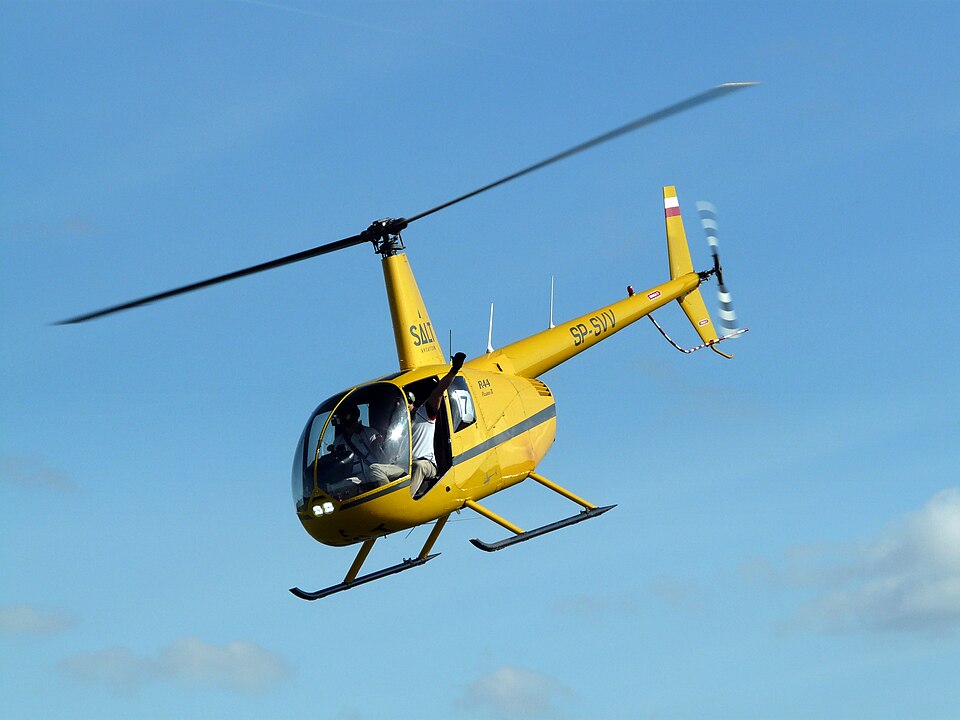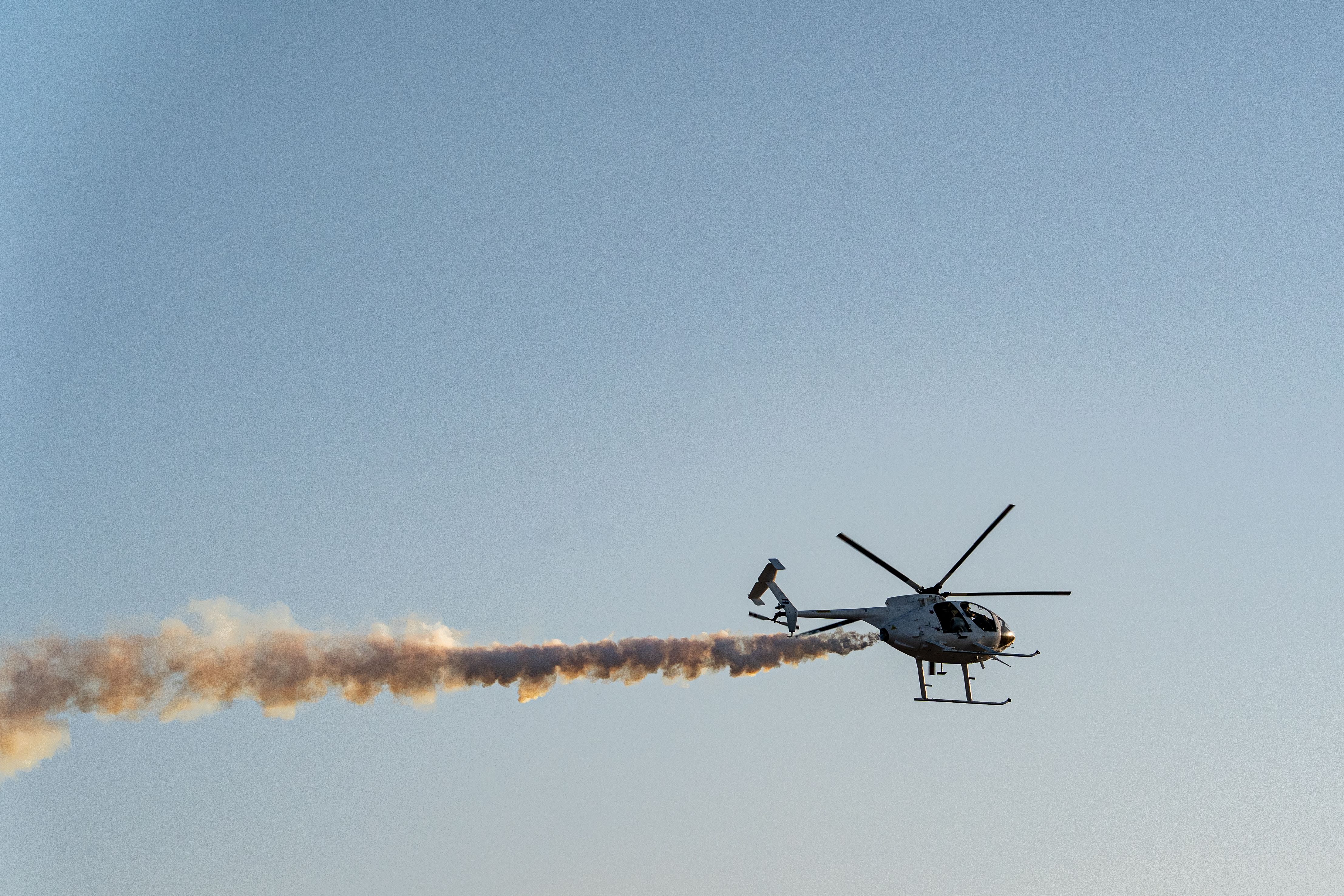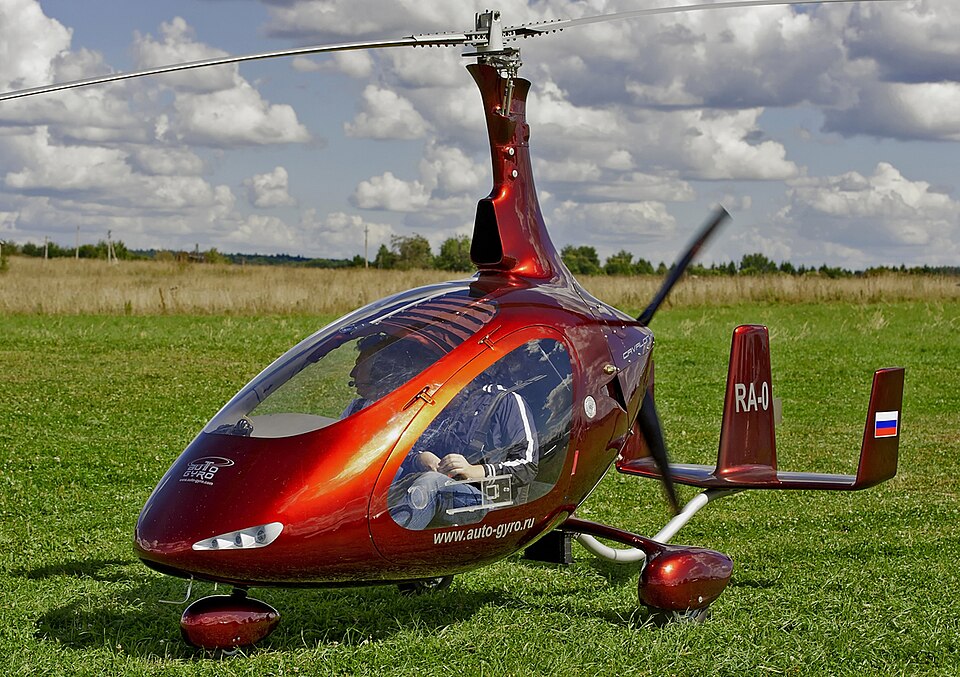
Close your eyes and picture a helicopter. Odds are, you imagined one main rotor spinning on top and a small tail rotor wagging at the back. That image covers most of the helicopters you will ever see in real life. But there is another kind of helicopter out there — one that throws the tail rotor out the window entirely and replaces it with something far more powerful.
Tandem rotor helicopters use two large, counter-rotating rotors mounted one in front of the other along the length of the fuselage. No tail rotor. No anti-torque tricks hiding in the back. Just two massive rotors working together to lift enormous loads, stay stable in rough conditions, and carry cargo that would make a single-rotor helicopter sweat. These machines are built for a different kind of mission. They are the heavy haulers of the rotorcraft world — and they have a fascinating story behind them.
From their earliest experimental roots in the 1920s to the iconic Boeing CH-47 Chinook that has served militaries around the world for over six decades, tandem rotor helicopters have carved out a role no other aircraft design can fill quite as well.
Understanding how they work, why they were built, and where they excel opens a whole new window into the world of aviation.
Key Takeaways
Tandem rotor helicopters are aircraft with two large rotor systems mounted front and back along the fuselage, spinning in opposite directions to cancel out each other's torque. This design means all engine power goes toward lift instead of wasting some on a tail rotor. The result is a helicopter that can carry far heavier loads, handle a wider range of cargo placement, and stay stable in demanding conditions. The Boeing CH-47 Chinook is the most well-known example and remains in active military service around the world today.
| Key Point | Quick Detail |
| Rotor setup | Two large horizontal rotors, front and rear |
| Torque solution | Counter-rotation cancels torque — no tail rotor needed |
| Power efficiency | All engine power directed to lift |
| Best known for | Heavy cargo transport and military logistics |
| Most famous model | Boeing CH-47 Chinook |
| First successful flight | Nicolas Florine's prototype, early 1930s |
| Primary users | Military forces, disaster relief, industrial operations |
| Key advantage | Massive payload capacity and wide center-of-gravity range |
If you love digging into helicopter history and aviation facts, Flying411 is a great resource to bookmark. It covers everything from helicopter facts and history to the latest in general aviation.
What Makes a Helicopter a "Tandem Rotor" Design?
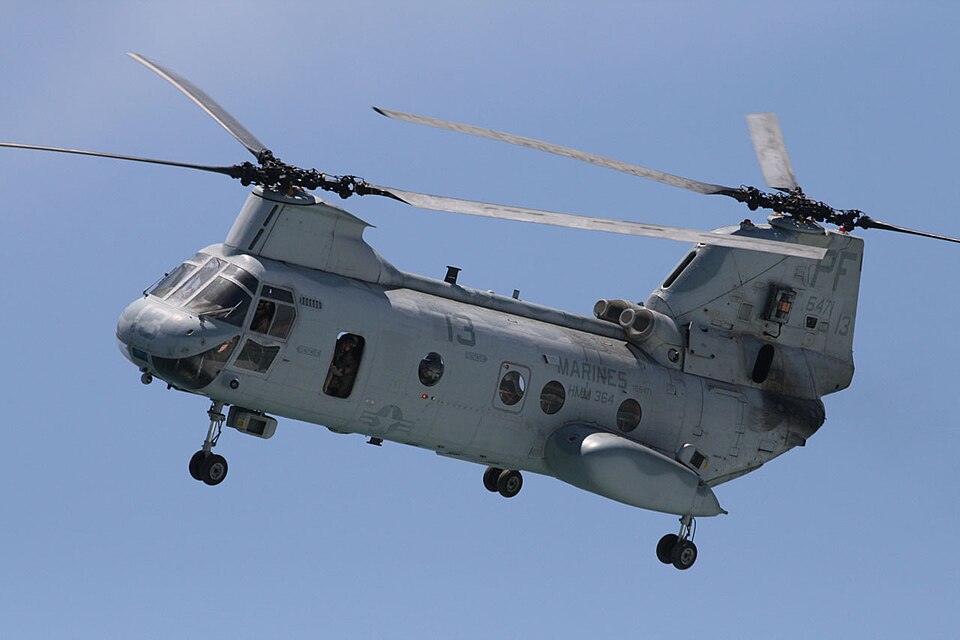
The term "tandem" comes from a Latin word meaning "one behind the other." That is exactly what you get with this helicopter configuration. Two large rotor assemblies sit at opposite ends of the fuselage — one near the nose and one elevated on a pylon at the tail end of the aircraft. Both rotors spin in opposite directions, and that counter-rotation is the whole secret to why the design works so well.
In a conventional single-rotor helicopter, the main rotor creates a powerful spinning force called torque. Left unchecked, that torque would cause the body of the helicopter to spin in the opposite direction of the rotor. The tail rotor exists specifically to push back against that spin and keep the aircraft stable. This works perfectly well, but it comes with a cost: some of the engine's power must go to spinning the tail rotor rather than generating lift.
Tandem rotor helicopters solve this problem in a different way. Because the two rotors spin in opposite directions, the torque from one rotor cancels out the torque from the other. The aircraft stays balanced without needing a tail rotor at all. This means every bit of engine power can be dedicated to lift — and that makes a dramatic difference when you need to carry something heavy.
Fun Fact: The rear rotor on a tandem helicopter is mounted on a raised pylon, sitting slightly higher than the front rotor. This is an intentional safety feature to prevent the long rotor blades from colliding with each other as they flex under aerodynamic loads.
A Brief History of Tandem Rotor Helicopters
The idea of placing two rotors front-to-back on an aircraft is older than most people realize. Belgian engineer Nicolas Florine is said to have achieved one of the first successful free flights of a tandem-rotor helicopter with his No. 2 prototype in the early 1930s. His aircraft even set an early helicopter endurance record, according to historical accounts — a remarkable achievement for the era.
The concept gained real momentum in the United States after World War II, largely through the work of American engineer Frank Piasecki. Piasecki recognized that placing two large, counter-rotating rotors at either end of the fuselage could produce a far more capable heavy-lift aircraft than anything a single-rotor design could achieve. His designs laid the groundwork for what would become one of the most important categories in military aviation.
The Piasecki H-21 Workhorse: The Flying Banana
One of the earliest practical tandem-rotor helicopters to see widespread use was the Piasecki H-21 Workhorse, introduced around 1952. Its fuselage had a distinctive curved shape — designed to keep the front and rear rotors from striking each other — which earned it the affectionate nickname "the Flying Banana." The H-21 served during the Vietnam War era, proving that the tandem-rotor layout could handle real-world military demands like troop transport and medical evacuation.
Good to Know: The curved fuselage of the H-21 Workhorse was not just a quirky design choice. The bend in the airframe kept the front and rear rotor blades at a safe distance from each other, preventing mid-flight collisions during heavy-load operations.
From the H-21 to the Chinook
The success of early tandem-rotor designs helped push the U.S. Army to seek an even more capable aircraft. Development work on what would become the CH-47 Chinook began in the late 1950s, with the helicopter's first flight taking place in 1961. It entered service in 1962 and has remained in production and frontline service ever since — one of the very few aircraft from that era to achieve such longevity.
How Tandem Rotor Helicopters Actually Fly
Flying a tandem rotor helicopter involves some clever engineering that is worth understanding. The two rotors are linked by a synchronized transmission system, which ensures they never collide — even during an engine failure. That synchronization is critical, because two massive sets of spinning blades occupying the same airspace without touching requires extremely precise mechanical coordination.
Controlling Direction Without a Tail Rotor
Since there is no tail rotor, tandem rotor helicopters use a different method for yaw control — the ability to turn left or right. To yaw, pilots apply opposite cyclic inputs to the front and rear rotors. This effectively pulls the front of the helicopter one direction and the rear in the opposite direction, rotating the aircraft around its center. It is a smooth and reliable system, though it works slightly differently from what single-rotor pilots are used to.
Pitching Forward and Back
To pitch the helicopter forward or backward, pilots apply opposite collective inputs to the two rotors. Increasing lift at the rear while decreasing it at the front tilts the aircraft nose-down for forward flight. Doing the reverse pitches it nose-up to slow down or climb. This dual-rotor control system gives tandem helicopters a wide and stable range of motion.
Pro Tip: The tandem rotor design gives these helicopters a much wider center-of-gravity (CG) range than single-rotor aircraft. This means cargo placement is less critical to maintaining stable flight — a major operational advantage when loading in the field.
Key Advantages of Tandem Rotor Helicopters
The tandem configuration was not developed out of novelty. It came out of a genuine need for aircraft that could do things single-rotor machines simply could not. Here is what makes the design so capable:
1. All Engine Power Goes to Lift
In a conventional helicopter, a meaningful portion of engine power must drive the tail rotor to counteract torque. In a tandem design, that power goes entirely toward generating lift. The result is a helicopter that can carry heavier loads using the same engines that would move a much lighter single-rotor aircraft.
2. Shorter Rotor Blades for the Same Lift
Because there are two rotor systems working together, each one does not need to be as large as the single rotor on a comparable helicopter. Tandem rotor helicopters can support more weight with shorter blades — an important factor for aircraft operating in confined spaces or needing to fold their rotors for shipboard storage.
3. Exceptional Payload Capacity
This is the headline advantage. Tandem rotor helicopters can carry massive external and internal loads. The Boeing CH-47 Chinook, for example, is capable of lifting tens of thousands of pounds of cargo using its three external cargo hooks. That kind of payload capacity is essentially impossible to match with a conventional single-rotor design of similar size.
4. Wide Center-of-Gravity Range
Because there are lift points at both the front and back of the aircraft, the helicopter is far less sensitive to where weight is placed. Cargo can be loaded more flexibly without compromising balance or safety. In fast-moving military or disaster-relief operations, this makes a significant practical difference.
5. Exceptional Stability in Hover
The absence of a tail rotor, combined with the balanced thrust from two rotor systems on opposite ends of the aircraft, produces a very stable hover. The aircraft is less vulnerable to crosswinds than some single-rotor designs. This stability is particularly valuable for precision operations like sling-loading cargo, lowering rescue personnel by rope, or placing loads in tight spaces.
6. Low Disk Loading
With two large rotor discs sharing the work of lifting the aircraft, the weight is spread across a much larger total rotor area. This lower disk loading means the aircraft can hover and fly at low speeds more efficiently, requiring less power for the same result. It also makes the aircraft better suited for operations in hot or high-altitude environments where the air is thin.
7. Redundancy in Emergencies
Having two separate rotor systems provides an added layer of mechanical redundancy. The synchronized transmission links both rotors so that even in the event of one engine failing, both rotors can still receive power from the remaining engine. This design has contributed to the overall safety record of tandem rotor platforms over decades of demanding military use.
Why It Matters: The wide center-of-gravity range and excellent hover stability of tandem rotor helicopters make them ideal for disaster relief missions, where cargo types vary wildly and precision placement is often a matter of life and death.
If you have ever been curious about the sheer lifting power these aircraft are capable of, there is a fascinating look at helicopters that can carry a tank that puts the payload capabilities of heavy-lift rotorcraft in vivid perspective.
Disadvantages and Trade-Offs
No aircraft design is perfect for every mission, and tandem rotor helicopters come with genuine trade-offs that explain why they remain a specialized tool rather than the dominant helicopter configuration.
Mechanical Complexity
The synchronized transmission system that links the two rotors is a sophisticated piece of engineering. More moving parts mean more potential points of failure, and more intensive maintenance requirements. This is one reason why tandem rotor aircraft like the Chinook are predominantly operated by military organizations with large maintenance infrastructures and well-trained technicians.
Size and Weight
Accommodating two large rotor systems requires a long, substantial airframe. That bulk adds weight and aerodynamic drag. At higher speeds, the larger profile of a tandem rotor helicopter creates more resistance than a streamlined single-rotor aircraft. These machines are not known for being nimble or fast in the way that attack helicopters or light utility aircraft are.
Cost
The combination of complex engineering, large size, and intensive maintenance makes tandem rotor helicopters expensive to acquire and operate. This cost is generally justified for heavy-lift military missions, but it limits civilian adoption significantly.
Heads Up: Tandem rotor helicopters are not designed for agility. Their strength lies in stability and load capacity. If you need something that can dart around tight spaces at high speed, a single-rotor design is the better choice.
The Most Famous Tandem Rotor Helicopters
The Boeing CH-47 Chinook
No conversation about tandem rotor helicopters is complete without the CH-47 Chinook. Originally designed by Vertol and later produced by Boeing, the Chinook entered U.S. Army service in 1962 and has never left. Its name comes from the Chinook people of the Pacific Northwest. The aircraft has seen service in conflicts including Vietnam, the Falklands, the Gulf War, Iraq, and Afghanistan, and it has been operated by the armed forces of more than two dozen countries.
The Chinook is capable of carrying large numbers of troops, substantial quantities of equipment, and oversized external loads suspended from its three cargo hooks. The latest variant, the CH-47F, features a modern digital cockpit and significantly reduced vibration levels. It remains one of the fastest military helicopters in operation, with a top speed of around 196 mph, making it notably quicker than many contemporary rotorcraft.
For a broader look at helicopter speed records and where the Chinook fits in the bigger picture, a comparison of the fastest helicopters in the world puts its performance in useful context.
Fun Fact: The CH-47 Chinook is one of only two military aircraft developed in the early 1960s that has remained in continuous production and frontline service for more than 60 years — the other being the fixed-wing Lockheed C-130 Hercules.
The Boeing CH-46 Sea Knight
The CH-46 Sea Knight was the Chinook's smaller sibling, developed for the U.S. Marine Corps as a medium-lift assault and logistics helicopter. It served for several decades before being phased out, filling a role similar to the Chinook but at a reduced scale. The Sea Knight was a reliable workhorse for amphibious assault operations and is remembered fondly by the Marines who flew and maintained it.
The Piasecki HRP-1 Rescuer
Often cited as one of the earliest practical American tandem rotor helicopters, the HRP-1 was an experimental transport that helped prove the concept in the late 1940s. It shared the "flying banana" curved-fuselage look with later designs and contributed valuable lessons to the development of more capable successors.
The Kaman K-MAX
The Kaman K-MAX takes a slightly different approach — it uses an intermeshing rotor system rather than a purely tandem layout, but it belongs to the broader family of multi-rotor configurations worth mentioning here. Designed primarily for external load operations, the K-MAX has logged substantial flight hours in civilian roles including remote cargo delivery and aerial logging. It is well regarded for its efficiency in precision load placement.
Good to Know: Civilian operators have found tandem-style rotor configurations useful for tasks like aerial logging, construction lift operations, and remote cargo delivery — roles where payload capacity and hover stability matter more than speed.
For a broader look at how rotorcraft development fits into the bigger picture of aviation history, the helicopter facts and history overview is worth a read.
Tandem Rotor Helicopters vs. Other Multi-Rotor Configurations
Tandem rotor helicopters are not the only way engineers have tried to solve the torque problem without a tail rotor. It helps to understand how the tandem layout compares to other dual-rotor designs.
| Configuration | Rotor Placement | Key Strength | Common Use |
| Tandem Rotor | Front and rear, same plane | Maximum payload, wide CG range | Military heavy lift |
| Coaxial Rotor | Stacked on the same mast | Compact size, high maneuverability | Military, special ops |
| Intermeshing Rotor | Side-by-side at an angle, blades interlace | Stable, compact airframe | Civilian cargo, logging |
| Tilt Rotor | Wing tips, tilt from vertical to horizontal | High speed, long range | Military, executive transport |
Each configuration handles the torque problem differently and excels in different mission profiles. The tandem layout remains unmatched for pure heavy-lift capacity combined with operational flexibility.
Pro Tip: If you are curious about the tilt-rotor category, the V-22 Osprey combines elements of the tandem rotor concept with the speed advantages of a fixed-wing aircraft — a fascinating evolution of multi-rotor thinking.
Real-World Uses of Tandem Rotor Helicopters
Military Transport and Logistics
Military operations have always been the primary home of tandem rotor helicopters. Their ability to transport large numbers of troops, artillery, vehicles, and supplies over challenging terrain has made them indispensable for armies that need to move fast and carry heavy. In mountainous or jungle environments, where roads are few and landing zones are tight, a tandem rotor helicopter can often reach places that no ground vehicle could access.
Disaster Relief and Humanitarian Operations
When natural disasters strike and roads are destroyed or flooded, tandem rotor helicopters become some of the most valuable tools available. Their wide CG range means crews can load a varied mix of supplies quickly, and their hover stability allows precise delivery to difficult locations. The Chinook has been deployed in hurricane response, earthquake relief, and flood rescue operations around the world.
Construction and Industrial Lifting
Civilian operators have used tandem-style heavy-lift helicopters for tasks like raising communication towers, placing large HVAC units on rooftop locations, and supporting construction in remote areas where cranes cannot reach. These missions take advantage of exactly the same qualities that make the design valuable in military contexts.
For those interested in the broader world of luxury and high-performance rotorcraft, a look at the best luxury helicopters offers a fascinating contrast to the heavy-lift machines discussed here.
The Future of Tandem Rotor Technology
The tandem rotor design is not standing still. Ongoing modernization programs continue to refine the CH-47 platform with improved digital flight controls, reduced vibration, and more powerful engines. Beyond that, the concept is influencing a new generation of unmanned heavy-lift drones that use dual-rotor configurations to carry cargo payloads beyond what conventional multi-rotor drones can manage.
Advances in composite materials are also expected to make future tandem rotor aircraft lighter and more fuel-efficient without sacrificing their legendary strength. Some research programs have explored hybrid-electric propulsion concepts that could expand the operating range of dual-rotor designs while reducing their environmental footprint.
Why It Matters: The tandem rotor concept is finding new life in autonomous cargo delivery. Unmanned tandem-rotor aircraft are being developed to carry heavy payloads to remote or contested locations without putting crew members at risk.
If you are passionate about aviation and want to learn more about flying rotorcraft yourself, exploring the best helicopter flight schools in the US is a solid next step toward the cockpit.
And if you have ever wondered what it takes to get airborne without a full license, a look at helicopters that don't require a license might surprise you.
Conclusion
Tandem rotor helicopters represent one of the most thoughtful and effective solutions to a fundamental problem in rotorcraft design. By placing two counter-rotating rotors front and back, engineers found a way to cancel torque naturally, free up all engine power for lift, and build aircraft capable of carrying loads that would be impossible for conventional designs. The result — best represented by the legendary CH-47 Chinook — is a machine that has served militaries and humanitarian organizations for generations and shows no signs of retirement.
Their story is not just about engineering. It is about understanding what aviation can accomplish when designers think boldly, build carefully, and commit to solving hard problems. Whether you are a pilot, an aviation enthusiast, or someone who just saw a Chinook fly overhead and thought "what on earth is that?", the tandem rotor world has something worth knowing.
If this article got your rotors spinning, Flying411 is your go-to destination for aviation content that goes deep without losing you in the technical weeds — from helicopter history to buying guides and beyond.
Frequently Asked Questions
How does a tandem rotor helicopter control direction without a tail rotor?
Tandem rotor helicopters achieve yaw control by applying opposite cyclic inputs to the front and rear rotors, which pulls each end of the aircraft in a different direction and rotates it around its center. This system is mechanically different from a tail rotor but produces reliable directional control.
Are tandem rotor helicopters harder to fly than conventional helicopters?
Pilots transitioning to tandem rotor aircraft generally need additional training because the control inputs work differently, particularly for yaw control. However, the aircraft's exceptional stability and wide center-of-gravity range can make certain maneuvers — especially hovering with heavy loads — more forgiving than in single-rotor designs.
Why do tandem rotor helicopters have the rear rotor mounted higher than the front?
The rear rotor sits on an elevated pylon to keep the two sets of blades from colliding with each other as they flex under aerodynamic loads. This height offset is a critical safety feature that allows the long rotor blades to operate in overlapping zones without touching.
Are there any civilian tandem rotor helicopters available?
Civilian versions of tandem rotor aircraft do exist, such as the Boeing Vertol 234, which is a commercial variant of the Chinook. However, the high purchase price and significant maintenance demands mean civilian tandem rotor aircraft are rare and tend to be used only for specialized heavy-lift operations like aerial logging or industrial construction.
How long has the CH-47 Chinook been in service?
The CH-47 Chinook first entered U.S. Army service in 1962 and has remained in continuous production and frontline use ever since, making it one of the longest-serving military aircraft of any type in aviation history. Ongoing upgrades have kept the platform modern and mission-capable across more than six decades of service.